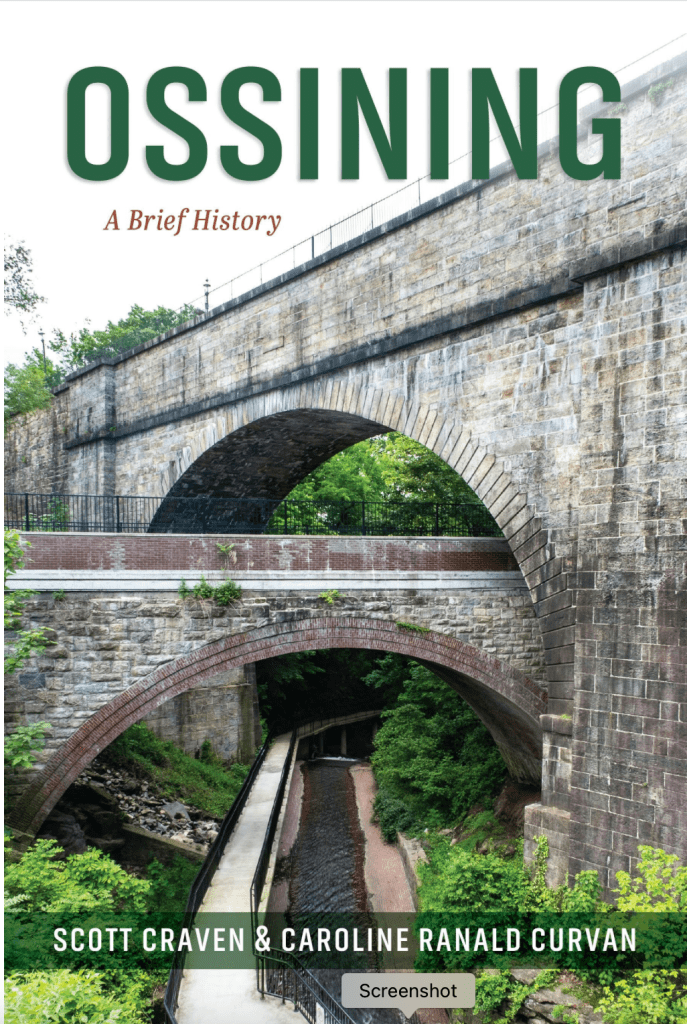
It’s almost here! Our new book, Ossining: A Brief History, will be released on February 10, 2026. Here’s a sneak peek at the cover — what do you think?
Check out the publisher’s website here to pre-order, or visit your favorite brick and mortar bookshop after its release.
We’ll be doing an official book launch at the Ossining Public Library on Saturday, February 21, 2026 at 2pm — watch this space for more info on that and other events coming your way soon!
Welcome to the virtual exhibit page for Ossining Women’s History Month 2025!
While the installation at the Ossining Public Library (53 Croton Avenue) is no longer on display, the entire exhibit will live on this blog in perpetuity.
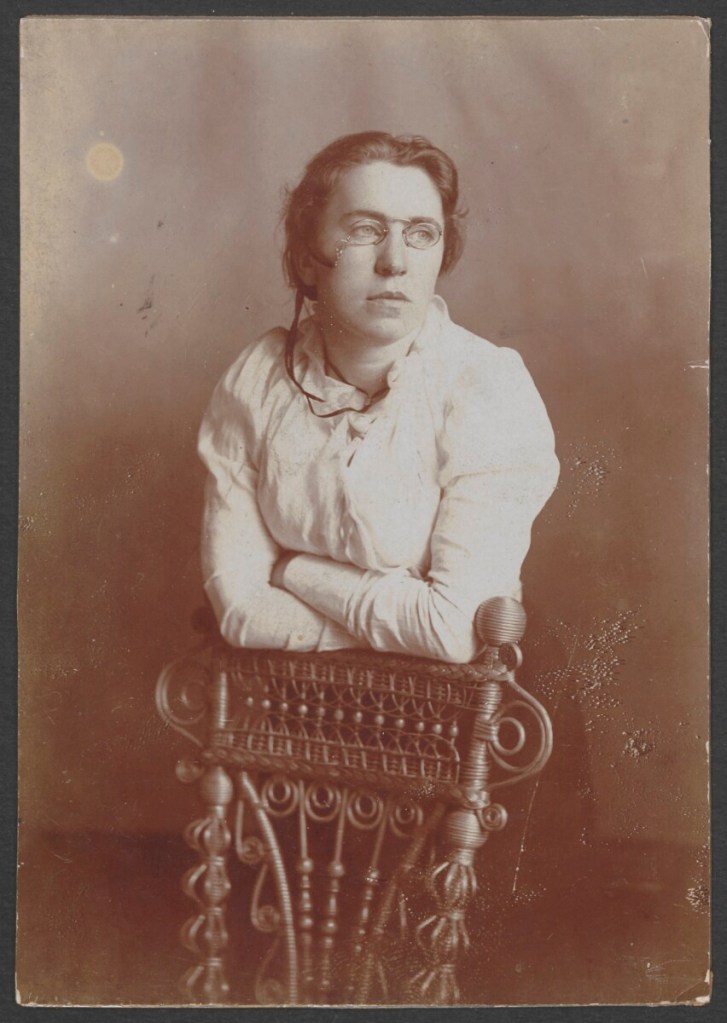
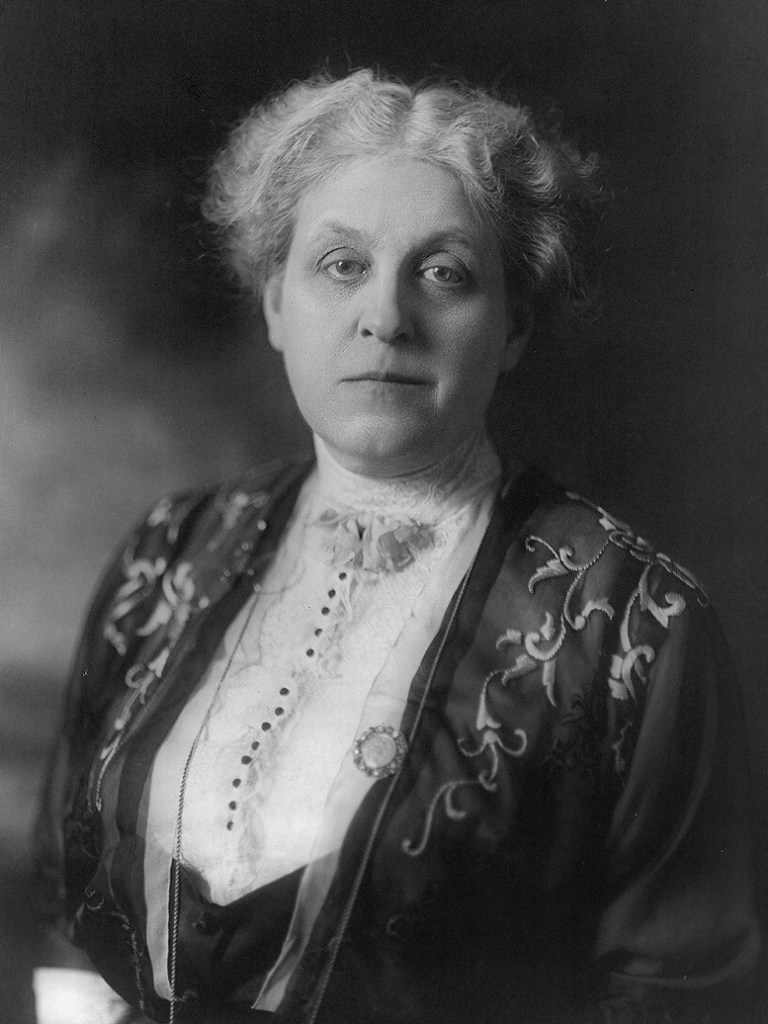
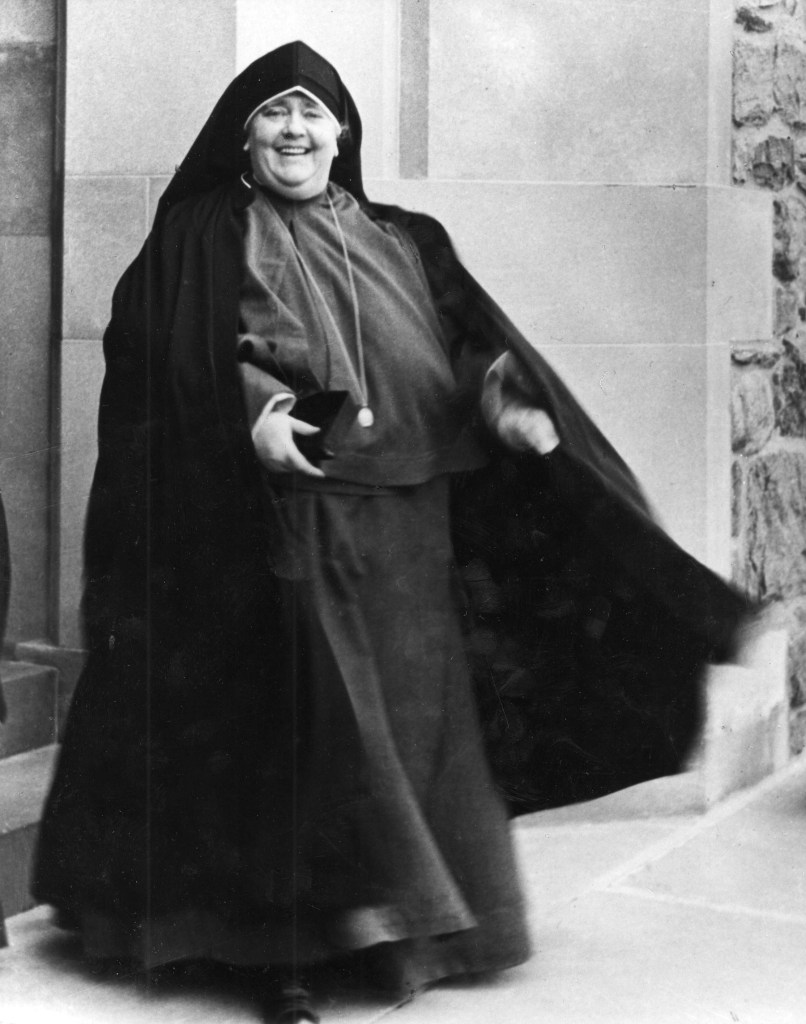
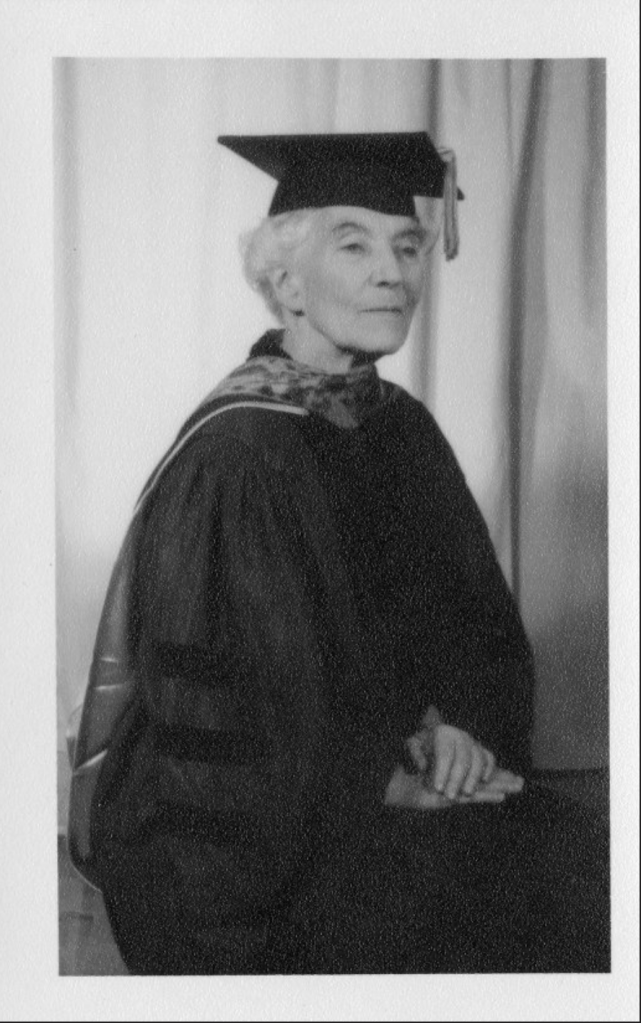
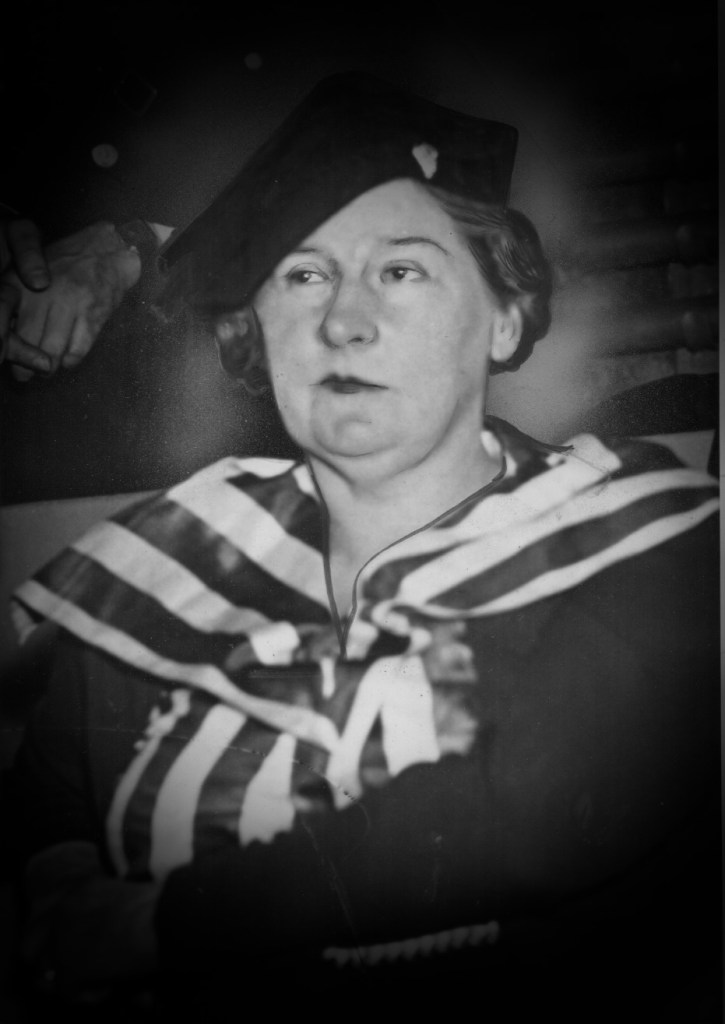
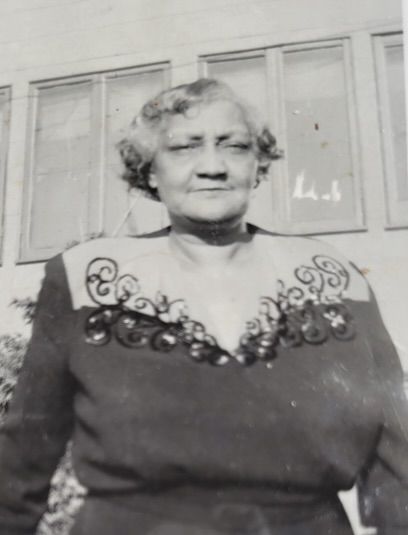
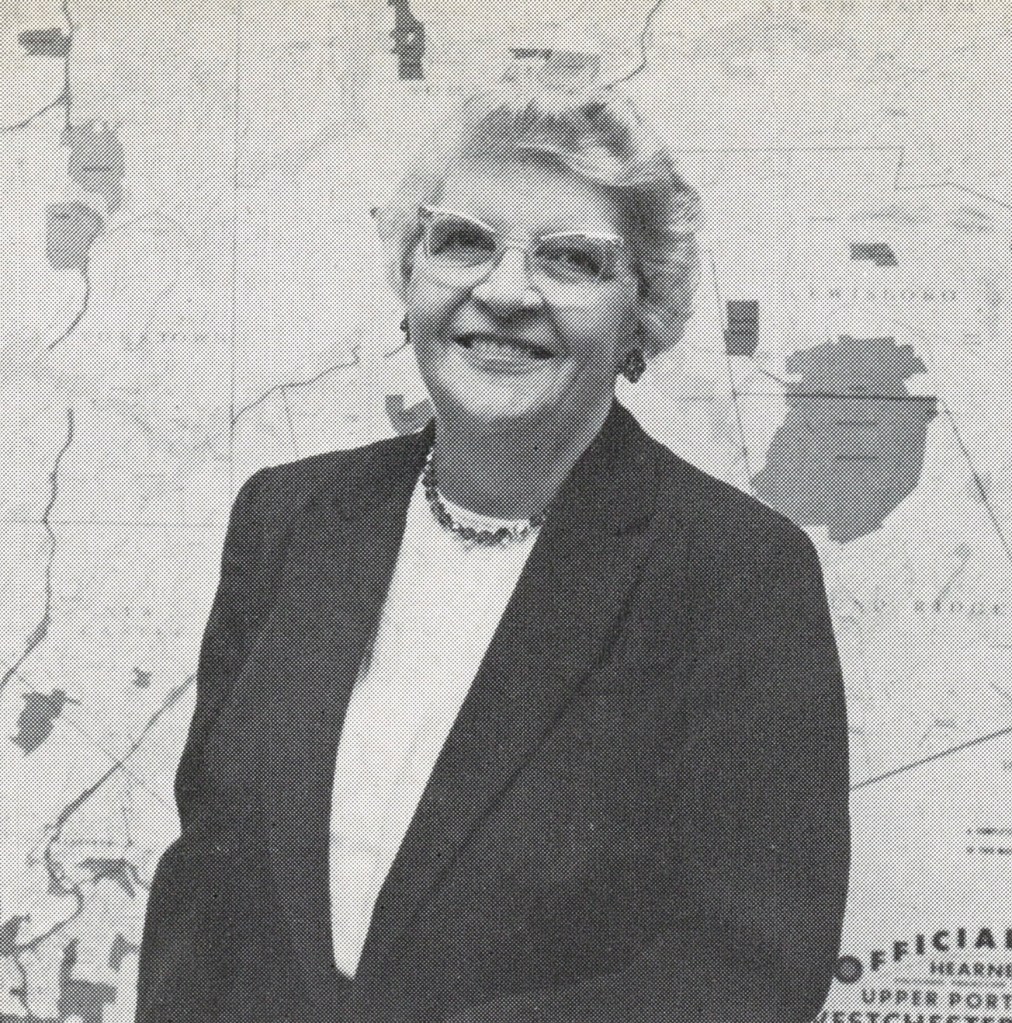
Who are these women?
These are all remarkable women local to Ossining who made a big impact in shaping our community and our world. Some are national figures. Some have local streets, schools or parks named after them. And some just did their work quietly. But all have accomplishments that deserve to be recognized and shared.
What will you see?
This is a retooling and enlargement of last year’s exhibit presented at the Bethany Arts Community, with expanded biographies and four more fascinating women included.
These women represent all facets of American life – art, religion, science, politics, military service, activism, and philanthropy. Those with a higher profile in life offer more images and material. Others avoided the limelight (either on purpose or through circumstance) and less is known about them, but this exhibit will help uncover and celebrate all of their remarkable stories.
To learn more about each woman featured, simply click on their names below and you’ll be quickly directed to a page with their detailed biography, including photos and links to further enrich their extraordinary stories.
Enjoy!
Caroline Ranald Curvan Ossining Town Historian & Exhibit Curator
I’m not really quite sure why it’s taken me so long to blog about Peter Falk – I guess it’s mostly because he’s well-known and doesn’t need me to tell his story. But, since he is a true son of Ossining (Ossining High School graduate 1945!) I would be remiss if I didn’t. (Plus, I did a lot of this research for my recent presentation at Sing Sing Kill Brewery, so figured I might as well turn it into a blog post.)
Peter “Pete” Falk was born in the Bronx in 1927 but raised in Ossining on Prospect Avenue. (In 2005, Ossining would officially rename the corner of Eastern and Prospect Avenues “Peter Falk Place.”)
His parents owned a popular local clothing shop, Falk’s, that was located at 159 Main Street. Back in the days before malls and such, this was one of those essential local stores that sold pajamas, kids’ clothes swimsuits, and ladies’ undergarments. (Not the lacy lingerie kind that Victoria’s Secret sells, mind you, but the hardcore 1940s/50s rubbery kind that look just one step more comfortable than a Victorian whalebone corset.)
Falk’s Department Store at 159 Main Street, Ossining.
Photo courtesy of the Ossining Historical Society
After perusing the 1945 Ossining High School yearbook (“The Wizard”) I get the strong impression that “Pete” Falk was one of those great guys that just everyone loved.
Photo Courtesy of the Ossining Historical Society
He was Class President for three years of high school (VP the other year) and, as you can see, served on an array of clubs and teams.
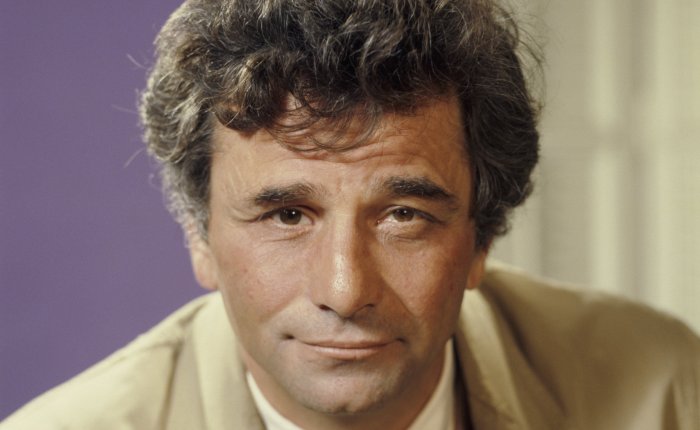
Now, if you’ve ever watched “Columbo” (or any of his other films), you might have noticed that he had an unusual squint – you can certainly see that his eyes don’t quite match in this photo. That’s because he had this eye removed at the age of three because of a retinoblastoma – a type of cancerous eye tumor. Ever after he wore a glass eye and would tell various stories regarding said eye.
One took place when he was playing Little League in Ossining. According to his 2006 autobiography, Just One More Thing: Stories from My Life, this happened:
“At Ossining High School, the baseball field was right in back of the school and the grandstand was very close to the playing field, particularly on the 3rd base side. This is significant because on this particular day it was a play at third base where the umpire called me out. It was a bad call. I was clearly safe. I knew it and everyone in the stands knew it. They sat so close to the field that they could see and hear everything. In front of everyone, I whipped out my eye and handed it to the umpire: ‘You’ll do better with this one.’ Talk about getting a laugh.” [2]
Because of his glass eye, he was not eligible for the draft, so he went straight on to Hamilton College but dropped out after three months to join the Merchant Marine. But also because of his glass eye, the only opportunities for him there were in the kitchen. So he sailed off as a third cook. After a year at sea, there were a few more attempts at college until Falk finally graduated from the New School of Social Research with a B.A. in Political Science and Literature. It was here, also, that he got his first taste of professional theater. After a few more false starts that included a master’s degree in Public Administration from Syracuse University (’53) and a job as an efficiency expert, in 1955 he finally followed the siren call of the theater.
When he told his dad, the response was “You’re gonna paint your face and make an ass of yourself for the rest of your life?”
Well, yes Dad, yes I will, said Peter Falk.
After that, things happened pretty fast. Falk began acting in summer stock in Connecticut, directed by theater legend Eva Le Gallienne. The next year, 1956, he made his Broadway debut in G.B. Shaw’s “St. Joan” as an English Soldier. From there, he landed in an off-Broadway production of Eugene O’Neill’s “The Iceman Cometh” directed by Jose Quintero and starring Jason Robards.
Pretty heady stuff for a kid who’d only just decided to make acting his career!
It was around this time that he went to Hollywood for a screen test. And here we get another (possibly apocryphal?) story about his glass eye when the young Peter Falk is introduced to Harry Cohn, the head of Columbia Pictures, as the next John Garfield. (I know, I’m not entirely sure who that is either!)
Cohn mumbled something about Falk’s “deficiency” and when he didn’t seem to be understood, Cohn just took a deep breath and shook his head. “For the same price” he said, “I’ll get an actor with two eyes.” [3]
Ouch!
Disappointed, Falk took himself back to the east coast, where he landed an agent and some bit parts in TV and off-Broadway. Finally, his big break came in 1960 with a movie called “Murder, Inc.” He even scored his first Academy Award nomination (for his supporting role as Abe Reles.)
Another Academy Award nomination came his way two years later, for “Pocketful of Miracles,” a Frank Capra-directed movie with a cast that included Bette Davis, Glenn Ford, Hope Lange and Ann-Margret.
But it was “Columbo” that catapulted him to legendary status. Starting in 1968, with the first pilot, the series ran consecutively from 1971 – 1978. After that, from 1990 – 2003 about ten Columbo specials were made. Falk as Lt. Columbo would get nominated for an Emmy Award almost every year, and he took it home at least four times. (He had already won an Emmy in 1962 for “Dick Powell Theatre.”)
Photo courtesy IMDB.com
(Fun fact – The Ossining Historical Society has an autographed trench coat on display that was personally given to them by Peter Falk.)
Falk was diagnosed with Alzheimer’s disease in 2008 and played his final film role a year later.
His last years were, it seems, tinged with sadness as his second wife, Shera, reportedly refused to allow his two children (from a previous marriage) to visit him as his dementia progressed. She supposedly didn’t even let them know when he passed away. The situation so troubled Falk’s daughter Catherine that after his death in 2011, she would go on to help pass legislation that would prevent family members from being cut off by the guardians of incapacitated family members. Ossining’s very own Assemblywoman Sandy Galef would introduce “Peter Falk’s Law” in 2015 and see it pass the NYS Senate in 2016.
But I like to think of him as that charming student from Ossining High School who spearheaded all sorts of fun for his class and went on to play one of the most iconic roles on television.
OHS ’45 Senior Class picnic, Rye Playland Photo courtesy Ossining Historical Society
[1] “The Wizard” the Ossining High School Yearbook, 1945
[2] “Peter Falk: Just one more thing – Stories from my Life” by Peter Falk, 2006
Jeanne Eagels, as a war orphan in the 1918 play “Daddies,” produced by David Belasco
Jeanne Eagels 1890 – 1929
Broadway and early film star ***Local Connection: Homes on Kitchawan Road (Rt. 134) and Cedar Lane***
Okay, first, if you are under the age of 95, you might ask, who is Jeanne Eagels?
Well, she was a big Broadway and film star in the 1910s and ‘20s — in fact, one of the biggest.
And her Ossining connection is that she owned not one, but two estates here: a 30-acre estate called “Kringejan” at 1395 Kitchawan Road, and 22-acres of land and a house on Cedar Lane Road.
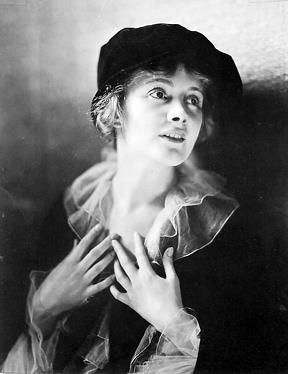
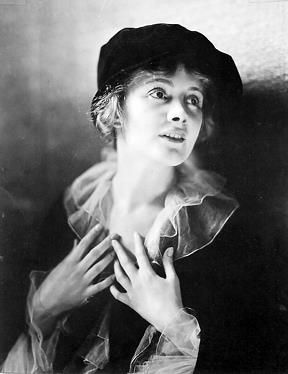
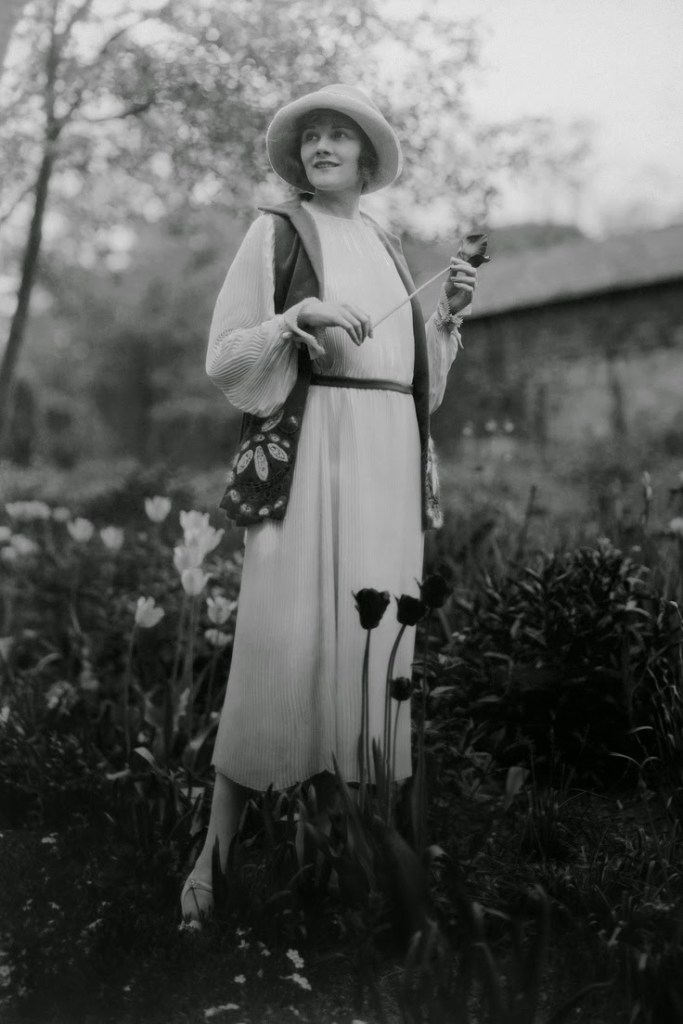
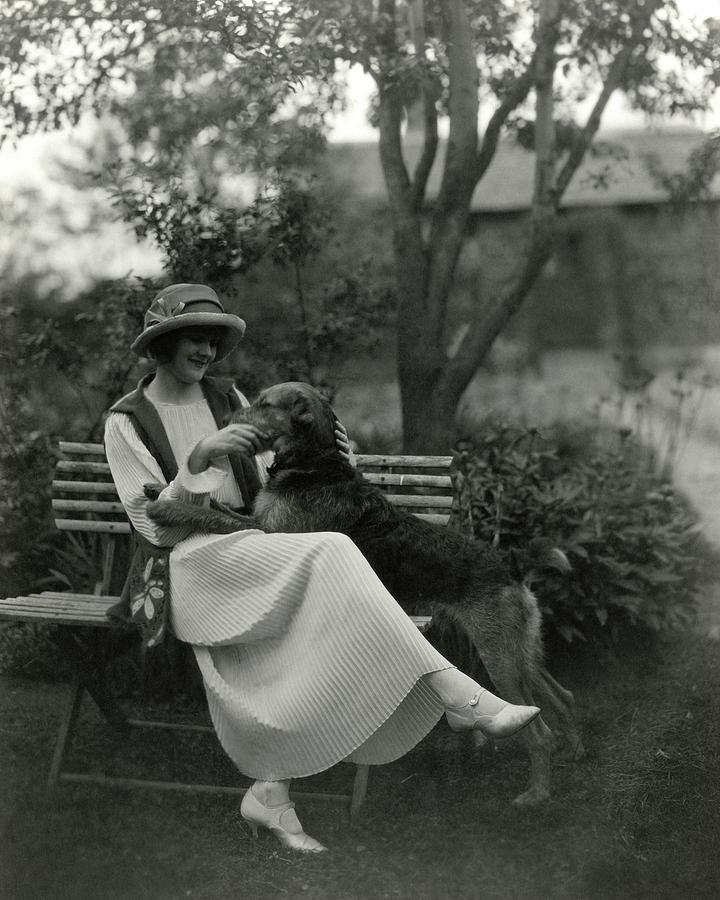
In fact, I’m convinced that these two photos below were taken in the gardens of Kringejan:
Photographs by Maurice Goldberg for Vanity Fair, c. 1925 Public Domain
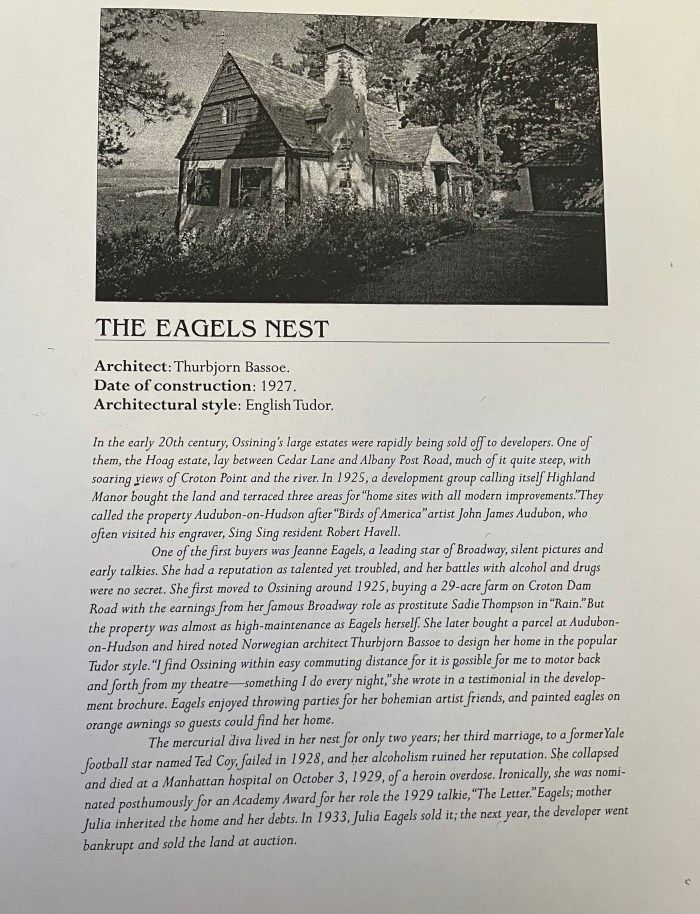
And here’s a description of her 2nd home in Ossining, on Cedar Lane Road:
Courtesy of the Ossining Historical Society
In those days, Ossining was quite the place for the gentry to land – businessmen, bankers, writers and actors were snapping up farms and transforming them into elegant country estates. According to Eric Woodard and Tara Hanks in their biography Jeanne Eagels: A Life Revealed, Eagels fell in love with the Ossining area when she was making silent films at Thanhouser Studios in New Rochelle.
Hers was the classic “lift yourself up by your bootstraps” story that America loves: the small-town girl who comes to the big city and makes good. She started by nabbing bit parts in around 1908, and by dint of hard work, talent and luck, reached the top of her profession before her untimely death at the age of 39.
1924 found her on a list with Rockefellers, Roosevelts, Guggenheims and Harrimans when the income tax payments of Manhattan’s wealthiest were made public.
But somehow, that’s not at all how she’s remembered.
She lived most of her life on that tricky front line where she was applauded for her success while at the same time condemned for it. She was raised up and then torn down time and time again. The insatiable curiosity of the press and the public transformed almost every detail of her life into something salacious.
So, let’s try to separate the fact from fiction and give this accomplished woman her due.
Jeanne Eagels was born Amelia Eugenia Eagles in Kansas City, Missouri in 1890.
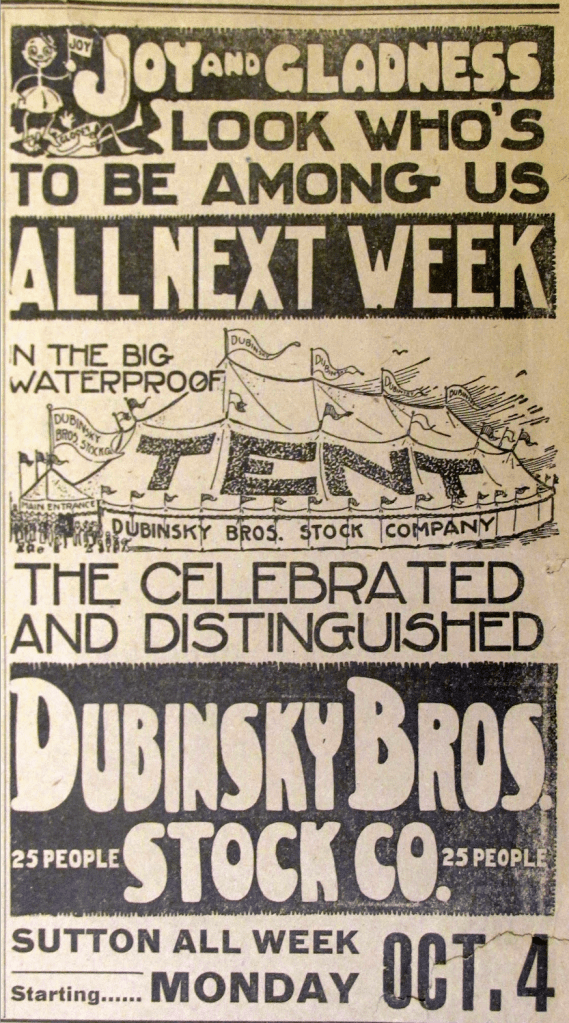
The story goes that Jean Eagles [sic] ran off with the Dubinsky Brothers Stock Company at the age of 15 (though she was really 18.) Starting off with a few small parts (and possibly by marrying one of the Dubinsky brothers) she clawed her way to the top there. At the time, stock companies were how most people living outside cities got their entertainment in the years before film and radio. And also how many actors got their starts.
These companies were constantly touring, often doing one night stands, after which the company would sleep sitting upright on chilly trains as they overnighted to the next stop. They played all sorts of venues, from legitimate theaters to church basements to tents in the nicer weather. On the rare occasion they played more than one night in a particular town, there were limitations about where they could stay because many hotels wouldn’t rent rooms to actors due to their supposedly loose morals. (And maybe because more than one had skipped out without paying.)
Sometimes they played in theaters, sometimes in tents . . .
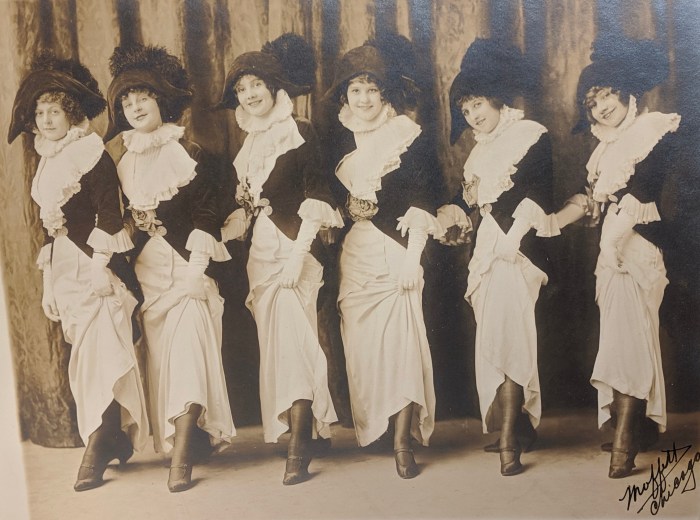
She left the Dubinsky Brothers in 1910 (and changed her name to Jeanne Eagels) to join a tour of Jumpin’ Jupiter, landing on Broadway for three weeks in March of 1911. While the show was savaged by critics, Eagels managed to land on her feet and score a job in the chorus of The Pink Lady, a Klaw & Erlanger production.
Jeanne Eagels is third from the left in this c. 1910 photograph. Courtesy of the New York Public Library – Billy Rose Theater Division
From here on, she’d continue to work steadily and for the most influential producers on Broadway, such as Charles Frohman, David Belasco, and the Shubert brothers.
Arguably, her most famous role was as Sadie Thompson in the play Rain. Whether you know it or not, I can guarantee you’ve heard of it somehow, or at least of the character of Sadie. Based on what was at the time considered a wicked and immoral story by Somerset Maugham (written in 1921), it’s about a prostitute named Sadie Thompson and the married missionary who falls in love with her as he tries to save her soul. It was provocative, controversial and just downright shocking.
Audiences couldn’t get enough of it.
Rain first premiered on Broadway in 1923. Lee Strasberg, the father of Method Acting, called her Sadie “One of the great performances of my theater-going experience . . . An inner, almost mystic flame engulfed Eagels and it seemed as if she had been brought up to some new dimension of being.”
(Fun fact: Gloria Swanson sold her Croton-on-Hudson estate to finance the 1928 silent picture version of Rain called Sadie Thompson, which she produced and starred in. Other actors connected to Rain in later films include Joan Crawford and Rita Hayworth. And, in 2016, the Old Globe Theater in San Diego premiered a musical version also called Rain. It’s a story that continues to fascinate.)
Jeanne Eagels quickly became as big a star as you could be back then. She appeared on Broadway and took her shows on the road, often selling out when she was the star. The Cleveland News ran a story about her which noted her “Lightning energy . . . Eyes snap. Voice trills. She seizes the attention.” It goes on to praise her realism and emotionalism – attributes it seems that most actresses of the time lacked.
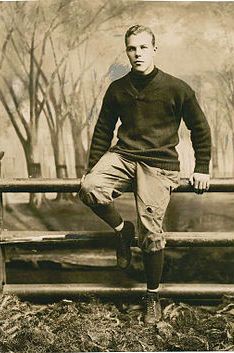
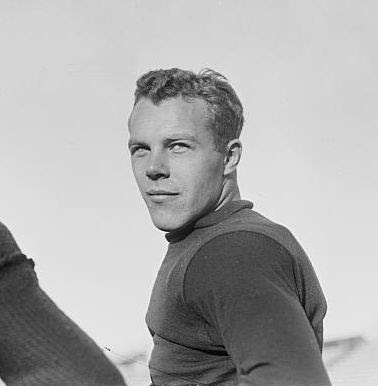
In 1925, Eagels secretly married Ted Coy, a famed Yale football player and supposedly the inspiration for F. Scott Fitzgerald’s character of Tom Buchanan in The Great Gatsby.
Ted Coy, legendary Yale football star.
But Eagels didn’t allow marriage to slow down her career. She stayed on tour with Rain until 1926, when she left to take on the role of Roxie Hart in the Maurine Dallas Watkins-penned play Chicago (in 1975, John Kander, Fred Ebb and Bob Fosse would turn it into a hit musical.) But as her star continued to ascend, her marriage with Coy became more and more volatile.
It’s at this point of her career that the legend of her temperamental nature becomes the story. Soon, the papers were running article after article about her failing marriage, health problems, mental instability and whispers of drug addictions. Ultimately, they got the better of her, and she quit Chicago.
After spending a few months in Ossining recuperating and trying to repair her marriage, she signed on to star in the play Her Cardboard Lover opposite a young Leslie Howard. Directed by an early-in-his-career George Cukor, and with a script doctored by P.G. Wodehouse, it seemed destined for success. Alas, Eagels’ reviews paled next to Leslie Howard’s.
Thus began a series of missed performances and general incidences of unprofessional behavior.
Here’s an excerpt from an article in the Milwaukee Sentinel from May 6, 1928, during the tour of Her Cardboard Lover:
Miss Eagel’s eccentricities are of long standing. Before each performance, the company and management wait anxiously to see if she will appear at all. When she does, nobody knows what she will do on the stage, and the stage manager stands ready to ring down the curtain in case of trouble.
The article goes on to describe how she simply disappeared when the show moved from Chicago to Milwaukee:
Days passed, the theatre remained dark, the company idle, the management began to tear its hair, already made gray by the erratic star. Towards the end of the week, the lady of mystery turned up with the simple explanation that “She hadn’t been feeling well.” It was too late to do anything in Milwaukee, but there was a fine advance in St. Louis. So the manager bought flowers for the star and the company took turns petting and pitying her and asking no questions.
But the newly formed Actors’ Equity Association (of which Eagels, along with her New Castle neighbor Holbrook Blinn, had been unsupportive and initially refused to join) brought her up on charges for her behavior, levied a $3,600 fine equal to two weeks’ salary (or $48,000 in 2025 dollars) and banned her from appearing on the Broadway stage for a year.
In response, Eagels just went off and made films because she could. She had made some silent movies before her stage career took off, and film producers had never stopped clamoring for her.
However, her personal demons were taking over, and after missing two weeks of shooting, she was fired from MGM’s Man, Woman and Sin, a silent film in which she was co-starring with John Gilbert. (Since she’s in the final cut, it seems like most of her scenes had been shot.) It’s also around this time the gossip columns start calling her “Gin Eagels” because she was known to drink hot gin “prescribed by her doctor to relieve persistent neuralgia.” (Let’s not forget, this is all during Prohibition.)
For the last year of her life, most of her press mentions concern her health (many hospitalizations), her divorce (in lurid detail), and her films. And, of course her tragic death.
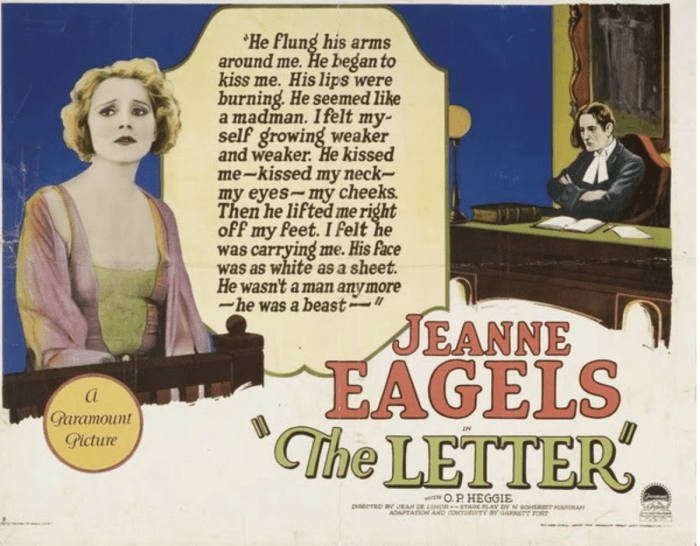
Her last project was a 1928 film called The Letter. It’s her only talkie, and she was posthumously nominated for a Best Actress Oscar Award for her performance (it went to Mary Pickford instead.)
Here’s a link to a scene. She does not look like she is at her best here.
Sadly, the story that’s mostly remembered is the tragedy of her early death, and her erratic behavior. This was helped along by a titillating biography written in 1930 by a muckraking Chicago reporter, Edward Doherty. Called The Rain Girl: The Tragic Story of Jeanne Eagels, her death was attributed to heroin addiction and alcoholism.
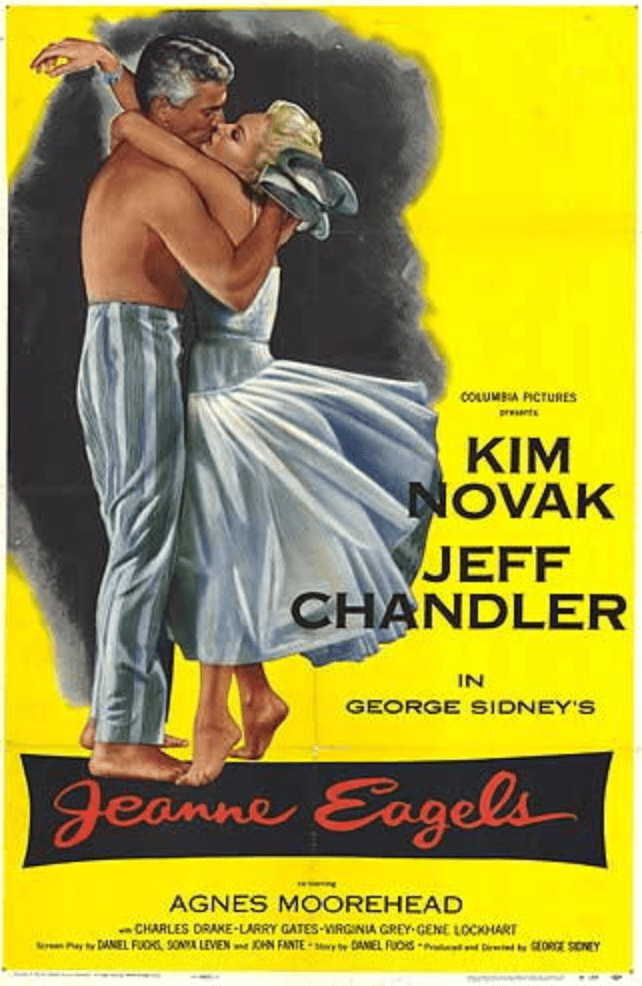
Eagels’ story was still bankable in 1957 when Columbia Pictures produced a highly fabricated biopic based on the Doherty book, starring Kim Novak:
Even the New York Times was not immune to capitalizing on her death. Her 1929 obituary made sure to remind everyone of her volatility and instability. It even took the time to follow up on her cause of death, publishing an article several days later that quoted the City Toxicologist’s finding that she “died from an overdose of chloral hydrate, a nerve sedative and soporific.”
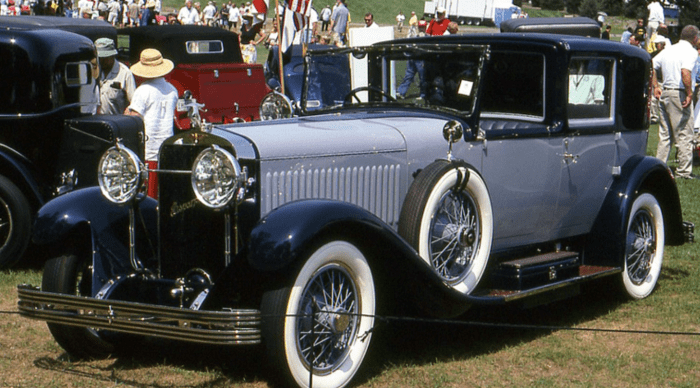
The Times would go on to cover her funeral, burial and the settlement of her estate, noting that it totaled over $88,000 (that’s $1.1 million today) and consisted of her Ossining home, nearly $12,000 in jewelry and furs, and a rare Hispano-Suiza autocar.
A 1927 Hispano-Suiza motorcar. Imagine living in Ossining when cars like that were on the road! Today such cars can sell for up to $450,000
Clearly she was troubled and likely an addict of some kind, and I’m not trying to be an apologist here for the unprofessional behavior reported by the press at the time. The fact of the matter is that she was a remarkably successful actress, and producers kept hiring her because she sold tickets and made money for them. Looking at her films today, it might be hard to see the appeal, but back then, she was the cat’s meow.








 Ossining History on the Run