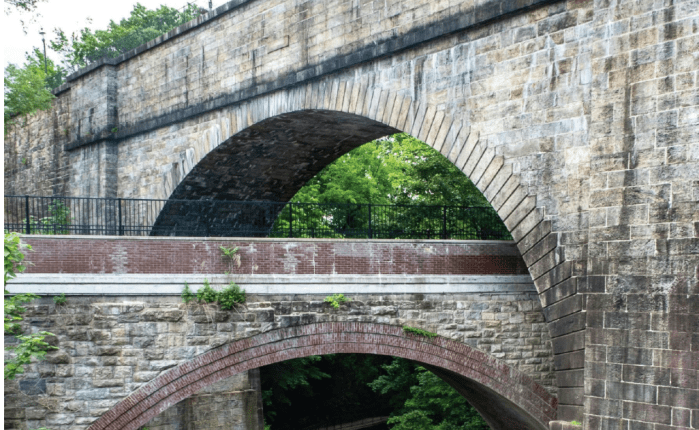
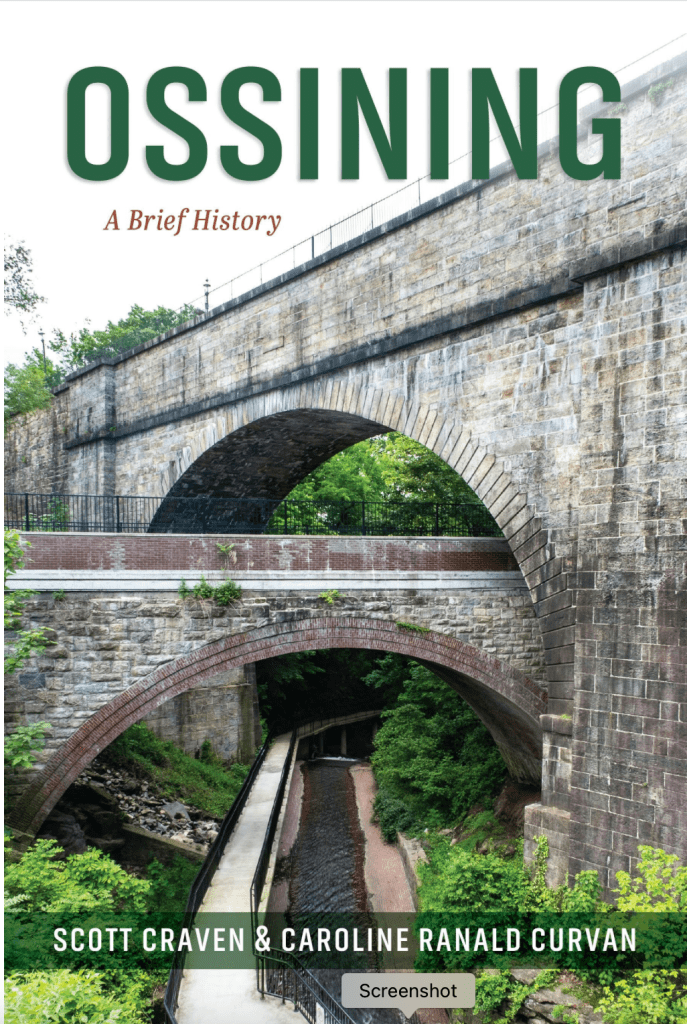
It’s almost here! Our new book, Ossining: A Brief History, will be released on February 10, 2026. Here’s a sneak peek at the cover — what do you think?
Check out the publisher’s website here to pre-order, or visit your favorite brick and mortar bookshop after its release.
We’ll be doing an official book launch at the Ossining Public Library on Saturday, February 21, 2026 at 2pm — watch this space for more info on that and other events coming your way soon!
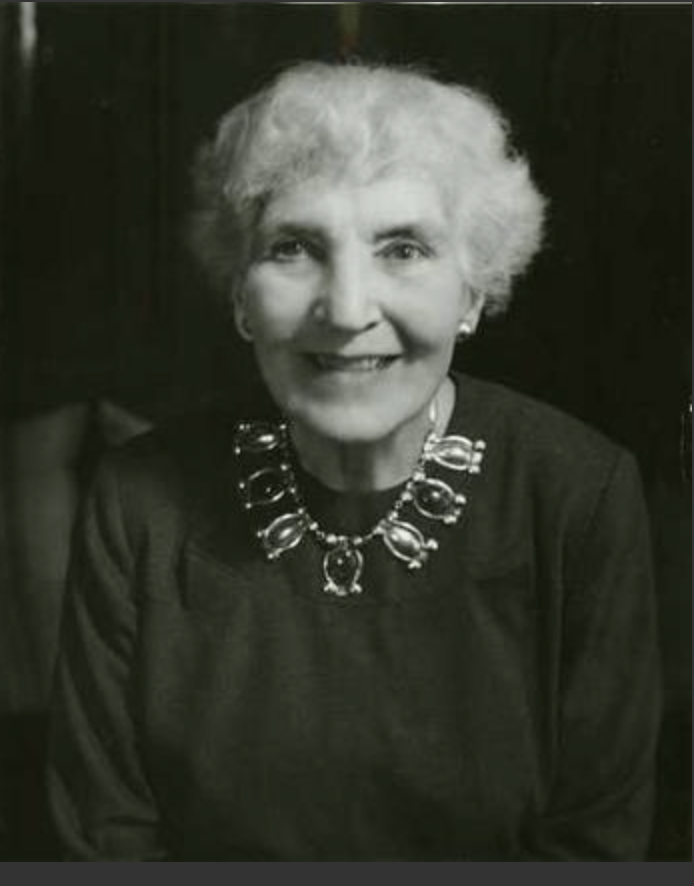
Dr. Ruth Murray Underhill Courtesy Denver Museum Nature and Science Center
Dr. Ruth Murray Underhill 1883 – 1984
Red Cross Volunteer WWI Anthropologist Author Professor Television/Radio Host ***Local Connection: Linden Avenue***
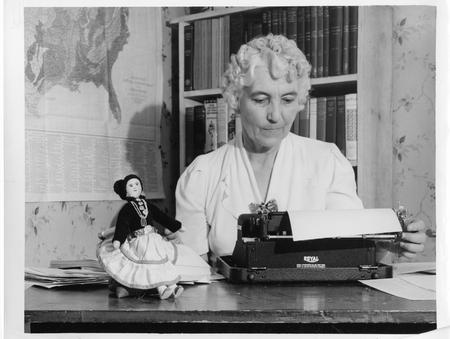
Ruth Murray Underhill was an anthropologist known for her work with Native Americans of the Southwest. She was also a social worker, a writer, a Supervisor at the Bureau of Indian Affairs, a professor, and a local television/radio host. Multi-lingual, Underhill spoke several Western languages, including O’odham and Navajo.
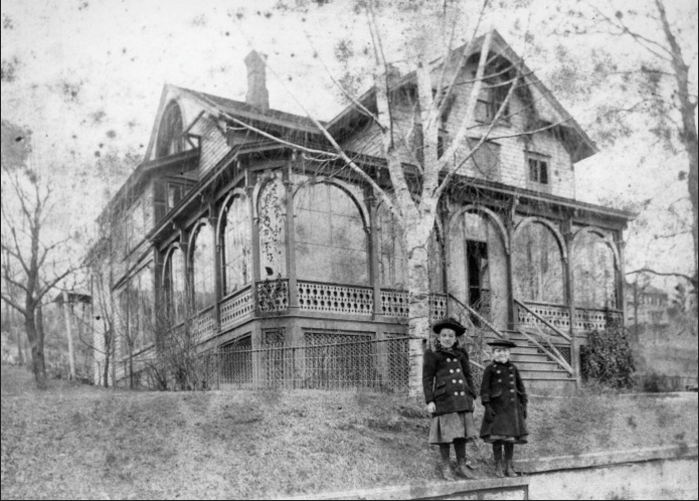
Underhill was born in Ossining in 1883. She grew up on Linden Avenue in the rambling Victorian home built by her father in about 1878. (The building still stands today.)
Ruth Murray Underhill and sister Margaret in front of the family home on Linden Avenue c. 1890 Courtesy of the Denver Museum of Nature & Science
The daughter of Abram S. Underhill and Anna Murray Underhill, her pedigree stretches back to one of the earliest European settlers of this country – Captain John Underhill, who arrived in 1632. And, according to a 1934 article in the Democratic Register, going even further back, the Underhills were related to a William Underhill of Stratford-upon-Avon who reportedly sold William Shakespeare his home. (It is impossible to ignore the irony that this woman, who spent much of her adult life studying and recording the language and culture of Native Americans, was directly related to Captain John Underhill, a man infamous for his brutal tactics against the Native Americans in the 1600s. He led several bloody massacres and murdered hundreds (if not thousands) of Lenape during the Dutch era in New York State.)
Ruth Underhill attended the Ossining School for Girls (located just across the street from today’s Ossining Public Library):
She would go on to study at Vassar College, graduating in 1905.
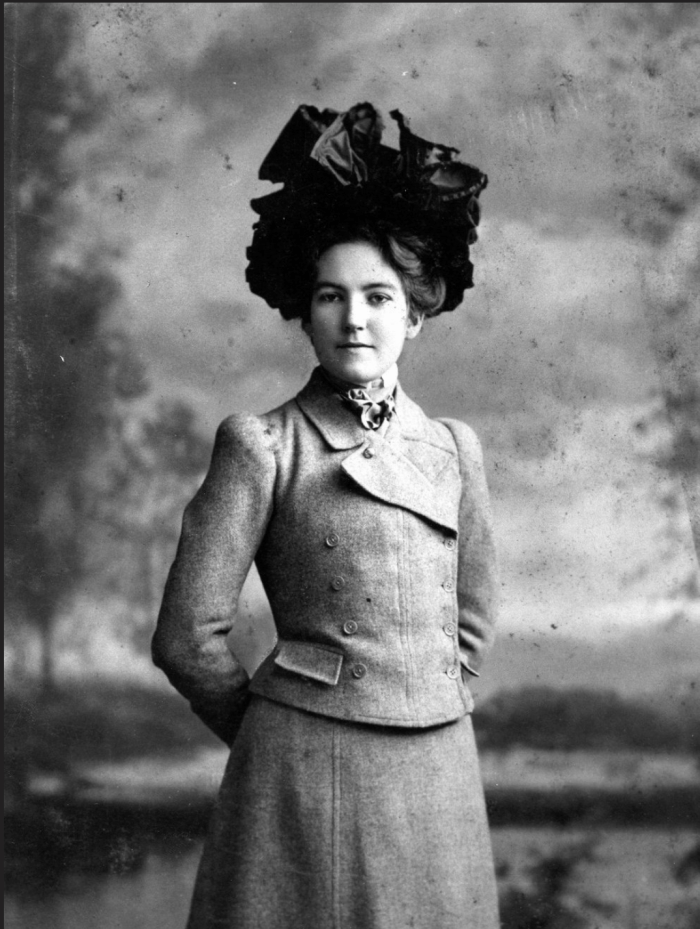
Ruth Murray Underhill, c. 1900 Courtesy of the Denver Museum of Nature & Science
But, as she wrote in her memoir An Anthropologist’s Arrival:
“I did not start with a career and a goal in mind, not even the goal of marriage – for nice girls did not know whether they would be asked or not. I pushed out blindly like a mole burrowing from instinct. My burrowings took me to strange places and now in my last hole I am trying to remember how I bumbled and tumbled from one spot to another. This is the story for those friends who wondered how I could even have started the bumbling, for many girls of my era did not.”
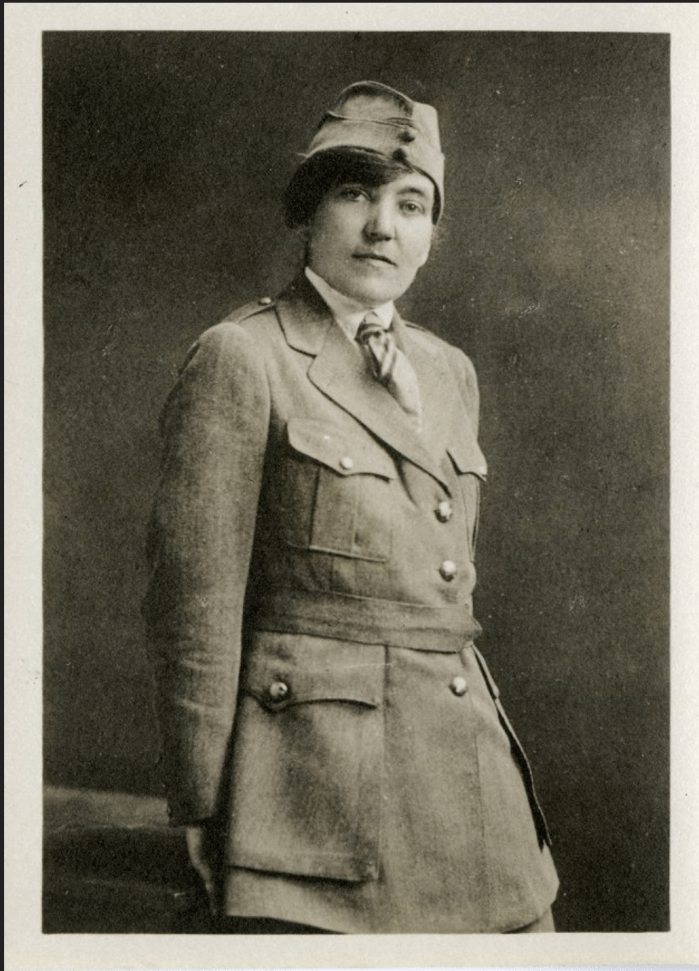
She spent the next decade searching for her calling – briefly serving as a social worker first in Massachusetts, then in New York City, then traveling around Europe with her family. When World War I broke out, she volunteered for the Red Cross, organizing orphanages for the children of Italian soldiers killed in battle.
Ruth Murray Underhill in Red Cross Uniform, c. 1917 Courtesy of the Denver Museum of Nature & Science
In 1919 she married Charles Crawford, but she described it as a loveless marriage on both sides that would end in divorce a decade later.
At age 46, Underhill went back to school, enrolling in a graduate program at Columbia University.
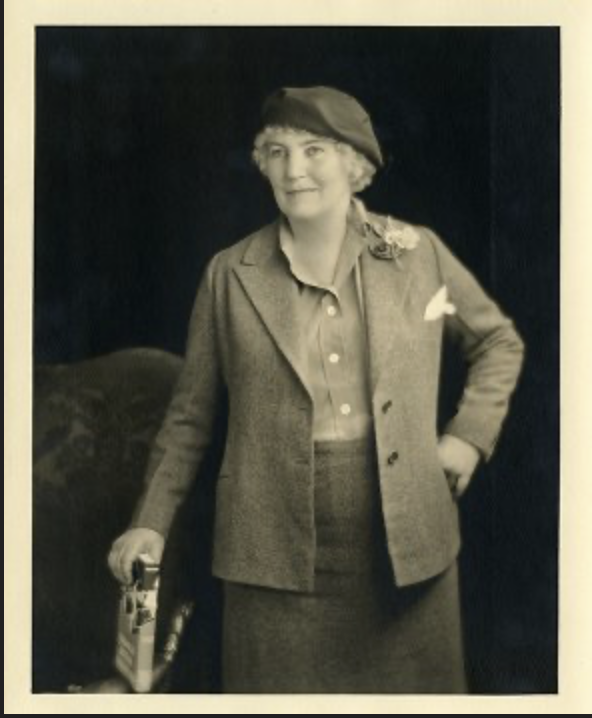
Ruth Murray Underhill c. 1930s
In her memoirs, Underhill tells the story about how she ended up studying anthropology:
“I am no longer quite sure which departments I visited before anthropology. I think they were sociology, philosophy, and economics. What I said to them in substance was: ‘I find that social work is not doing what I thought it did. I wonder if what you teach would really help me to understand these people. I want to understand the human race. How did it get into the state it is in?’
Upon asking this question of Dr. Ruth Benedict, a well-respected professor in the anthropology department, she found her answer: “You want to know about the human race? . . . Well, come here. That is what we teach.”
At the time, the chairman of Columbia’s anthropology department was Dr. Franz Boas, considered by many to be the “father of modern anthropology.” He seems to have been unusually encouraging towards female students – Margaret Mead and Zora Neale Hurston, among others, who studied with him. Both Boas and Benedict would encourage Underhill to pursue a PhD. [Fun Fact: Dr. Boas is buried in Ossining’s Dale Cemetery.]
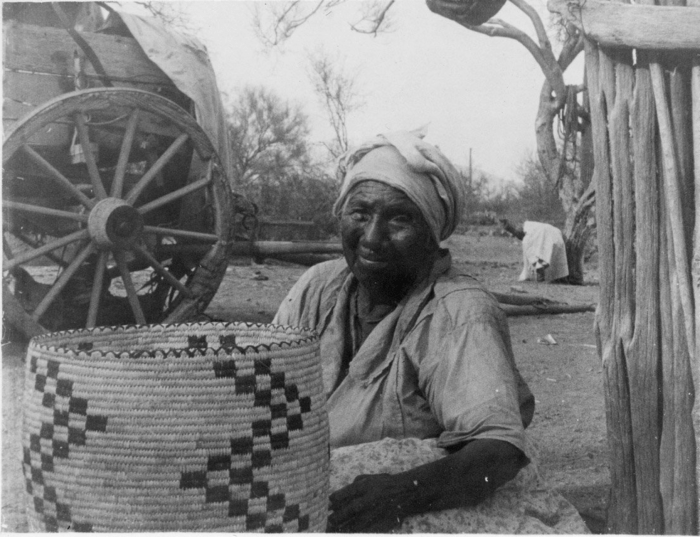
In 1936, Boas financed field work for Underhill to go to Arizona to study the Papago (today known as the Tohono O’odham.) Out of this work came Underhill’s doctoral thesis “Social Organization of the Papago Indians” and the first published autobiography of a Native American woman, Autobiography of a Papago Woman. Living with and studying the Papago in southern Arizona for several years, she became close to Maria Chona, an elder and leader of her tribe.
Maria Chona, Elder of the Papago (Tohono O’odham) c. 1936 Courtesy of the Denver Museum of Nature & Science
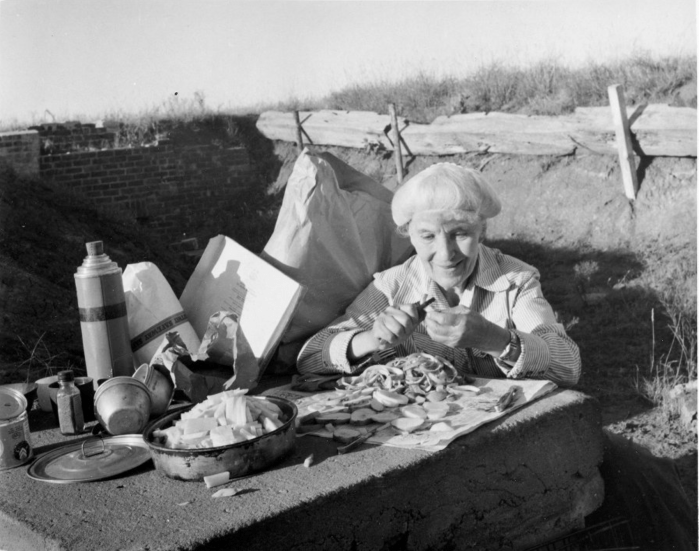
Dr. Underhill peeling potatoes at her campsite in Arizona, c. 1936 Courtesy of the Denver Museum of Nature & Science
In her book, Underhill documented the rites, ceremonies and history of Chona and her tribe. Underhill even wrote about the rituals surrounding menstruation, which must have been deeply shocking for her readership at that time.
Underhill received her doctorate in 1937 and began studying Navajo culture.
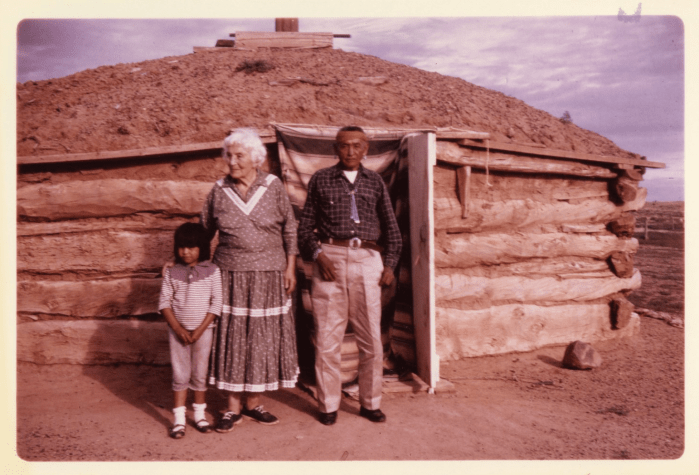
Dr. Underhill with members of the Navajo nation, c. 1940s Courtesy of the Denver Museum of Nature & Science
From there, she went on to work for the Bureau of Indian Affairs, becoming Supervisor of Indian Education and helping develop curricula for Native American reservation schools.
In 1948 Underhill became a Professor of Anthropology at the University of Denver, but “found the students languid.”
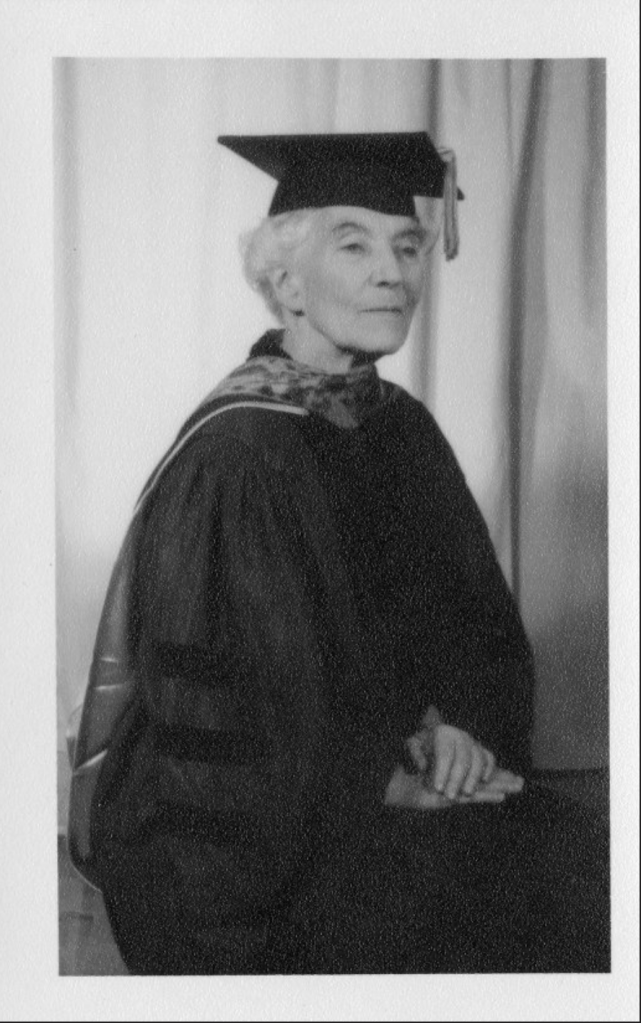
Dr. Underhill in cap & gown for a University of Denver Commencement, c. 1950 Courtesy of the Denver Museum of Nature & Science
She would retire from the University just five years later and travel the world solo.
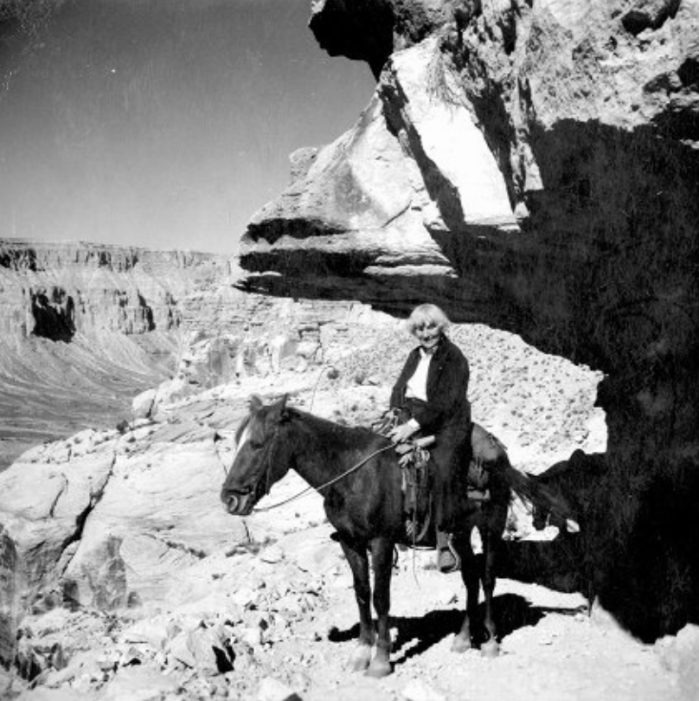
Dr. Underhill at the Rainbow Bridge in Arizona, c. 1950 Courtesy of the Denver Museum of Nature & Science
Upon returning home, she would write what is considered her seminal work, Red Man’s America – a textbook on Native American cultures and histories.
Dr. Underhill c. 1950s Courtesy of the Denver Museum of Nature & Science
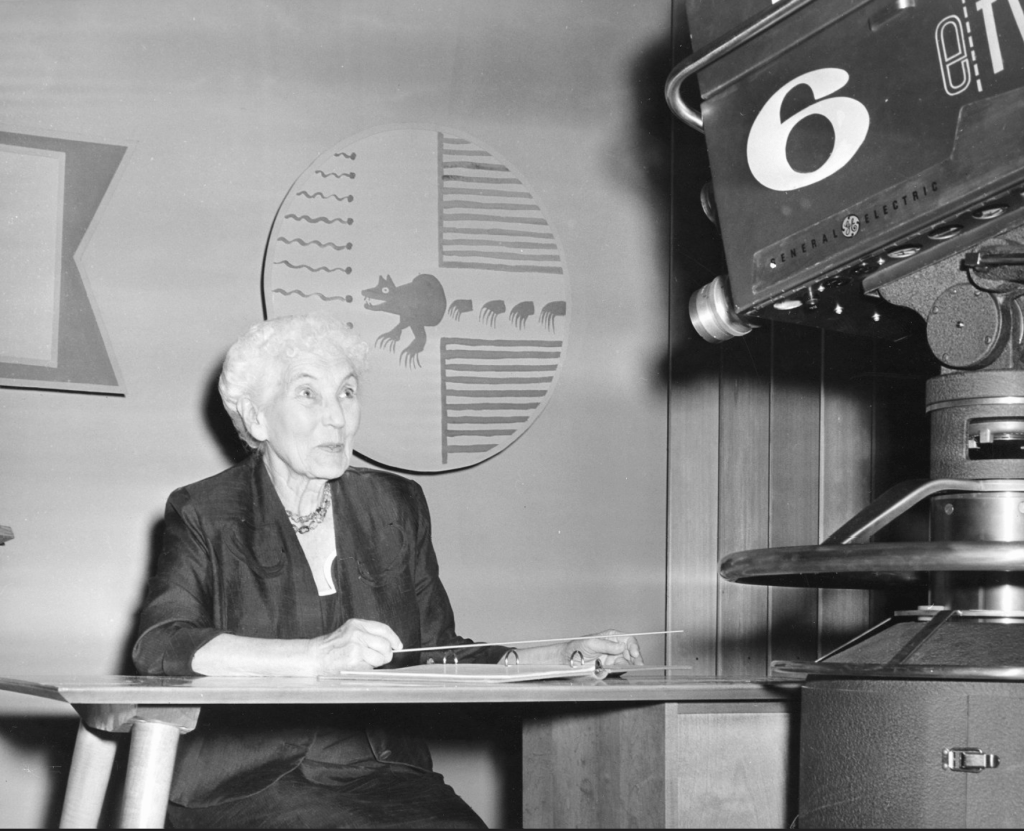
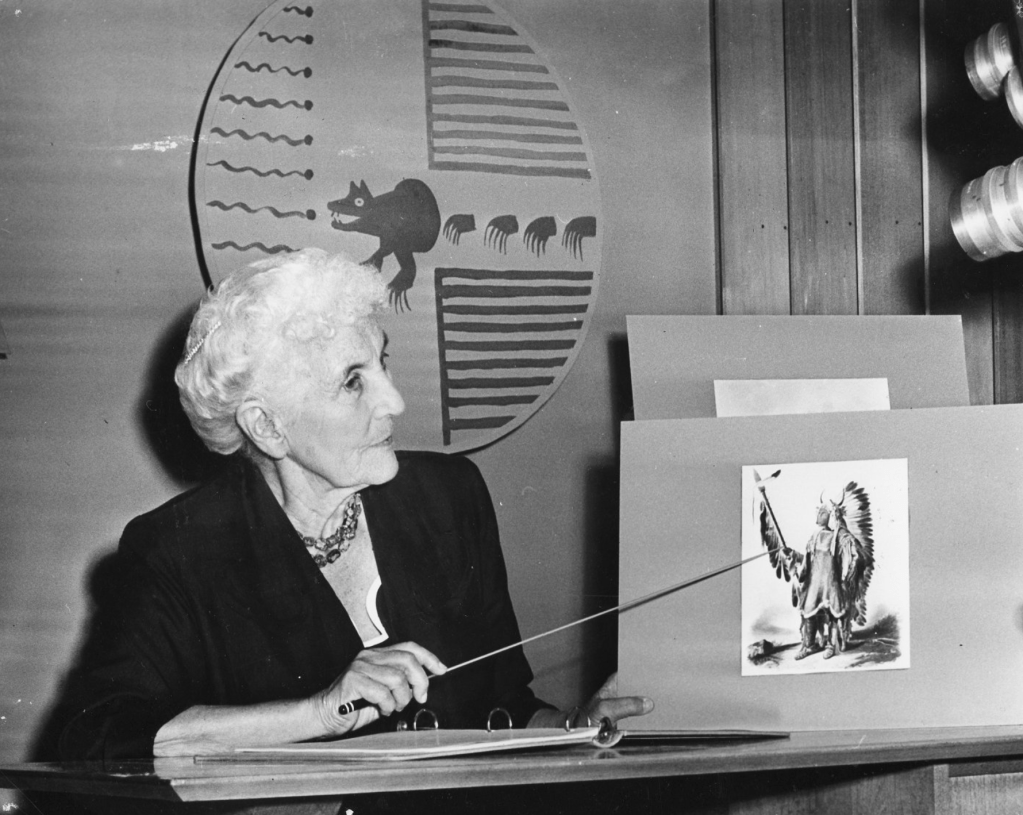
On the strength of that, she was asked to host a public television program of the same name that ran from 1957 – 1962.
Dr. Ruth Murray Underhill on TV c. 1957 Filming “Red Man’s America” for KRMA-TV channel 6, an educational TV station owned and operated by the Denver Public Schools. Courtesy of the Denver Museum of Nature & Science
Underhill would stay in contact with the members of the Papago and in 1979, they honored her with the following:
“It was through your works on the Papago people that many of our young Papagos, in search of themselves, their past, their spirit have recaptured part of their identities. Your works will continue to reinforce the true identity of many more young people as well as the old. It is with this in mind that we wish to express our deep sense of appreciation.”
So, if you know me at all or have attended any of my recent presentations, you’ll know I’ve become obsessed with the Agate family of artists who lived in the hamlet of Sparta in the 1800s. (Today Sparta is part of Ossining, NY.)
Today, I had the privilege of cleaning Harriet Agate Carmichael’s gravestone with the Ossining Historic Cemeteries Conservancy. It was the last cleaning event of the year and an absolutely gorgeous day for it.
Now, who are the Agate family of artists and why should you care?
Well, first, I think it’s all sorts of important to know about people who lived in your very town and contributed to the world in a meaningful and positive way (even if they lived decades, even centuries before you).
So, follow me down a rabbit hole that will take you to the farthest corners of the earth and to the beginnings of an American school of art.
Frederick (1803 – 1844) was a talented oil painter who helped found and run one of America’s first art schools, the National Academy of Design (NAD). He also likely taught his younger siblings Alfred and Harriet to paint. He would die young from tuberculosis and be buried in Sparta cemetery next to his sister Harriet (though his gravestone is currently missing.)
And here’s one of Frederick’s more famous paintings — a portrait of actor Edwin Forrest in the role of Chief Metamora from the John Augustus Stone play “The Last of the Wampanoags”:
Edwin Forrest in the Role of Metamora, c. 1832 Courtesy of the Smithsonian National Portrait Gallery
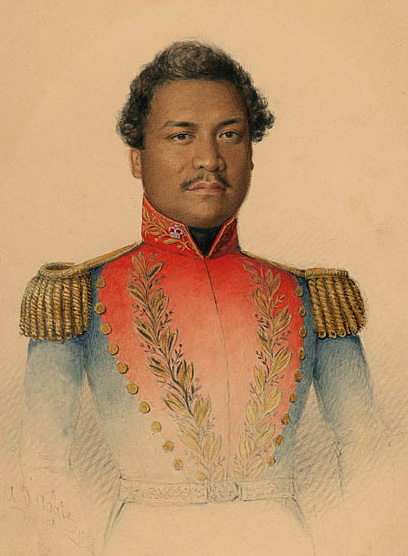
Alfred (1812 – 1846) would go on to study at NAD and exhibit paintings at their annual art show. He became a successful miniaturist and portrait painter before taking on what is arguably his most important role, that of illustrator on the US Exploring Expedition of 1838 – 1842 – one of the most ambitious and largest scientific expeditions of exploration that you‘ve never heard of.
King Kamehameha III of Hawaii by Alfred Agate c. 1840 Courtesy of the Naval History and Heritage Command
And our Harriet (1817 – 1871) would also study at the National Academy of Design. In 1833, she would be one of the first women to show a painting at the Academy’s annual Art Exhibition. That painting was called “View of Sleepy Hollow,” and Historic Hudson Valley just happens to have a painting of the same name from about the same time, although they note that the painter is unknown.
View of Sleepy Hollow Courtesy of Historic Hudson Valley
Could this possibly be by Harriet? Watch this space – I’m going to research this as far as I can!
We have only two other paintings by Harriet – likely from about the same time and likely from her days as a student.
Still Life by Harriet Agate Courtesy of the Ossining Historical Society and Museum
Greek Scene at the Monument of Lysicrates by Harriet Agate Courtesy of the Newark Art Museum
In about 1839 Harriet would marry Thomas J. Carmichael, a contractor for the Ossining portion of the Croton Aqueduct.
You’ve probably seen this aqueduct ventilator on Spring Street, near Park School. That’s Harriet’s husband!
They settled in Ossining, in the Agate family house at 2 Liberty Street:
2 Liberty Street, still standing in 2023!
Harriet would have several children then move to Wisconsin with her husband in 1846 to live on a farm. Sadly, Thomas would die there soon after they moved, in 1848, and after settling his estate, Harriet would move back to Sparta where she probably lived with her mother Hannah at 2 Liberty and then with her daughter Melodia Frederica Carmichael Foster in Brooklyn.
Harriet would die in 1871 in Brooklyn (at her daughter’s house) and, as we know, is buried in Sparta cemetery.
Her paintings and many of her brothers’ would be carefully kept in various family attics until 1959 when Harriet’s great grand-daughter, Melodia Carmichael Wood Ferguson, would discover them and donate them to the Ossining Historical Society. Some were in turn donated to the New York Historical Society and the Newark Art Museum. If you reach out to both places very nicely, they might permit you to view the paintings (which are not on display but are safely stored away. I did and they did!)
Here’s what her headstone looked like after the cleaning:
Grateful to the efforts of the Ossining Historic Cemeteries Conservancy for the opportunity to spend some time with Mrs. Harriet Ann Agate Carmichael today.
Yesterday I spent an absolutely delightful morning surrounded by Ossining history . . . in Dale Cemetery cleaning headstones.
If you’re reading this blog, I’m assuming you have some interest in the past. Along with that often comes a fascination with cemeteries. (Well, it does for me!)
My family will tell you that I’ve forced them to wander through cemeteries all over the Western world. (Don’t get me started on the summer we drove through the Somme in France.)
But you can learn so much about a culture and about its history from reading gravestones.
One of the things that always shocks me is the number of children and babies one finds in old cemeteries. You’ll see the headstones of the parents and surrounding them, the tiny headstones of 2, 3, 4, 5 children who didn’t make it past infancy. So so many babies. And then there are the 5, 6, 7-year- olds as well. It’s gutting, really, when you think about it.
And I had a lot of time to think about it today as I was working on this gravestone:
But wait, first I should tell you a little about why I was in Dale Cemetery in the first place.
There’s a marvelous local organization called the Ossining Historic Cemeteries Conservancy whose mission is to help preserve Dale and Sparta cemeteries. Active for about a decade, it’s spearheaded by a group of dedicated and capable folks who have done their research, learned the best practices for cleaning old headstones, are super organized, and very, very friendly.
Once a month, from about May through October, they choose a section of either Dale or Sparta cemetery, set up all their equipment and welcome volunteers to help scrub the lichen and dirt off old headstones. They keep excellent records and take the time to look up the people under the stones, sharing their stories on Facebook and in a monthly newsletter.
Today, they were set up in Section 3 of Dale Cemetery and I had the privilege of cleaning the headstone above. The OHCC has it down to a science and they provide all the tools you need, plus instruction.
First, you gently scrape off whatever you can from the dry headstone using a plastic scraper. Then you use a manual pump sprayer filled with water to wet everything down and scrape off more. After that, in comes the plastic dish brush to scrub some more, all the while rinsing with the sprayer.
There are toothbrushes and wooden sticks to get right into the crevices.
Finally a gentle cleaner is sprayed on and after a few minutes, scrubbed off. A few more rinses and voila!
It’s wonderfully meditative and zen – you can indulge your inner obsessive compulsive and just gently scrub and pick and scrape. It’s also oddly restorative, concentrating on just one thing, cleaning away decades, sometimes centuries, of soot and grime and lichen. And there is such a sense of accomplishment at the end, because no matter what, the stone you’re working on looks better than it did when you started.
Plus, you’re engaging with the place in a deeply historic way. Dale Cemetery was founded at a time when cemeteries were more than just places to bury the dead. They were often elegantly landscaped, with an eye towards creating serene and bucolic views. Families would picnic among the graves of their loved ones in the almost parklike atmosphere. According the OHCC website, in the October 8, 1851 speech given at its dedication, Dale Cemetery was described as”one of the most beautiful and appropriate rural cemeteries of the State.”
And so it is. The day I was there, the weather was perfect, the trees were lush and shady, and the company was affable and pleasant. As you work, and the details of the stone become clear, you can’t help wondering about the person beneath.
In my case, I was cleaning the headstone of a three-year -old.
Three. Years. Old.
Oh, Barbara Ann, what happened to you? And where are your parents? Barbara Ann’s stone is solitary, with no obvious relatives of any sort nearby. There are a couple of other tombs within a few feet, but datewise, they don’t seem connected. I’m hoping that a review of the Dale Cemetery files will help clear up this mystery, but in the meantime I’m left with the thought of poor little Barbara Ann, who died at the beginning of the Depression, sleeping anonymous and alone for eternity.
Of course, I can’t help making up a story. What did she die of? Alas, there are so many things to choose from in those days before vaccines and antibiotics: measles, mumps, rubella, rheumatic fever, scarlet fever, chicken pox, polio, whooping cough, diphtheria, pneumonia, tetanus. While we don’t think of these illnesses as death sentences today, they took many children back then and if they didn’t kill them, often left them with lifelong disabilities. Mumps could cause sterility, polio could paralyze, rheumatic fever could leave cardiac issues. The list goes on . . .
Little Barbara Ann suffered the worst fate of all, and has lain alone and obscured for years. Thanks to the OHCC, today her stone is clean and her story will soon be told. (And I’ll be sure to update this post when that happens.)
Next OHCC event is on Saturday, September 9, 2023 at Sparta Cemetery.






 Ossining History on the Run