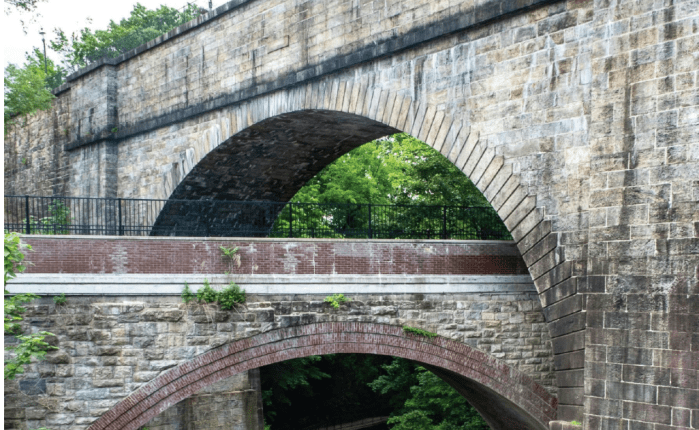
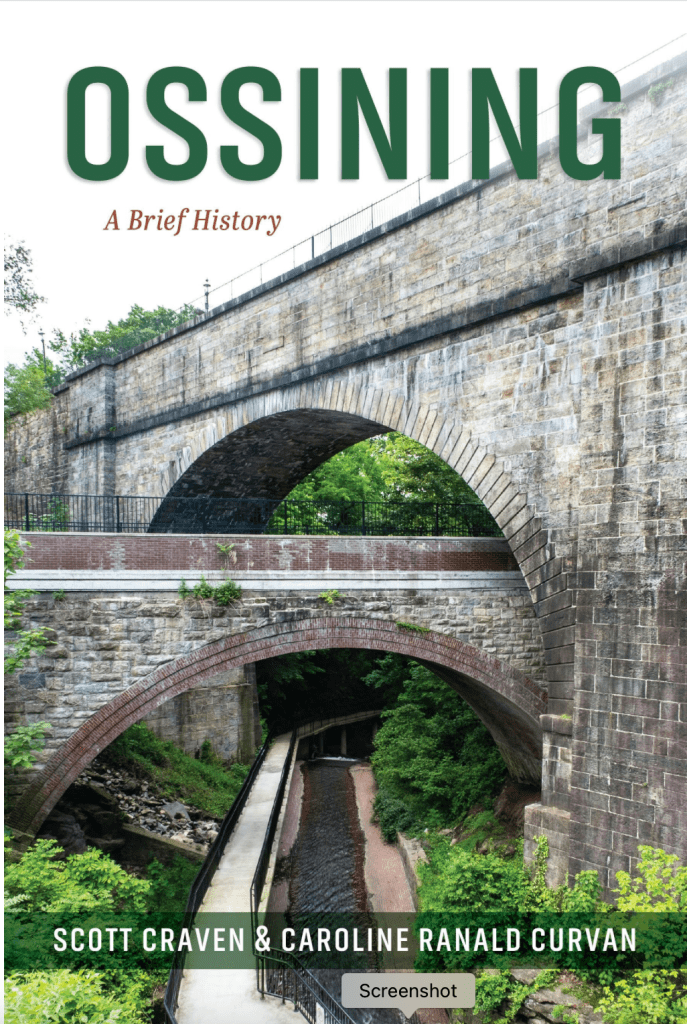
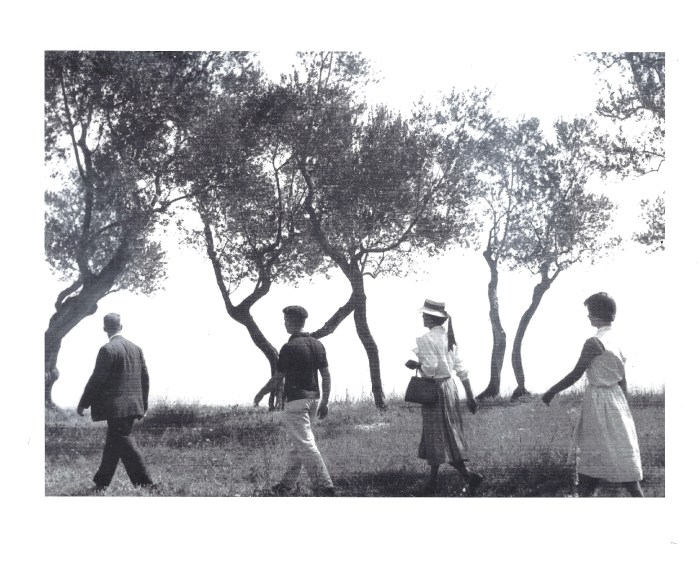
It’s almost here! Our new book, Ossining: A Brief History, will be released on February 10, 2026. Here’s a sneak peek at the cover — what do you think?
Check out the publisher’s website here to pre-order, or visit your favorite brick and mortar bookshop after its release.
We’ll be doing an official book launch at the Ossining Public Library on Saturday, February 21, 2026 at 2pm — watch this space for more info on that and other events coming your way soon!
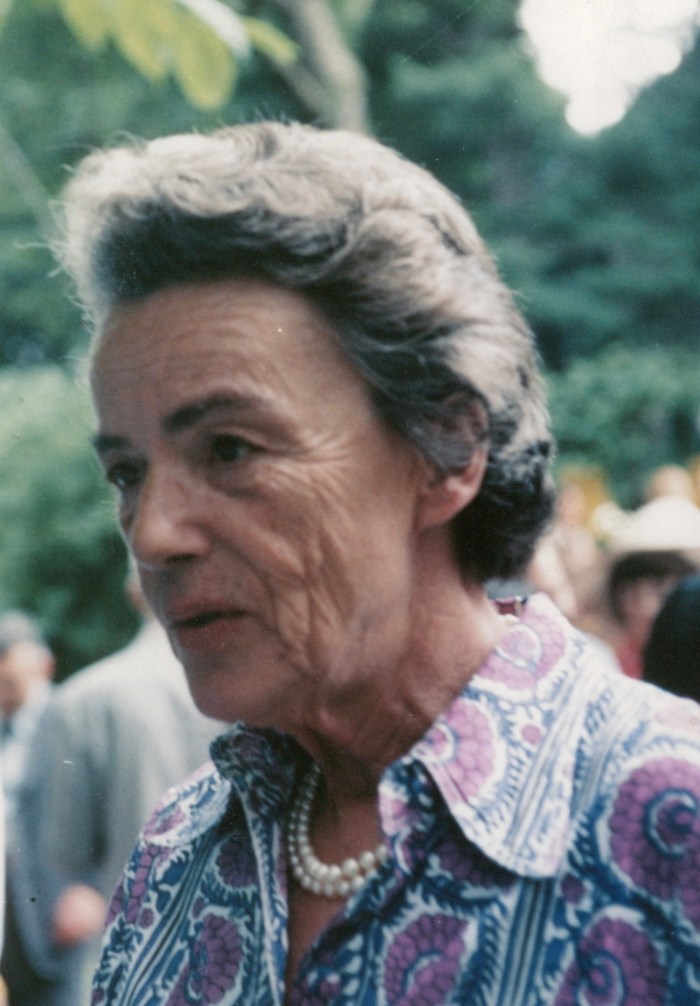
Sarah “Sally” Swope c. 1980s Courtesy of Dorry Swope
Sarah “Sally” Swope 1912 – 1999
Philanthropist Board Member Volunteer ***Local connection: Hawkes Avenue***
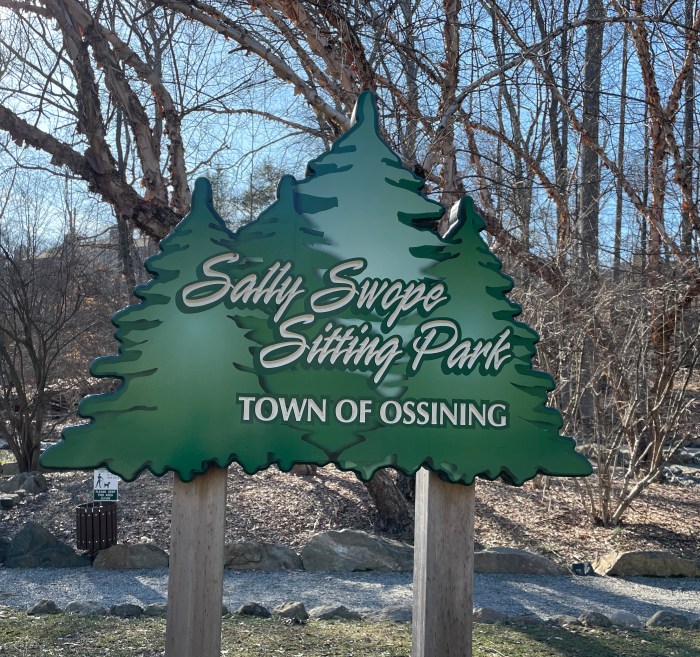
Perhaps you’ve driven along Hawkes Avenue to the very outskirts of the Town and noticed this sign for the Sally Swope Sitting Park:
Who, you might then wonder, is Sally Swope? And why does she have a park named after her?
Well, she is most definitely one of those women who very quietly Got Things Done. In fact, one person interviewed commented that she was “practically allergic to being recognized for her good deeds.”
But from the 1970s until her death in 1999, Sally was a discreet force as a philanthropist and board member for, among other organizations, the Ossining Children’s Center, Westchester Community College, the Scarborough (and later Clearview) School, and Teatown Lake Reservation.
From those I’ve spoken to, she was curious, interested in people, and approachable. “Cultured”, “upper crust”, and “strong-willed” are also words that come up often in connection with her.
Sarah Porter Hunsaker was born in Brookline, Massachusetts in October 1912.
She attended the exclusive Miss Porter’s School (Miss Porter was a great-aunt of hers) and go on to study at Sarah Lawrence and Radcliffe Colleges. After college, she traveled the world and came home to work at the Boston Museum of Fine Arts.
In 1937, she married David Swope, a son of General Electric president Gerard Swope (and brother to the astronomer Henrietta Hill Swope.) While Sally stayed close to home in those early years as she raised her son David, Jr., and daughter Dorry, she was still active in the social sphere of Ossining.
The Swope Family David Sr., David Jr., Sally & Dorry c. 1965 Courtesy of Dorry Swope
Gradually she began extending her reach, focusing on charities that spoke to her interests – primarily children, education, and the environment. She was especially dedicated to the idea that childcare should be more than babysitting – a policy that had just been enacted at the Federal level through the Head Start programs of the 1960s. And she wanted to make sure that the Ossining’s Children’s Center was as diverse as Ossining, believing that to change society, one had to start with the youngest and most vulnerable.
She would join boards, fundraise, and be a hands-on presence. She did whatever she felt needed to be done: answering phones at the Ossining Children’s Center on occasion, serving ice pops to OCC kids who were regularly bussed across town to swim in her pool high atop Hawkes Avenue, and strategizing about the best ways to approach people for donations.
Her motto seemed to be “If you want it badly enough, you can make it happen.” And indeed, in no small part due to her contributions, the organizations with which she was involved flourished and continue to thrive decades later.
Her work extended far beyond just writing checks and attending galas – she served on boards and led committees, organizing, encouraging, and motivating her fellow volunteers. She regularly opened her house and gardens to children from the various groups in which she was involved.
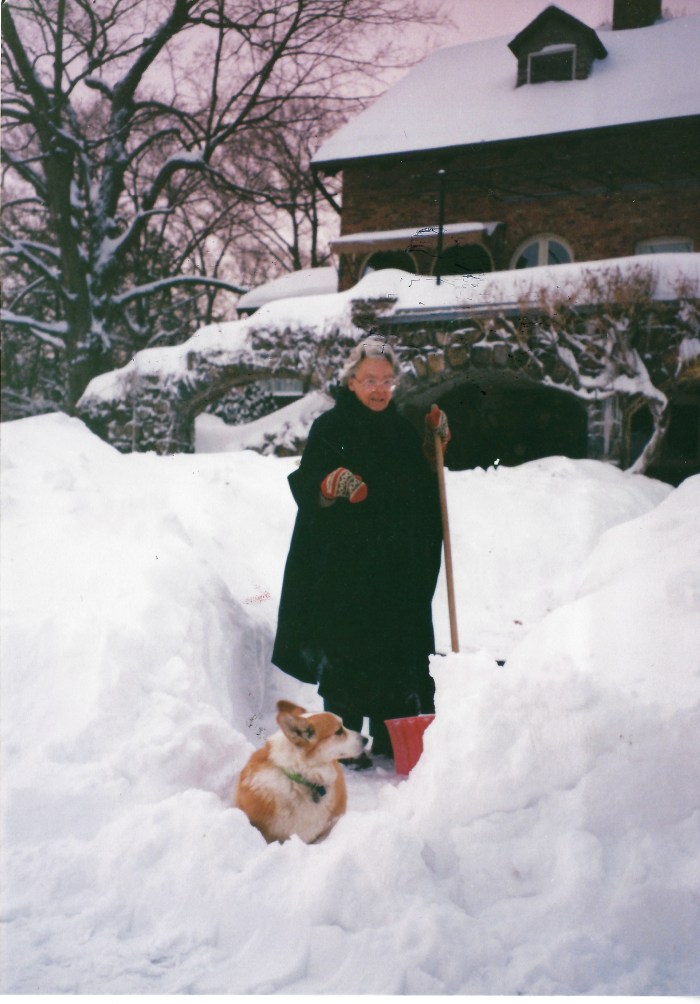
Sally Swope with Daisy c. 1990s Courtesy of Dorry Swope
And at her death, she was learning Italian. Always seeking, always learning . . .
In 2002, son David Swope, Jr., donated a parcel of land to the Town of Ossining in memory of his mother. Renovated and updated in 2024, the Sally Swope Sitting Park provides open space and meditative trails. Like its namesake, the park is a hidden gem in the midst of Ossining.
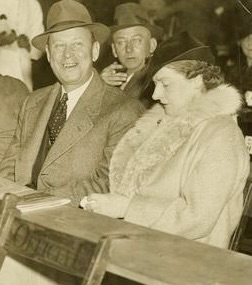
Kathryn and Lewis Lawes attending the Joe Louis v. Max Baer fight, 1935
Kathryn Stanley Lawes 1885-1937
“The Mother of Sing Sing” ***Local Connection: The Warden’s House, Spring Street*** (Today, the clubhouse of the Hudson Point Condominiums)
Kathryn Stanley Lawes (1885 – 1937) was known as the “Mother of Sing Sing.”
Wife of Warden Lewis Lawes, the longest tenured Prison Warden in Sing Sing’s history, she arrived at Sing Sing on January 1, 1920 with her two young daughters in tow. Settling into the drafty old Warden’s house situated next to the main cellblock, she would raise her girls (and have a third) within the walls of the prison.
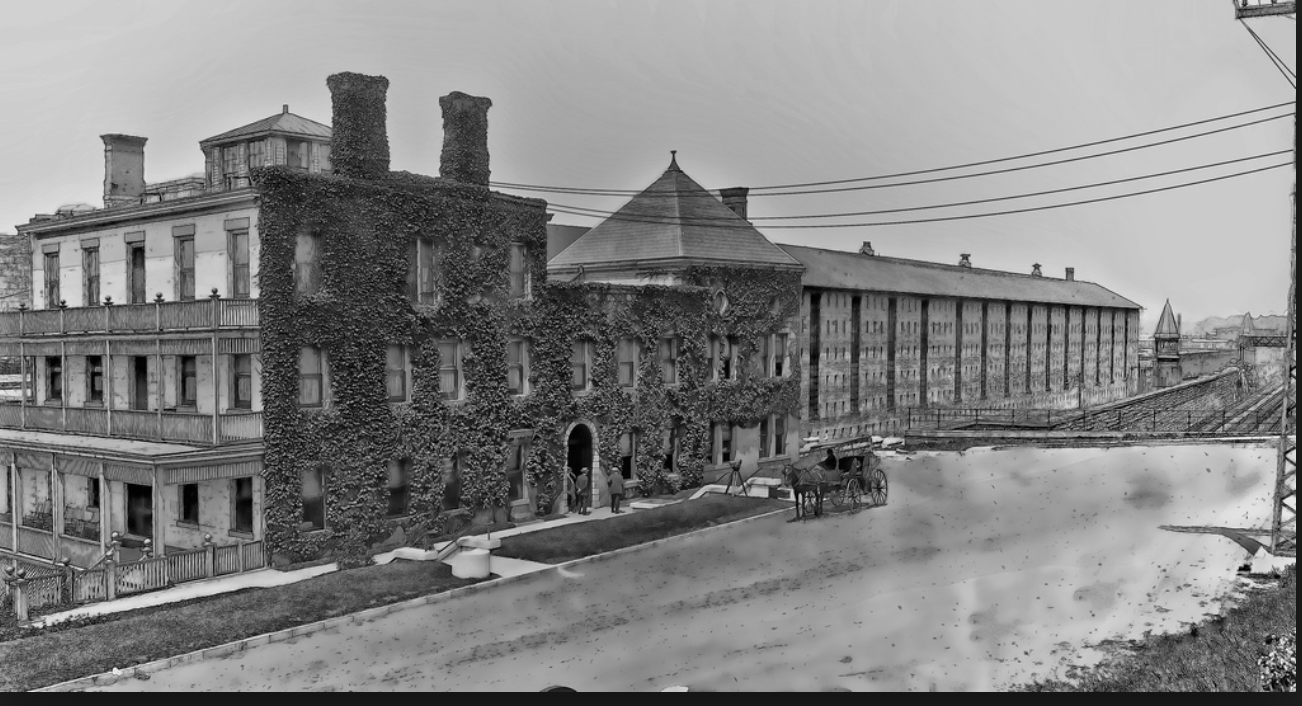
Sing Sing Warden’s House, c. 1910 Courtesy of the Ossining Historical Society and Museum
She would regularly go into the prison and visit with the incarcerated. And her quiet kindnesses were the stuff of legend. She would arrange for every man to get a Christmas present – noting that some had never received one in their brutal lives. She would help them write letters to their families. Her youngest daughter, Cherie, recalled how her mother once gave away a favorite dress of hers so that the daughter of one of “the boys” could wear it to attend a high school dance.
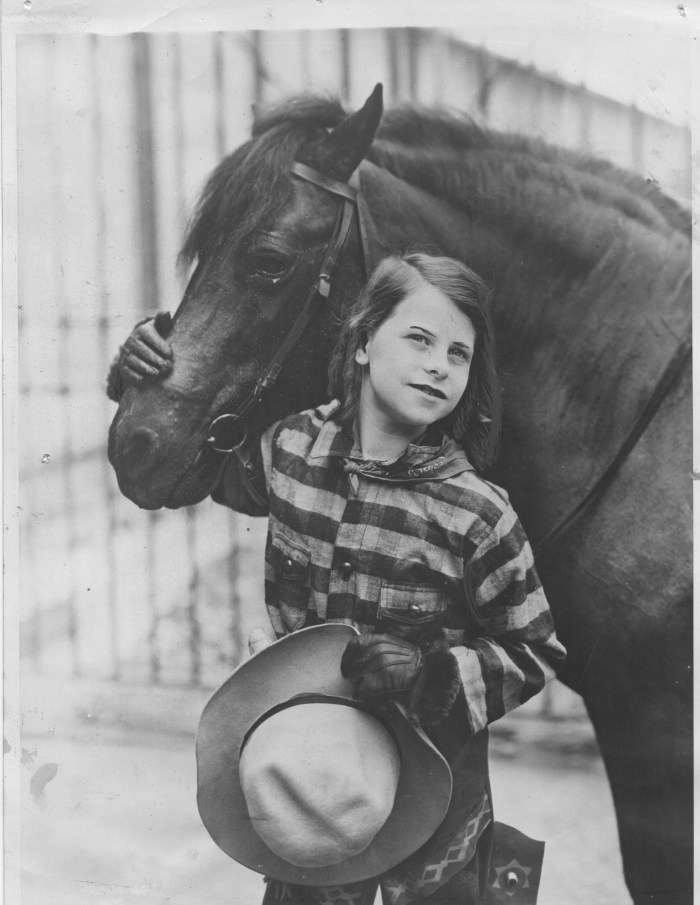
Daughter Joan Marie “Cherie” Lawes, seen with her pony just outside the gates of Sing Sing, c. 1930 Courtesy of the Ossining Historical Society and Museum
Kathryn hosted Labor Day picnics for inmates, Halloween parties for the neighborhood children, and oversaw special meals in the mess for Thanksgiving and other holidays.
Those incarnated in Sing Sing knew that they could trust her, with one quoted as saying that telling her something was “like burying it at sea.”
In 1937, the Logansport-Pharos-Tribune wrote one of the very few articles about her, saying “When a convict’s mother or near relative was dying, the convict was permitted to leave the Sing Sing walls for a final visit. On such occasions, instead of going under heavy guard, he was taken in Mrs. Lawes’ own car, often accompanied by the Warden’s wife herself.”
She was especially solicitous to those awaiting execution, doing little things to make their cells brighter, spending hours talking to them – sometimes she would even arrange for their families to stay in the Warden’s house as the execution date drew near. She also made sure that every incarcerated man (and women) had a decent burial if they had no immediate family.
Little things, perhaps, but important.
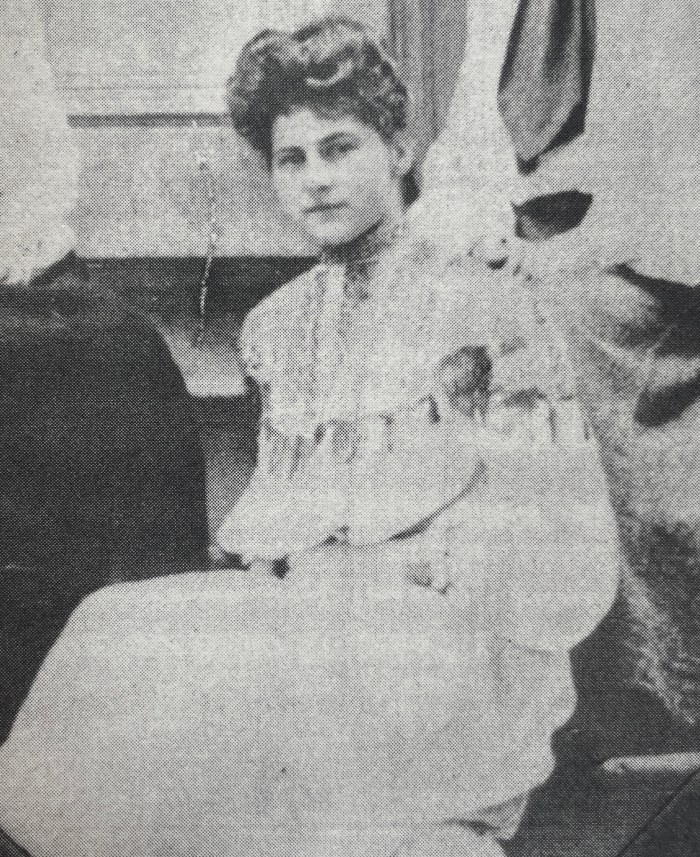
Born in 1885 in Elmira, New York, Kathryn Stanley was ambitious and smart. At 17, she took a business course and landed a job as a secretary in a paper company. It’s around that time she met Lewis Lawes, who was working as an errand boy in a neighboring office.
Kathryn Stanley in Elmira, c. 1900 Courtesy of Joan “Cherie” Lawes Jacobsen
But Lewis’ father was a “prison guard” (today the term is “Corrections Officer”) at the Elmira Prison, so it was rather natural that his son would eventually follow in his footsteps.
Kathryn and Lewis married in 1905 and started their family. Lewis quickly rose through the ranks in the New York prison system first in Elmira, then in Auburn. In 1915, he became Chief Overseer at the Hart Island reformatory, living right in the middle of the facility with Kathryn and their two infant daughters. Even then, Kathryn found time work with the boys in the reformatory, some who were as young as 10, giving many of them the first maternal attention they’d ever experienced.
Kathryn would be an essential participant in her husband’s success, helping cement his reputation as a progressive and compassionate Warden.
Still, it’s quite hard to flesh out Kathryn’s story. She gave very few interviews and those that she did give read like someone wrote them without ever talking to her. In fact, much of what we know about surfaced only after her mysterious death.
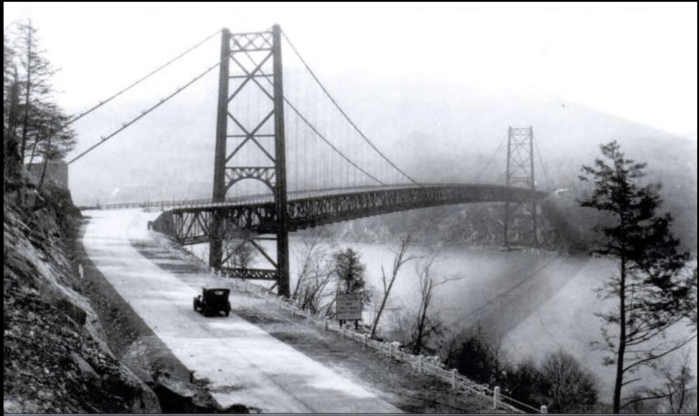
You see, one of the things that makes her story so complex and compelling is that she died at the age of 52 after falling off (or was it near?) the Bear Mountain Bridge.
The Bear Mountain Bridge, c. 1930
A Mysterious Death
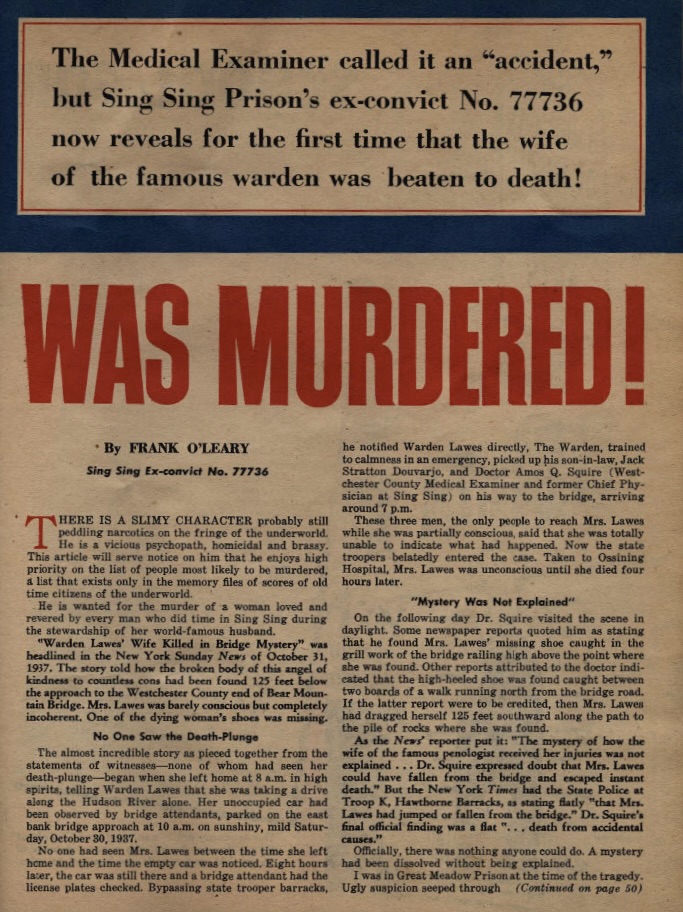
On October 30, 1937, the New York Times published an article entitled “Wife of Warden Lawes Dies After a Fall. Lies Injured all Day at Bear Mountain Span.” In it, the New York State Police stated that she had “jumped or fallen” from the bridge. Though conscious when discovered by Warden Lawes, their son-in-law, and Dr. Amos Squire, she died in Ossining Hospital soon after from her injuries.
A few days later, a follow-up story was published in the Times that quoted heavily from Dr. Squire (the former Sing Sing Prison Doctor as well as Westchester County Medical Examiner). Dr. Squire had apparently gone back to investigate the scene of the accident. There, according to the article, he found “her high-heeled shoes caught between two boards of a walk” and concluded that she had gone hiking, perhaps venturing down the trail to pick wildflowers. He continued, “After falling and breaking her right leg, Mrs. Lawes evidently dragged herself about 125 feet southward along the path to the pile of rock where she was found exhausted.”
The men of Sing Sing were devastated when they heard the news of her sudden and shocking death. Eventually, in response to their entreaties, the prison gates were opened and two hundred or so “old-timers” were permitted to march up the hill to the Warden’s house to pay their last respects at her bier.
(In 1938, the New York Times noted that the “Prisoners of Sing Sing Honor Late Mrs. Lawes” with the installation of brass memorial tablet, paid for by the Mutual Welfare League, a organization of incarcerated individuals.)
Kathryn’s Influence
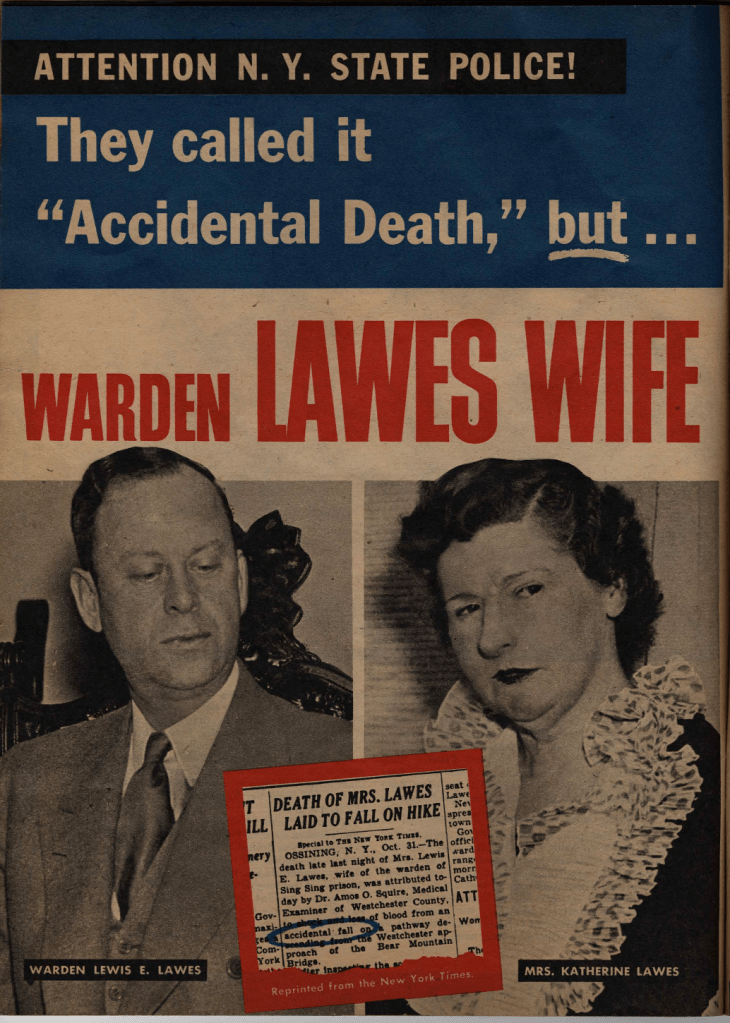
Fifteen years after her tragic death, Kathryn Lawes’ story continued to capture the attention of the press.
From a March 1953 feature in The Reader’s Digest “The Most Unforgettable Character I’ve Ever Met”, to the July 1956 exposé in tawdry Confidential Magazine below, Kathryn’s life (and death) remained compelling.
Even today, one can find sermons online that praise Kathryn Lawes’ generosity and compassion for those that society would rather forget.
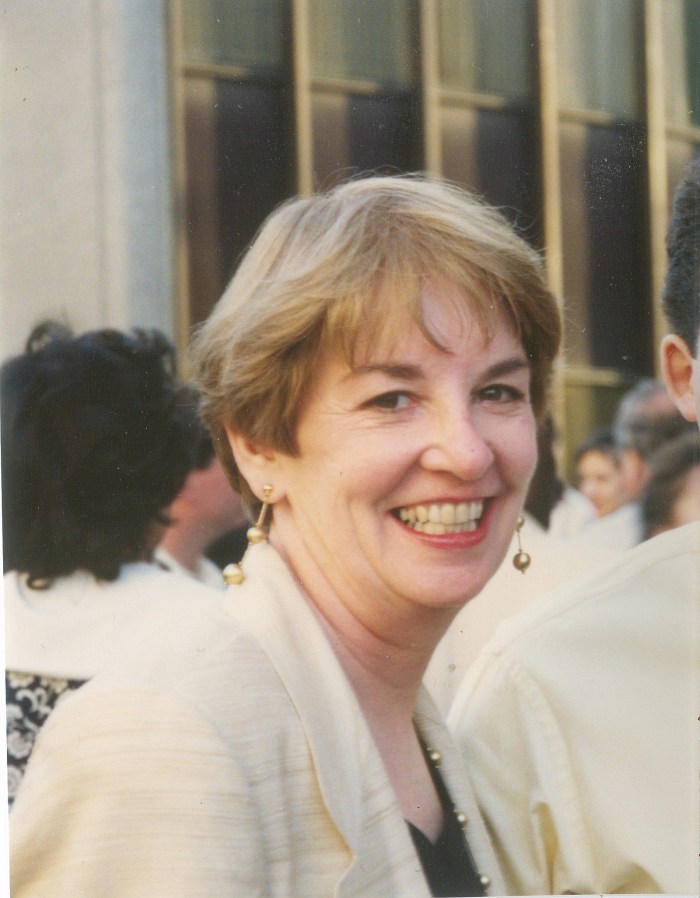
Margaret “Margie” Griesmer Courtesy of Open Door Family Medical Center
Margaret “Margie” Griesmer 1934 – 2008
Founder and First Executive Director of the Open Door Family Medical Center ***Local Connection: 165 Main Street
Margaret “Margie” Griesmer made a tremendous difference to thousands, maybe even hundreds of thousands of people in and around Ossining.
And her legacy continues.
Those of you who live in Ossining are no doubt familiar with the Open Door Family Medical Center. Located at 165 Main Street, it was the first location of what has become a chain of accredited health centers that serve the un- and underinsured throughout Westchester, Putnam, Dutchess and Ulster counties.
In 1972, Griesmer was the driving force behind its founding and development, quietly and methodically laboring to bring excellent, low- to no-cost health care to marginalized community members and the working poor.
Born in 1934, Griesmer graduated from the Mercy School of Nursing in Detroit, Michigan. Marrying soon after graduating, she moved to Ossining with her husband and had four children.
In 1970, the family relocated to Berkeley, California for a year when her husband, an IBM mathematician and researcher, was granted a sabbatical.
While there, Griesmer volunteered at the Berkeley Free Clinic, a self-described “radical volunteer health collective . . . that believes that health care is a fundamental human right.” Griesmer was inspired by what she saw and determined to replicate the concept in Ossining.
Free health clinics were growing in popularity in the 1960s and early 1970s, thanks in part to the civil rights movement and the War on Poverty. But when New York State decided that such clinics needed oversight and licensing, many clinics shuttered. It’s here that Open Door found its niche. As a registered nurse, Griesmer was uniquely positioned to work with local medical professionals, and get the needed licensing to operate.
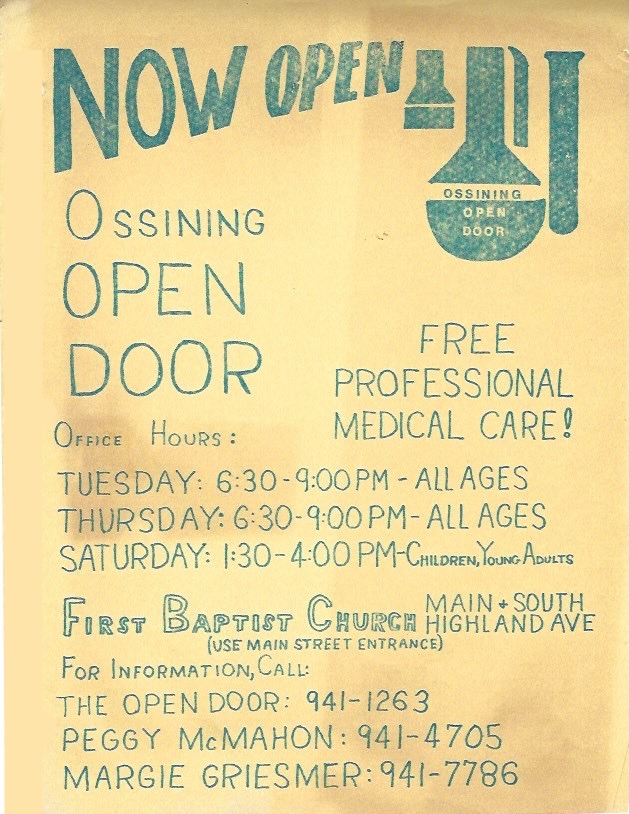
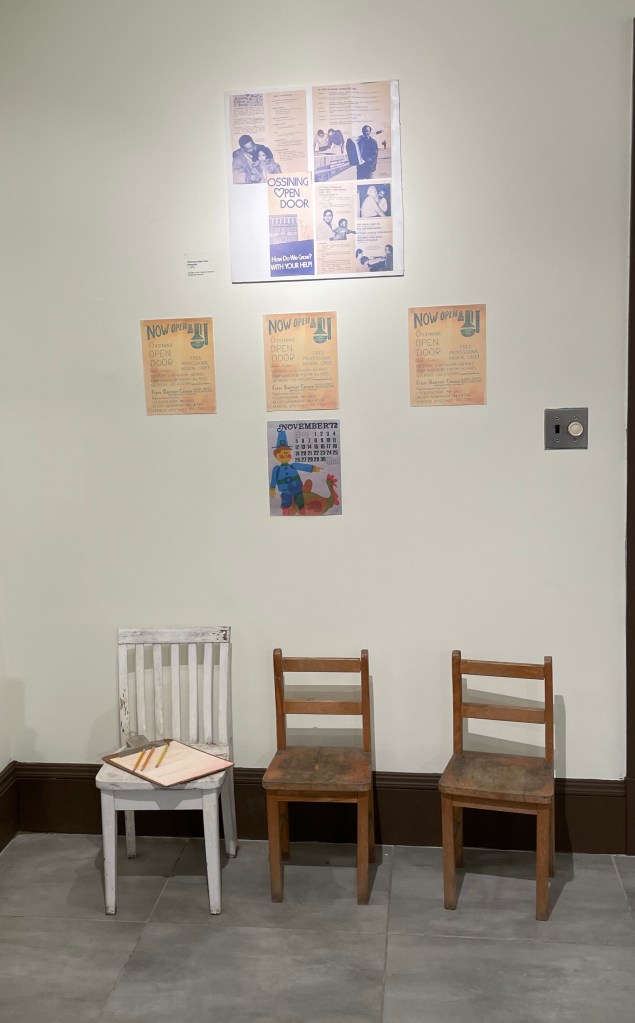
The first Open Door clinic was located in the basement of the First Baptist Church at 1 Church Street, Ossining. With an all-volunteer staff (doctors, nurses, technicians) it was only open Tuesday/Thursday nights and Saturday mornings. The waiting room was the Sunday School room, and the patients sat on tiny little chairs waiting for their appointments.
Original Open Door Flyer, c. 1972 Courtesy of Open Door Family Medical Center
Artistic re-creation of that first waiting area at the First Baptist Church c. 1972
That first year, the clinic saw over 1,000 patients.Griesmer reached out to businesses in the community for support, and organizations such as IBM, the Ossining Chamber of Commerce, A.L. Myers and the Junior League of Westchester contributed in various ways to help fit out that first clinic.
The goals were wide-ranging and egalitarian:
“The Ossining Open Door came into being because of an urgent need in Ossining not only to treat the physical illnesses of the underprivileged but to comfort our elderly, counsel our youth, and listen to the lonely.”
Griesmer would be named Executive Director in 1973, a position she held for over 20 years.
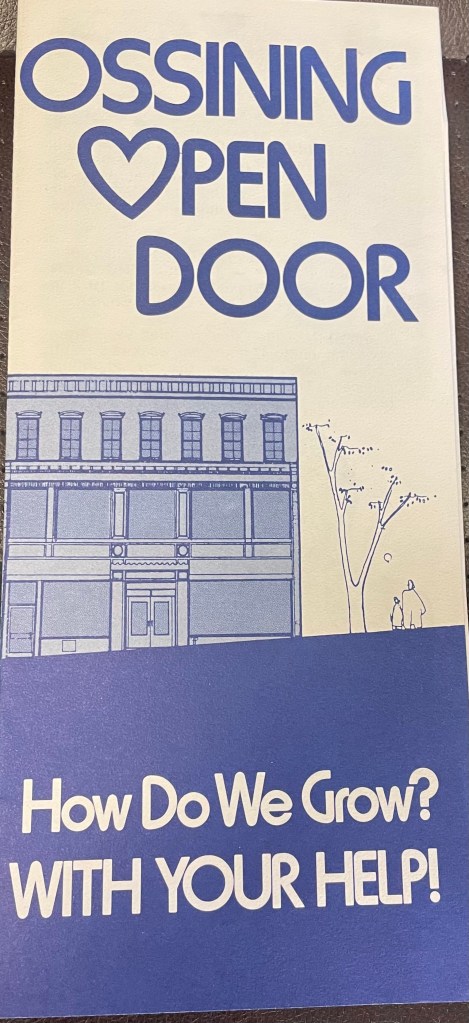
In 1976, Open Door moved to 165 Main Street (formerly Hilliker’s Department store) and in 1988, took over the adjacent building at 163 Main Street. Since then, they’ve hired full time physicians, nurses, technicians, dentists, specialists, social workers, psychologists, started a pre-natal program in collaboration with Phelps Hospital, opened clinics in Mt. Kisco, Brewster, Mamaroneck, Port Chester, Sleepy Hollow, Saugerties and pioneered school-based health centers in nine schools throughout the region.
Pamphlet for new location at 165 Main Street Courtesy of the Ossining Historical Society and Museum
Griesmer was a visionary with a solid medical background who also happened to excel at relationship building and fundraising. It was a powerful and effective combination.
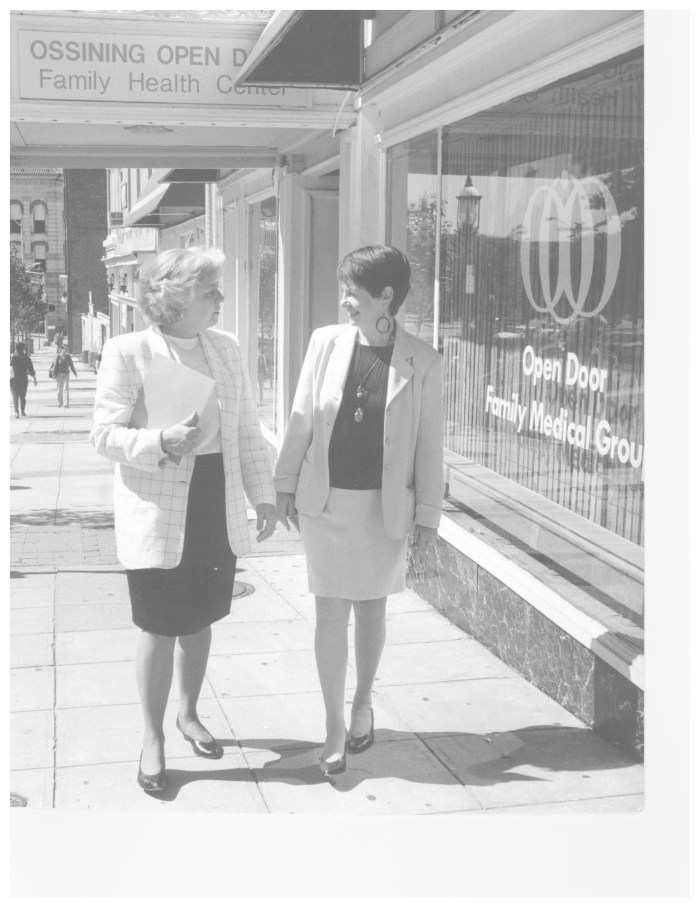
With Assemblywoman Sandy Galef, c. 1980 Courtesy of Open Door Family Medical Center
An excellent judge of people, she filled the ever-expanding Open Door with dedicated professionals who shared her drive to improve and grow the services offered to the community.
In 1998, Griesmer tapped Lindsay Farrell as her successor. A volunteer who started helping out in 1986, Farrell continues in the CEO position today, carrying on and expanding Margie Griesmer’s vision to make quality health care available to all.
Today Open Door serves over 60,000 patients at seven locations throughout Westchester, Putnam and Ulster counties, with an additional nine school-based health clinics. And, as has always been the case, care is available to anyone — fees are determined on a sliding scale.
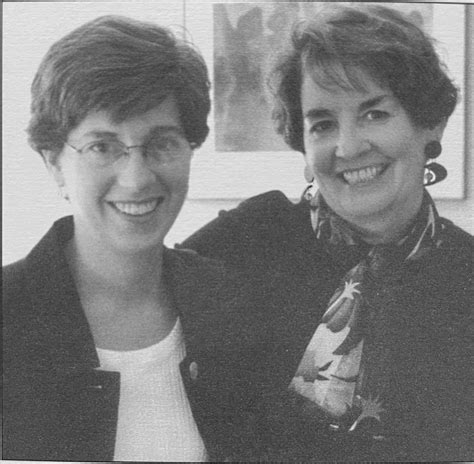
Lindsay Farrell and Margie Griesmer, c. 1990s Courtesy of the Open Door Family Medical Centers
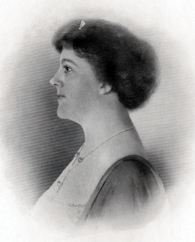
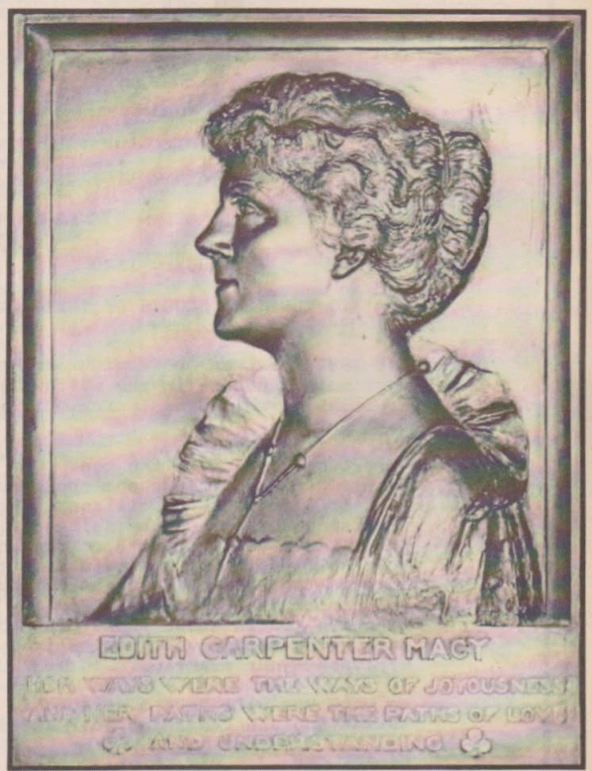
Today’s Women’s History Month post is celebrating Edith Carpenter Macy (1869 – 1925).
Edith Carpenter Macy, plaque located at the Edith Macy Center. Photo from the Girl Scouts Archives
If you’ve ever shopped at the Chilmark Center on the border of Ossining and Briarcliff Manor, you’ve been wandering through what was part of V. Everitt and Edith Carpenter Macy’s eponymous farm and estate.
Also, if you’ve ever bought a box of Girl Scout cookies, you were enjoying a fundraiser popularized by Edith Macy in the 1920s, in her position as Chair of the Girl Scout Board of Directors.
Edith Macy lived amidst great privilege. Marrying Valentine Everit Macy in 1896, she would benefit from his prodigious wealth (he inherited $20 million at the age of 5 thanks to his father’s canny merger with Standard Oil – but more on that in another post).
The 1900 Census notes that she and Everit had a butler, a 2nd butler, a cook, 3 maids (kitchen, chamber and ladies’), a laundress, and a nurse living with them on Underhill Road.
But though it might sound like she lived the American version of Downton Abbey (sorry, it’s that 2nd butler listed above!) Edith Macy spent much of her time working for the good of others.
Like many of her neighbors (Narcissa Cox Vanderlip, Carrie Chapman Catt and Elizabeth Underhill, just to name a few) Macy participated wholeheartedly in the fight for women’s suffrage. And once the 19th amendment was passed in 1920, (though let’s not forget that New York State passed a women’s suffrage act in 1917), Macy became the Director of the Westchester League of Women Voters.
But Edith Macy wasn’t content with only being associated with suffrage – she was also active in charities that directly helped poor women and children.
Now, one of the things I enjoy about writing these posts is that not only do I learn about the individuals I write about, but I gain granular insights into what the world was like “back then.” In writing up Mrs. Macy’s story, I’m reminded about all the things we take for granted today, such as the right for women to vote, pure food, and not seeing the majority of your children die before they reach adulthood.
One of the many organizations Mrs. Macy was involved in was the Henry Street Settlement. According to the Scarsdale Inquirier, “Long before the milk situation in New York city was satisfactory, [she] took an active part in the work of the Henry Street Settlement and furnished pure milk for the babies to that settlement from [her] farm at Chilmark.”[1]
I think it’s worth unpacking that snippet a bit, because we so take for granted that the milk we get in our supermarkets is safe for human consumption. But back at the turn of the 20th century, that was decidedly not the case. In 1901, in response to rising infant mortality rates, especially in the poorer sections of Manhattan, the Rockefeller Institute commissioned a report on the sanitary conditions in New York’s milk industry. They documented the generally filthy conditions found in local dairies, such as open vats of milk stored in stables and near manure piles that resulted in skyhigh bacterial content that sickened and killed thousands of infants.
So this “pure milk” the Macys supplied to the Henry Street Settlement was more than just a small PR stunt – they were actually responding to a serious need until routine pasteurization of milk was adopted in New York City in 1912.
In 1914, she helped found the Westchester County Children’s Association – an organization that still thrives today and, true to its original mission, provides direct support for children’s programs while also lobbying on behalf of policies that will benefit Westchester’s children.
Macy’s interest in women’s suffrage rather naturally steered her to the Girl Scouts, an organization she would help lead from 1919 – 1925. She thought it was never too early to educate girls about citizenship and how they could be effective, useful members of society. Indeed, one of her first initiatives was to involve the Girl Scouts in the final campaign that helped pass the 19thAmendment.
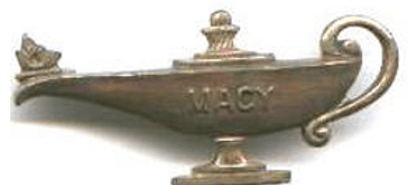
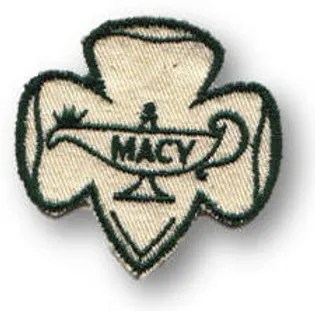
Vintage pin and patch celebrating Edith Macy. Photo credit Vintagegirlscout.com
Sadly, Edith Macy died suddenly at the age of 55. In her honor, her husband purchased 200 acres of land and established the Edith Macy Center, a permanent place for Girl Scout leaders to receive training. The Edith Macy Center at 550 Chappaqua Road is still active today and still named after her.
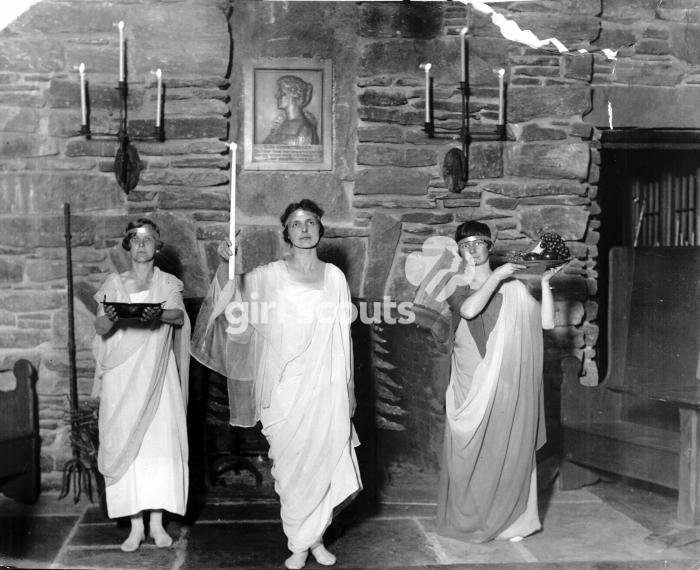
Dedication of Camp Edith Macy in Great Hall, 1926. Left to to Right: “Warmth”, Ruth Mitchell; “Light”, Oleda Schrottky; “Food”, Elsa G. Beeker. Plaque of Edith Macy on the wall behind them Photo credit the Girl Scouts Archives
[1] Scarsdale Inquirer, Volume VI, Number 12, 14 February 1925

 Ossining History on the Run