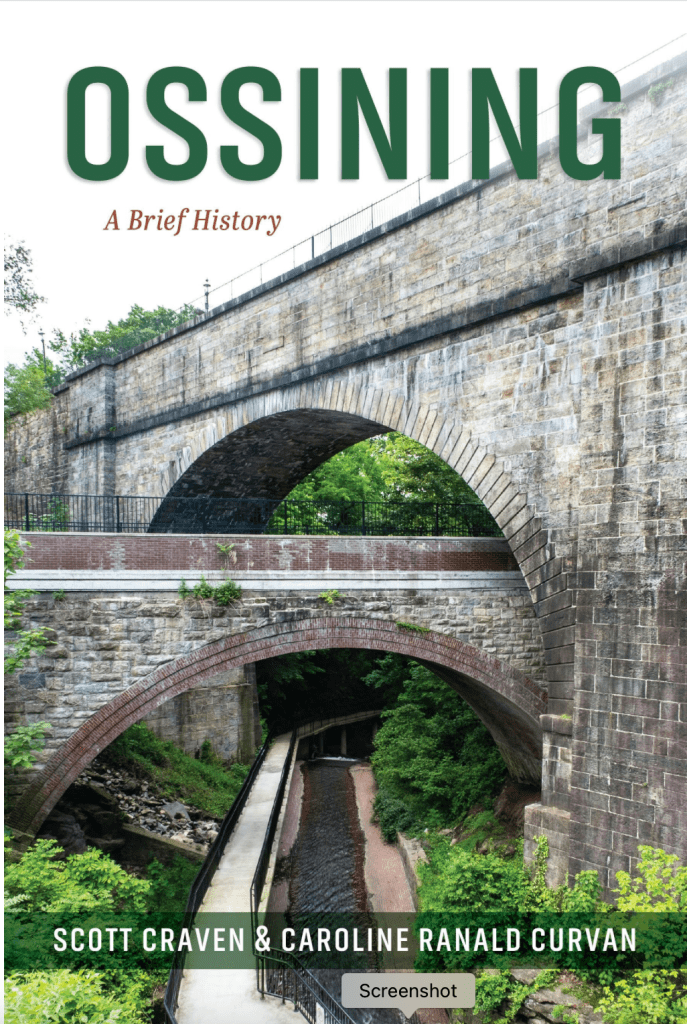
It’s almost here! Our new book, Ossining: A Brief History, will be released on February 10, 2026. Here’s a sneak peek at the cover — what do you think?
Check out the publisher’s website here to pre-order, or visit your favorite brick and mortar bookshop after its release.
We’ll be doing an official book launch at the Ossining Public Library on Saturday, February 21, 2026 at 2pm — watch this space for more info on that and other events coming your way soon!
Welcome to the virtual exhibit page for Ossining Women’s History Month 2025!
While the installation at the Ossining Public Library (53 Croton Avenue) is no longer on display, the entire exhibit will live on this blog in perpetuity.
Who are these women?
These are all remarkable women local to Ossining who made a big impact in shaping our community and our world. Some are national figures. Some have local streets, schools or parks named after them. And some just did their work quietly. But all have accomplishments that deserve to be recognized and shared.
What will you see?
This is a retooling and enlargement of last year’s exhibit presented at the Bethany Arts Community, with expanded biographies and four more fascinating women included.
These women represent all facets of American life – art, religion, science, politics, military service, activism, and philanthropy. Those with a higher profile in life offer more images and material. Others avoided the limelight (either on purpose or through circumstance) and less is known about them, but this exhibit will help uncover and celebrate all of their remarkable stories.
To learn more about each woman featured, simply click on their names below and you’ll be quickly directed to a page with their detailed biography, including photos and links to further enrich their extraordinary stories.
Enjoy!
Caroline Ranald Curvan Ossining Town Historian & Exhibit Curator
Ensign Mary Feeney Gordenstein Courtesy of the Ossining Historical Society and Museum
Ensign Mary Feeney Gordenstein 1916 – 1943 OHS 1933
U.S. Navy Nurse, Died in Action , World War II ***Local connection: Hamilton Avenue***
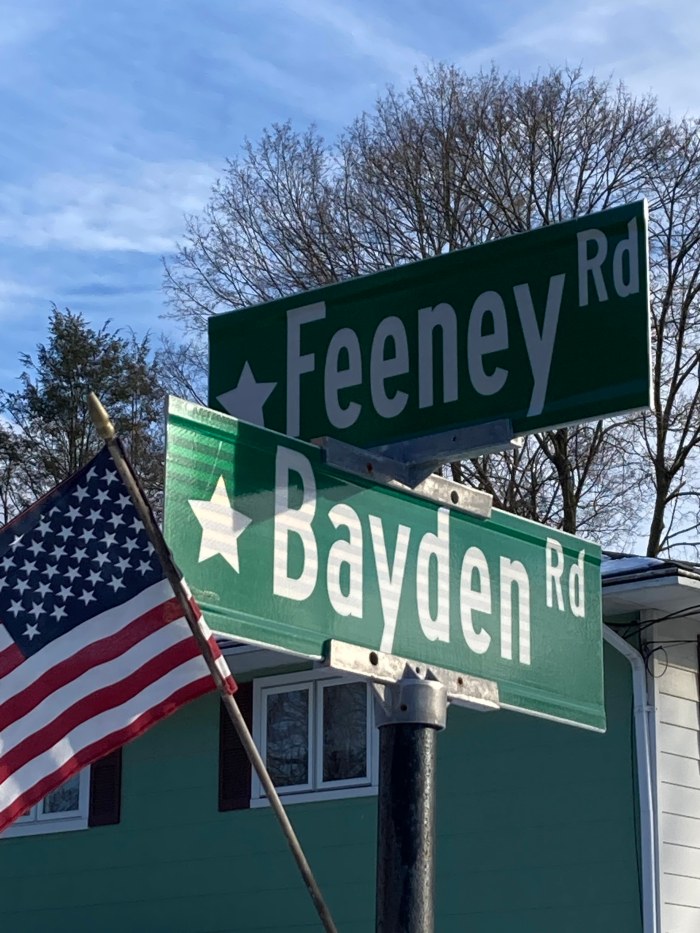
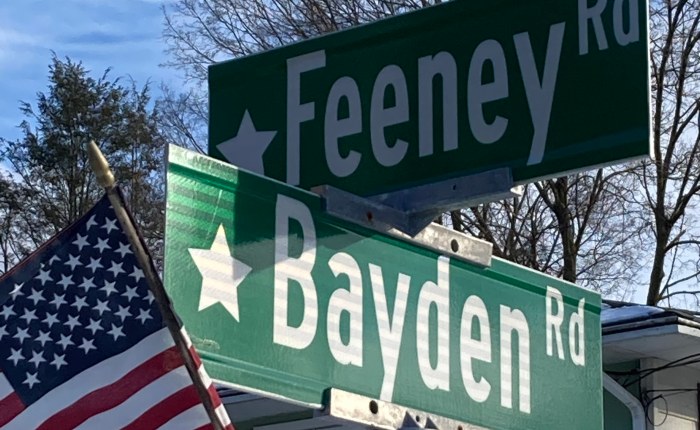
Did you know that Feeney Road in the Town of Ossining is named after Ensign Mary Feeney Gordenstein, a US Navy nurse who died in Pearl Harbor, Hawaii on April 14, 1943?
Mary Feeney was born in Ossining on September 11, 1916, to John and Ida Mae (Farren) Feeney. Her father was a desk clerk for the Ossining Police.
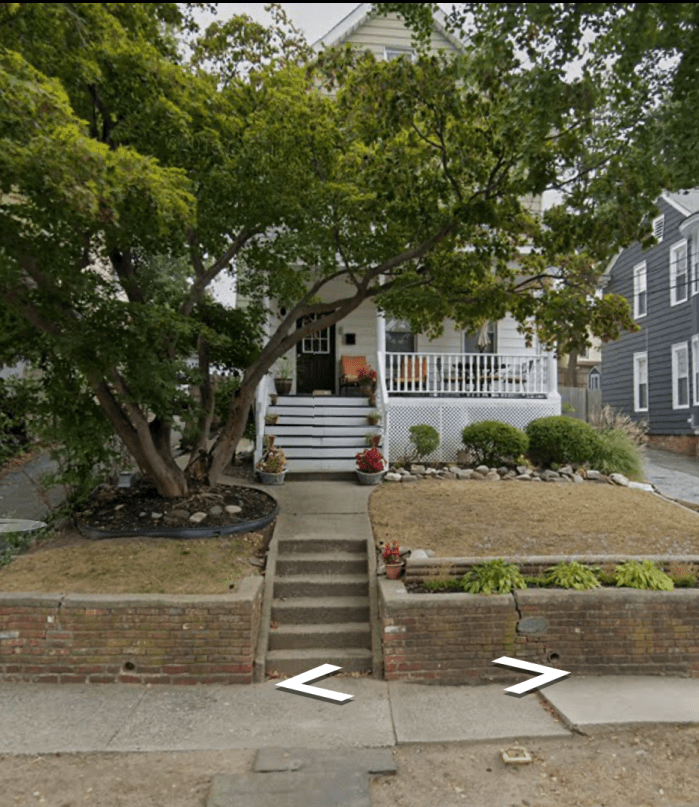
They first rented a house at 72 South Highland Avenue and then moved to 31 Hamilton Avenue.
Both houses still stand today:
72 Highland Avenue. Photo source: Google Streetview
31 Hamilton Avenue. Photo source: Google Streetview
Mary went to Ossining High School, graduating in 1933. She then went on to study at the Cochran School of Nursing at St. John’s Riverside Hospital, Yonkers, graduating in 1937.
The census for 1940 has her working in “private practice.” In August 1941, she entered the US Navy Nurse Corps as an Ensign and spent at least four months in training before being shipped out. (For more on the US Navy Nurse Corps see here and here.)
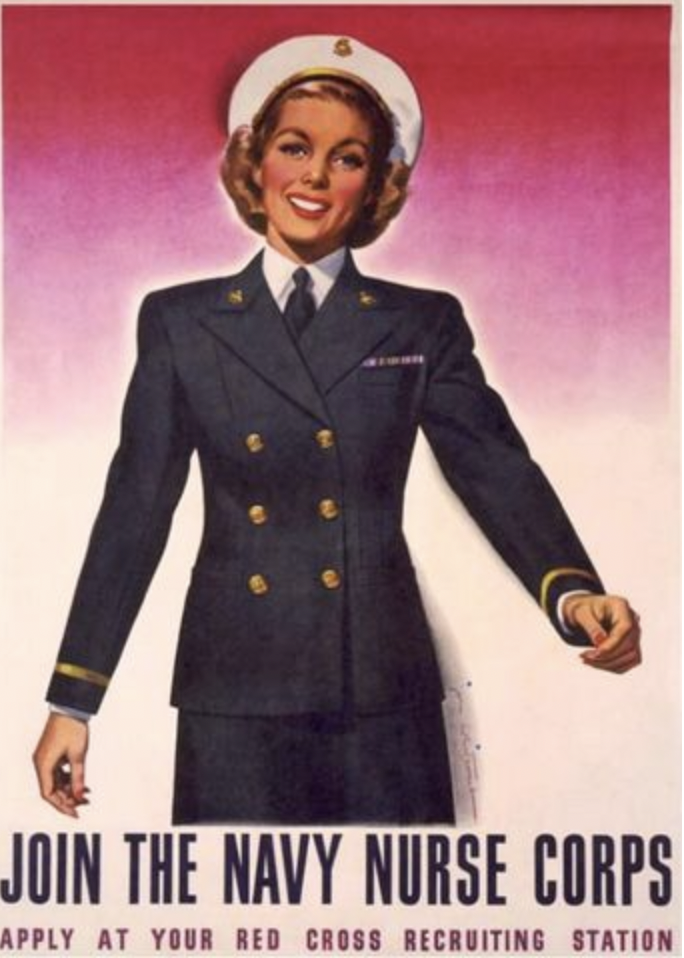
Navy Nurse Recruiting Poster. Courtesy of the National Archives
When Ensign Feeney joined up, there were only about 800 Navy nurses on active duty. By the end of World War II, over 11,000 nurses, both active and reserve, were serving in the Navy.
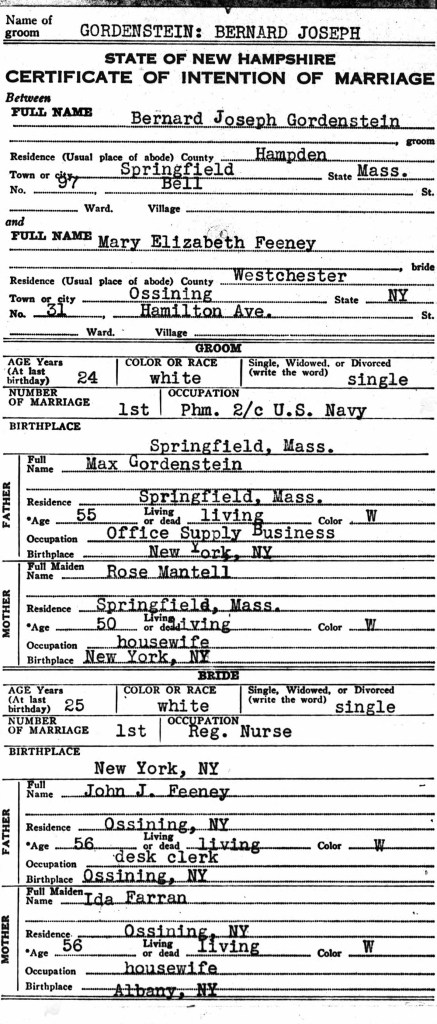
Ensign Feeney’s initial posting is still unclear, but in May of 1942 she married Bernard Joseph Gordenstein in Hillsborough, New Hampshire. He was also in the Navy, serving as a pharmacist. (This bit of information came as something of a surprise to the members of the Feeney family consulted for this exhibit. This might explain why the road is named Feeney and not Gordenstein.)
At some point, after the December 7, 1941 Pearl Harbor attacks, Ensign Mary Feeney was posted to Hawaii and served at the Pearl Harbor Naval Hospital. This was where injured warriors, primarily those from the Pacific Theatre of Operations, were stabilized before they were sent back to the US.
Here’s a 1942 photo from the U.S. Navy Bureau of Medicine and Surgery — while I can’t prove it, I have a feeling that the third nurse from the left, in the back row, might be our Mary Feeney.
Administrative group including Navy nurses and Red Cross workers at the Pearl Harbor Naval Hospital, 1942. Courtesy U.S. Navy Bureau of Medicine and Surgery
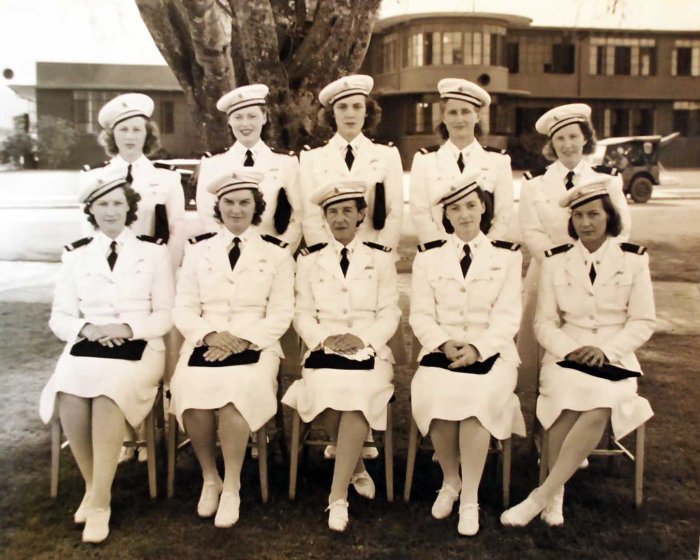
And in the photo below, the nurse seated in the front row all the way on the left actually does look very much like Ensign Feeney. (What do you think?) If it is, it would have been taken just four months before her death.
U.S. Navy Nurses pose for a group portrait at Pearl Harbor, Territory of Hawaii, December 16, 1942. Photo source: National Museum of the U.S. Navy
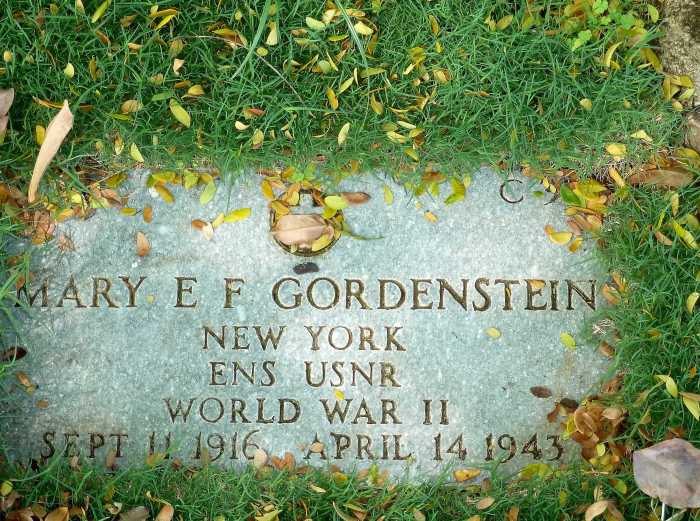
Sadly, Ensign Mary Feeney’s career in the US Navy was brief – she died of pneumonia on April 14, 1943 while stationed at the Pearl Harbor Naval Hospital.
She was posthumously awarded the Bronze Star for “Heroic or Meritorious Achievement or Service.”
She is buried in the Punchbowl National Memorial Cemetery of the Pacific on Oahu.
And in 1963, the Town of Ossining would name a street in the newly completed Lakeville Estates subdivision after her.
I thought I’d compile the posts I’ve written over the years honoring Ossining’s War Veterans. Please note that this is an extremely small selection of the approximately 193 men and women who died in the service of our country, and doesn’t even touch on all those who have served. I also realize, in putting this together, I have so far only written about World War I and II.
But Ossining has had a part in nearly every US conflict, from the Revolutionary War, the War of 1812, the Mexican-American War, the Civil War, the Spanish-American War, WWI & II, the Korean War, the Vietnam War, the Beirut Police Action, the Gulf War, the Iraq War, the Afghanistan War and numerous other police actions and conflicts.
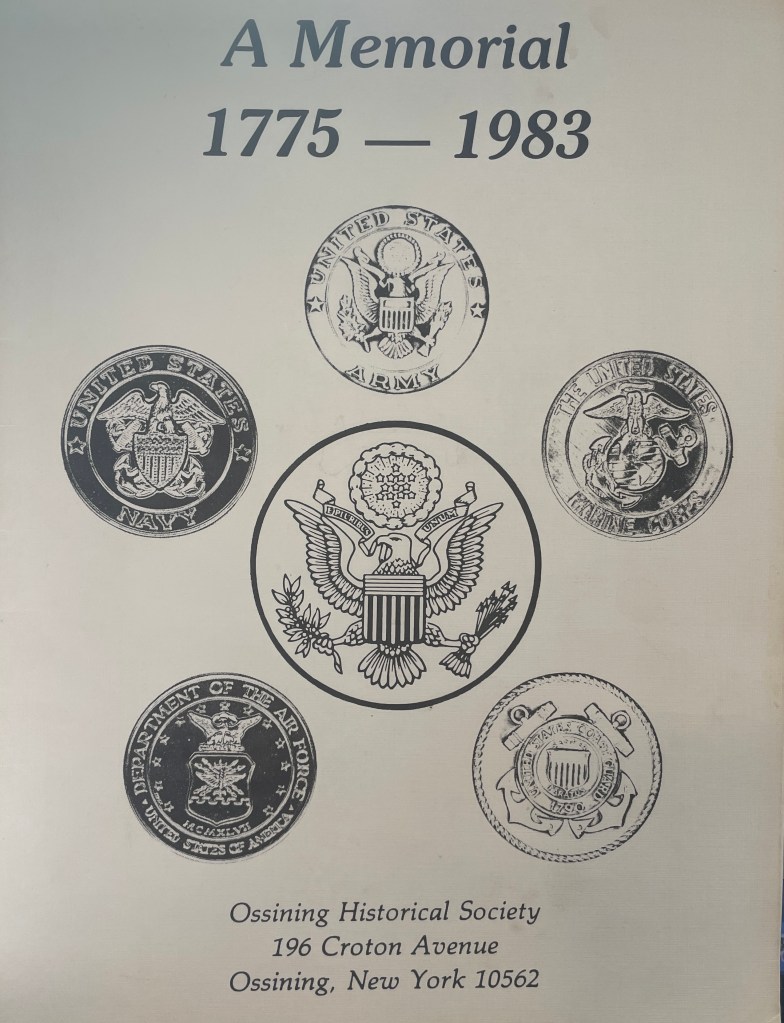
For a more complete list, please refer to this book, published in 1983 by the Ossining Historical Society. (Yes, it does need an update!) I believe a copy can be found in the Ossining Public Library for perusal. One can purchase this from the Ossining Historical Society which, as of this writing on 11/11/2024, is generally open the first Saturday of every month from 10am – 2pm.
We thank each and every person for their service to our country.
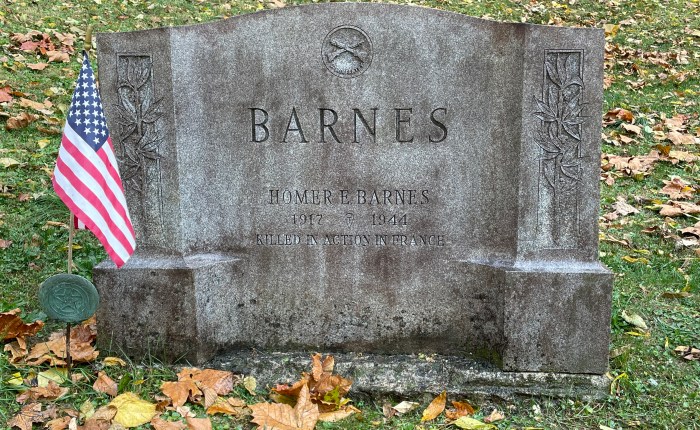
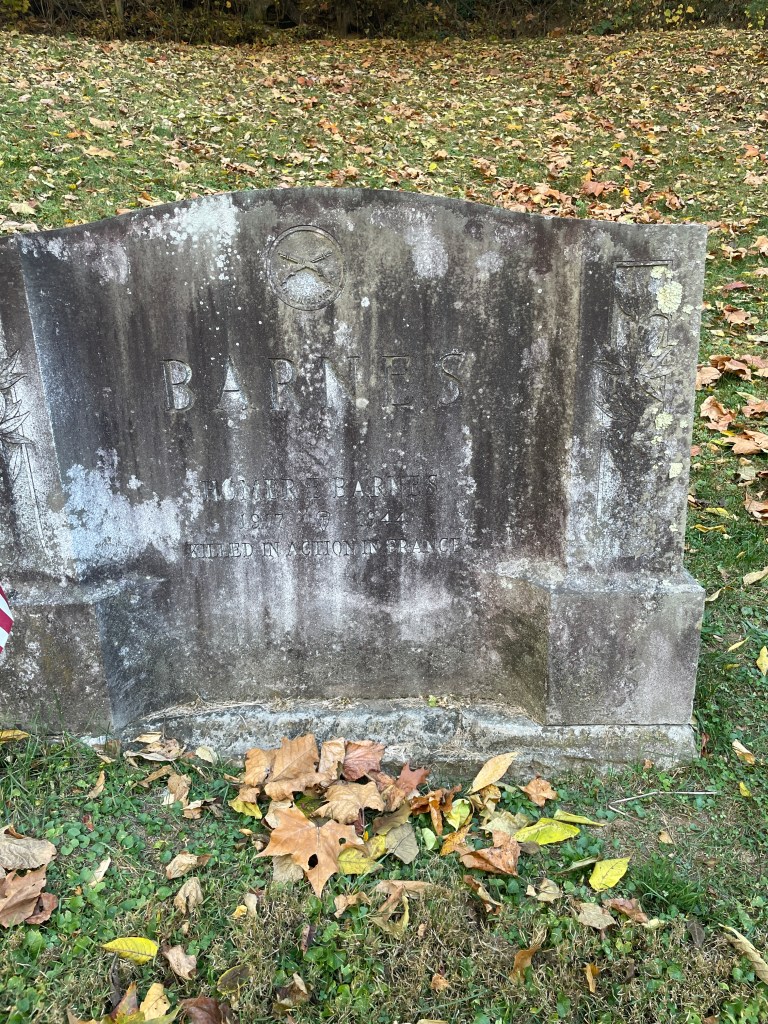
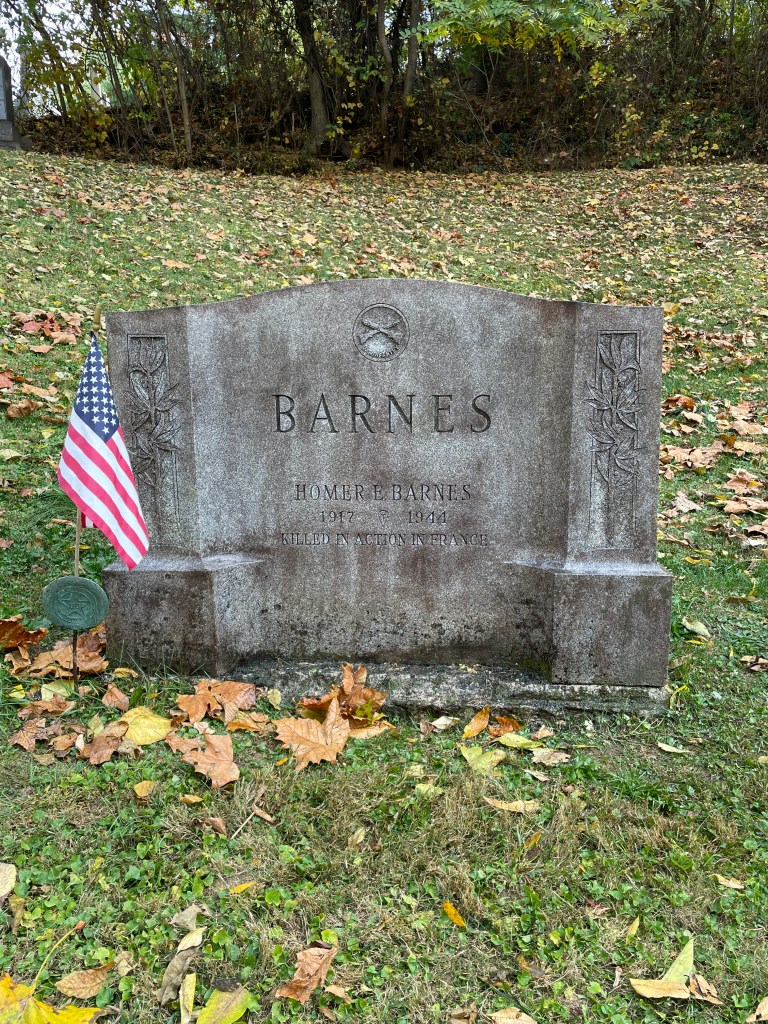
Thanks to the ongoing efforts of the Ossining Historic Cemeteries Conservancy, I recently had the privilege of cleaning this grave, that of Private Homer Barnes, who died in France on September 26, 1944:
I must confess that I chose this grave specifically because it had a Veteran’s flag stuck into the earth in front of it and because the date of death clearly indicated that he had died in WWII. I felt that there was a story to uncover here, and I was not wrong.
Homer Barnes was born in Hamilton, Ontario in 1917 – at the time his father, Dr. Edmund Barnes, was serving as a Major in the Army Medical Corps stationed at Fort Dix during WWI. Homer’s mother had gone home to live with her family while she awaited the birth of her son.
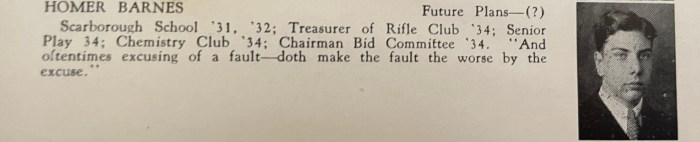
The Barnes family would move to Ossining after the War, and Homer would attend the Scarborough School and then graduate from OHS in 1934.
Courtesy of the 1934 Ossining High School Yearbook
According to his October 23, 1944 obituary published in the Citizen Register, he then attended Pennington Seminary, New York University, and the New York Technical School. The 1940 census has him working as a “chauffeur, self-employed.”
Homer Barnes registered for the draft on October 16, 1940, and was inducted into the service on December 16, 1942[1] at Camp Upton.
He would serve in the 36th Infantry Division, 143rd Infantry Regiment, Company A, 1st Battalion. (I learned all this from the 36th Division Archive, which also notes that his address was 120 North Highland Avenue, Ossining. Today this is the site of Mavis Discount Tire.)
Private First Class Barnes married Ruth Treanor on April 10, 1943 while he was on furlough from Camp Phillips, Kansas to attend his mother’s funeral in Ossining. Ruth would apparently accompany him back to Camp Phillips and stay there until he went overseas on November 1, 1943. PFC Barnes would see some extraordinarily heavy action, first in Italy, then in France.
Now, I’ve never learned much about the Italian campaign of WWII. Just quickly researching PFC Barnes’ Army service has already taught me more than I ever knew about this part of the war, thanks to the detailed after action reports kept (and digitized) by the 36th Infantry Division archive. Here’s a link to the entire thing, if you’re interested.
I’m not yet exactly sure when PFC Barnes entered the field of battle, but the 143rd Infantry Regiment was engaged in some pretty hot fighting in Operation Avalanche, and the Battles of Monte Cassino, and San Pietro during the last few months of 1943.
By February 1944, PFC Barnes had been awarded a Purple Heart for wounds received while crossing the Rapido River near San Angelo, Italy that January. The after-action report for the 36th Infantry offers some excruciating details about this Rapido River offensive:
“Enemy artillery and mortar fire began falling as the first troops reached the river and when Company “A” [PFC Barnes’ company] sent the first wave across, it met with heavy machine gun fire. . . Reports from men who returned the next day indicate that the German machine gun positions were wired in and the bands of fire were interlocking. Many men were wounded in the lower extremities or the buttocks by low grazing fire as they moved or crawled forward.” (52)
PFC Barnes would have shrapnel lodge in his thigh and end up hospitalized for a month after this.
He returned to the front and continued advancing towards Rome with his regiment. The after-action report almost waxes poetic here:
“Never in the entire Italian campaign was there so brilliant a division operation as that employed by the 36th Infantry Division in flanking the enemy bastion at Velletri…. never before in history had the “Eternal City” been captured from the south and as was evidenced by the swiftness with which the enemy was forced to reel back, he was surprised and outwitted by this brilliant maneuver.” (77)
That said, there was deadly fighting throughout, with the German defense “skillfully located and carefully prepared, with first class infantry and strong supporting fire of artillery.” (77)
However, by June 5, 1944 (yes, the day before the Normandy Invasion D-Day!)
“The 143rd Infantry Regiment moved through the city in all available transportation, past the Colosseum, the Ancient Forum, Vatican City and splendid Saint Peter’s Cathedral, through the Arch of Triumph of the Caesars amid cheering throngs of Romans throwing garlands of flowers – greeted as true liberators in a grandiose but sincere reception. No infantryman will forget this experience and he may well be proud to remember it. Following this triumphal turn through Rome, all troops of the 143rd Regiment terminated their gruelling advance, and took a well-deserved rest, bivouacking on the outskirts of the city.” (78)
I sincerely hope that PFC Barnes got to experience this – it must have been rewarding and remarkable. Because after a short break, his regiment would continue to pursue the Germans north. As Captain Douglas Boyd, the Adjutant of the 143rd Infantry Regiment and author of this part of the after-action report writes: “There is no praise too great for the officers and men of the regiment who uncomplainingly, with true soldierly spirit and without regard to self, fought their way those 240 miles in hot pursuit of the enemy.” (90)
After this, PFC Barnes and the 143rd engaged in a Normandy-like invasion of beachheads in Southern France, landing between Cannes (to the north) and Saint-Tropez to the south. PFC Barnes would spend the last month of his life engaged in daily life and death battles, pushing up into the French Alps and encountering stiff resistance from German troops the whole way.
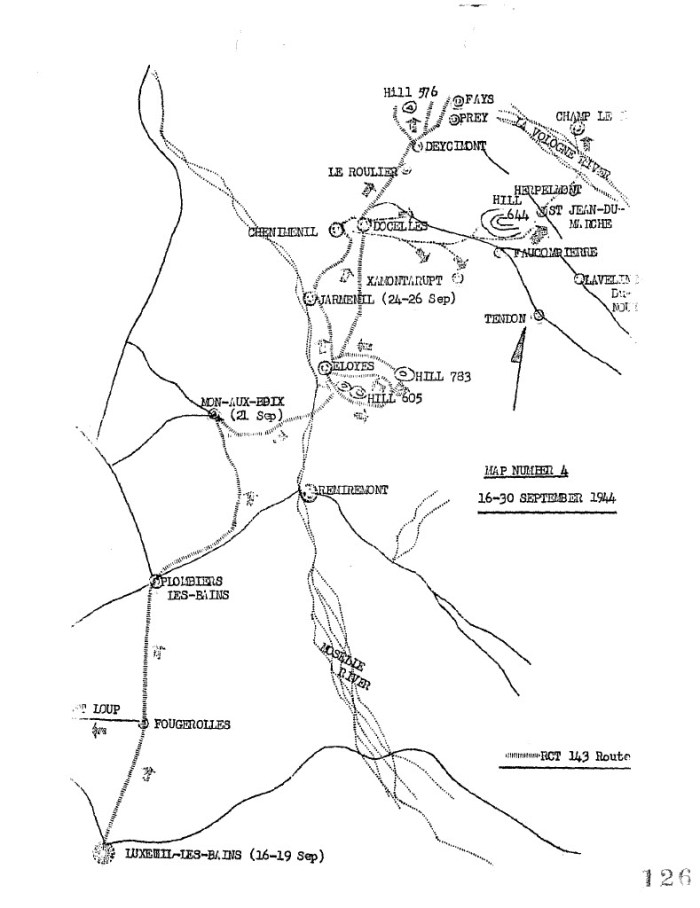
While I can’t be 100% certain, it seems that the last fight PFC Barnes engaged in took place around the Moselle River near a town called Remiremont.
Courtesy of the 36th Division Archive, 143rd Infantry After-Action Reports
The after-action report describes the attack as follows:
“The 143rd began to cross the Moselle River in a column of battalions, the troops waiting and hand carrying their weapons . . . The 1st Battalion – [PFC Barnes’] moved towards its objective, Hill 605 southeast of Eloyes, while under enemy artillery, mortar and machine gun fire. The enemy, approximating battalion strength, engaged the first battalion units in a fierce fire fight. During the night of 21 September 1944, a company of Germans infiltrated Company A’s [PFC Barnes’] positions, and at the dawn of 22nd September, bitter hand to hand fighting ranged until the Germans were cleared.” (133)
PFC Barnes died on 26 September 1944 from wounds received on 22 September, so I’m going to make the assumption that he was wounded in this “bitter hand to hand fighting.”
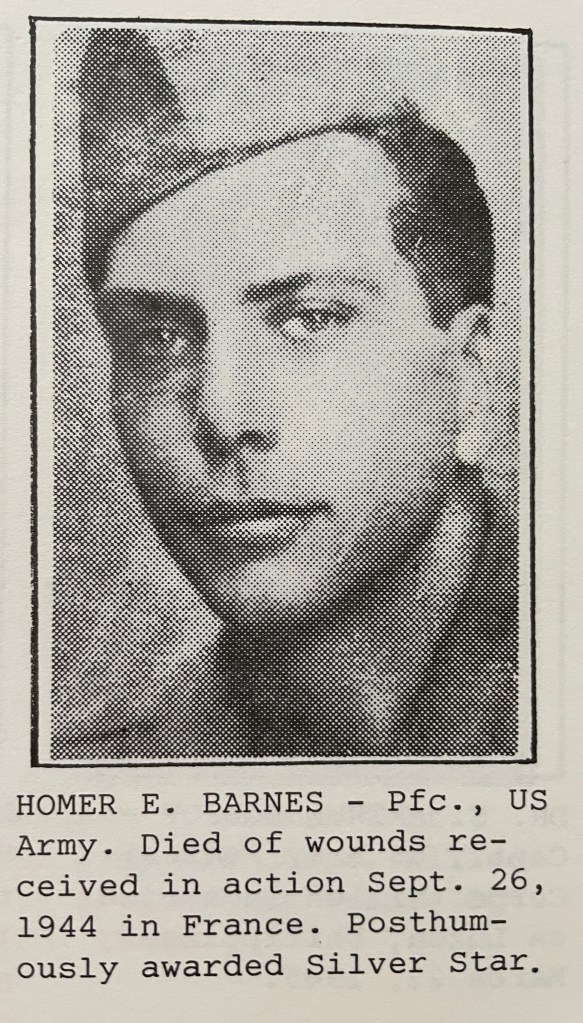
He would be posthumously awarded the Silver Star for gallantry and this decoration would be presented to his two-year-old son, William E. Barnes.
[1] October 23, 1944 obitiuary published in the Citizen Register
Edith Cheatham was born on March 8, 1917, in Lunenberg, Virginia to John Floyd Cheatham and Susie Fowlkes Cheatham. Her father came up to Ossining in about 1911 and is said to have helped build Maryknoll.
In about 1924, her parents were both living in Ossining, and in the 1930 census we find the family living at 59 Durston (now Hunter) Street. Her father was a carpenter who had his own business, and her mother was busy raising Edith and her six siblings.
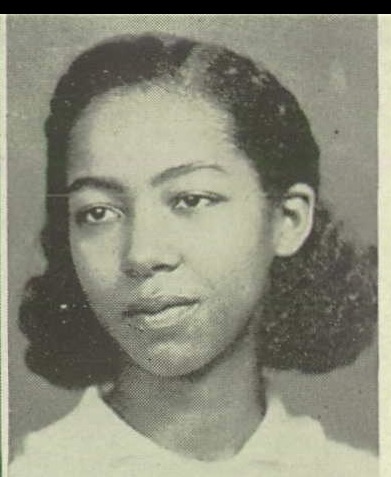
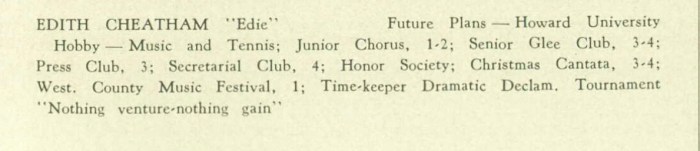
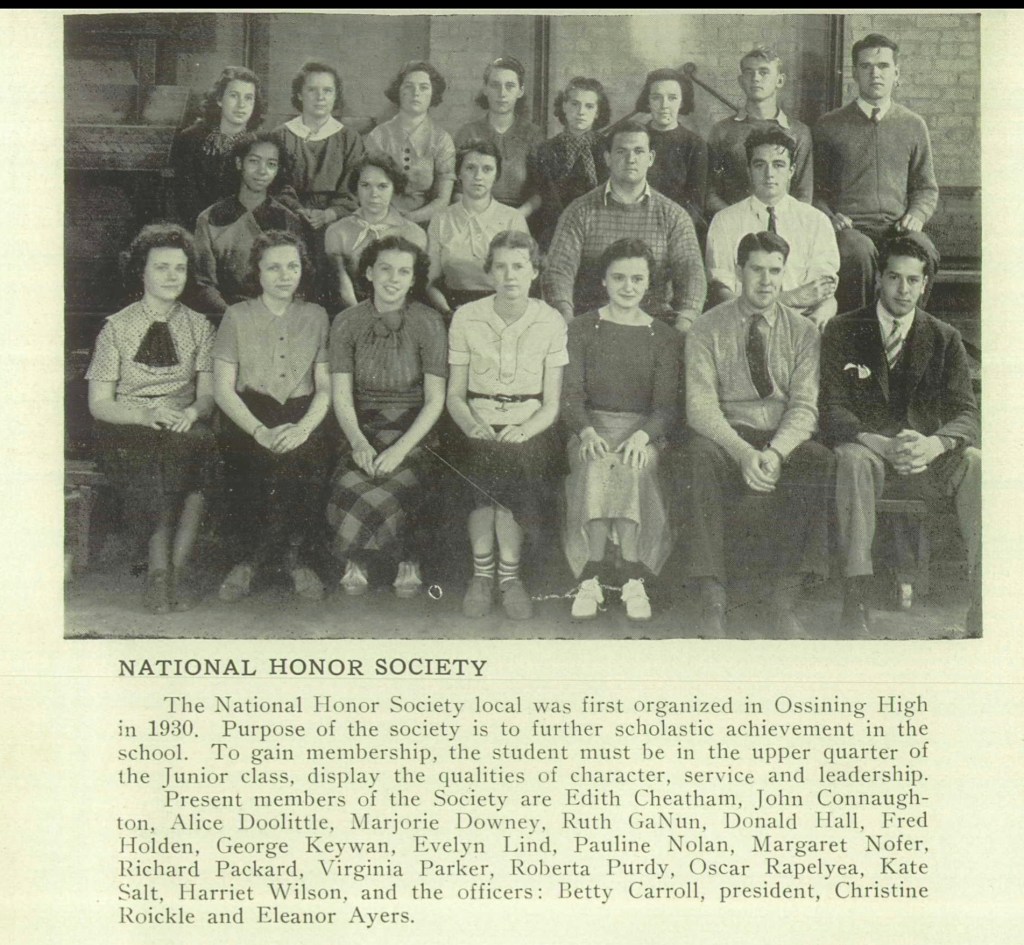
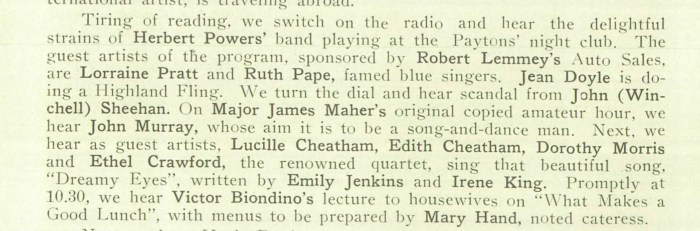
Edith attended Ossining High School, graduating in 1936. A member of the National Honor Society and numerous music clubs, she had hoped to go on to Howard University.
Courtesy of the Ossining High School Yearbook, 1936
Courtesy of the Ossining High School Yearbook, 1936
Courtesy of the Ossining High School Yearbook, 1936
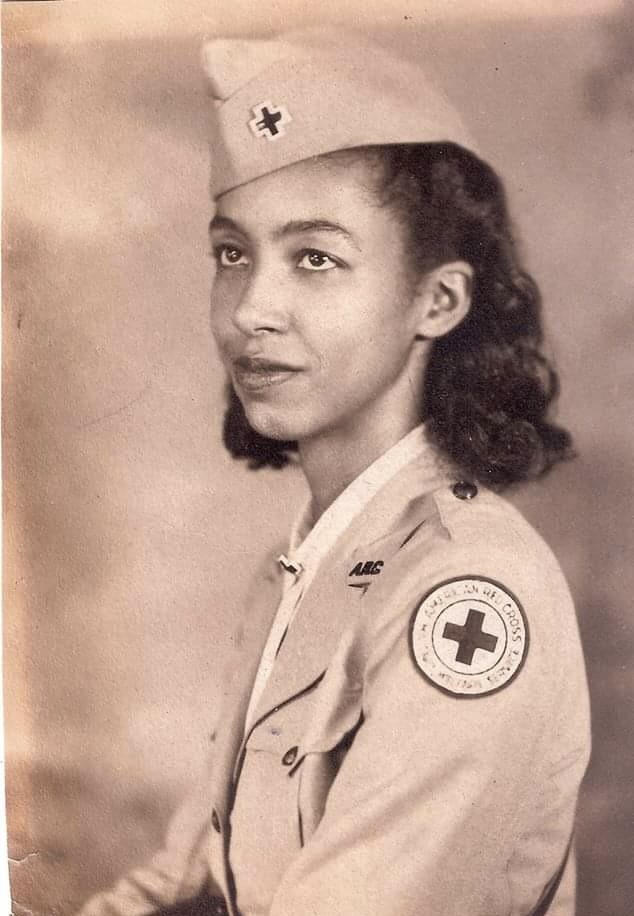
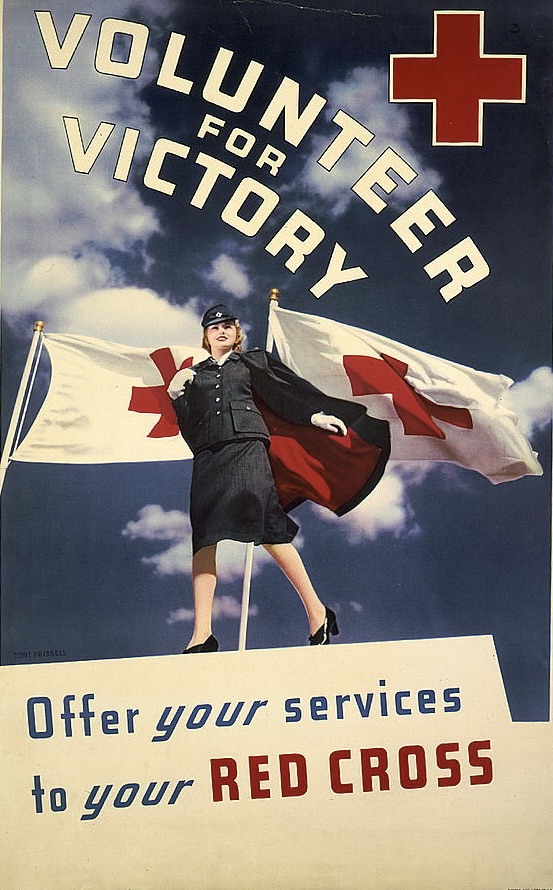
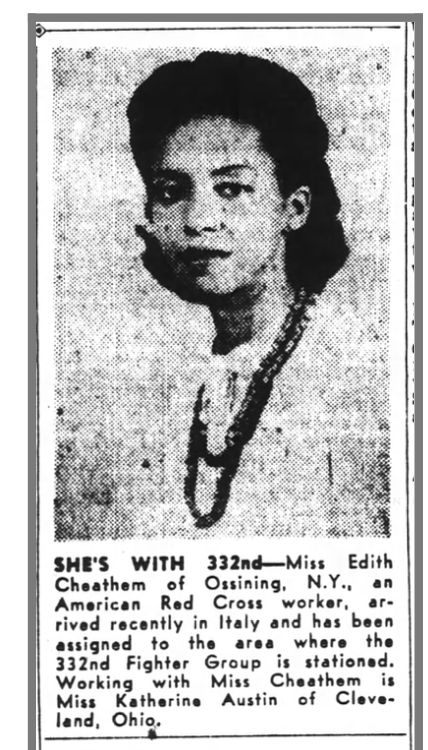
According to the 1940 US census, Edith was still living at home and working as a clerk. She also was apparently taking business classes at NYU. Then, in 1943, she accompanied a friend who wanted to volunteer for the Red Cross into the city and ended up volunteering herself. She was first assigned to the Aberdeen Proving Grounds in Maryland and then sent overseas in 1944 to support the men of the 332nd Fighter Group, aka the Tuskegee Airmen, a pioneering group of Black aviators who fought in WWII.
Courtesy of the Library of Congress
Miss Edith Cheatham of Ossining, NY. From the Pittsburgh Courier, 12/9/1944
Thanks to the Baltimore Afro-American newspaper, we know that Edith was one of the first “Colored women to operate Clubmobile Service in the Mediterranean Theater of Operations,” delivering coffee and donuts to fighter pilots at Ramitelli Airfield as they returned from their bomber escort missions. She also may have assisted in the base hospital in the nearby town of Campomarino. Perhaps she was occasionally stationed at the Officers Club at the 332nd base. Maybe she even snuck onto a plane on a covert mission to photograph future bombing sites. (Things like this ARE documented!)
But whatever her specific activities were, they involved courage and resourcefulness. (Read this thesis by Julia Ramsey on Red Cross Volunteers during WWII, which offers great information about what the Red Cross volunteers did.)
In January 1946, she left Naples on the USS General W.P. Richardson, a troopship with about 4,000 on board, and arrived in New York City two weeks later.
She would return to Ossining and then take flying lessons at Zahn’s Flying Service in Amityville, Long Island, where her instructor was Archie Smith. They married in October 1946. (Smith was a graduate of Tuskegee University in Alabama and had been a Flight Instructor and Commander at the Tuskegee Institute during World War II. After his stint at Zahn’s, he would go on to found Warhawk Aviation Service, based at the Westchester Airport, in the 1950s.)
Archie and Edith settled on Batton Road in Croton-on-Hudson, and raised their three children, David, Tim, and Dolores.
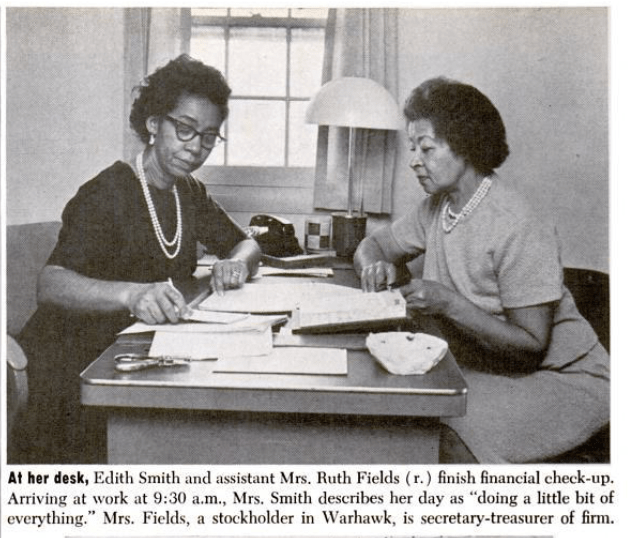
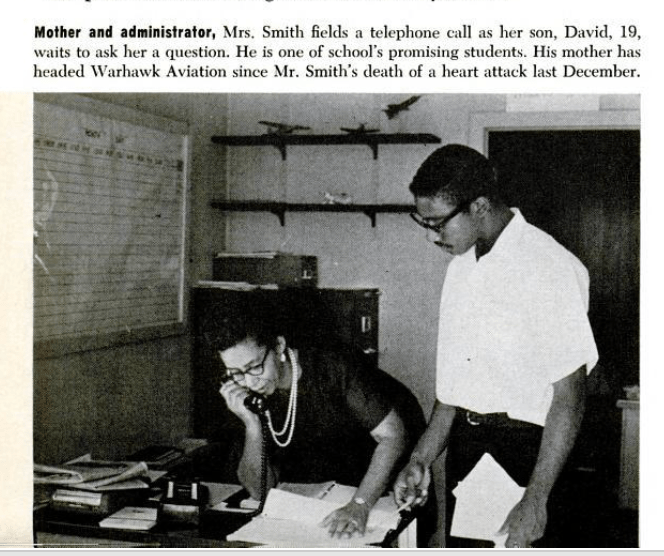
Archie passed away suddenly in 1966 and Edith took over Warhawk Aviation, running it until 1969. Below are two images from an October 1967 article in Ebony Magazine, titled “Spunky Widow Runs Modern Pilot School”:
She would then work at IBM for nearly 20 years, before moving to Mesa, Arizona to be near her daughter Dolores. Edith lived there until her death in 2007.
Her relatives remember her as independent, strong-willed and kind. She loved to do New York Times crosswords and could usually fill them out in one pass. Not surprising for a former member of the National Honor Society.
If she could do what she did in the 1940s – volunteer overseas on the battlefield, learn to fly, run a business – what’s stopping the rest of us?
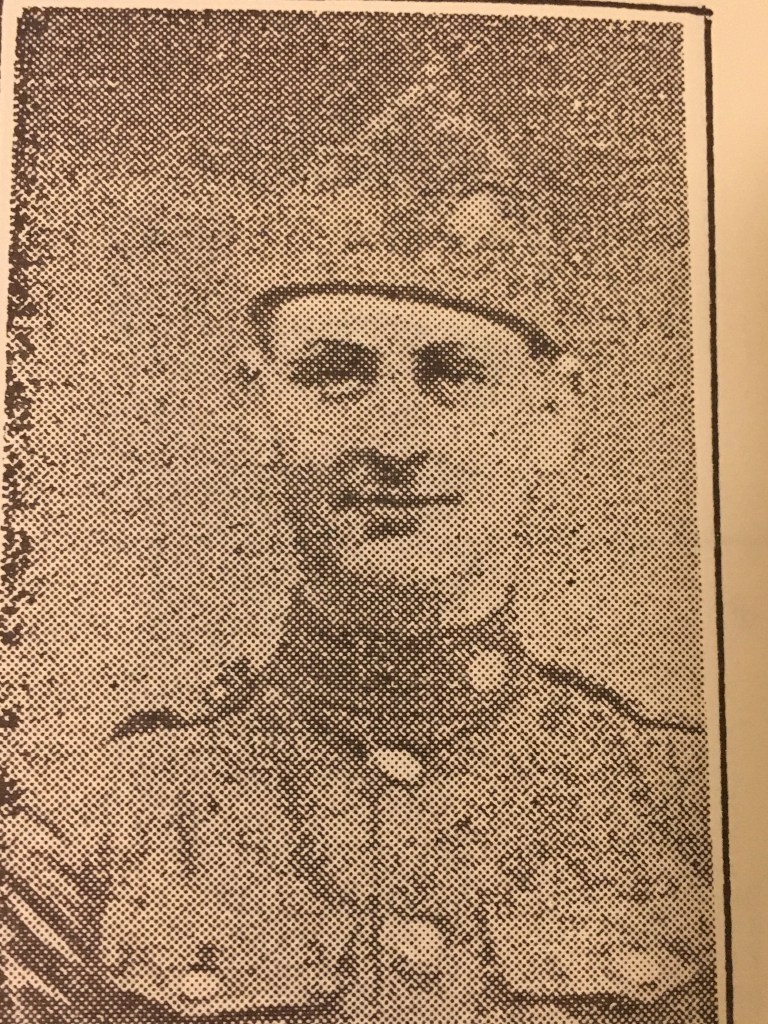
Private Benjamin Feeney. Photo Source: Ossining Historical Society pamphlet “A Memorial 1775 – 1983”
Today, let’s learn a little bit about Benjamin Feeney, one of Ossining’s own who made the greatest sacrifice in World War 1. (But no, he is NOT the Feeney after whom Feeney Road is named after. It is actually named after Ensign Mary Feeney, a U.S. Navy Corps nurse. See this post here.)
Benjamin K. Feeney was a Private in the 165th Infantry, Company L. He died in a German prison camp on August 7, 1918 from wounds received in battle on August 1, 1918.
Now, the 165th Infantry Regiment[1] had originally been known as the 69th Infantry Regiment, but for reasons known only to the Army, it was renamed the 165th in July of 1917 and became part of the 42nd Division. Because the 42nd was comprised of National Guard units from many states, then-Major Douglas MacArthur noted that the “42nd Division stretches like a Rainbow from one end of America to the other.” Ever after, the 165th was known as the Rainbow Division.
Fun fact – as the 69th Infantry Regiment it was known as the “Fighting 69th”, a nickname supposedly given to it by Robert E. Lee during the Civil War. Its Armory still stands at 26th Street and Lexington Avenue in New York City and has had a storied history I won’t get into here. But you should definitely Google it.
Also, here’s another fun fact: Father Duffy (of the statue in Times Square, right where the TKTS half-price ticket booth is located) was the regimental chaplain for the Fighting 69th. Poet Joyce Kilmer (you probably know him from the poem “Trees” that begins “I THINK that I shall never see/A poem lovely as a tree”) was also a member of this regiment and was killed on July 30, during the Aisne-Marne counter- offensive, just a week before our Private Feeney died.
Now, I’m not going to get into the weeds about the Aisle-Marne counter-offensive, or the Battle of Second Marne as it is sometimes called, to distinguish it from the first Battle of the Marne that took place in 1914. However, the fact that there are two battles of the same name on basically the same bit of land four years apart tells you something about what deadlock this World War was.
But I will note that this battle was Germany’s last major offensive of WWI and that it signed the Armistice about 100 days later, so this could certainly be seen as the beginning of the end for them. Some even think that the German infantry was decimated by the so-called “Spanish flu” and this contributed to their crushing defeat.
But back to our doughboy, Benjamin Feeney.
According to the 1905 census, Private Feeney was the son of Coleman and Bridget Feeney and born in about 1890. He lived on Revolutionary Road with his parents and at least seven siblings.[2]
On November 6, 1917, as a member of the National Guard incorporated into the 165th Regiment, he traveled to France, on the troopship Ascania, departing from Montreal, Canada.
According to the Records of the Office of the Quartermaster General, 1774-1985[3] Private Feeney took part in several major engagements in France: Rouge Bouquet (in March 1918.) Poet Joyce Kilmer was also in this battle and wrote a poem called Rouge Bouquet in memory of their fallen comrades.
Other battles in which poor Private Feeney fought in were in Baccarat (April 1918), Champagne (June 1918), and Chateau Thierry (July 1918). I realize that these last three sound like a vacation, but they were brutal, trench-based conflicts that make “All Quiet on the Western Front” seem tame.
His final battle was the Aisne-Marne Offensive whose objective was to cross the Ourcq River and force the Germans to retreat (Read this if you want a deeper dive.) While the Allies were, as previously mentioned, successful, the 165th suffered a 42% casualty rate. Our poor Private Feeney was one of them.
His record notes “captured August 1/18, released, death at Limburg, Germany of wounds received in action.” He was likely held at Limburg an der Lahn, a large German POW camp, in the days before he died.
He was buried at the Oise-Aisne American Cemetery, Seringes-et-Nesles, France.
(And no, Feeney Road in the Town of Ossining is NOT named after him. It is named after Ensign Mary Feeney, who also died in World War II.)
[3] The National Archives at College Park; College Park, Maryland; Record Group Title: Records of the Office of the Quartermaster General, 1774-1985; Record Group Number: 92; Roll or Box Number: 379





 Ossining History on the Run