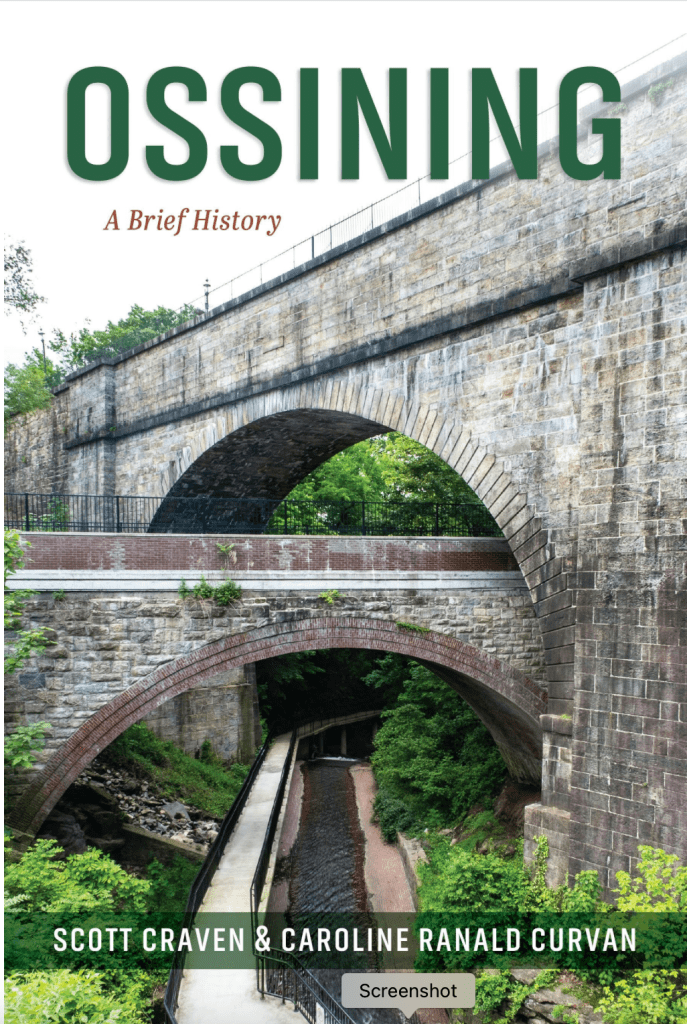
It’s almost here! Our new book, Ossining: A Brief History, will be released on February 10, 2026. Here’s a sneak peek at the cover — what do you think?
Check out the publisher’s website here to pre-order, or visit your favorite brick and mortar bookshop after its release.
We’ll be doing an official book launch at the Ossining Public Library on Saturday, February 21, 2026 at 2pm — watch this space for more info on that and other events coming your way soon!
Welcome to the virtual exhibit page for Ossining Women’s History Month 2025!
While the installation at the Ossining Public Library (53 Croton Avenue) is no longer on display, the entire exhibit will live on this blog in perpetuity.
Who are these women?
These are all remarkable women local to Ossining who made a big impact in shaping our community and our world. Some are national figures. Some have local streets, schools or parks named after them. And some just did their work quietly. But all have accomplishments that deserve to be recognized and shared.
What will you see?
This is a retooling and enlargement of last year’s exhibit presented at the Bethany Arts Community, with expanded biographies and four more fascinating women included.
These women represent all facets of American life – art, religion, science, politics, military service, activism, and philanthropy. Those with a higher profile in life offer more images and material. Others avoided the limelight (either on purpose or through circumstance) and less is known about them, but this exhibit will help uncover and celebrate all of their remarkable stories.
To learn more about each woman featured, simply click on their names below and you’ll be quickly directed to a page with their detailed biography, including photos and links to further enrich their extraordinary stories.
Enjoy!
Caroline Ranald Curvan Ossining Town Historian & Exhibit Curator
Writer Activist Abolitionist Prison reformer ***Local Connection: Matron of Mt. Pleasant Women’s Prison (aka Sing Sing Prison)***
In a society that portrayed the ideal woman as submissive, pure, and fragile, Eliza W. Farnham created her own concepts of female identity. Her theories and actions, occasionally contradictory, offered alternatives to women who felt confined by the limited roles prescribed by their culture. As Catherine M. Sedgwick, a contemporary writer and friend wrote of her “She has physical strength and endurance, sound sense and philanthropy . . . [and] the nerves to explore alone the seven circles of Dante’s Hell.”
Born in Rensselaerville, New York, Eliza Burhans’s early childhood was marked by the death of her mother and abandonment by her father. Growing up with harsh foster parents, she became a self-sufficient, quiet autodidact, reading anything and everything she could get her hands on.
At 15, an uncle would retrieve her from the foster home, reunite her with her siblings and arrange for her to go to school. By 21, she had married an idealistic Illinois lawyer, Thomas Jefferson Farnham, and set off with him to explore the American West.
Eliza would have three sons in four years, though only one would survive childhood. Thomas and Eliza would write up their observations of the West — he would become a popular travel writer of the day, and she would publish her memoir, Life in Prairie Land, in 1846.
In 1840, the Farnhams returned east and settled near Poughkeepsie, New York, where Eliza became deeply involved in the intellectual and reform movements of the day. An early feminist who believed that women were superior to men, Eliza wrote articles in local magazines against women’s suffrage, believing that women could have a much greater impact as mothers and decision makers in the home. (However, in their 1887 History of Woman Suffrage, Elizabeth Cady Stanton and Susan B. Anthony would write that Eliza’s attitudes evolved and that she ultimately saw the necessity of and supported women’s suffrage.)
Eliza also became interested in prison reform at the time, and in 1844 sought and was appointed to the position of Matron of the Mt. Pleasant Female Prison, at the time infamous for its chaos, rioting and escapes, to prove that kindness was a more effective method of governance than brutality.
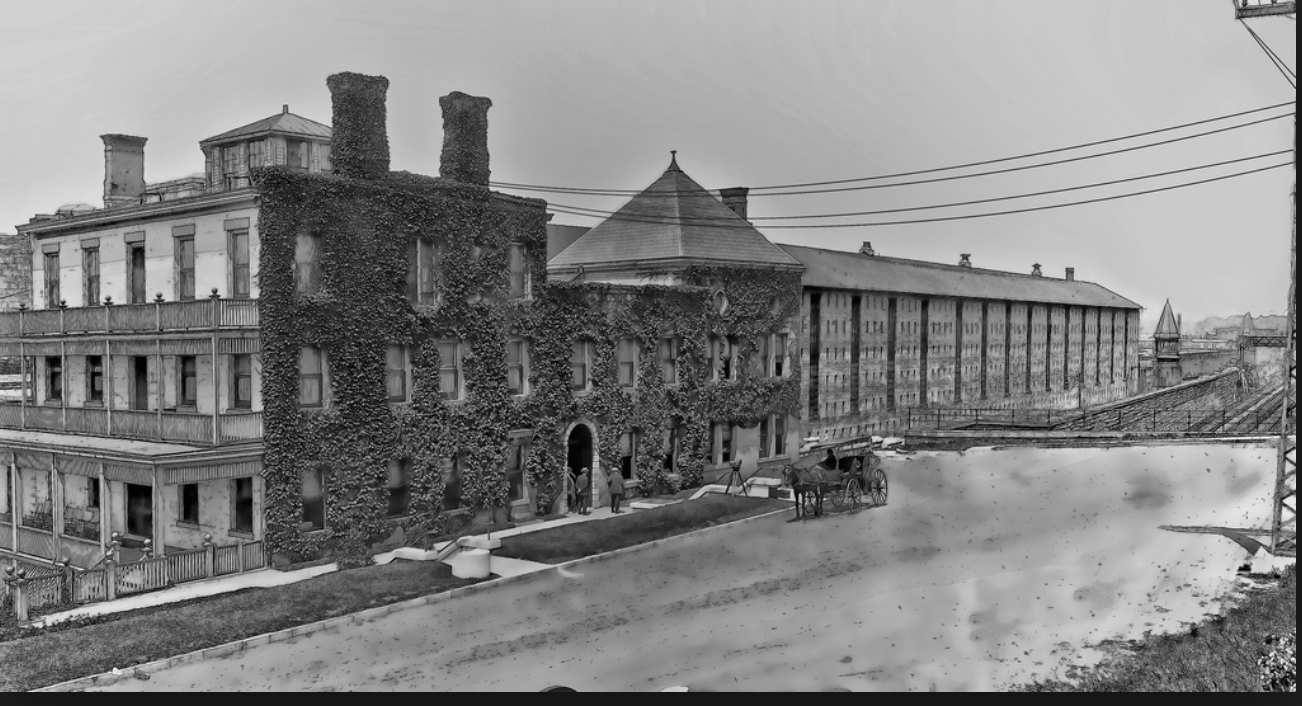
The Mt. Pleasant Female Prison, built in 1839, was a department of Mount Pleasant State Prison (today’s Sing Sing) Courtesy of the Ossining Historical Society and Museum
She instituted daily schooling in the prison chapel and started a small library that allowed each woman to take a book to her cell to read (making sure that there were picture books available for those who couldn’t read.) She also believed that lightness and cheer were more conducive to reformation, and placed flowerpots on all windowsills, tacked maps and pictures on the walls, and installed bright lights throughout. She spearheaded the celebration of holidays, introduced music into the prison, and began a program of positive incentive over punishment. Finally, she fought to improve the food served to the women and ended the “rule of silence”, believing that “the nearer the condition of the convict, while in prison, approximates the natural and true condition in which he should live, the more perfect will be its reformatory influence over his character.” [1]
It must be said that her methods were deeply influenced by the now-discounted “science” of phrenology which looked at the correlation between skull shape and human behavior, giving a biological basis for criminal behavior (not, as many religious people believed then, sheer, incorrigible sinfulness.) Eliza would even edit and publish an American edition of a treatise by the English phrenologist Marmaduke Blake Sampson, under the title Rationale of Crime and its Appropriate Treatment. [2]
This phrenological poster ostensibly shows how to interpret bumps on the skull to predict and understand observed behaviors. Courtesy of the Library of Congress
Although the mayhem that had plagued previous matrons was significantly reduced, Eliza’s approach was viewed as simply coddling the prisoners. This led to conflicts with several staff members, including Reverend John Luckey, the influential prison chaplain. By 1848, a change in the political landscape installed new prison leadership and she was forced to resign.
She would move to Boston, to work at the Perkins Institute for the Blind until her explorer-husband died unexpectedly while in San Francisco. Eliza went to California both to settle his estate and execute a plan assisting destitute women purchase homes in the West to achieve financial independence. Though that initiative was not successful, Eliza herself bought a ranch in Santa Cruz County, built her own house, and traveled on horseback unchaperoned, among other scandalous things she would detail in her 1856 book California, In-doors and Out.
In 1852, she entered into a stormy marriage with William Fitzpatrick, a volatile pioneer. During this period, she had a daughter, who died in infancy, worked on her California book, taught school, visited San Quentin prison, and gave public lectures.
Divorcing Fitzpatrick in 1856, she returned to New York and began work on what is arguably her most significant work, Woman and Her Era. In it, she would glorify women’s reproductive role as a creative power second only to that of God. She further contended that the discrimination women experienced and the double-standard of social expectations stemmed from an unconscious realization that females had been “created for a higher and more refined existence than the male.”[3]
So, her initial disdain for women’s equality and suffrage stemmed from her unique feminist philosophy that ironically saw women as superior due to their reproductive function, historically something that had always defined female inferiority. Thus, in her world view, why should women lower themselves to the level of men to achieve “equality”?
It’s a fascinating way to look at the world, no?
Eliza would give numerous lectures on this topic before returning to California and serving as the Matron of the Female Department of the Stockton Insane Asylum.
In 1862, she would work towards a Constitutional Amendment to abolish slavery and, in 1863, answer the call for volunteers to help nurse wounded soldiers at Gettysburg.
She died of consumption a year later, likely contracted during her Civil War hospital work.
She is buried in a Quaker cemetery in Milton, New York.
Major Publications:
Life in the Prairie Land (1846) A memoir of her time on the Illinois prairie between 1836 and 1840.
California, In-doors and Out (1856) – A chronicle of her experiences and observations in California.
My Early Days (1859) An autobiographical novel describing Farnham’s life as a foster child in a home where she was treated as a household drudge and denied the benefits of a formal education. The fictional heroine reflects Farnham’s own character as a tough, determined individual who works hard to achieve her goals, overcoming all obstacles.
Woman and Her Era (1864) Farnham’s “Organic, religious, esthetic, and historical” arguments for woman’s inherent superiority.
The Ideal Attained: being the story of two steadfast souls, and how they won their happiness and lost it not (1865) This novel’s heroine, Eleanora Bromfield, is an ideal, superior woman who tests and transforms the hero, Colonel Anderson, until he is a worthy mate who combines masculine strength with the nobility of womanhood and is ever ready to sacrifice himself to the needs of the feminine, maternal principle.
SOURCES
James, Edward T., et al., editors. Notable American Women, 1607-1950 : A Biographical Dictionary. The Belknap Press of Harvard University Press, 1971.
Wilson, James Grant, et al., editors. Appleton’s Cyclopaedia of American Biography. D. Appleton & Co., 1900.
[1] NYS Senate Report, 70th Session, 1847, vol. viii, no.255, part 2, p. 62
[2]Notable American Women, 1607-1950 : A Biographical Dictionary.
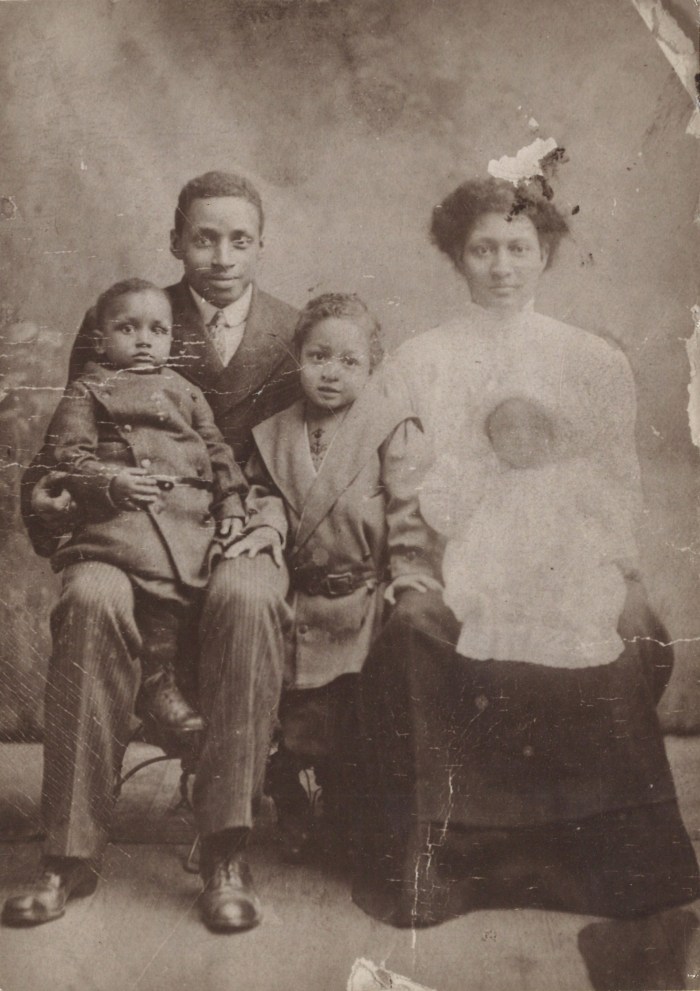
Minnie Moseley was one of eight children born to Jacob and Ella Moseley in Buckingham, Virginia.
According to the New York State census, in June of 1905, at the age of 18, she seems to have been working in Yonkers as a servant, but that December she returned to Virginia to marry Thomas Nabors.
By 1910, Minnie and Thomas would have three children and travel up north in search of better opportunities.
Thomas and Minnie with Thomas, Sherman & baby Pearl, c. 1910 Courtesy of Dwayne Mann
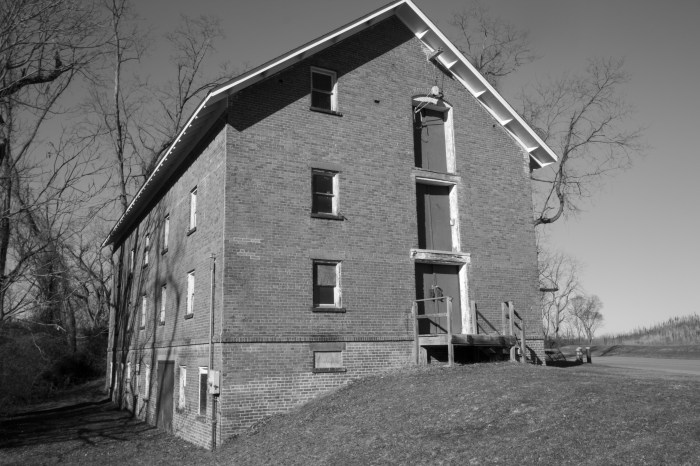
Soon they would be living on Croton Point in the brick ‘Fruit House’ building while Thomas worked in the brickyards.
Brick “Fruit House” on Croton Point. Still standing today, it was originally built for fruit and vegetable storage. In the early 20th century, it was used as a boardinghouse for the brick and orchard workers. Courtesy of Scott Craven
Minnie would take care of her children while also cooking three meals a day for the boarders they lived among. When the brickyards closed a few years later, the Nabors family would move to Ossining, purchase a home on Hunter Street, and Thomas would build a successful trucking business, delivering coal and oil.
Minnie was a force of nature. Describing her influence on all around her, her family fondly jokes: “If Minnie coughed, everyone caught a cold.” Her commitment to helping others was unwavering as she tirelessly donated her energy and resources to anyone in need.
When her brother Jake Moseley lost his wife in the 1918 flu pandemic, Minnie opened her heart and home to his three daughters. When another sibling succumbed to tuberculosis, she stepped in once more, helping to raise his children as her own.
Minnie and Thomas would have five children: Thomas, Sherman, Pearl, Blanche and Beulah. And all the time she was raising her children, she was running side businesses to help support the family.
She managed a summertime snack bar on Hunter Street called the “Busy Bee,” serving hamburgers, hot dogs and sodas. At the time, there was really only one playground Black children were allowed to use and it just happened to be right across the street from Minnie’s.
A stern disciplinarian, organized, ambitious, and with a ramrod straight back, Minnie began her day by balancing her checkbook. But her grandchildren also remember her energy and humor, with grandson Tom recalling Minnie as firm but gentle, infusing everything she did with love, even when she scrubbed him everywhere with borax and a brush.
Her kindness and generosity weren’t confined to her family — once her children were school-age, Minnie started taking in foster children.
In 1947, she would receive recognition from the Department of Child Welfare for raising over 40 children, but her work was far from over. Ultimately, Minnie would act as foster mother to 53 youngsters, in addition to raising her own children and those of her siblings.
But there was more to Minnie. She was also an integral part of the community, and a member of several clubs – The Order of the Eastern Star, and, with her husband Thomas, the Improved Benevolent and Protective Order of Elks. (Also known as the “Black Elks,” this organization was founded in 1868 when Black people were denied entry into similar, white, fraternal groups.)
An active member of the Star of Bethlehem Church, Minnie was a church committee woman who hosted many meetings and gatherings at her home, as well as attending and chairing fundraisers and other events.
Local newspapers note that she helped found the Ossining Chapter of the NAACP, and in 1958 was recognized for her “meritorious service.” In addition, for over 20 years she involved herself in local politics, eventually becoming Chairwoman of the Ossining Republican committee.
She died at the age of 72 and is buried in the Bethel Cemetery, Croton-on-Hudson, New York.
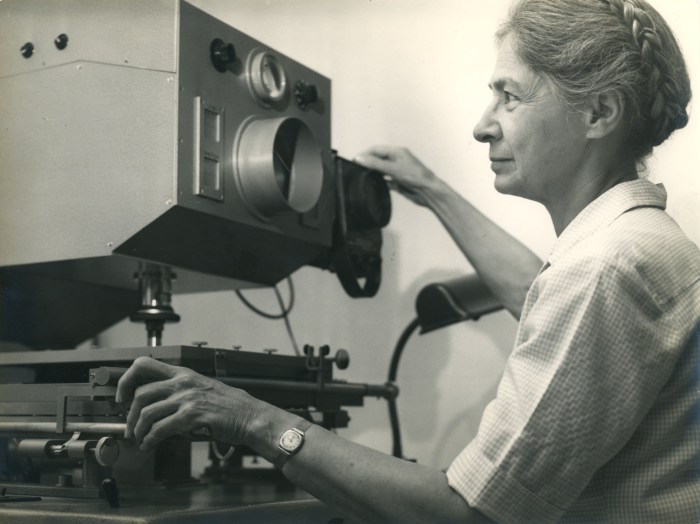
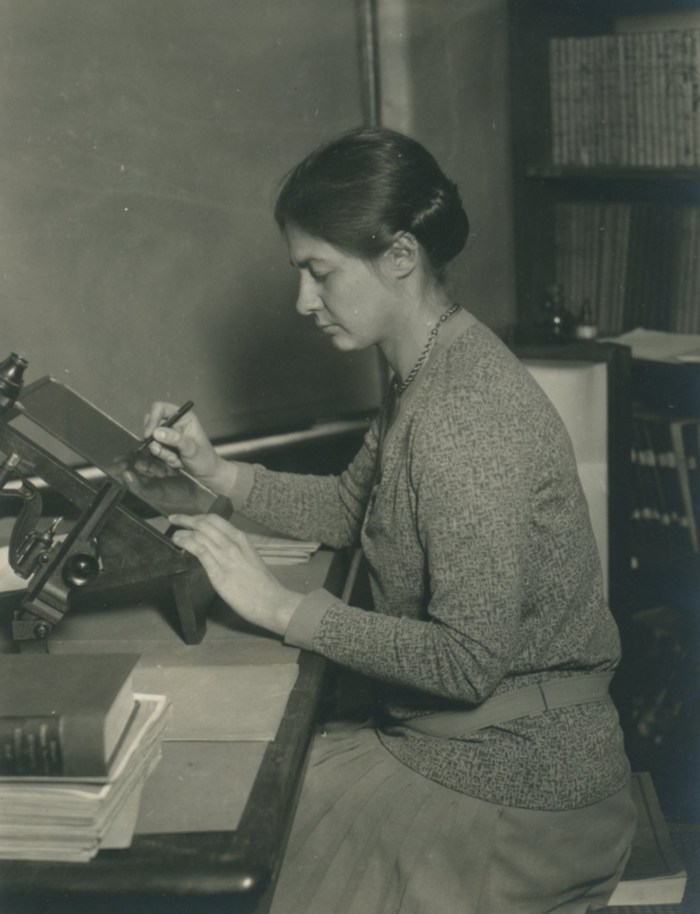
Henrietta Hill Swope, c. 1950s Courtesy of Kevin Swope
Henrietta Hill Swope 1902 – 1980
Astronomer Inventor ***Local Connection: The Croft, Teatown, Spring Valley Road***
Henrietta Hill Swope was a quiet, humble, but fiercely driven scientist whose work contributed to our current understanding of the structure of our universe.
Specifically working in the fields of Cepheid variable stars and photometry, her early work showed that that the Earth and the Sun were not at the center of the Milky Way galaxy as previously believed. From there, she surveyed all the variable stars within the Milky Way, thus tracing out the structure of that galaxy, something that had never been done before. She also helped invent LORAN, and contributed to the creation of a new technique to simply and accurately determine the distance of stars and galaxies from Earth.
Born in St. Louis, MO in 1902 to Gerard and Mary Hill Swope, Henrietta came from an extraordinary family. Her father was a financier and president of General Electric, while her uncle, Herbert Bayard Swope, was a Pulitzer-prize winning journalist, war correspondent and newspaper editor. Her mother was a Bryn Mawr graduate who would go on to study with the pioneering educator John Dewey, and later work for Jane Addams at Hull House in Chicago.
Henrietta became interested in astronomy as a young girl, and was taken to the Maria Mitchell Observatory on Nantucket where she heard lectures from Harvard’s Dr. Harlow Shapley and others.
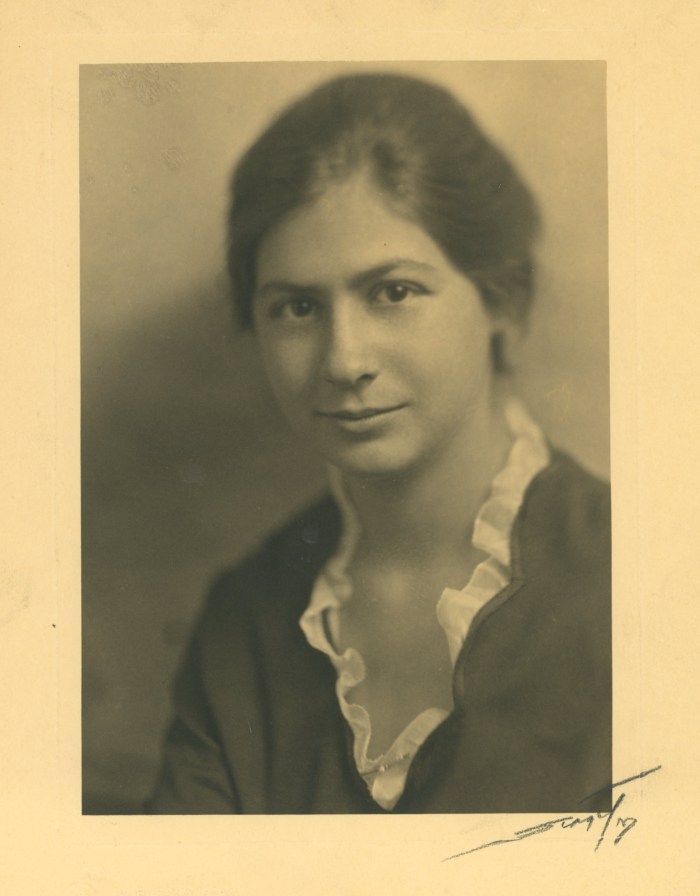
Henrietta went off to Barnard College, where she majored in Mathematics and was graduated in 1925. (She said she chose Barnard because she “didn’t have any Latin. My father didn’t believe in any Latin. He thought I should spend that time on either sciences or modern languages.”[1])
Henrietta Hill Swope Barnard Class of 1925 Photo Courtesy of Kevin Swope
In 1927, though she had only taken one course in astronomy, a friend alerted her to a fellowship offering for women only sponsored by Dr. Harlow Shapley at the Harvard College Observatory (HCO). She applied and was quickly accepted. (Her initial interpretation was that he was reaching out to women specifically because he “wanted some cheap workers.” Ahem.)[2]
She became Shapley’s first assistant, and while she looked for variable stars on photographic plates taken via the HCO telescope, she earned her Master’s in astronomy from Radcliffe College in 1928.
At the Harvard College Observatory, c. 1930s Looking for variable stars Courtesy of Kevin Swope
The following year, she became famous when she identified 385 new stars, accurately revealing the composition of the Milky Way galaxy. By 1934, she was in charge of all the Harvard programs on variable stars which were central to much of the astronomical research at the time.
In 1942, she left Harvard to work at MIT in a radiation laboratory, and the following year was recruited by the US Navy to work on a secret project which would come to be known as LORAN (Long Range Aid to Navigation.) This innovative technology allowed navigators to use radio signals from multiple locations to fix a precise position. She was appointed head of LORAN Division at the Navy Hydrographic Office in Washington, DC for the duration of the World War II.
Post-WWII, she would teach astronomy at Barnard College, then relocate to California to work as a research fellow at the Mt. Wilson and Palomar Observatories, as well as teach at the California Institute of Technology (CalTech). She would visit her family’s home The Croft in Ossining a few times a year, and is remembered by a niece as being “no frills. Very sweet, otherworldly, and decidedly bluestocking, none of us knew how accomplished she was or how important her work was.”
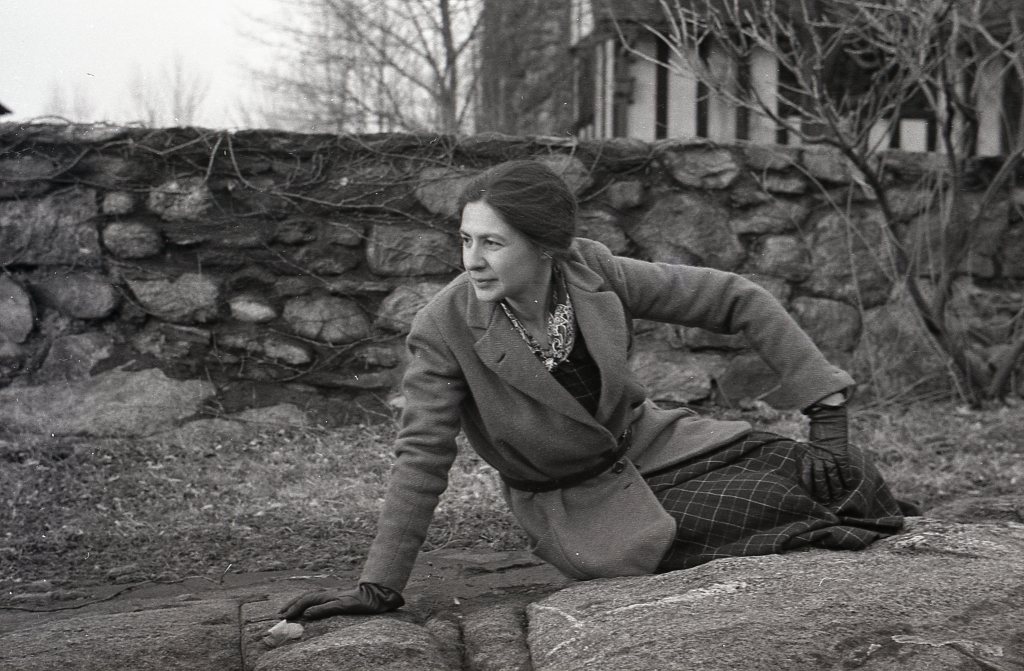
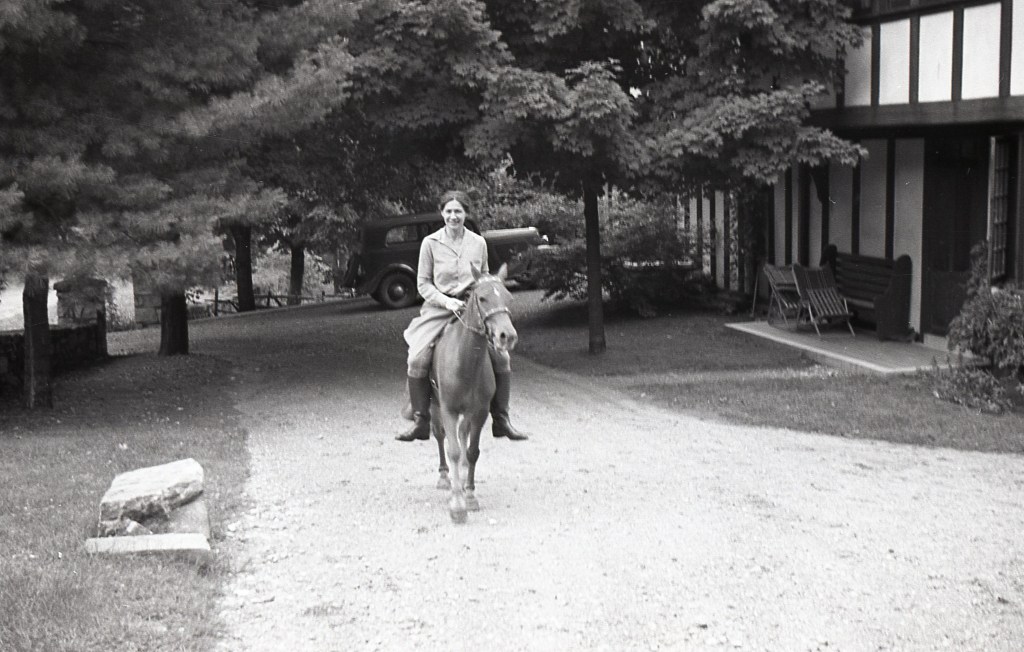
Henrietta Swope at The Croft, c. 1930s/40s Courtesy of Kevin Swope
During this time, Swope’s research focused on determining the brightness and blinking periods of Cepheid variable stars, and the quality and precision of her work allowed other astronomers to use these stars as “celestial yardsticks” with which to rapidly measure celestial distances. Swope herself used them to determine that the distance from earth to the Andromeda galaxy is 2.2 million light-years.
She remained at the Mt. Wilson Observatory and CalTech until her retirement in 1968.
In the 1970s, she donated funds to the Carnegie Institute of Washington to aid in the development of the Las Campanas Observatory in Chile.
The Henrietta Swope Telescope in Las Campanas, Chile
The 40-inch Henrietta Swope Telescope began operation in 1971 and though Swope died in 1980, she continues to help people look to the stars.
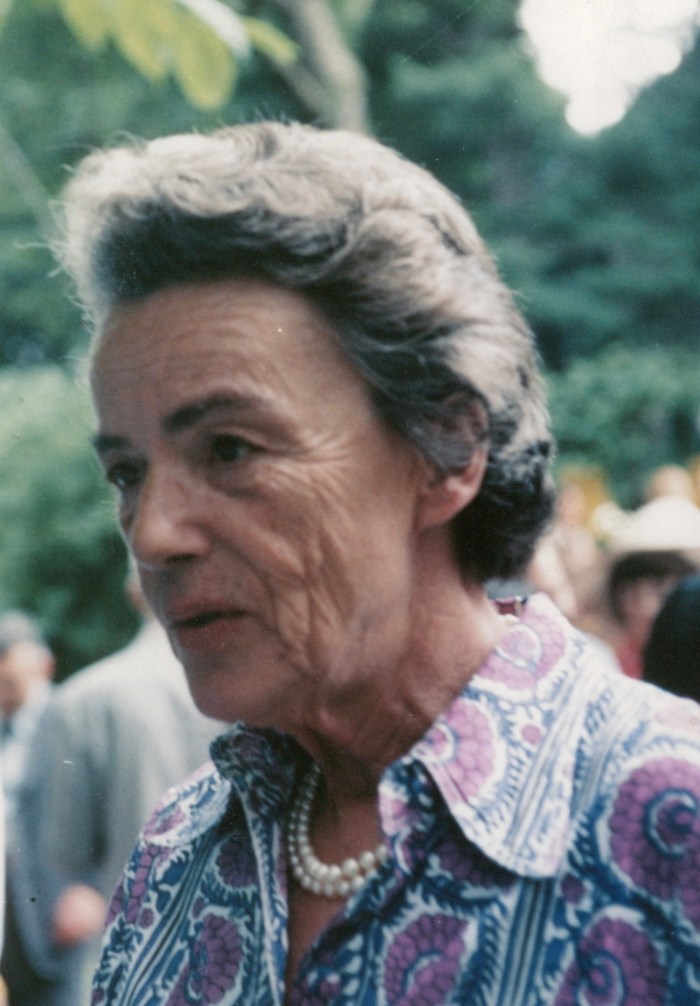
Sarah “Sally” Swope c. 1980s Courtesy of Dorry Swope
Sarah “Sally” Swope 1912 – 1999
Philanthropist Board Member Volunteer ***Local connection: Hawkes Avenue***
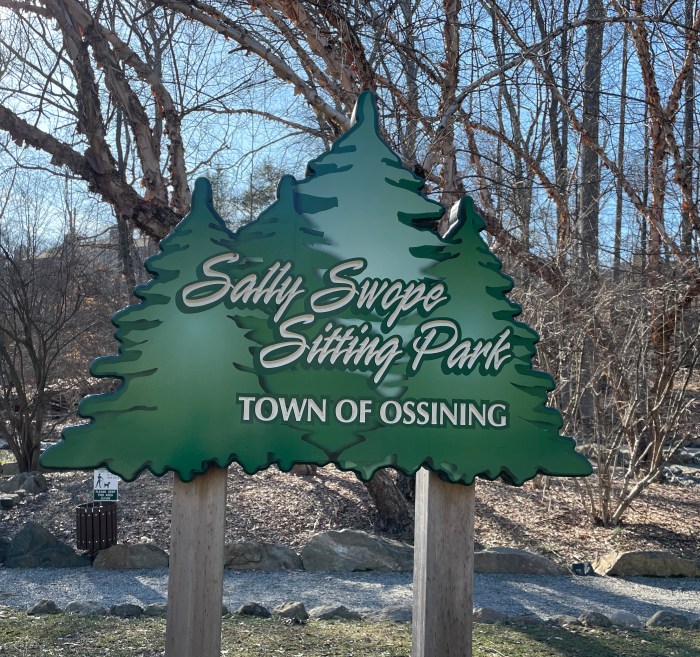
Perhaps you’ve driven along Hawkes Avenue to the very outskirts of the Town and noticed this sign for the Sally Swope Sitting Park:
Who, you might then wonder, is Sally Swope? And why does she have a park named after her?
Well, she is most definitely one of those women who very quietly Got Things Done. In fact, one person interviewed commented that she was “practically allergic to being recognized for her good deeds.”
But from the 1970s until her death in 1999, Sally was a discreet force as a philanthropist and board member for, among other organizations, the Ossining Children’s Center, Westchester Community College, the Scarborough (and later Clearview) School, and Teatown Lake Reservation.
From those I’ve spoken to, she was curious, interested in people, and approachable. “Cultured”, “upper crust”, and “strong-willed” are also words that come up often in connection with her.
Sarah Porter Hunsaker was born in Brookline, Massachusetts in October 1912.
She attended the exclusive Miss Porter’s School (Miss Porter was a great-aunt of hers) and go on to study at Sarah Lawrence and Radcliffe Colleges. After college, she traveled the world and came home to work at the Boston Museum of Fine Arts.
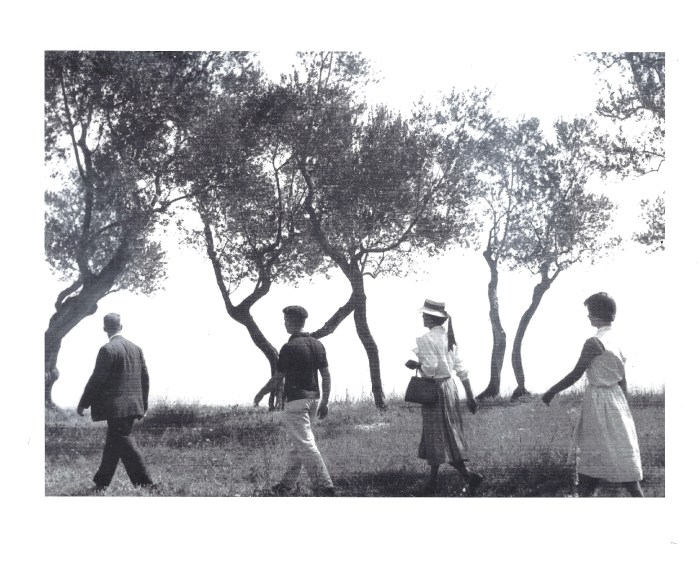
In 1937, she married David Swope, a son of General Electric president Gerard Swope (and brother to the astronomer Henrietta Hill Swope.) While Sally stayed close to home in those early years as she raised her son David, Jr., and daughter Dorry, she was still active in the social sphere of Ossining.
The Swope Family David Sr., David Jr., Sally & Dorry c. 1965 Courtesy of Dorry Swope
Gradually she began extending her reach, focusing on charities that spoke to her interests – primarily children, education, and the environment. She was especially dedicated to the idea that childcare should be more than babysitting – a policy that had just been enacted at the Federal level through the Head Start programs of the 1960s. And she wanted to make sure that the Ossining’s Children’s Center was as diverse as Ossining, believing that to change society, one had to start with the youngest and most vulnerable.
She would join boards, fundraise, and be a hands-on presence. She did whatever she felt needed to be done: answering phones at the Ossining Children’s Center on occasion, serving ice pops to OCC kids who were regularly bussed across town to swim in her pool high atop Hawkes Avenue, and strategizing about the best ways to approach people for donations.
Her motto seemed to be “If you want it badly enough, you can make it happen.” And indeed, in no small part due to her contributions, the organizations with which she was involved flourished and continue to thrive decades later.
Her work extended far beyond just writing checks and attending galas – she served on boards and led committees, organizing, encouraging, and motivating her fellow volunteers. She regularly opened her house and gardens to children from the various groups in which she was involved.
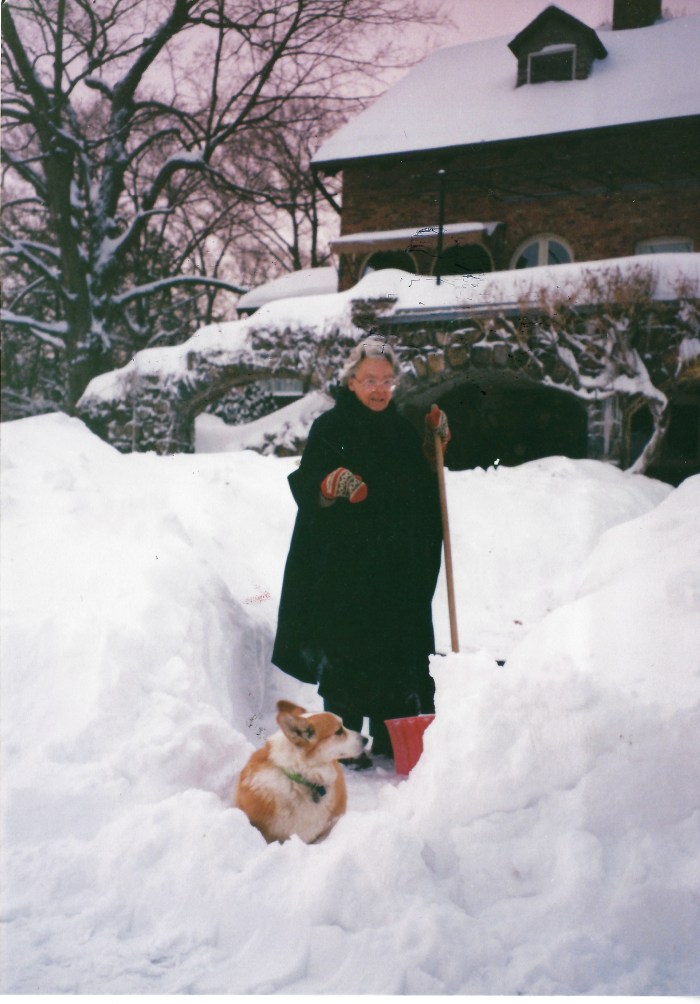
Sally Swope with Daisy c. 1990s Courtesy of Dorry Swope
And at her death, she was learning Italian. Always seeking, always learning . . .
In 2002, son David Swope, Jr., donated a parcel of land to the Town of Ossining in memory of his mother. Renovated and updated in 2024, the Sally Swope Sitting Park provides open space and meditative trails. Like its namesake, the park is a hidden gem in the midst of Ossining.
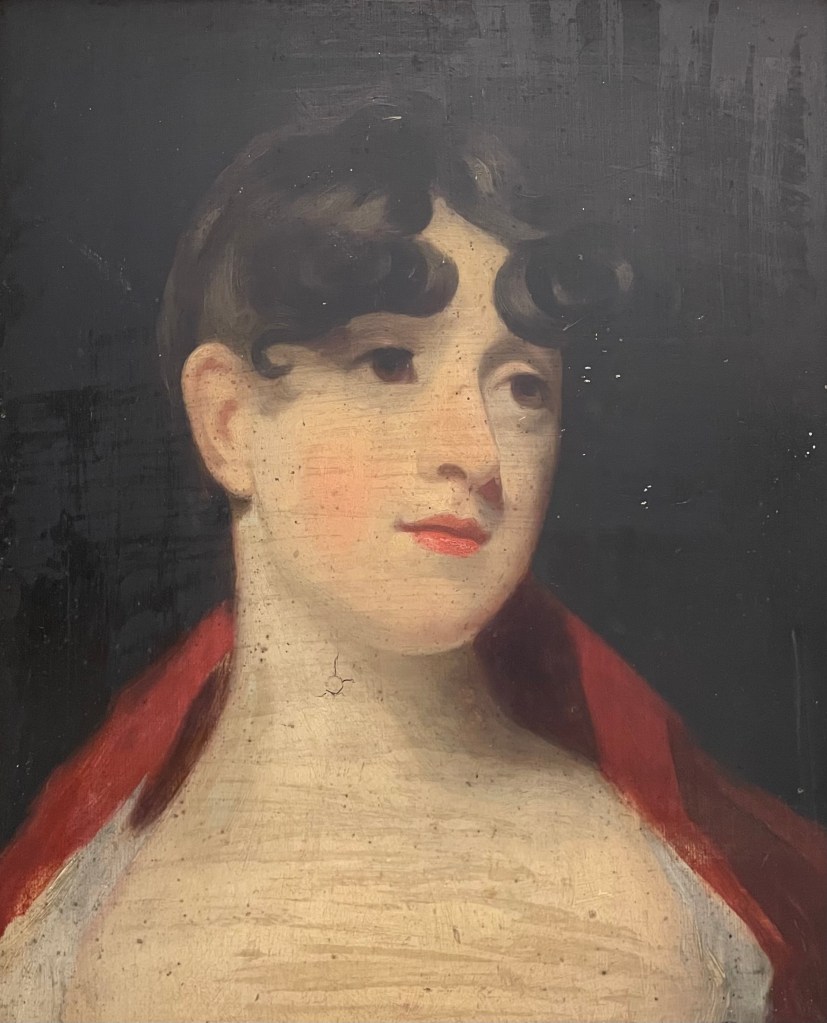
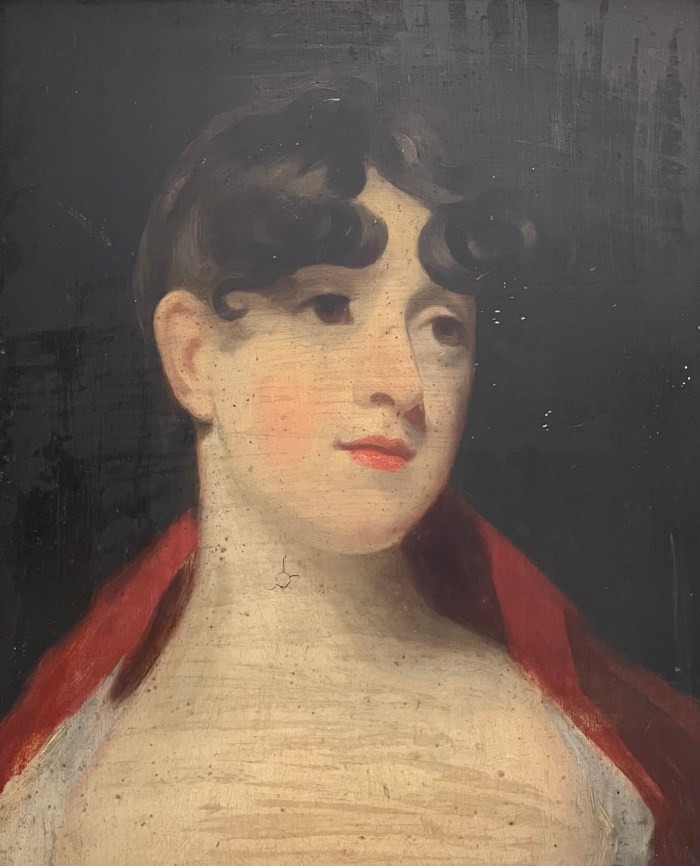
“A Lady of the Agate Family” Family legend has that this is a portrait of Harriet, painted by her older brother Frederick Agate c. 1830s Courtesy of the New York Historical Society
Harriet Agate Carmichael 1817 – 1871
Artist ***Local Connection: 2 Liberty Street***
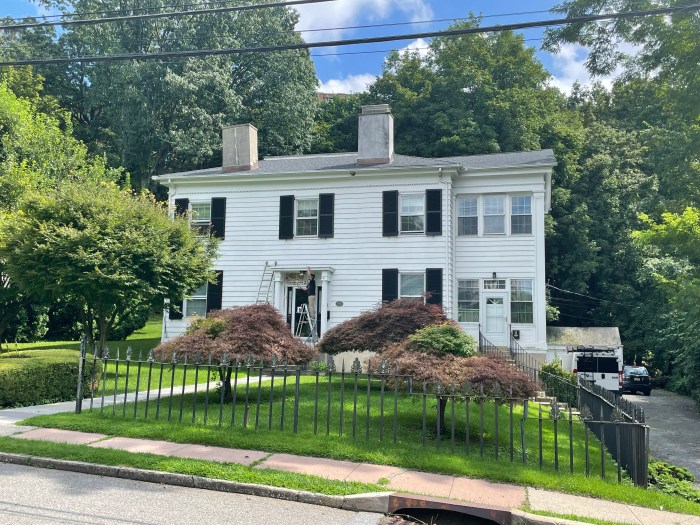
2 Liberty Street, Ossining, c. 2024 Built c. 1820 by Harriet’s father Thomas Agate, the home is still standing and still occupied today.
One of three artistic siblings, Harriet Agate was born in Sparta in 1817. (Today Sparta is part of the Village of Ossining.)
In 1833, Harriet was one of the first women invited to show a painting at the National Academy of Design’s annual Art Exhibition. That painting was called “A View of Sleepy Hollow,” and was exhibited at the Eight Annual Exhibition, held at Clinton Hall, Beekman Street from May 14 – August 20, 1833.
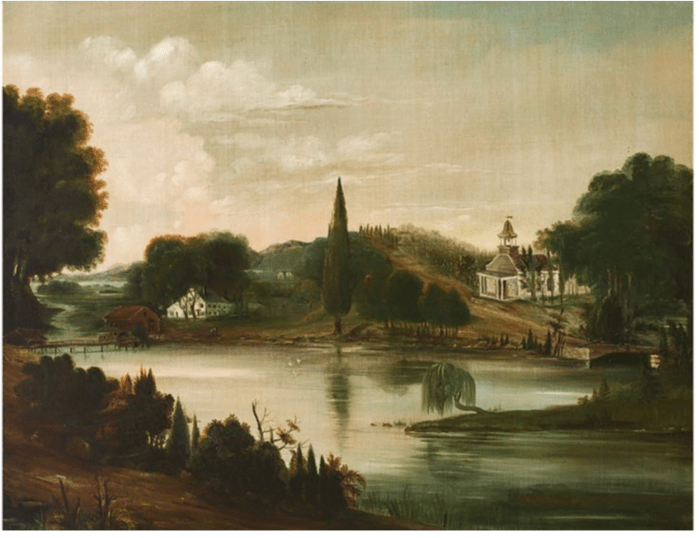
While it cannot currently be proven, I have a hunch that the painting below could be the one Harriet Agate showed at the 1833 National Academy of Design’s Art Exhibition. Hers was titled “A View of Sleepy Hollow.”
“View of Sleepy Hollow” c. 1834 – 1867 Unknown artist Courtesy of Historic Hudson Valley
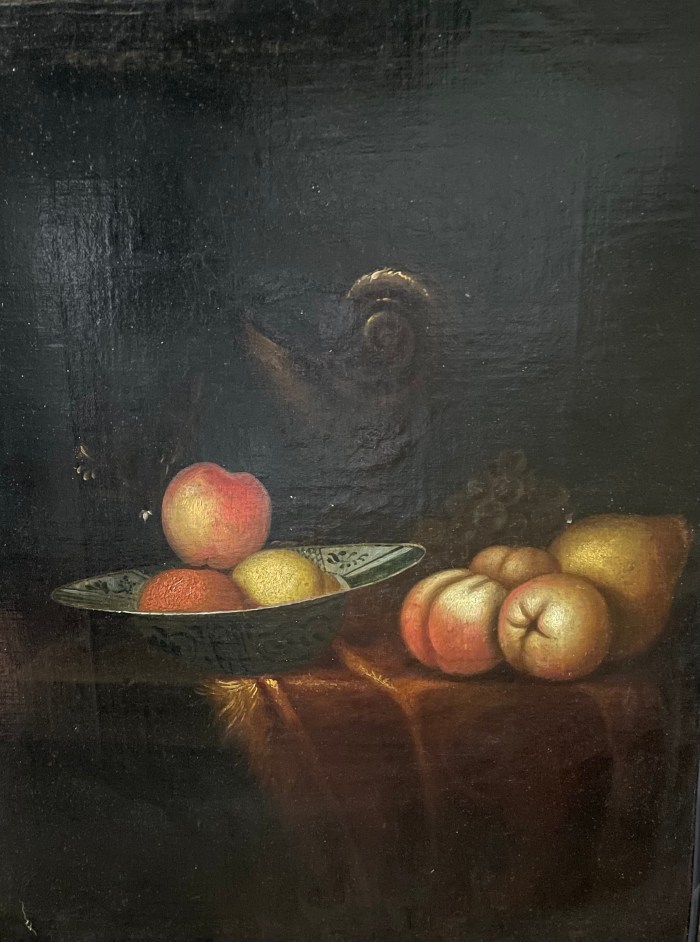
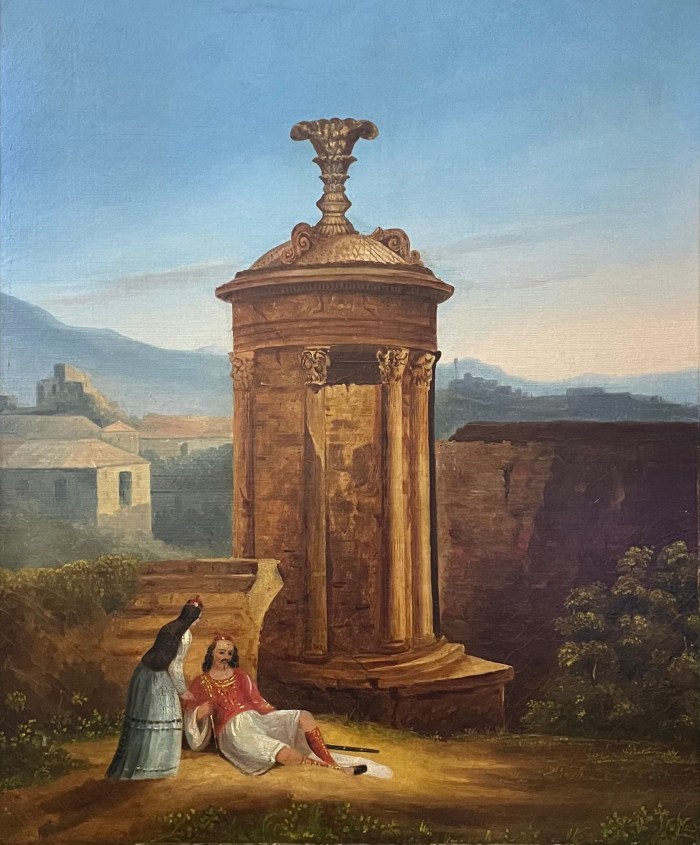
There are only two surviving paintings known to be by Harriet:
Still Life with Apples By Harriet Agate, c. 1830 Courtesy of the Ossining Historical Society and Museum
At the Monument of Lysicrates Oil painting on board by Harriet Agate, c. 1830 Courtesy of the Newark Museum of Art
When the Newark Art Museum accepted this painting in 1959, curator William H. Gerdts wrote the following notes:
It is an almost primitive painting, most interesting from a general cultural point of view . . . It shows a Greek soldier in costume lying on the ground with a Greek woman, also in native costume, next to him. A big Greek monument is in the centre behind him (Choragic Monument of Lysikrates I think.) Now, the subject of the picture is not known, but from the figures in it and from the time it was painted (it looks circa 1820 to 1830) I am sure it is a provincial American expression of sympathy with the Greek revolution — same time as Lord Byron’s [poem entitled “January 22, Missolonghi”] and Delacroix’s “Greek Expiring on the Ruins of Missalonghi” . . . but it is a relatively rare to see this in American art.
It is noteworthy that the people depicted in “At the Monument of Lysicrates” look particularly awkward – an indicator perhaps of the limitations placed on women artists at that time. Women would not have been allowed to take figure drawing classes, as viewing nude models would have been considered decidedly inappropriate.
This painting was included in a 1965 exhibit at the Newark Art Museum on “Women Artists of America, 1707 to 1964.”
Harriet’s two paintings and many of her brothers’ (Frederick and Alfred Agate) had been carefully kept in the attics of Agate family descendants (first in the Liberty Street house and then in another on Agate Avenue) until 1959 when Harriet’s great granddaughter, Melodia Carmichael Wood Ferguson, would discover them and give them to the Ossining Historical Society. Most were then donated to the New-York Historical Society and the Newark Art Museum, where they are not on public view but are safely stored in climate-controlled warehouses.
Around 1837, Harriet married Thomas J. Carmichael, a contractor for the Sing Sing portion of the Croton Aqueduct. They lived with her mother in the Agate family house at 2 Liberty Street. Harriet’s husband may have also contracted with Sing Sing Prison, then called Mount Pleasant State Prison, to use inmate labor for his stone cutting business.
Unfortunately, as was proper for women of the time, Harriet mostly seems to have lived in the shadows of the men in her life. All we have are these two paintings, the possible portrait painted by her brother Frederick, some deeds of property sales, and a few mentions of her in the biographies of her artist brothers. We don’t know if she continued painting, or if the responsibilities of motherhood and the pressure of societal norms caused her to abandon the pursuit of her art altogether.
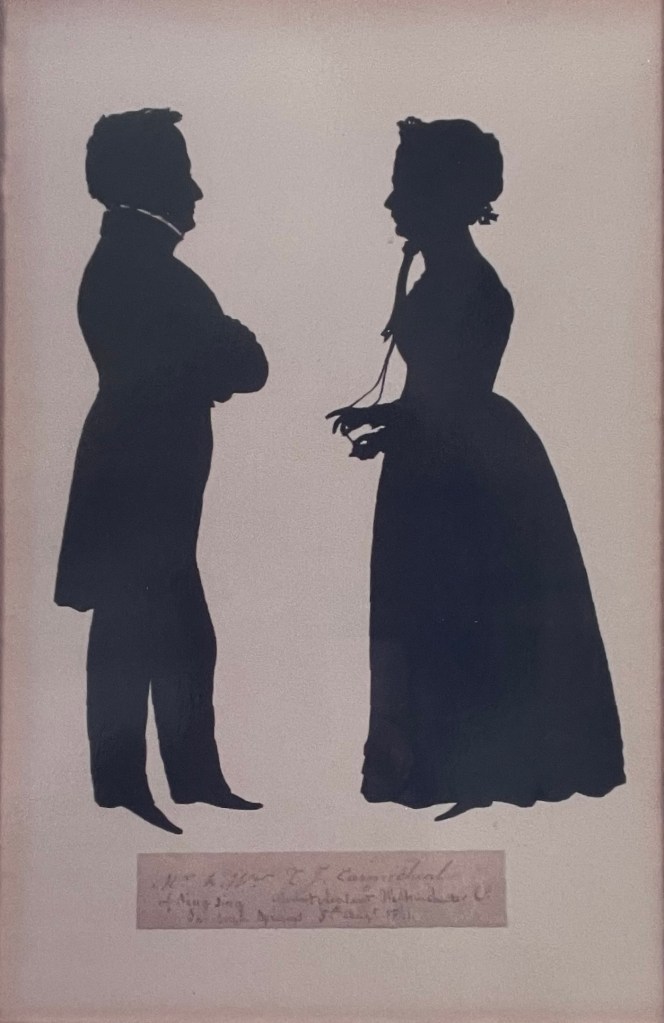
We do, however, have this delightful silhouette of the couple:
Silhouette of Harriet and Thomas Carmichael Made by Auguste Edouart, 1843 Handwritten caption reads: Mr. and Mrs. Thomas J. Carmichael of Sing Sing, Mount pleasant, Westernchester [sic] Co. Saratoga Springs, 6th August 1843 Courtesy of a private owner
Harriet would have five children and move to Wisconsin with her family in 1846 to live on a farm in Lake Mills. Sadly, husband Thomas died there in 1848, and after settling his estate, Harriet returned to Sparta where she lived with her mother Hannah at 2 Liberty Street and then with her daughter Melodia Frederica Carmichael Foster in Brooklyn.
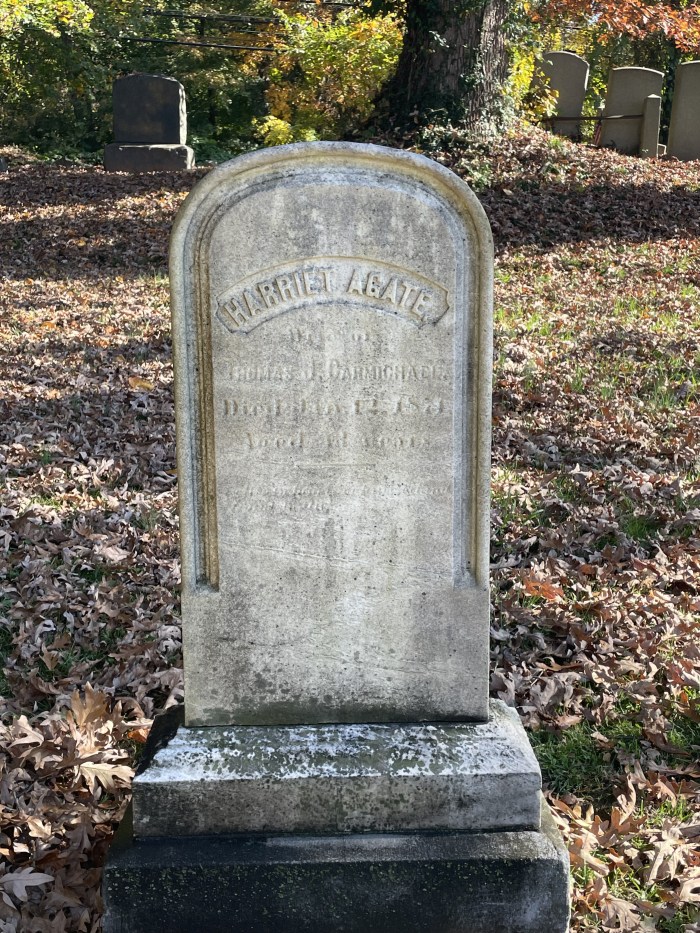
Harriet died in 1871 in Brooklyn and is buried in Sparta cemetery.
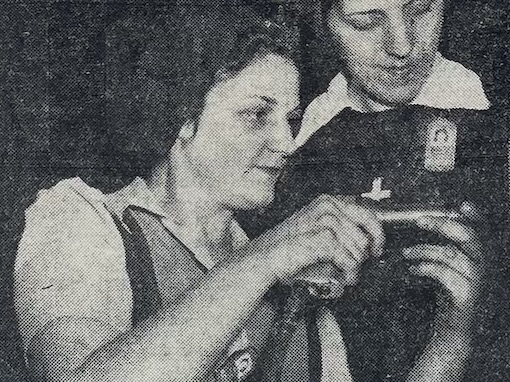
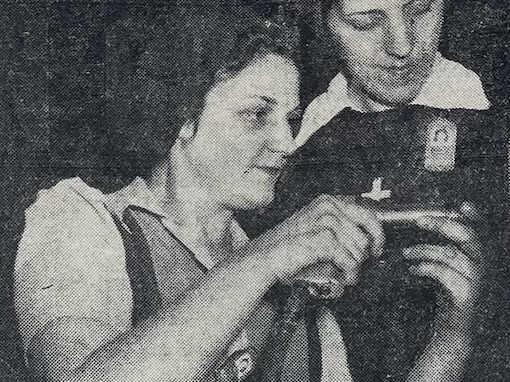
Jennie Chicarelli Fiorito & Rose Bonita at Eastern Aircraft plant, Tarrytown NY Courtesy of the Ossining Citizen Register, June 8, 1943
Jennie Chicarelli Fiorito Windas 1916 – 2002
An original “Rosie the Riveter” ***Local Connection: 10 Denny Street***
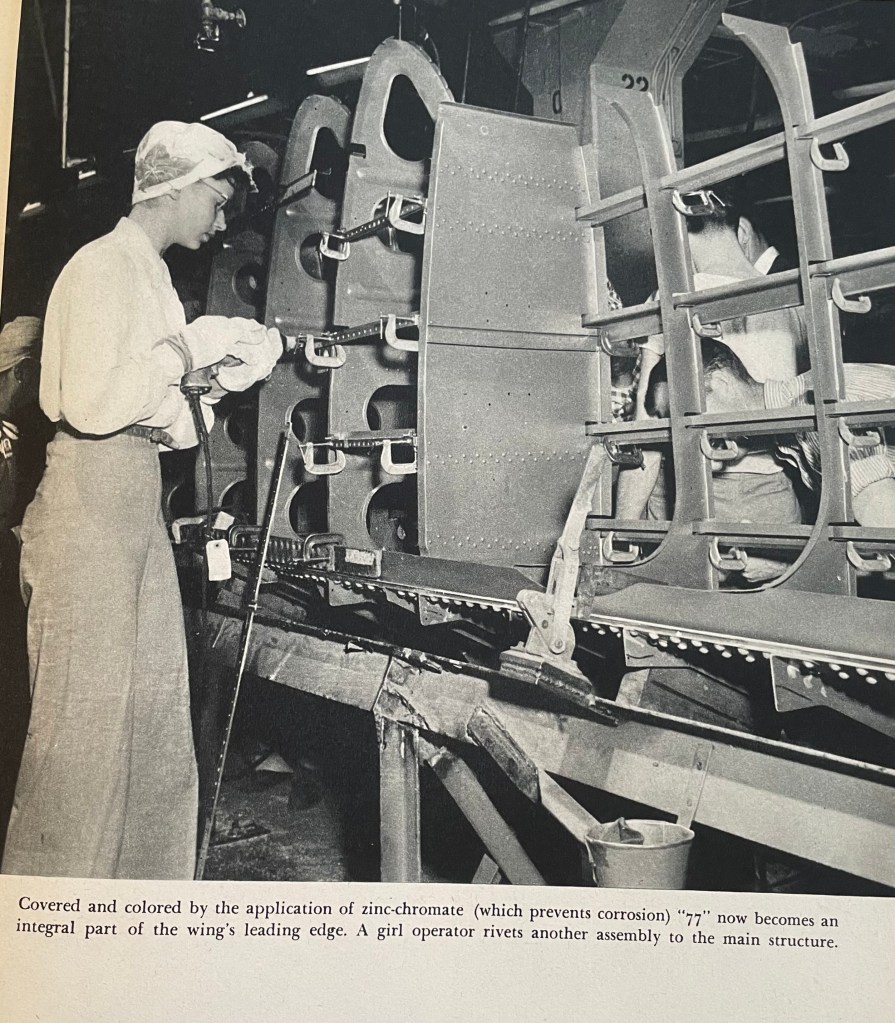
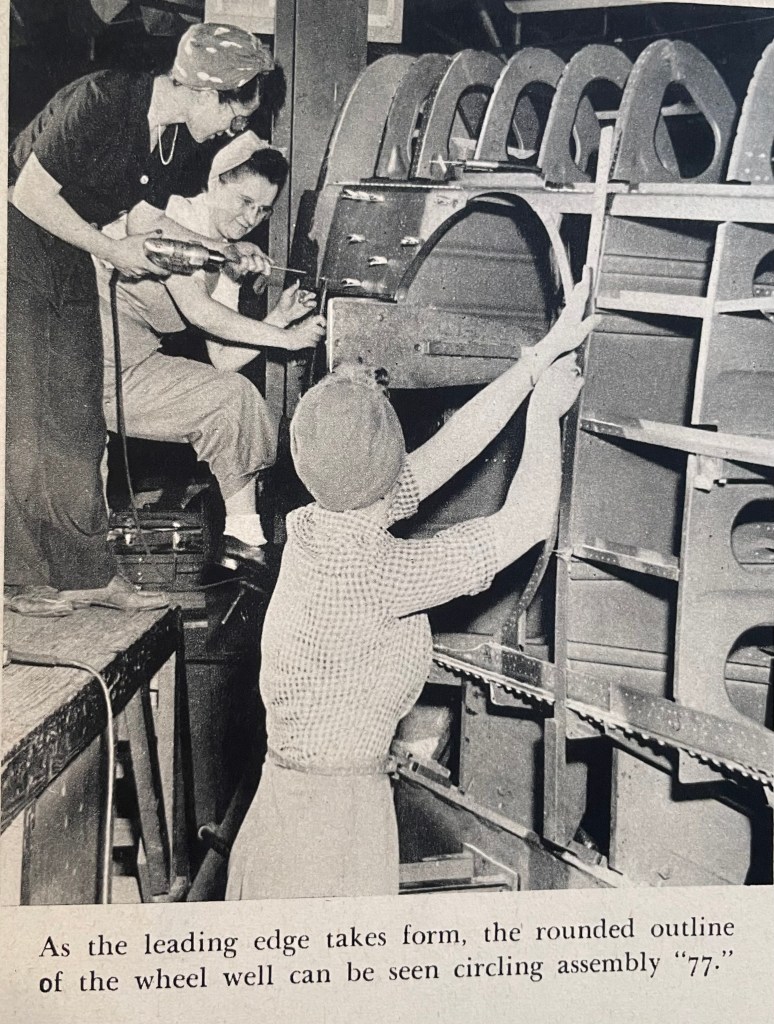
On June 8, 1943, at the north Tarrytown plant of Eastern Aircraft, Jennie Fiorito and Rose Bonavita set a record by riveting an entire trailing edge wing assembly for an Avenger torpedo bomber in less than six hours.
They started at midnight and finished just as the sun was rising.
Jennie and Rose had been working together as a riveting team for about six months when they decided to try and set a record. (Bonevita’s 1996 obituary in The Journal News asserted that the idea came about to help “raise flagging morale at the factory.”)
They asked for approval from their supervisor and were given the go-ahead. As word spread throughout the factory, the girls were a bit nervous, knowing that everyone was watching them closely. But as Jennie said, “The record doesn’t really mean anything, the main thing, as we see it, is to get out as many wings as we possibly can. We like to work and we feel that we, personally, are responsible to those boys for producing as much as we can as quickly as we can.”
For their effort, they received a letter from Franklin D. Roosevelt and the satisfaction of a job well done.
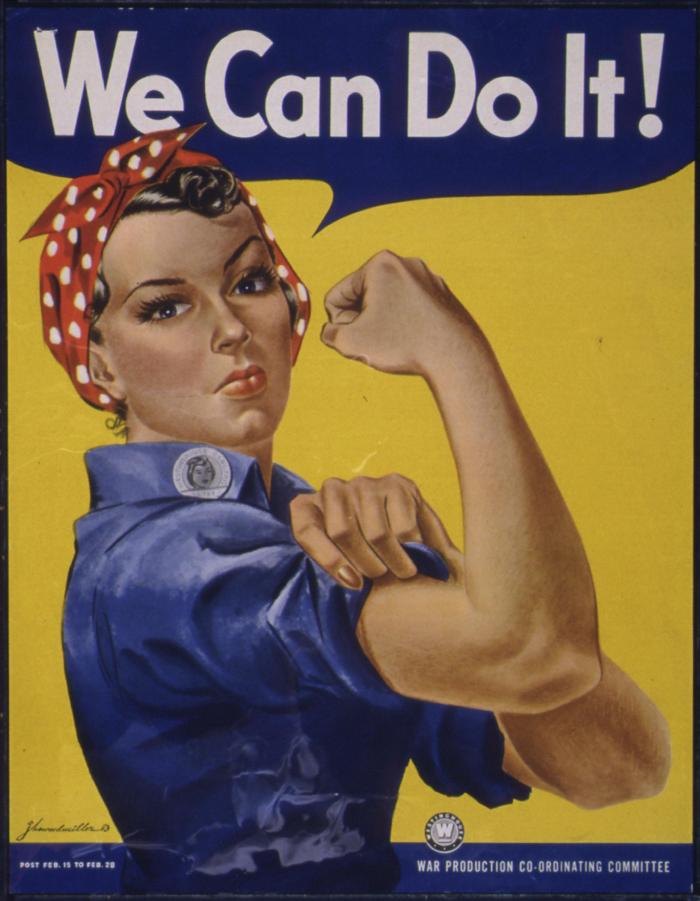
“We Can Do It!” By J. Howard Miller Created for in-house use at the Westinghouse Electric Company, it was displayed for only two weeks from February 15 – 28, 1943 to inspire workers to work harder. The poster was rediscovered the 1980s and has been used as inspiration for female empowerment ever since. Courtesy of the Library of Congress
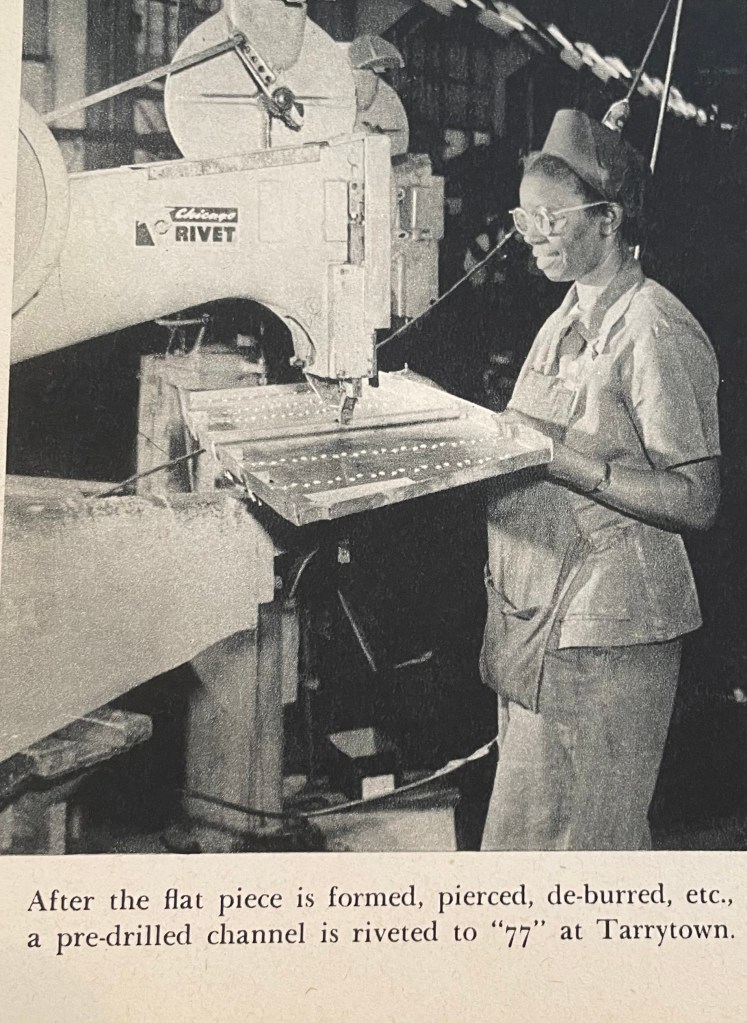
Born in 1916, Jennie was the youngest of six children whose parents emigrated from Faenza, Italy in 1909. The Chicarellis lived on a farm next to the Scarborough Country Club, and Jennie and her siblings attended a one-room schoolhouse in the area. Jennie would leave school at the age of 16 to work as a trimmer at the Fisher/General Motors Body Plant in North Tarrytown. With the advent of WWII, that factory was converted to an Eastern Aircraft plant in mid-1942, and primarily built Avenger torpedo bombers
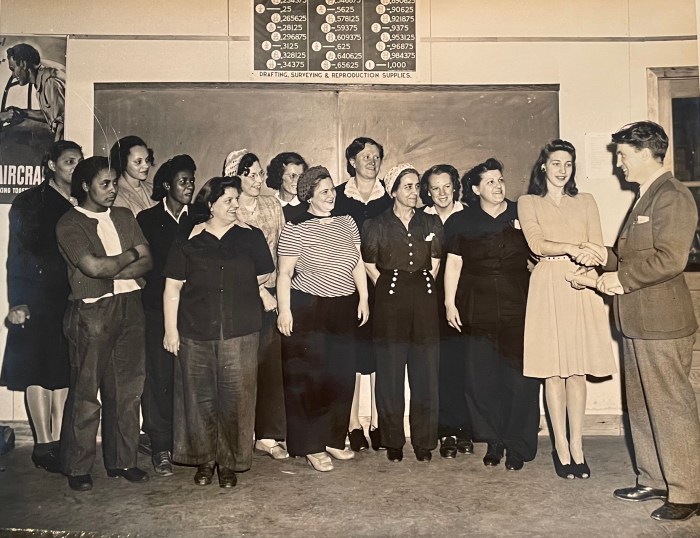
Training the Fisher Body/General Motors workers for war time. Jennie Fiorito is in the front row, 2nd from the left. Courtesy of the Tarrytown Historical Society
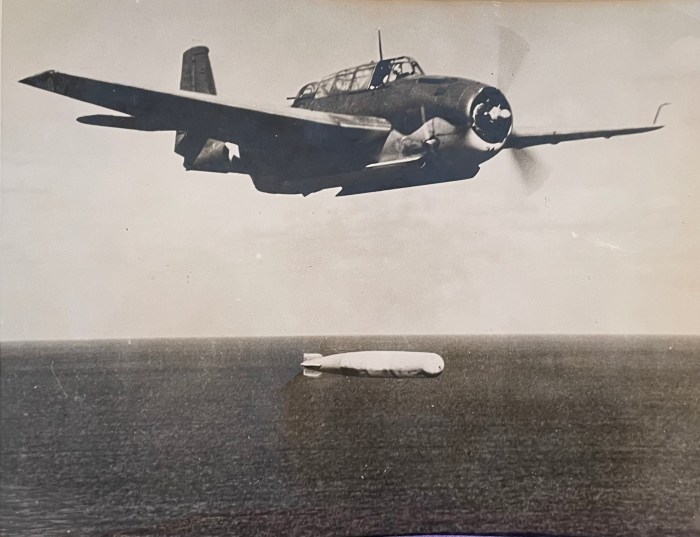
An Avenger Torpedo Bomber dropping a bomb Over 75% of these aircraft were produced at the Eastern Aircraft Division of General Motors, Tarrytown Plant Courtesy of the Tarrytown Historical Society
By April 1944, nearly half of the workers at the north Tarrytown plant were women, a significant increase from pre-war conditions. However, many would lose those jobs after the war ended and the men began returning home from the front.
After the war, Jennie would go on to work at Bell Telephone in Ossining, then transfer to NY Telephone in White Plains, where she would retire as a Supervisor after 30 years.
FUN FACT: “Rosie the Riveter”
Though we’re referring to Jennie and her partner Rosa as “Rosie the Riveters”, it’s a title that does not refer to one single person – there are many who are considered to be “Rosie.”
According to the Library of Congress, the first use of the term “Rosie the Riveter” came from a song of that title, written in 1942 by Redd Evans and Jacob Loeb and recorded by the Four Vagabonds. [Here’s a version recorded by Allen Miller and his Orchestra in 1943.]
The story goes that the songwriters were inspired by a 1942 newspaper article in which they read about Rosalind Palmer, a Connecticut society girl who took a job as a riveter at a Stratford, Connecticut factory that built Corsair fighter planes.
Then there’s that iconic “We Can Do It!” poster (above) – it is now believed that the model for the image was Naomi Parker, who worked in Alameda, California at the Naval Air Station and had been photographed at work on the assembly line. However, for decades the model was believed to be Geraldine Hoff Doyle.
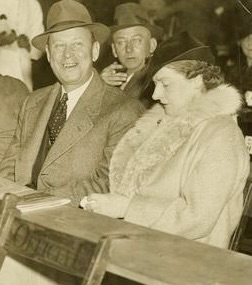
Kathryn and Lewis Lawes attending the Joe Louis v. Max Baer fight, 1935
Kathryn Stanley Lawes 1885-1937
“The Mother of Sing Sing” ***Local Connection: The Warden’s House, Spring Street*** (Today, the clubhouse of the Hudson Point Condominiums)
Kathryn Stanley Lawes (1885 – 1937) was known as the “Mother of Sing Sing.”
Wife of Warden Lewis Lawes, the longest tenured Prison Warden in Sing Sing’s history, she arrived at Sing Sing on January 1, 1920 with her two young daughters in tow. Settling into the drafty old Warden’s house situated next to the main cellblock, she would raise her girls (and have a third) within the walls of the prison.
Sing Sing Warden’s House, c. 1910 Courtesy of the Ossining Historical Society and Museum
She would regularly go into the prison and visit with the incarcerated. And her quiet kindnesses were the stuff of legend. She would arrange for every man to get a Christmas present – noting that some had never received one in their brutal lives. She would help them write letters to their families. Her youngest daughter, Cherie, recalled how her mother once gave away a favorite dress of hers so that the daughter of one of “the boys” could wear it to attend a high school dance.
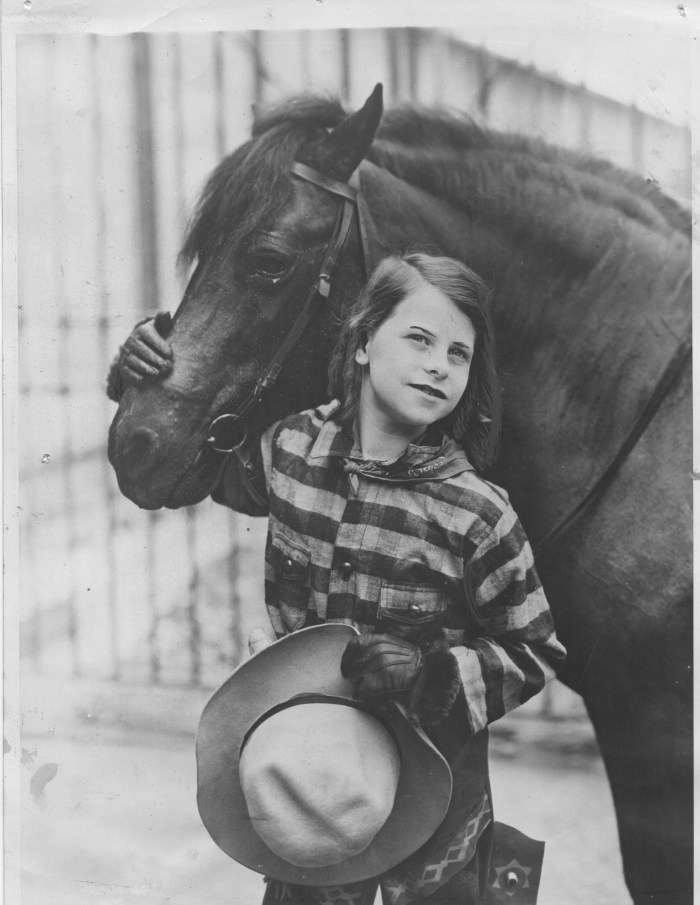
Daughter Joan Marie “Cherie” Lawes, seen with her pony just outside the gates of Sing Sing, c. 1930 Courtesy of the Ossining Historical Society and Museum
Kathryn hosted Labor Day picnics for inmates, Halloween parties for the neighborhood children, and oversaw special meals in the mess for Thanksgiving and other holidays.
Those incarnated in Sing Sing knew that they could trust her, with one quoted as saying that telling her something was “like burying it at sea.”
In 1937, the Logansport-Pharos-Tribune wrote one of the very few articles about her, saying “When a convict’s mother or near relative was dying, the convict was permitted to leave the Sing Sing walls for a final visit. On such occasions, instead of going under heavy guard, he was taken in Mrs. Lawes’ own car, often accompanied by the Warden’s wife herself.”
She was especially solicitous to those awaiting execution, doing little things to make their cells brighter, spending hours talking to them – sometimes she would even arrange for their families to stay in the Warden’s house as the execution date drew near. She also made sure that every incarcerated man (and women) had a decent burial if they had no immediate family.
Little things, perhaps, but important.
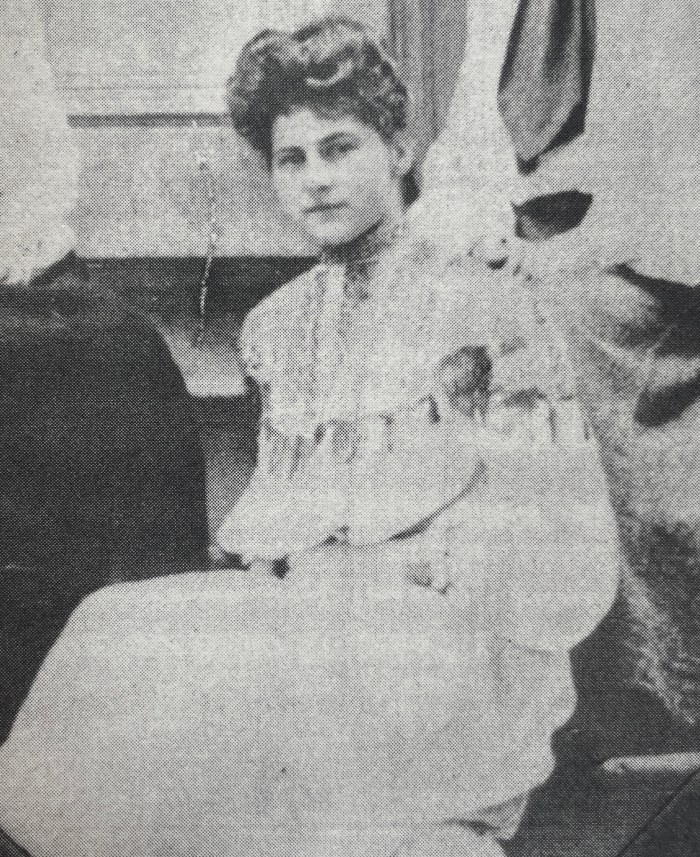
Born in 1885 in Elmira, New York, Kathryn Stanley was ambitious and smart. At 17, she took a business course and landed a job as a secretary in a paper company. It’s around that time she met Lewis Lawes, who was working as an errand boy in a neighboring office.
Kathryn Stanley in Elmira, c. 1900 Courtesy of Joan “Cherie” Lawes Jacobsen
But Lewis’ father was a “prison guard” (today the term is “Corrections Officer”) at the Elmira Prison, so it was rather natural that his son would eventually follow in his footsteps.
Kathryn and Lewis married in 1905 and started their family. Lewis quickly rose through the ranks in the New York prison system first in Elmira, then in Auburn. In 1915, he became Chief Overseer at the Hart Island reformatory, living right in the middle of the facility with Kathryn and their two infant daughters. Even then, Kathryn found time work with the boys in the reformatory, some who were as young as 10, giving many of them the first maternal attention they’d ever experienced.
Kathryn would be an essential participant in her husband’s success, helping cement his reputation as a progressive and compassionate Warden.
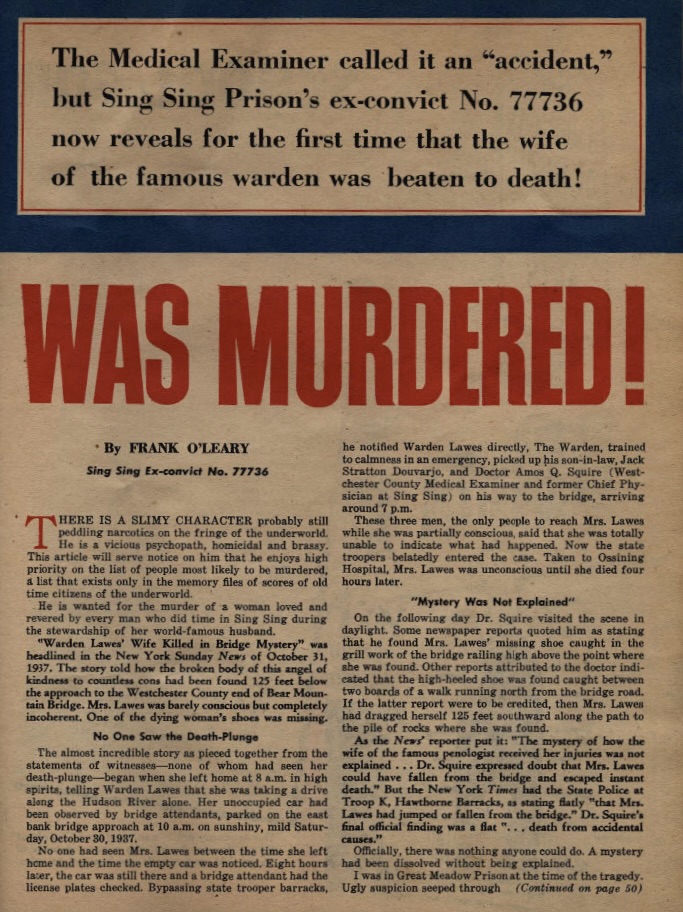
Still, it’s quite hard to flesh out Kathryn’s story. She gave very few interviews and those that she did give read like someone wrote them without ever talking to her. In fact, much of what we know about surfaced only after her mysterious death.
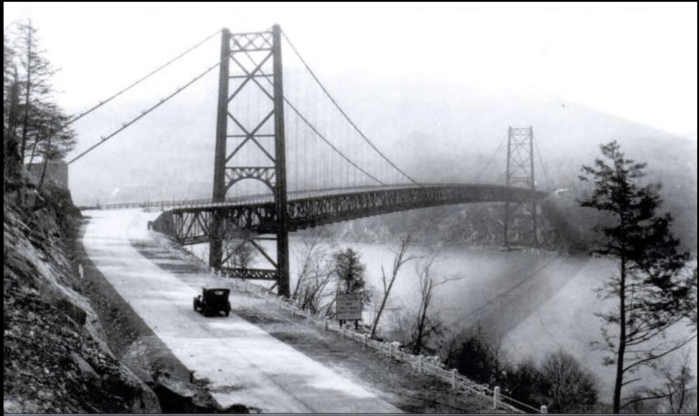
You see, one of the things that makes her story so complex and compelling is that she died at the age of 52 after falling off (or was it near?) the Bear Mountain Bridge.
The Bear Mountain Bridge, c. 1930
A Mysterious Death
On October 30, 1937, the New York Times published an article entitled “Wife of Warden Lawes Dies After a Fall. Lies Injured all Day at Bear Mountain Span.” In it, the New York State Police stated that she had “jumped or fallen” from the bridge. Though conscious when discovered by Warden Lawes, their son-in-law, and Dr. Amos Squire, she died in Ossining Hospital soon after from her injuries.
A few days later, a follow-up story was published in the Times that quoted heavily from Dr. Squire (the former Sing Sing Prison Doctor as well as Westchester County Medical Examiner). Dr. Squire had apparently gone back to investigate the scene of the accident. There, according to the article, he found “her high-heeled shoes caught between two boards of a walk” and concluded that she had gone hiking, perhaps venturing down the trail to pick wildflowers. He continued, “After falling and breaking her right leg, Mrs. Lawes evidently dragged herself about 125 feet southward along the path to the pile of rock where she was found exhausted.”
The men of Sing Sing were devastated when they heard the news of her sudden and shocking death. Eventually, in response to their entreaties, the prison gates were opened and two hundred or so “old-timers” were permitted to march up the hill to the Warden’s house to pay their last respects at her bier.
(In 1938, the New York Times noted that the “Prisoners of Sing Sing Honor Late Mrs. Lawes” with the installation of brass memorial tablet, paid for by the Mutual Welfare League, a organization of incarcerated individuals.)
Kathryn’s Influence
Fifteen years after her tragic death, Kathryn Lawes’ story continued to capture the attention of the press.
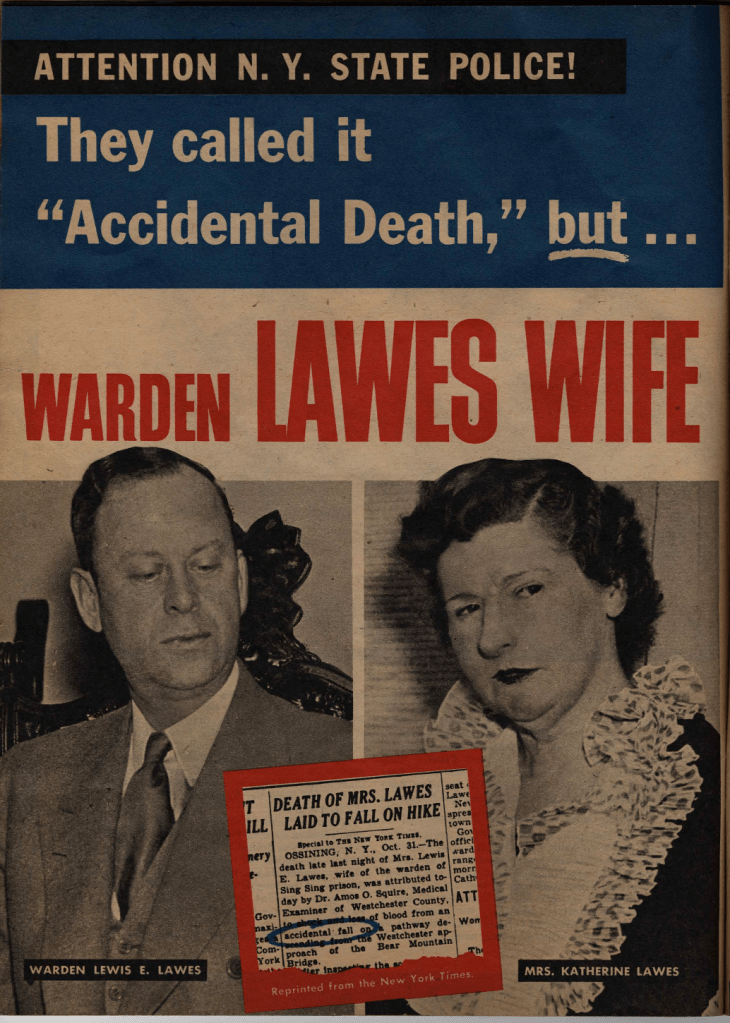
From a March 1953 feature in The Reader’s Digest “The Most Unforgettable Character I’ve Ever Met”, to the July 1956 exposé in tawdry Confidential Magazine below, Kathryn’s life (and death) remained compelling.
Even today, one can find sermons online that praise Kathryn Lawes’ generosity and compassion for those that society would rather forget.
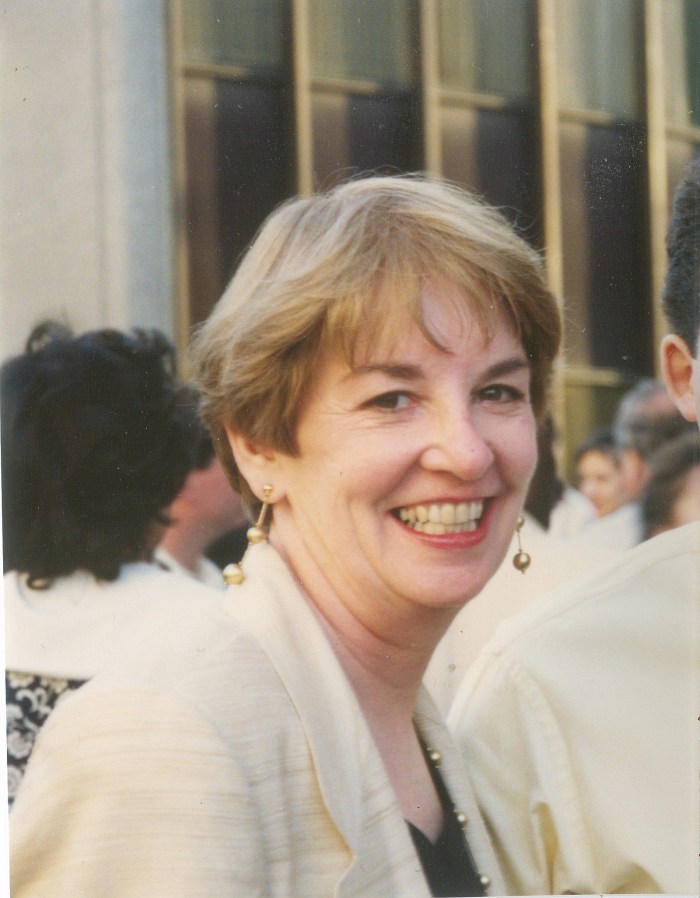
Margaret “Margie” Griesmer Courtesy of Open Door Family Medical Center
Margaret “Margie” Griesmer 1934 – 2008
Founder and First Executive Director of the Open Door Family Medical Center ***Local Connection: 165 Main Street
Margaret “Margie” Griesmer made a tremendous difference to thousands, maybe even hundreds of thousands of people in and around Ossining.
And her legacy continues.
Those of you who live in Ossining are no doubt familiar with the Open Door Family Medical Center. Located at 165 Main Street, it was the first location of what has become a chain of accredited health centers that serve the un- and underinsured throughout Westchester, Putnam, Dutchess and Ulster counties.
In 1972, Griesmer was the driving force behind its founding and development, quietly and methodically laboring to bring excellent, low- to no-cost health care to marginalized community members and the working poor.
Born in 1934, Griesmer graduated from the Mercy School of Nursing in Detroit, Michigan. Marrying soon after graduating, she moved to Ossining with her husband and had four children.
In 1970, the family relocated to Berkeley, California for a year when her husband, an IBM mathematician and researcher, was granted a sabbatical.
While there, Griesmer volunteered at the Berkeley Free Clinic, a self-described “radical volunteer health collective . . . that believes that health care is a fundamental human right.” Griesmer was inspired by what she saw and determined to replicate the concept in Ossining.
Free health clinics were growing in popularity in the 1960s and early 1970s, thanks in part to the civil rights movement and the War on Poverty. But when New York State decided that such clinics needed oversight and licensing, many clinics shuttered. It’s here that Open Door found its niche. As a registered nurse, Griesmer was uniquely positioned to work with local medical professionals, and get the needed licensing to operate.
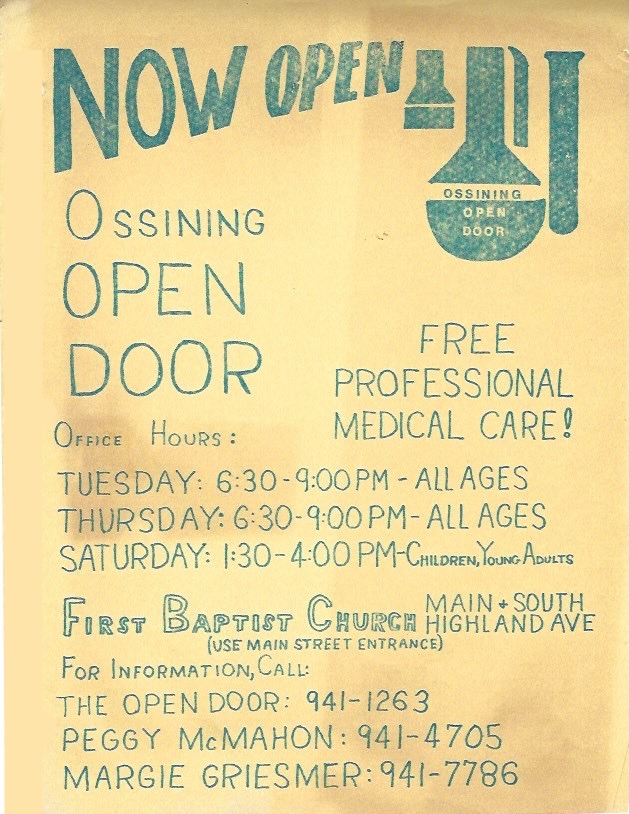
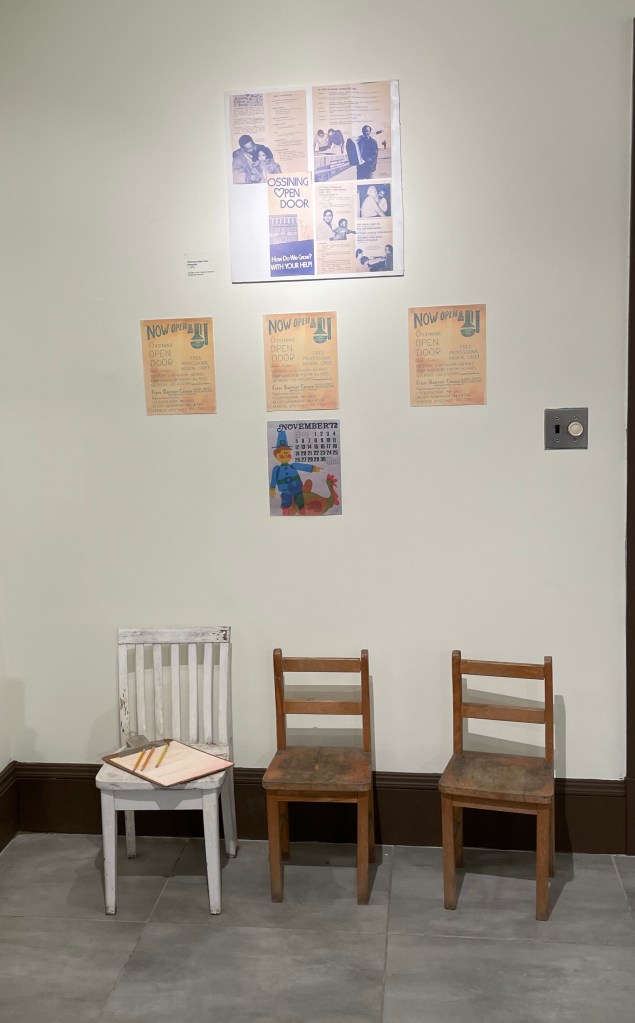
The first Open Door clinic was located in the basement of the First Baptist Church at 1 Church Street, Ossining. With an all-volunteer staff (doctors, nurses, technicians) it was only open Tuesday/Thursday nights and Saturday mornings. The waiting room was the Sunday School room, and the patients sat on tiny little chairs waiting for their appointments.
Original Open Door Flyer, c. 1972 Courtesy of Open Door Family Medical Center
Artistic re-creation of that first waiting area at the First Baptist Church c. 1972
That first year, the clinic saw over 1,000 patients.Griesmer reached out to businesses in the community for support, and organizations such as IBM, the Ossining Chamber of Commerce, A.L. Myers and the Junior League of Westchester contributed in various ways to help fit out that first clinic.
The goals were wide-ranging and egalitarian:
“The Ossining Open Door came into being because of an urgent need in Ossining not only to treat the physical illnesses of the underprivileged but to comfort our elderly, counsel our youth, and listen to the lonely.”
Griesmer would be named Executive Director in 1973, a position she held for over 20 years.
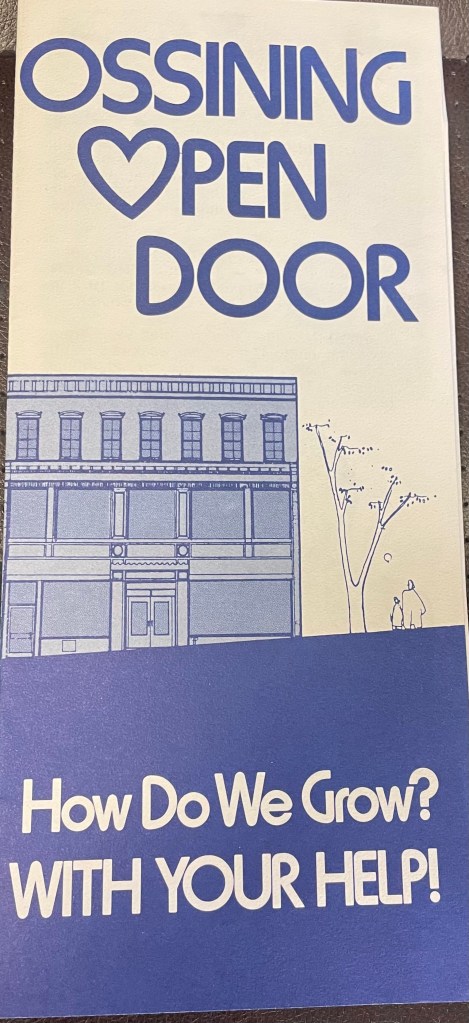
In 1976, Open Door moved to 165 Main Street (formerly Hilliker’s Department store) and in 1988, took over the adjacent building at 163 Main Street. Since then, they’ve hired full time physicians, nurses, technicians, dentists, specialists, social workers, psychologists, started a pre-natal program in collaboration with Phelps Hospital, opened clinics in Mt. Kisco, Brewster, Mamaroneck, Port Chester, Sleepy Hollow, Saugerties and pioneered school-based health centers in nine schools throughout the region.
Pamphlet for new location at 165 Main Street Courtesy of the Ossining Historical Society and Museum
Griesmer was a visionary with a solid medical background who also happened to excel at relationship building and fundraising. It was a powerful and effective combination.
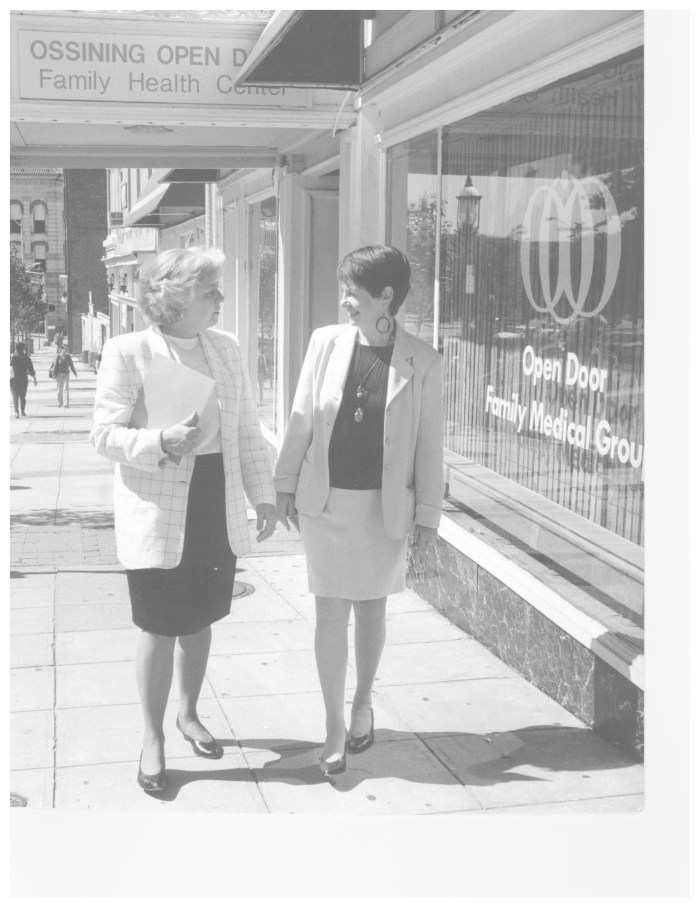
With Assemblywoman Sandy Galef, c. 1980 Courtesy of Open Door Family Medical Center
An excellent judge of people, she filled the ever-expanding Open Door with dedicated professionals who shared her drive to improve and grow the services offered to the community.
In 1998, Griesmer tapped Lindsay Farrell as her successor. A volunteer who started helping out in 1986, Farrell continues in the CEO position today, carrying on and expanding Margie Griesmer’s vision to make quality health care available to all.
Today Open Door serves over 60,000 patients at seven locations throughout Westchester, Putnam and Ulster counties, with an additional nine school-based health clinics. And, as has always been the case, care is available to anyone — fees are determined on a sliding scale.
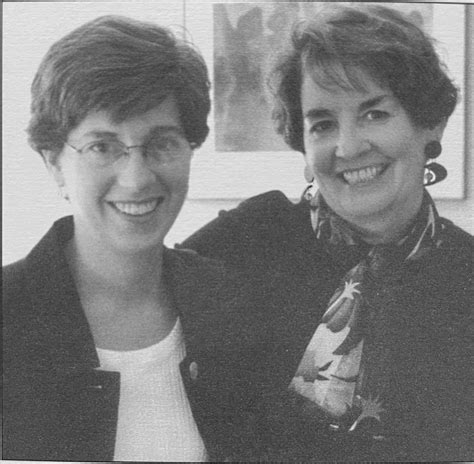
Lindsay Farrell and Margie Griesmer, c. 1990s Courtesy of the Open Door Family Medical Centers




 Ossining History on the Run
