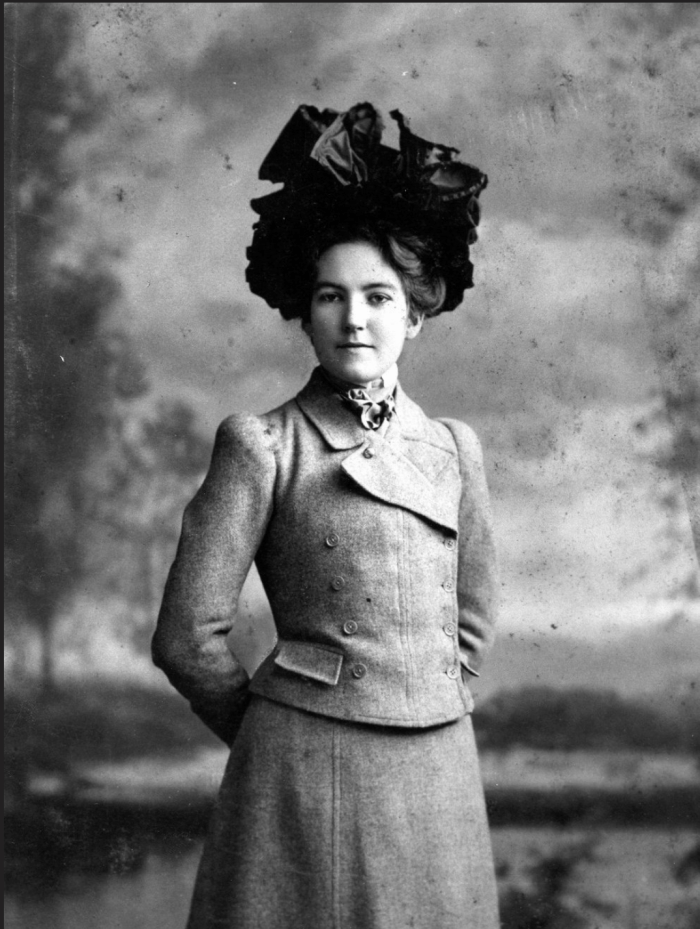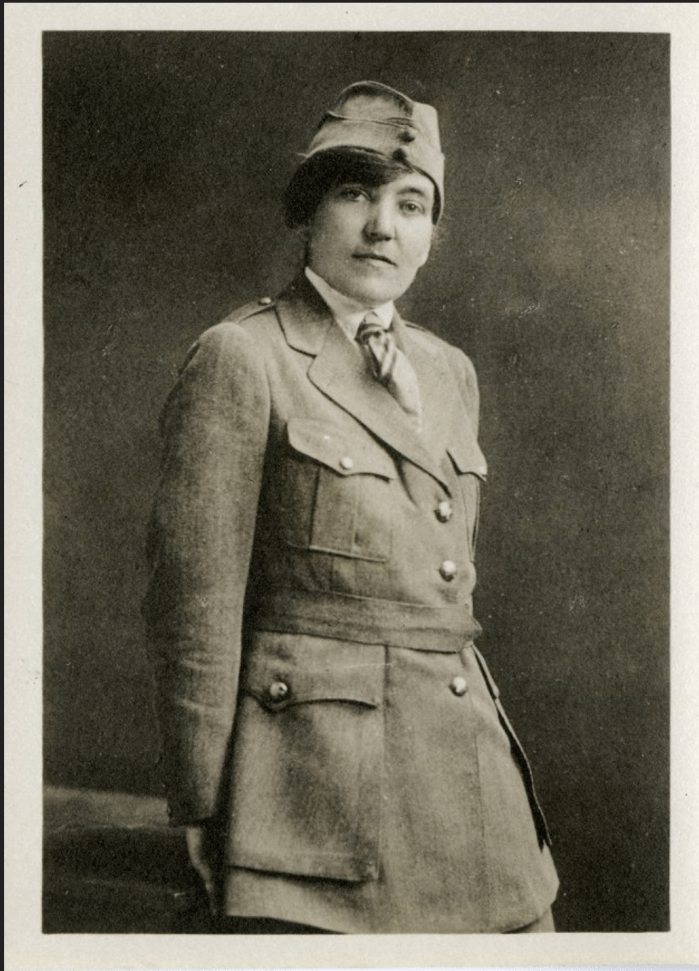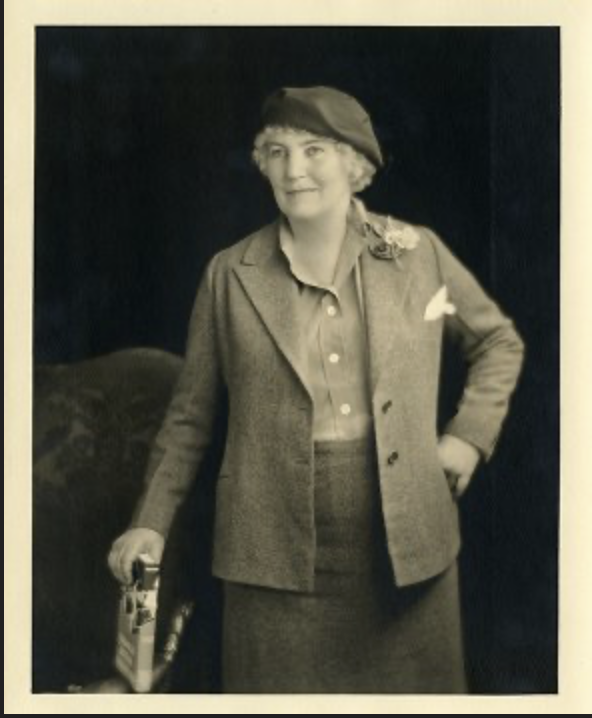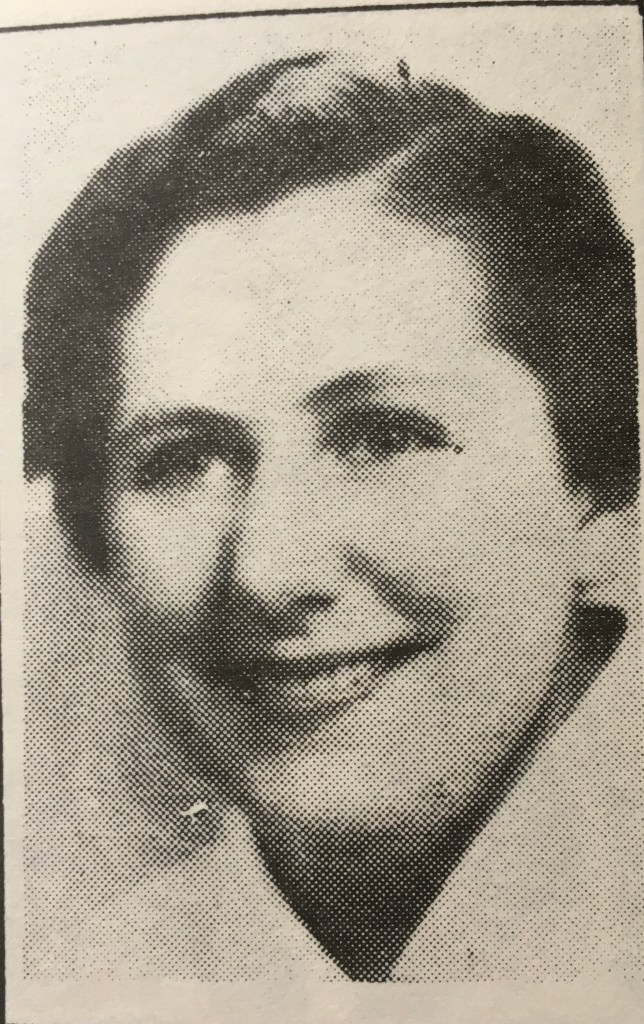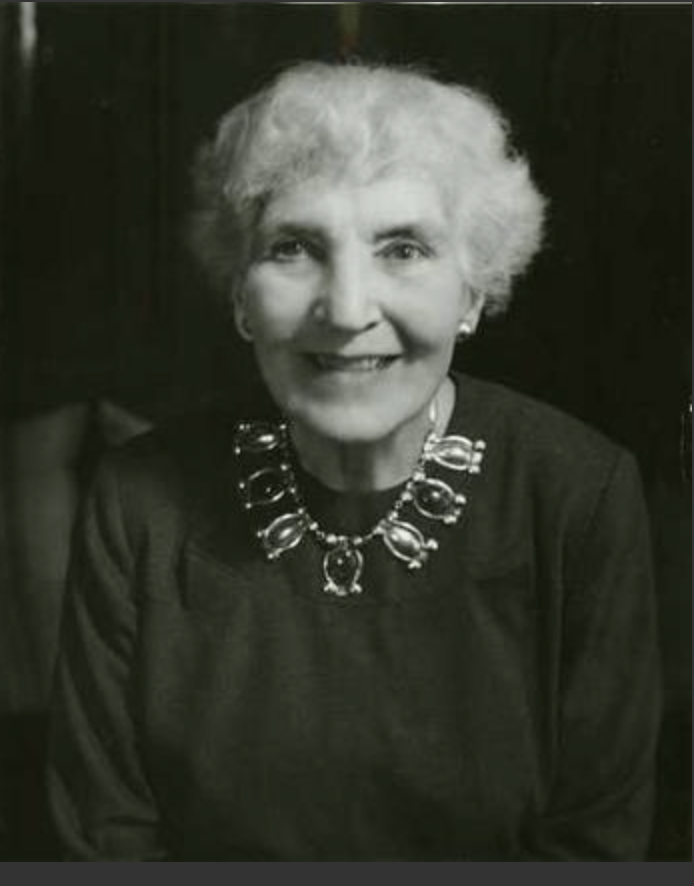
Ensign Mary Feeney Gordenstein Courtesy of the Ossining Historical Society and Museum
Ensign Mary Feeney Gordenstein 1916 – 1943 OHS 1933
U.S. Navy Nurse, Died in Action , World War II ***Local connection: Hamilton Avenue***
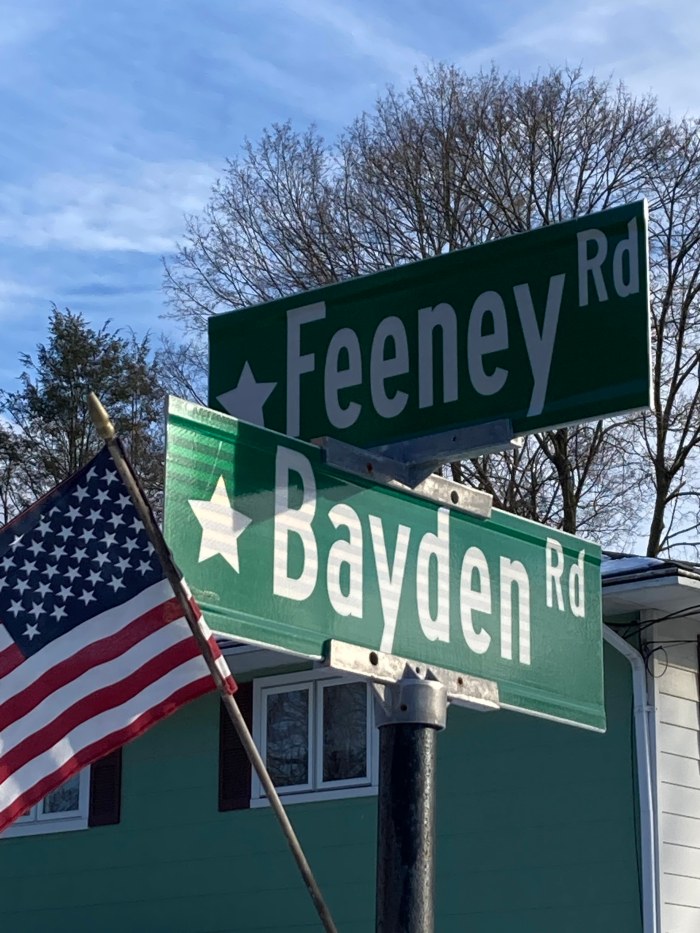
Did you know that Feeney Road in the Town of Ossining is named after Ensign Mary Feeney Gordenstein, a US Navy nurse who died in Pearl Harbor, Hawaii on April 14, 1943?
Mary Feeney was born in Ossining on September 11, 1916, to John and Ida Mae (Farren) Feeney. Her father was a desk clerk for the Ossining Police.
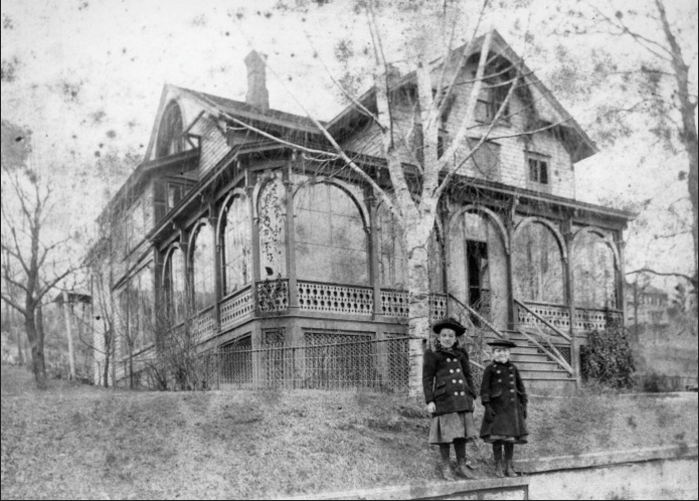
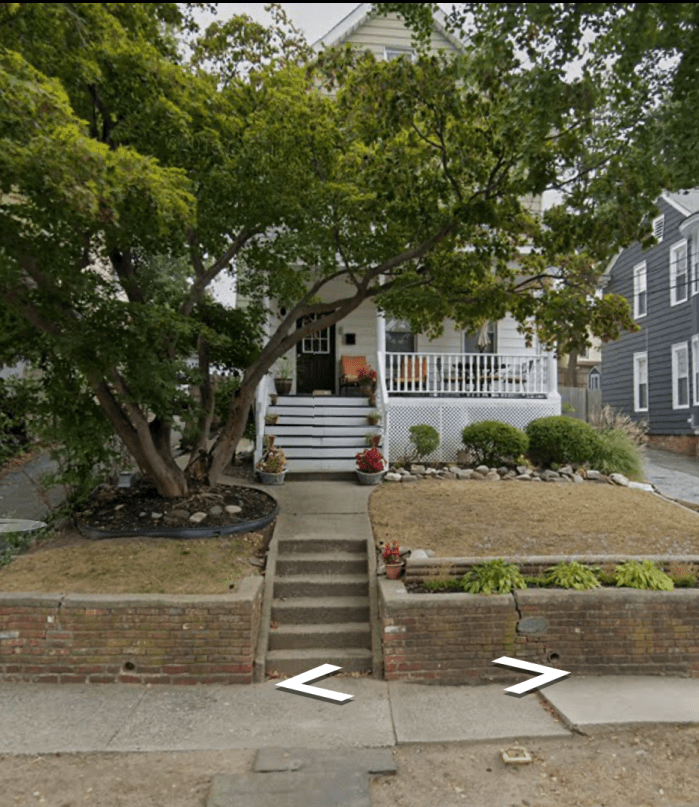
They first rented a house at 72 South Highland Avenue and then moved to 31 Hamilton Avenue.
Both houses still stand today:
72 Highland Avenue. Photo source: Google Streetview
31 Hamilton Avenue. Photo source: Google Streetview
Mary went to Ossining High School, graduating in 1933. She then went on to study at the Cochran School of Nursing at St. John’s Riverside Hospital, Yonkers, graduating in 1937.
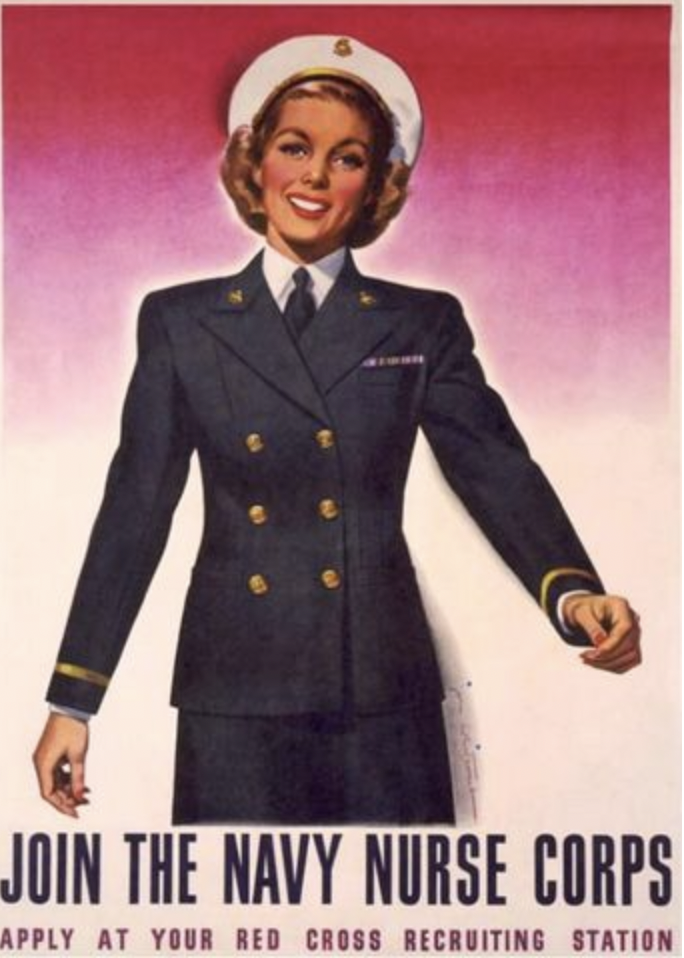
The census for 1940 has her working in “private practice.” In August 1941, she entered the US Navy Nurse Corps as an Ensign and spent at least four months in training before being shipped out. (For more on the US Navy Nurse Corps see here and here.)
Navy Nurse Recruiting Poster. Courtesy of the National Archives
When Ensign Feeney joined up, there were only about 800 Navy nurses on active duty. By the end of World War II, over 11,000 nurses, both active and reserve, were serving in the Navy.
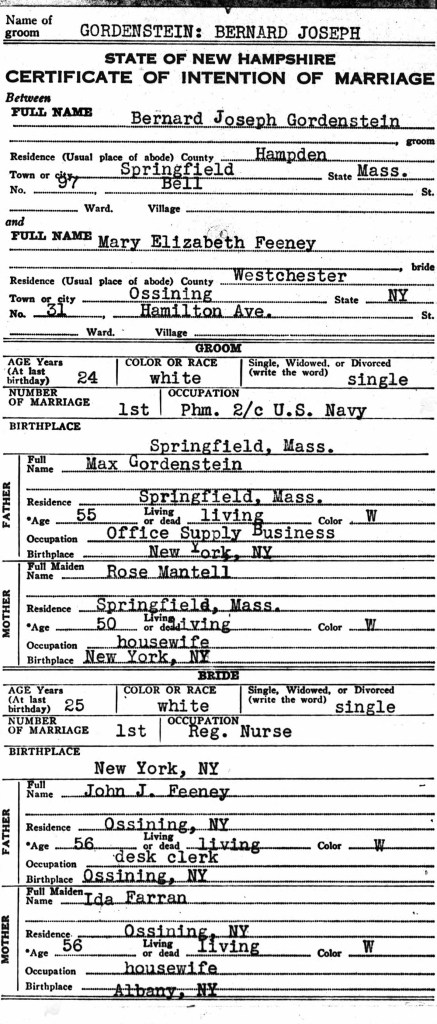
Ensign Feeney’s initial posting is still unclear, but in May of 1942 she married Bernard Joseph Gordenstein in Hillsborough, New Hampshire. He was also in the Navy, serving as a pharmacist. (This bit of information came as something of a surprise to the members of the Feeney family consulted for this exhibit. This might explain why the road is named Feeney and not Gordenstein.)
At some point, after the December 7, 1941 Pearl Harbor attacks, Ensign Mary Feeney was posted to Hawaii and served at the Pearl Harbor Naval Hospital. This was where injured warriors, primarily those from the Pacific Theatre of Operations, were stabilized before they were sent back to the US.
Here’s a 1942 photo from the U.S. Navy Bureau of Medicine and Surgery — while I can’t prove it, I have a feeling that the third nurse from the left, in the back row, might be our Mary Feeney.
Administrative group including Navy nurses and Red Cross workers at the Pearl Harbor Naval Hospital, 1942. Courtesy U.S. Navy Bureau of Medicine and Surgery
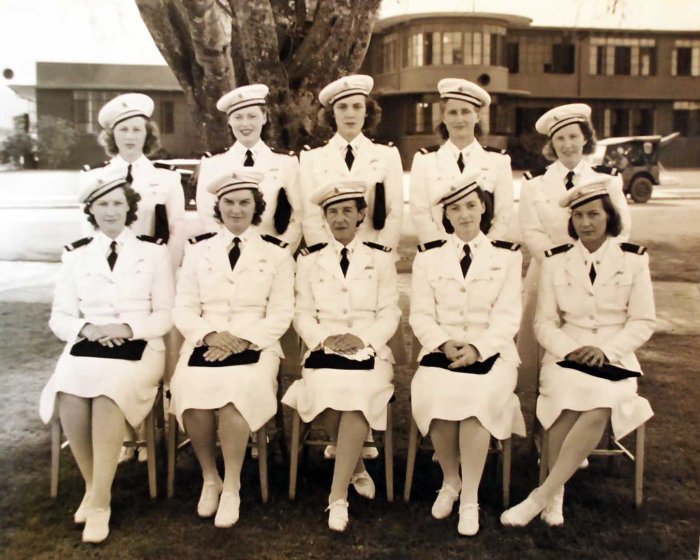
And in the photo below, the nurse seated in the front row all the way on the left actually does look very much like Ensign Feeney. (What do you think?) If it is, it would have been taken just four months before her death.
U.S. Navy Nurses pose for a group portrait at Pearl Harbor, Territory of Hawaii, December 16, 1942. Photo source: National Museum of the U.S. Navy
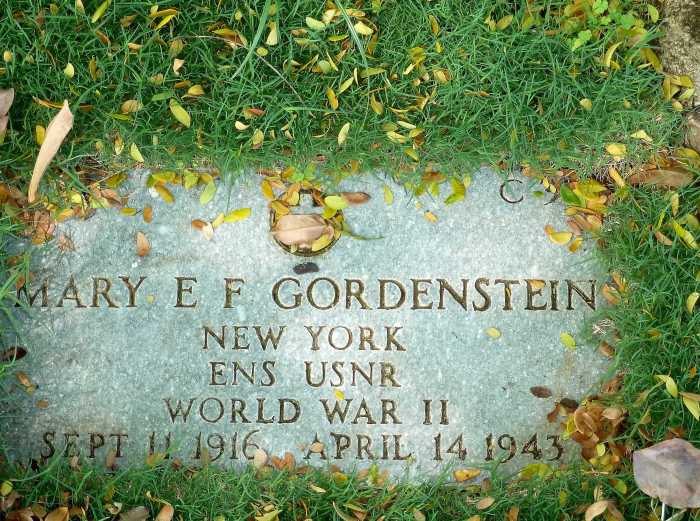
Sadly, Ensign Mary Feeney’s career in the US Navy was brief – she died of pneumonia on April 14, 1943 while stationed at the Pearl Harbor Naval Hospital.
She was posthumously awarded the Bronze Star for “Heroic or Meritorious Achievement or Service.”
She is buried in the Punchbowl National Memorial Cemetery of the Pacific on Oahu.
And in 1963, the Town of Ossining would name a street in the newly completed Lakeville Estates subdivision after her.
Playwright Author Civil Rights Activist ***Local Connection: Bridge Lane, Croton-on-Hudson***
Lorraine Hansberry was born in Chicago, IL to Carl August Hansberry, a successful real estate speculator (known as “The Kitchenette King of Chicago”) and Nannie Louise Perry, a teacher.
When Hansberry was 8, her parents purchased a house in a white neighborhood, but faced intimidation and threats from the residents who tried to force them to leave. Hansberry remembered rocks being thrown through their windows, and her mother prowling the house after midnight carrying a German Luger pistol when Carl Hansberry was away on business.
Illinois courts upheld the ongoing eviction proceedings and found that by purchasing their house, the Hansberrys had violated the “white-only” covenant of that subdivision. However, Hansberry’s father took the case all the way to the United States Supreme Court and won.
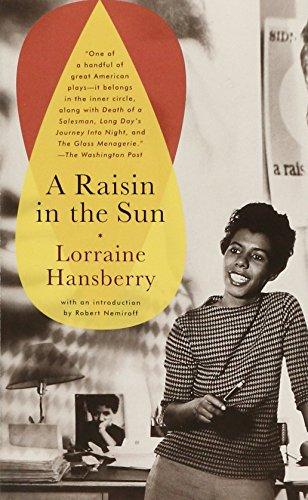
This experience would inspire Hansberry’s most famous play A Raisin in the Sun.
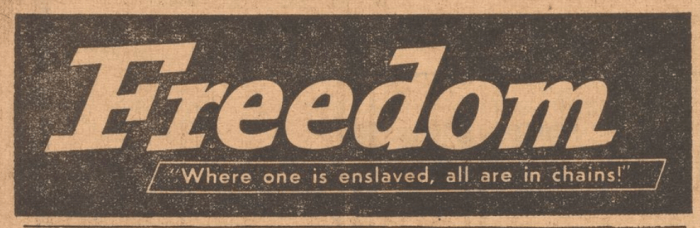
In 1950, Hansberry moved to New York City to pursue a career as a writer. Landing first in Harlem, she began working for Paul Robeson’s Black, radical newspaper Freedom, a monthly periodical.
At Freedom, she quickly rose through the ranks from subscription manager, receptionist, typist, copy editor to associate editor, along the way writing articles and editorials for the paper. It was during this time that she wrote one of her first theatrical pieces, a pageant for “The Freedom Negro History Festival” that would feature Paul Robeson, Harry Belafonte and Sidney Poitier, among other luminaries.
In 1953, she married Robert Nemiroff, a book editor, producer, and composer of the hit single “Cindy, oh Cindy.” They moved to 337 Bleecker Street in Greenwich Village and it was here, in 1957, that she wrote her semi-autobiographical play A Raisin in the Sun.
It took the producers nearly two years to raise the funds, as investors were wary of backing the first play of an unknown 26-year-old Black woman. Premiering in New Haven, Connecticut, A Raisin in the Sun opened on Broadway in March 1959 and was the first Broadway show to be written by Black woman and the first to be directed by a Black man (Lloyd Richards.) Starring Sidney Poitier, Ruby Dee and Claudia McNeil, the production was nominated for four Tony Awards. The original production ran for 530 performances – a remarkable feat in those days and would make a successful transfer to the big screen in the 1961 movie written by Hansberry and starring most of the Broadway cast. Today it is a staple of high school and college curricula and is considered one of the greatest American plays of the 20th century. It continues to be produced all over the world.
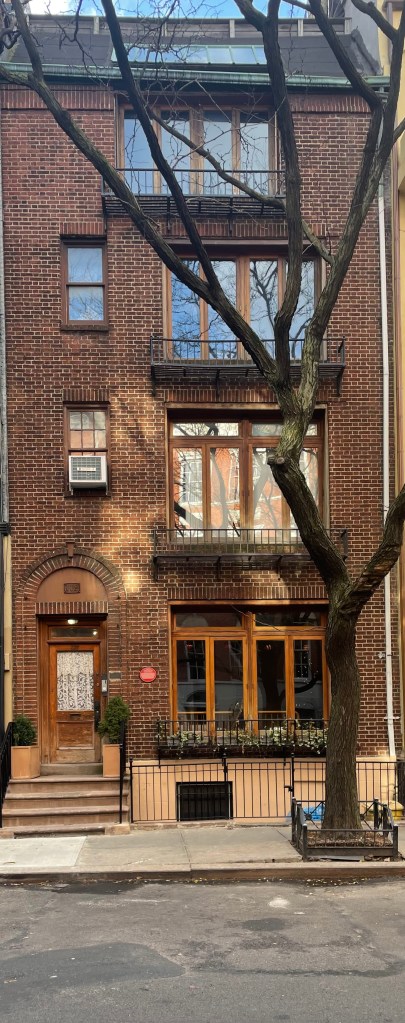
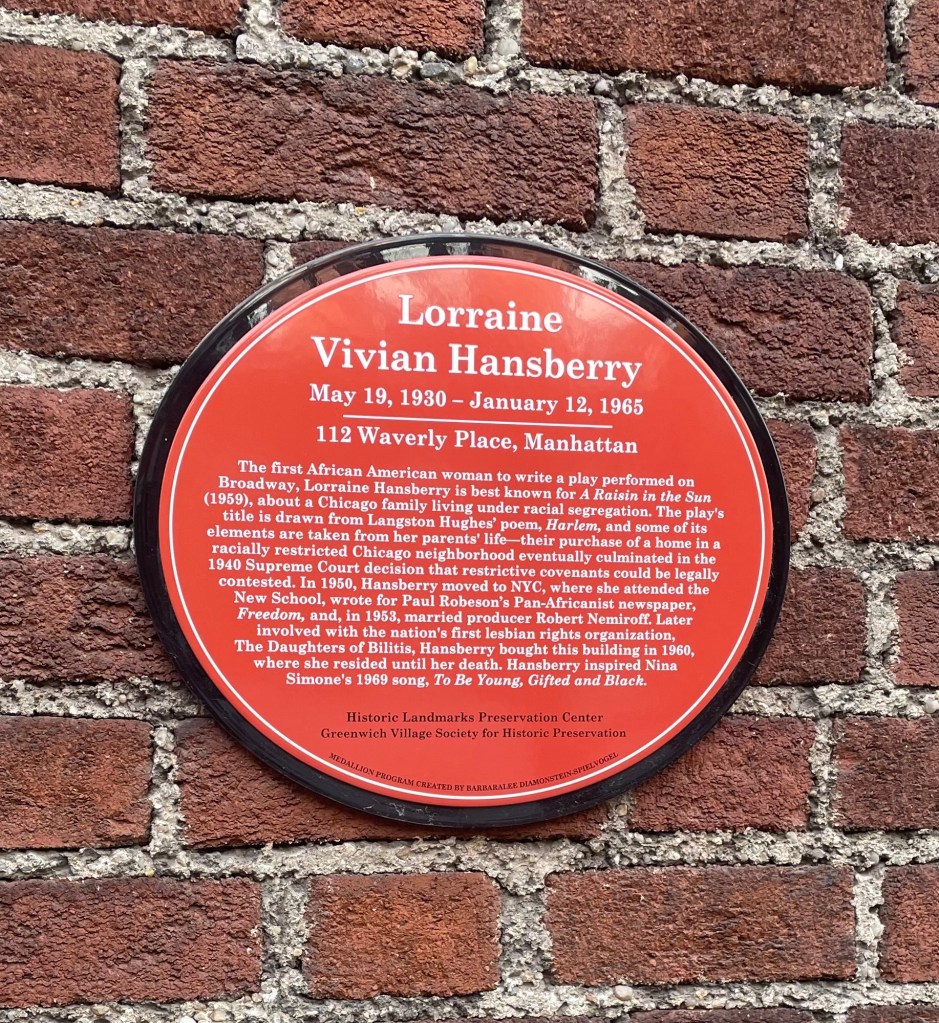
After the success of A Raisin in the Sun, Hansberry purchased a townhouse in Greenwich Village.
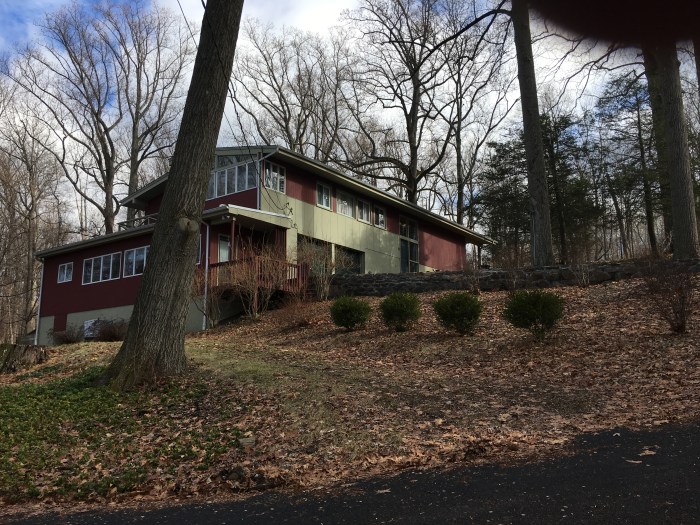
Soon after, she would purchase a house in Croton-on-Hudson. Ironically calling her Bridge Lane home, “Chitterling Heights,” it became her escape from the city, her writing studio, and a place where Black artists and progressives (such as Langston Hughes, Alex Haley, and Ruby Dee) would gather.
Lorraine Hansberry’s house on Bridge Lane, c. 2018
Hansberry’s Broadway success catapulted her into the whirlwind of popular intellectual discourse, and she used her newfound fame to speak out on things that mattered to her. She became a star speaker, dominating panels, podiums and television appearances. Her quick wit and provocative stances made her popular with the media as she could always be counted on for spirited discussion.
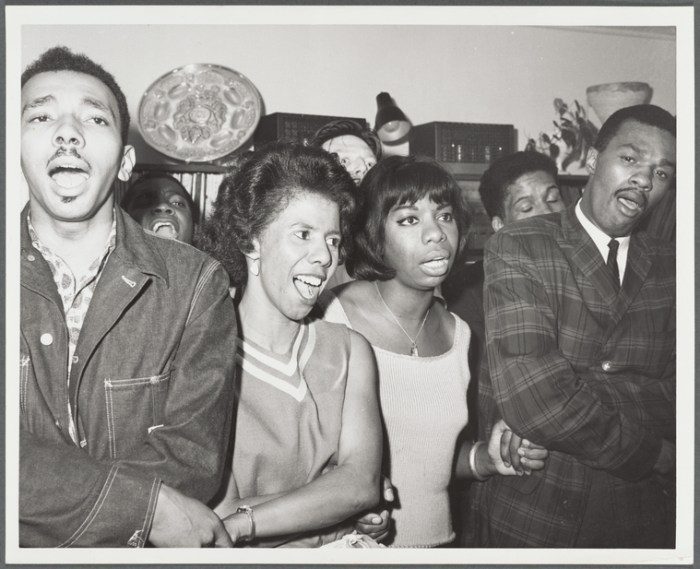
She was deeply involved in the Civil Rights movement, appearing at numerous events and meeting with political leaders:
Hansberry with Nina Simone at a Student Non-Violent Coordinating Committee event, 1963. Courtesy of the New York Public Library
By 1963, as one of the intellectual leaders of the civil rights movement, Attorney General Robert F. Kennedy would meet with her, James Baldwin, Lena Horne, Harry Belafonte and others for advice on civil rights and school desegregation initiatives. (Read a May 25, 1963 New York Times article about this meeting here.)
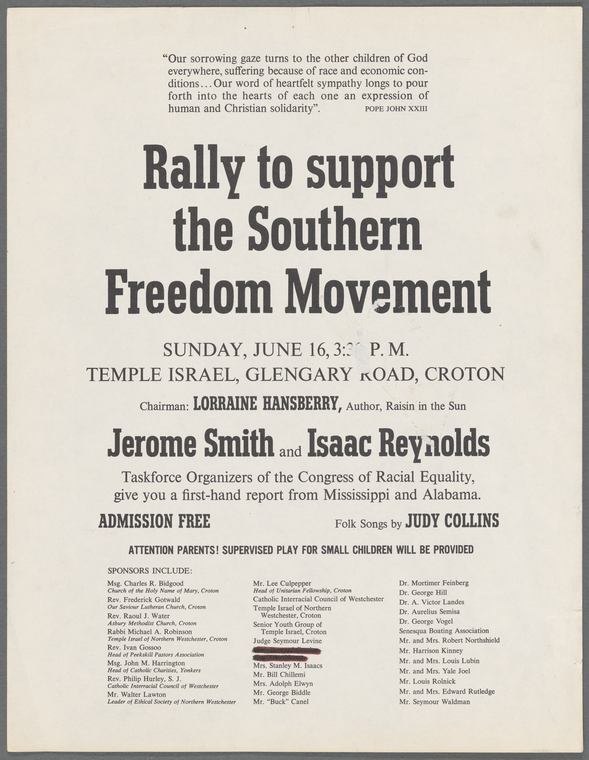
In 1964, Hansberry was integral in organizing and participating in one of the first fundraisers in the New York City area for the civil rights movement, held at Croton’s Temple Israel. (The 1963 Birmingham church bombings catalyzed many on the East Coast.)
She was the MC of the event, and brought in other like-minded celebrities, including Ossie Davis, James Baldwin, and Judy Collins. They raised over $11,000 for organizations like the Congress of Racial Equality – Freedom Summer voter registration project (CORE), the Student Non-violent Coordinating Committee (SNCC) and the NAACP.
Some of the money raised went towards the purchase of a Ford station wagon that Freedom Riders James Chaney, Andrew Goodman, and Michael Schwerner were driving the night they were murdered by the Ku Klux Klan in Philadelphia, Mississippi.
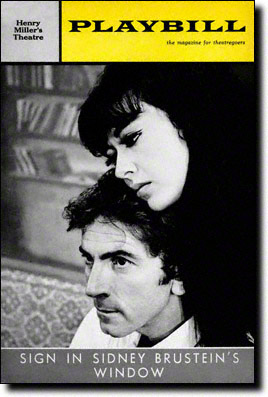
Unofficially separated for several years, Hansberry would divorce Robert Nemiroff in 1964, though they remained close collaborators and business partners to the end of her life. Nemiroff produced her final play, The Sign in Sidney Brustein’s Window, which opened on Broadway in October 1964.
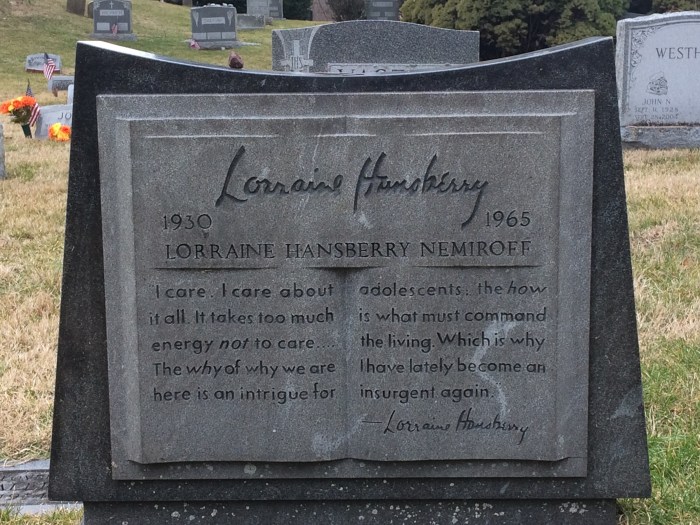
In January 1965, Hansberry would die from pancreatic cancer at the age of 34, two days after The Sign in Sidney Brustein’s Window closed.
She is buried in the Bethel Cemetery in Croton-on-Hudson, New York.
CODA:
“You are young, gifted, and black. In the year 1964, I, for one can think of no more dynamic combination that a person might be.”
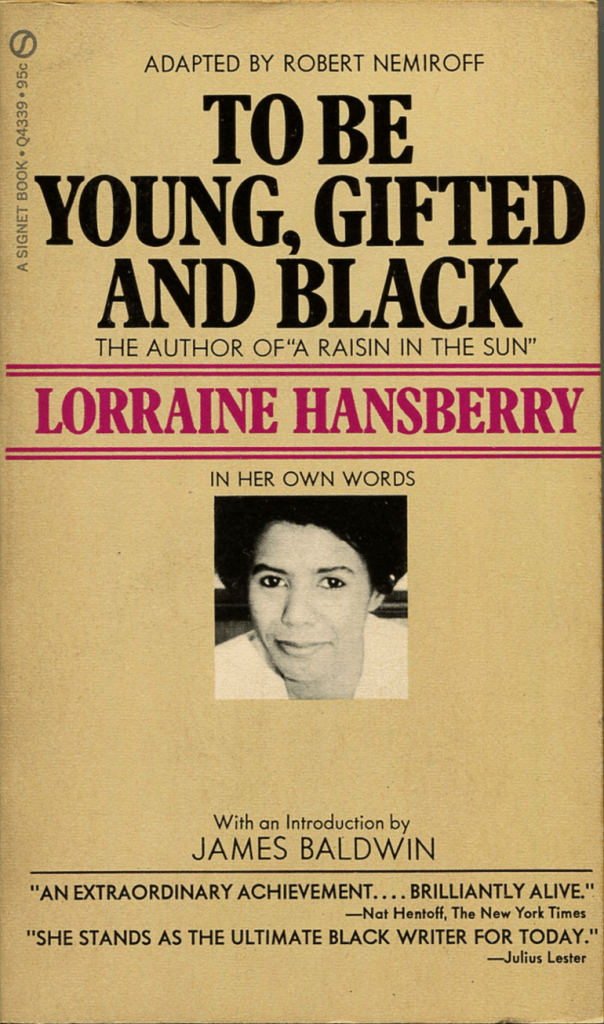
The above quotation comes from a talk Lorraine Hansberry gave to six teenage winners of a Readers’ Digest/ United Negro College Fund writing contest. In 1968, ex-husband and literary executor Robert Nemiroff would compile many of Hansberry’s unfinished and unpublished works into an off-Broadway play called Young, Gifted and Black. This in turn would be adapted into a posthumous autobiography of the same name published in 1969.
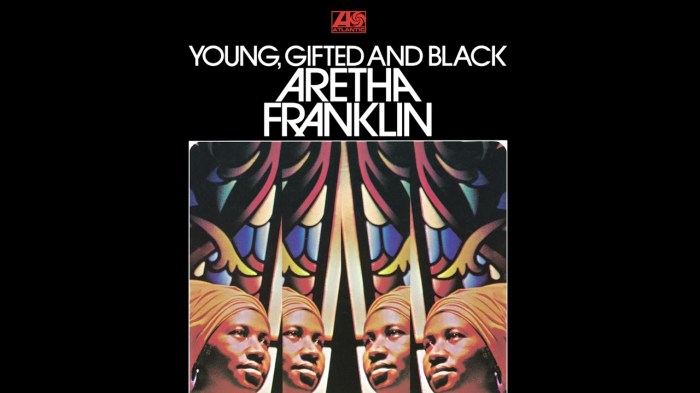
Singer/Songwriter Nina Simone would be inspired to write and record a song with that title and in 1972, singer Aretha Franklin would release an album of the same name.
There have been numerous productions of her seminal play A Raisin in the Sun – on Broadway and off-, internationally, in regional theaters, on television and film. In 1973, a musical version of the play, called Raisin won the Tony Award for Best Musical. In 2010, playwright Bruce Norris wrote Clybourne Park which tells the story before and after the events of A Raisin in the Sun and in 2013, Kwame Kwei-Armah wrote Beneatha’s Place which imagines what happened to the character of Beneatha after the events of A Raisin in the Sun.
It is a play and a story that continue to inspire.
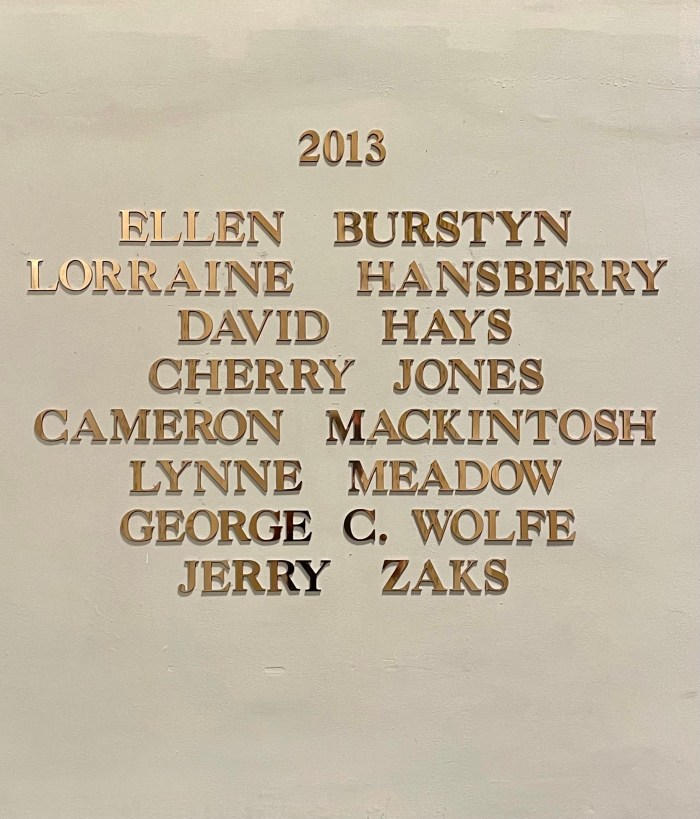
Yet, it took until 2013 for Lorraine Hansberry to be inducted into the Theatre Hall of Fame:
Finally, today, in addition to her other accomplishments, Lorraine Hansberry is now being hailed as a figurehead of the LGBTQ movement. However, this is a little tricky, as Hansberry was not out during her lifetime. For five decades after her death, ex-husband and literary executor Robert Nemiroff restricted access to any of Hansberry’s writings that explored her sexuality. It wasn’t until 2013 that researchers were allowed to see these previously hidden articles, letters, and journal entries. Since then, Hansberry has emerged as a queer icon. Her published works from this cache, often signed only with her initials, reveal a thoughtful and progressive thinker, while her private writings offer a new perspective on this multifaceted artist.
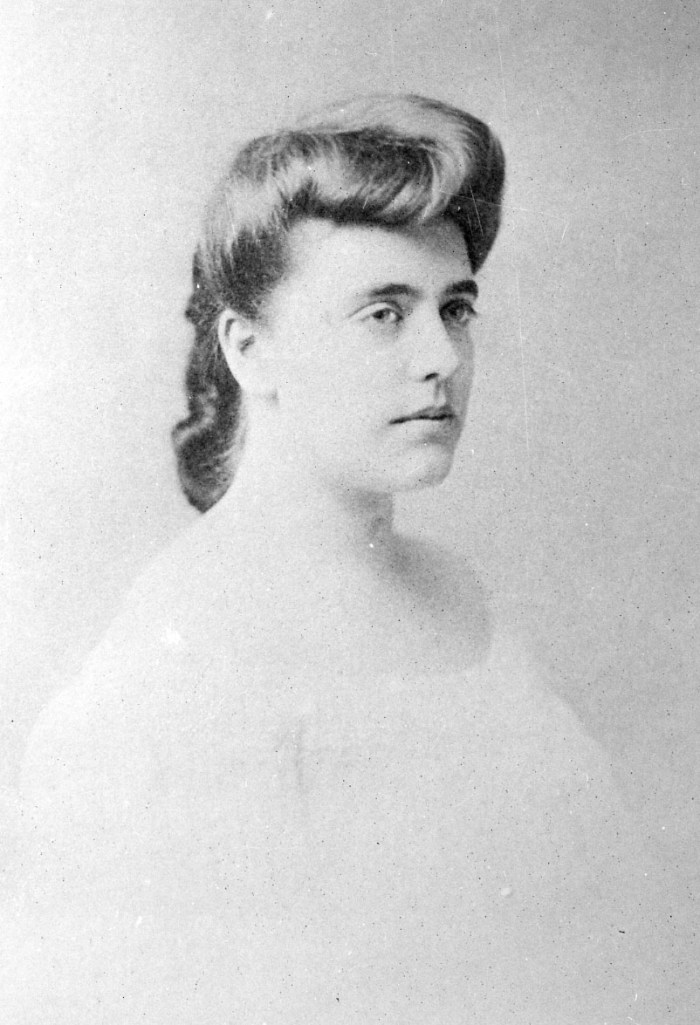
Born to an Irish-Catholic family in Roxbury, Massachusetts, Mary “Mollie” Josephine Rogers grew up as a dutiful, observant Catholic.
It wasn’t until she attended Smith College as a Zoology major that she became inspired by the active Protestant Mission Study groups. She wondered, why didn’t the Catholic students have anything similar?
Mollie Rogers, c. 1905 On the occasion of her graduation from Smith College Courtesy Maryknoll Mission Archives
After graduation, she went on to get a teaching certificate and was invited back to Smith as a “demonstrator” in the Department of Zoology. It was during this time that she was tapped to lead a Bible and Mission Study class for Catholic undergraduates at Smith. To prepare, she contacted Father James Walsh, Director of the Society for the Propagation of the Faith in Boston. At the time, her goal was simply to “inspire the girls to do actual work when they leave college [and] show them how great the Church is.”
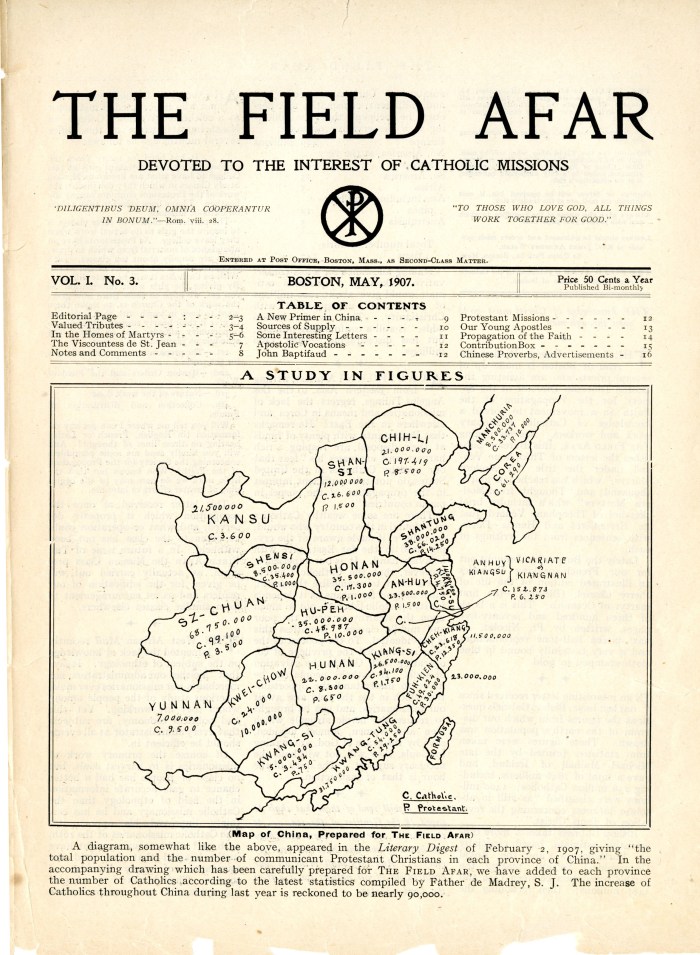
Soon, she was leading a class of Smith students as well as working for Father Walsh as a secretary, helping him publish the first missionary periodical in the United States called The Field Afar:
Courtesy Maryknoll Mission Archives
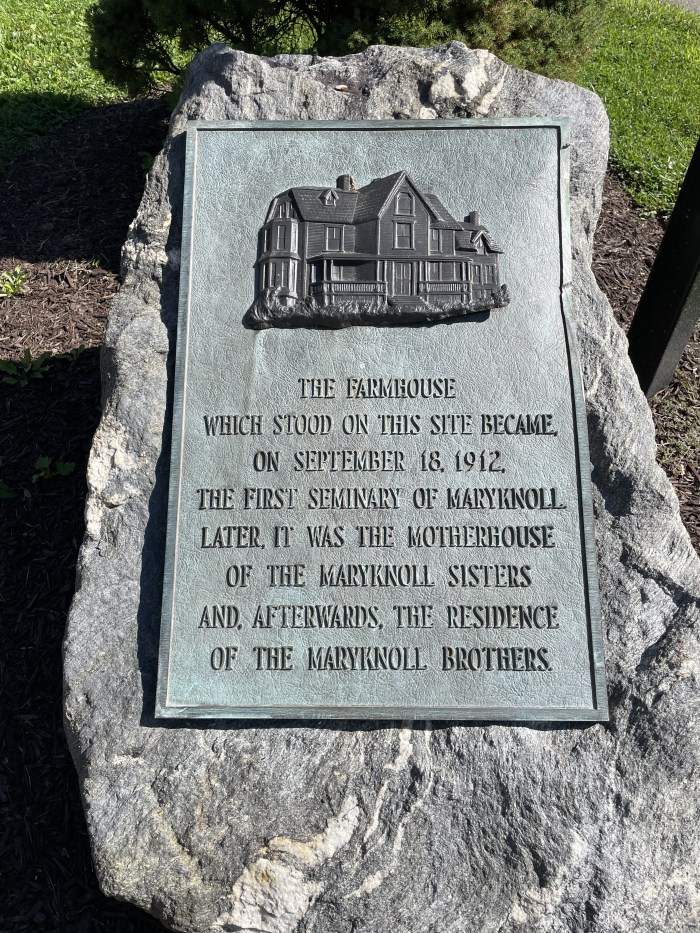
In 1912, Father Walsh would go on to found the first missionary society in the United States, the Catholic Foreign Mission Society of America.
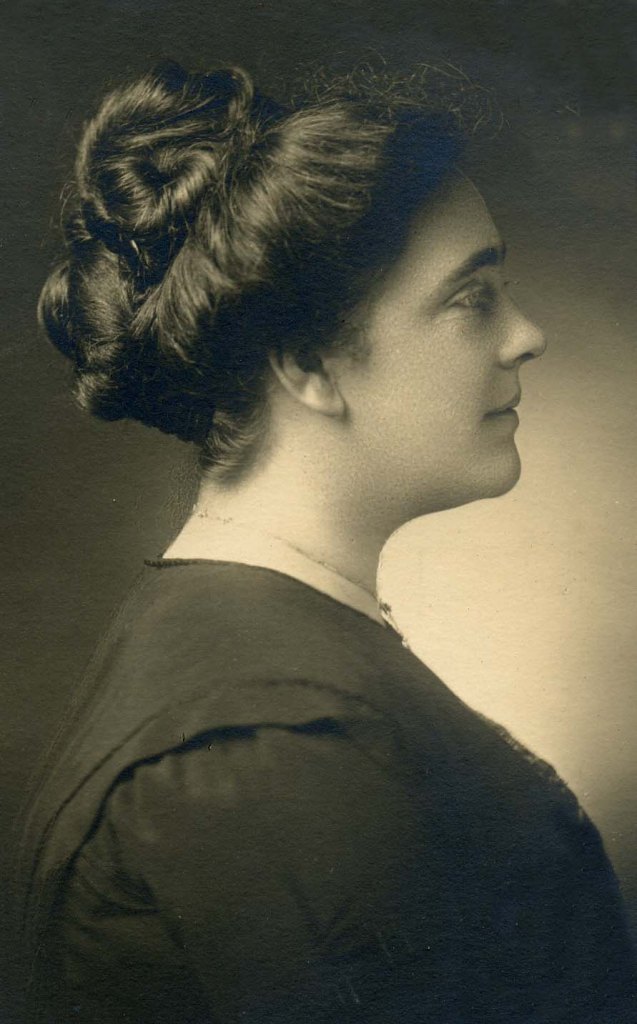
But he was having problems purchasing land for the campus he envisioned. After a transaction in Pocantico Hills fell through, Father Walsh sensed that there might be anti-Catholic sentiment at the root of his difficulties. To counteract that, he turned to his secretary, Mollie Rogers. She put on her best Smith College ensemble with pearls, hat and gloves, and, looking like a wealthy Westchester matron, purchased a 99-acre farm on what was then known as Sunset Hill in Ossining.
Mollie Rogers, c. 1912 Courtesy Maryknoll Mission Archives
From then on, Mollie Rogers would be looked to as the de facto leader of the group of women who were drawn to help Father Walsh.
Soon, they determined to form a religious community of their own. As Mollie charted a course through unmapped waters – theirs was the first group of American religious women whose goal was overseas missionary service – she took on the name Mother Mary Joseph.
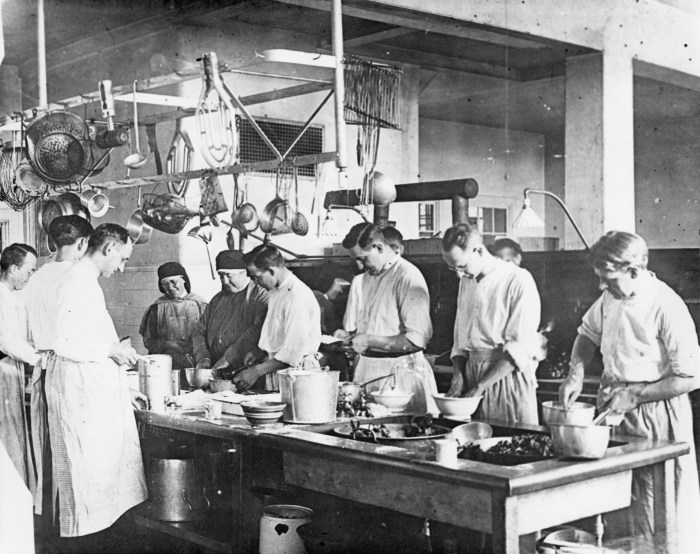
Mother Mary Joseph cooking with the Maryknoll Brothers in 1925 Courtesy Maryknoll Mission Archives
The women affiliated themselves with the religious order of St. Dominic and worked relentlessly to overcome multiple rejections by church leadership in both the US and Rome.
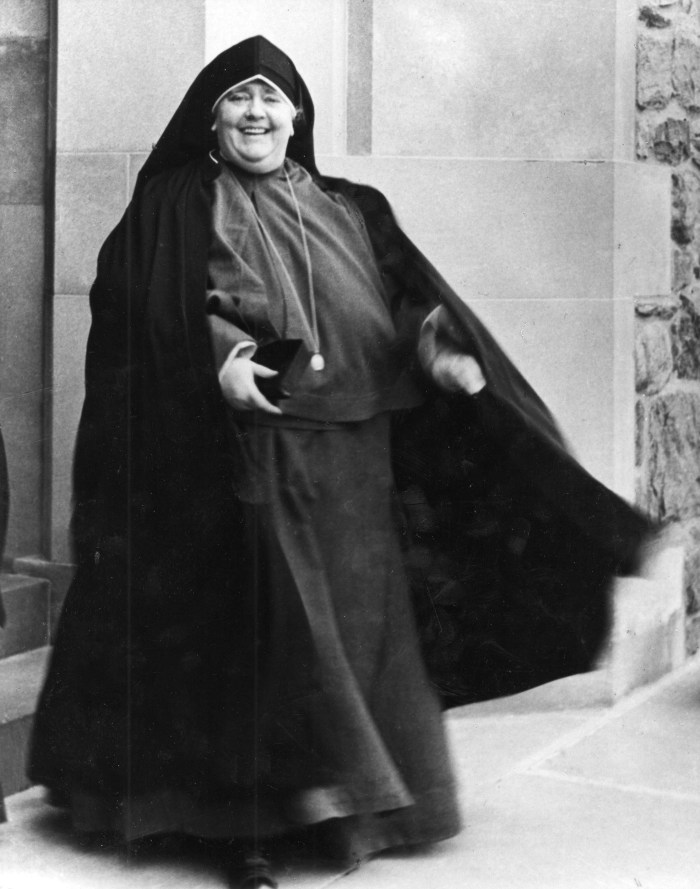
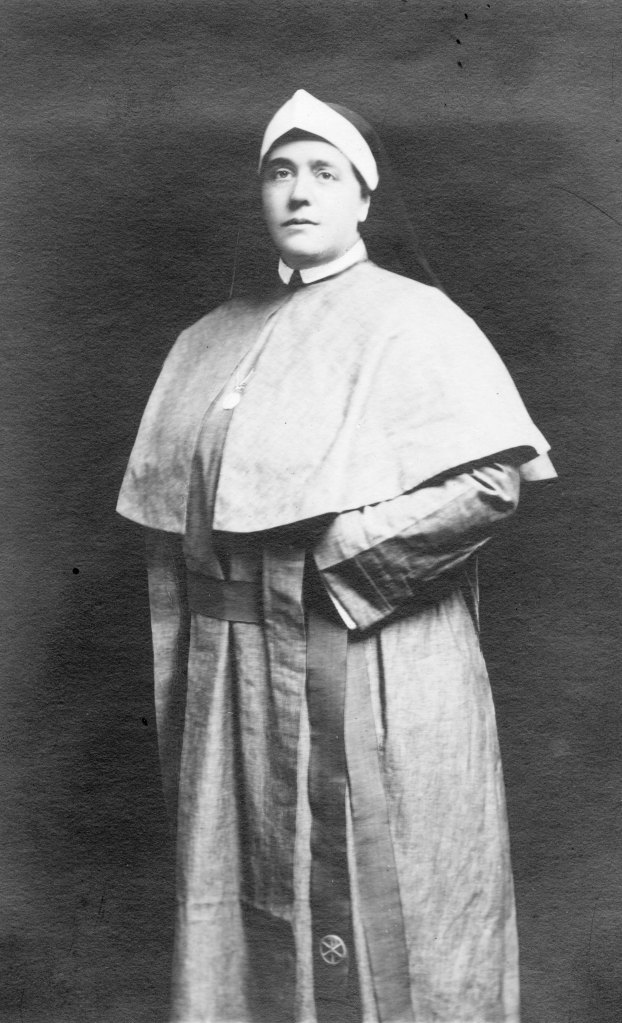
Mother Mary Joseph testing out veil options, c. 1920 Courtesy Maryknoll Mission Archives
It wasn’t until 1920 that they were finally approved to begin their mission work. Soon, they were serving in faraway places like Manchuria, the Philippines and China, and women from all over the world were joining the community.
Mother Mary Joseph in Loting, China c. 1940 Courtesy Maryknoll Mission Archives
Under Mother Mary Joseph’s guidance, the congregation of Sisters grew rapidly, setting up missions in Asia, Latin America, Africa and the United States.
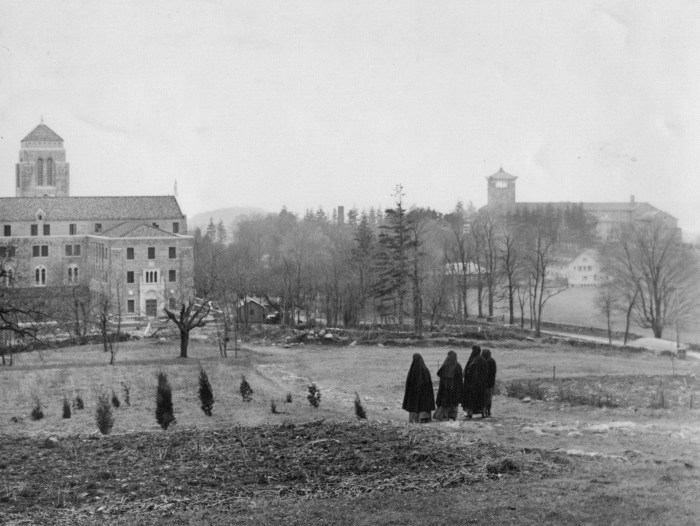
The new Maryknoll Motherhouse, c. 1932 Courtesy Maryknoll Mission Archives
Mother Mary Joseph would live in the Maryknoll Motherhouse until 1952 when she suffered a debilitating stroke that left her partially paralyzed. She would rally, continuing to encourage and inspire, until she passed away on October 9, 1955.
Today, Maryknoll Sisters continue to serve in 18 countries. Sisters have opened schools, clinics, and hospitals, expanding their reach into Latin America, Africa, Thailand, Japan and South Korea. They’ve nursed lepers in Hawaii, AIDs patients in El Salvador, taught English in Jakarta, prayed with Navajo, worked with Sudanese refugees, helped Vietnamese asylum seekers, performed surgery in Guatemala, started health clinics in Tanzania, taught nursing in Korea – Mother Mary Joseph’s mission lives on.
“As one lamp lights another nor grows less, so nobleness enkindles nobleness . . . If we could only be mindful that every act of kindness can beget another act of kindness, and any act of charity can bring forth another act of charity, how little trouble we would have in life.”
PERSONAL NOTE FROM THE CURATOR:
I’ve had the great good fortune to work with some of the Maryknoll Sisters over the years, and they always amaze me with their breadth of knowledge, keen intelligence, and positivity.
In 2020, I spoke with Sister Jean Fallon and asked her what made her want to be a missionary nun. This is what she told me:
“When I was a very little girl, my father took me to see some shacks that had appeared at the end of our very nice street.
‘They’re called Hoovervilles,’ he told me. [Yes, Herbert Hoover was President when she was a little girl!]
I cried, ‘But we have to help these people, they can’t live like that.’
My father shook his head – ‘There are too many of them and they need too much. There’s nothing we can do.’
Well, I think that was the moment that started me on this path – I was only about four years old, but I’ve never forgotten that moment. Yes, there ARE too many and they DO need a lot. But there’s always something we can do.”
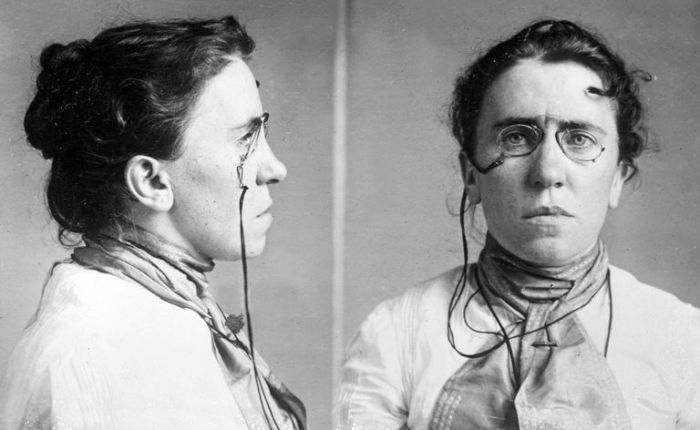
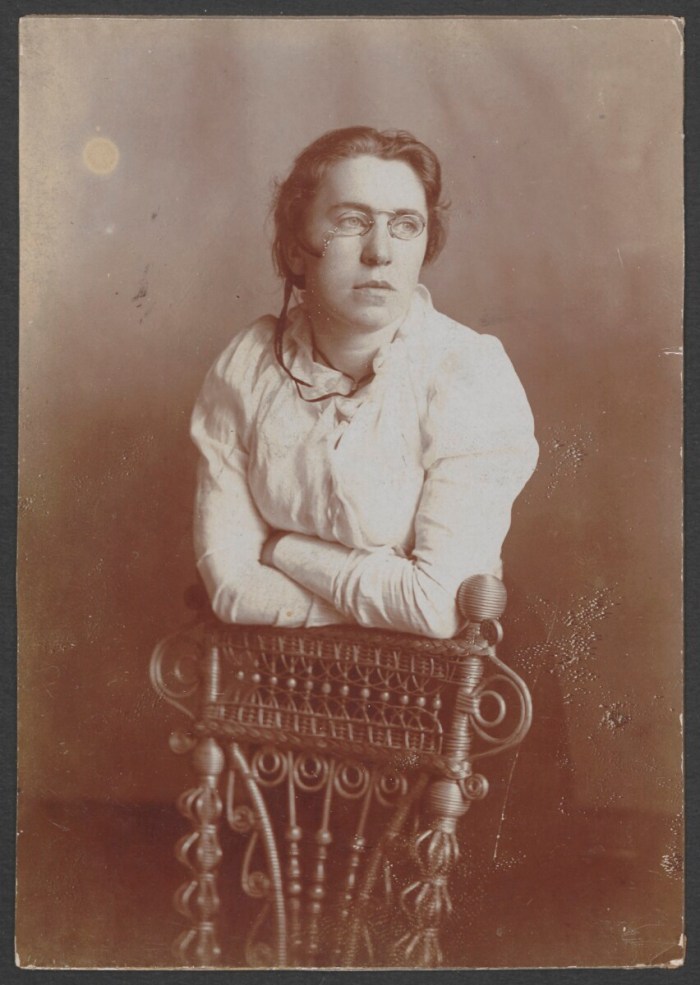
Did you know that Emma Goldman, famous anarchist, had a country home on Allapartus Road in the early 20th century?
Do you even know who Emma Goldman was? Or what anarchy is? Don’t worry, most people I’ve tried to impress with this piece of Ossining history don’t know either.
Now, today, instead of being described as “The High Priestess of Anarchy,” Emma Goldman is more often thought of as a progressive feminist, an author, a magazine publisher, and an inspirational speaker. Her passionate advocacy for birth control, marriage reform, sexual freedom, worker’s rights, and vehement anti-war activism was extremely progressive for the time.
And in the 19th/early 20th centuries, Emma Goldman made headlines as “Red Emma” and “A Dangerous Woman.”
Believing that “Fighting injustice and exploitation is all that matters,” she tirelessly spoke out on behalf of the marginalized, the exploited and the oppressed.
Now, I have to delve into this anarchy thing before I go any further, because it’s essential to understanding what Emma Goldman was about.
Basically, anarchy (in the way that Goldman defined it) describes a society without any centralized authority. So, no rulers, government, laws — frankly, it’s a movement that I never found that interesting because it seems so irrational, so angry, and so violent. And perhaps it is on the surface, and violent acts have certainly been perpetrated in its name.
In 1893, when Goldman was imprisoned for “inciting to riot”, she gave a jailhouse interview to Nellie Bly, a reporter for The New York World, and explained why she was an anarchist and what she hoped to accomplish:
I am an Anarchist because I am an egotist. It pains me to see others suffer. I cannot bear it. Everything wrong, crime and sickness and all that, is the result of the system under which we live. Were there no money, and as a result, no capitalists, people would not be over-worked, starved and ill-housed, all of which makes them old before their time, diseases them and makes them criminals. To save a dollar the capitalists build their railroads poorly, and along comes a train, and loads of people are killed. What are their lives to him if by their sacrifice he has saved money?
In further researching this topic, I came upon this definition by the writer Rebecca Solnit: “Anarchists are idealists, believing human beings do not need authorities or the threat of violence to govern them, but are instead capable of governing themselves by cooperation, negotiation, and mutual aid.”[1]
Between Goldman and Solnit’s explanations, on paper anarchism certainly seems like a utopian ideal but really – has there ever been such an idyllic civilization? Could it ever really exist? Did Emma Goldman meet any human beings? (Ooops, my cynicism is showing.)
But she truly believed this world was possible and pursued these ideals her entire life. And for all her fight and spirit and refusal to accept the status quo, Emma Goldman was a radical optimist, a passionate believer in the essential good of the human beings, if only the jackboot of authority could be lifted from their necks.
Born in 1869 in Popelon, Lithuania, Goldman emigrated to Rochester, New York in 1885. The first job she would find was working in a sweatshop sewing men’s overcoats at a wage of $2.50 per week. (She marked this as the beginning of her advocacy for worker’s rights.)
According to her 1931 memoir Living My Life, Goldman was radicalized after the 1886 Haymarket Affair bombing.
Soon after this, Goldman would meet and fall in love with Alexander Berkman, an equally fiery anarchist and activist. In 1892, in response to the strikes in Andrew Carnegie’s steel mills in Homestead, Pennsylvania where Pinkerton guards were brought in to quell the conflict with billy clubs and bullets, Berkman decided to follow the anarchist’s playbook, deploy “targeted violence,” and murder Carnegie’s right hand man Henry Clay Frick. (The idea was that this murder would inflame the masses, causing revolution to take place, thus toppling capitalism.)
Frick survived, and Berkman served 14 years in prison for attempted murder. Goldman was initially implicated, but there was no evidence with which to charge her. However, this incident would mark her as a violent, dangerous person, one the authorities would trail and watch closely.
Knowing this, she still toured the country giving speeches, encouraging workers to “Demonstrate before the palaces of the rich; demand work. If they do not give you work, demand bread. If they deny you both, take bread.” It was after one such lecture that she was arrested and convicted for “inciting to riot.” She spent a year imprisoned on Blackwell’s (now Roosevelt) Island, New York working as an amateur nurse in the prison hospital and giving occasional interviews to sympathetic reporters.
After serving her term, she traveled to Europe for formal nursing and midwife training and would fall back on these skills throughout her life to support herself.
Ossining Connection
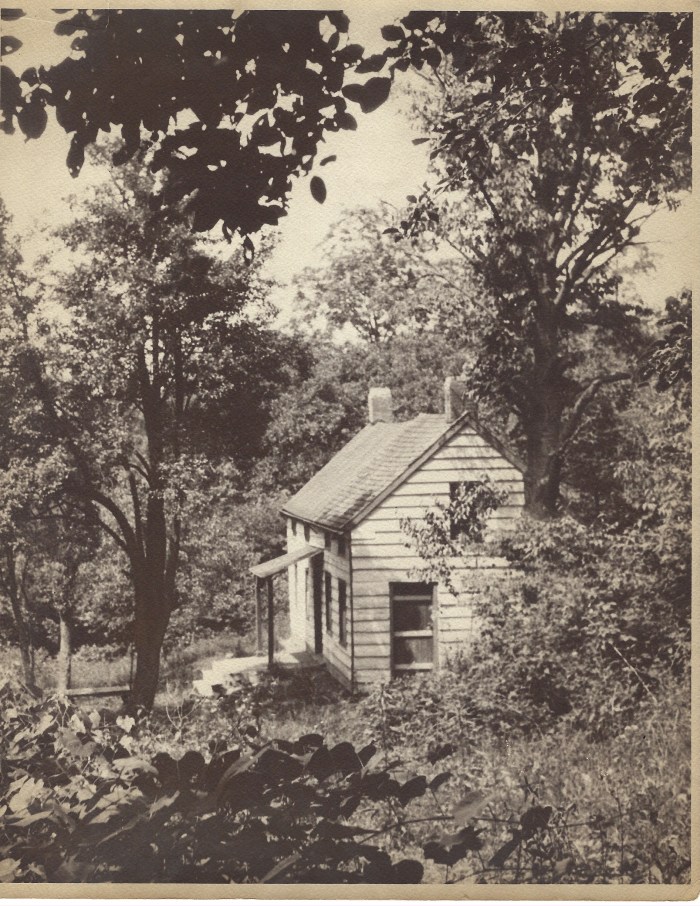
In 1905, a wealthy friend, Bolton Hall, purchased a small farm at the top of Allapartus Road (technically in New Castle, just outside the Ossining border) and gave it to Goldman.
Farmhouse on Allapartus Road, c. 1910 (now demolished) Courtesy of Gareth Hougham
She would come to this little farmhouse to decompress, to cook, to garden and to write. As she described it “The house was old and shaky, and there was no water on the premises. But its rugged beauty and seclusion, and the gorgeous view from the hill, made up for what was lacking in comfort.”
Alexander Berkman would join her there after his release from prison. Though they would discover that their romantic relationship was irretrievably broken by their time apart, they would remain professional colleagues for many years.
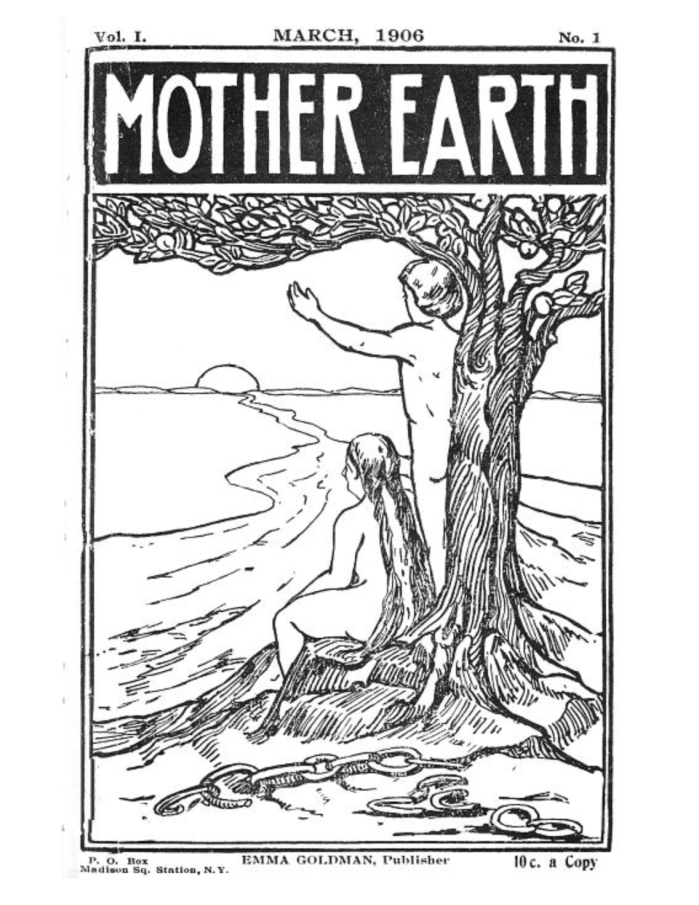
It’s around this time that Goldman found her radical periodical Mother Earth. She would serve at various times as its publisher, head writer, and editor. She attracted many of the progressive/radical writers and artists of the time, such as Floyd Dell, Louise Bryant (Diane Keaton played her in the movie Reds), Man Ray, and Margaret Sanger.
Courtesy Gutenberg.org
(Fun Fact: Croton resident Max Eastman would found his socialist magazine The Masses in 1911 and employ some of the same writers and artists. And both magazines would be shuttered in 1917 by the US Government for violating the Espionage Act for their radical anti-war/anti-conscription stances.)
In addition to putting out her monthly periodical, Goldman spent the 1910s on lecture tours speaking on topics ranging from anarchism, birth control, homosexuality to pacifism:
1915 Lecture Handbill from Portland, Oregon Courtesy of JWA.org
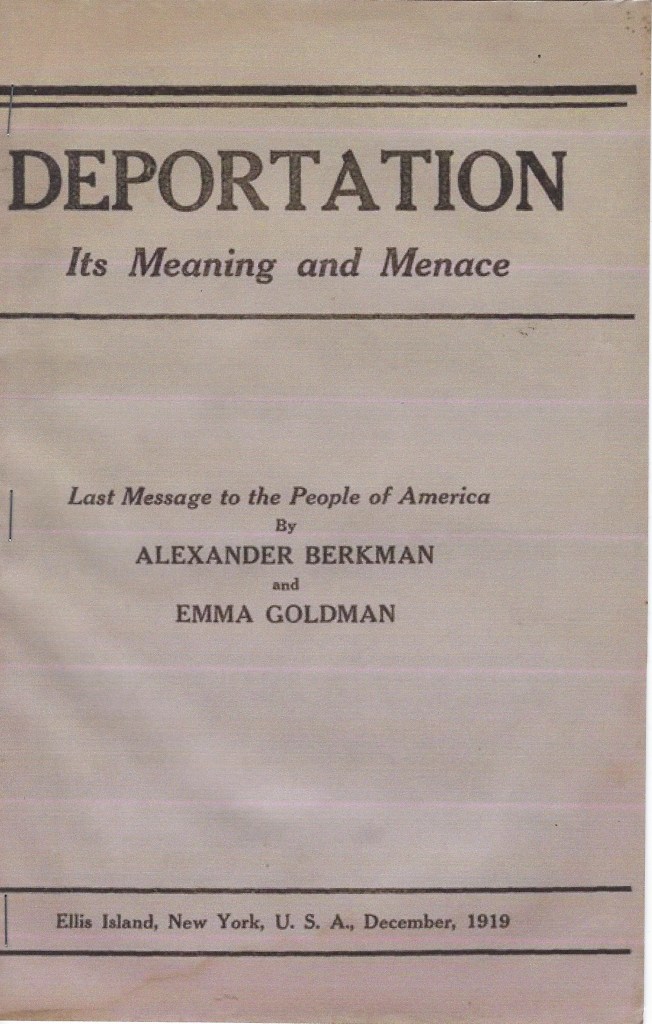
She would get arrested several more times for violating both the Comstock and Espionage acts – and this last one would cause her deportation to Russia in 1919, along with Alexander Berkman and around 200 others the US Government branded as communists/anarchists. She and Berkman would write the following pamphlet on Ellis Island as they awaited their boat to Russia:
Goldman died in Toronto in 1940 at the age of 70, after a series of strokes. However, even death could not silence her: Her body would be transported to Forest Park, Illinois to be buried near those who were executed for the Haymarket bombing.
Her final words, chiseled on her gravestone are: “Liberty will not descend to a people. A people must raise themselves to liberty.”
[1] Solnit, Rebecca A Paradise Built in Hell, 2010
Edith Cheatham was born on March 8, 1917, in Lunenberg, Virginia to John Floyd Cheatham and Susie Fowlkes Cheatham. Her father came up to Ossining in about 1911 and is said to have helped build Maryknoll.
In about 1924, her parents were both living in Ossining, and in the 1930 census we find the family living at 59 Durston (now Hunter) Street. Her father was a carpenter who had his own business, and her mother was busy raising Edith and her six siblings.
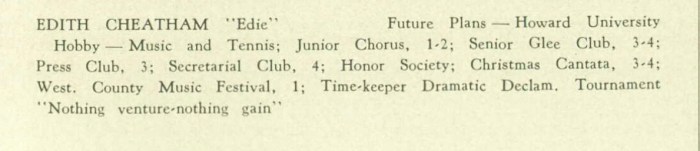
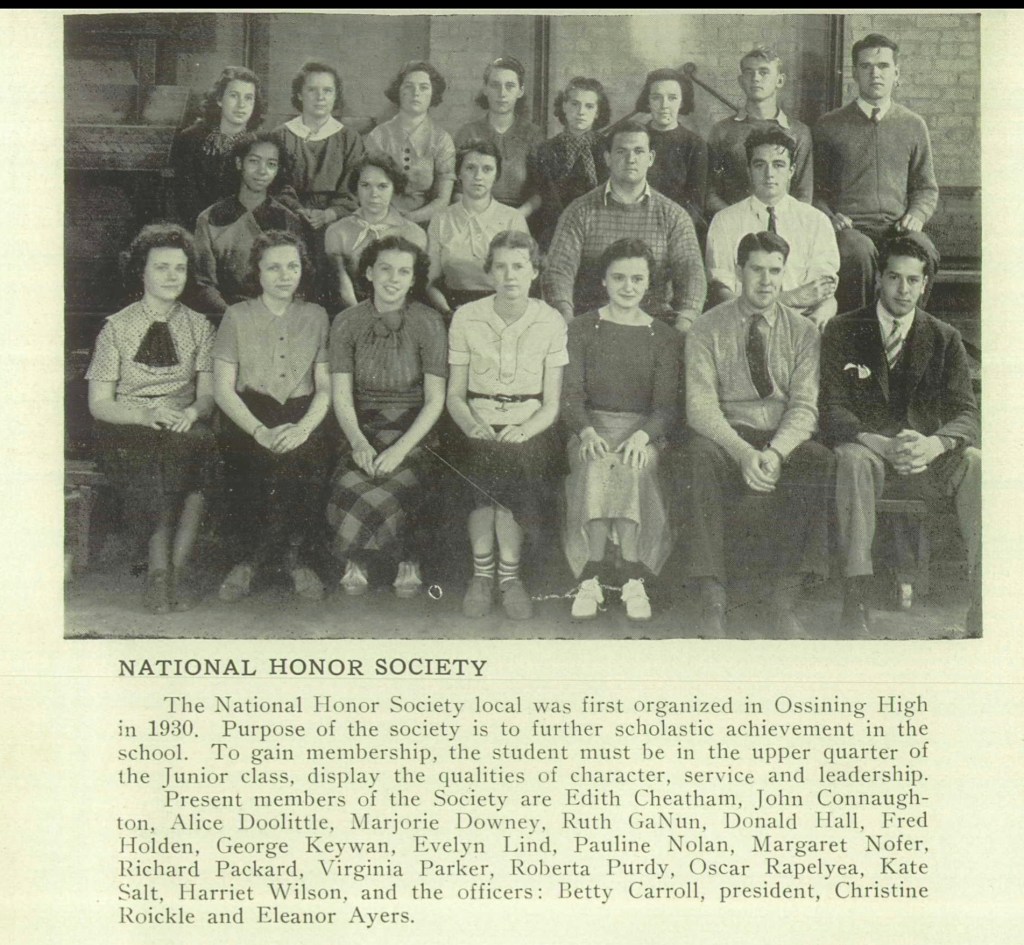
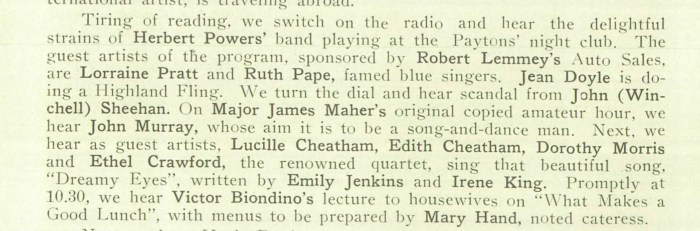
Edith attended Ossining High School, graduating in 1936. A member of the National Honor Society and numerous music clubs, she had hoped to go on to Howard University.
Courtesy of the Ossining High School Yearbook, 1936
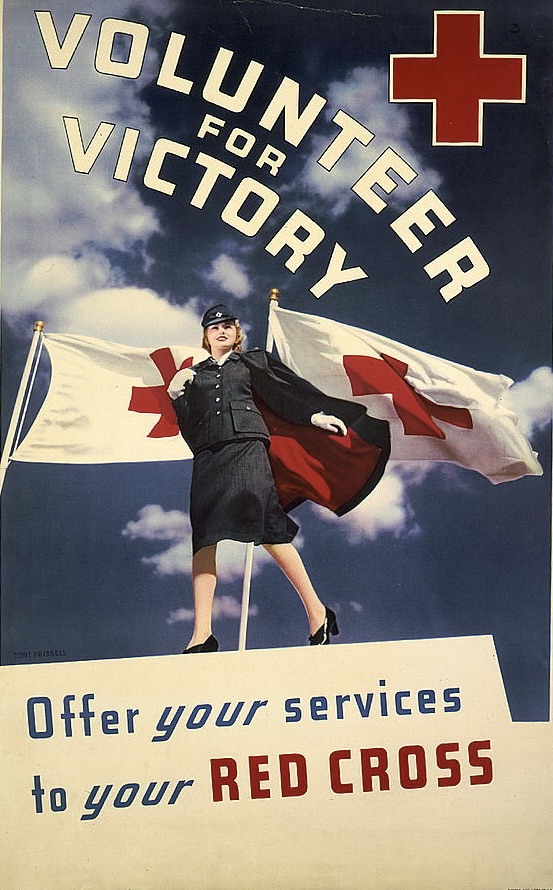
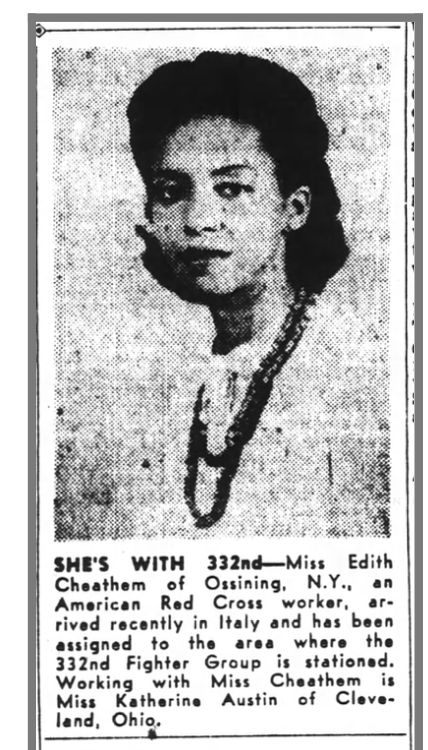
According to the 1940 US census, Edith was still living at home and working as a clerk. She also was apparently taking business classes at NYU. Then, in 1943, she accompanied a friend who wanted to volunteer for the Red Cross into the city and ended up volunteering herself. She was first assigned to the Aberdeen Proving Grounds in Maryland and then sent overseas in 1944 to support the men of the 332nd Fighter Group, aka the Tuskegee Airmen, a pioneering group of Black aviators who fought in WWII.
Courtesy of the Library of Congress
Miss Edith Cheatham of Ossining, NY. From the Pittsburgh Courier, 12/9/1944
Thanks to the Baltimore Afro-American newspaper, we know that Edith was one of the first “Colored women to operate Clubmobile Service in the Mediterranean Theater of Operations,” delivering coffee and donuts to fighter pilots at Ramitelli Airfield as they returned from their bomber escort missions. She also may have assisted in the base hospital in the nearby town of Campomarino. Perhaps she was occasionally stationed at the Officers Club at the 332nd base. Maybe she even snuck onto a plane on a covert mission to photograph future bombing sites. (Things like this ARE documented!)
But whatever her specific activities were, they involved courage and resourcefulness. (Read this thesis by Julia Ramsey on Red Cross Volunteers during WWII, which offers great information about what the Red Cross volunteers did.)
In January 1946, she left Naples on the USS General W.P. Richardson, a troopship with about 4,000 on board, and arrived in New York City two weeks later.
She would return to Ossining and then take flying lessons at Zahn’s Flying Service in Amityville, Long Island, where her instructor was Archie Smith. They married in October 1946. (Smith was a graduate of Tuskegee University in Alabama and had been a Flight Instructor and Commander at the Tuskegee Institute during World War II. After his stint at Zahn’s, he would go on to found Warhawk Aviation Service, based at the Westchester Airport, in the 1950s.)
Archie and Edith settled on Batton Road in Croton-on-Hudson, and raised their three children, David, Tim, and Dolores.
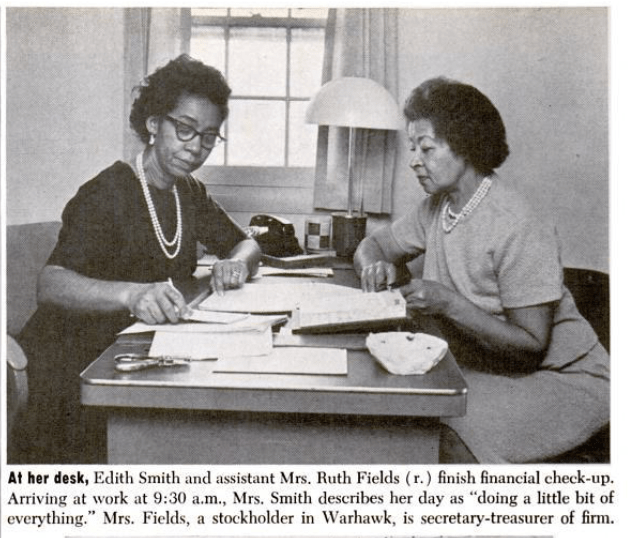
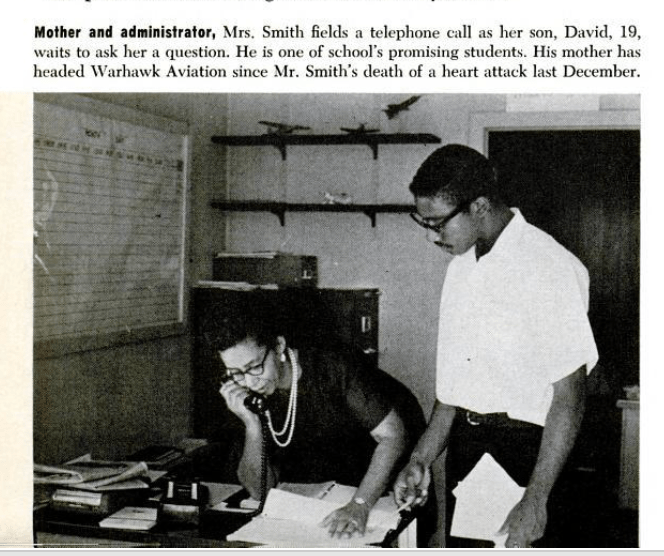
Archie passed away suddenly in 1966 and Edith took over Warhawk Aviation, running it until 1969. Below are two images from an October 1967 article in Ebony Magazine, titled “Spunky Widow Runs Modern Pilot School”:
She would then work at IBM for nearly 20 years, before moving to Mesa, Arizona to be near her daughter Dolores. Edith lived there until her death in 2007.
Her relatives remember her as independent, strong-willed and kind. She loved to do New York Times crosswords and could usually fill them out in one pass. Not surprising for a former member of the National Honor Society.
If she could do what she did in the 1940s – volunteer overseas on the battlefield, learn to fly, run a business – what’s stopping the rest of us?
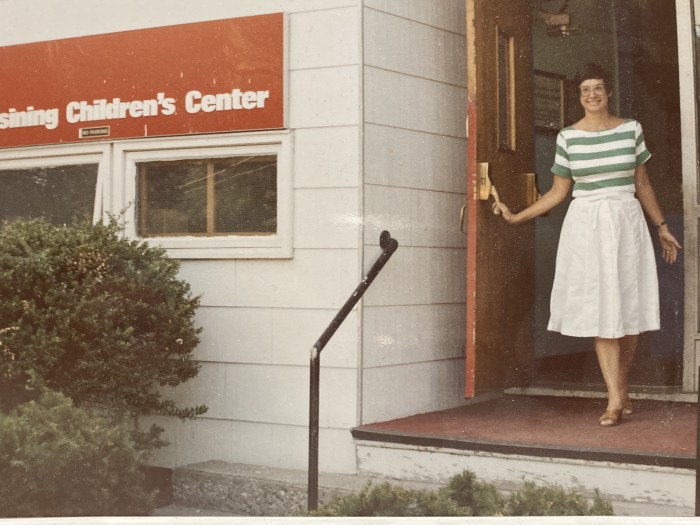
Today I am highlighting the life and work of Sally Ziegler, the Executive Director of the Ossining Children’s Center in the 1970s. In addition to helping run the Center, she also saw the need to engage in the political arena to further advocate for childcare and founded the Child Care Council, an organization she helped lead into the 1990s.
Sally Ziegler at the Ossining Children’s Center, c. 1970s Photo courtesy Andrew Zeigler
Now, the Ossining Children’s Center is another one of those resilient organizations that was founded years ago by a group of community-minded, compassionate and powerful women in Ossining.
In 1895, seeing a need to offer childcare to immigrant women, the Women’s Association of St. Paul’s Episcopal Church started what was then called the Christ Child Day Nursery and Bethany Home. According to the website of Grace Episcopal Church (the current iteration of St. Paul’s), at the end of the 19thcentury there were many widows in Ossining, women whose husbands had been killed working on the railroad or building the Croton Dam. Women who then needed to go to work to support their families but had no one to look after their children.
Let’s stop here for a moment and unpack that bit of history. In that time before OSHA, before any sort of Worker’s Compensation, before any worker protection really at all, enough local workers were dying on their jobs that the good women of Ossining saw the need to organize one of the first childcare centers in the United States. It’s hard not to have strong feelings about the plight of working people in the United States at the turn of the 20th century, where a fatal accident could leave a family indigent and the business owner unscathed.
But back to the Ossining Children’s Center and Sally Ziegler.
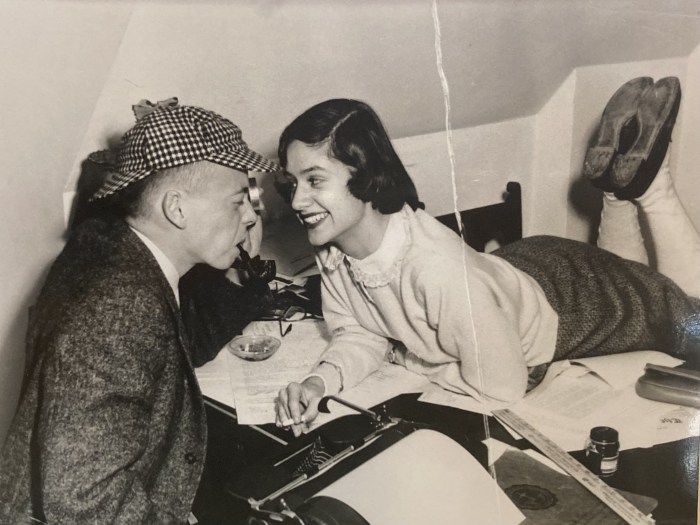
Sally McIntosh Ziegler was born in 1936 in Savannah, Georgia. Attending Duke University, in 1956 she became the first female editor-in-chief of the Duke Chronicle, the university newspaper.
Sally McIntosh and Ted Ziegler in the Duke University Chronicle Editorial Office, c. 1955. Photo courtesy Andrew Ziegler
She married and moved to Ossining in the early 1960s, where she and husband Ted started their family. Sally began volunteering at the Children’s Center when her children were toddlers.
What was a volunteer position soon morphed into something paid, then permanent, until Sally was appointed Executive Director, a role she held for over a decade.
From what I’ve read about her (see her Duke University obituary here), and conversations I’ve had with her son Andrew, Sally was one of those quietly determined women who got things done. I’m sure her soft southern manners helped mask her grit and fierce desire to help those less fortunate.
Stories of her taking night classes in Spanish to better communicate with the parents at the Children’s Center, tirelessly lobbying the legislature for more funding for childcare, and becoming an Episcopal deacon in retirement, all speak to a woman who was dedicated to the service of others.
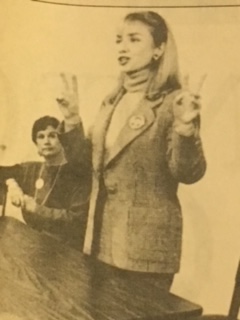
Sally Ziegler keeping an eye on Hillary Rodham Clinton. Photo courtesy Andrew Ziegler
I see her as one of a parade of women who have done great good in our community, and perhaps got a testimonial dinner and a plaque upon retirement (a la Fanny Kane), but the remembrance of their good works has melted away as the years march on. Unlike the Carnegies and the Rockefellers whom we can’t help continuing to honor thanks to their largesse and the fact that their names are on things, the stories of the people who do the work, who show up day after day, who minister to the needy are so often forgotten. Perhaps that’s the way they wanted it, but I think we need more stories of good people who think of others. Just imagine the number of families whose lives have been lifted up by Sally Ziegler and all the others who have made (and continue to make) the Ossining Children’s Center a success.
Sally Ziegler is just one of many of the unsung heroes who have bolstered and improved our community. And though I rail against the necessity of “theme months,” I have to admit I likely would never have heard of her if I hadn’t been writing these Women’s History blog posts. Her story is inspiring and should be told. I’m grateful to have had the opportunity to learn about and highlight her, even if only in blog form.
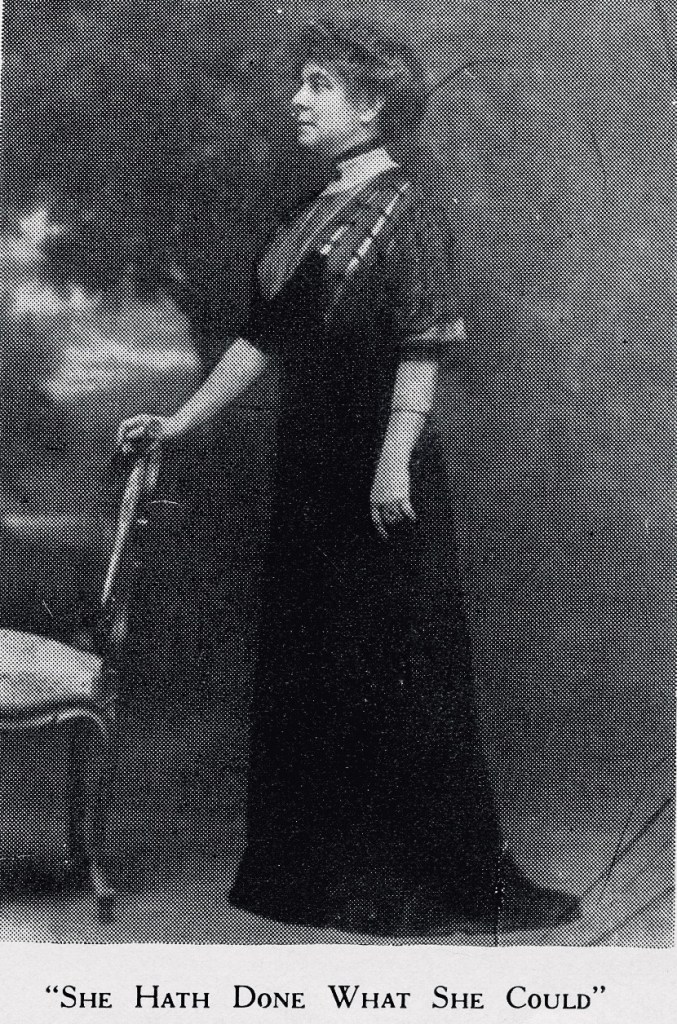
Folks, you’re in for a treat! Former Ossining Village Historian (and current Village Trustee) Dana White is our guest today on the blog. Please enjoy her post on Fanny Brandreth Kane, Ossining’s first lady of civic affairs.
Guest post by Dana White
Fanny Brandreth Kane 1858 – 1938
On the evening of April 13, 1936, more than 150 local residents paid $2.25 apiece to attend a testimonial dinner at the Briar Hills Country Club (now Trump International). While such soirees were not uncommon, usually they were held for someone who’d recently died. That evening’s honoree, Fanny Kane, was very much alive, the first person with a pulse–and a woman to boot–to be honored “for her unselfish service” to Ossining.
Frances (Fanny) Kane was a tiny ball of energy in a size-one shoe, a Mayflower descendant and DAR member who made it her mission to help the less fortunate, the sick, the lonely.
After the diners had finished the fresh fruit cocktail with mint, cream of tomato soup, filet mignon with pan roasted potatoes, new peas, and ice cream in “fancy moulds,” the speeches began. One after another, Mrs. Kane’s friends and admirers stood to toast her achievements as a Neighbor and Friend, an Organizer, a Citizen and a Humanitarian. Clara Fuller, co-founder with Kane of the Civic League and the Ossining Woman’s Club, attested to her friend’s astonishing can-do spirit: “She can’t help it, she was born that way. What she wills to be done, will be done.”
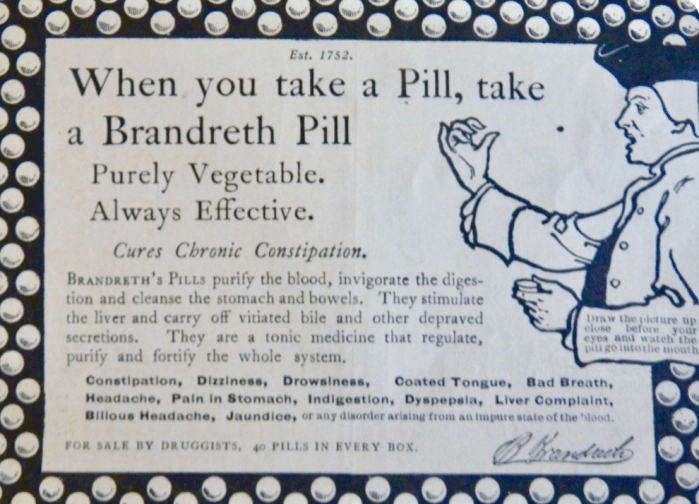
Fanny entered the world on October 31, 1858, one of four girls born to George and Virginia Brandreth. George, a lawyer and village president, was the oldest of thirteen children born to Benjamin Brandreth, the wealthy Englishman who manufactured his patent medicines and porous plasters on the Sing Sing waterfront. George ran the company after his father’s death in 1880.
Brandreth Pills for your vitiated bile . . .
Fanny’s mother Virginia was a daughter of another leading citizen, General Aaron Ward, who lived in Careswell, a grand Greek Revival mansion built in the 1830 sof convict-quarried Sing Sing marble. (It stood where the high school gym is today.) Fanny and her family lived at No. 10 Ellis Place, a large house they called Vine Cottage, only steps from Trinity Episcopal, the church the Brandreths were instrumental in building. Fanny showed an early propensity for order and neatness; as one admirer testified that night, Fanny “began her activities in public welfare at the early age of six, when she made her father remove a blot on the beauty of the neighborhood in the form of a little black pig and his sty.”
Fanny’s high-society upbringing was full of trips to New York City for Christmas presents, charity balls and dances at West Point, yet tragedy blotted this idyllic life. There was a childhood accident that stole the sight in her left eye, a handicap she did her best to ignore. When Fanny was 12 her mother passed away, and Mary, the oldest daughter, assumed the maternal role. When Fanny was 20, her fiance, Alexander Gibson, son of the principal of St. John’s School (where St. Ann’s School now stands), died suddenly, and a heartbroken Fanny took a year-long trip to Europe and Egypt with Mary and her husband.
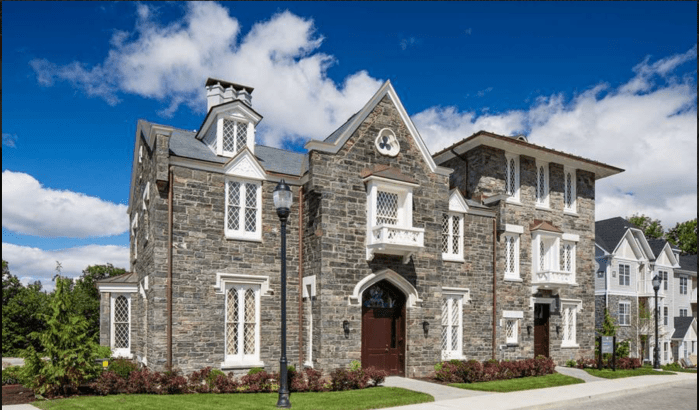
In 1884, at the ripe old age of 25, Fanny finally married, the last daughter to do so. Like her, John Innes Kane II was a Sing Sing native whose wealthy father, John Kane Sr., hailed from Albany. In the early 1840s, the Kane family had bought 46 acres on the river side of Albany Post Road–saving it from being cut up into home lots–and built the fine granite mansion called Woodlawn. It had 20 rooms and numerous outbuildings and was stuffed with fine antiques. But John Sr. had tuberculosis, and by the time their son was one year of age, both he and his wife had passed away. The little orphan inherited Woodlawn but was raised by relatives. He did not live there again until he married Fanny, having returned to Ossining after a career in the Army Calvary on the Texas frontier. According to a New York Times account of the wedding, Fanny’s father George “presented her with a share in the Brandreth company, valued at $50,000, a silver tea set, a check for $500, an elegant piano, and a handsome victoria.”
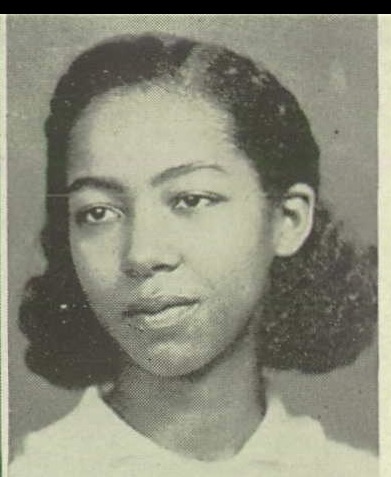
Woodlawn today, the clubhouse for Avalon/The Terrace apartment complex
The first half of Fanny’s adult life was occupied with raising three children and caring for her husband, who, like his father, battled tuberculosis. John held positions at the Sing Sing Gas Co. and as Ossining postmaster, but his ill health forced him to warmer climes. Woodlawn was often vacant, the furniture sheeted, as Fanny accompanied John to Texas, California, and Arizona. In 1898, John volunteered to serve in the Spanish American war, and after the invasion of Cuba returned home with ruined health. He passed away at Lake George in 1904, leaving Fanny, at 46, a wealthy widow with three children and a philanthropic heart.
Over the next thirty years, Fanny made her mark on the village of Ossining. Again, tragedy was the motivation: Her younger sister Helen, called Nellie, was dying. Nellie, a kind soul who was married to Frederick Potter, scion of a wealthy local family, had the best medical care money could provide, yet she worried about those less fortunate. One day, she wondered aloud, “What do poor people do when they are sick?” Her dying wish was that Fanny and Frederick help the poor receive medical care.
After Nellie’s death in 1905, Fanny and Frederick embarked on a partnership that would change the face of Ossining’s health care. Frederick hired a nurse to care for the village poor, and Fanny directed her duties, jotting down reports with a pad and pencil she kept by her bed, at all hours of the day and night. (In 1914, this service became the District Nursing Association; Fanny served as its president until her death.) In 1906, the Potter family funded the construction of a new hospital on Spring Street, with Fanny a charter member. She also started clinics for women on Pre-Natal care, Maternal Health and Social Hygiene.
Community service filled a void in Fanny’s life. Deciding the village was untidy, she and her childhood friend Clara Fuller, principal of the Ossining School for Girls, decided to do something about it. They started the Civic League, comprised of women dedicated to improving quality of life in the village. Whereas Ossining politics had been purely a man’s game, Fanny insisted female voices be heard. In addition to cleaning up the streets, Fanny and her volunteer force tackled the clean up of the Kill Brook, fought to preserve trees from developers, and took on the illegal saloons that distracted so many husbands from their domestic obligations. The story goes that one Sunday, motivated by one wife’s tears, Fanny marched into a saloon and led the drunken husband out by the hand. When her efforts to regulate the saloons came up short, she opened a coffee shop and reading room on North Malcolm Street where “idlers” could spend time. She even hired the village’s first policewoman to patrol the local “disorderly houses” at night and report any problems.
She felt the state prison was another blot on the landscape, especially after the electric chair arrived in 1891. She called for the prison to be closed, or at the very least given its own train stop, so that newly arrived inmates were not marched through the streets to the prison gates. In both these goals, she proved unsuccessful.
During World War I, Fanny characteristically turned hardship into opportunity. Her youngest child, Edward Winslow (named for relative Winslow Homer), went off to Europe and became an aviator on the front lines. Fanny and the rest of the country’s women stayed behind and did their part, knitting socks and making bandages for the troops. After Winslow returned unscathed, much to her delight, she transformed this community spirit into the Ossining Woman’s Club. She raised the $10,000 needed to buy the large house on South Highland Avenue. It was not only a gathering place and hub of activity, but also a home for single women of modest means, who could rent rooms at a low price.
In 1931, convinced Ossining needed to preserve its past, Fanny hosted the first meeting of the Ossining Historical Society at Woodlawn. The society’s first president, she presided over the collection of artifacts and documents that were stored in the Washington School on Croton Ave. before landing in their current home at 196 Croton Ave. While Fanny’s other organizations have waned over the time, the Ossining Historical Society Museum remains her most visible and active legacy.
Elsewhere, Fanny’s legacy is in transition. The Woman’s Club closed and the South Highland house sold. An oil portrait of Fanny that hung above the fireplace in the main room was relocated to the historical society. The Woodlawn estate, which was sold after her death in 1938 and served as a corporate headquarters for decades, is now home to luxury apartments (Avalon Bay and now The Terraces). The majestic mansion was restored to its former glory for a resident’s clubhouse, a stellar example of adaptive reuse.
The interior of Woodlawn today, in its current use as the Clubhouse for Avalon/the Terrace apartments
Fanny was the last of her sisters to pass away. Her generous heart gave out on June 1, 1938, at the age of 79. Her funeral was held at Trinity Episcopal Church and she was buried in Dale Cemetery. Flags on all the public buildings were lowered to half-mast. Her tiny coffin and legions of mourners brought to mind the words of one doctor at the testimonial dinner: “Fanny, you are a little bit of a woman, but you have a big heart and a big capacity for work that is worth while.”
Addendum by Caroline: Here’s Fanny Kane’s New York Times obituary. She truly was a powerhouse!
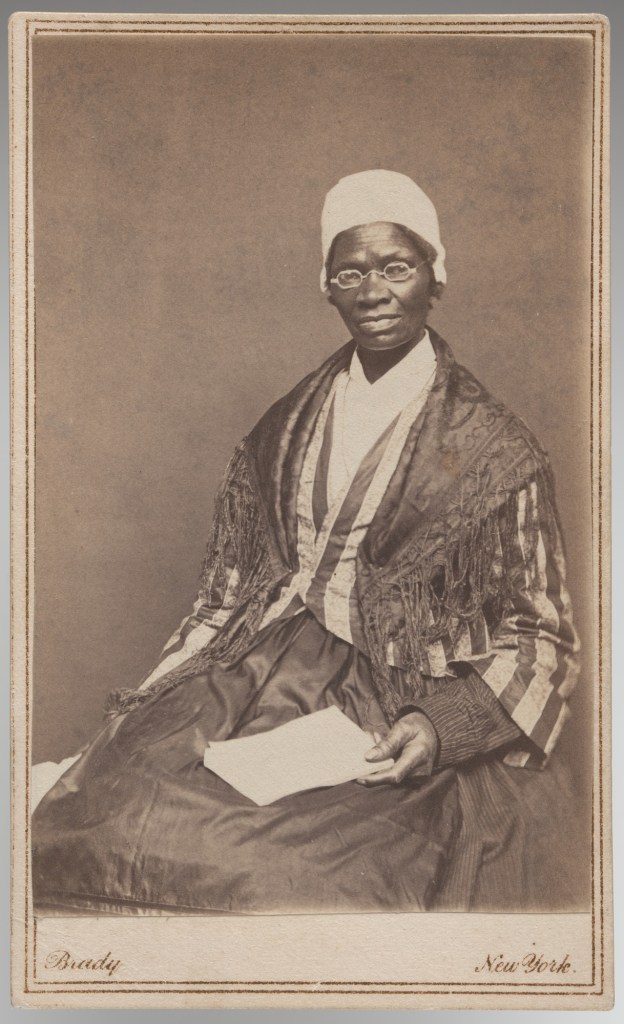
Sojourner Truth, c. 1864 Photographer: Mathew Brady Credit: National Portrait Gallery, Smithsonian Institution
Sojourner Truth (aka Isabella Baumfree Van Wagenen) c.1797 – 1883
Abolitionist Activist Speaker ***Local Connection: Zion Hill, Sparta*** (today the site of the Beechwood Condominium Complex off Route 9)
Sojourner Truth was born Isabella Baumfree in about 1797, to James and Elizabeth Baumfree. One of about ten children, the family was enslaved by a Col. Hardenburgh who owned a large farm in Ulster County, New York.
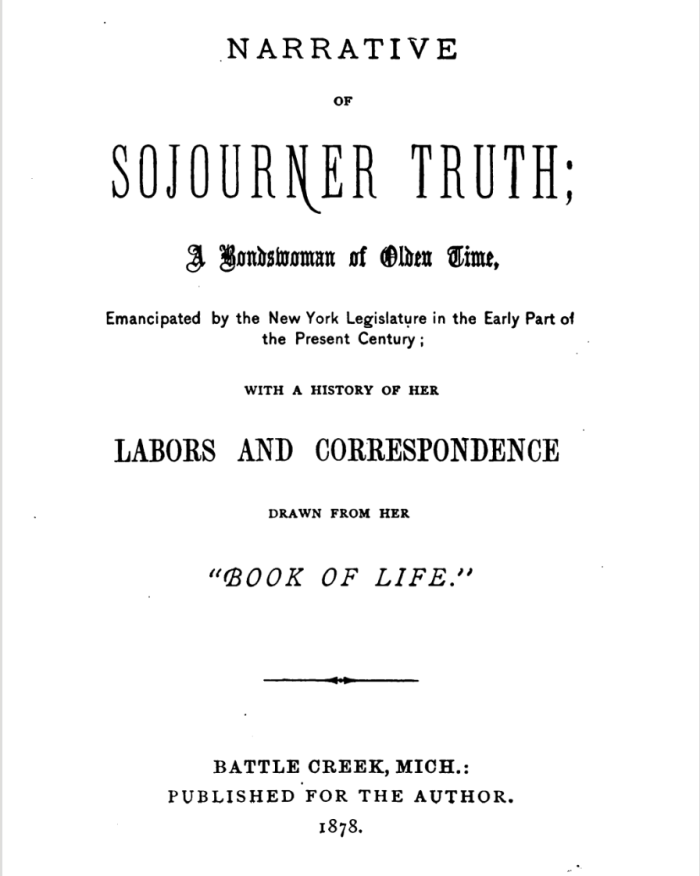
First, we’re able to know so much about her because in 1850 she dictated her memoirs to friend Olive Gilbert and they were published. This Book of Life would be added to and republished in 1878:
You can read it in its entirety here if you’re interested.
At the age of 9 (or so), Isabella was sold away from her family “for the sum of one hundred dollars, to one John Nealy, of Ulster County, New York; and she has an impression that in this sale she was connected with a lot of sheep.”
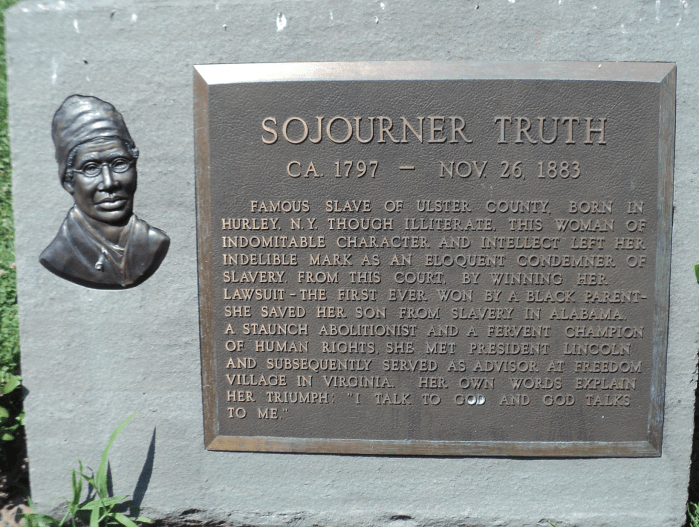
Sojourner Truth plaque in Ulster County
Her first language was Dutch, and she was said to speak with a Dutch accent when speaking English (which then brings into question the stylized “dees, dems and doze” accent she is often quoted as having in her famous “Ain’t I a Woman” speech. But more on that anon.)
Because at this point (she was NINE!) Isabella could only speak Dutch and the Nealys could only speak English, she was frequently whipped for her misunderstanding and confusion. Within a few years, she was again sold, this time to a tavern owner named Martinus Schryver who lived nearby in Port Ewen. She would later describe this as “a wild, out-of-door kind of life. She was expected to carry fish, to hoe corn, to bring roots and herbs from the wood for beers, go to the Strand for a gallon of molasses or liquor as the case might require . . . morally, she retrograded, as their example taught her to curse; and it was here that she took her first oath.”[3]
Within two years, Schryver sold her to a John Dumont in New Paltz, New York.
So, before she was 15, she had been taken from her family and sold as chattel to three other men.
Around the age of 18, she was “married to a fellow-slave, named Thomas, who had previously had two wives, one of whom, if not both, had been torn from him and sold far away.”[4] She would have about five children with Thomas.
Now, beginning in 1799, New York State began slowly abolishing slavery – so slowly, that it would take until 1827 for it to be completely outlawed. As described in her Narrative:
“After emancipation had been decreed by the State, some years before the time fixed for its consummation, Isabella’s master told her if she would do well, and be faithful, he would give her ‘ free papers,’ one year before she was legally free by statute. In the year 1826, she had a badly diseased hand, which greatly diminished her usefulness; but on the arrival of July 4, 1827, the time specified for her receiving her free papers, she claimed the fulfilment of her master’s promise; but he refused granting it, on account (as he alleged) of the loss he had sustained by her hand.”[5]
Furious, Isabella would sit down and spin about 100 pounds of wool before taking her infant daughter and walking away from the Dumonts early one morning (walked away, not run away. The distinction was important to Isabella.) She would eventually find herself in the home of the Van Wageners, an abolitionist, Quaker couple. When John Dumont tracked her to the Van Wageners, they offered $25 for Isabella and her infant. Dumont acquiesced, and Isabella lived with the Van Wageners (and took their name) until she was legally freed by the State of New York a year later.
Once free, Isabella Van Wagener wanted to find her young son, Peter who, at the age of five, had been sold away from Isabella by John Dumont. Now, human enslavement in New York State operated in a bit of a gray area. Post-1799, several laws were passed that would free all enslaved minors once they reached the age of 21, and specifically outlawed selling enslaved minors out of state. However, these laws were enforced only occasionally. But Isabella Baumfree was not to be trifled with and she marched down to the courthouse to file a lawsuit. Long story short, she got her son back from Alabama where he’d been sold – a remarkable feat for a woman of that era.
A page from court documents pertaining to Isabella (Baumfree) Van Wagener’s suit to regain her son, Peter, recently discovered in the NYS Archives Courtesy of the New York State Archives
It’s at this point in her life that Isabella Baumfree Van Wagener’s Ossining connection arises. It’s a very complicated story and even the Narrative doesn’t get into the particulars, but let’s just say that in 1833 she was hired to be a housekeeper for what can really be only called a cult, led by one Prophet Matthias. They all ended up in a house in Sing Sing/Scarborough called Zion Hill (still standing today as part of the Beechwood condominium complex,) living with Benjamin and Ann Folger.
We can be quite certain that she really did live here, because Benjamin Folger implicated her in the murder of one Elijah Pierson, a follower of Matthias and resident of Zion Hill, who mysteriously died after eating blackberries. But though accused of murder, Isabella went to court, sued Benjamin Folger for libel and, amazingly, won. See (former Ossining Village Historian) Miguel Hernandez’s article here for a deeper dive.
Isabella would continue working as a servant for about ten more years, before she heard the Lord call on her to preach. She changed her name to Sojourner Truth on Pentecost Sunday, 1843 and began preaching against slavery. By all accounts she was a very charismatic speaker and an inspiring singer. She would go on to dictate her memoirs, and with the proceeds, buy a house in Massachusetts.
In 1851, Sojourner Truth gave her famous “Ain’t I a Woman” speech at the Ohio Women’s Rights Convention.
Today it’s believed that this is probably not at all an accurate representation of the speech Truth gave. A transcription was published at the time and is very unlike the version that has become associated with Truth. In fact, it wasn’t until 1863, at the height of the Civil War, that the version linked to above became the accepted version. (For more on this, check out the Sojourner Truth Project here.) But let’s just say the popular speech sounds pretty racially stereotyped linguistically and not at all like it came from someone who spoke with a Dutch accent.
Regardless, I think we can agree that Truth’s speech enlightened many who heard it, as did her life story.
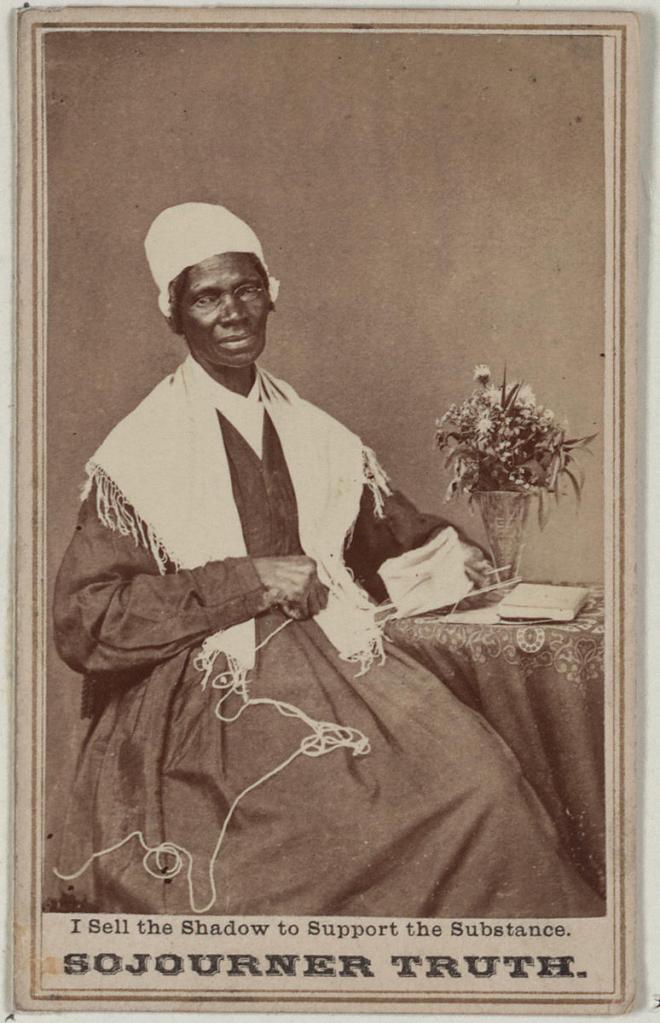
Truth was a savvy marketer. She would sell Cartes de Visites (postcards) like the one below to support herself and fund her lecture tours. Often carrying the caption “I sell the shadow to support the substance,” these cards symbolized Truth’s struggle between self-promotion and her desire to be seen as a sophisticated and respectable free woman. Distributed at anti-slavery conventions and through mail orders, these postcards became wildly popular, enabling Truth to fully pay off her first home within three years and then purchase a second home.
In this image, the seemingly random coils of yarn on her skirt are believed to have been placed quite deliberately – if you look closely, they seem to form the shape of the east coast of the United States. This symbol reiterates Truth’s message of freedom and equality that applied to all states, both North and South. Courtesy of the Library of Congress
Truth would move to Michigan, join a Seventh Day Adventist sect there, all the while preaching about equality.
She would die in Battle Creek, MI in 1883, in the home she owned, bought with money she had earned from her writing and speeches, surrounded by her children.
Today’s Women’s History Month post is celebrating Edith Carpenter Macy (1869 – 1925).
Edith Carpenter Macy, plaque located at the Edith Macy Center. Photo from the Girl Scouts Archives
If you’ve ever shopped at the Chilmark Center on the border of Ossining and Briarcliff Manor, you’ve been wandering through what was part of V. Everitt and Edith Carpenter Macy’s eponymous farm and estate.
Also, if you’ve ever bought a box of Girl Scout cookies, you were enjoying a fundraiser popularized by Edith Macy in the 1920s, in her position as Chair of the Girl Scout Board of Directors.
Edith Macy lived amidst great privilege. Marrying Valentine Everit Macy in 1896, she would benefit from his prodigious wealth (he inherited $20 million at the age of 5 thanks to his father’s canny merger with Standard Oil – but more on that in another post).
The 1900 Census notes that she and Everit had a butler, a 2nd butler, a cook, 3 maids (kitchen, chamber and ladies’), a laundress, and a nurse living with them on Underhill Road.
But though it might sound like she lived the American version of Downton Abbey (sorry, it’s that 2nd butler listed above!) Edith Macy spent much of her time working for the good of others.
Like many of her neighbors (Narcissa Cox Vanderlip, Carrie Chapman Catt and Elizabeth Underhill, just to name a few) Macy participated wholeheartedly in the fight for women’s suffrage. And once the 19th amendment was passed in 1920, (though let’s not forget that New York State passed a women’s suffrage act in 1917), Macy became the Director of the Westchester League of Women Voters.
But Edith Macy wasn’t content with only being associated with suffrage – she was also active in charities that directly helped poor women and children.
Now, one of the things I enjoy about writing these posts is that not only do I learn about the individuals I write about, but I gain granular insights into what the world was like “back then.” In writing up Mrs. Macy’s story, I’m reminded about all the things we take for granted today, such as the right for women to vote, pure food, and not seeing the majority of your children die before they reach adulthood.
One of the many organizations Mrs. Macy was involved in was the Henry Street Settlement. According to the Scarsdale Inquirier, “Long before the milk situation in New York city was satisfactory, [she] took an active part in the work of the Henry Street Settlement and furnished pure milk for the babies to that settlement from [her] farm at Chilmark.”[1]
I think it’s worth unpacking that snippet a bit, because we so take for granted that the milk we get in our supermarkets is safe for human consumption. But back at the turn of the 20th century, that was decidedly not the case. In 1901, in response to rising infant mortality rates, especially in the poorer sections of Manhattan, the Rockefeller Institute commissioned a report on the sanitary conditions in New York’s milk industry. They documented the generally filthy conditions found in local dairies, such as open vats of milk stored in stables and near manure piles that resulted in skyhigh bacterial content that sickened and killed thousands of infants.
So this “pure milk” the Macys supplied to the Henry Street Settlement was more than just a small PR stunt – they were actually responding to a serious need until routine pasteurization of milk was adopted in New York City in 1912.
In 1914, she helped found the Westchester County Children’s Association – an organization that still thrives today and, true to its original mission, provides direct support for children’s programs while also lobbying on behalf of policies that will benefit Westchester’s children.
Macy’s interest in women’s suffrage rather naturally steered her to the Girl Scouts, an organization she would help lead from 1919 – 1925. She thought it was never too early to educate girls about citizenship and how they could be effective, useful members of society. Indeed, one of her first initiatives was to involve the Girl Scouts in the final campaign that helped pass the 19thAmendment.
Vintage pin and patch celebrating Edith Macy. Photo credit Vintagegirlscout.com
Sadly, Edith Macy died suddenly at the age of 55. In her honor, her husband purchased 200 acres of land and established the Edith Macy Center, a permanent place for Girl Scout leaders to receive training. The Edith Macy Center at 550 Chappaqua Road is still active today and still named after her.
Dedication of Camp Edith Macy in Great Hall, 1926. Left to to Right: “Warmth”, Ruth Mitchell; “Light”, Oleda Schrottky; “Food”, Elsa G. Beeker. Plaque of Edith Macy on the wall behind them Photo credit the Girl Scouts Archives
[1] Scarsdale Inquirer, Volume VI, Number 12, 14 February 1925