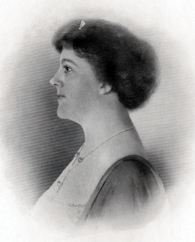
Today’s Women’s History Month post is celebrating Edith Carpenter Macy (1869 – 1925).
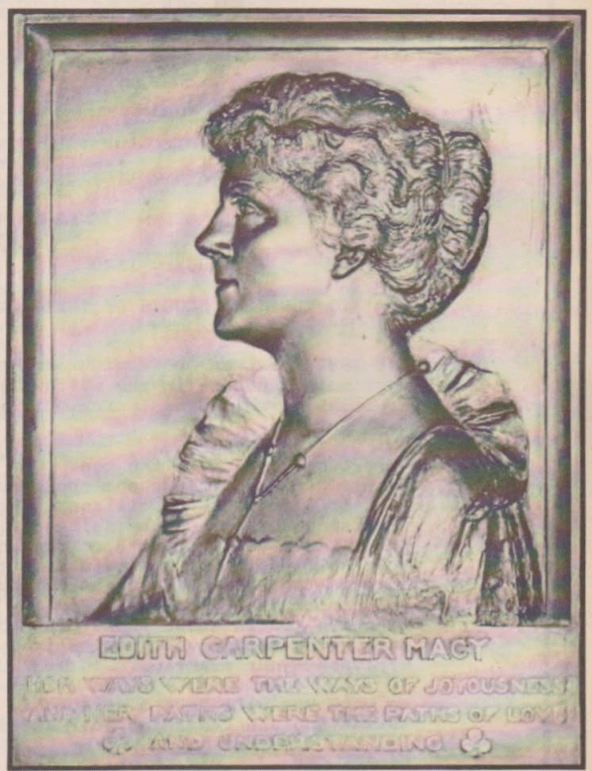
Edith Carpenter Macy, plaque located at the Edith Macy Center. Photo from the Girl Scouts Archives
If you’ve ever shopped at the Chilmark Center on the border of Ossining and Briarcliff Manor, you’ve been wandering through what was part of V. Everitt and Edith Carpenter Macy’s eponymous farm and estate.
Also, if you’ve ever bought a box of Girl Scout cookies, you were enjoying a fundraiser popularized by Edith Macy in the 1920s, in her position as Chair of the Girl Scout Board of Directors.
Edith Macy lived amidst great privilege. Marrying Valentine Everit Macy in 1896, she would benefit from his prodigious wealth (he inherited $20 million at the age of 5 thanks to his father’s canny merger with Standard Oil – but more on that in another post).
The 1900 Census notes that she and Everit had a butler, a 2nd butler, a cook, 3 maids (kitchen, chamber and ladies’), a laundress, and a nurse living with them on Underhill Road.
But though it might sound like she lived the American version of Downton Abbey (sorry, it’s that 2nd butler listed above!) Edith Macy spent much of her time working for the good of others.
Like many of her neighbors (Narcissa Cox Vanderlip, Carrie Chapman Catt and Elizabeth Underhill, just to name a few) Macy participated wholeheartedly in the fight for women’s suffrage. And once the 19th amendment was passed in 1920, (though let’s not forget that New York State passed a women’s suffrage act in 1917), Macy became the Director of the Westchester League of Women Voters.
But Edith Macy wasn’t content with only being associated with suffrage – she was also active in charities that directly helped poor women and children.
Now, one of the things I enjoy about writing these posts is that not only do I learn about the individuals I write about, but I gain granular insights into what the world was like “back then.” In writing up Mrs. Macy’s story, I’m reminded about all the things we take for granted today, such as the right for women to vote, pure food, and not seeing the majority of your children die before they reach adulthood.
One of the many organizations Mrs. Macy was involved in was the Henry Street Settlement. According to the Scarsdale Inquirier, “Long before the milk situation in New York city was satisfactory, [she] took an active part in the work of the Henry Street Settlement and furnished pure milk for the babies to that settlement from [her] farm at Chilmark.”[1]
I think it’s worth unpacking that snippet a bit, because we so take for granted that the milk we get in our supermarkets is safe for human consumption. But back at the turn of the 20th century, that was decidedly not the case. In 1901, in response to rising infant mortality rates, especially in the poorer sections of Manhattan, the Rockefeller Institute commissioned a report on the sanitary conditions in New York’s milk industry. They documented the generally filthy conditions found in local dairies, such as open vats of milk stored in stables and near manure piles that resulted in skyhigh bacterial content that sickened and killed thousands of infants.
So this “pure milk” the Macys supplied to the Henry Street Settlement was more than just a small PR stunt – they were actually responding to a serious need until routine pasteurization of milk was adopted in New York City in 1912.
In 1914, she helped found the Westchester County Children’s Association – an organization that still thrives today and, true to its original mission, provides direct support for children’s programs while also lobbying on behalf of policies that will benefit Westchester’s children.
Macy’s interest in women’s suffrage rather naturally steered her to the Girl Scouts, an organization she would help lead from 1919 – 1925. She thought it was never too early to educate girls about citizenship and how they could be effective, useful members of society. Indeed, one of her first initiatives was to involve the Girl Scouts in the final campaign that helped pass the 19thAmendment.
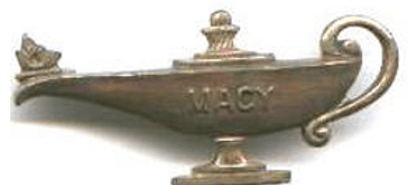
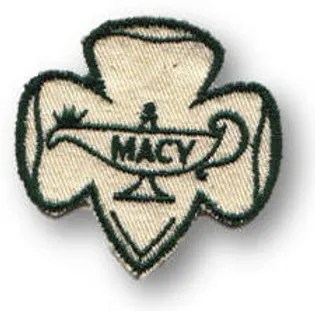
Vintage pin and patch celebrating Edith Macy. Photo credit Vintagegirlscout.com
Sadly, Edith Macy died suddenly at the age of 55. In her honor, her husband purchased 200 acres of land and established the Edith Macy Center, a permanent place for Girl Scout leaders to receive training. The Edith Macy Center at 550 Chappaqua Road is still active today and still named after her.
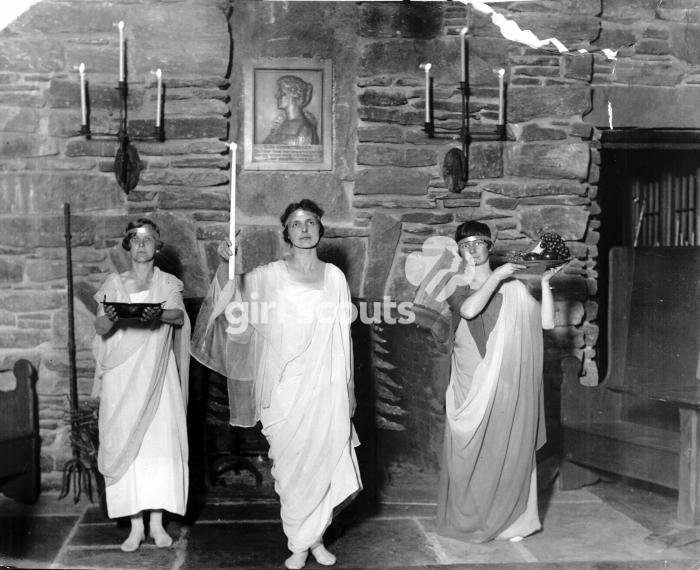
Dedication of Camp Edith Macy in Great Hall, 1926. Left to to Right: “Warmth”, Ruth Mitchell; “Light”, Oleda Schrottky; “Food”, Elsa G. Beeker. Plaque of Edith Macy on the wall behind them Photo credit the Girl Scouts Archives
[1] Scarsdale Inquirer, Volume VI, Number 12, 14 February 1925
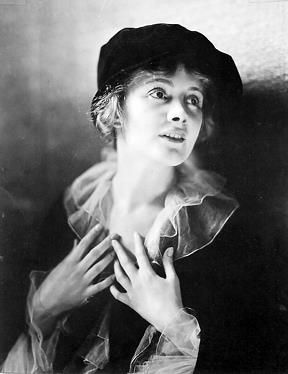
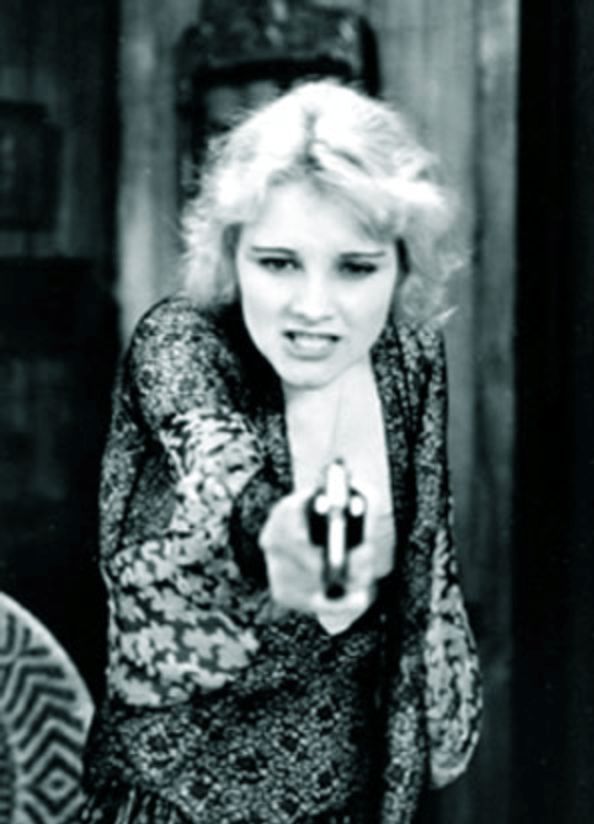
Jeanne Eagels, as a war orphan in the 1918 play “Daddies,” produced by David Belasco
Jeanne Eagels 1890 – 1929
Broadway and early film star ***Local Connection: Homes on Kitchawan Road (Rt. 134) and Cedar Lane***
Okay, first, if you are under the age of 95, you might ask, who is Jeanne Eagels?
Well, she was a big Broadway and film star in the 1910s and ‘20s — in fact, one of the biggest.
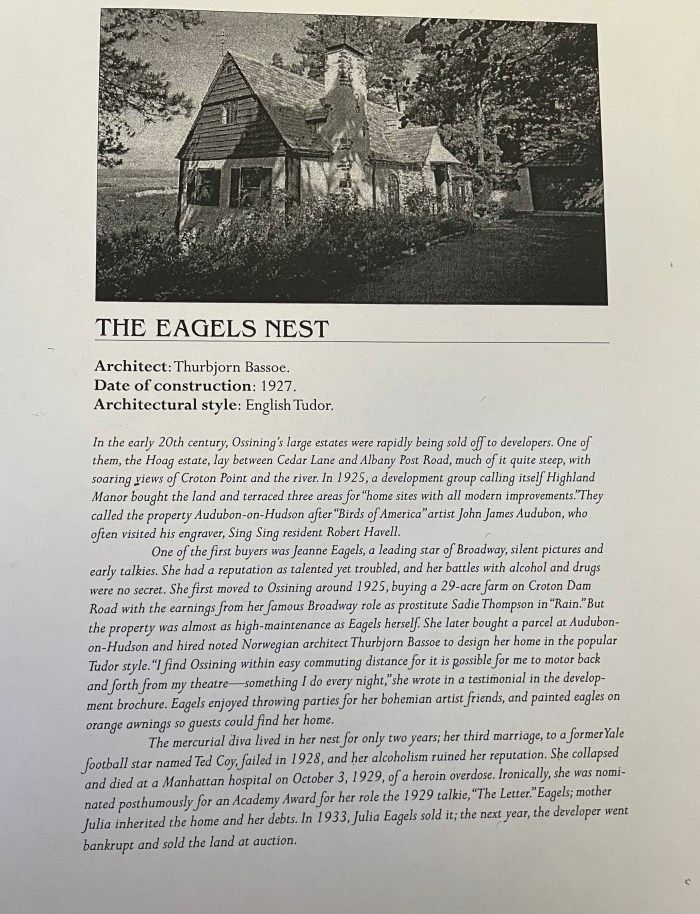
And her Ossining connection is that she owned not one, but two estates here: a 30-acre estate called “Kringejan” at 1395 Kitchawan Road, and 22-acres of land and a house on Cedar Lane Road.
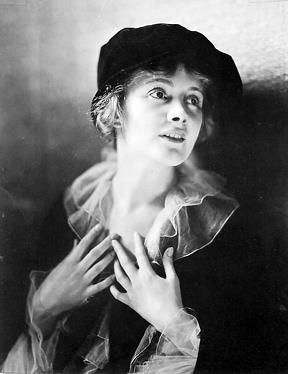
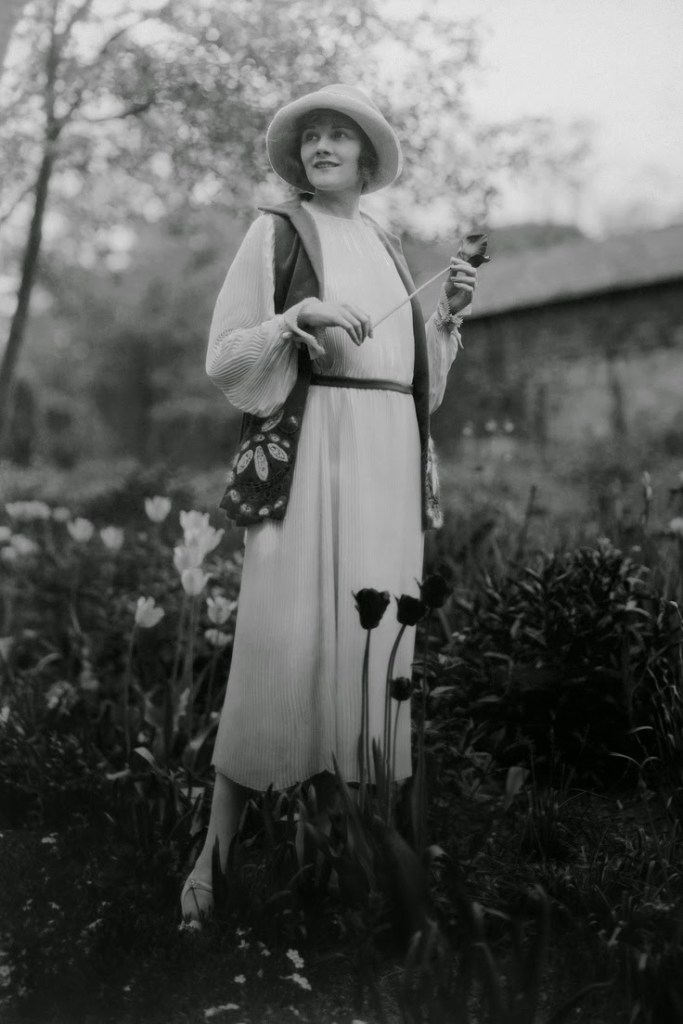
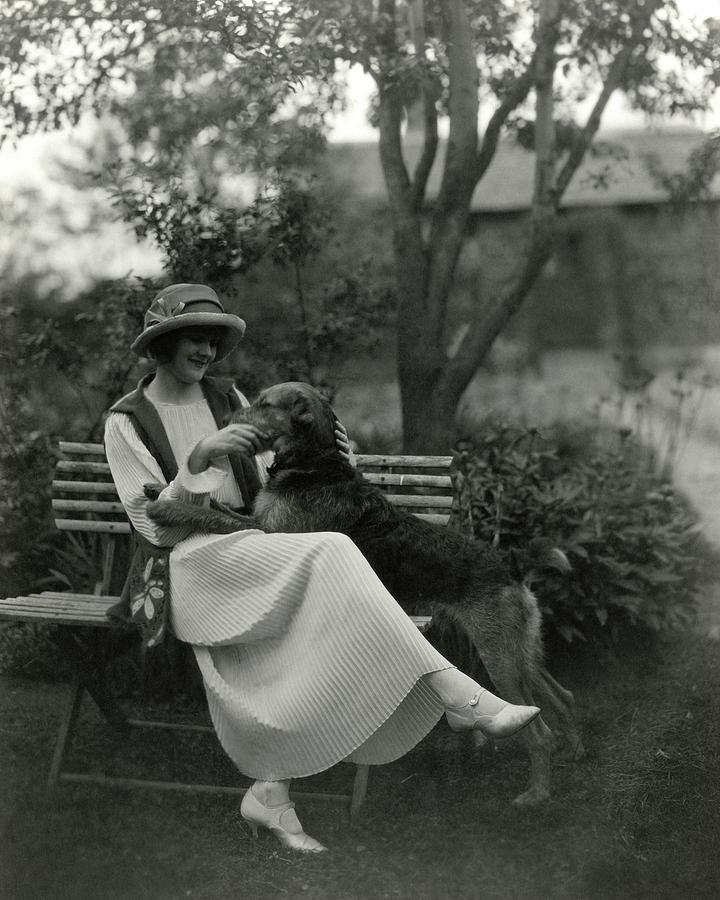
In fact, I’m convinced that these two photos below were taken in the gardens of Kringejan:
Photographs by Maurice Goldberg for Vanity Fair, c. 1925 Public Domain
And here’s a description of her 2nd home in Ossining, on Cedar Lane Road:
Courtesy of the Ossining Historical Society
In those days, Ossining was quite the place for the gentry to land – businessmen, bankers, writers and actors were snapping up farms and transforming them into elegant country estates. According to Eric Woodard and Tara Hanks in their biography Jeanne Eagels: A Life Revealed, Eagels fell in love with the Ossining area when she was making silent films at Thanhouser Studios in New Rochelle.
Hers was the classic “lift yourself up by your bootstraps” story that America loves: the small-town girl who comes to the big city and makes good. She started by nabbing bit parts in around 1908, and by dint of hard work, talent and luck, reached the top of her profession before her untimely death at the age of 39.
1924 found her on a list with Rockefellers, Roosevelts, Guggenheims and Harrimans when the income tax payments of Manhattan’s wealthiest were made public.
But somehow, that’s not at all how she’s remembered.
She lived most of her life on that tricky front line where she was applauded for her success while at the same time condemned for it. She was raised up and then torn down time and time again. The insatiable curiosity of the press and the public transformed almost every detail of her life into something salacious.
So, let’s try to separate the fact from fiction and give this accomplished woman her due.
Jeanne Eagels was born Amelia Eugenia Eagles in Kansas City, Missouri in 1890.
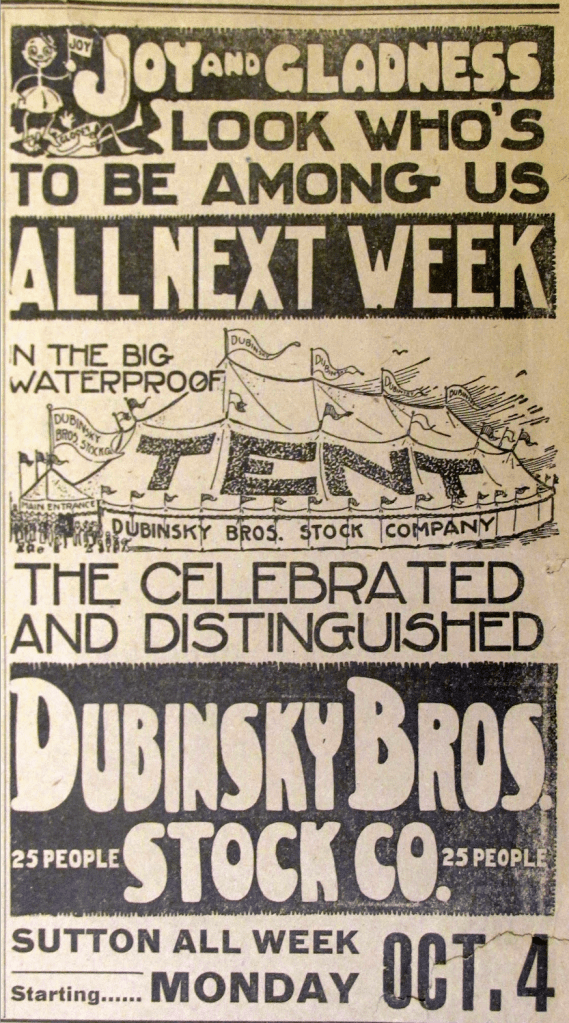
The story goes that Jean Eagles [sic] ran off with the Dubinsky Brothers Stock Company at the age of 15 (though she was really 18.) Starting off with a few small parts (and possibly by marrying one of the Dubinsky brothers) she clawed her way to the top there. At the time, stock companies were how most people living outside cities got their entertainment in the years before film and radio. And also how many actors got their starts.
These companies were constantly touring, often doing one night stands, after which the company would sleep sitting upright on chilly trains as they overnighted to the next stop. They played all sorts of venues, from legitimate theaters to church basements to tents in the nicer weather. On the rare occasion they played more than one night in a particular town, there were limitations about where they could stay because many hotels wouldn’t rent rooms to actors due to their supposedly loose morals. (And maybe because more than one had skipped out without paying.)
Sometimes they played in theaters, sometimes in tents . . .
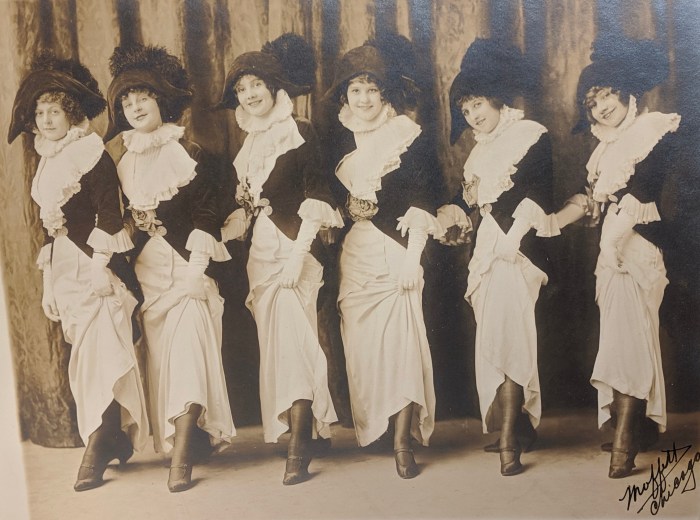
She left the Dubinsky Brothers in 1910 (and changed her name to Jeanne Eagels) to join a tour of Jumpin’ Jupiter, landing on Broadway for three weeks in March of 1911. While the show was savaged by critics, Eagels managed to land on her feet and score a job in the chorus of The Pink Lady, a Klaw & Erlanger production.
Jeanne Eagels is third from the left in this c. 1910 photograph. Courtesy of the New York Public Library – Billy Rose Theater Division
From here on, she’d continue to work steadily and for the most influential producers on Broadway, such as Charles Frohman, David Belasco, and the Shubert brothers.
Arguably, her most famous role was as Sadie Thompson in the play Rain. Whether you know it or not, I can guarantee you’ve heard of it somehow, or at least of the character of Sadie. Based on what was at the time considered a wicked and immoral story by Somerset Maugham (written in 1921), it’s about a prostitute named Sadie Thompson and the married missionary who falls in love with her as he tries to save her soul. It was provocative, controversial and just downright shocking.
Audiences couldn’t get enough of it.
Rain first premiered on Broadway in 1923. Lee Strasberg, the father of Method Acting, called her Sadie “One of the great performances of my theater-going experience . . . An inner, almost mystic flame engulfed Eagels and it seemed as if she had been brought up to some new dimension of being.”
(Fun fact: Gloria Swanson sold her Croton-on-Hudson estate to finance the 1928 silent picture version of Rain called Sadie Thompson, which she produced and starred in. Other actors connected to Rain in later films include Joan Crawford and Rita Hayworth. And, in 2016, the Old Globe Theater in San Diego premiered a musical version also called Rain. It’s a story that continues to fascinate.)
Jeanne Eagels quickly became as big a star as you could be back then. She appeared on Broadway and took her shows on the road, often selling out when she was the star. The Cleveland News ran a story about her which noted her “Lightning energy . . . Eyes snap. Voice trills. She seizes the attention.” It goes on to praise her realism and emotionalism – attributes it seems that most actresses of the time lacked.
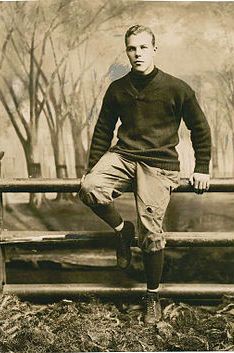
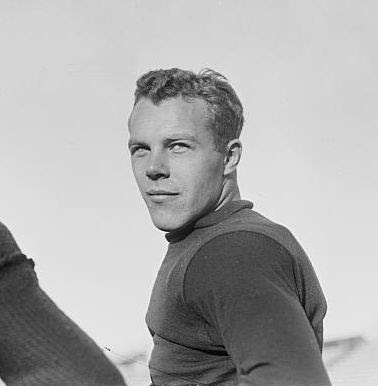
In 1925, Eagels secretly married Ted Coy, a famed Yale football player and supposedly the inspiration for F. Scott Fitzgerald’s character of Tom Buchanan in The Great Gatsby.
Ted Coy, legendary Yale football star.
But Eagels didn’t allow marriage to slow down her career. She stayed on tour with Rain until 1926, when she left to take on the role of Roxie Hart in the Maurine Dallas Watkins-penned play Chicago (in 1975, John Kander, Fred Ebb and Bob Fosse would turn it into a hit musical.) But as her star continued to ascend, her marriage with Coy became more and more volatile.
It’s at this point of her career that the legend of her temperamental nature becomes the story. Soon, the papers were running article after article about her failing marriage, health problems, mental instability and whispers of drug addictions. Ultimately, they got the better of her, and she quit Chicago.
After spending a few months in Ossining recuperating and trying to repair her marriage, she signed on to star in the play Her Cardboard Lover opposite a young Leslie Howard. Directed by an early-in-his-career George Cukor, and with a script doctored by P.G. Wodehouse, it seemed destined for success. Alas, Eagels’ reviews paled next to Leslie Howard’s.
Thus began a series of missed performances and general incidences of unprofessional behavior.
Here’s an excerpt from an article in the Milwaukee Sentinel from May 6, 1928, during the tour of Her Cardboard Lover:
Miss Eagel’s eccentricities are of long standing. Before each performance, the company and management wait anxiously to see if she will appear at all. When she does, nobody knows what she will do on the stage, and the stage manager stands ready to ring down the curtain in case of trouble.
The article goes on to describe how she simply disappeared when the show moved from Chicago to Milwaukee:
Days passed, the theatre remained dark, the company idle, the management began to tear its hair, already made gray by the erratic star. Towards the end of the week, the lady of mystery turned up with the simple explanation that “She hadn’t been feeling well.” It was too late to do anything in Milwaukee, but there was a fine advance in St. Louis. So the manager bought flowers for the star and the company took turns petting and pitying her and asking no questions.
But the newly formed Actors’ Equity Association (of which Eagels, along with her New Castle neighbor Holbrook Blinn, had been unsupportive and initially refused to join) brought her up on charges for her behavior, levied a $3,600 fine equal to two weeks’ salary (or $48,000 in 2025 dollars) and banned her from appearing on the Broadway stage for a year.
In response, Eagels just went off and made films because she could. She had made some silent movies before her stage career took off, and film producers had never stopped clamoring for her.
However, her personal demons were taking over, and after missing two weeks of shooting, she was fired from MGM’s Man, Woman and Sin, a silent film in which she was co-starring with John Gilbert. (Since she’s in the final cut, it seems like most of her scenes had been shot.) It’s also around this time the gossip columns start calling her “Gin Eagels” because she was known to drink hot gin “prescribed by her doctor to relieve persistent neuralgia.” (Let’s not forget, this is all during Prohibition.)
For the last year of her life, most of her press mentions concern her health (many hospitalizations), her divorce (in lurid detail), and her films. And, of course her tragic death.
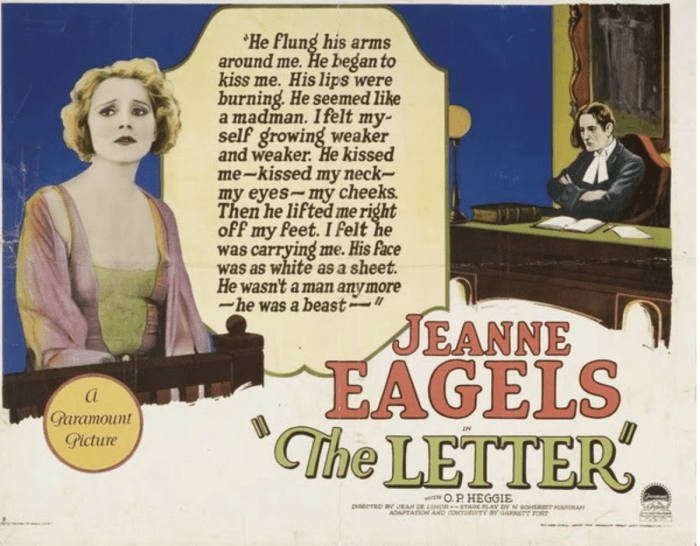
Her last project was a 1928 film called The Letter. It’s her only talkie, and she was posthumously nominated for a Best Actress Oscar Award for her performance (it went to Mary Pickford instead.)
Here’s a link to a scene. She does not look like she is at her best here.
Sadly, the story that’s mostly remembered is the tragedy of her early death, and her erratic behavior. This was helped along by a titillating biography written in 1930 by a muckraking Chicago reporter, Edward Doherty. Called The Rain Girl: The Tragic Story of Jeanne Eagels, her death was attributed to heroin addiction and alcoholism.
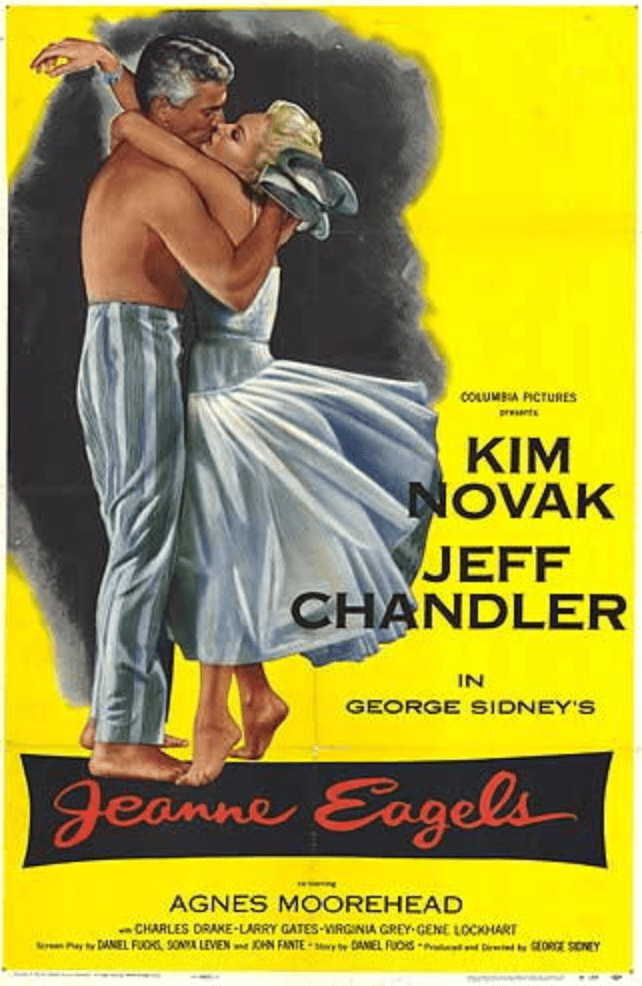
Eagels’ story was still bankable in 1957 when Columbia Pictures produced a highly fabricated biopic based on the Doherty book, starring Kim Novak:
Even the New York Times was not immune to capitalizing on her death. Her 1929 obituary made sure to remind everyone of her volatility and instability. It even took the time to follow up on her cause of death, publishing an article several days later that quoted the City Toxicologist’s finding that she “died from an overdose of chloral hydrate, a nerve sedative and soporific.”
The Times would go on to cover her funeral, burial and the settlement of her estate, noting that it totaled over $88,000 (that’s $1.1 million today) and consisted of her Ossining home, nearly $12,000 in jewelry and furs, and a rare Hispano-Suiza autocar.
A 1927 Hispano-Suiza motorcar. Imagine living in Ossining when cars like that were on the road! Today such cars can sell for up to $450,000
Clearly she was troubled and likely an addict of some kind, and I’m not trying to be an apologist here for the unprofessional behavior reported by the press at the time. The fact of the matter is that she was a remarkably successful actress, and producers kept hiring her because she sold tickets and made money for them. Looking at her films today, it might be hard to see the appeal, but back then, she was the cat’s meow.
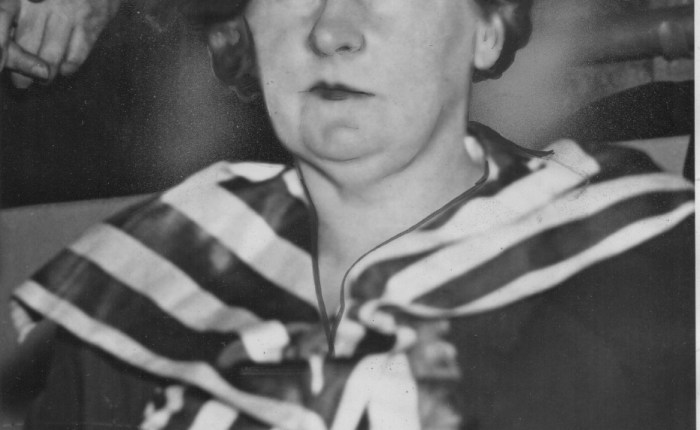
Today’s post highlights the life and work of Kathryn Stanley Lawes, known as the “Mother of Sing Sing.”
Now, Kathryn Lawes’ story was actually my entry into Ossining history – when my husband and I first moved here, one of the first things we did was go to the Ossining Library and check out every book we could find about Ossining.
Of course, many of them were focused on Sing Sing Prison. Built by convicts in 1825 using stone quarried on site, it has featured prominently in the history and lore of our town. And Hollywood’s films of the 1930s, starring actors like Humphrey Bogart, Spencer Tracy, and Bette Davis, and where the terms “Up the River,” “The big house” and “The last mile” were coined, helped burnish the myth and mystery of the prison. (Fun fact: Many of these films were actually shot inside Sing Sing’s walls, using real prisoners as extras and sometimes engaging the actual Warden, Kathryn’s husband Lewis Lawes, to play a version of himself. In 1934, Warner Brothers even built a brand-new gymnasium for the prison as a thank-you. Here’s a partial list of films if you’re interested.)
One of the first books I read was Ralph Blumenthal’s “The Miracle at Sing Sing,” a biography of Kathryn’s husband, the progressive and once well-known Warden Lewis Lawes. In charge of Sing Sing from 1920 to 1941, he instituted many reforms and remains the longest tenured prison warden in its history. He also seems to have had the highest profile of any prison warden ever, appearing in movies, giving lectures world-wide, hosting his own radio program, writing books, articles, a Broadway play, and even a couple of screenplays. He also oversaw more executions than any other Sing Sing warden (303, to be precise, with four of them women.)
His wife, Kathryn, was beloved by Sing Sing’s inmates — to the point that they all called her “Mother.” In addition to raising three daughters inside the prison walls, she would regularly go into the prison and visit with the incarcerated. She arranged for every man to get a Christmas present; she would help them write letters to their families; she would even intercede on their behalf with the Warden on occasion.
In 1937, the Logansport-Pharos-Tribune wrote one of the few articles about her and described how she “Took – not sent – food and clothes and money to a family left desolate by the husband’s imprisonment. She saw to it that encouraging letters went to hopeless young criminals. Many, many dollars found their way from her purse to the pockets of newly released men, frightened to face freedom again. . . When a convict’s mother or near relative was dying, the convict was permitted to leave the Sing Sing walls for a final visit. On such occasions instead of going under heavy guard, he was taken in Mrs. Lawes’ own car, often accompanied by the Warden’s wife herself.” [1]
Her youngest daughter, Cherie, recalled how her mother once gave away a favorite dress of hers so that the daughter of one of “the boys” could wear it to attend a high school dance.
Kathryn hosted Labor Day picnics for inmates, Halloween parties for the neighborhood children, and made sure the mess served special meals for Thanksgiving and other holidays.
The inmates knew that they could trust her, with one quoted as saying that telling Mother Lawes something was “like burying it at sea.”
She was especially kind to those in the death house awaiting execution, quietly helping to make their cells brighter, spending hours talking to them, helping out their families – to the extent of putting the families up in her own home as the execution date drew near and arranging their final visits. She also made sure that every prisoner had a decent burial if they had no immediate family.
Little things, perhaps, but important. And so deeply compassionate.
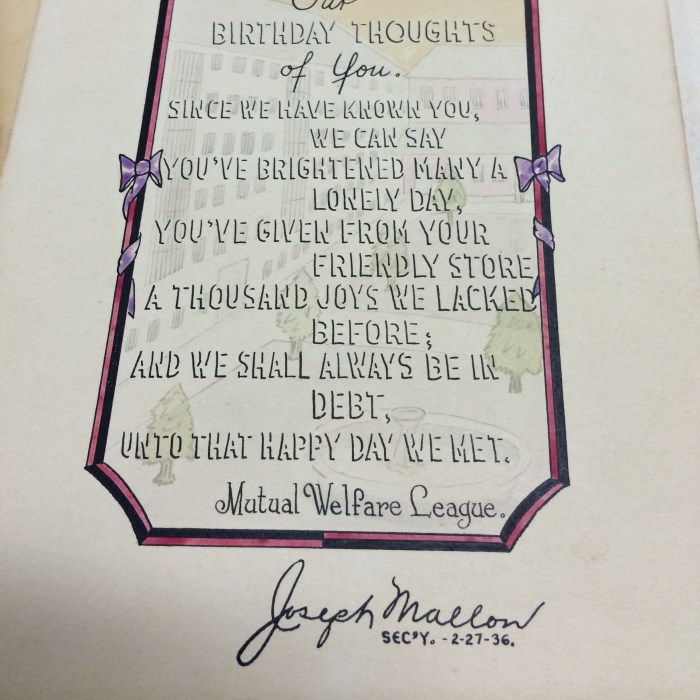
In 1936, the “boys” sent her this handmade birthday card:
Courtesy of the Lewis Lawes Archive, John Jay College, NYC
Kathryn was born in Elmira, New York in 1885. Born into genteel poverty, she was ambitious and smart. At 17, she took a business course and landed a job as a secretary in a paper company. It’s around that time she met Lewis Lawes, who was working as an errand boy in a neighboring office. But Lewis’ father was a prison guard at the Elmira Prison, so it was rather natural that his son would follow in his footsteps.
Kathryn and Lewis married in 1905 and started their family. Lewis quickly rose through the ranks in the New York prison system first in Elmira, then in Auburn. In 1915, he became Chief Overseer at the Hart Island reformatory, living right in the middle of the facility with Kathryn and their two young daughters. There, Kathryn found time to work with the boys, some who were as young as 10, giving many of them the first maternal attention they’d ever experienced.
Still, it’s quite hard to flesh out Kathryn’s story. She gave very few interviews and those that she did give read like someone wrote them without ever talking to her. Much of what we know about her surfaced only after her mysterious death.
You see, what makes her story so complex (and dare I say compelling?) is that she died at the age of 52 after falling off the Bear Mountain Bridge.
What, you say? But yes, it’s true.
I hate to hijack a Women’s History month post with a true crime mystery, but it can’t be helped.
On October 30, 1937, the New York Times published an article entitled “Wife of Warden Lawes Dies After a Fall. Lies Injured all Day at Bear Mountain Span.” In it, the NYS Police said that she had jumped or fallen from the Bridge. Though conscious when discovered hours later by Warden Lawes, their son-in-law, and Dr. Amos Squire the Westchester County Medical Examiner, she died of her injuries soon after arriving at Ossining Hospital.
A few days later, a follow-up story was published in the Times that quoted heavily from Dr. Amos Squire (the former Sing Sing Prison Doctor as well as Medical Examiner), asserting that he had gone back to the scene of the accident. There, he found “her high-heeled shoes caught between two boards of a walk” and concluded that she had gone hiking, perhaps venturing down the trail to pick wildflowers. He surmised that she had tripped, rolled hundreds of feet down the steep embankment towards the river, breaking her leg in the fall. Then, he asserted, she dragged herself 125 feet to the spot where she was found twelve hours later.
I mean, really. So many things here –
First, how perfectly horrible. What a ghastly way to die. How could this have happened to such a universally beloved woman?
But then, the mind starts to whir . . . Were fifty-two-year-old women in the habit of hiking in 1937? In high heels? And how convenient that her high heels remained stuck between “boards of a walk.” And what about this dragging herself one hundred twenty-five feet southward with a compound fracture to spot where she was finally found? Finally, was it coincidence that the Westchester County Medical Examiner was Dr. Amos Squire, the former Sing Sing prison doctor and old friend to the Lawes’?
There’s so much to unpack. But I’m going to leave it there, for another time.
I’d rather try to concentrate on her life and the good she did in her relatively short time on earth by sharing some of the condolence letters Warden Lawes received. [2] More than anything, they give us a picture of the truly kind, benevolent influence she had on the lives of so many:
Joe Moran, Prisoner # 47-342 wrote “With the passing of dear Mrs. Lawes, the only ray of sunshine ever to be found within the walls of Sing Sing has gone forever. She lent courage to the condemned, she comforted the sick and she brightened the lives of the friendless. The men branded with numbers shall never forget the many kindnesses and acts of charity administered to them by the woman they regarded as their mother.”
Edward McIntyre, a former inmate, said “I don’t believe a kinder soul ever lived. And I know this from watching her making her daily visits to the sick and being at all times ready to help somebody who was in need.”
Even the mothers of inmates sent in condolences: “She was highly appreciated by me because she was kind to the inmates, especially my son. Only two weeks ago he praised her to me. He said ‘Mother, Mrs. Lawes is right fine. Mrs. Lawes always says ‘hello boys’ in a motherly tone. And you know, she does not have to recognize us. But she does.’”
The inmates were inconsolable when they heard the news of her sudden and shocking death. Finally, against his instincts, Warden Lawes was forced to do the unthinkable – open up the prison gates and allow two hundred or so “old-timers” to march up the hill to the Warden’s house to pay their last respects at her bier. Two hundred men walked through the gates to freedom and two hundred men walked back into the prison.
That year, there was no Halloween party for local children, nor any Christmas presents for the inmates of Sing Sing ever again.
To this day, her good works are remembered by preachers and highlighted in their prayers and sermons.


 Ossining History on the Run