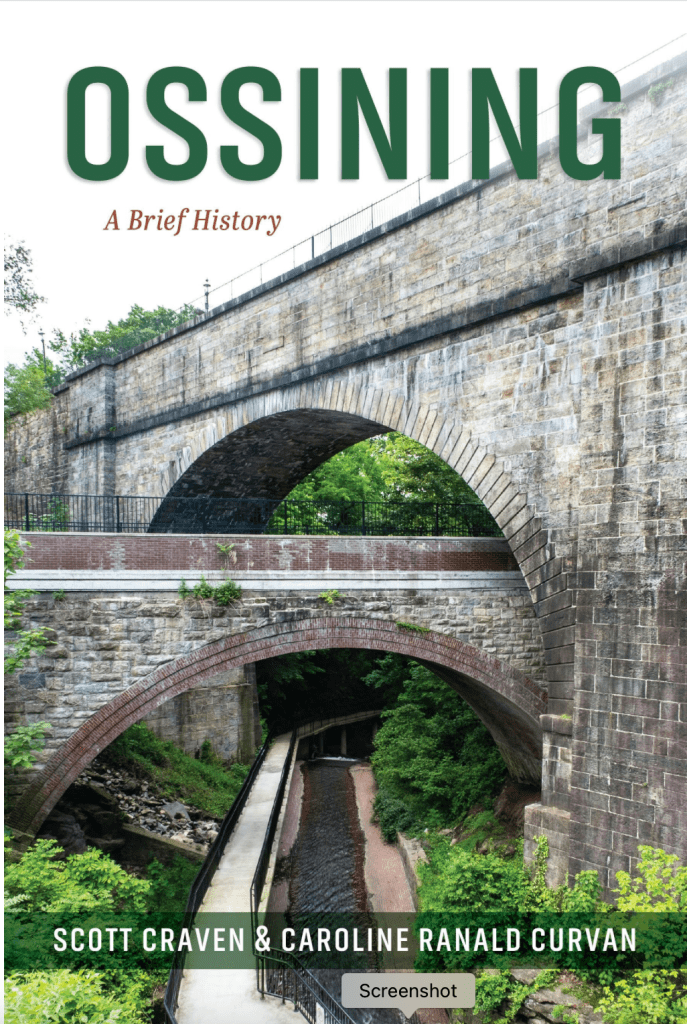
It’s almost here! Our new book, Ossining: A Brief History, will be released on February 10, 2026. Here’s a sneak peek at the cover — what do you think?
Check out the publisher’s website here to pre-order, or visit your favorite brick and mortar bookshop after its release.
We’ll be doing an official book launch at the Ossining Public Library on Saturday, February 21, 2026 at 2pm — watch this space for more info on that and other events coming your way soon!
Welcome to the virtual exhibit page for Ossining Women’s History Month 2025!
While the installation at the Ossining Public Library (53 Croton Avenue) is no longer on display, the entire exhibit will live on this blog in perpetuity.
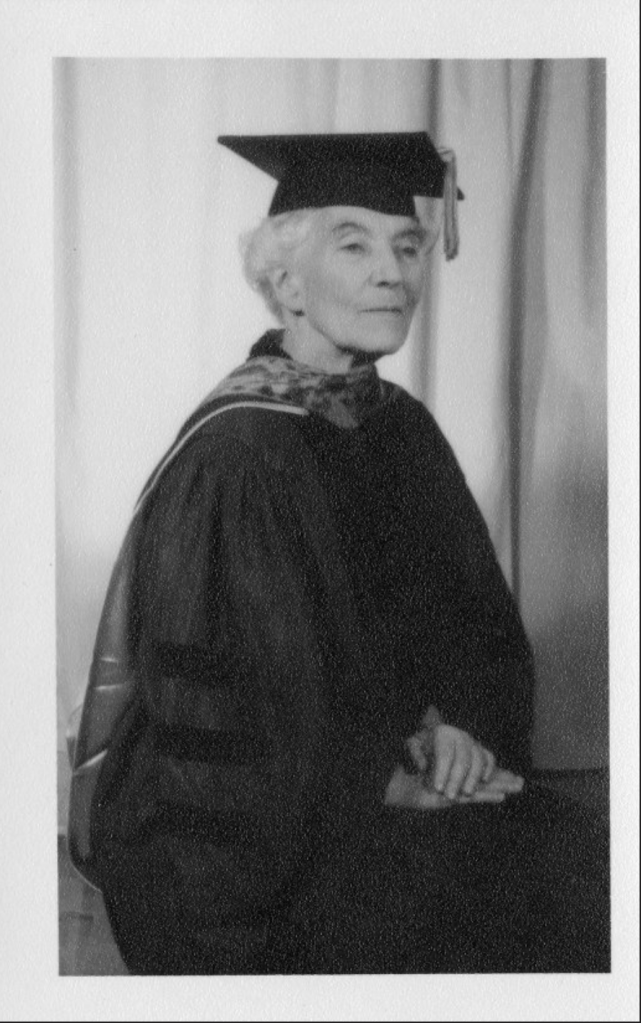
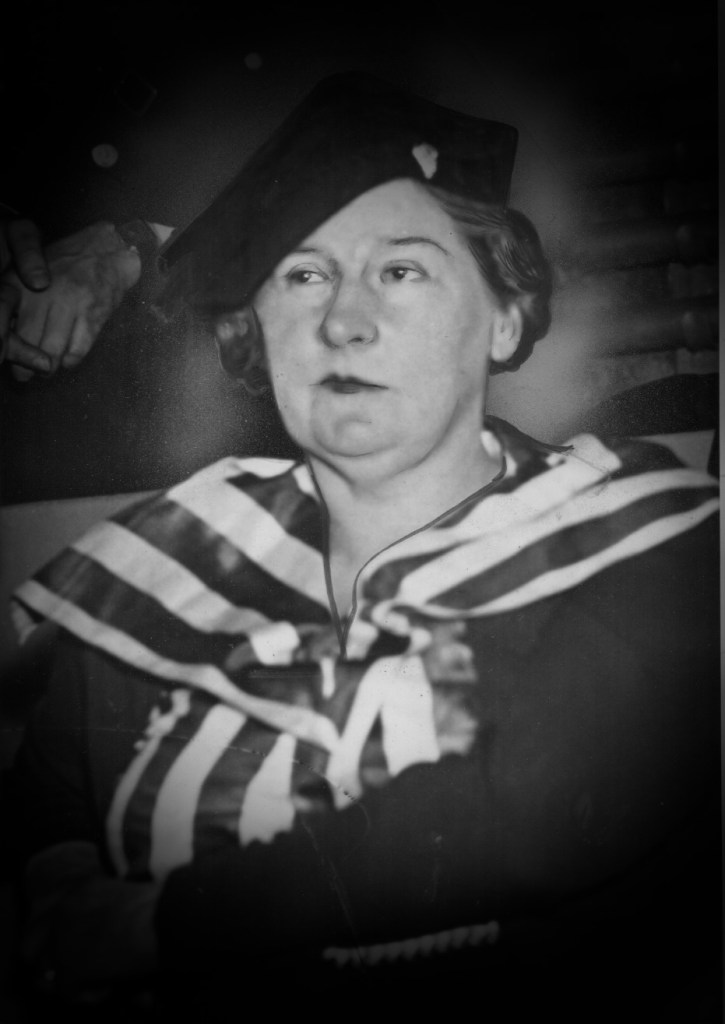
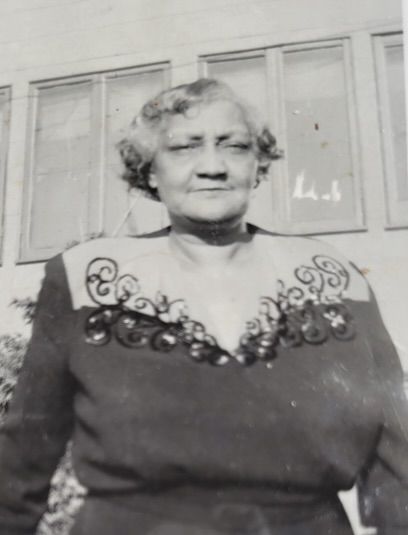
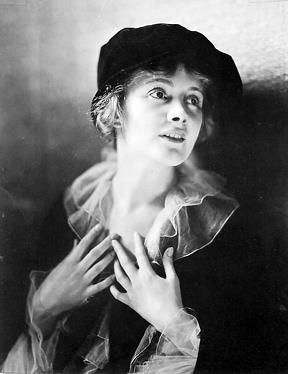
Who are these women?
These are all remarkable women local to Ossining who made a big impact in shaping our community and our world. Some are national figures. Some have local streets, schools or parks named after them. And some just did their work quietly. But all have accomplishments that deserve to be recognized and shared.
What will you see?
This is a retooling and enlargement of last year’s exhibit presented at the Bethany Arts Community, with expanded biographies and four more fascinating women included.
These women represent all facets of American life – art, religion, science, politics, military service, activism, and philanthropy. Those with a higher profile in life offer more images and material. Others avoided the limelight (either on purpose or through circumstance) and less is known about them, but this exhibit will help uncover and celebrate all of their remarkable stories.
To learn more about each woman featured, simply click on their names below and you’ll be quickly directed to a page with their detailed biography, including photos and links to further enrich their extraordinary stories.
Enjoy!
Caroline Ranald Curvan Ossining Town Historian & Exhibit Curator
Writer Activist Abolitionist Prison reformer ***Local Connection: Matron of Mt. Pleasant Women’s Prison (aka Sing Sing Prison)***
In a society that portrayed the ideal woman as submissive, pure, and fragile, Eliza W. Farnham created her own concepts of female identity. Her theories and actions, occasionally contradictory, offered alternatives to women who felt confined by the limited roles prescribed by their culture. As Catherine M. Sedgwick, a contemporary writer and friend wrote of her “She has physical strength and endurance, sound sense and philanthropy . . . [and] the nerves to explore alone the seven circles of Dante’s Hell.”
Born in Rensselaerville, New York, Eliza Burhans’s early childhood was marked by the death of her mother and abandonment by her father. Growing up with harsh foster parents, she became a self-sufficient, quiet autodidact, reading anything and everything she could get her hands on.
At 15, an uncle would retrieve her from the foster home, reunite her with her siblings and arrange for her to go to school. By 21, she had married an idealistic Illinois lawyer, Thomas Jefferson Farnham, and set off with him to explore the American West.
Eliza would have three sons in four years, though only one would survive childhood. Thomas and Eliza would write up their observations of the West — he would become a popular travel writer of the day, and she would publish her memoir, Life in Prairie Land, in 1846.
In 1840, the Farnhams returned east and settled near Poughkeepsie, New York, where Eliza became deeply involved in the intellectual and reform movements of the day. An early feminist who believed that women were superior to men, Eliza wrote articles in local magazines against women’s suffrage, believing that women could have a much greater impact as mothers and decision makers in the home. (However, in their 1887 History of Woman Suffrage, Elizabeth Cady Stanton and Susan B. Anthony would write that Eliza’s attitudes evolved and that she ultimately saw the necessity of and supported women’s suffrage.)
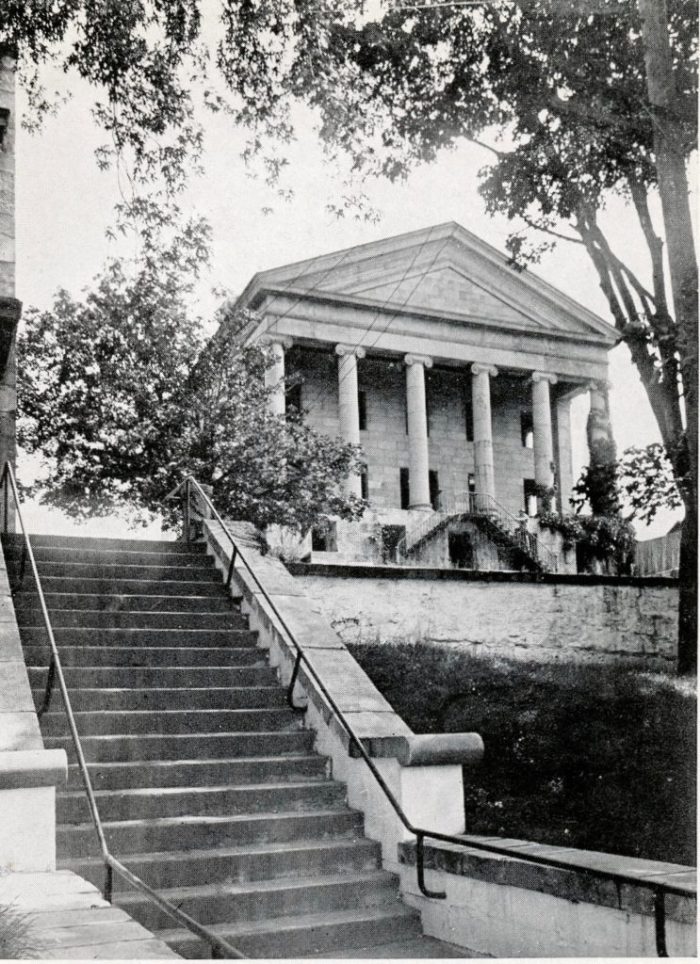
Eliza also became interested in prison reform at the time, and in 1844 sought and was appointed to the position of Matron of the Mt. Pleasant Female Prison, at the time infamous for its chaos, rioting and escapes, to prove that kindness was a more effective method of governance than brutality.
The Mt. Pleasant Female Prison, built in 1839, was a department of Mount Pleasant State Prison (today’s Sing Sing) Courtesy of the Ossining Historical Society and Museum
She instituted daily schooling in the prison chapel and started a small library that allowed each woman to take a book to her cell to read (making sure that there were picture books available for those who couldn’t read.) She also believed that lightness and cheer were more conducive to reformation, and placed flowerpots on all windowsills, tacked maps and pictures on the walls, and installed bright lights throughout. She spearheaded the celebration of holidays, introduced music into the prison, and began a program of positive incentive over punishment. Finally, she fought to improve the food served to the women and ended the “rule of silence”, believing that “the nearer the condition of the convict, while in prison, approximates the natural and true condition in which he should live, the more perfect will be its reformatory influence over his character.” [1]
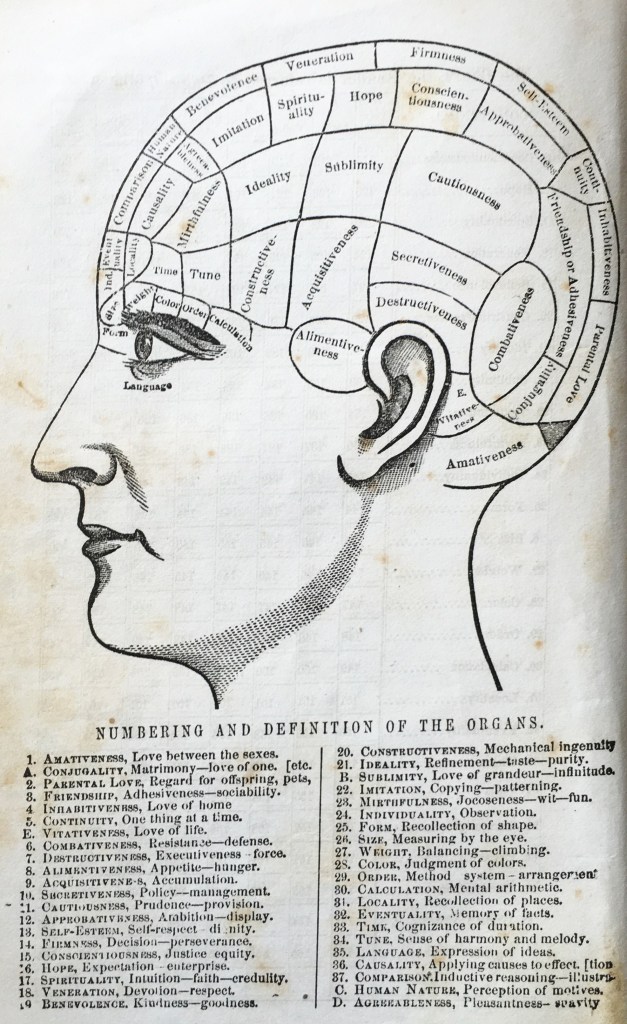
It must be said that her methods were deeply influenced by the now-discounted “science” of phrenology which looked at the correlation between skull shape and human behavior, giving a biological basis for criminal behavior (not, as many religious people believed then, sheer, incorrigible sinfulness.) Eliza would even edit and publish an American edition of a treatise by the English phrenologist Marmaduke Blake Sampson, under the title Rationale of Crime and its Appropriate Treatment. [2]
This phrenological poster ostensibly shows how to interpret bumps on the skull to predict and understand observed behaviors. Courtesy of the Library of Congress
Although the mayhem that had plagued previous matrons was significantly reduced, Eliza’s approach was viewed as simply coddling the prisoners. This led to conflicts with several staff members, including Reverend John Luckey, the influential prison chaplain. By 1848, a change in the political landscape installed new prison leadership and she was forced to resign.
She would move to Boston, to work at the Perkins Institute for the Blind until her explorer-husband died unexpectedly while in San Francisco. Eliza went to California both to settle his estate and execute a plan assisting destitute women purchase homes in the West to achieve financial independence. Though that initiative was not successful, Eliza herself bought a ranch in Santa Cruz County, built her own house, and traveled on horseback unchaperoned, among other scandalous things she would detail in her 1856 book California, In-doors and Out.
In 1852, she entered into a stormy marriage with William Fitzpatrick, a volatile pioneer. During this period, she had a daughter, who died in infancy, worked on her California book, taught school, visited San Quentin prison, and gave public lectures.
Divorcing Fitzpatrick in 1856, she returned to New York and began work on what is arguably her most significant work, Woman and Her Era. In it, she would glorify women’s reproductive role as a creative power second only to that of God. She further contended that the discrimination women experienced and the double-standard of social expectations stemmed from an unconscious realization that females had been “created for a higher and more refined existence than the male.”[3]
So, her initial disdain for women’s equality and suffrage stemmed from her unique feminist philosophy that ironically saw women as superior due to their reproductive function, historically something that had always defined female inferiority. Thus, in her world view, why should women lower themselves to the level of men to achieve “equality”?
It’s a fascinating way to look at the world, no?
Eliza would give numerous lectures on this topic before returning to California and serving as the Matron of the Female Department of the Stockton Insane Asylum.
In 1862, she would work towards a Constitutional Amendment to abolish slavery and, in 1863, answer the call for volunteers to help nurse wounded soldiers at Gettysburg.
She died of consumption a year later, likely contracted during her Civil War hospital work.
She is buried in a Quaker cemetery in Milton, New York.
Major Publications:
Life in the Prairie Land (1846) A memoir of her time on the Illinois prairie between 1836 and 1840.
California, In-doors and Out (1856) – A chronicle of her experiences and observations in California.
My Early Days (1859) An autobiographical novel describing Farnham’s life as a foster child in a home where she was treated as a household drudge and denied the benefits of a formal education. The fictional heroine reflects Farnham’s own character as a tough, determined individual who works hard to achieve her goals, overcoming all obstacles.
Woman and Her Era (1864) Farnham’s “Organic, religious, esthetic, and historical” arguments for woman’s inherent superiority.
The Ideal Attained: being the story of two steadfast souls, and how they won their happiness and lost it not (1865) This novel’s heroine, Eleanora Bromfield, is an ideal, superior woman who tests and transforms the hero, Colonel Anderson, until he is a worthy mate who combines masculine strength with the nobility of womanhood and is ever ready to sacrifice himself to the needs of the feminine, maternal principle.
SOURCES
James, Edward T., et al., editors. Notable American Women, 1607-1950 : A Biographical Dictionary. The Belknap Press of Harvard University Press, 1971.
Wilson, James Grant, et al., editors. Appleton’s Cyclopaedia of American Biography. D. Appleton & Co., 1900.
[1] NYS Senate Report, 70th Session, 1847, vol. viii, no.255, part 2, p. 62
[2]Notable American Women, 1607-1950 : A Biographical Dictionary.
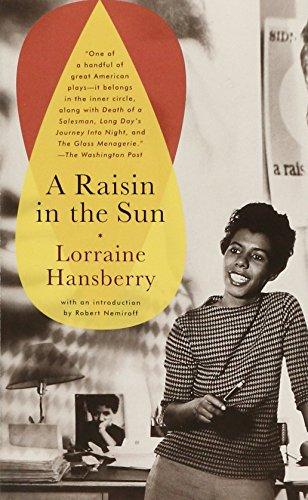
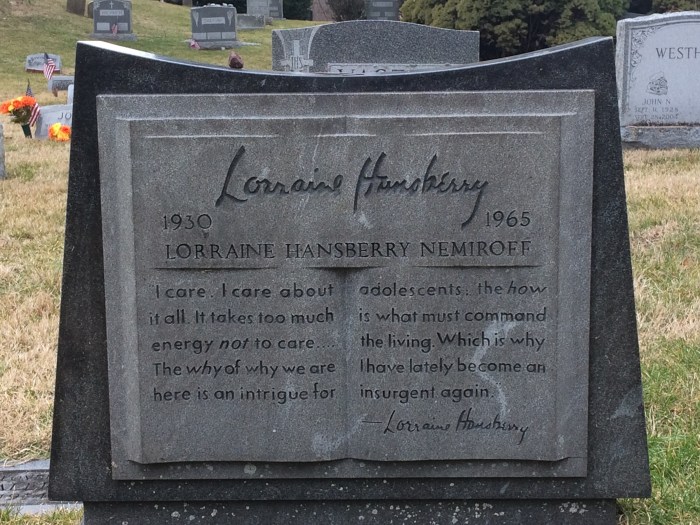
Playwright Author Civil Rights Activist ***Local Connection: Bridge Lane, Croton-on-Hudson***
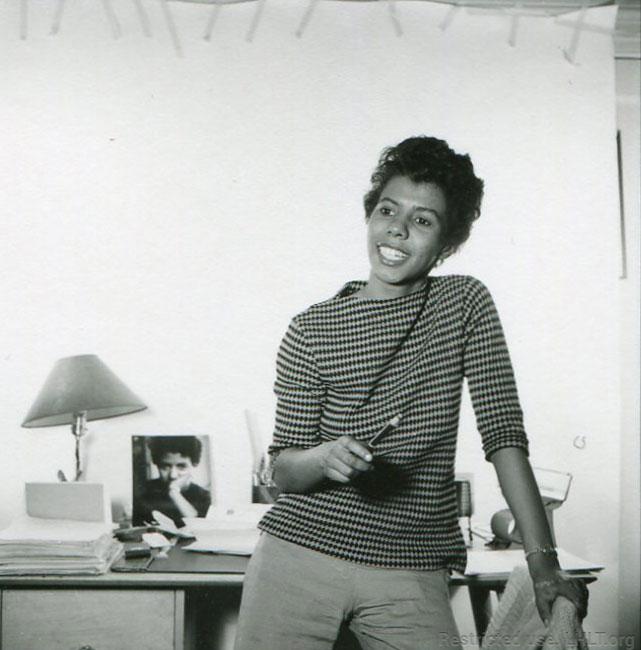
Lorraine Hansberry was born in Chicago, IL to Carl August Hansberry, a successful real estate speculator (known as “The Kitchenette King of Chicago”) and Nannie Louise Perry, a teacher.
When Hansberry was 8, her parents purchased a house in a white neighborhood, but faced intimidation and threats from the residents who tried to force them to leave. Hansberry remembered rocks being thrown through their windows, and her mother prowling the house after midnight carrying a German Luger pistol when Carl Hansberry was away on business.
Illinois courts upheld the ongoing eviction proceedings and found that by purchasing their house, the Hansberrys had violated the “white-only” covenant of that subdivision. However, Hansberry’s father took the case all the way to the United States Supreme Court and won.
This experience would inspire Hansberry’s most famous play A Raisin in the Sun.
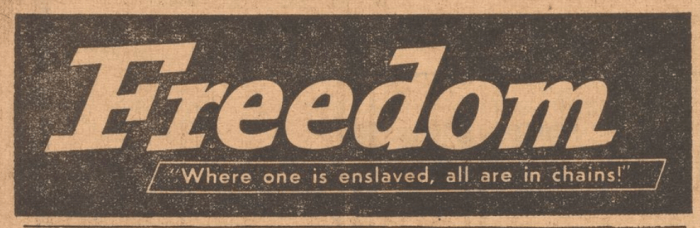
In 1950, Hansberry moved to New York City to pursue a career as a writer. Landing first in Harlem, she began working for Paul Robeson’s Black, radical newspaper Freedom, a monthly periodical.
At Freedom, she quickly rose through the ranks from subscription manager, receptionist, typist, copy editor to associate editor, along the way writing articles and editorials for the paper. It was during this time that she wrote one of her first theatrical pieces, a pageant for “The Freedom Negro History Festival” that would feature Paul Robeson, Harry Belafonte and Sidney Poitier, among other luminaries.
In 1953, she married Robert Nemiroff, a book editor, producer, and composer of the hit single “Cindy, oh Cindy.” They moved to 337 Bleecker Street in Greenwich Village and it was here, in 1957, that she wrote her semi-autobiographical play A Raisin in the Sun.
It took the producers nearly two years to raise the funds, as investors were wary of backing the first play of an unknown 26-year-old Black woman. Premiering in New Haven, Connecticut, A Raisin in the Sun opened on Broadway in March 1959 and was the first Broadway show to be written by Black woman and the first to be directed by a Black man (Lloyd Richards.) Starring Sidney Poitier, Ruby Dee and Claudia McNeil, the production was nominated for four Tony Awards. The original production ran for 530 performances – a remarkable feat in those days and would make a successful transfer to the big screen in the 1961 movie written by Hansberry and starring most of the Broadway cast. Today it is a staple of high school and college curricula and is considered one of the greatest American plays of the 20th century. It continues to be produced all over the world.
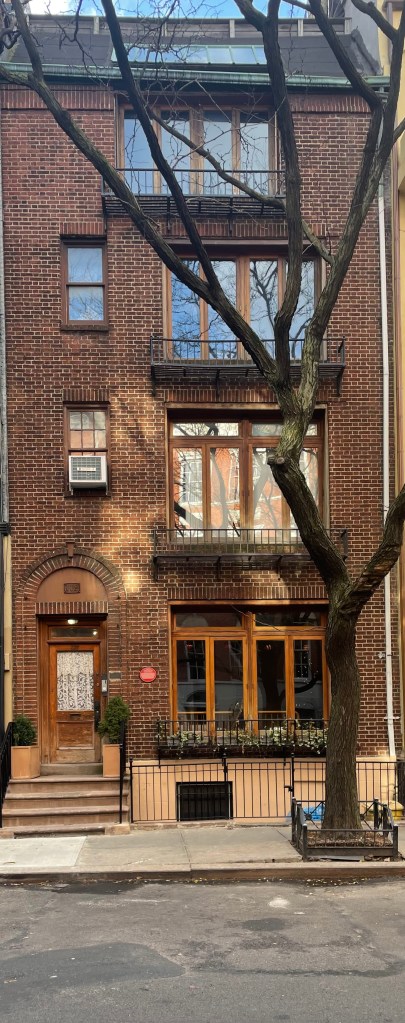
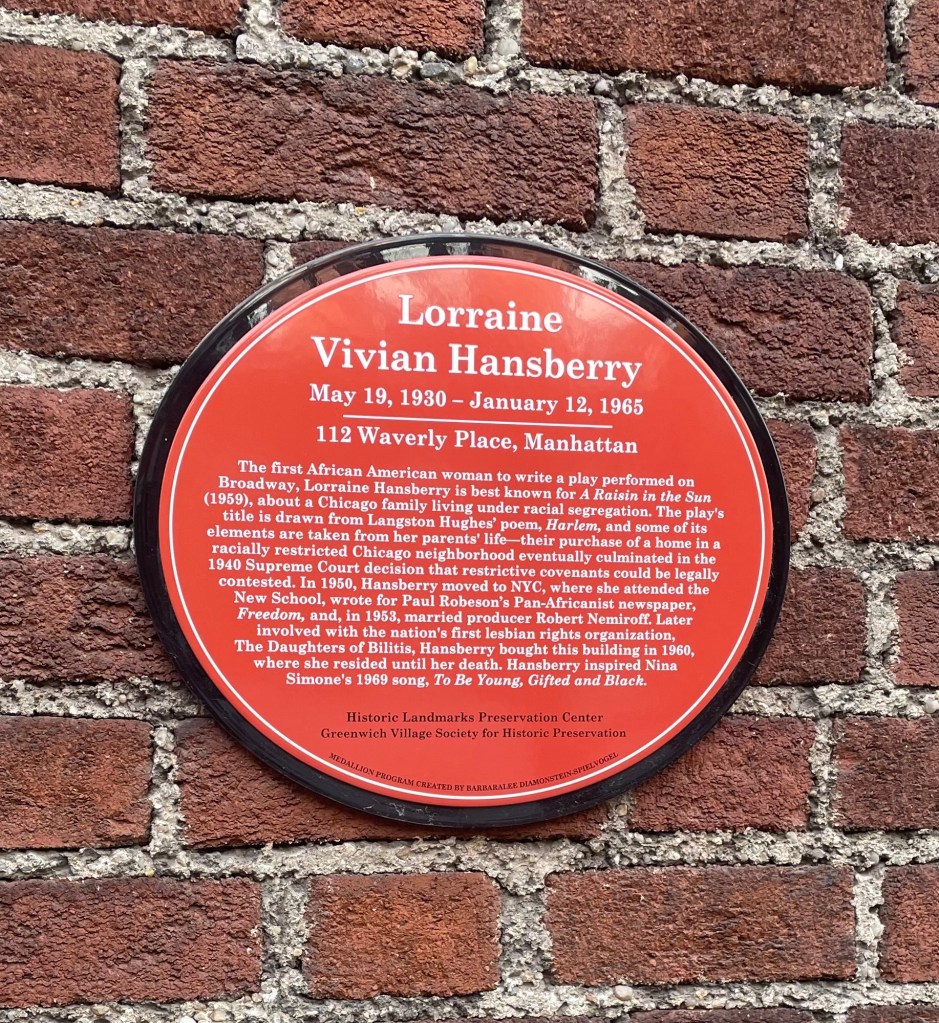
After the success of A Raisin in the Sun, Hansberry purchased a townhouse in Greenwich Village.
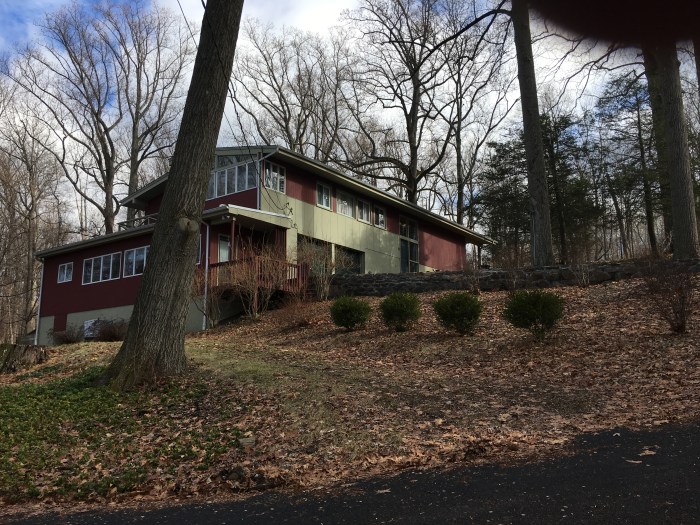
Soon after, she would purchase a house in Croton-on-Hudson. Ironically calling her Bridge Lane home, “Chitterling Heights,” it became her escape from the city, her writing studio, and a place where Black artists and progressives (such as Langston Hughes, Alex Haley, and Ruby Dee) would gather.
Lorraine Hansberry’s house on Bridge Lane, c. 2018
Hansberry’s Broadway success catapulted her into the whirlwind of popular intellectual discourse, and she used her newfound fame to speak out on things that mattered to her. She became a star speaker, dominating panels, podiums and television appearances. Her quick wit and provocative stances made her popular with the media as she could always be counted on for spirited discussion.
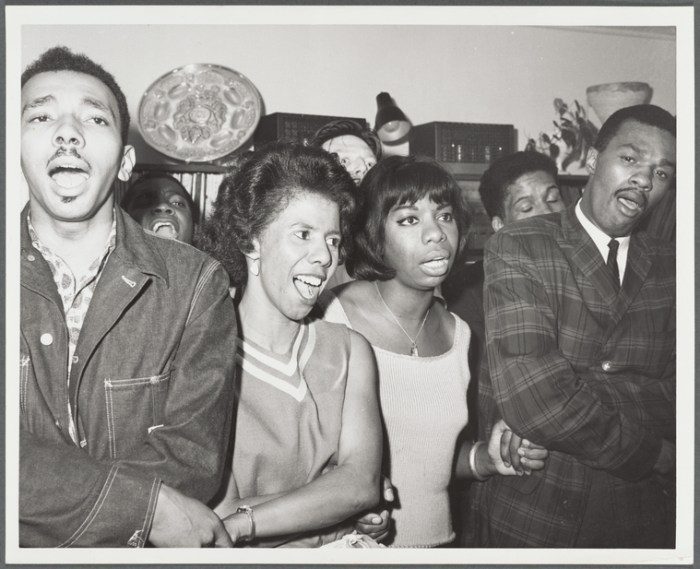
She was deeply involved in the Civil Rights movement, appearing at numerous events and meeting with political leaders:
Hansberry with Nina Simone at a Student Non-Violent Coordinating Committee event, 1963. Courtesy of the New York Public Library
By 1963, as one of the intellectual leaders of the civil rights movement, Attorney General Robert F. Kennedy would meet with her, James Baldwin, Lena Horne, Harry Belafonte and others for advice on civil rights and school desegregation initiatives. (Read a May 25, 1963 New York Times article about this meeting here.)
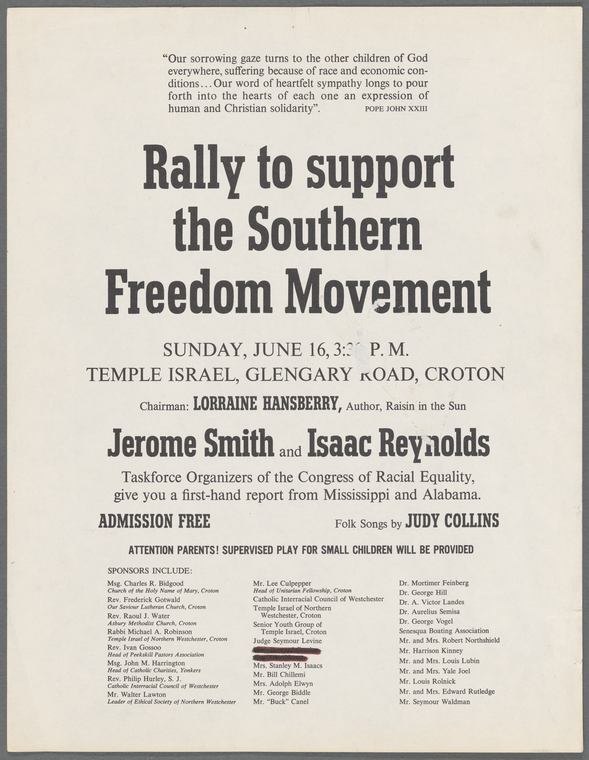
In 1964, Hansberry was integral in organizing and participating in one of the first fundraisers in the New York City area for the civil rights movement, held at Croton’s Temple Israel. (The 1963 Birmingham church bombings catalyzed many on the East Coast.)
She was the MC of the event, and brought in other like-minded celebrities, including Ossie Davis, James Baldwin, and Judy Collins. They raised over $11,000 for organizations like the Congress of Racial Equality – Freedom Summer voter registration project (CORE), the Student Non-violent Coordinating Committee (SNCC) and the NAACP.
Some of the money raised went towards the purchase of a Ford station wagon that Freedom Riders James Chaney, Andrew Goodman, and Michael Schwerner were driving the night they were murdered by the Ku Klux Klan in Philadelphia, Mississippi.
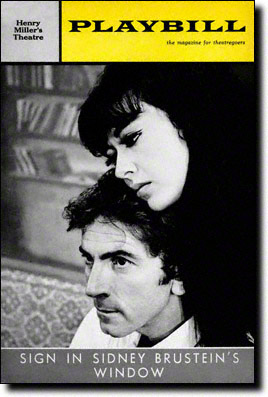
Unofficially separated for several years, Hansberry would divorce Robert Nemiroff in 1964, though they remained close collaborators and business partners to the end of her life. Nemiroff produced her final play, The Sign in Sidney Brustein’s Window, which opened on Broadway in October 1964.
In January 1965, Hansberry would die from pancreatic cancer at the age of 34, two days after The Sign in Sidney Brustein’s Window closed.
She is buried in the Bethel Cemetery in Croton-on-Hudson, New York.
CODA:
“You are young, gifted, and black. In the year 1964, I, for one can think of no more dynamic combination that a person might be.”
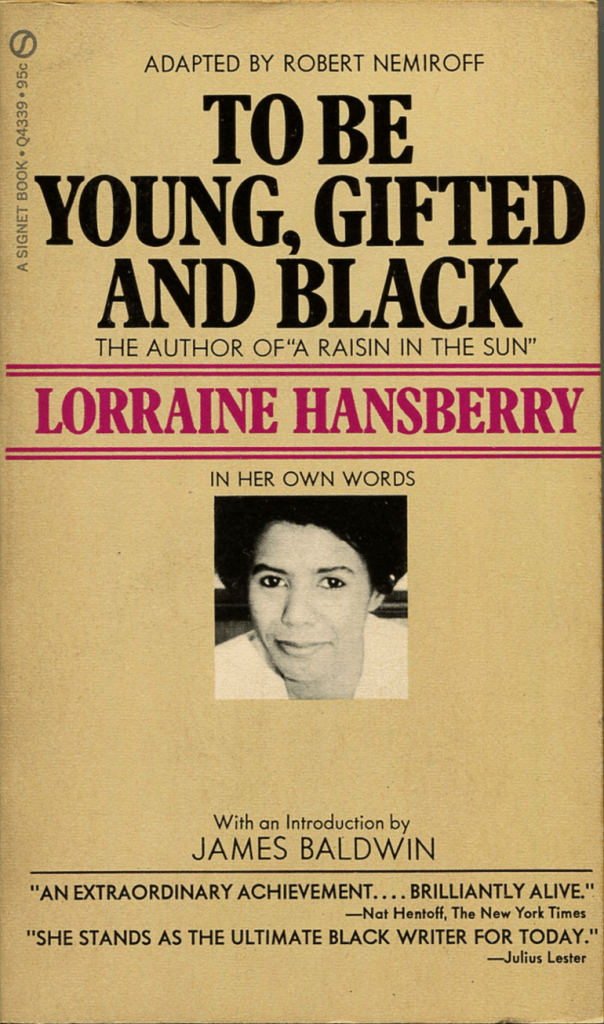
The above quotation comes from a talk Lorraine Hansberry gave to six teenage winners of a Readers’ Digest/ United Negro College Fund writing contest. In 1968, ex-husband and literary executor Robert Nemiroff would compile many of Hansberry’s unfinished and unpublished works into an off-Broadway play called Young, Gifted and Black. This in turn would be adapted into a posthumous autobiography of the same name published in 1969.
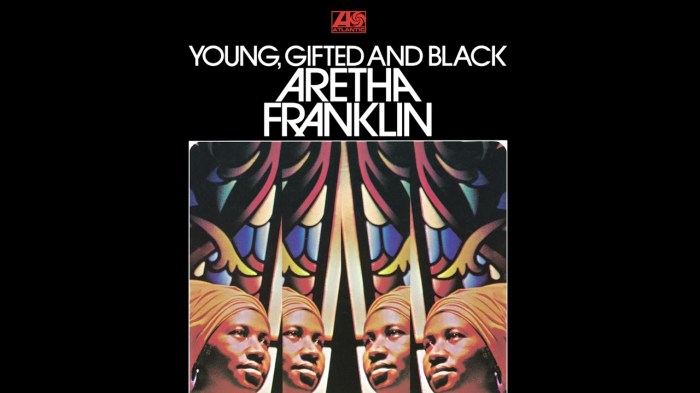
Singer/Songwriter Nina Simone would be inspired to write and record a song with that title and in 1972, singer Aretha Franklin would release an album of the same name.
There have been numerous productions of her seminal play A Raisin in the Sun – on Broadway and off-, internationally, in regional theaters, on television and film. In 1973, a musical version of the play, called Raisin won the Tony Award for Best Musical. In 2010, playwright Bruce Norris wrote Clybourne Park which tells the story before and after the events of A Raisin in the Sun and in 2013, Kwame Kwei-Armah wrote Beneatha’s Place which imagines what happened to the character of Beneatha after the events of A Raisin in the Sun.
It is a play and a story that continue to inspire.
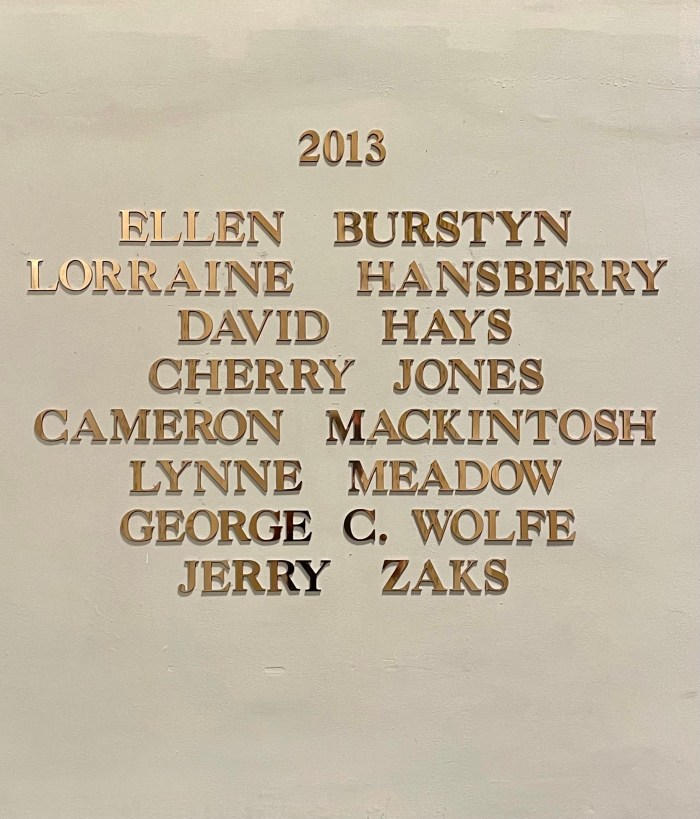
Yet, it took until 2013 for Lorraine Hansberry to be inducted into the Theatre Hall of Fame:
Finally, today, in addition to her other accomplishments, Lorraine Hansberry is now being hailed as a figurehead of the LGBTQ movement. However, this is a little tricky, as Hansberry was not out during her lifetime. For five decades after her death, ex-husband and literary executor Robert Nemiroff restricted access to any of Hansberry’s writings that explored her sexuality. It wasn’t until 2013 that researchers were allowed to see these previously hidden articles, letters, and journal entries. Since then, Hansberry has emerged as a queer icon. Her published works from this cache, often signed only with her initials, reveal a thoughtful and progressive thinker, while her private writings offer a new perspective on this multifaceted artist.
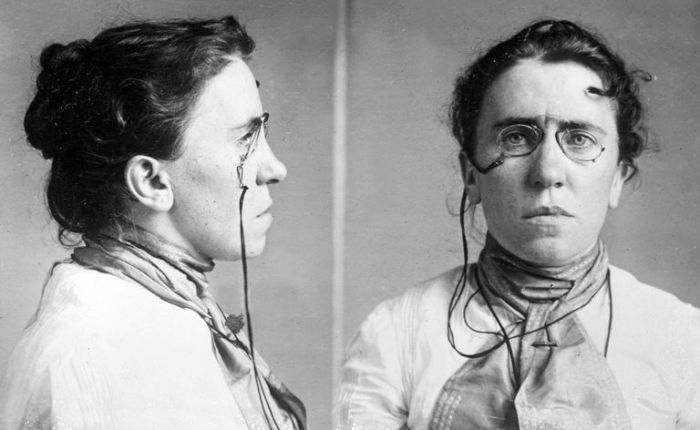
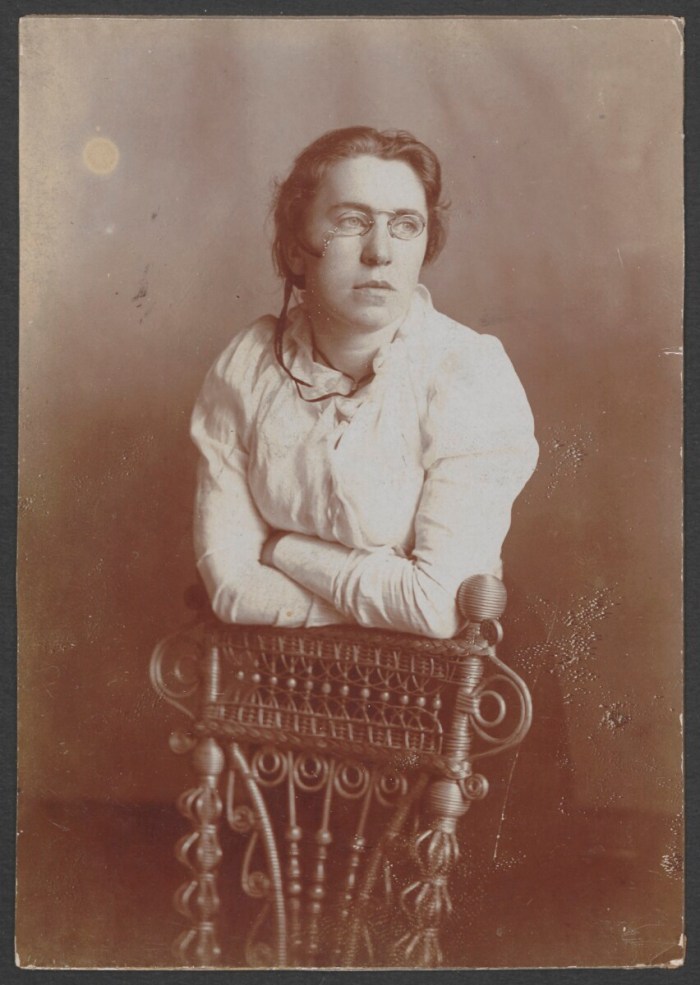
Did you know that Emma Goldman, famous anarchist, had a country home on Allapartus Road in the early 20th century?
Do you even know who Emma Goldman was? Or what anarchy is? Don’t worry, most people I’ve tried to impress with this piece of Ossining history don’t know either.
Now, today, instead of being described as “The High Priestess of Anarchy,” Emma Goldman is more often thought of as a progressive feminist, an author, a magazine publisher, and an inspirational speaker. Her passionate advocacy for birth control, marriage reform, sexual freedom, worker’s rights, and vehement anti-war activism was extremely progressive for the time.
And in the 19th/early 20th centuries, Emma Goldman made headlines as “Red Emma” and “A Dangerous Woman.”
Believing that “Fighting injustice and exploitation is all that matters,” she tirelessly spoke out on behalf of the marginalized, the exploited and the oppressed.
Now, I have to delve into this anarchy thing before I go any further, because it’s essential to understanding what Emma Goldman was about.
Basically, anarchy (in the way that Goldman defined it) describes a society without any centralized authority. So, no rulers, government, laws — frankly, it’s a movement that I never found that interesting because it seems so irrational, so angry, and so violent. And perhaps it is on the surface, and violent acts have certainly been perpetrated in its name.
In 1893, when Goldman was imprisoned for “inciting to riot”, she gave a jailhouse interview to Nellie Bly, a reporter for The New York World, and explained why she was an anarchist and what she hoped to accomplish:
I am an Anarchist because I am an egotist. It pains me to see others suffer. I cannot bear it. Everything wrong, crime and sickness and all that, is the result of the system under which we live. Were there no money, and as a result, no capitalists, people would not be over-worked, starved and ill-housed, all of which makes them old before their time, diseases them and makes them criminals. To save a dollar the capitalists build their railroads poorly, and along comes a train, and loads of people are killed. What are their lives to him if by their sacrifice he has saved money?
In further researching this topic, I came upon this definition by the writer Rebecca Solnit: “Anarchists are idealists, believing human beings do not need authorities or the threat of violence to govern them, but are instead capable of governing themselves by cooperation, negotiation, and mutual aid.”[1]
Between Goldman and Solnit’s explanations, on paper anarchism certainly seems like a utopian ideal but really – has there ever been such an idyllic civilization? Could it ever really exist? Did Emma Goldman meet any human beings? (Ooops, my cynicism is showing.)
But she truly believed this world was possible and pursued these ideals her entire life. And for all her fight and spirit and refusal to accept the status quo, Emma Goldman was a radical optimist, a passionate believer in the essential good of the human beings, if only the jackboot of authority could be lifted from their necks.
Born in 1869 in Popelon, Lithuania, Goldman emigrated to Rochester, New York in 1885. The first job she would find was working in a sweatshop sewing men’s overcoats at a wage of $2.50 per week. (She marked this as the beginning of her advocacy for worker’s rights.)
According to her 1931 memoir Living My Life, Goldman was radicalized after the 1886 Haymarket Affair bombing.
Soon after this, Goldman would meet and fall in love with Alexander Berkman, an equally fiery anarchist and activist. In 1892, in response to the strikes in Andrew Carnegie’s steel mills in Homestead, Pennsylvania where Pinkerton guards were brought in to quell the conflict with billy clubs and bullets, Berkman decided to follow the anarchist’s playbook, deploy “targeted violence,” and murder Carnegie’s right hand man Henry Clay Frick. (The idea was that this murder would inflame the masses, causing revolution to take place, thus toppling capitalism.)
Frick survived, and Berkman served 14 years in prison for attempted murder. Goldman was initially implicated, but there was no evidence with which to charge her. However, this incident would mark her as a violent, dangerous person, one the authorities would trail and watch closely.
Knowing this, she still toured the country giving speeches, encouraging workers to “Demonstrate before the palaces of the rich; demand work. If they do not give you work, demand bread. If they deny you both, take bread.” It was after one such lecture that she was arrested and convicted for “inciting to riot.” She spent a year imprisoned on Blackwell’s (now Roosevelt) Island, New York working as an amateur nurse in the prison hospital and giving occasional interviews to sympathetic reporters.
After serving her term, she traveled to Europe for formal nursing and midwife training and would fall back on these skills throughout her life to support herself.
Ossining Connection
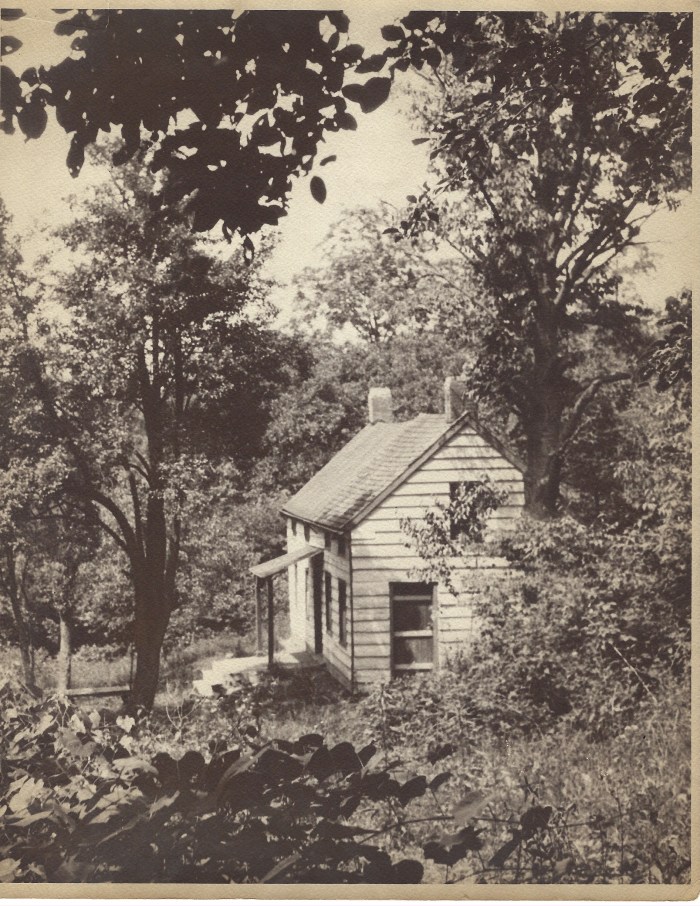
In 1905, a wealthy friend, Bolton Hall, purchased a small farm at the top of Allapartus Road (technically in New Castle, just outside the Ossining border) and gave it to Goldman.
Farmhouse on Allapartus Road, c. 1910 (now demolished) Courtesy of Gareth Hougham
She would come to this little farmhouse to decompress, to cook, to garden and to write. As she described it “The house was old and shaky, and there was no water on the premises. But its rugged beauty and seclusion, and the gorgeous view from the hill, made up for what was lacking in comfort.”
Alexander Berkman would join her there after his release from prison. Though they would discover that their romantic relationship was irretrievably broken by their time apart, they would remain professional colleagues for many years.
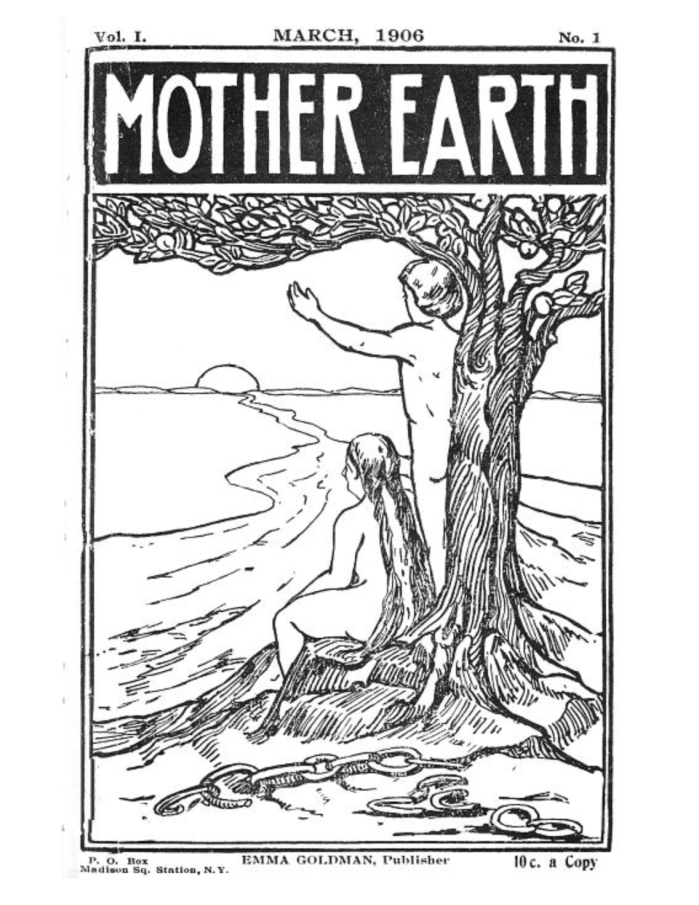
It’s around this time that Goldman found her radical periodical Mother Earth. She would serve at various times as its publisher, head writer, and editor. She attracted many of the progressive/radical writers and artists of the time, such as Floyd Dell, Louise Bryant (Diane Keaton played her in the movie Reds), Man Ray, and Margaret Sanger.
Courtesy Gutenberg.org
(Fun Fact: Croton resident Max Eastman would found his socialist magazine The Masses in 1911 and employ some of the same writers and artists. And both magazines would be shuttered in 1917 by the US Government for violating the Espionage Act for their radical anti-war/anti-conscription stances.)
In addition to putting out her monthly periodical, Goldman spent the 1910s on lecture tours speaking on topics ranging from anarchism, birth control, homosexuality to pacifism:
1915 Lecture Handbill from Portland, Oregon Courtesy of JWA.org
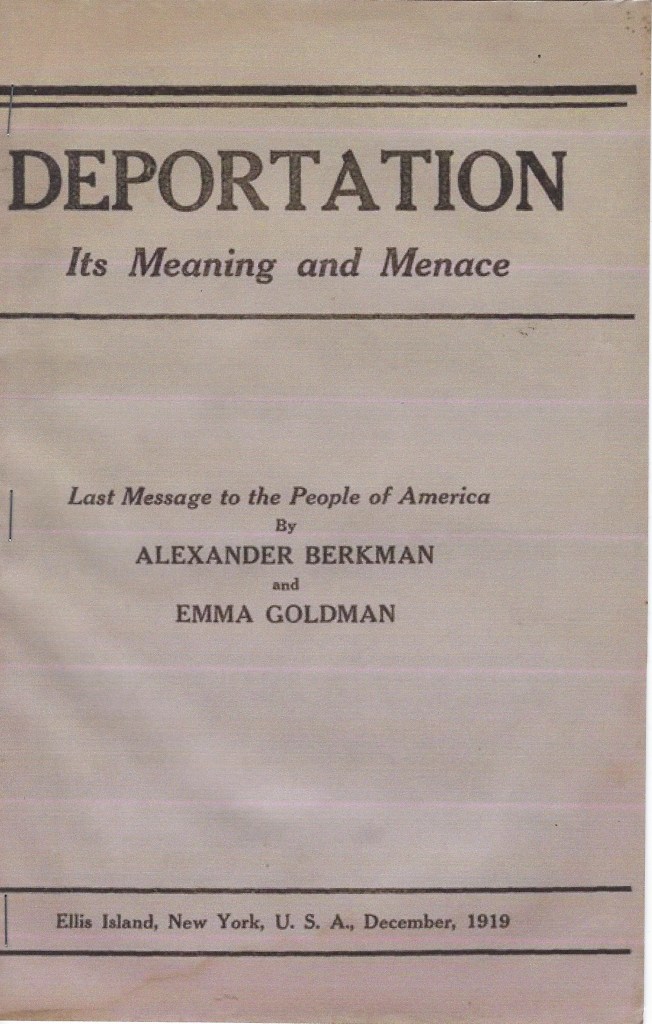
She would get arrested several more times for violating both the Comstock and Espionage acts – and this last one would cause her deportation to Russia in 1919, along with Alexander Berkman and around 200 others the US Government branded as communists/anarchists. She and Berkman would write the following pamphlet on Ellis Island as they awaited their boat to Russia:
Goldman died in Toronto in 1940 at the age of 70, after a series of strokes. However, even death could not silence her: Her body would be transported to Forest Park, Illinois to be buried near those who were executed for the Haymarket bombing.
Her final words, chiseled on her gravestone are: “Liberty will not descend to a people. A people must raise themselves to liberty.”
[1] Solnit, Rebecca A Paradise Built in Hell, 2010
Nyack, New York — Okay, so I didn’t run by here, but I DID bike by here, so that still seems in keeping with the theme of this blog.
I had the good fortune to be one of the first riders across the new Gov. Mario M. Cuomo Bridge Bike/Walk path. (The path had officially opened the day before.)
Here’s a shot of it:
I rode from the Tarrytown side all the way over to the other side, and as I was biking through the picturesque town of Nyack, I remembered that Berta and Elmer Hader had lived here, so I needed to go find their house.
Who, I hear you asking, are Berta and Elmer Hader, and why should I care?
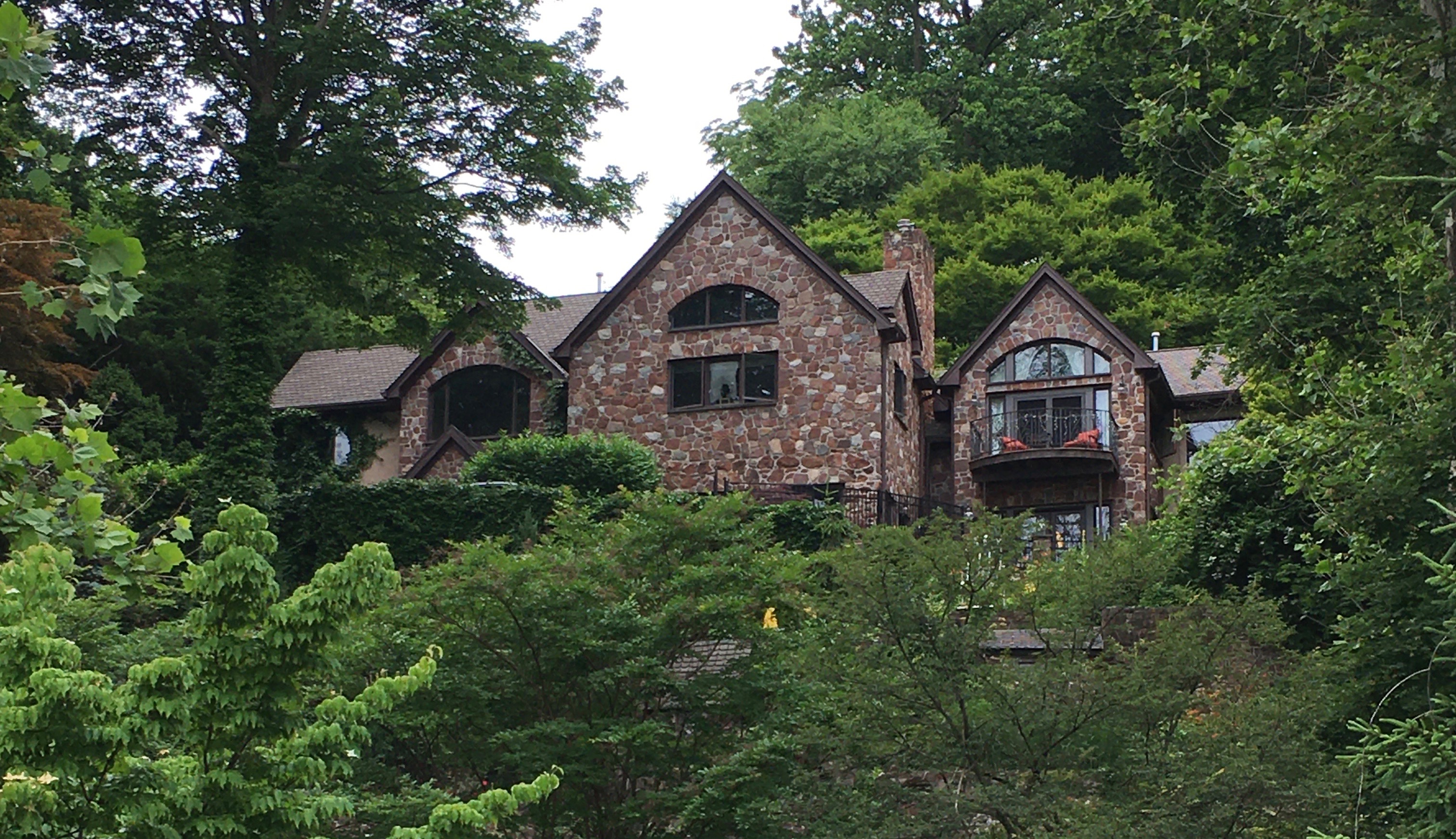
Well, they were popular and prolific children’s book writers and illustrators. A husband and wife team, they met in San Francisco in the teens, married, and moved to Nyack, New York, because they thought that to really make it they had to be near New York City. Over a period of some years, they built this glorious stone house perched high on the hill overlooking the Hudson. Big enough to accommodate many guests and their studio, they lived, worked and entertained here up until they died (Elmer in 1973, Berta in 1976)
Berta and Elmer Hader in their studio in Nyack, NY (Courtesy of Concordia University)
Here are some images of their work:
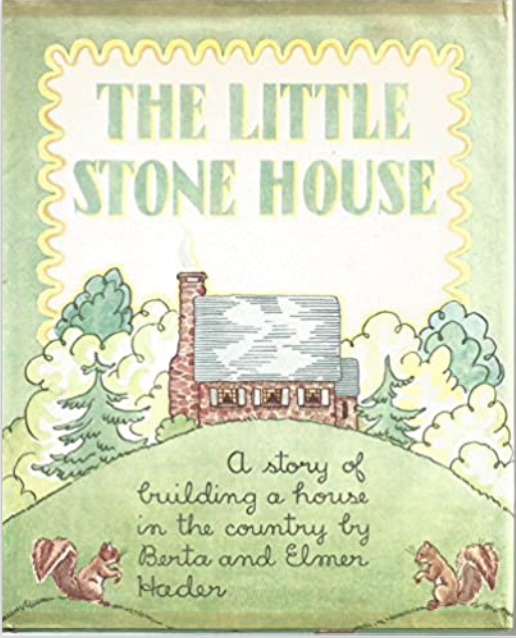
Here’s the cover of a book they wrote in 1944 about building their lovely stone house. (It even got a review in the New York Times):
Elmer also illustrated John Steinbeck’s first four novels – the story goes that Steinbeck saw the drawings for the book “Billy Butter” and was so impressed with it that he asked him to do the cover art for “The Grapes of Wrath.”
One of the things that strikes me about them, their work, and their house, is that it seems like they would have been magical parents. However, tragically, their only child, Hamilton, died at the age of two from meningitis. But Berta and Elmer soldiered on and brought joy to hundreds of thousands of children.
According to the research guide at the Concordia University Library, which houses an archive of their illustrations, the Haders once wrote this about their artistic philosophy:
“We write for children, not to preach, nor moralize, but to suggest that the world about them is a beautiful and pleasant place to live in, if they but take time out, to look. And perhaps in doing so, our young readers will develop an interest to save what is good of their world for others to enjoy.”
What a delightful and joyful way to approach the world, eh?
The Haders were active in their community, early supporters of the environmental movement, and committed pacifists (Elmer had served in WWI, though it’s unlikely he ever saw any action, leaving on a troopship for France as he did on November 10, 1918, the day before the Armistice.)
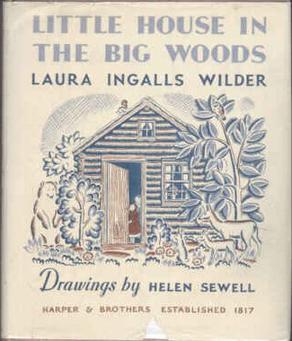
But I’m not going to lie – my interest in the Haders did not stem from books of theirs I read as a child. No, my interest in them comes by way of Laura Ingalls Wilder and “Little House in the Big Woods.”
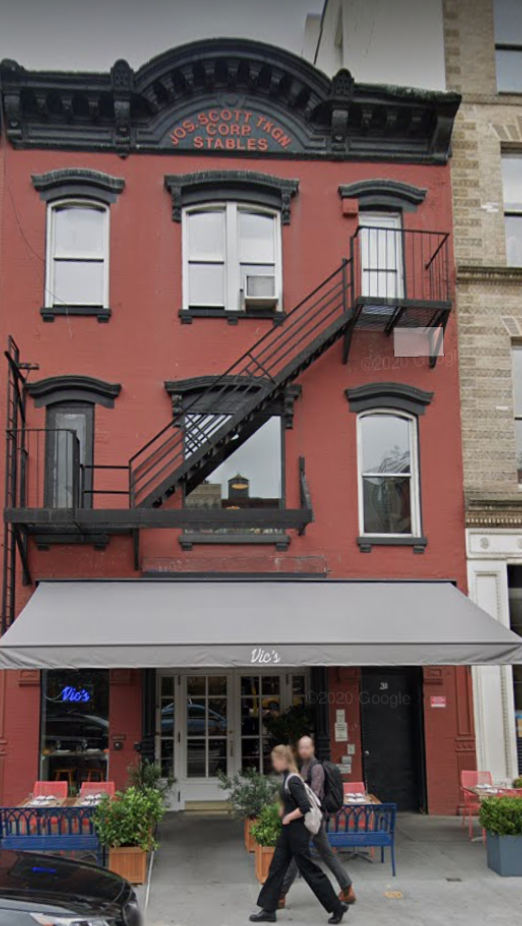
That’s a whole other post unto itself, which I will take up at the proper time, but let’s just say that Berta flatted with Laura Ingalls Wilder’s daughter Rose in San Francisco in the late teens. It’s during this time that Berta met Elmer, a fellow artiste and a former vaudeville performer, and they all moved to New York to live in that epicenter of artistic poverty, Greenwich Village, in a converted stable at 31 Great Jones Street. (Well, I’m not sure Elmer lived with them there, but he was certainly in the picture by then.)
(Courtesy Google Maps Street View)
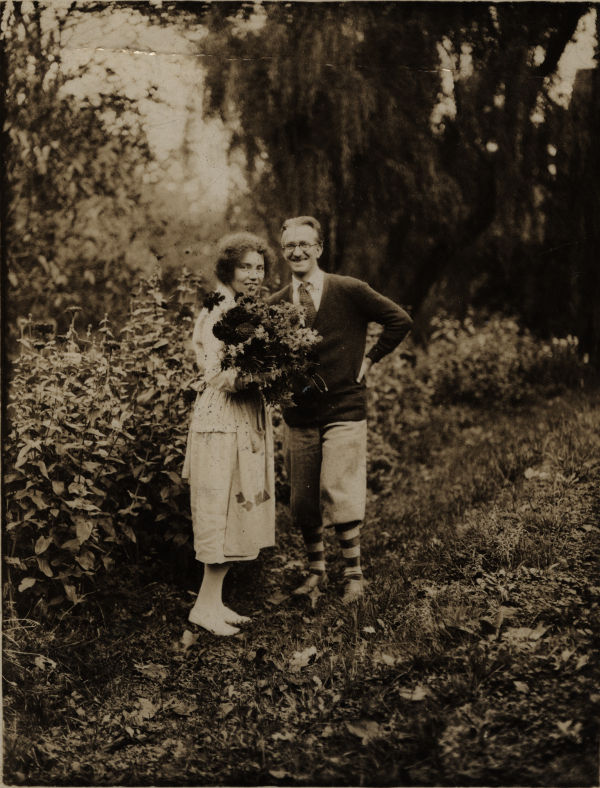
Berta married Elmer in 1919, and they moved to Nyack, New York. This is their wedding photo:
(Courtesy of Concordia University)
Berta and Elmer would spend the rest of their lives in their eyrie at 55 River Road, watching the sun rise over the Hudson, and happily writing and illustrating books together.
One of the things that endlessly fascinate me are the ‘gates to nowhere’ that I pass on my runs. You know what I mean — those stone entranceways that sit just off the road, often covered in vines, sometimes with a name carved into them. The last vestiges of a grand estate sitting forlorn and forgotten. It’s at once tragic and mysterious to me that someone once spent the time and effort to install a stone gate to mark the entryway to their property, yet today it’s reduced to a stub of a thing leading nowhere. What happened? Why? Where are the people that put the gate up?
Since I have nothing else to think about when I run, I find myself getting terribly existential, and mourn the ephemeral nature of our world. Then I get mad — it’s a sad commentary on our respect for history that an estate or farm that once merited a grand gate can just be erased from memory and topography by real estate developments. (Of course, to be fair, often those developments memorialize what was there by naming themselves after it.)
Some of these gates are connected to estates I’ve blogged about before. Some are of unknown provenance. If you know anything about these mystery gates, please let me know and I’ll update this post. (Who knows, perhaps they’ll even merit a post of their own!)
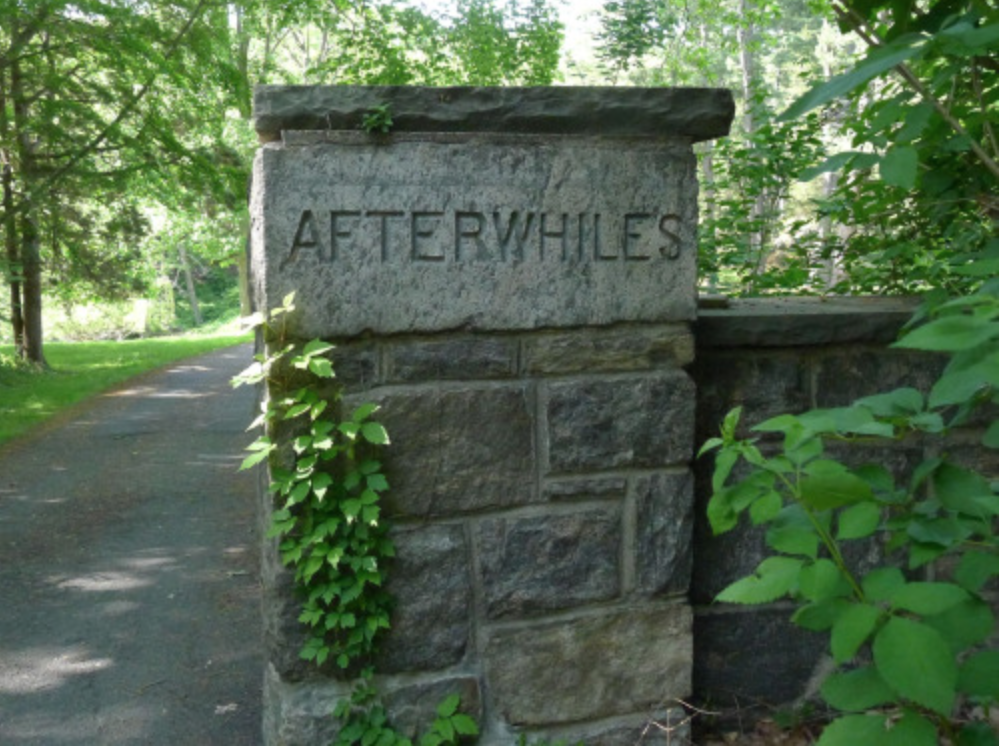
This first one can be found on Spring Valley Road, almost exactly across from the Heady Family Cemetery, and is one of the mystery gates. It seems to have “Lichtstern” etched into it on the right-hand pillar. I have not been able to find any records of such a family anywhere in the area. Anyone?
This is the pillar for the entrance to John Cheever’s old house. It looks as if it’s been maintained in the recent past, so I like to think that Cheever had it rebuilt and a new namestone engraved.
Here is the entrance to Carrie Chapman Catt’s former Ossining home, Juniper Ledge. It looks random and forgotten, sitting as it does on North State Road, catty corner to Club Fit, but it is in fact still guarding the driveway to where Catt lived in the 1920s.
These are the pillars for theBrandywine estate entrance, now the Briarcliff Manor Center for Rehab and Nursing Care:
Here’s the entrance to Frank Vanderlip’s estate “Beechwood,” complete with columns left over from the National City Bank building renovation located at 55 Wall Street:
The two photos below show the gate to theKress Estate(today’s Cedar Lane Park), now and then (the ‘then’ photo is courtesy of grandson Rush Kress via Steven Worthy’s Facebook page “Save the Kress Buildings at Cedar Lane Park“):
These next three examples are likely leftovers from the McCord Farm which, in the 1750s, encompassed about 225 acres and was originally part of Frederick Phillipse’s Manor. (This definitely requires its own post!)
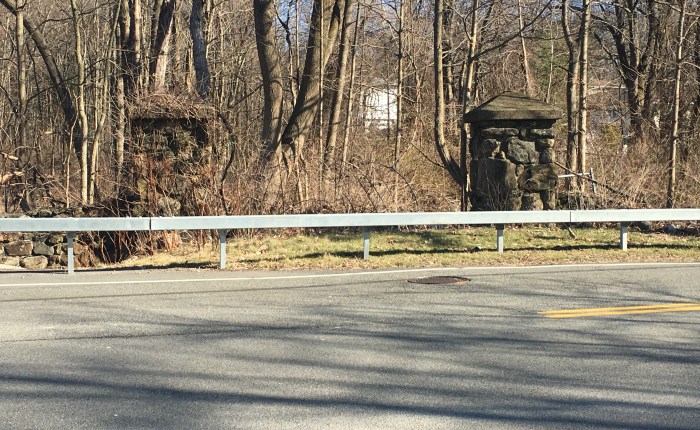
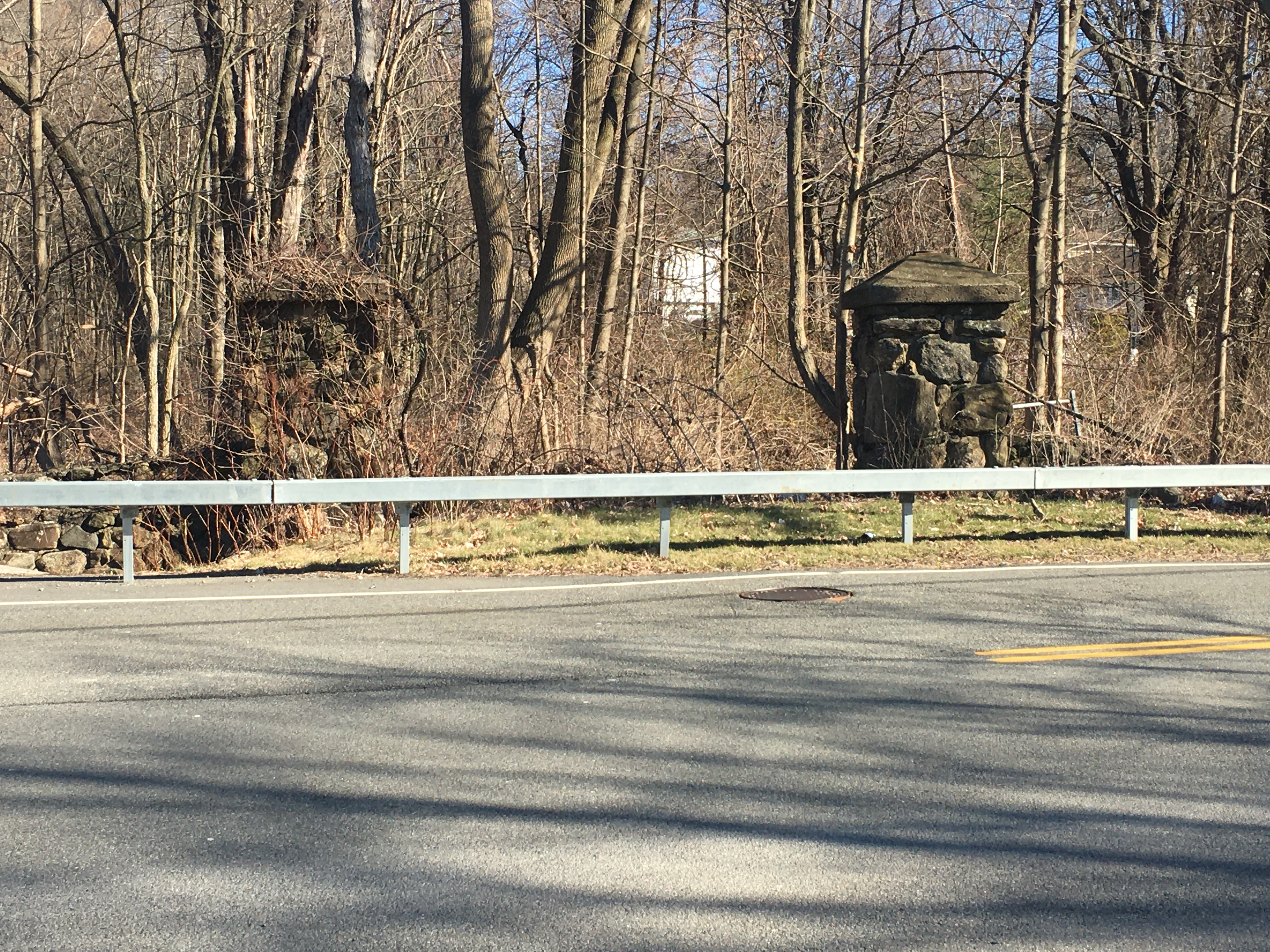
Now, I’ve been told by those who know, that these pillars – found at the intersection of 134 & Kitchawan Road/Croton Dam Road – were the original entrance to the McCord Farm. Since the main farmhouse is all the way over at the corner of Narrangansett and Collyer, I kind of question that assessment, but since I have nothing better to add, I’ll leave it there until I learn more:
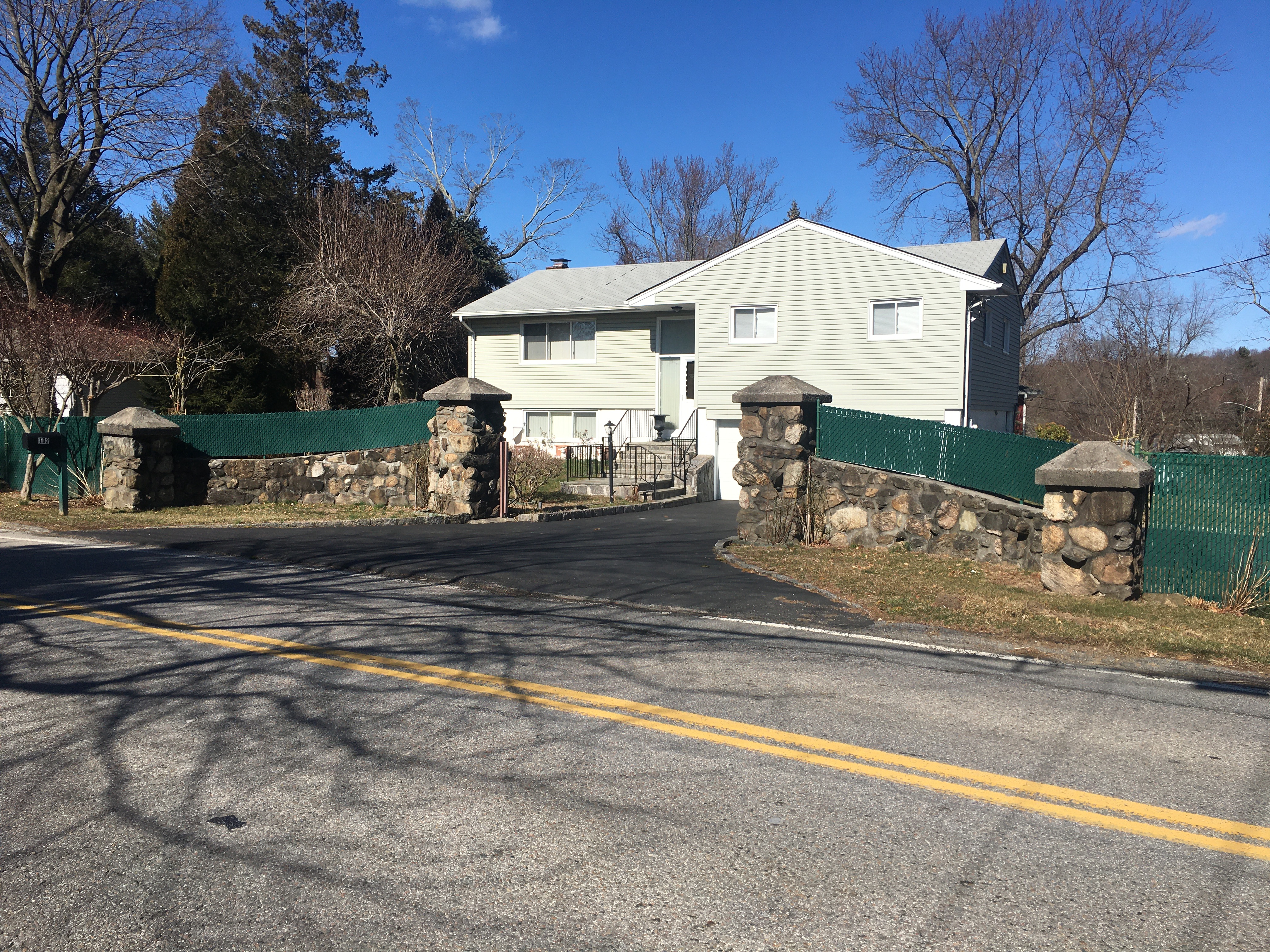
This gate sits along Narrangansett near Bayden Road and has been nicely incorporated into the entrance of the current house:
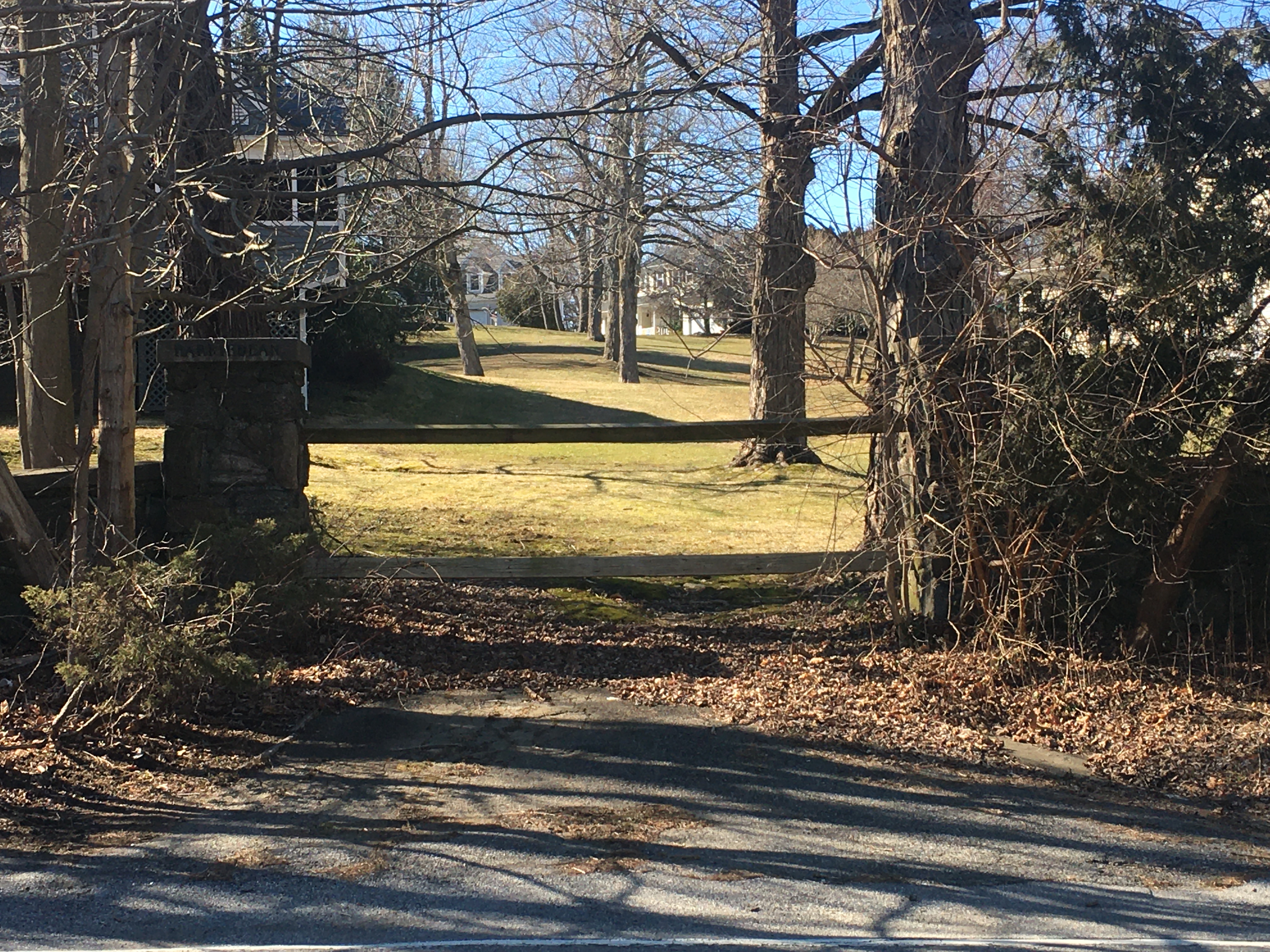
This one’s kind of hard to see, but it’s at the intersection between Croton Dam Road and Narrangansett. If you look really closely, you can see it has brass letters that read “HarrieDean” on the left column:
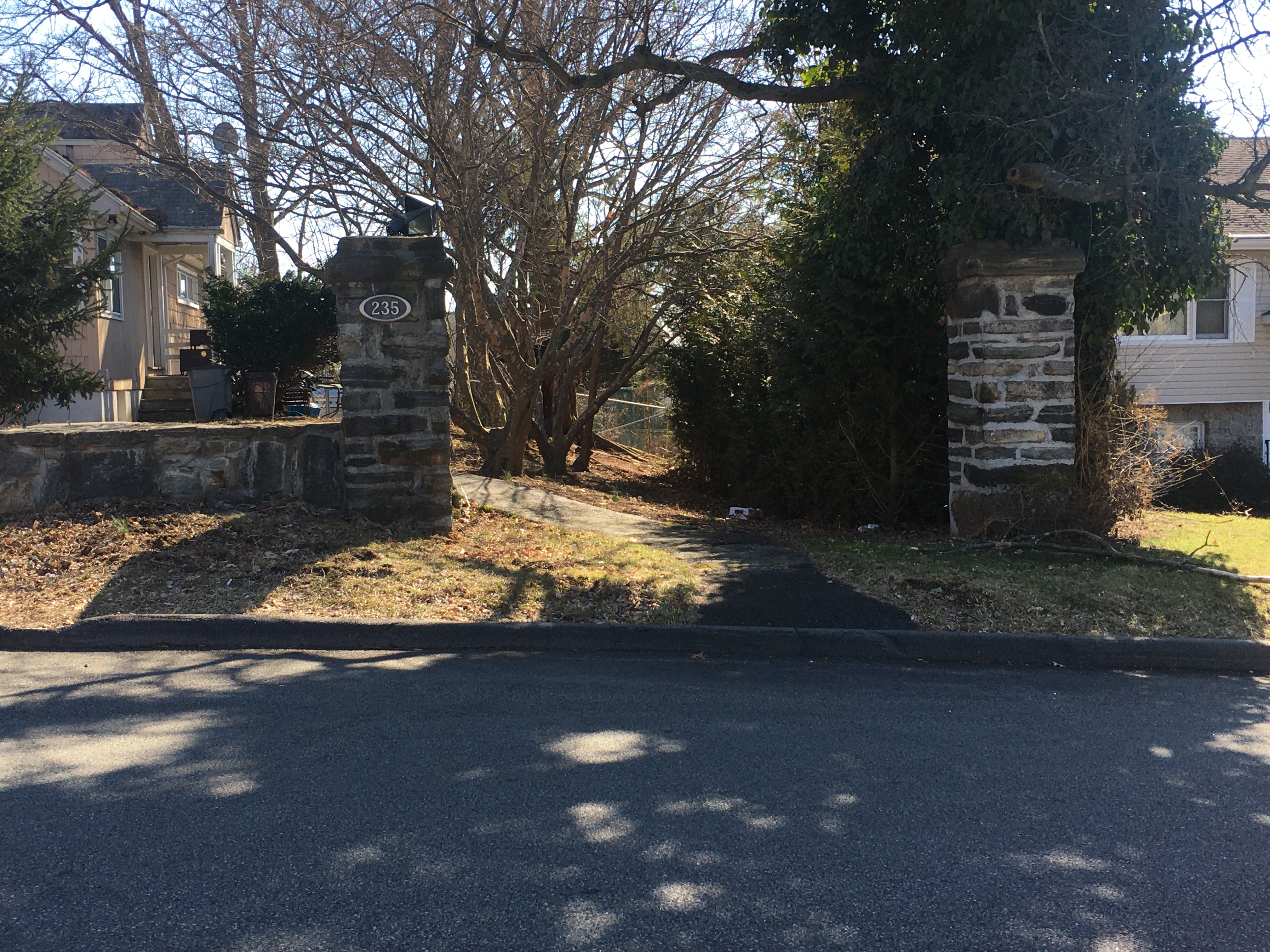
These pillars are at the corner of Eastern and Watson — not at all lined up with the house behind. So curious!
Are there any other old gates in the Ossining area that you’ve always wondered about? Send photos and locations and let’s see if we can solve their mystery!
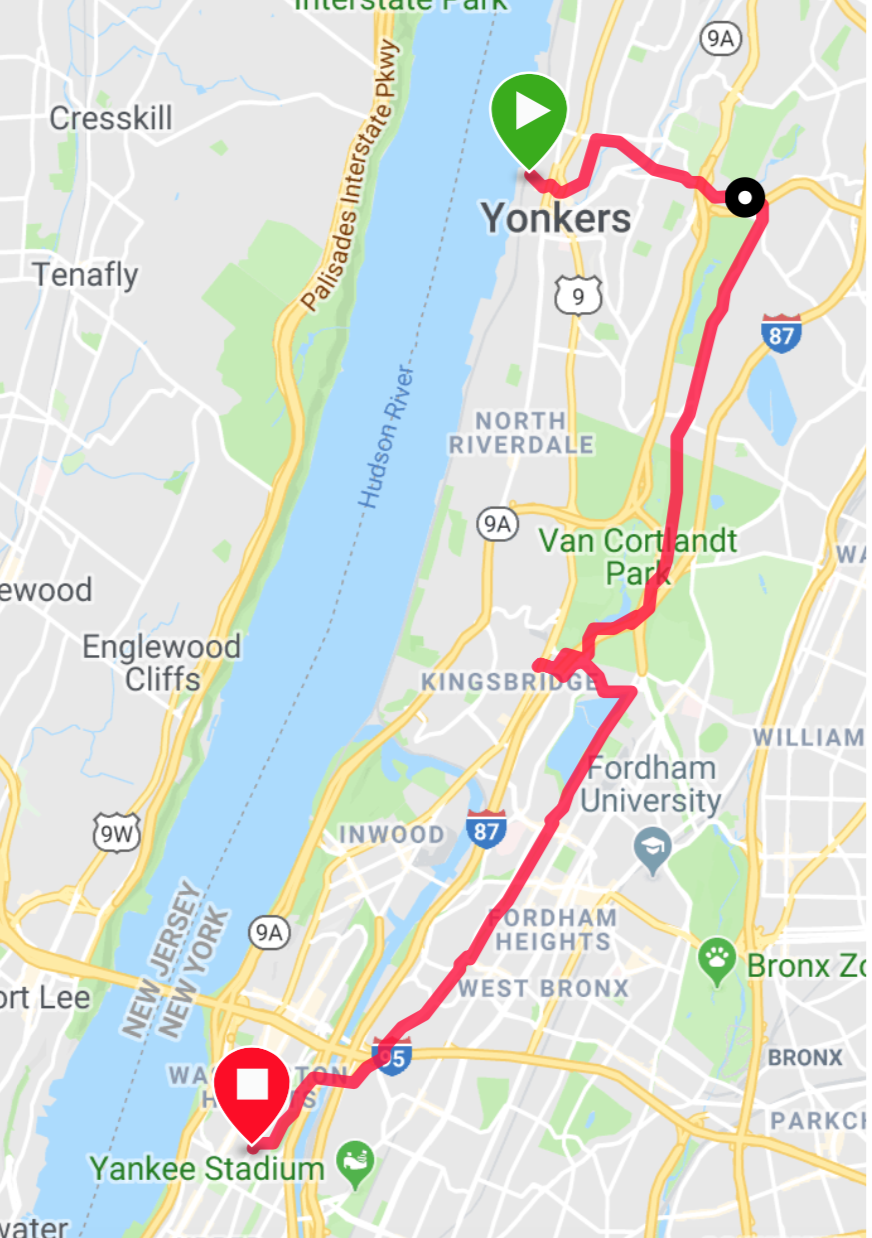
Yonkers – Amsterdam and 163rd Street, Manhattan
12.25 miles
We had hoped to make it all the way to down to 42nd Street & 5th Avenue where the Old Croton Aqueduct once disgorged itself into the reservoir there, but we ran out of steam. (And cell phone battery power!) You’ll note the squiggly bit in the middle, just south of Van Cortlandt Park? That’s where we got rather lost and probably added a couple of miles to our route.
This part of the Aqueduct, while fairly well-marked in places, is difficult to follow. Part of this is due to the fact that the Mosholu and the Major Deegan cut across it, but part of it just due to the fact that you’re running through streets and it’s tricky to look at your map.
We started in Yonkers on a clear, windy morning (it happened to be the morning of the Yonkers marathon, too, so people kept cheering us on even though we were way off course!)
Yup, it’s the same place! The few miles are a secluded trail that I definitely would not run alone. It’s well-marked, but . . .
And the trail is littered with trash both big and small . . .
There’s a little bit of running along a road, but you can duck into Tibbetts Brook Park and keep following this lovely, bucolic trail, peopled by runners from Fordham University and Holy Ghost Prep (is that for real?)
When you cross the border from Westchester into New York City, you’ll see a fancy carved stone indicating said border, and the first of several informational signs.
It really is hard to believe that you’re in a city!
There’s another old Weir, unused for decades now (the Old Croton Aqueduct was taken out of service by 1965 when the New Croton Aqueduct was completed.) But it had a good run, regulating the water going to the city for over a hundred years.
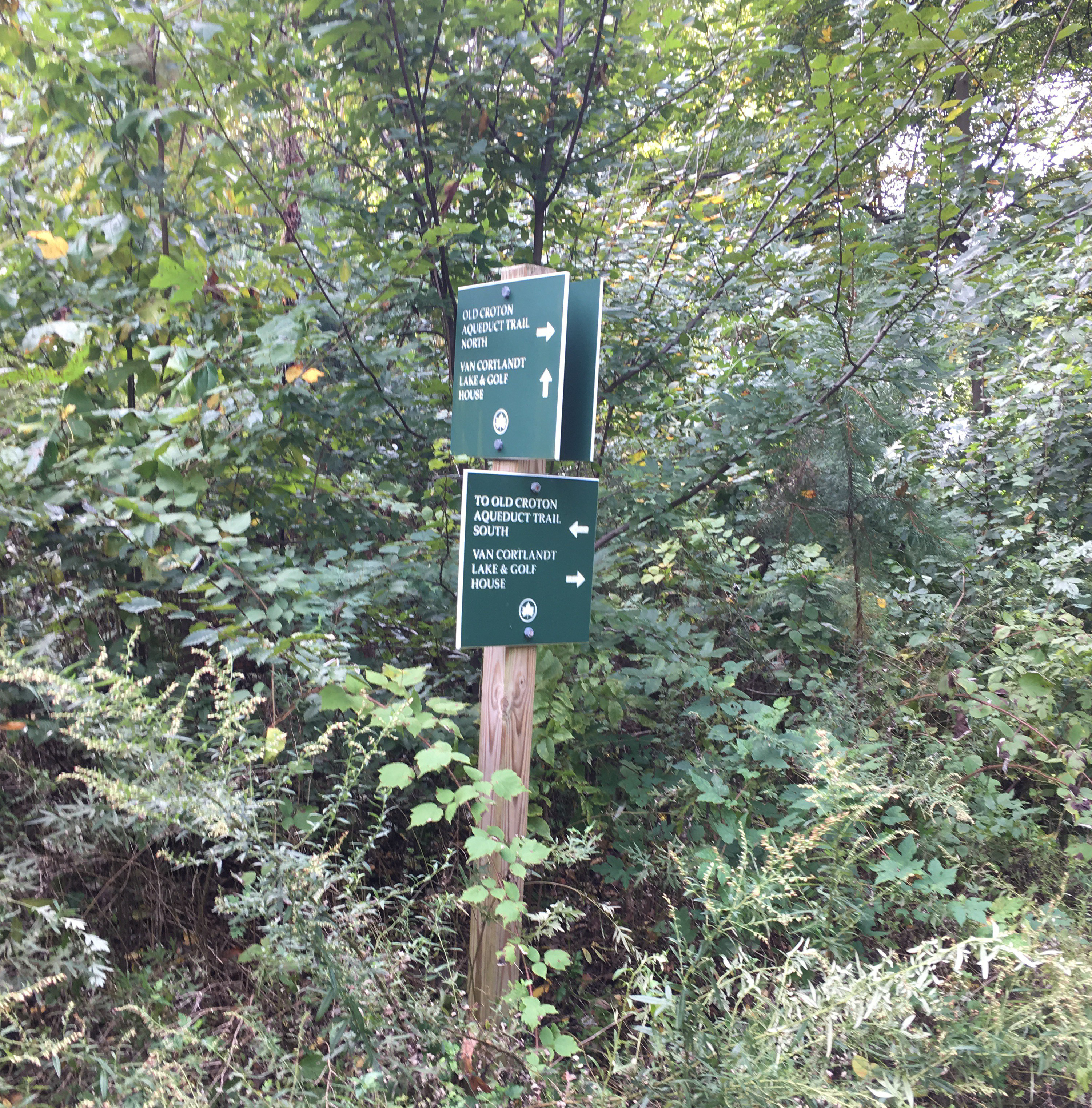
Running through Van Cortlandt Park was lovely, even though we were close enough to the Mosholu to see an accident and traffic jam at one point. There’s a section of the Aqueduct that you can’t run over, so we kept following the trail south, which just seemed logical, when we really should have taken another route.
(Note to self, next time follow the arrow north to the Old Croton Aqueduct Trail South.)
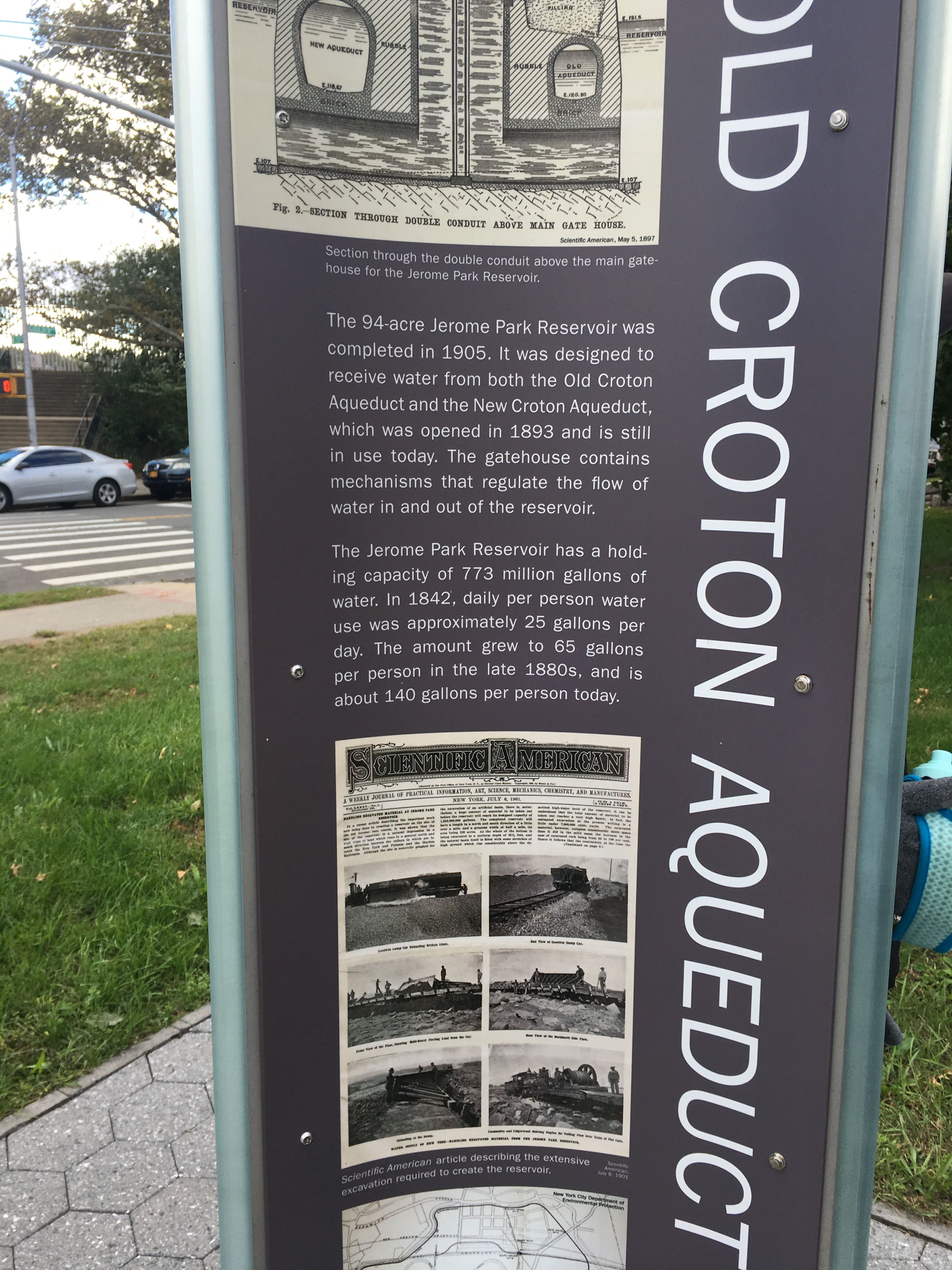
We parallel the golf course, waving to some intrepid golfers out on a 45* morning, and found ourselves on Van Cortlandt Park South Avenue. This is where we took a little unscheduled tour of the Kingsbridge area of the Bronx. We finally found our way to the Jerome Park Reservoir and made it back onto the Aqueduct. Here are a couple of gatehouses for the reservoir.
And here is another historical marker:
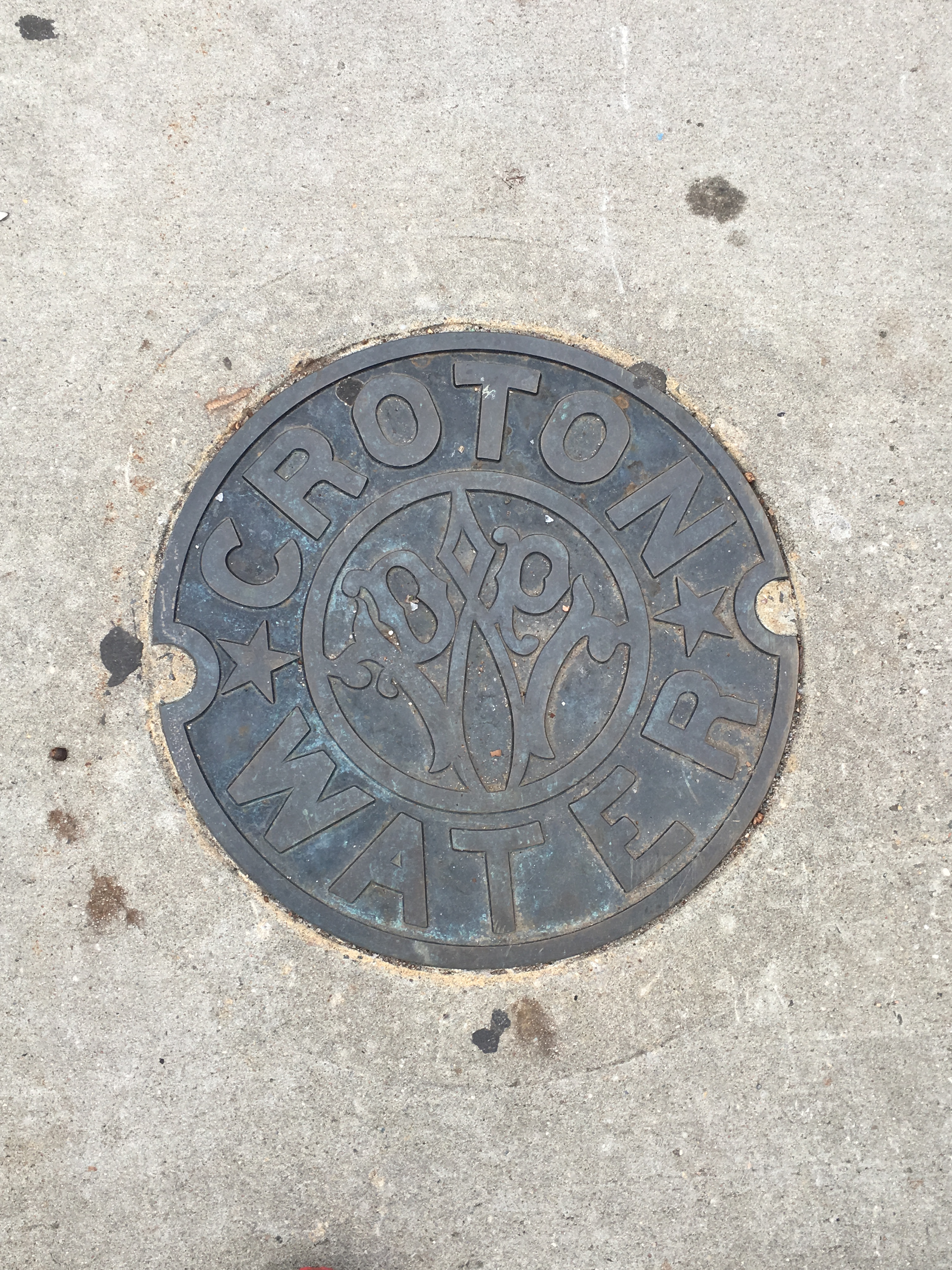
After that, the trail and the Aqueduct stay together, marvelously straight and true through the Bronx. There’s an interesting bit near Fordham University where the Aqueduct cuts between buildings, and features custom-made manhole covers!
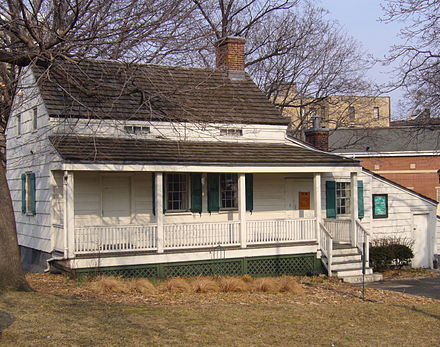
A bit off the Aqueduct, right at the intersection between Kingsbridge Road and Grand Concourse is the site of Edgar Allan Poe’s cottage, where he lived from the 1840s until his death:
Poe’s wife Virginia died in this very cottage in 1847 (but not on this very site, as the cottage was moved to its current location in the early 1900s.) Supposedly Poe wrote one his last poems, “Annabel Lee” here in in 1849, a poem likely about his wife Virginia. (Note to self, go back and recite “Annabel Lee” here next time.) Poe also enjoyed the (newly finished!) Aqueduct, taking long walks along it to clear his mind for writing.
I feel I would be remiss if I did not warn you that the Aqueduct Avenue section is dodgy at best. I am not easily shocked, but running past a fellow in the midst of shooting up right there in the park was a gritty piece of reality.
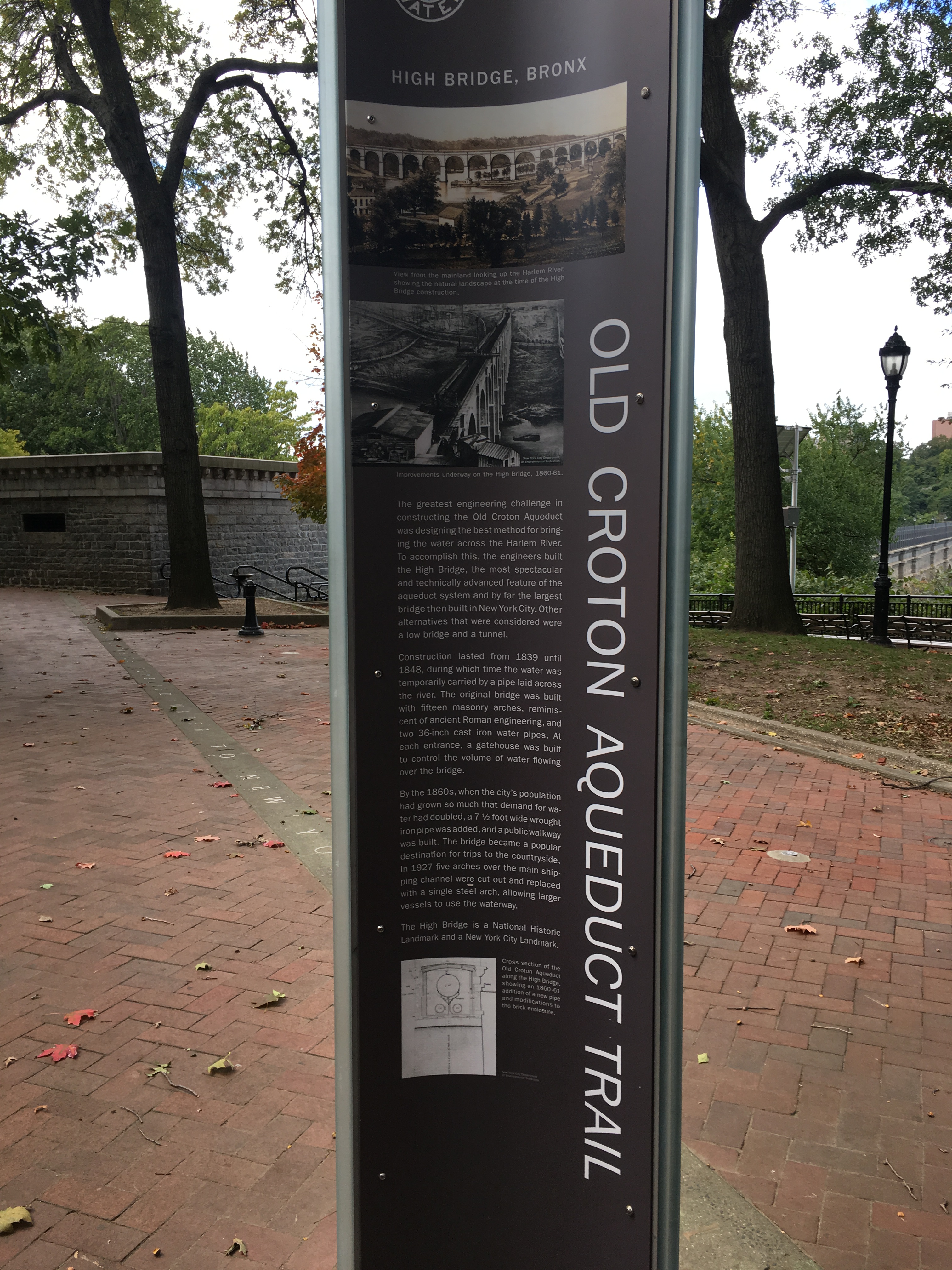
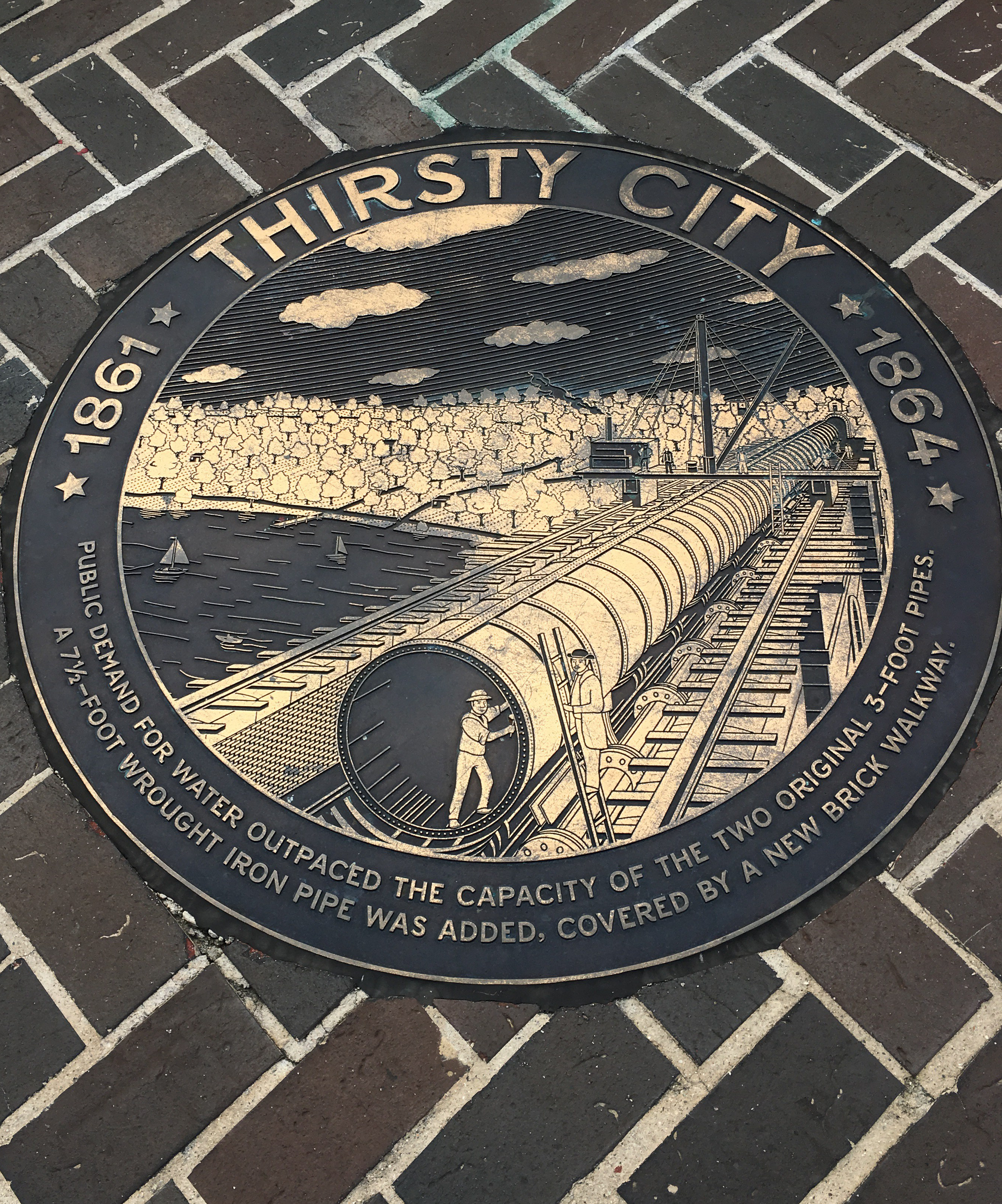
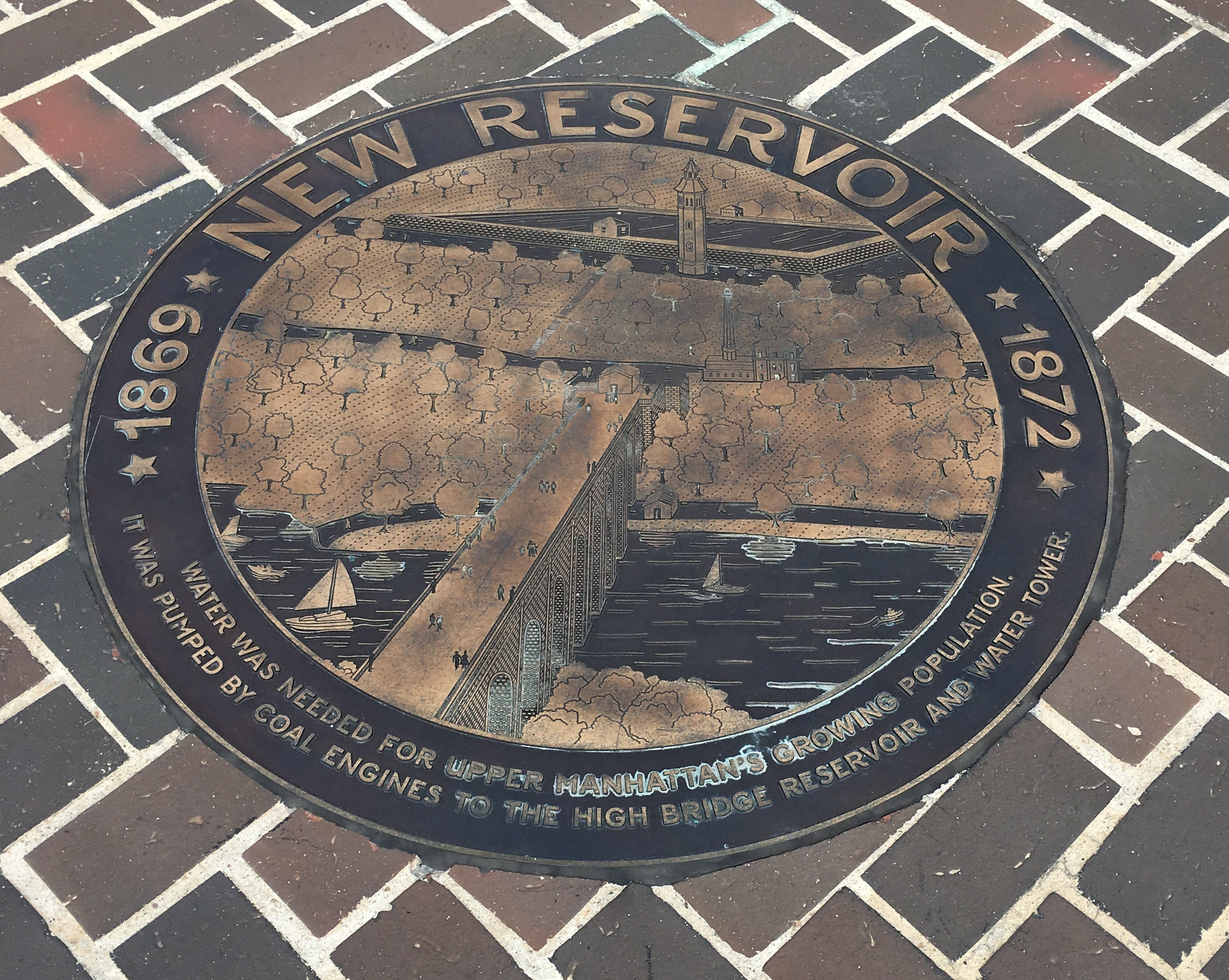
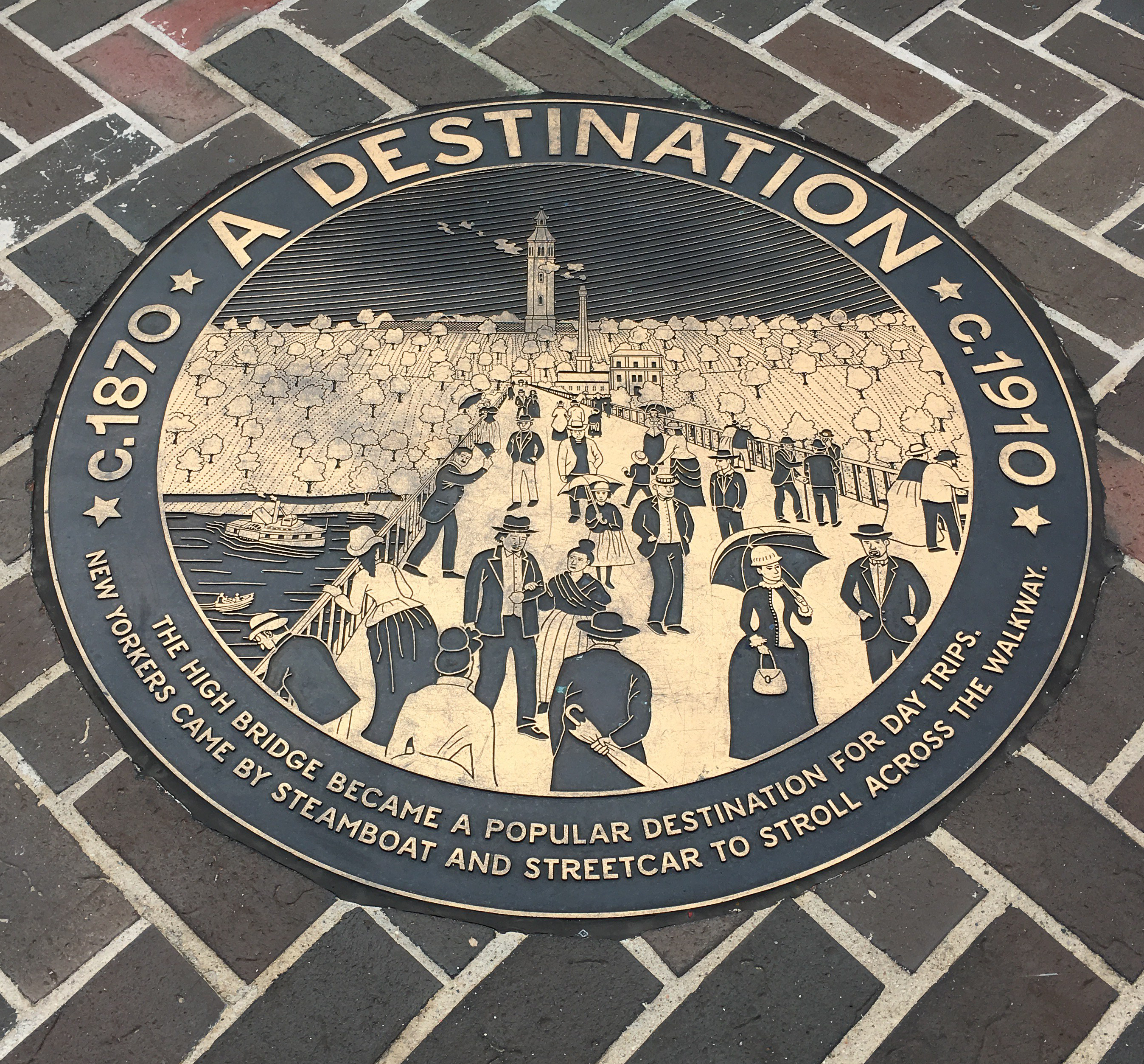
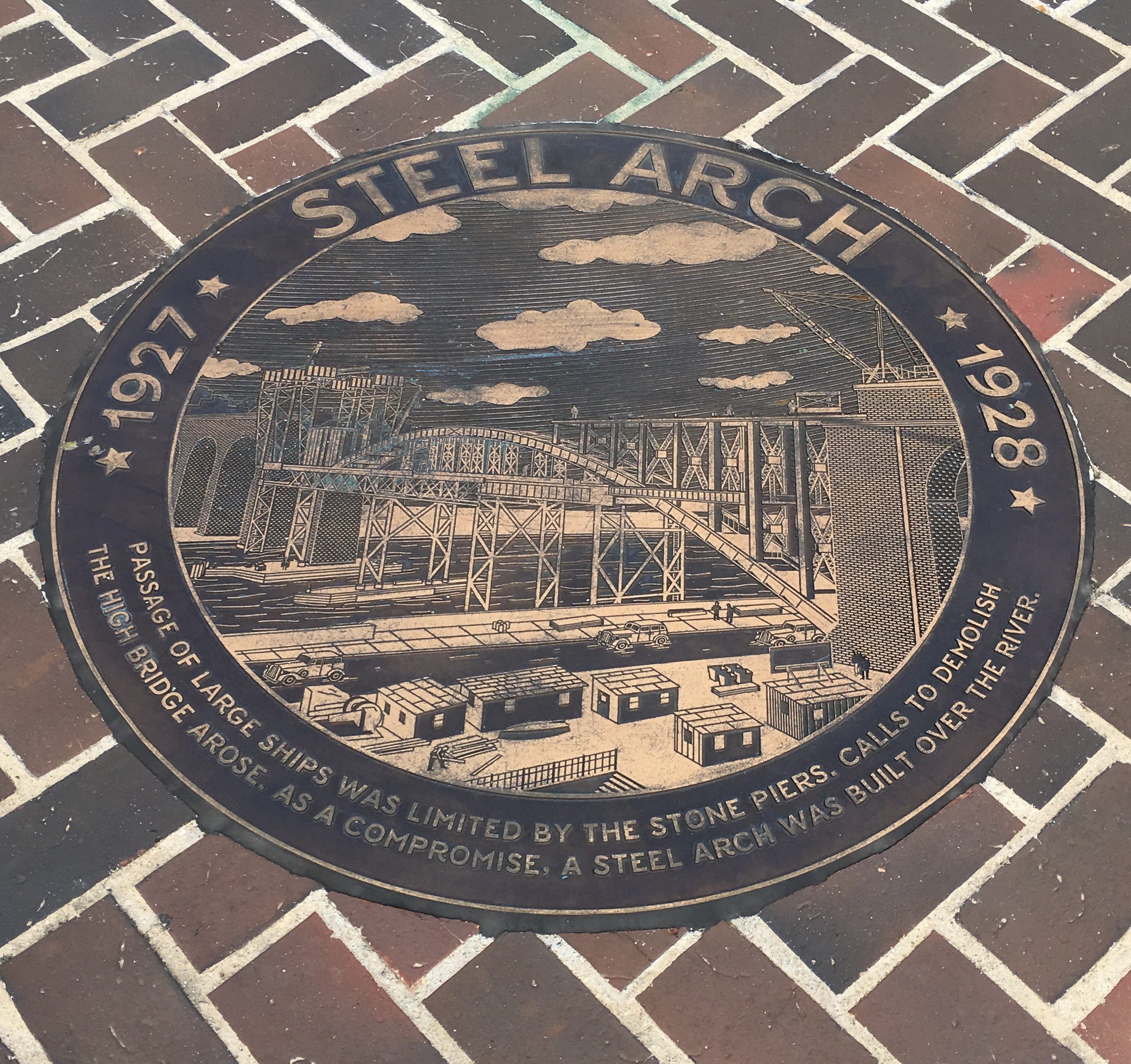
Aqueduct Avenue turns into Martin Luther King Jr. Avenue and thence into University Avenue. Following that, running along sidewalks and taking some turns here and there, you’ll make it to the High Bridge, only recently renovated and re-opened to the public. As the historical marker tells you, built in 1848 it’s the oldest bridge in New York. You can read more details here on Wikipedia.
I was stoked to make it here, as I’ve wanted to walk over the High Bridge since it re-opened.
There are some interesting historical medallions inset into the bridge, and I used the last of my cell phone battery juice to photograph them:
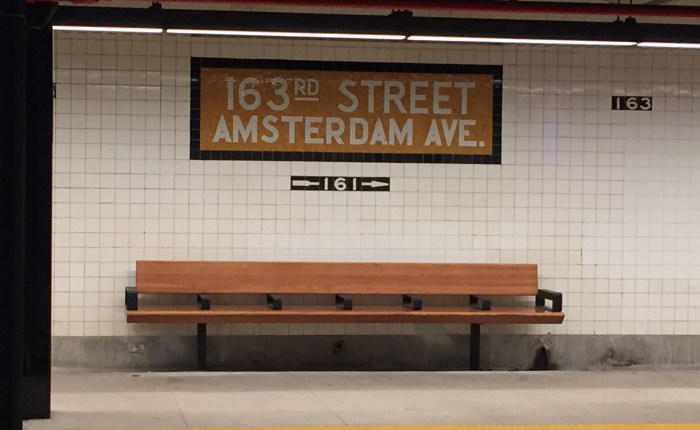
After crossing the High Bridge, we decided that we’d run enough. So, we hopped on the subway at Amsterdam and 163rd. Recently renovated, this is one of the nicest NYC subway stations I’ve ever been in!
Stay tuned for the next and last leg of our Aqueduct journey where we will run from Amsterdam and 163rd down to the New York Public Library on 42nd Street & 5th Avenue.
BLOG POST: 116 Hawkes Avenue — The Corliss Lamont Estate
116 Hawkes Avenue is for sale. 13 bedrooms, 8 baths for $1,999,222. Check out the link here.
This is also informally known as the “Lamont Estate,” once owned by the progressive activist and intellectual Corliss Lamont. It’s funny – I’ve had a draft of this post simmering for about a year now, ever since I joined the American Civil Liberties Union, but it wasn’t until this “For Sale” sign went up that I was inspired to post.
The realtor is pitching this as a “Wonderful opportunity to develop over 19 acres of rolling property. . .” – GRRR! Like Hawkes Avenue needs any more development right now! (See my blog 87HawkesAvenue.com for more on the topic.)
But the story of Corliss Lamont is one that deserves telling. Something about the idea of sub-dividing this estate makes me feel (irrationally, I admit) like his legacy is somehow being diminished. I mean, he was a deep thinking activist who fought long and hard to protect those liberties enshrined in our Constitution, as well as an intellectual who was forever striving to improve humanity. His reach was long and his connections were extensive.
Corliss Lamont (1902-1995) was a 20th century American hero whose independent thinking challenged prevailing ideas in philosophy, economics, religion, patriotism, world peace and the exercise of our cherished civil liberties.
Corliss Lamont was born to Wall Street wealth, yet he championed the cause of the working class, and was derided as a “Socialist” and a “traitor to his class.”
Corliss Lamont’s Humanist belief that earthlings have evolved without supernatural intervention and are responsible for their own survival on this planet caused traditionalists to label him a “godless atheist.”
Okay, first, how ironic is it that that Dr. Andrija Puharich lived right across the street at 87 Hawkes Avenue – a man whose life work involved proving that extraterrestrials have intervened over the centuries to help human beings evolve and survive. (Don’t know what I’m talking about? Check out my blog post on Puharich here.) You have to wonder if Corliss and Andrija ever hung out in the 1960s and ’70s and just rapped until the wee hours . . . Can you imagine it? Boy, would I ever have liked to have been a fly on that wall!
Anyway, let’s unpack the information from Lamont’s website: “Born to Wall Street wealth,” it asserts. Well, yes sir, that is no less than the truth. His father was none other than Thomas Lamont, a partner and later Chairman at J.P. Morgan. In fact, he was the acting head of J.P. Morgan the day the stock market began crashing in 1929, and famously rallied other Wall Street firms to join forces with him and purchase massive amounts of stocks in an attempt to stabilize the market. Alas, the market was too far gone. (Earlier, in 1910, Thomas Lamont took part in a secret meeting on Jekyll Island to help create the Federal Reserve System. I know, financial history is a snooze, but Frank Vanderlip was there and he lived nearby in Scarborough! Blog post on him to come soon.) Let’s just say money was in the blood.
Son Corliss followed in his father’s footsteps to Phillips Exeter Academy and thence to Harvard, but that’s where the similarities end. No doubt Thomas would have welcomed his son to Wall Street, but Corliss had other interests. After Harvard, he studied at Oxford University (where he roomed with Aldous Huxley’s brother Julian), earned a Ph.D from Columbia University, and went on to teach philosophy at various Ivy League universities. Philosophy was also in his blood — his mother, Florence Corliss Lamont, earned an M.A. in philosophy from Columbia University in 1898. She later donated the estate that today houses the Lamont-Doherty Geological Observatory in Palisades, N.Y.
Now’s as good a time as any to talk about Corliss’ avowed Socialist/Communist/Marxist leanings. It is true that in Corliss wrote an admiring book about the USSR describing how they had turned their feudal society into a modern one in a remarkably short time. It is also true that in 1937 he helped found a short-lived magazine called the Marxist Quarterly that delved into the theory and practice of socialism and communism. It is further true that he was the Chairman of the group “Friends of the Soviet Union.” But here’s some context on all this: the seeming failure of capitalism in the West, as evidenced by the enduring hardships of the Depression, caused many intellectuals to look positively at the Soviet Union and communism in general in the 1930s and ‘40s. Worker’s rights and the ideal of a more equitable society was very appealing at the time. However, Corliss and others gradually became disenchanted with the Soviet Union as stories of Josef Stalin’s brutality and events like the Moscow Trials came to light.
(Another Fun Fact: Corliss was a prolific pamphlet writer and one of them, “Basic Pamphlet 14, The Crime Against Cuba,” was distributed by none other than Lee Harvey Oswald on the streets of New Orleans, Louisiana, during the summer of 1963! According to the Corliss Lamont website, the CIA purchased 45 copies of the pamphlet and it was ended up as Exhibit No. 3120 in the Warren Commission Report on JFK’s assassination. Want to know more? Click on this link.)
Okay, back to the chronology: In the 1930s, Corliss became director of the American Civil Liberties Union (ACLU.) You must have heard of it — it’s a non-profit organization founded in 1920 to, as their website says, “Defend and preserve the individual rights and liberties guaranteed to every person in this country by the Constitution and laws of the United States.” They’ve defended the rights of anti-war protesters, striking workers, teachers who teach about evolution (the Scopes Monkey trial anyone?) the Ku Klux Klan, refugees – basically anyone anywhere in the United States whose civil liberties are threatened.
In the 1950s, Corliss (and many others) were hauled in front of Sen. Joseph McCarthy’s infamous committee and asked the notorious question “Are you now or have you ever been a Communist?” Refusing to answer, Lamont creatively invoked not the usual Fifth Amendment that protects a citizen from incriminating himself, but the First Amendment that guarantees free speech. He was cited for contempt of Congress and faced prison time. He sued the government and remarkably, after several years, won. In fact, he successfully sued the government several more times, taking at least two of these cases to the Supreme Court. (Yet another Fun Fact: according to a neighbor, in the 1960s unmarked cars were often seen parked near the driveway entrance to 116 – keeping Corliss under surveillance for his anti-Vietnam war stance, and pro-Cuba leanings, I guess.)
In later years, 116 Hawkes Avenue was the location for anti-war concerts and gatherings – I’m told Pete Seeger played here, along with other like-minded folk artists. His foundation, the Half-Moon, hosted Humanist weddings and events there up until the 1990s.





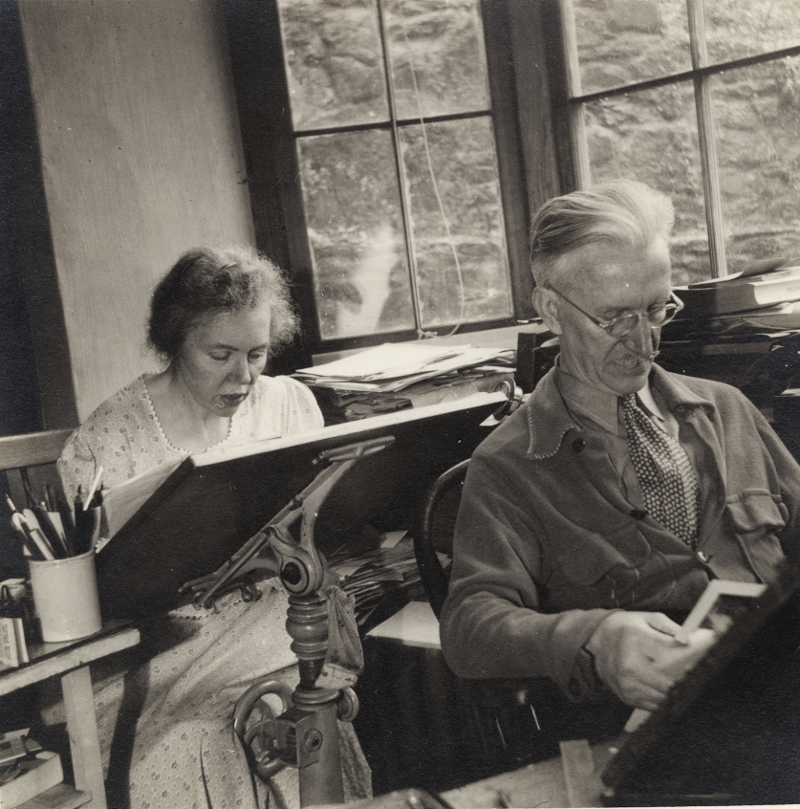 Berta and Elmer Hader in their studio in Nyack, NY (Courtesy of Concordia University)








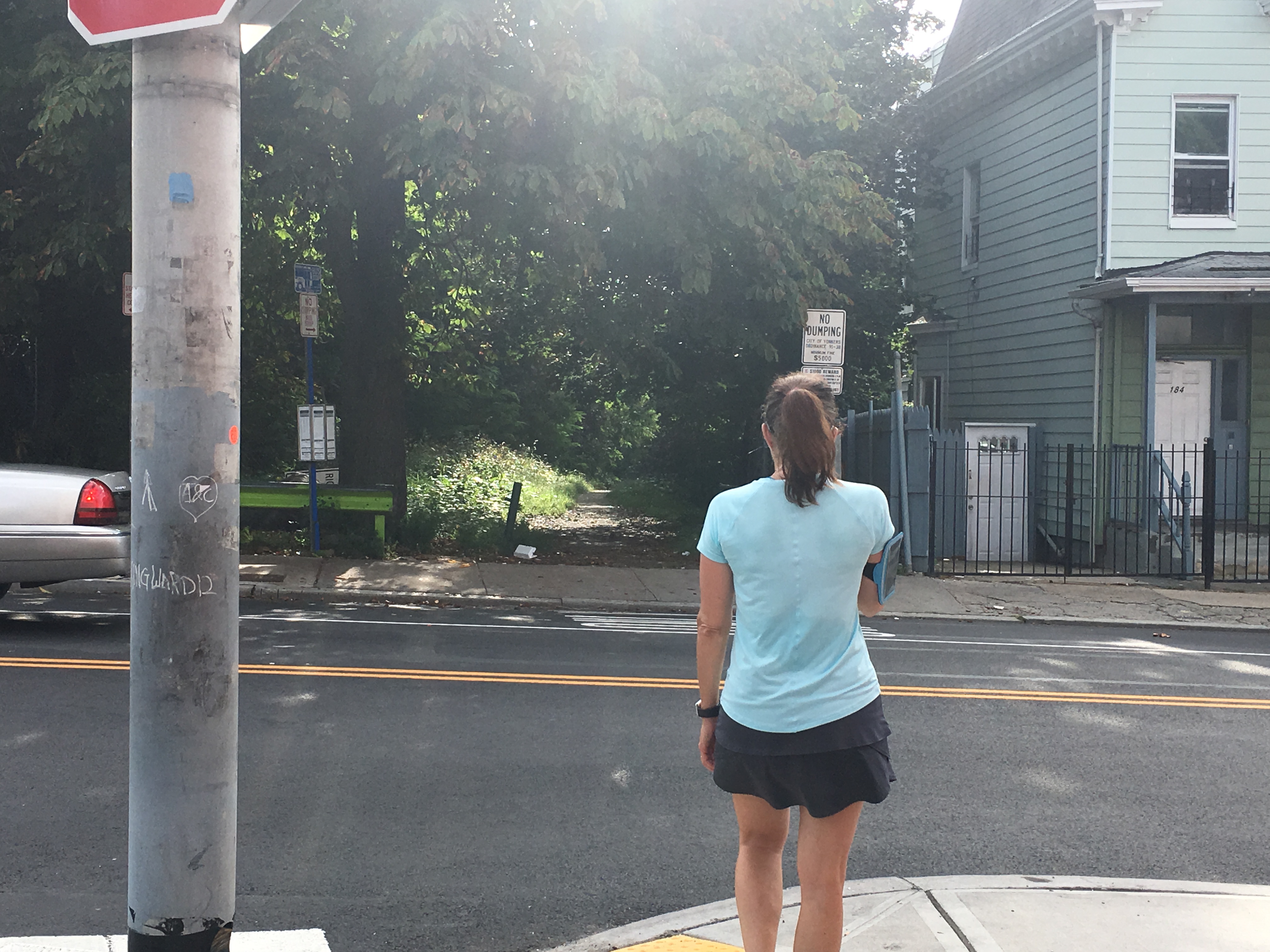
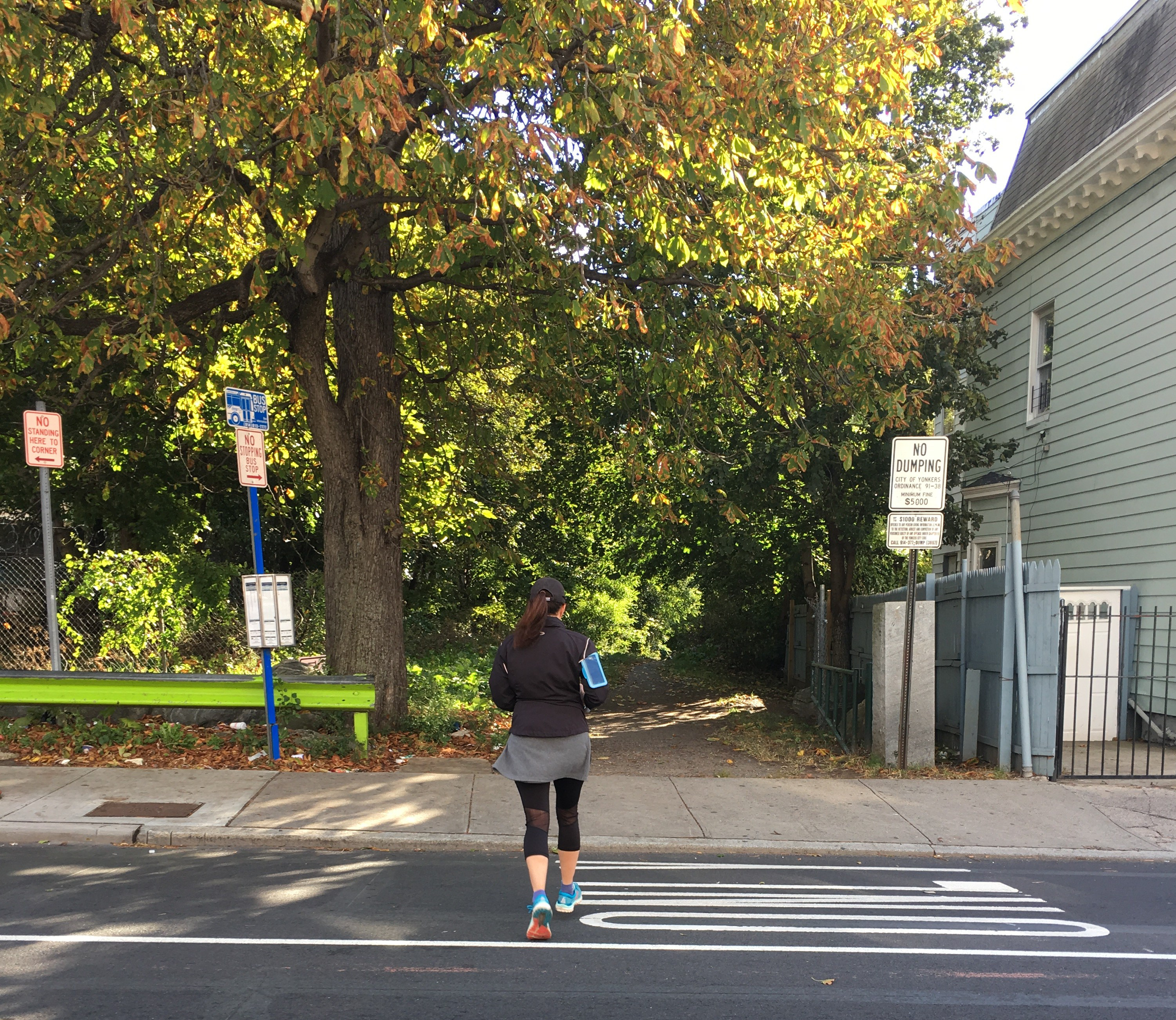 Yup, it’s the same place! The few miles are a secluded trail that I definitely would not run alone. It’s well-marked, but . . .

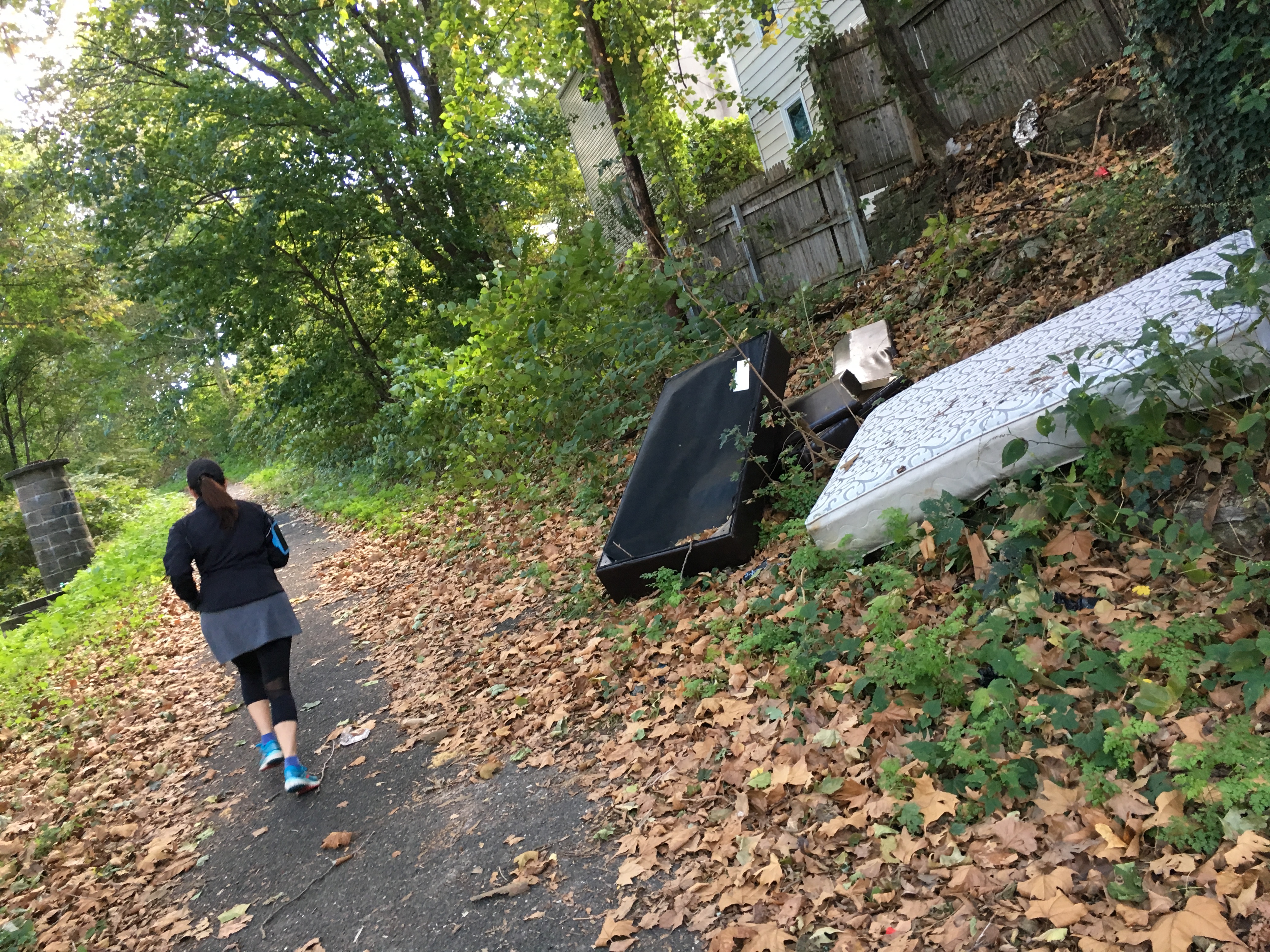


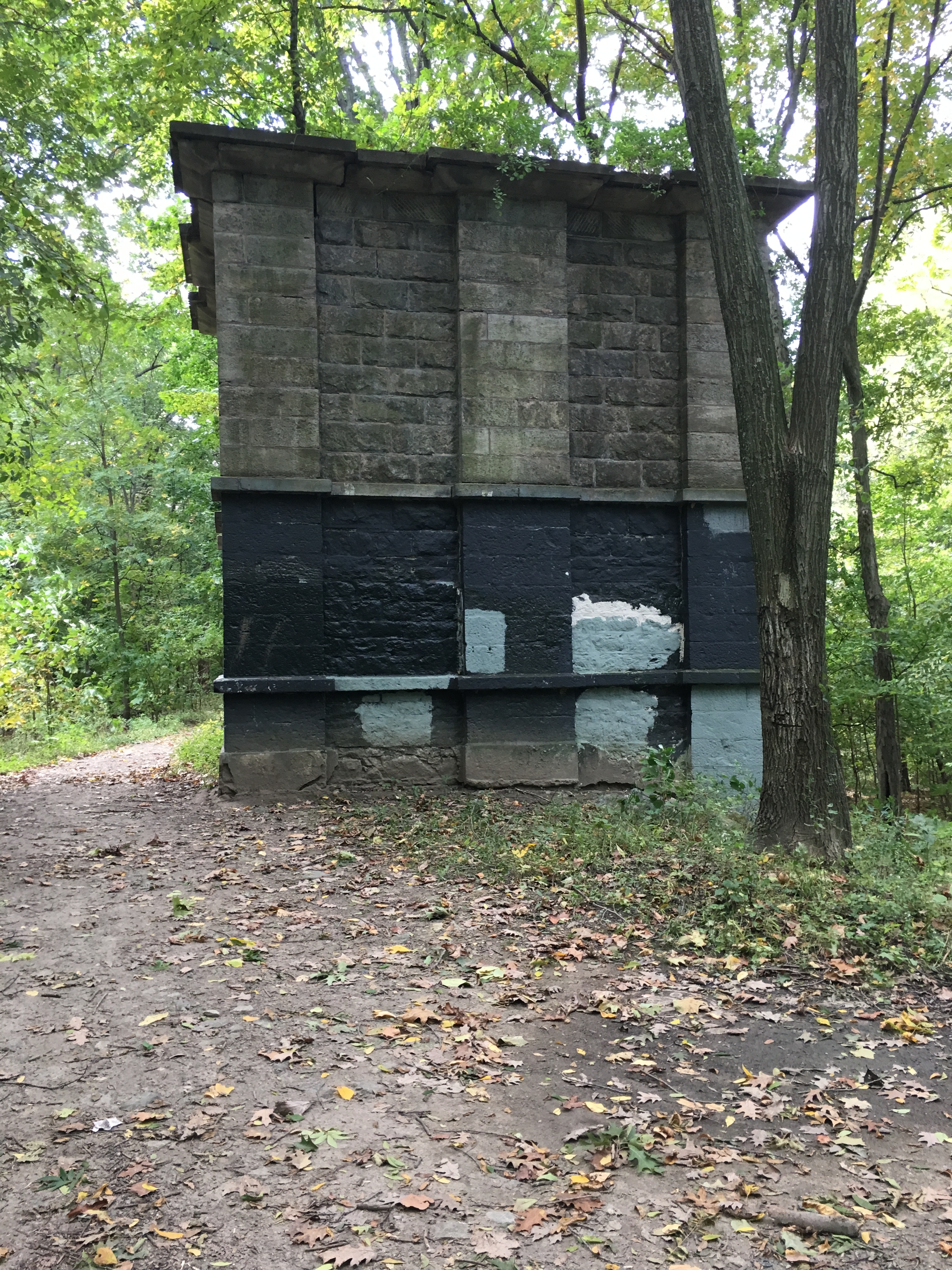




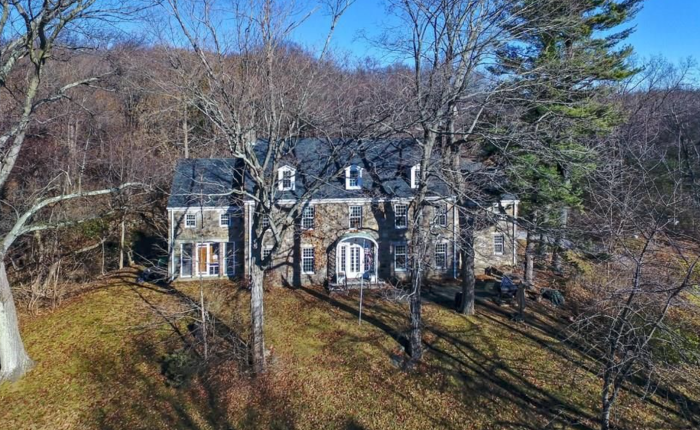
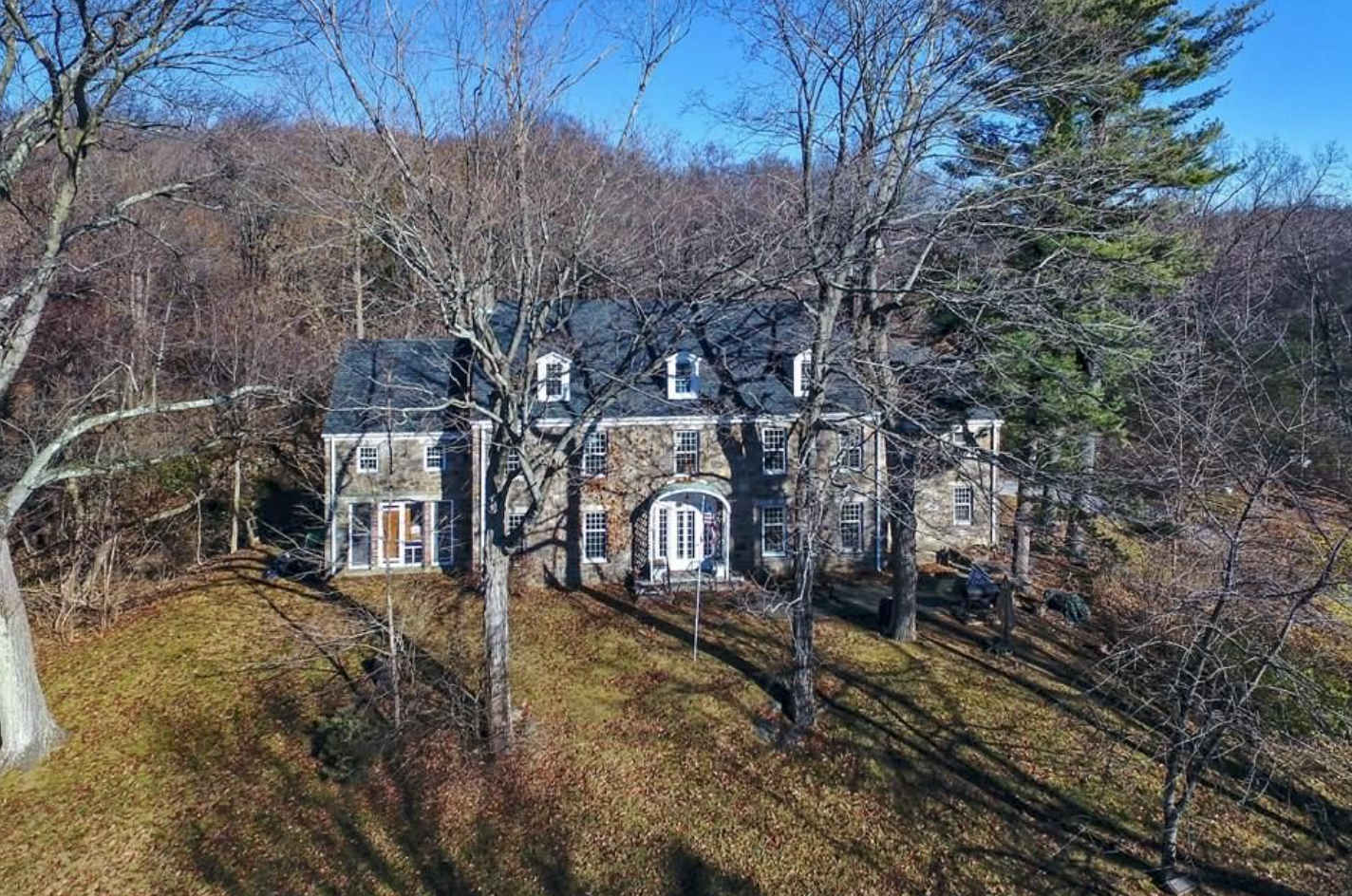 116 Hawkes Avenue is for sale. 13 bedrooms, 8 baths for $1,999,222. Check out the link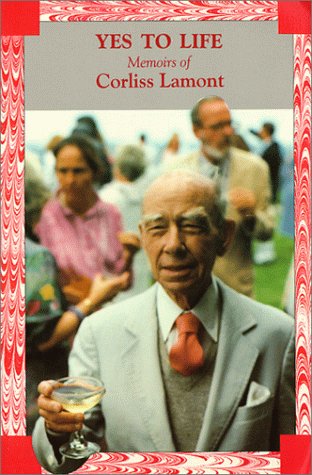
 Ossining History on the Run