Carrie Chapman Catt – Suffragist Leader

Carrie Chapman Catt, c. 1914
Courtesy of the Library of Congress

Carrie Chapman Catt
1859 – 1947

Suffragist Leader
President, National American Women’s Suffrage Association
President, International Women’s Suffrage Association
Founder, National League of Women Voters
Founder, National Committee on the Cause and Cure of War
****Local Connection:  Juniper Ledge, North State Road
****

Carrie Chapman Catt (née Lane) was born in Ripon, Wisconsin in 1859. Unusually for that time and place, she went to college (Iowa State Agricultural College) and earned her Bachelor of Science degree in 1880. She became a teacher, a principal, then Superintendent of her Iowa school district. 
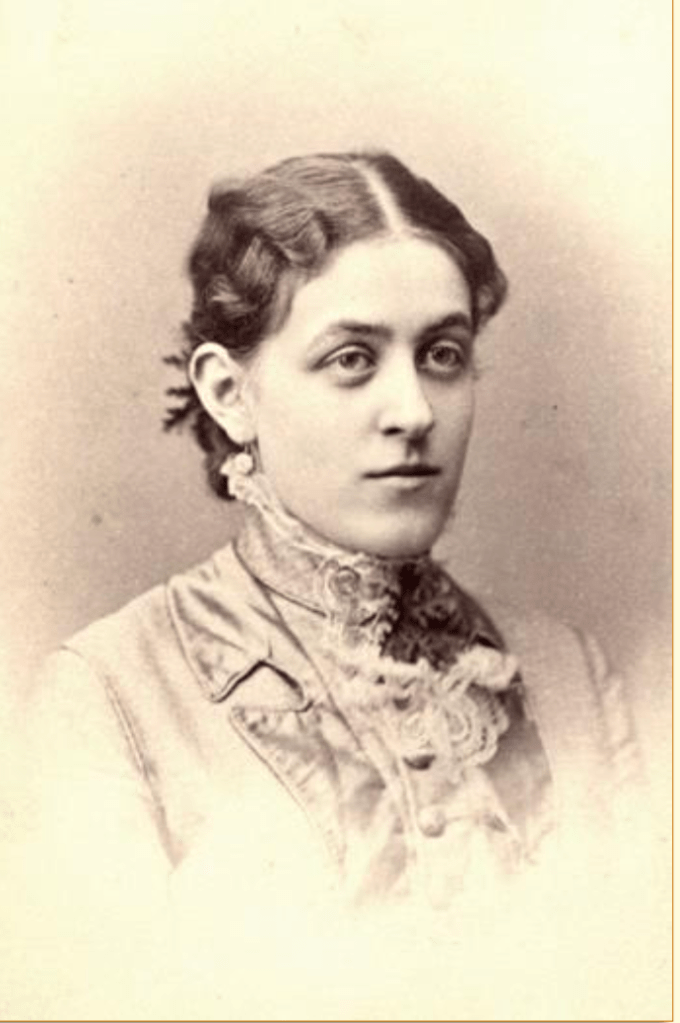
Carrie Lane at the time of her 1880 graduation from Iowa State Agricultural College
Courtesy Digital Collection, Iowa State University Park Library

In 1880, she married husband #1, Leo Chapman, editor of the Mason City Republican, who held extremely progressive ideas for the time, but died of typhoid fever within a couple of years. In 1885, she married husband #2, George Catt, a wealthy engineer and fellow Iowa State alum. He apparently was quite supportive of her involvement in the fight for women’s rights.

The Constitutional Amendment to give women the right to vote was first proposed in 1878.  Catt became involved with the fight soon after.  By 1890, she was president of the Iowa Women’s Suffrage Association, running it with great skill. From there, Catt came to the attention of Susan B. Anthony, the Grande Dame of suffragists, who, in 1900, anointed Catt as her successor as President of the National American Women’s Suffrage Association (NAWSA).  Catt was its President when the Nineteenth Amendment was passed in 1920, recognizing women’s right to vote.  
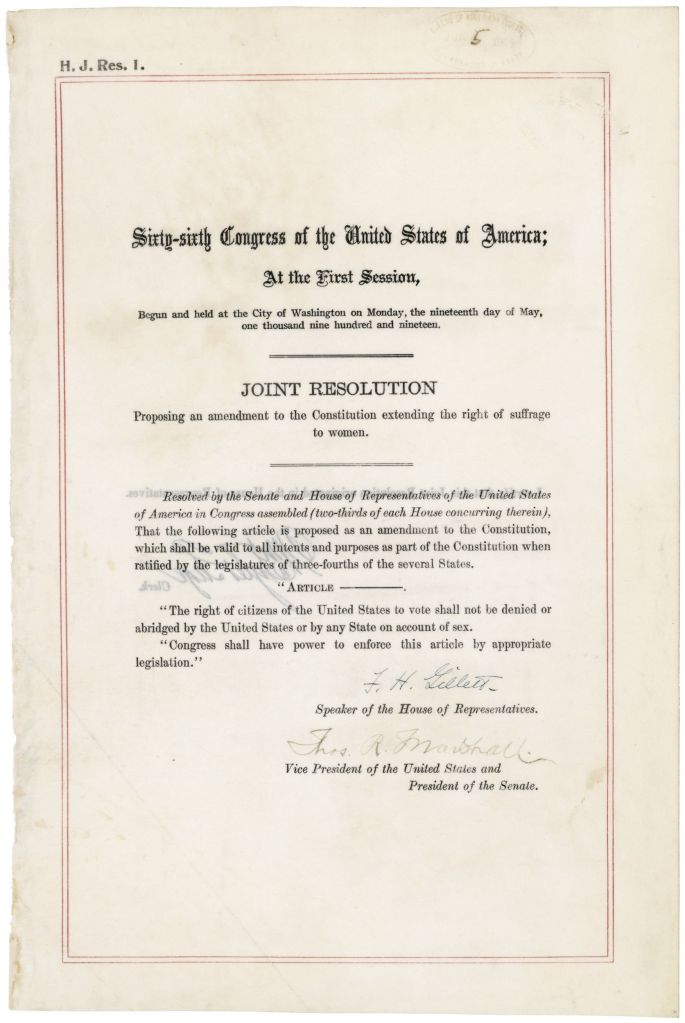
May 19, 1919 – Joint Resolution proposed by Congress to amend the US Constitution and giving women the right to vote.
3/4ths of the States needed to vote to ratify this amendment and they did, allowing this to become the law of the land on August 26, 1920
Courtesy National Archives

Arguably, it was Catt’s stewardship and steady hand that helped unite all the different factions and finally win the vote for women. 

Catt would purchase Juniper Ledge, her home in Ossining, in 1919 and live there until 1928 with her companion Mary Garrett Hay:
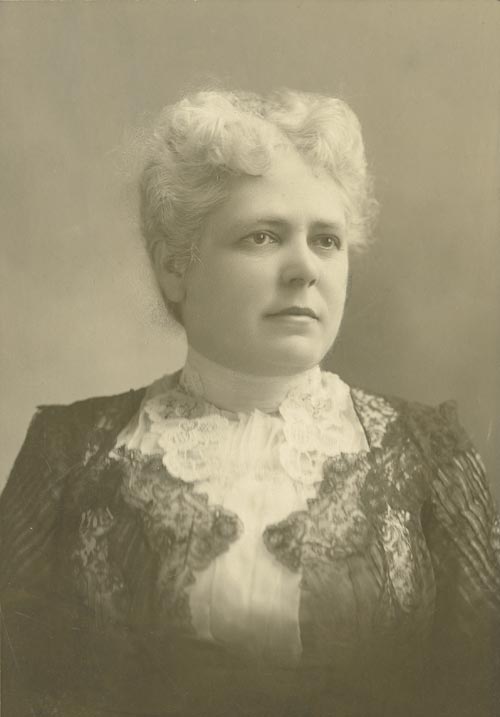
Mary Garrett Hay (1857 – 1928)
She and Carrie Chapman Catt lived together from c. 1900 under Hay’s death
Courtesy of the University of Rochester

 The story goes that the estate was called Juniper Ledge because of its abundance of juniper trees.
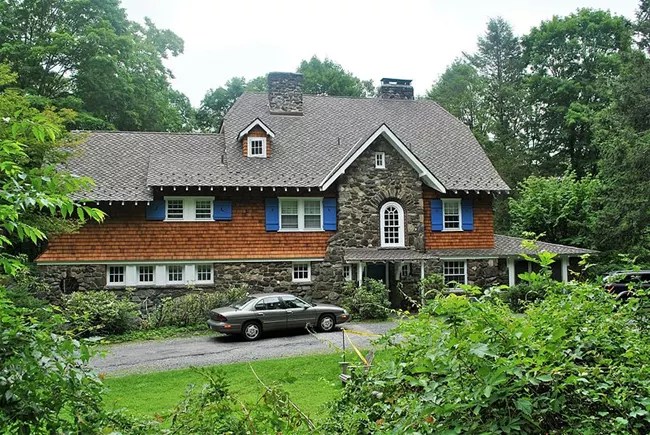
Juniper Ledge, Ryder Road, Briarcliff Manor, c.2014
Today this structure is on the US National Register of Historic Places
Image originally published in Queer Places: Retracing the Steps of LGBTQ People Around the World by Elisa Rolle

In a 1921 New York Times article detailing a picnic she hosted for 100 members of the League of Women voters, Catt is quoted as saying “I know that the juniper is useful in making liquor, and that is why I bought the place – so no one would have opportunity to use the trees for that purpose.”  She served her guests coffee and orangeade.

According to another New York Times article, this one from 1927, Juniper Ledge was quite impressive: “The estate is one of the show places of Northern Westchester, and includes sixteen acres of extensively developed land fronting on two roads. The residence, on a knoll overlooking the countryside, is a modern house of English architecture containing fourteen rooms and three baths. A gardener’s cottage, stables, a garage and a greenhouse are also on the property.”  Catt affixed brass plaques with the names of famous suffragettes to fourteen trees – and some of those plaques are reportedly in the archives at Harvard University.

From her Juniper Ledge home, she started the League of Women Voters in order to give women information to help them make informed voting decisions. She also was a big supporter of Prohibition, the League of Nations and its successor the United Nations, spending much of her time on crusades for world peace and international disarmament.

Catt sold Juniper Ledge in 1927 and purchased a home at 120 Paine Avenue in New Rochelle. Sadly, her companion Mary Garrett Hay died shortly after they moved.

Catt lived on, staying active right up until her death in 1947. She and Hay are buried in Woodlawn Cemetery in the Bronx. The inscription on their joint tombstone reads, “Here lie two, united in friendship for thirty-eight years through constant service to a great cause.” (Here’s Catt’s obituary if you want to learn more about her life.  It makes me tired just to read about all the things she accomplished.)

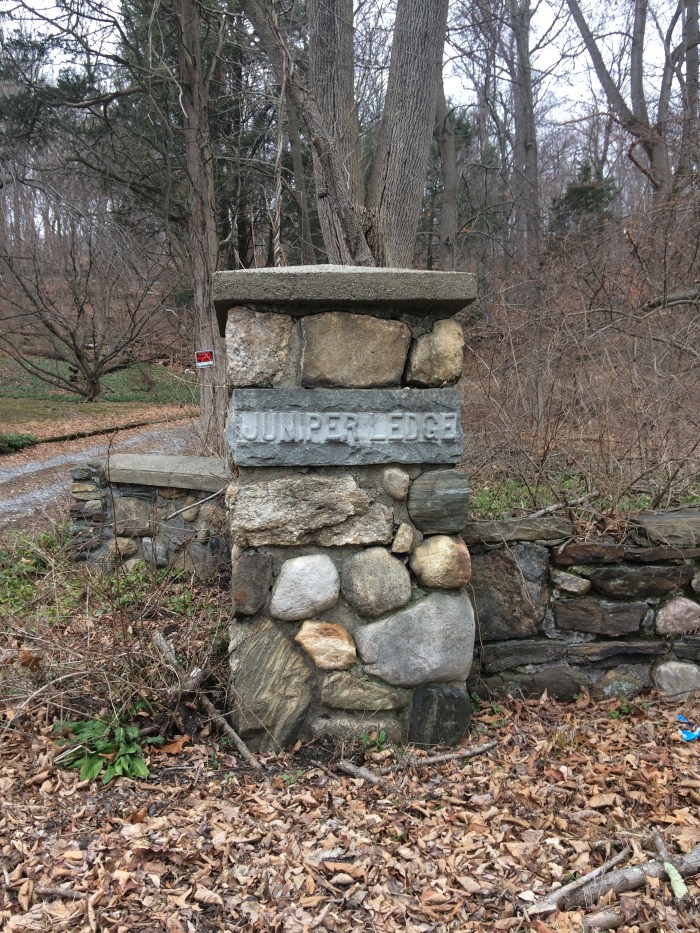
So, the next time you drive on North State Road, keep an eye out for this old driveway pillar and know that a very influential and historically important woman lived just up the hill.
CONTROVERSY

We would be remiss if we didn’t address the controversy that has swirled around the US women’s suffrage movement almost since its inception.

Some have perceived that it was a racist one, with white women keeping Black women on the fringes of the movement ostensibly to avoid antagonizing the Southern vote.

Carrie Chapman Catt would address these concerns in a speech she delivered in 1893: “If any say we would put down one class to rise ourselves, they do not know us. The woman suffrage movement is not one for woman alone. It is for equality of rights and privileges, and it knows no difference between black and white.”

However, by 1903, Catt and many of her colleagues would state that the national women’s suffrage movement was solely concentrating on removing the “sex restriction” for voting.  They seemed perfectly content to let the individual States to determine what, if any, qualifications were deemed necessary to allow women to vote.

And in 1919, Catt would continue to respond to such concerns, such as those from the NAACP who feared that Black women would not be allowed to vote in southern states if the proposed suffrage amendment did not include specific language to include all races, by repeating “We stand for the removal of the sex restriction, nothing more, nothing less.”[1]

This controversy re-emerged forcefully in 1995, right before Iowa State University (formerly Iowa State Agricultural College) was set to name a campus building in Catt’s honor.

In an article, published in the Uhuru! newsletter of the ISU Black Student Alliance entitled “The Catt’s Out of the Bag: Was She Racist?” sophomore Meron Wondwosen argued that Catt and other white suffragists employed racist strategies to gain Southern support for the ratification of the 19th Amendment. Wondwosen referenced examples of Catt giving lectures in Southern states and stressing that women’s suffrage would reinforce white supremacy, discouraging Black suffragists from participating in marches and rallies, and belittling immigrants and Black people.

After several years of research, reflection and discussion, Iowa State decided not to take her name off the building, saying:

“The crux of the matter is that while Catt made statements that are likely to be considered racist, there is also an abundance of declarations upholding and even defending other races. This duality and implicit contradiction is what makes the work of this committee very difficult—and it is what makes Catt such an ambiguous figure when it comes to questions of racism. It adds layers to Catt, her work, how she viewed the world, and how the world viewed her. These may begin to shed light on how compromises were made to achieve an ultimate goal.[2]

Several of the arguments for removing Catt’s name from Catt Hall were based on Barbara Andolsen’s 1985 book Daughters of Jefferson, Daughters of Bootblacks. Andolsen, a feminist theologian, documented some of the frankly bigoted tactics white suffragists used to win passage of the 19th Amendment. Despite this, however, Andolsen believed most suffragist leaders were “women of integrity” committed to gaining the vote for all women. She argued that these leaders didn’t condone segregation or manipulate racist ideologies out of bad intentions, but out of political necessity in a racist society.

In the 2020 PBS program Carrie Chapman Catt, Warrior for Women, historian Beth Behn explored why Catt, generally a progressive thinker and leader, used racism in the suffrage movement. Behn suggested that Catt felt a sense of urgency, fearing that the opportunity to secure a Federal amendment could close. Behn noted that other developed countries, like Great Britain and France, didn’t grant women suffrage until years later, reinforcing the suffragists’ urgency.

A life-long pacifist, Catt endorsed America’s entry into World War I in 1917 in order to gain President Woodrow Wilson’s support for women’s suffrage. She would spend the rest of her life working for peace and disarmament.

Food for thought . . .


[1] Carrie Chapman Catt, letter to John Shillady, Executive Secretary of the NAACP, May 6, 1919. 
[2] 2023 Catt Hall Review Final Report 2023, p. 27; https://iastate.app.box.com/s/rw7igjtl5iet6vb6s3xdu3yfkhqin9ck
Veterans’ Day 2024 — Honoring Ossining’s Veterans

I thought I’d compile the posts I’ve written over the years honoring Ossining’s War Veterans. Please note that this is an extremely small selection of the approximately 193 men and women who died in the service of our country, and doesn’t even touch on all those who have served. I also realize, in putting this together, I have so far only written about World War I and II.

But Ossining has had a part in nearly every US conflict, from the Revolutionary War, the War of 1812, the Mexican-American War, the Civil War, the Spanish-American War, WWI & II, the Korean War, the Vietnam War, the Beirut Police Action, the Gulf War, the Iraq War, the Afghanistan War and numerous other police actions and conflicts.

George de Barbiery WWI

Private Benjamin Feeney WWI

Private Elting Roosa WWI

Corporal Nathan Bayden WWII

Ensign Mary Feeney WWII

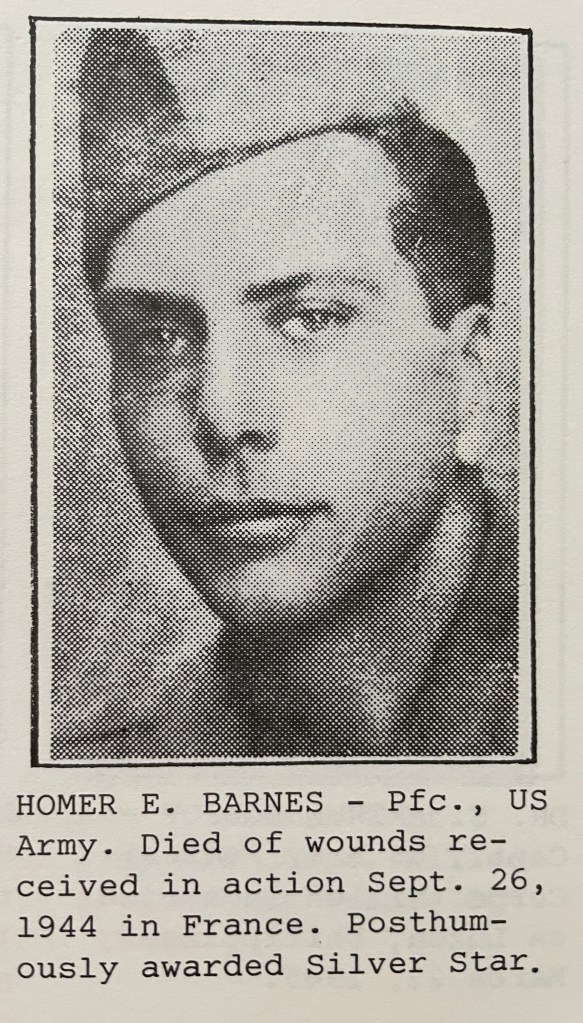
Private Homer Barnes WWII

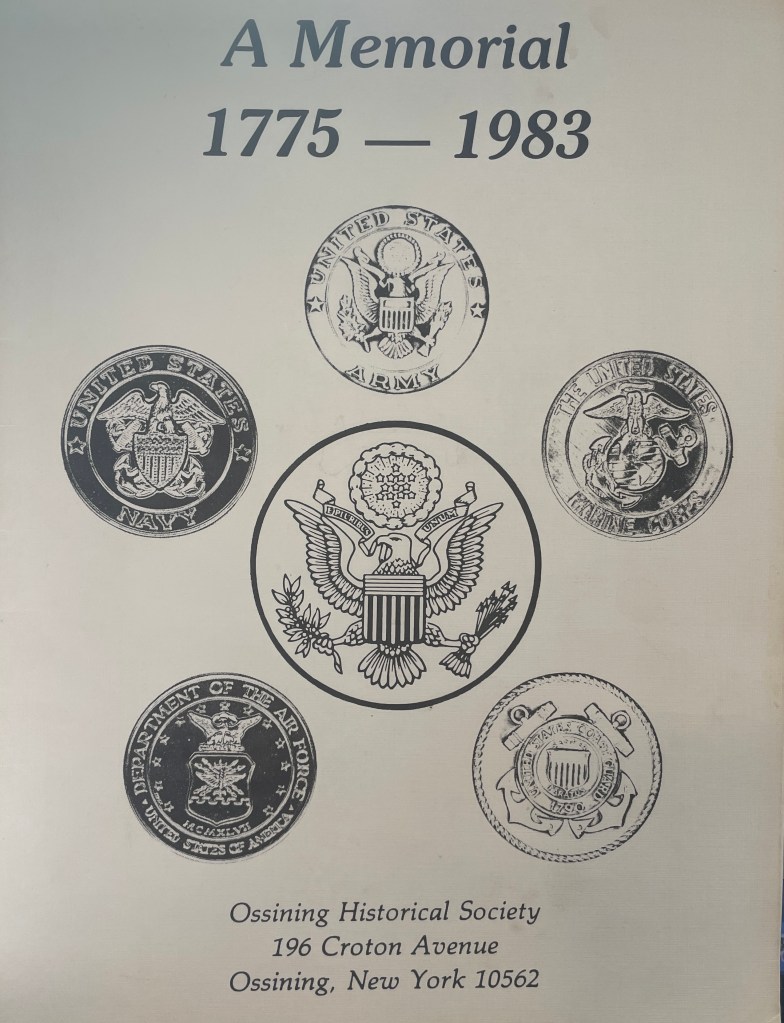
For a more complete list, please refer to this book, published in 1983 by the Ossining Historical Society. (Yes, it does need an update!) I believe a copy can be found in the Ossining Public Library for perusal. One can purchase this from the Ossining Historical Society which, as of this writing on 11/11/2024, is generally open the first Saturday of every month from 10am – 2pm.

We thank each and every person for their service to our country.

Ossining War Casualty — Homer Barnes

Ossining War Casualty — Homer Barnes
Courtesy of the Ossining Historical Society

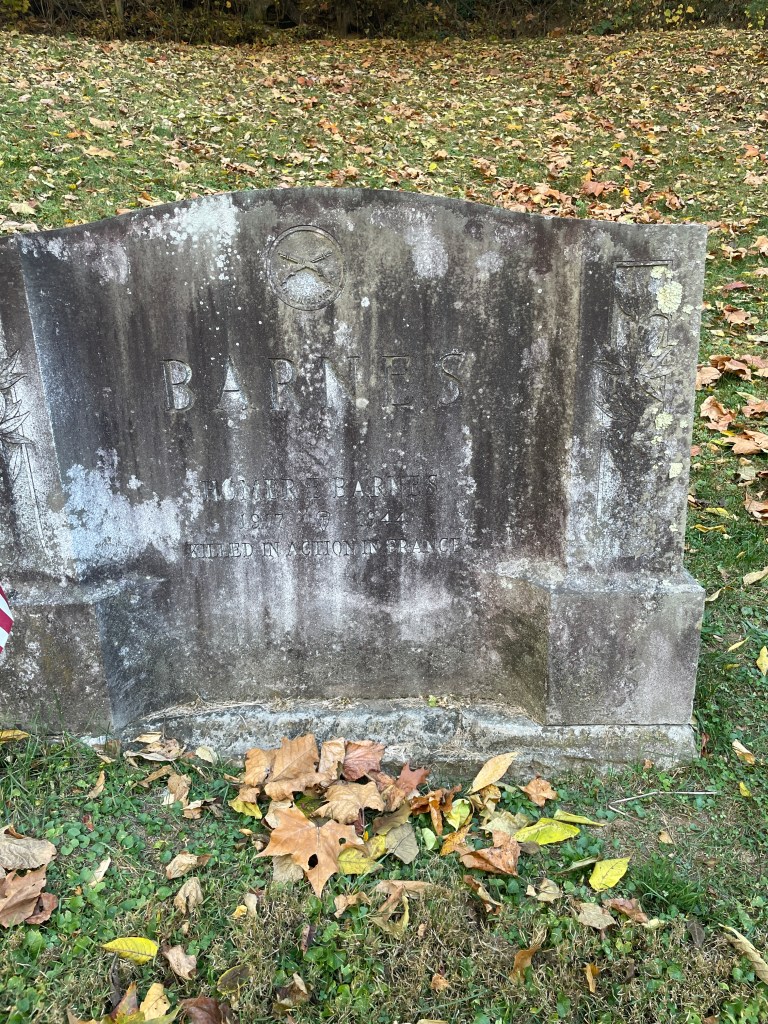
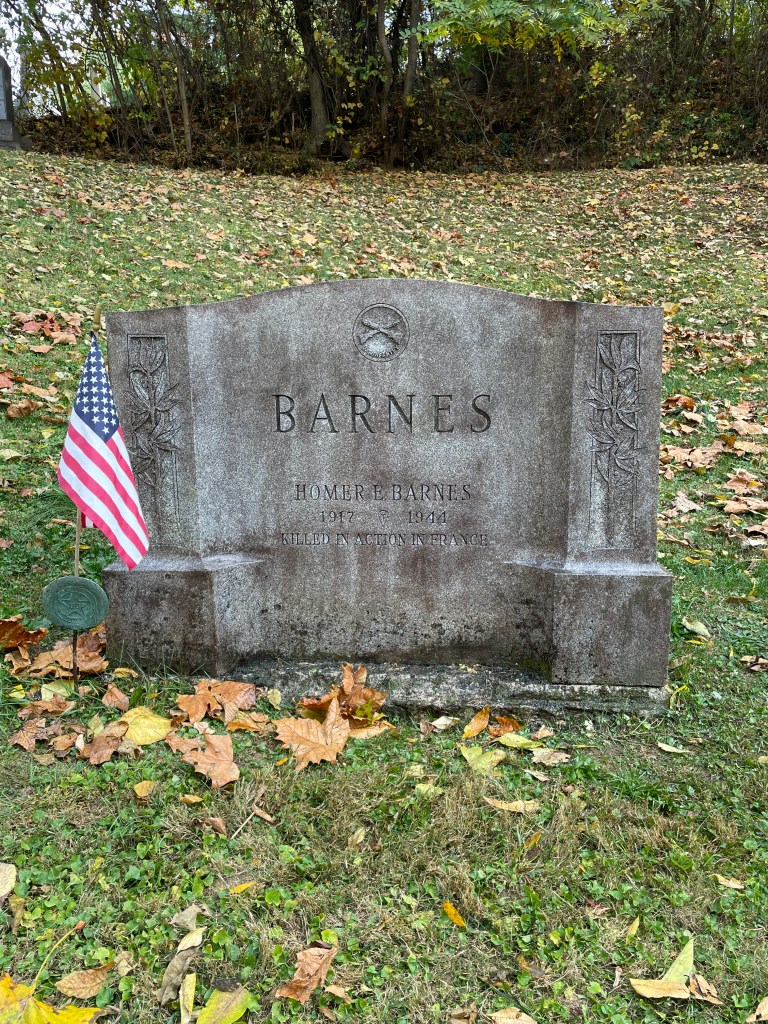
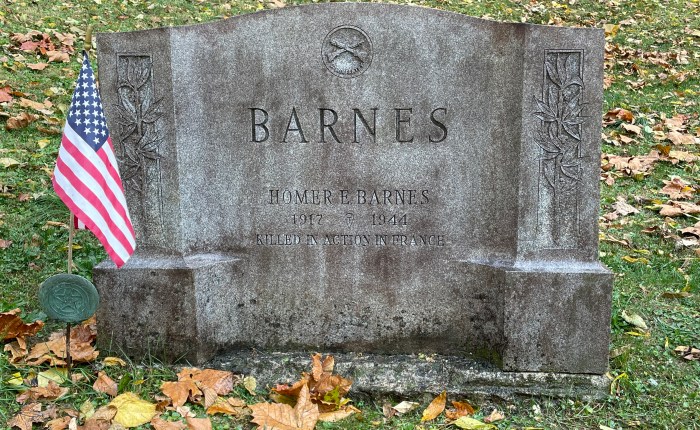
Thanks to the ongoing efforts of the Ossining Historic Cemeteries Conservancy, I recently had the privilege of cleaning this grave, that of Private Homer Barnes, who died in France on September 26, 1944:

I must confess that I chose this grave specifically because it had a Veteran’s flag stuck into the earth in front of it and because the date of death clearly indicated that he had died in WWII.  I felt that there was a story to uncover here, and I was not wrong.
Homer Barnes was born in Hamilton, Ontario in 1917 – at the time his father, Dr. Edmund Barnes, was serving as a Major in the Army Medical Corps stationed at Fort Dix during WWI.  Homer’s mother had gone home to live with her family while she awaited the birth of her son.

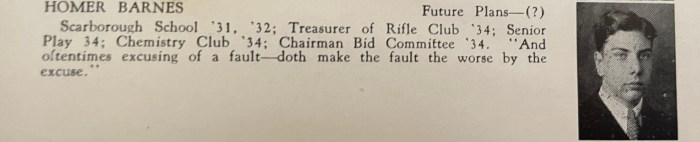
The Barnes family would move to Ossining after the War, and Homer would attend the Scarborough School and then graduate from OHS in 1934.  

Courtesy of the 1934 Ossining High School Yearbook
According to his October 23, 1944 obituary published in the Citizen Register, he then attended Pennington Seminary, New York University, and the New York Technical School.  The 1940 census has him working as a “chauffeur, self-employed.”

Homer Barnes registered for the draft on October 16, 1940, and was inducted into the service on December 16, 1942[1] at Camp Upton.

He would serve in the 36th Infantry Division, 143rd Infantry Regiment, Company A, 1st Battalion.  (I learned all this from the 36th Division Archive, which also notes that his address was 120 North Highland Avenue, Ossining.  Today this is the site of Mavis Discount Tire.)

Private First Class Barnes married Ruth Treanor on April 10, 1943 while he was on furlough from Camp Phillips, Kansas to attend his mother’s funeral in Ossining. Ruth would apparently accompany him back to Camp Phillips and stay there until he went overseas on November 1, 1943.  PFC Barnes would see some extraordinarily heavy action, first in Italy, then in France.

Now, I’ve never learned much about the Italian campaign of WWII.  Just quickly researching PFC Barnes’ Army service has already taught me more than I ever knew about this part of the war, thanks to the detailed after action reports kept (and digitized) by the 36th Infantry Division archive.  Here’s a link to the entire thing, if you’re interested.

I’m not yet exactly sure when PFC Barnes entered the field of battle, but the 143rd Infantry Regiment was engaged in some pretty hot fighting in Operation Avalanche, and the Battles of Monte Cassino, and San Pietro during the last few months of 1943.

By February 1944, PFC Barnes had been awarded a Purple Heart for wounds received while crossing the Rapido River near San Angelo, Italy that January.  The after-action report for the 36th Infantry offers some excruciating details about this Rapido River offensive:

Enemy artillery and mortar fire began falling as the first troops reached the river and when Company “A” [PFC Barnes’ company] sent the first wave across, it met with heavy machine gun fire. . . Reports from men who returned the next day indicate that the German machine gun positions were wired in and the bands of fire were interlocking.  Many men were wounded in the lower extremities or the buttocks by low grazing fire as they moved or crawled forward.” (52)

 PFC Barnes would have shrapnel lodge in his thigh and end up hospitalized for a month after this.

He returned to the front and continued advancing towards Rome with his regiment.  The after-action report almost waxes poetic here:

Never in the entire Italian campaign was there so brilliant a division operation as that employed by the 36th Infantry Division in flanking the enemy bastion at Velletri…. never before in history had the “Eternal City” been captured from the south and as was evidenced by the swiftness with which the enemy was forced to reel back, he was surprised and outwitted by this brilliant maneuver.” (77)

That said, there was deadly fighting throughout, with the German defense “skillfully located and carefully prepared, with first class infantry and strong supporting fire of artillery.” (77)

However, by June 5, 1944 (yes, the day before the Normandy Invasion D-Day!)

“The 143rd Infantry Regiment moved through the city in all available transportation, past the Colosseum, the Ancient Forum, Vatican City and splendid Saint Peter’s Cathedral, through the Arch of Triumph of the Caesars amid cheering throngs of Romans throwing garlands of flowers –  greeted as true liberators in a grandiose but sincere reception. No infantryman will forget this experience and he may well be proud to remember it.  Following this triumphal turn through Rome, all troops of the 143rd Regiment terminated their gruelling advance, and took a well-deserved rest, bivouacking on the outskirts of the city.” (78)

I sincerely hope that PFC Barnes got to experience this – it must have been rewarding and remarkable.  Because after a short break, his regiment would continue to pursue the Germans north.  As Captain Douglas Boyd, the Adjutant of the 143rd Infantry Regiment and author of this part of the after-action report writes: “There is no praise too great for the officers and men of the regiment who uncomplainingly, with true soldierly spirit and without regard to self, fought their way those 240 miles in hot pursuit of the enemy.” (90)

After this, PFC Barnes and the 143rd engaged in a Normandy-like invasion of  beachheads in Southern France, landing between Cannes (to the north) and Saint-Tropez to the south.  PFC Barnes would spend the last month of his life engaged in daily life and death battles, pushing up into the French Alps and encountering stiff resistance from German troops the whole way.  

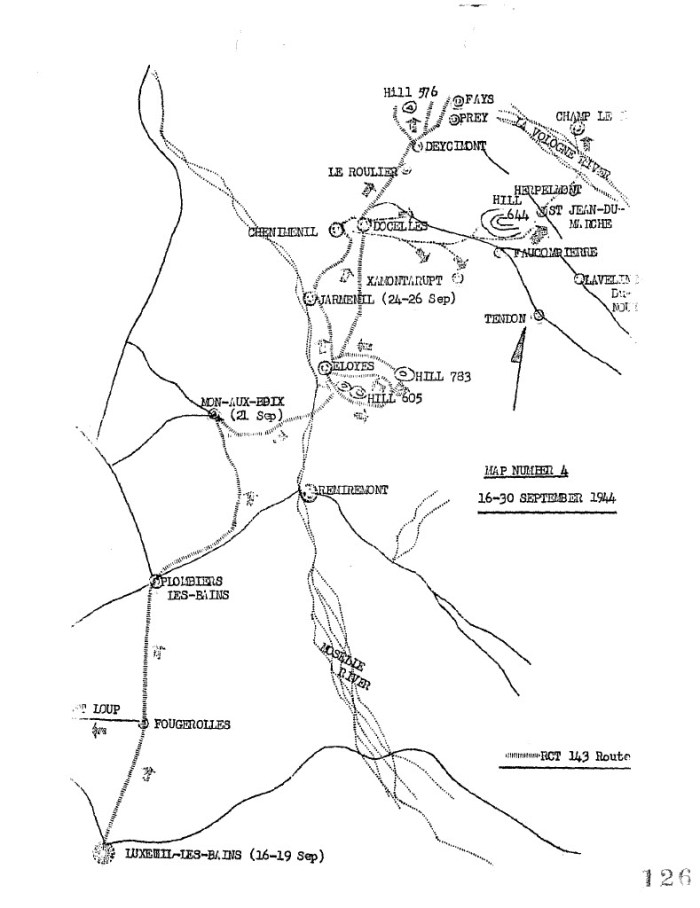
While I can’t be 100% certain, it seems that the last fight PFC Barnes engaged in took place around the Moselle River near a town called Remiremont.  

Courtesy of the 36th Division Archive, 143rd Infantry After-Action Reports

The after-action report describes the attack as follows:

“The 143rd began to cross the Moselle River in a column of battalions, the troops waiting and hand carrying their weapons . . . The 1st Battalion – [PFC Barnes’] moved towards its objective, Hill 605 southeast of Eloyes, while under enemy artillery, mortar and machine gun fire. The enemy, approximating battalion strength, engaged the first battalion units in a fierce fire fight. During the night of 21 September 1944, a company of Germans infiltrated Company A’s [PFC Barnes’] positions, and at the dawn of 22nd  September, bitter hand to hand fighting ranged until the Germans were cleared.” (133)

PFC Barnes died on 26 September 1944 from wounds received on 22 September, so I’m going to make the assumption that he was wounded in this “bitter hand to hand fighting.”

He would be posthumously awarded the Silver Star for gallantry and this decoration would be presented to his two-year-old son, William E. Barnes.


[1] October 23, 1944 obitiuary published in the Citizen Register

Some Boat talk (Post #6)

I’ve received a number of queries asking me to compare the Bark Europa, the ship I’ll be sailing on, to the ship that Alfred Agate was on for the US Exploring Expedition.

First, Alfred was on a total of three ships during the course of the US XX.  

He started on the USS Relief, a supply ship that was 109’ long with a 30’ beam. 

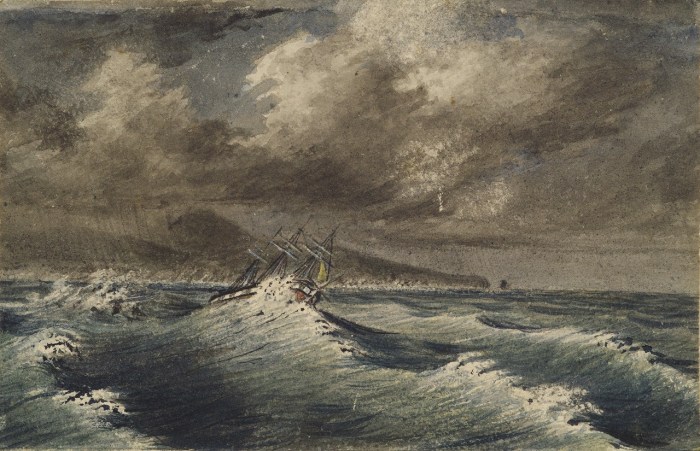
Commanded by Lt. Andrew K. Long, the Relief was not built for speed.  But then, it was meant to be a storeship, so what could you expect?  Still, her sluggishness infuriated Lt. Charles Wilkes and after berating Lt. Long mercilessly for months (as much as one could do from another ship with no radio), and after the ship was almost wrecked off Noir Island,  Wilkes sent the ship home from the port of Callao. (Fun fact that gets grosser in some accounts – when the Relief was fumigated in Callao, anywhere from 3 – 8 barrels of dead rats were unloaded from her hold.)

Here is Alfred Agate’s rendition of the USS Relief struggling off Noir Island in the Straits of Magellan, February 1839.
Courtesy of the Naval History and Heritage Command

 Alfred Agate and William Rich, the naturalist, are transferred to the USS Peacock at Callao.  

The USS Peacock was a sloop-of-war, 119’ (36m) long with a 32’ (10m) beam.  

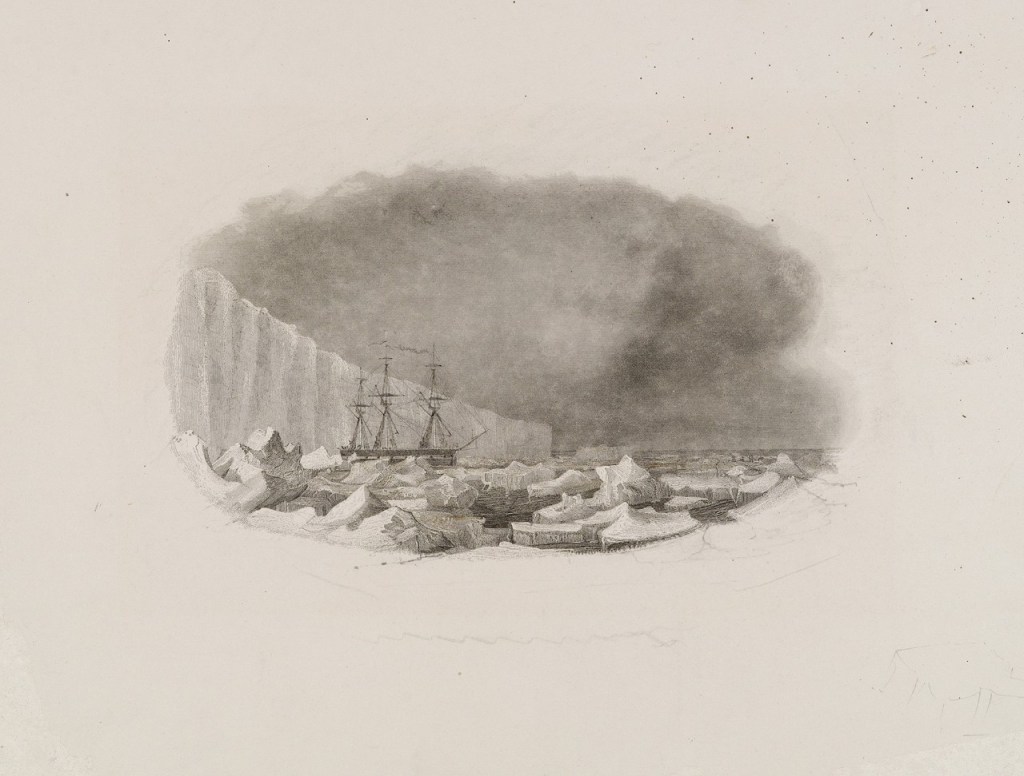
USS Peacock drifting listlessly in Antarctic waters, c. 1839
This image was likely sketched by Lt. Wilkes and then cleaned up by Alfred Agate later as Agate did not embark on either Antarctic mission of the US XX.
Courtesy of the Smithsonian Institution

Lt. William Hudson was the very capable commander who eventually, as it seems did everyone, got on Wilkes’ bad side.  

Alfred was on the Peacock until it was wrecked on or about July 16, 1840 while trying to cross the bar into the Columbia River.  All hands were saved, but Alfred is said to have lost many illustrations on his escape from the sinking ship.

Wreck of the USS Peacock at the mouth of the Columbia River, c. 1840 by Alfred Agate
Courtesy of the Naval History and Heritage Command

From there, after some overland expeditions in southern Oregon and northern California (during which Alfred got so ill from “fever and ague” that he had to be transported to San Francisco for treatment.)  At this point, he was placed on the USS Vincennes, the flagship of the Expedition and the one under Lt. Charles Wilkes’ direct command.  

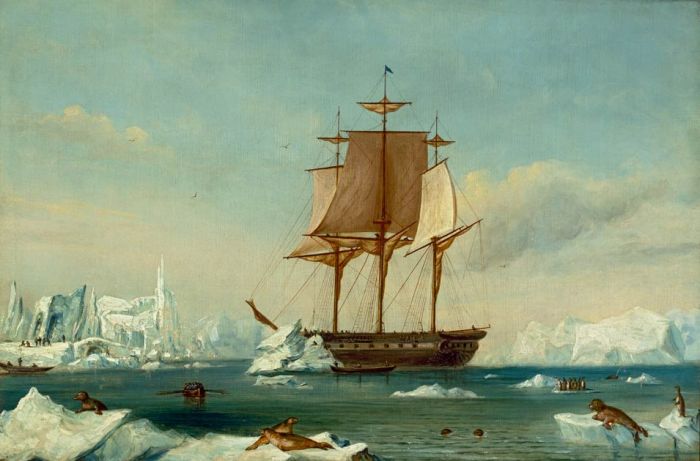
USS Vincennes in Disappointment Bay, attributed to Lt. Charles Wilkes, c. 1840
Courtesy of the Smithsonian Institution

The Vincennes, also a sloop-of-war, was 127’ (39m) with a beam of 34’ (11m).

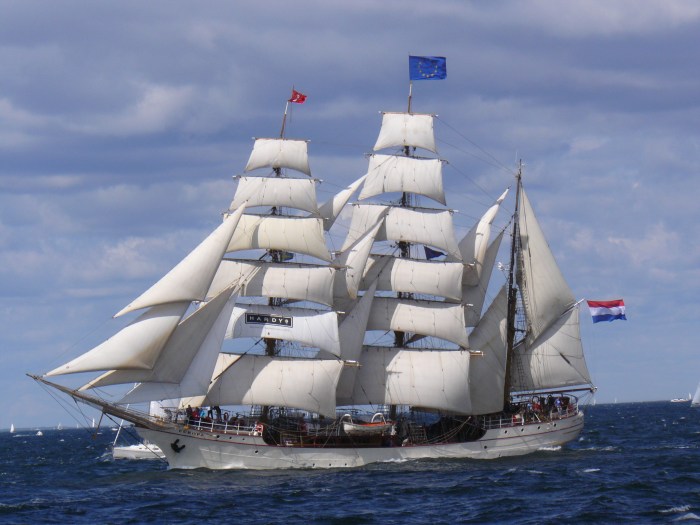
In comparison to the three ships listed above, the Bark Europa is a three-masted steel barque,  131’ (40m) long with a beam of 25’ (7.5m).  And of course, unlike all the ships on the US Exploring Expedition, she is equipped with engines. However, unlike the Europa, the two sloops-of-war were equipped with numerous cannons of various sizes. These were used to frighten the various native peoples to “encourage” them to cooperate with the demands of the Americans and to retaliate against said natives when they did not.

The Bark Europa in full sail, c. 2007.
Courtesy of Wikimedia Commons

This is likely to be my last post for a while, as I am about to board the Europa in less than an hour. But I will post again!

If you haven’t already subscribed and are interested in following this journey, you can do so here:

The Bark Europa (Post #2)

The Bark Europa (Post #2)

This is the 2nd post detailing my 2024 voyage to the South Pacific.  (Thanks to all of you who responded to my last post asking for more info!)

Herewith I shall answer the essential questions.  To wit:

  1. What is it that I’m doing?

My primary impetus for this expedition is to follow in the wake of the artist Alfred Agate, born in Sparta village (today’s Ossining) in 1812.  

I am constantly amazed by how the local can connect us to the world.  I mean, local history is the bridge that gets you from your neighborhood in Ossining to Tahiti, to Fiji, to Antarctica and beyond.  Plus, let’s face it, history is often taught in a rather remote way, dealing with Great Men, dates, wars and empires – things that are grand and far removed from our everyday experience.  I think the more we can weave these threads of local connection into the global fabric, the more interesting history becomes, and the tighter our understanding and bonds become with people and cultures around the world.

It’s my hope that I can make the life of Alfred Agate and his experience on the US Exploring Expedition of 1838 – 1842 not only more immediate, but also relevant to our understanding of the world today. Because understanding the past can help us learn from it and move this knowledge forward to do things better in the future.  

2. Where am I going?

On July 3, 2024, I’ll be embarking on the Bark Europa from the port of Papeete, Tahiti (French Polynesia) for a 35-day journey to the Fiji Islands, by way of Tonga and whatever other islands the wind leads us to.  Our precise route will be determined by the Captain, the weather, and the permits of the local authorities.

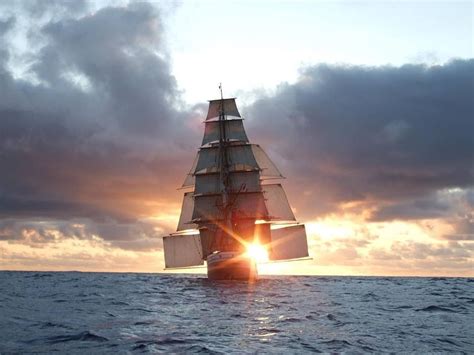
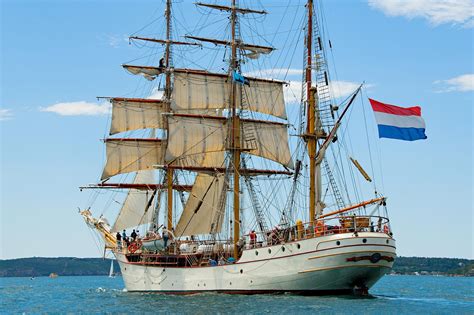
Beauty Shot of the Bark Europa

3. How am I getting there?

What exactly is this Bark Europa of which I speak?  Well, she’s a square-rigged, steel-hulled barque that sails under the flag of the Netherlands and is owned and operated by a Dutch company.  

Sailing a variety of routes, the Europa often spends her summers in the Antarctic and the Southern Ocean. (As I write this, she just left Pitcairn Island, home to the HMS Bounty mutineers c. 1780s, and South Georgia Island, where Ernest Shackleton landed in 1916 after an 800-mile journey from Elephant Island to arrange the rescue of his crew.  Yeah, I might be a little obsessed with the Southern Ocean . . .)

This past fall, the opportunity arose for me to sign on as voyage crew on the Bark Europa on this Tahiti-Tonga-Fiji route.  Deep into my obsession with Alfred Agate and the USXX, it seemed like a sign.  And sometimes, you just have to say yes to the universe.

Now, for my sailing experts (and to avoid sounding like the neophyte I am regarding all things sail), here is some text lifted in its entirety from the Bark Europa website giving the nitty gritty details on the ship:

Rigged as a bark, the Europa carries twelve square sails in total: six on both the fore and the main mast. The mizzen mast carries the spanker and the gaff topsail. Moreover, she carries ten staysails, to be found between the masts and between the jibboom and the foremast. Sailing broad reach in seas with winds up to 5 Beaufort, Europa can carry six studding sails. In total, a huge area of canvas that has to be set and manned by a lot of hands. 

When not under sail, Europa has two Caterpillar 380 HP diesels driving two propellers. For manoeuvring, the ship also has a DAF 180 HP engine that drives a bow thruster and the anchor winch. Both are used in shallow waters, when hoisting anchor and when finding a way through the ice. Bunker capacity for diesel fuel is limited and diesel is also needed to drive the generators for electricity. 

This, my friends, is not a Carnival Cruise with unlimited umbrella drinks, a Guy Fieri 24-hour burger buffet and luxury Platinum cabins:

My shared berth

No, as a member of the voyage crew, I’ll be standing watch, acting as helmsman/lookout, climbing the rigging, and practicing all those knots I learned when the boys were in Scouts. (I’ll also learn what the spanker and jibboom are!)

It’s also going to be an experience of slow travel and a return to the pre-internet, pre-smartphone world.  There’s satellite communication onboard, but that’s it, and I’m told one pays about $1 per KB for email messages, so don’t expect any Instagram or blog posts from me for the duration (unless we should happen upon an internet café!) 

Finally, there will be about 65 people aboard, consisting of crew and passengers.

Feel free to leave a comment if there’s something else you want to know!

For my next post I’ll be giving a little history of the US Exploring Expedition and after that, stories and images of Tahiti, Alfred Agate-style.

If you haven’t already subscribed and are interested in following this journey, you can do so here:

You can also follow the route of the Bark Europa here updated in real time.

Elda Castle

My training for this year’s NYC marathon officially starts this week.

It’s not my first marathon, nor even my first NYC marathon, so this year I’m going to try and finish in a particular time, not just hope to finish without soiling myself. Now, I’m not at all fast, but to hit the time I want, I know I need to incorporate more than just a lot of running into my training. I’ll need to do horrible things like Yasso 800s, tempo runs and hill repeats. Sounds like great fun in the heat of summer, right?

Blah blah blah, I know this is all boring to you non-runners, but I promise there’s a point to all this, because it’s those hill repeats that inspire today’s post . . .

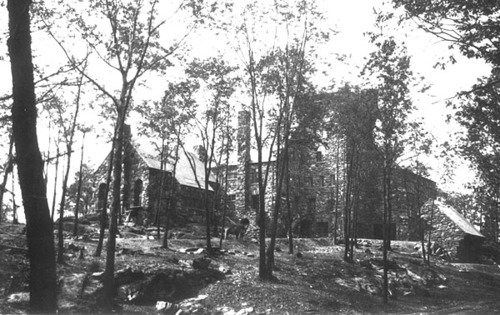
The hill of choice for me is Allapartus Road, which is a narrow, windy road that connects Spring Valley Road up to Rt. 134/Croton Dam Road. As you run up it, you pass the Lutheran retreat on your left (once owned by Major Edward Bowes) and on your right, if you know exactly where to peek through the trees, an abandoned castle once known as Elda.

tumblr_lx71qvyW4x1qe4w9k

Wait, what? A castle? There’s an abandoned castle right in our midst? (Maybe abandoned is the wrong word because apparently someone owns this castle. And if you try to get close enough to see it, you’ll be trespassing. So don’t do that, okay?)

Just know that at the crest of Allapartus, there’s a stone castle that was built by David Abercrombie, of Abercrombie & Fitch fame.

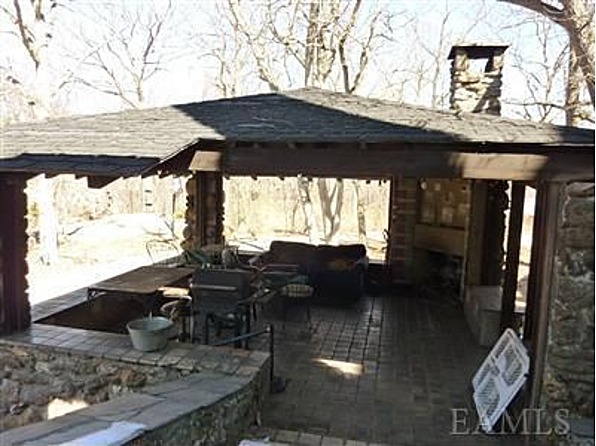
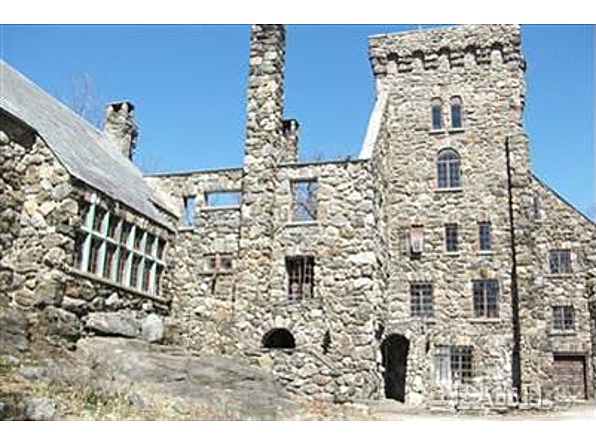
According to the NYC Office of Parks, Recreation & Historic Preservation, the castle “was built in 1927 as the Elda Estate. The 60-acre estate included the large main house, a house barn, three small residences, a bathhouse and a large pond. The estate was carved from a W.W. Law property between 1911 and 1927. [The main house is] a massive, multi-level building based on the English Cottage style constructed of both cut granite and live rock (also granite.) The house is reminiscent of a Medieval Castle and designed to look in part like a ruin. The house features a number of intersecting gables as well as a section with a hipped roof and some areas that are not covered at all. The house features a number of arched doorways, arched windows, curved staircases, exposed stone chimneys, and vaulted spaced and covered masonry. Other features include an open patio with a fireplace, a covered patio with a hipped roof and other medieval inspired elements.”

Here’s the open patio:

249croton15

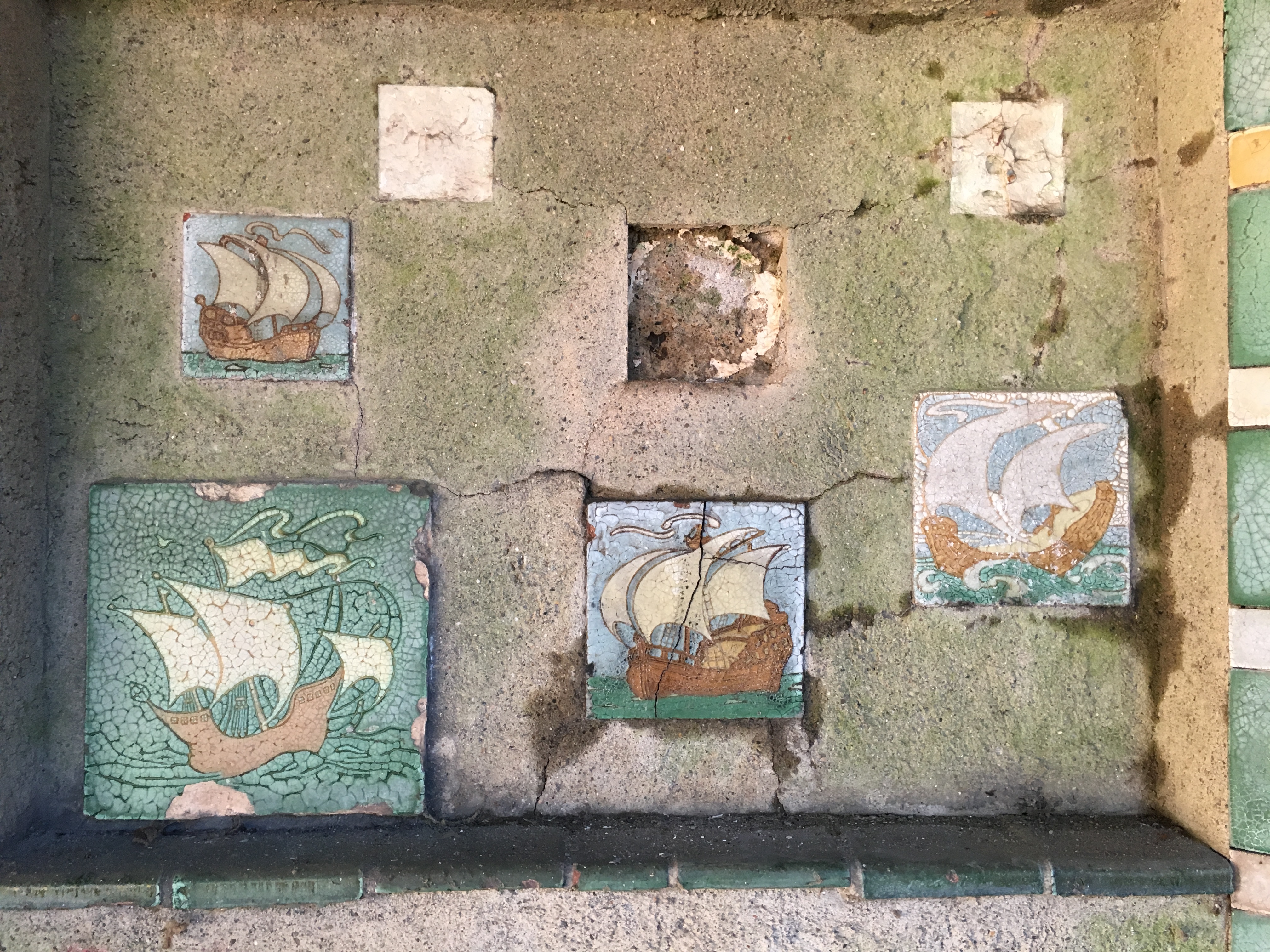
Here are some pictures of tiles that are inset into this gazebo:

Here are the tiles above the outdoor fireplace — they look like Henry Hudson’s Half-Moon, don’t they?

Elda Halfmoon tiles?

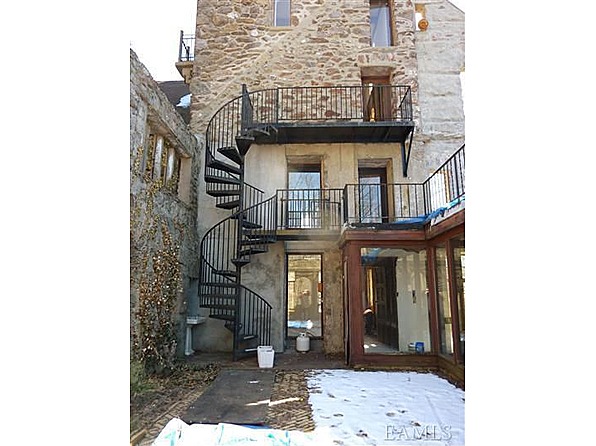
And here’s another open patio/courtyard (opinions differ on whether the castle was built like this, or whether a post-Abercrombie owner removed the roof on this part. The outline of a roof in the stone work makes me think this area was meant to be enclosed.)

249croton16

And here’s a photo that really gives the Medieval flavor of the place:249croton1

According to David Abercrombie’s obituary, the castle also “affords a view of the Hudson Valley and Long Island Sound.”  I guess that’s possible, if you stand on the very top of that tower.

Anyway, why was it called Elda, and who was David Abercrombie?

Well, Elda was an acronym for Elizabeth, Lucy, David, and Abbott, Abercrombie’s four children.

And David Abercrombie himself was a surveyor, civil engineer, and general all-around outdoorsman. Born in Baltimore in 1867, he began working for railroad and mining companies surveying land across America, living the outdoor life in rough camps and mining towns.

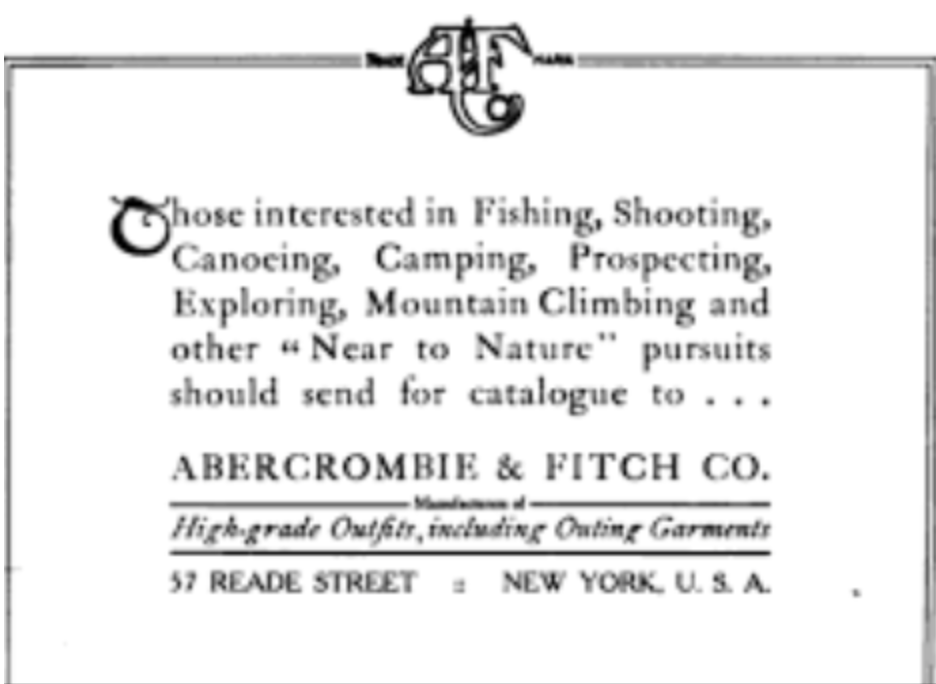
In 1892 he opened up Abercrombie Co., a top-drawer camping, fishing and hunting gear boutique at 36 South Street in downtown Manhattan. Financier Ezra Fitch was one of his best customers and, in 1900, Fitch bought a share of the store, renaming it — you guessed it —  “Abercrombie & Fitch.”Screen Shot 2016-06-19 at 3.18.05 PM

(I’d love to know what the well-dressed prospector wore circa 1905! And what are outing garments?  Oh my!)

In those early days, Abercrombie & Fitch outfitted some of the most famous explorers of the day – like Arctic explorer Admiral Richard Byrd, Theodore Roosevelt, Ernest Hemingway and Amelia Earhardt.  A far cry from today’s Abercrombie & Fitch that outfits teenagers with bikinis, perfumes and polo shirts.

During World War I, Abercrombie was commissioned as a Major in the Quartermaster corps and was in charge of packing and shipping all sorts of supplies to our boys overseas.  It seems that he basically invented compression packing, and figured out how to squeeze 20 cubic feet of material into 4 cubic feet.  (See this 1942 letter from wife Lucy Abercrombie to the New York Times extolling her husband’s skill in packing.)

At some point in the 1920s, the Abercrombies bought the estate’s land from Briarcliff Manor founder Walter Law.  Abercrombie’s wife Lucy supposedly designed the castle, and it was built using stone from the area.  No doubt the Abercrombies invited neighbors like Major Bowes, Margaret Illington, and maybe even Jeanne Eagels to their housewarming party!

According to an article written by Miguel Hernandez, Abercrombie was very active in local society.  He founded the Dirt Trails Association, which created a public bridle path through many of the adjoining estates in the area, all marked with “DTA.” (Funny that the initials for the Dirt Trail Association are the same as for David T. Abercrombie.  Coincidence?  I wonder.)

He had a firing range built on the property and allowed local police officers to use it freely for target practice (he was Police Commissioner of New Castle at one time.)  His estate was designated as a Reserve Officers Contact Camp and was used by groups like the Veteran Corps of Artillery and the Military Society of the War of 1812.  (Did they do re-enactments back then??)  He also encouraged the priests and brothers of Maryknoll to use his pond.  (I suppose it’s not that long a trek from Maryknoll to Elda, if you take the trails.)

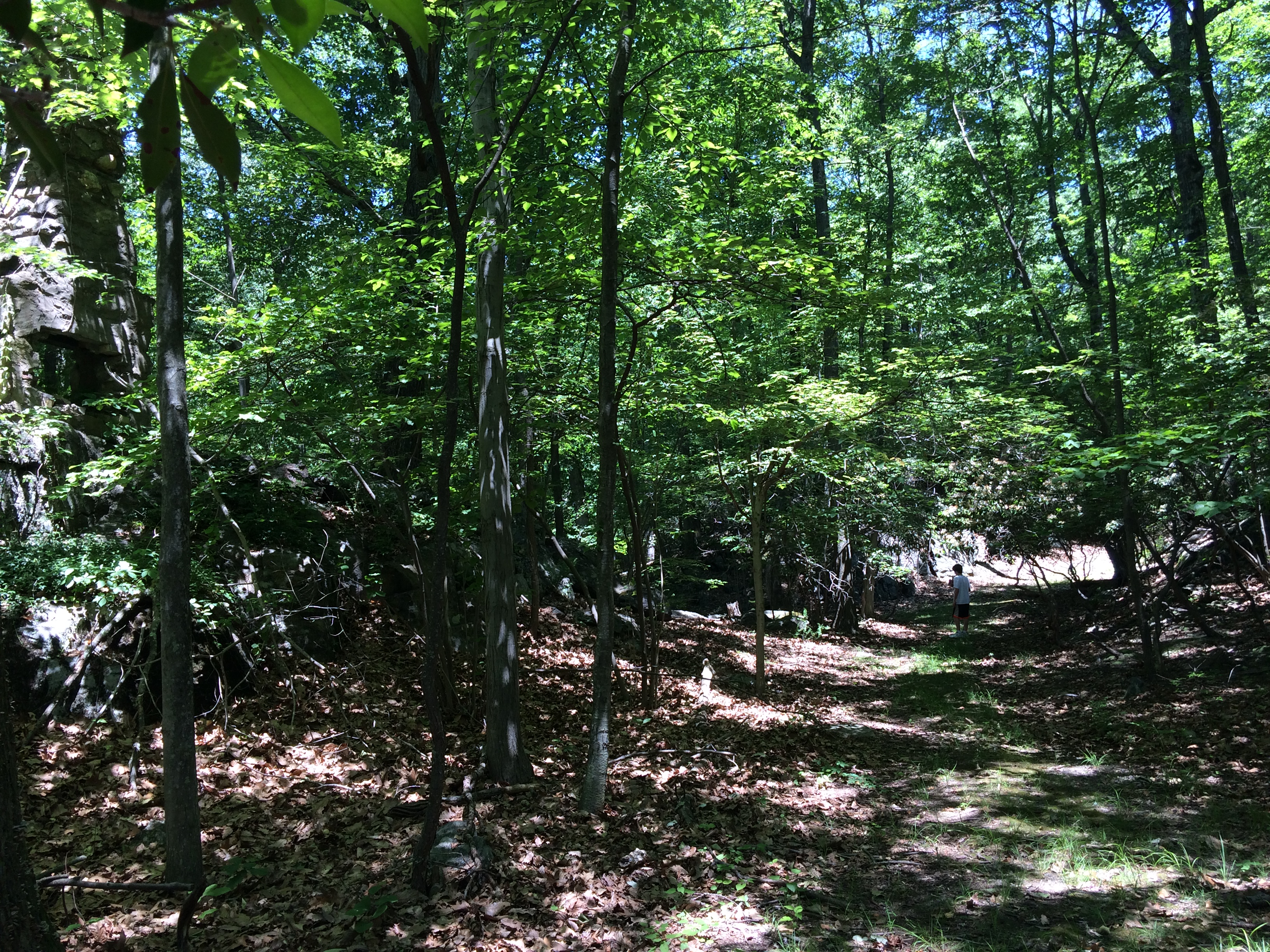
Today, you can pretend to be a Maryknoll missionary and hike along part of the old estate grounds to the pond:

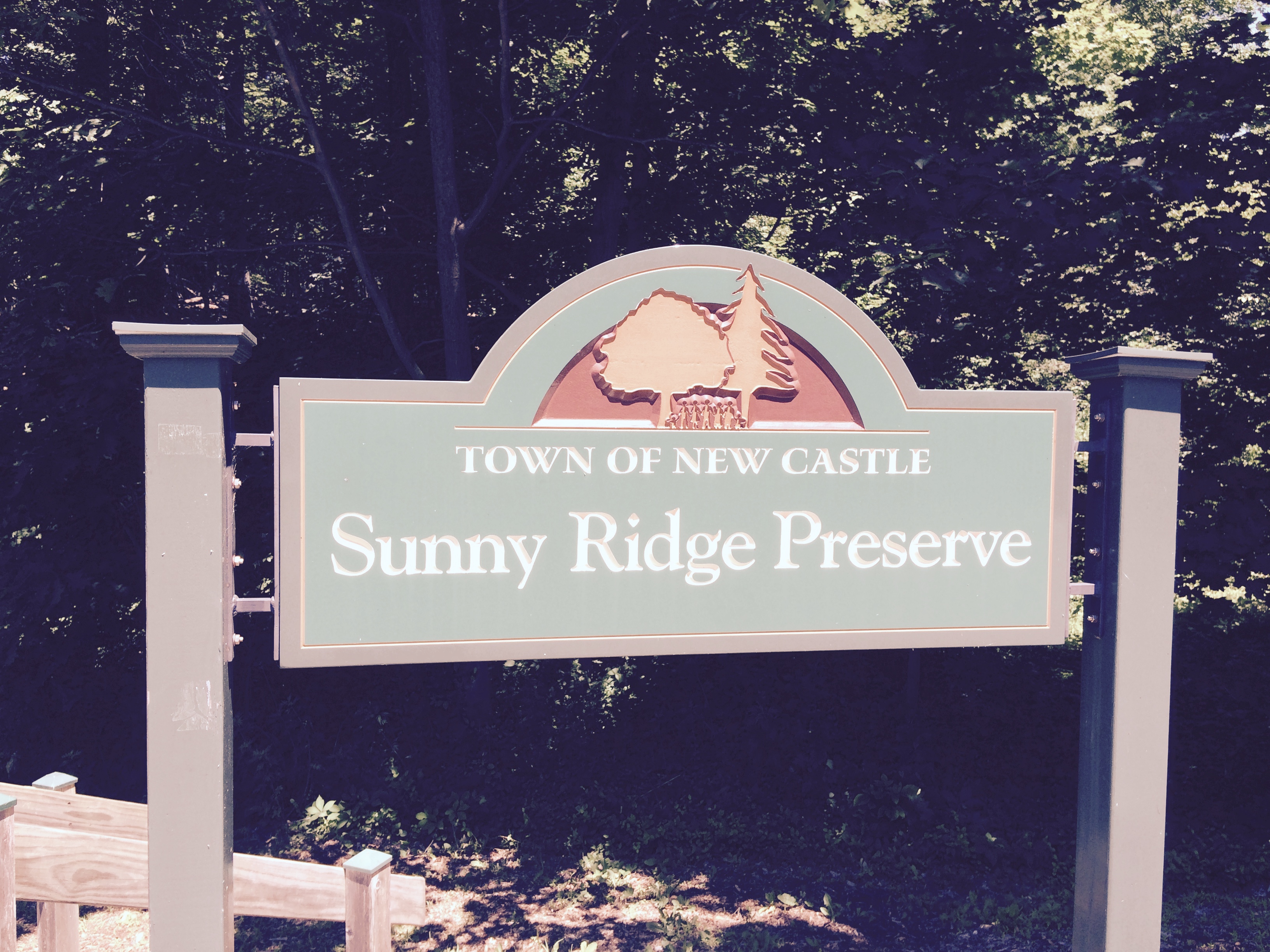
Park in the lot for New Castle’s Sunny Ridge Preserve (on Rt. 134/Croton Dam Road near Grace Lane.)

IMG_4018

Follow the white-blazed trail for about 5 minutes

IMG_4020

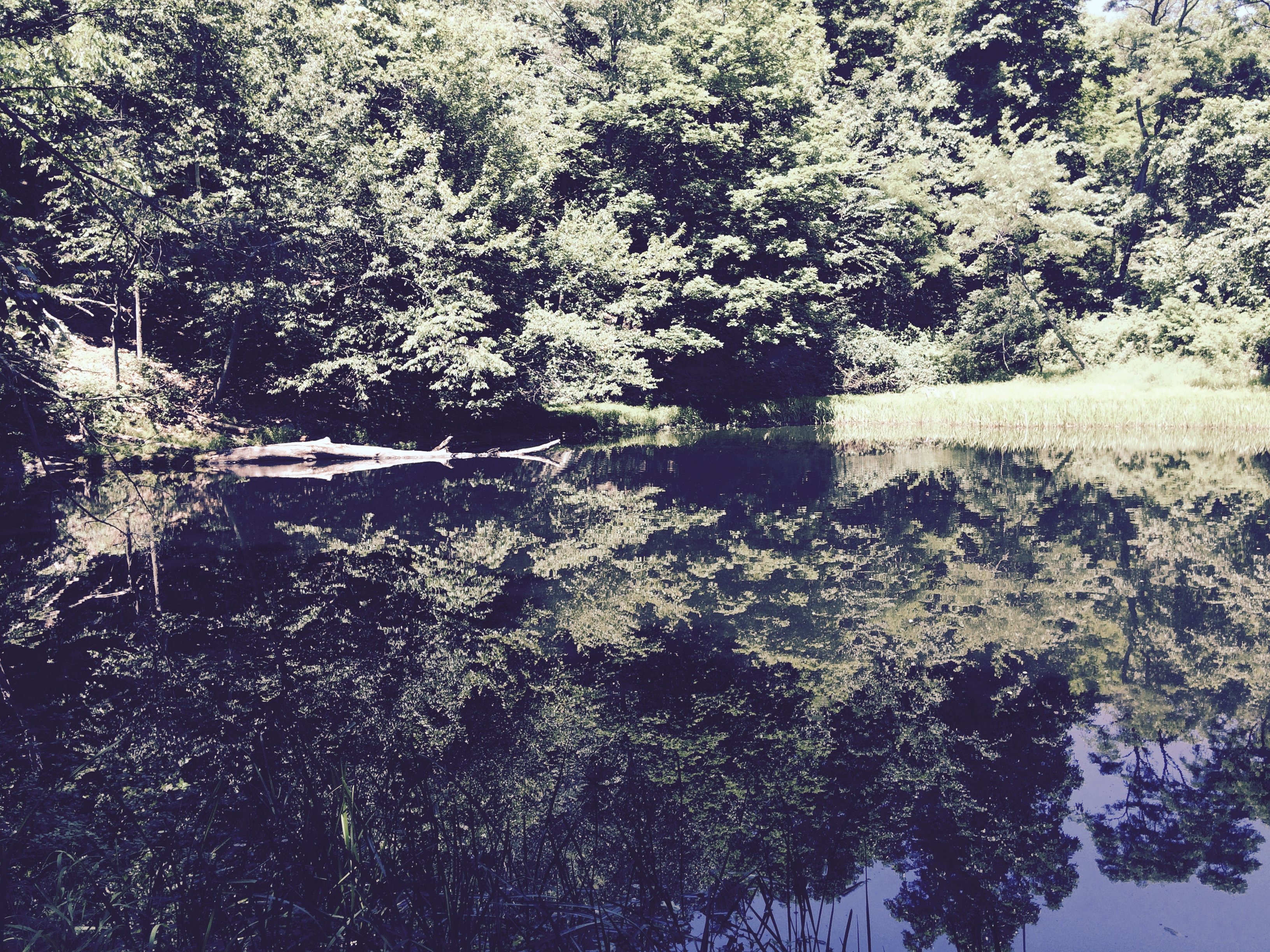
until you see a little trail lead off into the brush to your right.  Bushwhack along that trail a little bit until it opens up and you come to a pond down the hill to your left:

IMG_4021

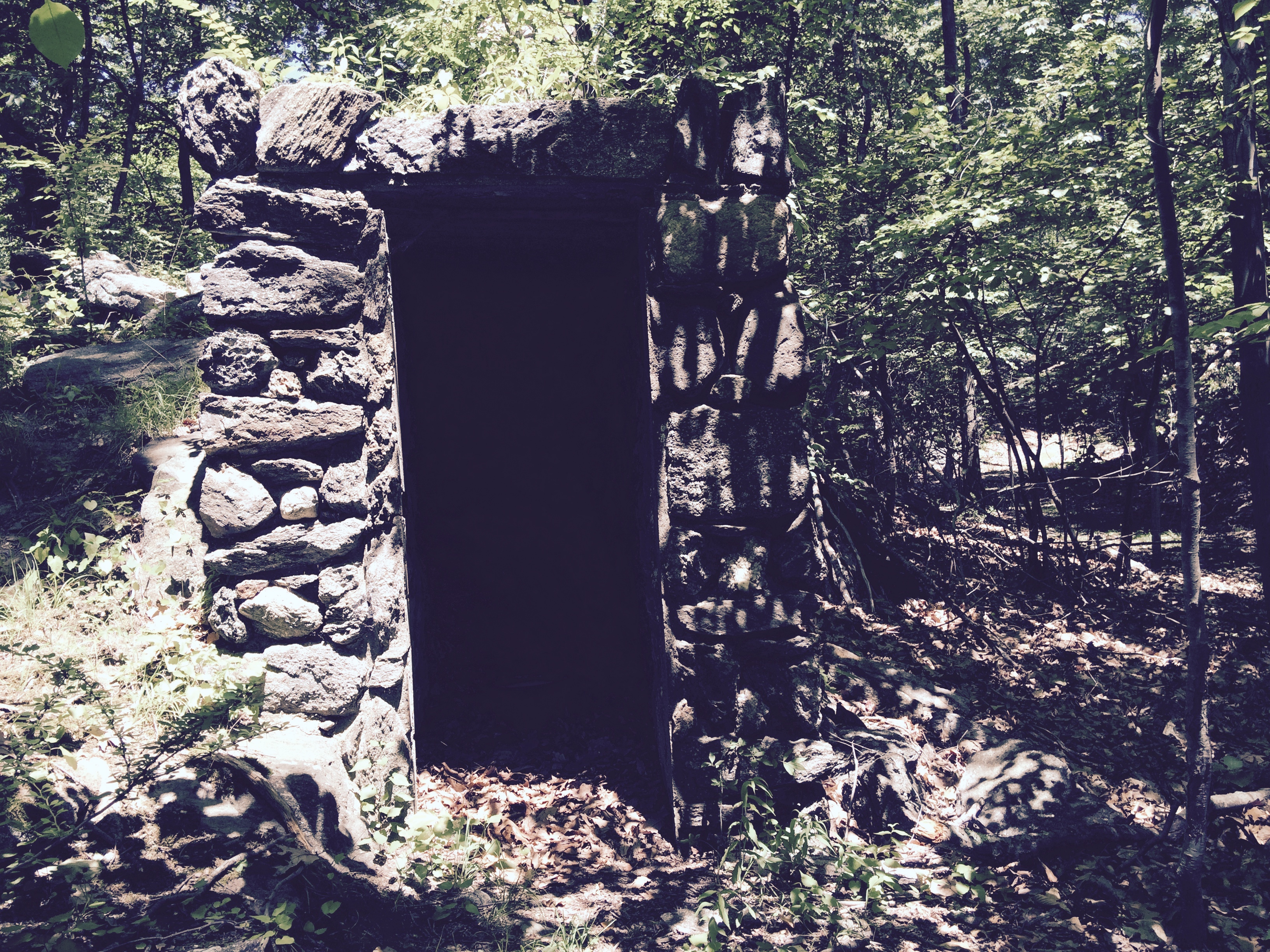
There’s a small stone building on the edge of the pond (you have to look really hard at this picture to see it):

IMG_4022

Walk around the edge of the pond to go inside and take dramatic, shadowy photos:

IMG_4023

(I’ve no idea what the stone house was used for — perhaps a pump house of some kind?)

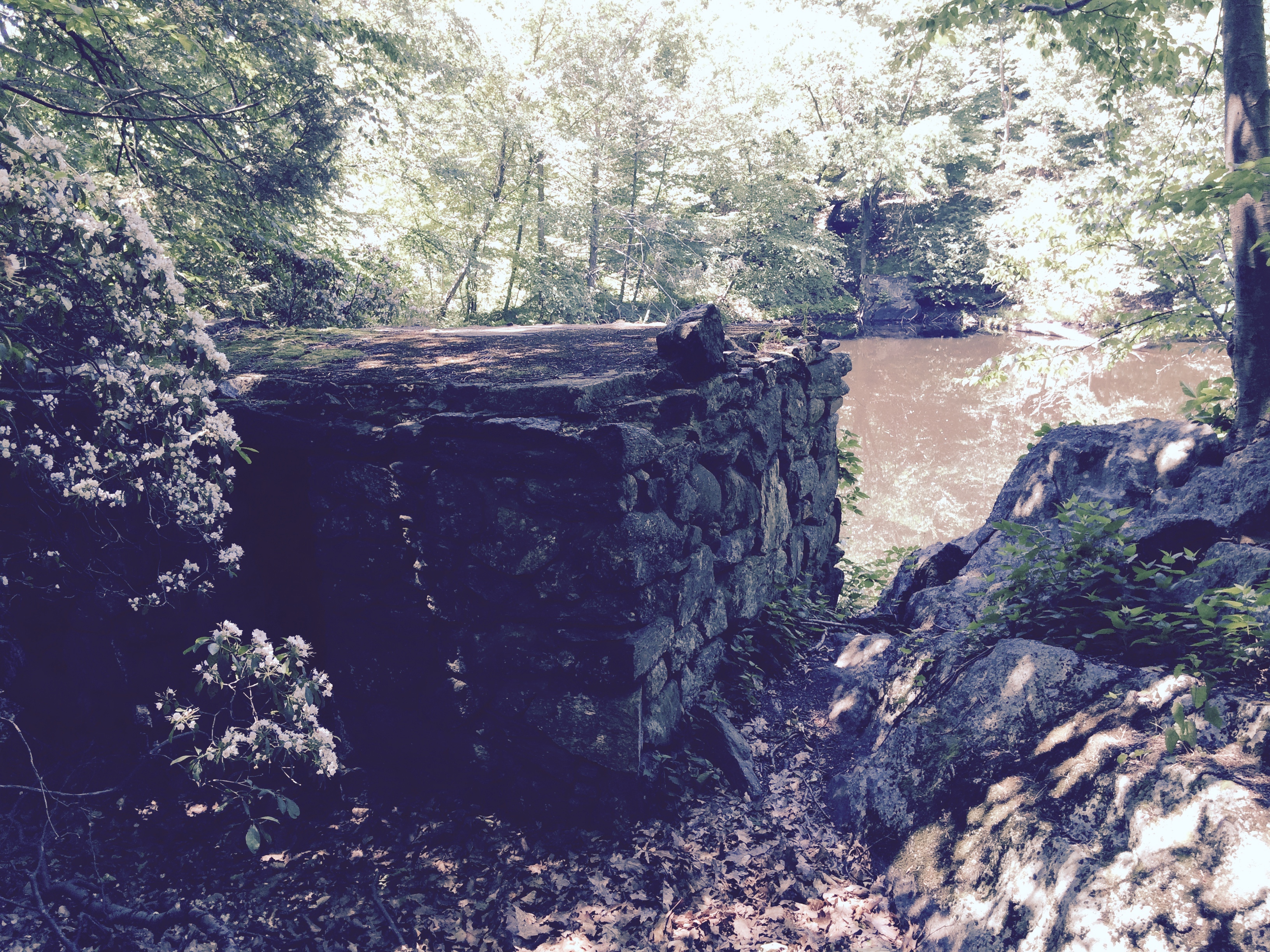
Walk past the stone house up a scrabbly hill – wait, first look back and see again how delightful this site is, and imagine the Abercrombie family enjoying this cool, shady spot on a blazing summer day.

IMG_4024

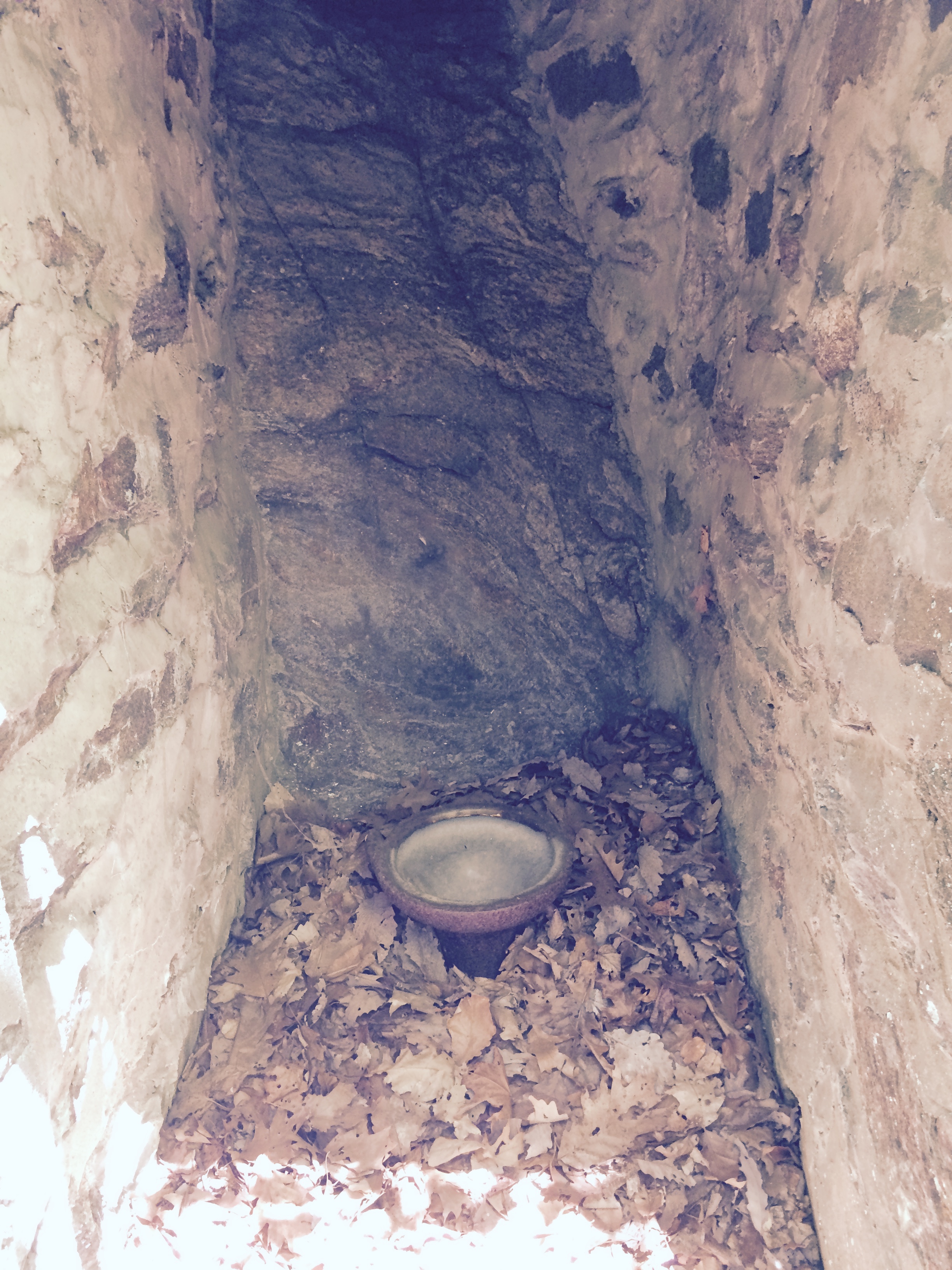
At the top of the hill, you’ll come across the ruins of an old stone toilet building,

IMG_4026     IMG_4025

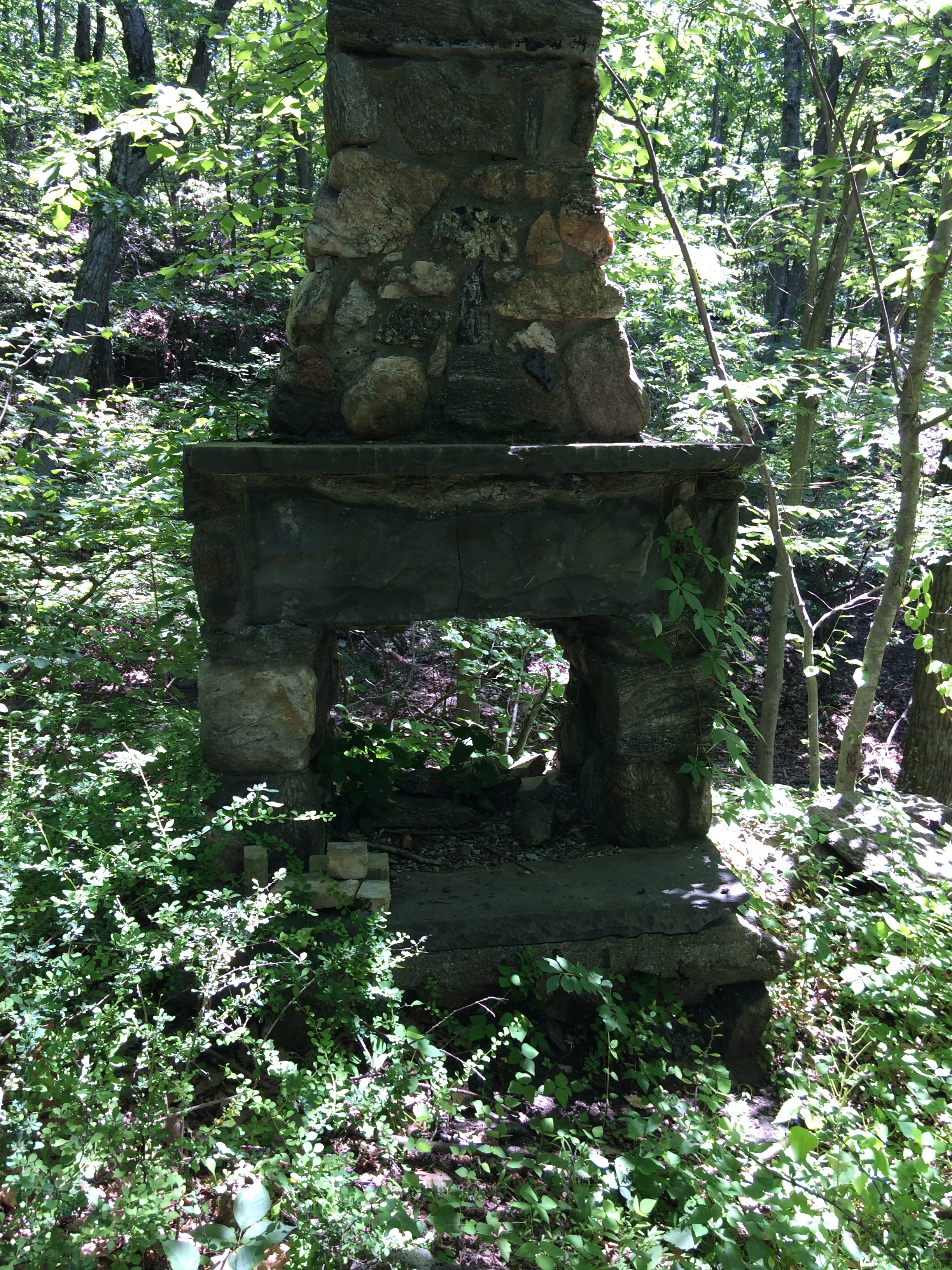
On top of the toilet, you find the ruins of an old stone fireplace:

IMG_4030

I imagine these are the ruins of the bathhouse mentioned earlier, in which one could enjoy hot cocoa in front of a roaring fire after a brisk morning swim.  Or perhaps to toast marshmallows in after a sunset dip?

Walk a little further past the toilet, the fireplace and the pond, along the path strewn with branches and fallen trees . . .

IMG_4032

and you’ll come across the driveway to the castle. Whatever you do, don’t take a left and walk up the driveway to the castle. Like I said earlier, it’s private property.

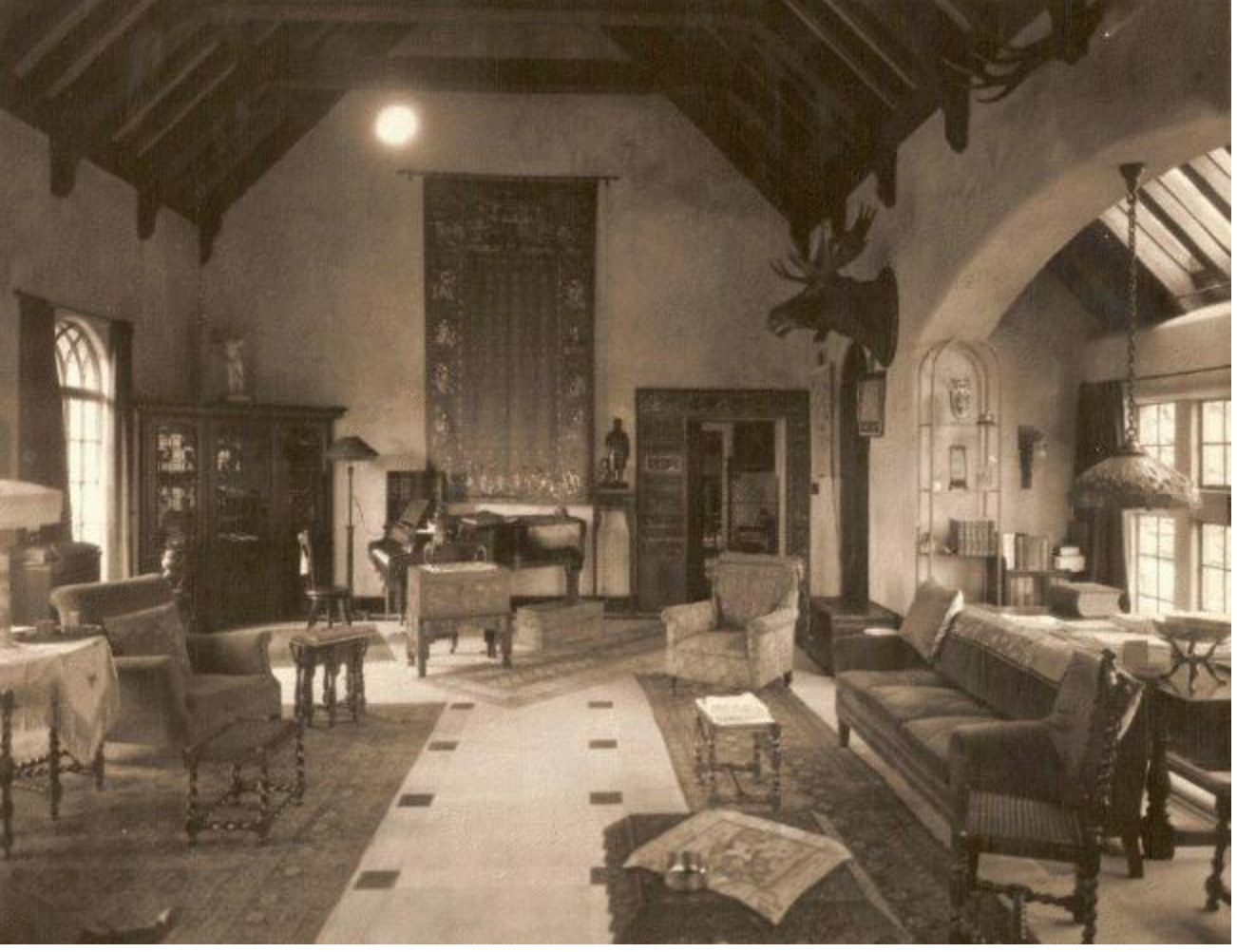
Here’s a photo of the great room in the castle, in its heyday:

Screen Shot 2016-06-19 at 2.24.24 PM

And here are some random photos of the castle today that I’ve lifted off the Internet:

249croton2

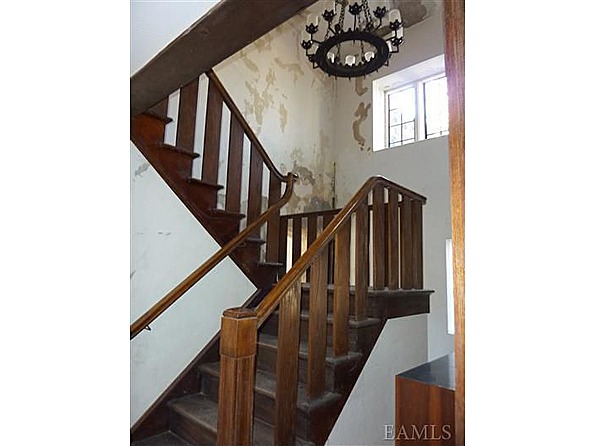
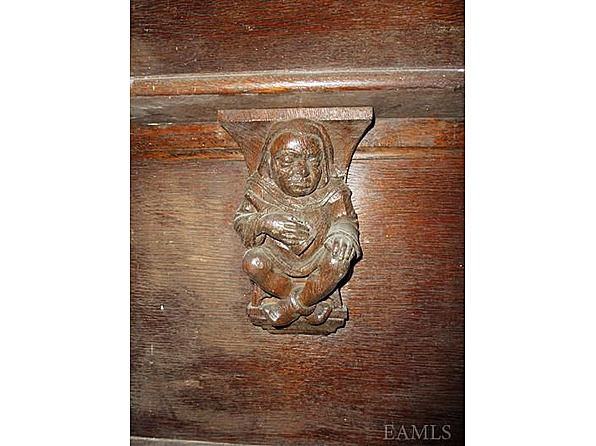
Check out these built-in bookshelves with hand-carved figurines:

249croton22

Close-up of bookshelf holding figurine:

249croton222

I’ve read somewhere that parts of the castle were shipped over from Scotland, and if you look closely at the beams, you can see the numbers carved into them for easy reassembly.  Not sure if that’s true, but it makes for an interesting story.

However, it does seem like the castle has been rather cursed.

In 1929, Abercrombie’s 30-year old daughter Lucy died horribly from burns she received while “engaged in a task on a preparation for waterproofing canvas compounded from a secret formula developed by her father many years ago.” A formula that involved powdered paraffin and gasoline.  And a formula that, as far as I can tell, blew up in her face and enveloped her in flames.  The New York Times article on this unhappy accident is opaque on whether the accident occurred at Elda or at some other Ossining location.  But still.

Soon after, in August 1931, David Abercrombie passed away from rheumatic fever at the relatively young age of 64. At the time, the castle had still not quite been completed.

In 1937, the Abercrombie’s oldest son David died from a horse kick on his Wyoming dude ranch.

Soon after (I’m guessing,) Mrs. Lucy Abercrombie moved out of the castle and in with her oldest daughter Elizabeth in Millbrook, NY.  Apparently, the castle sat empty until 1947 when the Centro Research Laboratories bought Elda from the Abercrombie estate. After a two-year zoning fight between the neighbors and Centro, “a new by-pass entrance was constructed into the estate, away from the privately-owned houses, built on the estate frontage on Croton Dam Road.”  I guess that’s when they built that driveway you shouldn’t walk on that leads from the castle to Rt. 134/Croton Dam Road.  The Centro laboratory was involved in working on “industrial applications of resins and plastics.”  No wonder the neighbors were fighting it!  Would you want that stuff in your neighborhood?  Hmm, I wonder how that parcel is zoned now . . .

It might have been during this time that the roof was blown off the now-open courtyard section of the castle.  Or it might not.  No one really seems to know.  (I’ve also heard the rumor that part of the Manhattan Project was housed there during WWII.  I don’t really believe it though.)

In the 1960s, Dr. N.J. Harrick of Harrick Scientific lived in the castle and apparently tried to rescue it from complete ruin.  According to local people who knew of/owned this property in the 1960s – 70s,  it’s been beset by vandals since the 1930s, and has been damaged and repaired many times over the years.

In the 1990s, the Half Moon Foundation of the Humanist Society purchased it to use for events and weddings.  (The Humanist Society was founded by Corliss Lamont, another local resident and subject of this blog post.)  By then, it seems that the 60-acre estate had shrunk down to about 14-acres.

After they sold it, though, it seems the castle really fell into disrepair. Now, so I’ve heard, all the windows have been shattered by rocks, and all the rooms have been graffiti’d and are knee deep in garbage and broken glass. Apparently, the property was sold in 2011 for $3.75 million but the state of the buildings continue to deteriorate.

Isn’t it a shame to know that something so cool is just disintegrating in our midst?

Here’s a post from a fellow blogger over at SecretHike.com that gives some more recent shots.

UPDATE:  April 2022 – a major fire ripped through the castle.  While it’s still standing, it’s been seriously damages. See here for the shocking pictures!