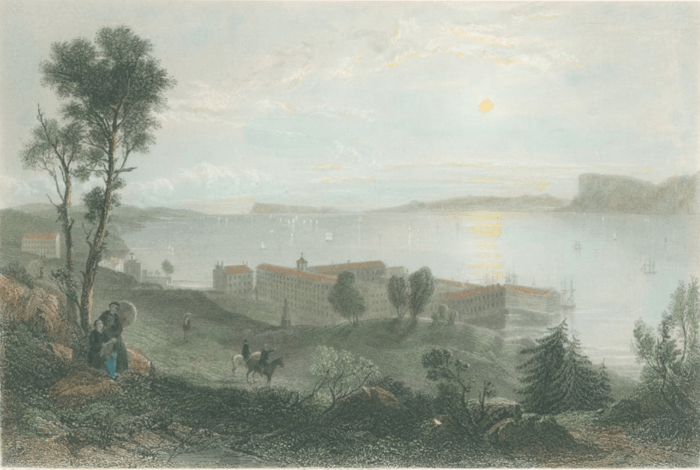
Sing Sing Prison and the Tappan Sea by W.H. Bartlett, 1840
Folks, this is just a short post to direct you to the Sing Sing Prison Museum website where you can learn more about the history of this iconic penitentiary, as well as read three posts I recently wrote for their blog about religion in Sing Sing Prison.
[Note that the Museum is on track to open very soon, and in the meantime is offering numerous events to the public as they complete construction on their space in Ossining’s historic Olive Opera House.]
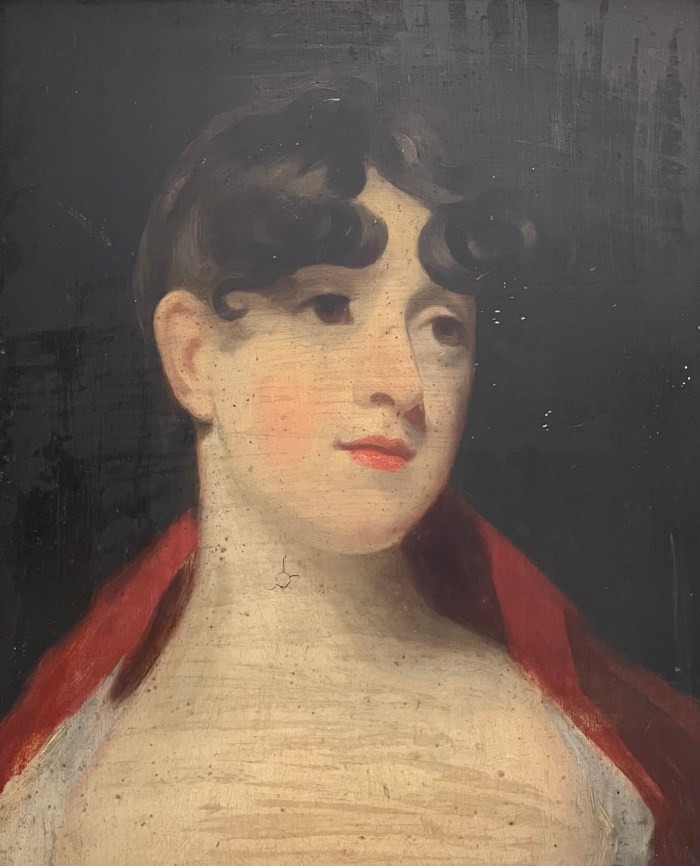
“A Lady of the Agate Family” Family legend has that this is a portrait of Harriet, painted by her older brother Frederick Agate c. 1830s Courtesy of the New York Historical Society
Harriet Agate Carmichael 1817 – 1871
Artist ***Local Connection: 2 Liberty Street***
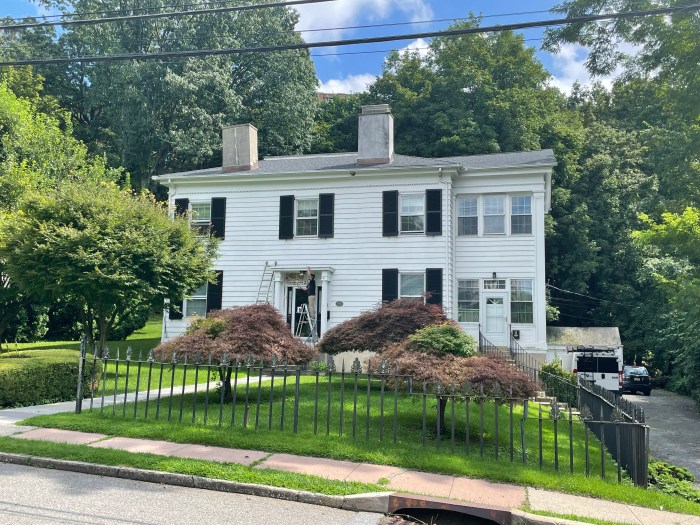
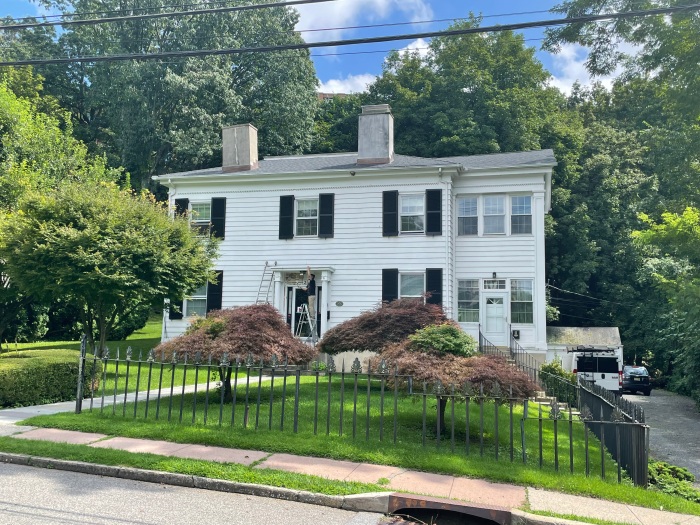
2 Liberty Street, Ossining, c. 2024 Built c. 1820 by Harriet’s father Thomas Agate, the home is still standing and still occupied today.
One of three artistic siblings, Harriet Agate was born in Sparta in 1817. (Today Sparta is part of the Village of Ossining.)
In 1833, Harriet was one of the first women invited to show a painting at the National Academy of Design’s annual Art Exhibition. That painting was called “A View of Sleepy Hollow,” and was exhibited at the Eight Annual Exhibition, held at Clinton Hall, Beekman Street from May 14 – August 20, 1833.
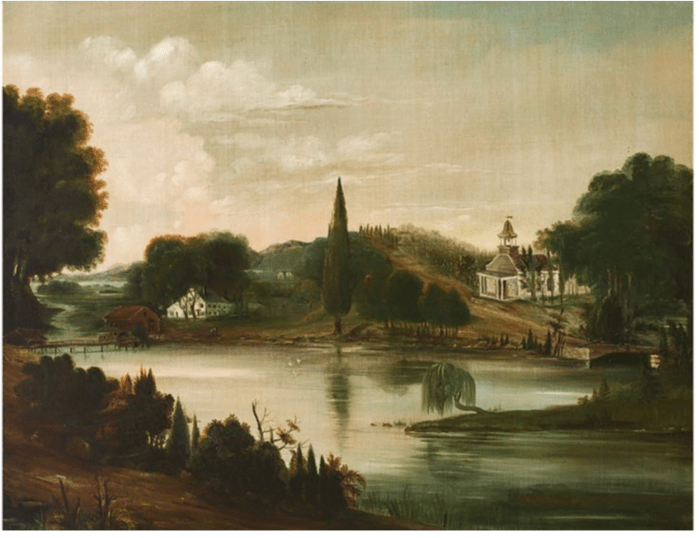
While it cannot currently be proven, I have a hunch that the painting below could be the one Harriet Agate showed at the 1833 National Academy of Design’s Art Exhibition. Hers was titled “A View of Sleepy Hollow.”
“View of Sleepy Hollow” c. 1834 – 1867 Unknown artist Courtesy of Historic Hudson Valley
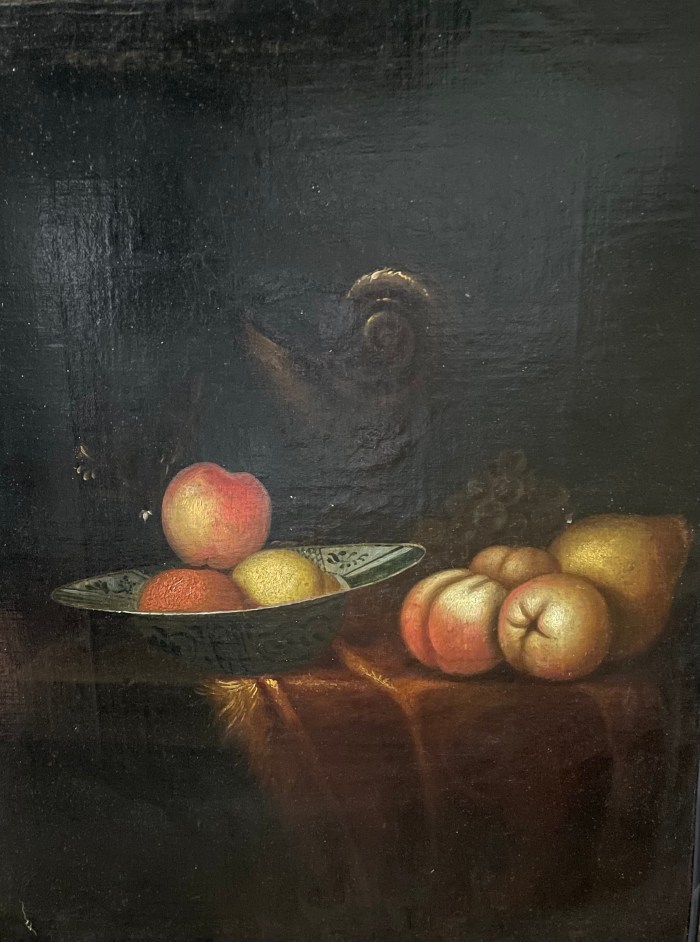
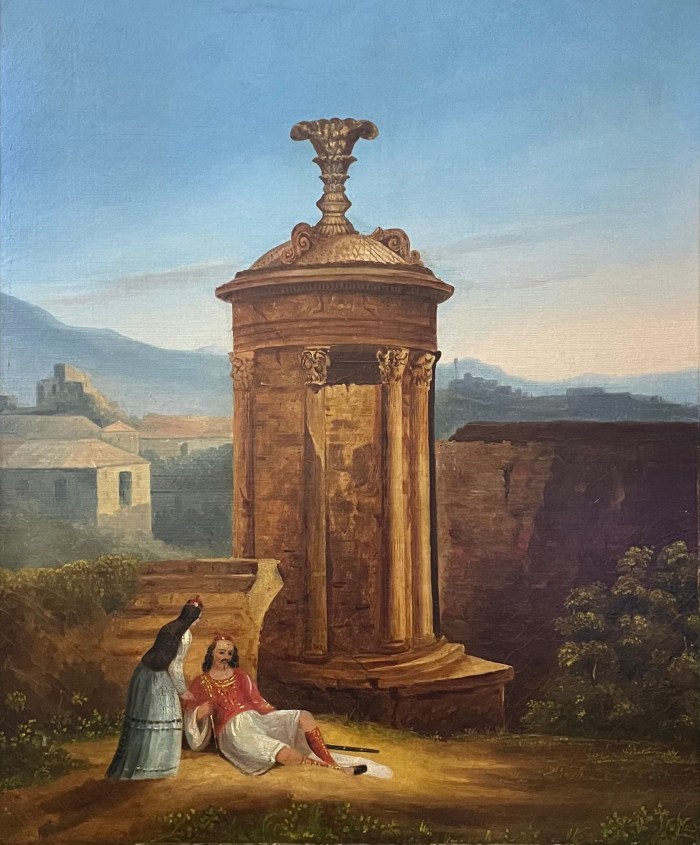
There are only two surviving paintings known to be by Harriet:
Still Life with Apples By Harriet Agate, c. 1830 Courtesy of the Ossining Historical Society and Museum
At the Monument of Lysicrates Oil painting on board by Harriet Agate, c. 1830 Courtesy of the Newark Museum of Art
When the Newark Art Museum accepted this painting in 1959, curator William H. Gerdts wrote the following notes:
It is an almost primitive painting, most interesting from a general cultural point of view . . . It shows a Greek soldier in costume lying on the ground with a Greek woman, also in native costume, next to him. A big Greek monument is in the centre behind him (Choragic Monument of Lysikrates I think.) Now, the subject of the picture is not known, but from the figures in it and from the time it was painted (it looks circa 1820 to 1830) I am sure it is a provincial American expression of sympathy with the Greek revolution — same time as Lord Byron’s [poem entitled “January 22, Missolonghi”] and Delacroix’s “Greek Expiring on the Ruins of Missalonghi” . . . but it is a relatively rare to see this in American art.
It is noteworthy that the people depicted in “At the Monument of Lysicrates” look particularly awkward – an indicator perhaps of the limitations placed on women artists at that time. Women would not have been allowed to take figure drawing classes, as viewing nude models would have been considered decidedly inappropriate.
This painting was included in a 1965 exhibit at the Newark Art Museum on “Women Artists of America, 1707 to 1964.”
Harriet’s two paintings and many of her brothers’ (Frederick and Alfred Agate) had been carefully kept in the attics of Agate family descendants (first in the Liberty Street house and then in another on Agate Avenue) until 1959 when Harriet’s great granddaughter, Melodia Carmichael Wood Ferguson, would discover them and give them to the Ossining Historical Society. Most were then donated to the New-York Historical Society and the Newark Art Museum, where they are not on public view but are safely stored in climate-controlled warehouses.
Around 1837, Harriet married Thomas J. Carmichael, a contractor for the Sing Sing portion of the Croton Aqueduct. They lived with her mother in the Agate family house at 2 Liberty Street. Harriet’s husband may have also contracted with Sing Sing Prison, then called Mount Pleasant State Prison, to use inmate labor for his stone cutting business.
Unfortunately, as was proper for women of the time, Harriet mostly seems to have lived in the shadows of the men in her life. All we have are these two paintings, the possible portrait painted by her brother Frederick, some deeds of property sales, and a few mentions of her in the biographies of her artist brothers. We don’t know if she continued painting, or if the responsibilities of motherhood and the pressure of societal norms caused her to abandon the pursuit of her art altogether.
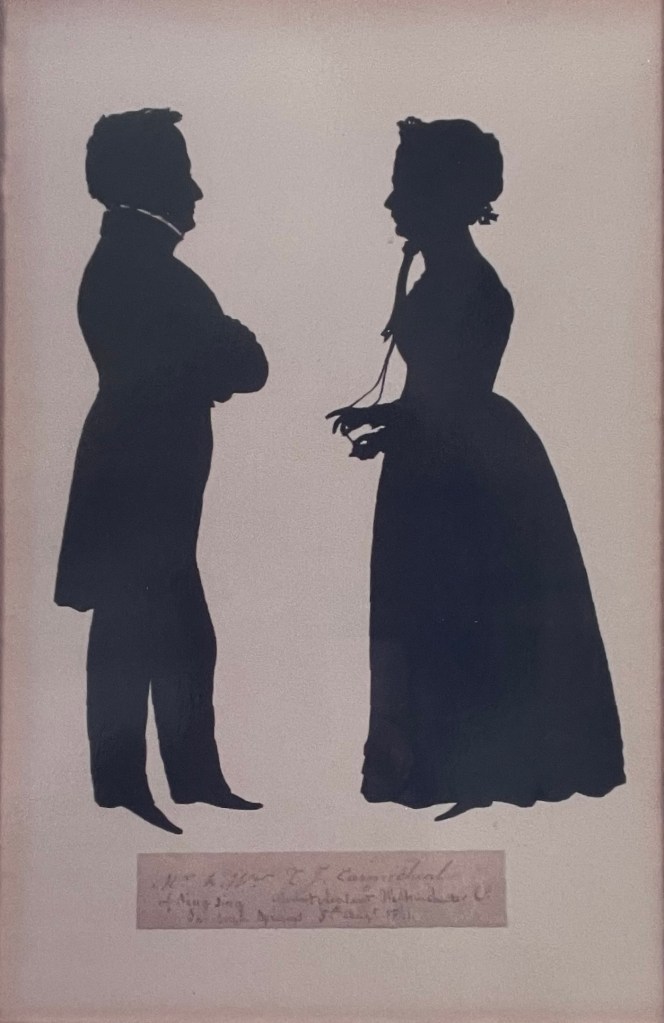
We do, however, have this delightful silhouette of the couple:
Silhouette of Harriet and Thomas Carmichael Made by Auguste Edouart, 1843 Handwritten caption reads: Mr. and Mrs. Thomas J. Carmichael of Sing Sing, Mount pleasant, Westernchester [sic] Co. Saratoga Springs, 6th August 1843 Courtesy of a private owner
Harriet would have five children and move to Wisconsin with her family in 1846 to live on a farm in Lake Mills. Sadly, husband Thomas died there in 1848, and after settling his estate, Harriet returned to Sparta where she lived with her mother Hannah at 2 Liberty Street and then with her daughter Melodia Frederica Carmichael Foster in Brooklyn.
Harriet died in 1871 in Brooklyn and is buried in Sparta cemetery.
This is the third of the series documenting my Summer 2024 voyage to the South Pacific. See here for my previous post.
Today’s post will give a blog-length history of the US Exploring Expedition of 1838 – 1842 (aka the US XX). However, if you really want an excellent, in-depth study, I highly recommend reading Nathaniel Philbrick’s Sea of Glory. He does a magnificent job of synthesizing previous histories and making a corking good story of it all:
Known by numerous names – South Seas Surveying and Exploring Expedition, the US South Seas Exploring Expedition, the Charles Wilkes Expedition, it took over 10 years for this expedition to come to fruition.
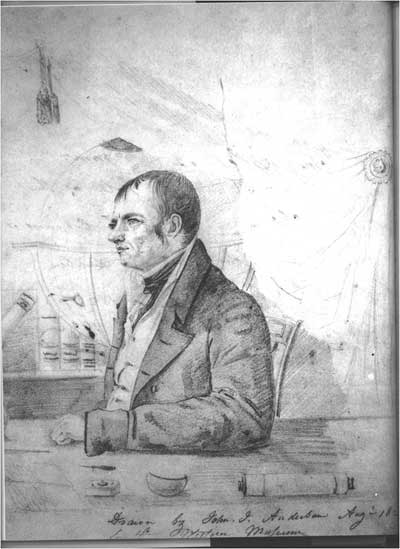
Its inspiration is often laid at the feet of Captain John Cleves Symmes, Jr, a curious veteran of the War of 1812 (and nephew of a Revolutionary War Colonel of the same name). Somehow, Symmes came to believe that the world was hollow and that the entrance to this undiscovered realm could be accessed through the South Pole.
I include John James Audubon’s rough sketch of Captain Symmes here only because Audubon is intimately connected to Ossining, having engaged our own Robert Havell to produce the engravings for his Birds of America in the 1820s & ‘30s. And I love finding these connections!
In 1818, Symmes boldly mailed out 500 copies of his “Circular No. 1” in which he stated:
“I declare the earth is hollow, and habitable within; containing a number of solid concentrick spheres, one within the other, and that it is open at the poles 12 or 16 degrees; I pledge my life in support of this truth, and am ready to explore the hollow, if the world will support and aid me in the undertaking.”
This “Holes in the Poles” theory was not met with great enthusiasm, but it did attract some attention, perhaps most importantly that of New England merchants and whalers. They loved the idea of an expedition that would explore the South Seas, possibly find them undiscovered whaling and sealing grounds, create accurate charts and maps of the area, and maybe even enter into treaties with the islanders. Thanks to President John Quincy Adams, who believed that “The object of government is the improvement of the condition of those who are parties to the social compact,” Congress passed a resolution in 1828 to send a ship to the Southern Ocean. Congress did not, however, appropriate any funds for it.
President John Quincy Adams by Mathew Brady, c. 1843
[Sidebar on President J. Q. Adams, a president that I only know as a whiny politician from the musical “Bloody Bloody Andrew Jackson.” He had remarkably big ideas and believed that America would be doomed to “perpetual inferiority” if she did not step up and contribute to the world of discovery and knowledge. To that end, he tried to establish universities, museums and observatories. An exploration of this magnitude fit in nicely with his worldview.]
Now, no doubt Adams’ desire to sponsor an expedition to the South Seas was also influenced by the fact that many of his Massachusetts friends included the aforementioned whalers and merchants.
But there was still such distrust in leaders and government left over from America’s colonial experiences that it was hard to get Congress to act on anything “frivolous” like science or exploration. Adams was a one-term President and couldn’t get the US XX together before President Andrew Jackson took over. And as we all know, Andrew Jackson was not at all interested in exploration (unless it was in the US and involved massacring indigenous people,) nor was he interested in education or broadening world knowledge. However, by the end of his second term, Jackson started to think that such an ocean expedition seemed very cool and so got the US Navy involved and encouraged Congress to make it happen.
President Andrew Jackson by Ralph Eleaser Whiteside Earl c. 1835
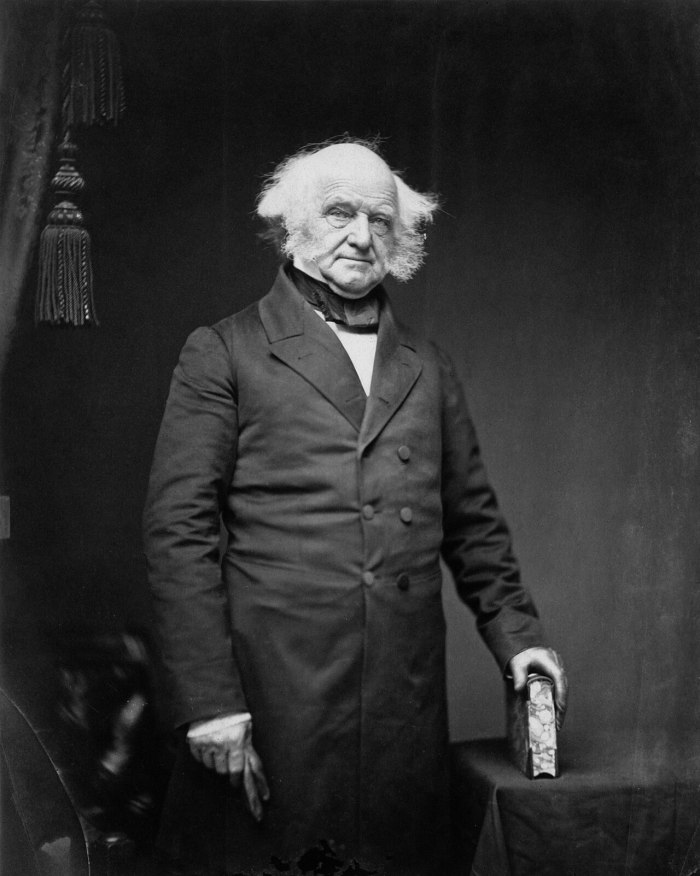
However, it took New Yorker President Martin Van Buren to push it across the start. But by the time things were falling in place for the USXX in the mid-1830s, there had been so much chaos surrounding the expedition, and so many commanders had come and gone, that no Navy man worth his grog wanted command of what began to be called the “Deplorable Expedition.”
President Martin Van Buren by Mathew Brady, c. 1855
Enter Jr. Lt. Charles Wilkes to organize and command the expedition. (Note that Wilkes was a mere Lieutenant though in command of an expedition with six ships. Pretty unheard of in the world of the US Navy, but there was no one else willing to take on this command. His lowly rank would become a great bone of contention for him, since most of the captains of his expedition’s six ships outranked him. This, combined with his inflexible personality and inexperience as a leader would create numerous problems going forward. But more on this in another post.)
Admiral Charles Wilkes (he eventually got promoted!) Courtesy of the Smithsonian Institution
By the time the Expedition shoved off from Hampton Roads, VA on August 18, 1838 its price tag had swelled to over $300,000 (around $10 million in today’s dollars), an astonishing amount for the nation at the time.
In a celebratory speech at the Expedition’s departure, Secretary of the Navy James Paulding would proclaim that the Expedition’s goal was “Not for conquest but for discovery.”
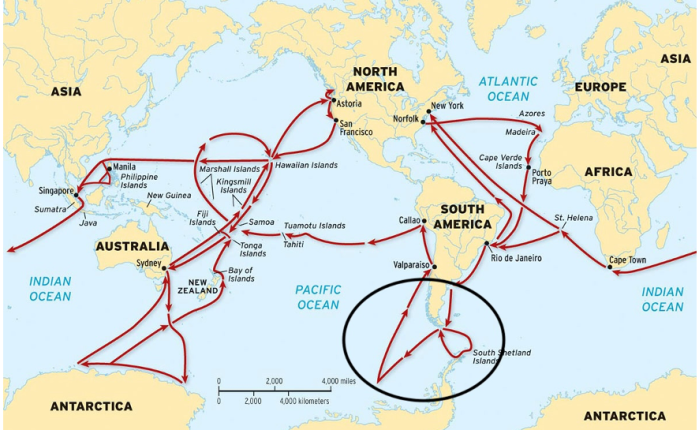
As a reminder, here’s a map of where the Expedition went:
The accomplishments of the Expedition are quite impressive:
Over 280 islands were surveyed
Over 180 charts created (some were still being used during WWII!)
Some 800 miles of Oregon coast and its interior were explored and mapped
Around 1500 miles of Antarctic coast were charted, and the USXX was the likely the first to discover that Antarctica was a separate land mass (there’s still some question on this point) but Charles Wilkes had this factoid chiseled onto his tombstone.
Contributed to the rise of science in America, the evolution of navigation, and the development of the fields of botany and anthropology
The 40-tons worth of plants, animals and artifacts collected becomes the core of the Smithsonian Museum. See more on that here.
Just as a reminder of how large this expedition was, here are the details of six ships that originally comprised it:
Now, for an expedition whose purported purpose was “To extend the bounds of science and promote knowledge,” out of the 400-plus crew, only nine were considered “scientifics.” And our Alfred was considered one of this nine.
Many of them went on to important careers in their chosen fields, adding greatly to the store of knowledge on the natural world. And, thanks to their US XX work, many new species of birds, plants and animals were discovered, collected and studied. Further, thanks to Alfred Agate, records of the unique cultural patterns of dress, tattoos and rituals of the different South Pacific Island nations was documented.
The perils facing the Expedition were great: there were few accurate charts or maps to navigate through the shoals and coral reefs of the islands. The indigenous people were, for the most part, often and understandably hostile towards Europeans coming to their islands and demanding food, water and other supplies. There was no way to communicate between ships except by cannon, lights and flags, meaning that sometimes days or even weeks would go by before they resumed contact. One ship, the Sea Gull, was lost at sea somewhere between Tierra Del Fuego and Valparaiso, Chile during the first year, never to be heard of again. Another ship was wrecked and lost at the mouth of the Columbia River. About 20 of the crew died during the four-year voyage from disease, injury or attacks.
But the Expedition accomplished its mission and put America on the world stage, though perhaps not as spectacularly as President Adams had hoped.
Stay tuned for more about Lt. Charles Wilkes, and stories about the Expedition’s encounters on Tahiti, Tonga and Fiji.
If you haven’t already subscribed and are interested in following this journey, you can do so here:
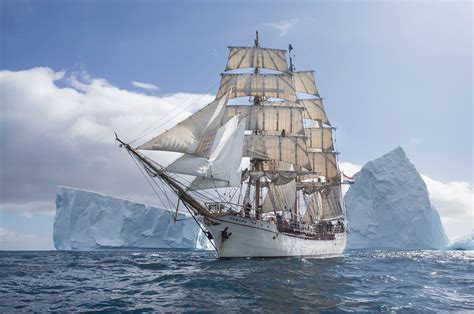
Soon I shall be heading to sea on the above Dutch-registered, steel-hulled barque as voyage crew to follow in the footsteps of Ossining’s own Alfred Agate, best known as one of two illustrators for the US Exploring Expedition of 1838 – 1842 (USXX).
Wait, what?
“To sea”?
“Voyage crew”?
“Alfred Agate”??
“US Exploring Expedition of 1838 – 1842”???
Oh yes, I hear all your questions. So consider this the first of several blog posts detailing the life of Alfred Agate, the US XX (aka the Largest All-Sail Exploring Expedition You’ve Never Heard Of), and my 21st century pilgrimage on a tall ship.
Today’s post will focus on Alfred Agate, Ossining artist and International Man of Illustration.
Now, truth to tell, I knew nothing about Alfred or his family until I stumbled into the bottom drawer of a filing cabinet at the Ossining Historical Society and learned about this surprisingly influential family of artists.
First, perhaps you’re familiar with this house that still stands at the corner of Hudson and Liberty Streets in the Sparta area of Ossining?
2 Liberty Street, Ossining c. 2023
Built over 200 years ago by Thomas Agate, it is the grand home of one of the first English settlers in Sparta.
[NOTE: much of the following information comes from a 1968 article written by Ossining historian Greta Cornell, Ancestry.com, and Phillip Field Horne’s A Land of Peace.]
Here’s some background: Alfred’s father, Thomas Agate, was born in Sussex, England c. 1775. He came to Sparta in the 1790s with his siblings John, William, Ann & Mary. In about 1795, the Agates purchased two lots of Sparta land from James Drowley’s estate via a Richard Hillier. They were Baptist/Republicans who didn’t believe in the monarchy, so settling in the recently independent colonies must have been a no-brainer for these motivated Brits.
Thomas seems to have been scrappy and ambitious, and according to Philip Horne, kept a “House of Entertainment” in Sparta until about 1811. (Excellent term, no? Sounds like a strip club to me, although it was likely just a tavern.)
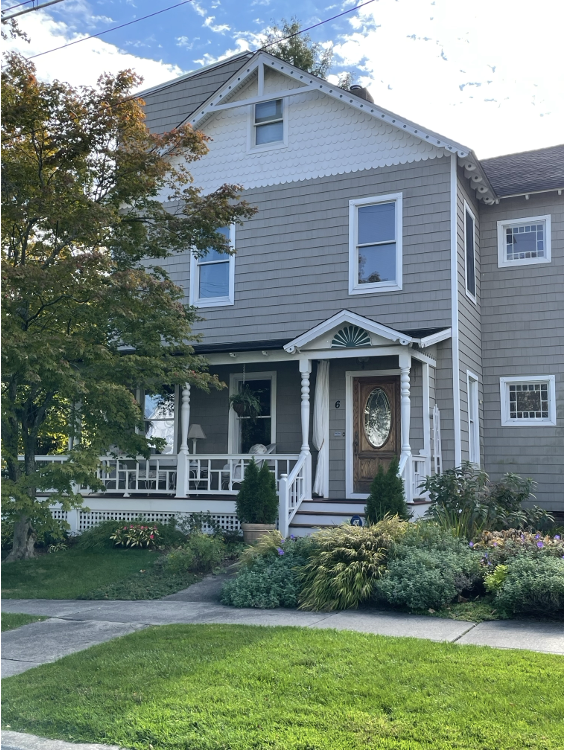
In 1795, he married Hannah Stiles and would continue living and prospering in Sparta. After leaving the “entertainment” business, he would run a store in Sparta, manage the Sparta dock, and buy and sell numerous parcels of land in the neighborhood. When copper was discovered practically right under his house in 1820, Thomas Agate was one of the first to invest in the Westchester Copper Mine Company. Unsurprisingly, nearby Agate Street is named after the family, and the house pictured below was still in the family as late as 1960!
6 Agate Avenue In 1959, home of descendant Melodia Agate Foster Wood
Thomas and Hannah would have at least 4 children:
Edward Priestley Agate:
b. August 29, 1798
m. Mary Williams (7 children “all died young”),
d. November 22, 1872
Frederick Stiles Agate:
b. January 29, 1803
Never married
d. May 1, 1844 (buried in Sparta Cemetery)
Harriet Ann Agate Carmichael
b. March 29, 1817
m. Thomas J. Carmichael c. 1835
d. January 12, 1871 (buried in Sparta Cemetery, though his headstone is currently missing)
Alfred Thomas Agate
b. Feb. 14, 1812
m. Elizabeth Hill Kennedy, 1844
d. Jan. 5, 1845 (buried Mt. Olivet Cemetery, Washington DC)
But Frederick, Harriet and of course Alfred are the ones we are most interested in here.
Older brother Frederick was a precocious and artistic child who, at the age of 15 or so, was sent to study art in New York City with John Rubens Smith. Frederick would then teach his siblings Alfred and Harriet the rudiments of oil painting and find them teachers at the National Academy of Design (which Frederick would help found in 1825 with his bosom friend Thomas Seir Cummings, and painter/telegraph inventor Samuel F.B. Morse.)
At the time, historical and portrait painting was a lucrative career – photographs of course did not yet exist, so painted portraits were the only way to capture a person’s likeness.
Alfred studied with Thomas Seir Cummings at the National Academy of Design (NAD), and by the age of 20 he was exhibiting his paintings at their annual exhibition. By 25, he had his own studio at 25 Walker Street and churned out portraits – both oil paintings as well as miniatures.
Now, during this time, it’s entirely likely (though I have so far found no concrete evidence of it) that Frederick and Alfred met and socialized with Charles Wilkes, the man who would become the leader of the USXX. Wilkes was a Navy man, a talented artist himself, and, most importantly, a skilled navigator, cartographer and surveyor. It does seem that he took some drawing classes at the NAD during the late 1820s/early 1830s.
This connection will become important when the US XX, an expedition that was about a decade in the making, starts to come together in the late 1830s.
In late 1836 our Alfred is offered a position as illustrator for what was then called the “South Seas Surveying and Exploring Expedition.” Here’s his acceptance letter written to Secretary of the Navy Mahlon Dickerson:
Isn’t his handwriting gorgeous??? Courtesy of the National Archives
Now, as promised, I will expound on the development and purpose of said Expedition in a future post. For now, let us concentrate on young Alfred.
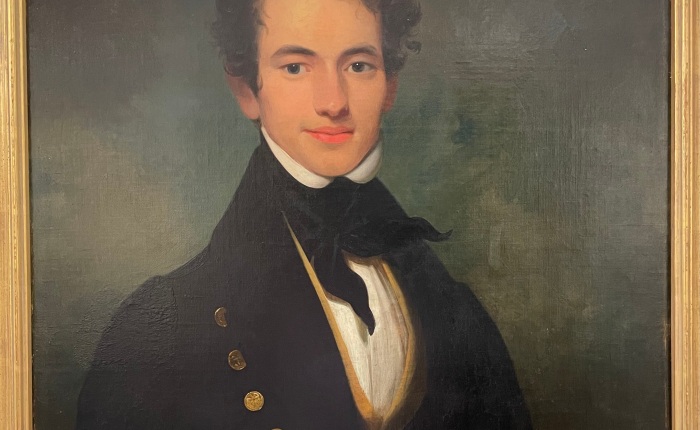
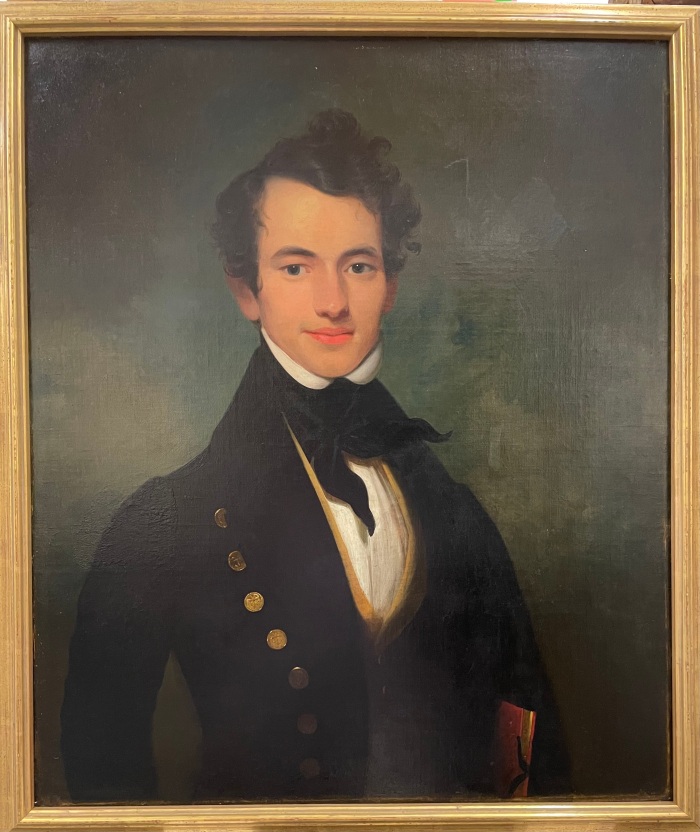
Alfred Agate, c. 1838 Courtesy of the New-York Historical Society
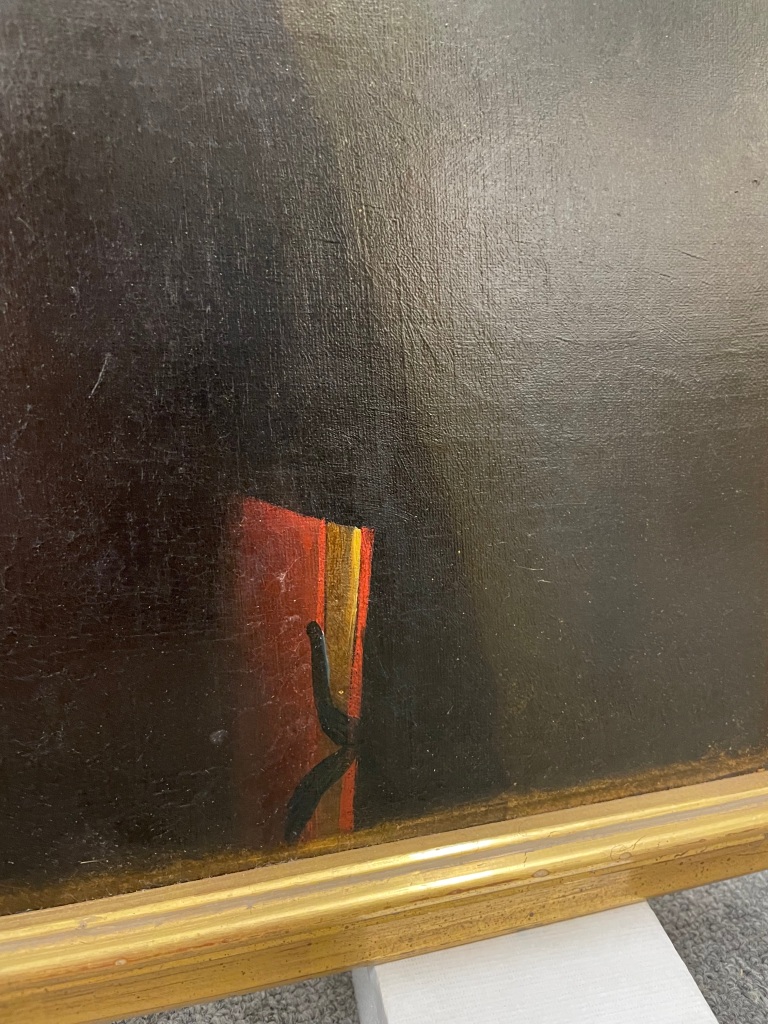
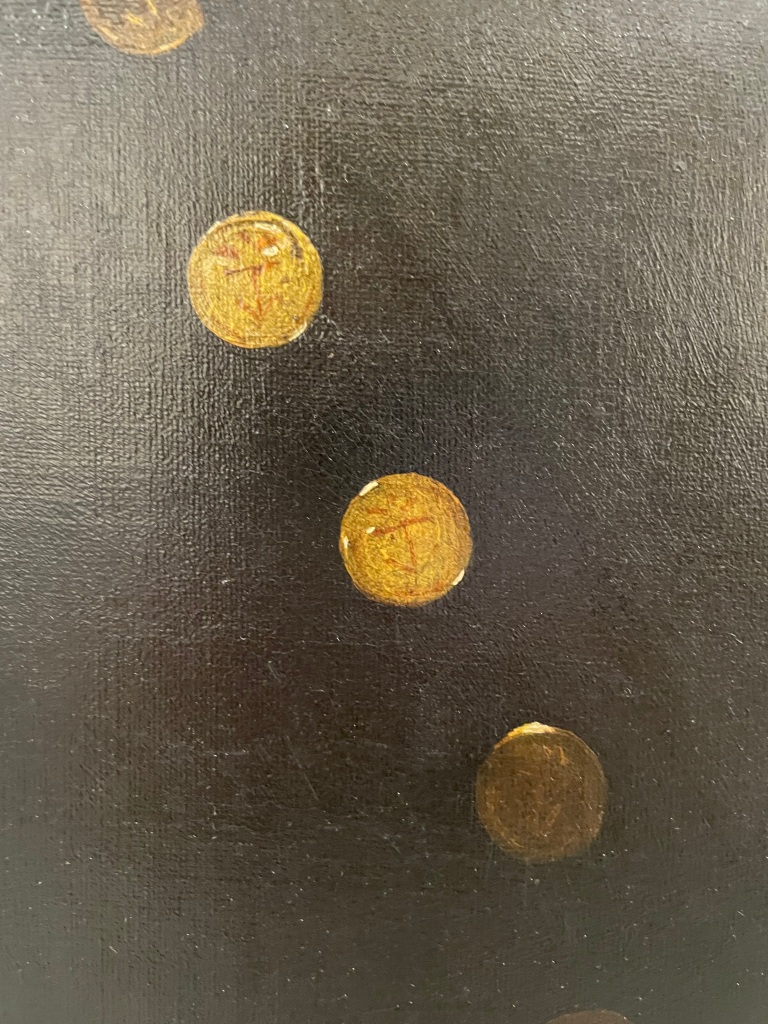
It is believed that brother Frederick painted this portrait just before Alfred left for his voyage to points south. And if you look closely, you can see some subtle iconography in the form of the red sketchbook under Alfred’s left arm and the boat anchors on his fetching gold buttons. Here they are in close up for your amusement:
On August 18, 1838 six ships set off from Norfolk, Virginia on what is often described as the world’s last all-sail exploration expedition:
Approximately 440 men served – 82 officers, 345 sailors, 7 naturalists/scientists and 2 illustrators.
Alfred shared the load with fellow illustrator Joseph Drayton and their importance to the expedition cannot be underestimated. With no ability to photograph anything, it was up to these two artists to document as many plants, animals, landscapes, and people as possible. (Knowing that the US XX sent back about 40 TONS of artifacts, it would have been an Herculean task to document it all.) To that end, to save time, the illustrators often used the Camera Lucida, an optical projection device that some say was developed in the 1600s, though it wasn’t patented until the early 1800s.
Alfred tended to do landscapes and portraits, while Drayton focused on botanical and animal illustrations
Sometimes they worked from sketches of others – many of the officers were passable artists themselves and would give sketches to the illustrators to work from.
During the course of the expedition, hundreds of sketches, watercolors, oils, and later, engravings were made. Just a small number of these were published in the multi-volumed post-expedition Narrative of the USXX.
Sadly, some of Agate’s work was lost in the wreck of the Peacock in 1841, and in a later fire at the Philadelphia publisher’s plant, but there still are a large number extant.
Today, the Naval History and Heritage Command website has digitized and interpreted its significant collection of Alfred’s USXX illustrations. Check it out here.
The route of the USXX is mind-boggling:
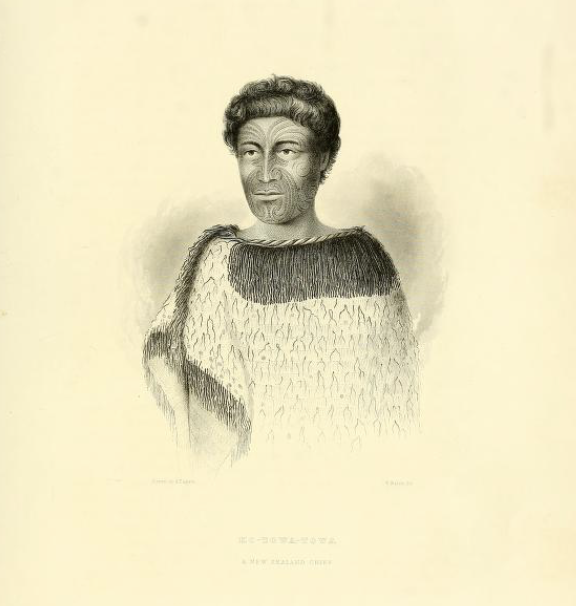
And our Alfred sketched wonderful portraits throughout — here are just two of many:
Fijian Chief Ro Veidovi c. 1839Ko-Towa-Towa, New Zealand (Maori) Chief c. 1839
Alfred returned to New York on June 10, 1842, landing at the Brooklyn Navy Yard. After spending a week in quarantine, he likely came back to Ossining to recuperate at his parents’ home on Liberty Street. He was apparently unusually sickly on the expedition (at least, according to Charles Wilkes’ memorial to him). He regained enough strength to relocate to Washington, DC to finalize illustrations for the first volume or two of the Narrative of the US Exploring Expedition written by Charles Wilkes. He also married Elizabeth Hill Kennedy in October 1844. But, tragically, his life was cut short by tuberculosis, that scourge of the 19th century, and he died just a few months after his wedding.
He was fondly remembered by all who knew him, and Senator James A. Pearce of Maryland would honor him with the following words:
The delicacy and sensibility of the man seemed to characterize the productions of his pencil. His drawings, which have been published, and those which remain to be published, show a truthfulness and harmony which stamp him as an artist of the highest order of talent.
RIP Alfred Agate.
Type your email address below to subscribe and make sure you don’t miss the next exciting posts about the USXX and the upcoming voyage I’ll be taking to Tahiti, Tonga & Fiji in July/August 2024 to see the actual sights our Alfred memorialized!
Or click here for the next post in the series on the Bark Europa.
Here’s a shameless plug for a presentation I’m doing in Tarrytown at the Shames JCC on Monday, January 22, 2024 @ 10am.
Alfred Agate, believed to have been painted by his brother Frederick Agate c. 1838 Courtesy of the New York Historical Society
From the Shames JCC website:
Alfred Agate was the illustrator for one of the most ambitious and largest scientific exploratory expeditions that you‘ve never heard of the US South Seas Exploring Expedition from 1838 – 1842 – an epic voyage that sailed to South America, the South Pacific, Australia, New Zealand, Antarctica, the West Coast of North America, the Philippines, and Indonesia. He was born in Sparta, now part of Ossining, and was a very successful portrait and miniature painter before he went to sea. In this image-packed talk, Ossining Town Historian Caroline Curvan presents a fascinating piece of little-known local history.
The Shames JCC is located at 371 S. Broadway, Tarrytown, NY 10591.
Folks, it’s my first video presentation — this one is on Frederick, Alfred and Harriet Agate — artistic siblings who lived in Sparta (now part of Ossining) and were at the forefront of the development of an American style of art and approach to science. Check it out! They are fascinating people.
So, if you know me at all or have attended any of my recent presentations, you’ll know I’ve become obsessed with the Agate family of artists who lived in the hamlet of Sparta in the 1800s. (Today Sparta is part of Ossining, NY.)
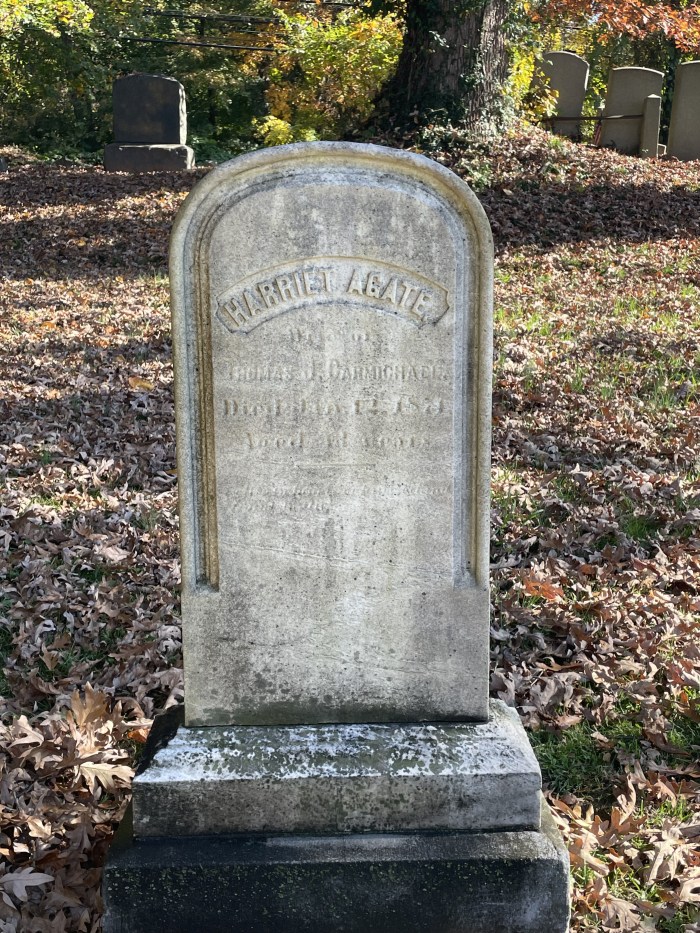
Today, I had the privilege of cleaning Harriet Agate Carmichael’s gravestone with the Ossining Historic Cemeteries Conservancy. It was the last cleaning event of the year and an absolutely gorgeous day for it.
Now, who are the Agate family of artists and why should you care?
Well, first, I think it’s all sorts of important to know about people who lived in your very town and contributed to the world in a meaningful and positive way (even if they lived decades, even centuries before you).
So, follow me down a rabbit hole that will take you to the farthest corners of the earth and to the beginnings of an American school of art.
Frederick (1803 – 1844) was a talented oil painter who helped found and run one of America’s first art schools, the National Academy of Design (NAD). He also likely taught his younger siblings Alfred and Harriet to paint. He would die young from tuberculosis and be buried in Sparta cemetery next to his sister Harriet (though his gravestone is currently missing.)
And here’s one of Frederick’s more famous paintings — a portrait of actor Edwin Forrest in the role of Chief Metamora from the John Augustus Stone play “The Last of the Wampanoags”:
Edwin Forrest in the Role of Metamora, c. 1832 Courtesy of the Smithsonian National Portrait Gallery
Alfred (1812 – 1846) would go on to study at NAD and exhibit paintings at their annual art show. He became a successful miniaturist and portrait painter before taking on what is arguably his most important role, that of illustrator on the US Exploring Expedition of 1838 – 1842 – one of the most ambitious and largest scientific expeditions of exploration that you‘ve never heard of.
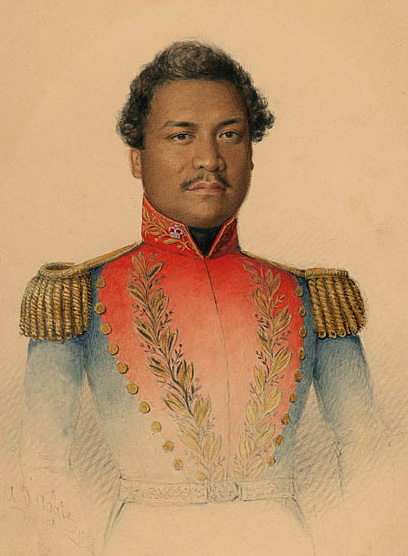
King Kamehameha III of Hawaii by Alfred Agate c. 1840 Courtesy of the Naval History and Heritage Command
And our Harriet (1817 – 1871) would also study at the National Academy of Design. In 1833, she would be one of the first women to show a painting at the Academy’s annual Art Exhibition. That painting was called “View of Sleepy Hollow,” and Historic Hudson Valley just happens to have a painting of the same name from about the same time, although they note that the painter is unknown.
View of Sleepy Hollow Courtesy of Historic Hudson Valley
Could this possibly be by Harriet? Watch this space – I’m going to research this as far as I can!
We have only two other paintings by Harriet – likely from about the same time and likely from her days as a student.
Still Life by Harriet Agate Courtesy of the Ossining Historical Society and Museum
Greek Scene at the Monument of Lysicrates by Harriet Agate Courtesy of the Newark Art Museum
In about 1839 Harriet would marry Thomas J. Carmichael, a contractor for the Ossining portion of the Croton Aqueduct.
You’ve probably seen this aqueduct ventilator on Spring Street, near Park School. That’s Harriet’s husband!
They settled in Ossining, in the Agate family house at 2 Liberty Street:
2 Liberty Street, still standing in 2023!
Harriet would have several children then move to Wisconsin with her husband in 1846 to live on a farm. Sadly, Thomas would die there soon after they moved, in 1848, and after settling his estate, Harriet would move back to Sparta where she probably lived with her mother Hannah at 2 Liberty and then with her daughter Melodia Frederica Carmichael Foster in Brooklyn.
Harriet would die in 1871 in Brooklyn (at her daughter’s house) and, as we know, is buried in Sparta cemetery.
Her paintings and many of her brothers’ would be carefully kept in various family attics until 1959 when Harriet’s great grand-daughter, Melodia Carmichael Wood Ferguson, would discover them and donate them to the Ossining Historical Society. Some were in turn donated to the New York Historical Society and the Newark Art Museum. If you reach out to both places very nicely, they might permit you to view the paintings (which are not on display but are safely stored away. I did and they did!)
Here’s what her headstone looked like after the cleaning:
Grateful to the efforts of the Ossining Historic Cemeteries Conservancy for the opportunity to spend some time with Mrs. Harriet Ann Agate Carmichael today.
During Covid, my friend Dorian and I met almost every Saturday to go to the Farmer’s Market, get a coffee at First Village, and walk along the Sing Sing Kill Greenway. It was a welcome respite from being stuck in our homes teaching via Zoom.
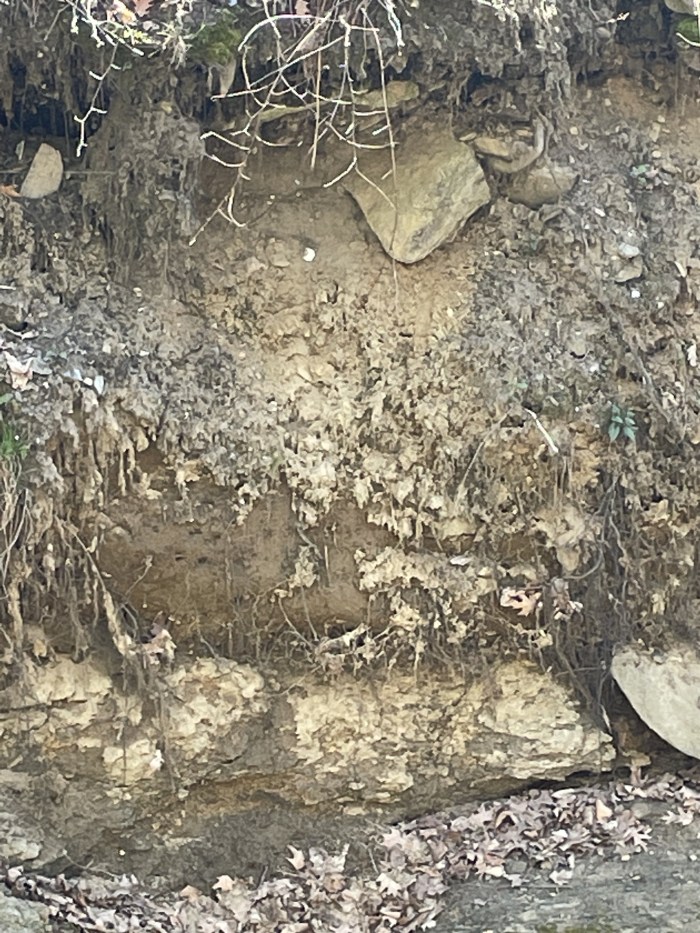
On one of these many excursions, I felt sure I saw a collection of oyster shells poking out from the steep slope across from the pedestrian walkway. Knowing that the indigenous people of this area were known to eat a great many oysters and knowing that there are a number of shell middens along this stretch of the Hudson, and knowing that the sea/river level had been higher here at one point long ago, it wasn’t a completely bonkers assumption.
Here’s what first piqued my interest:
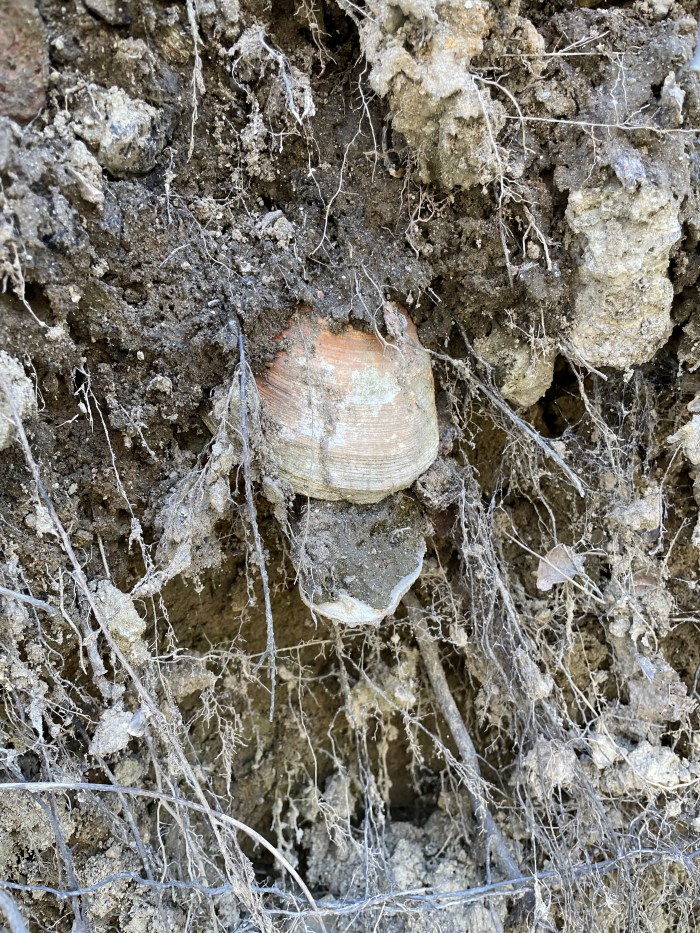
It’s a little hard to tell from this picture, but almost all those white things you see are indeed shells – oyster and clam.
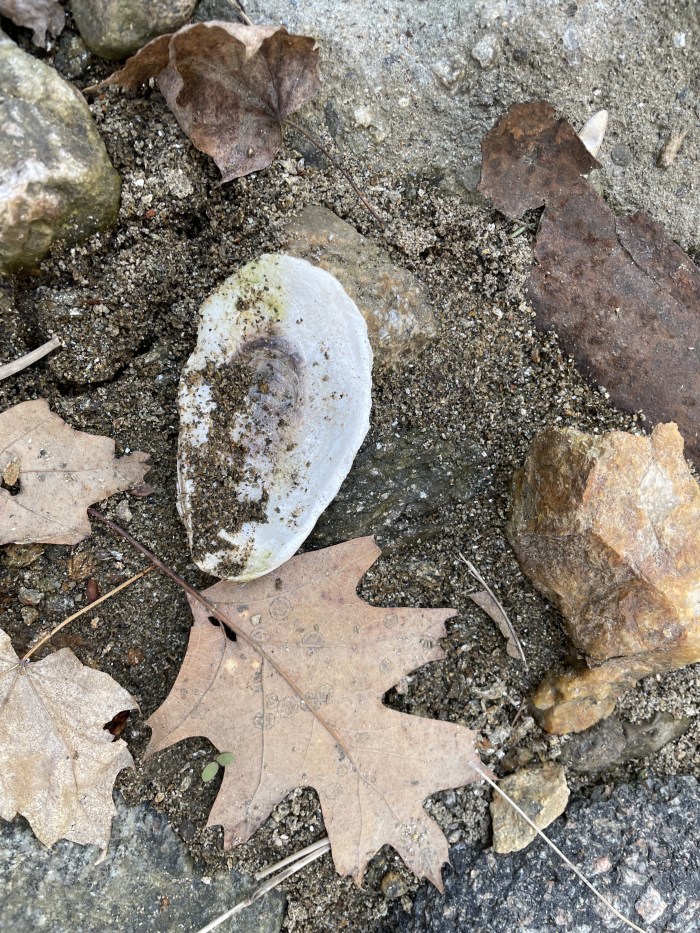
Looking down by the water, I saw several shells just lying about:
Then, here’s a close-up of the hillside — you can definitely see shells poking out, yes?
Now what, you may ask, precisely IS a shell midden? Well, basically, it’s a pile of discarded shells left there by the indigenous people who visited and inhabited these sites over the centuries. In our area, on the Hudson River, it’s thought the salinity of the river became ideal for oysters around 7,000 years ago. That’s about the age of the oldest oyster that’s been radiocarbon dated around here.
Here’s a picture of one of the middens on Croton Point, not at all far away from Sing Sing Kill:
You can see how there’s a definite band of shells underneath this tree, along with shells scattered all over the surface. Go check this spot out at Croton Point (on the trail behind the Nature Center.) Photo by Scott Craven
But somehow it took me until very recently to do my due diligence and really try to figure this out. So, I located the site on a map, took all sorts of pictures of it, and consulted with Dr. Jonathan Lothrop, Curator of Archeology of the NYS Museum in Albany. (And let me take this opportunity to give him and the whole research department there a huge shoutout for their generosity in answering my questions over the years.)
First, I must confess that I’ve always had a fascination with radiocarbon dating – that is, the 1940s-era technology of determining the age of an organic artifact by measuring its radiocarbon levels. Since I learned of this technique in my “Tell Me Why” book when I was 10, I’ve had a burning desire to find an artifact that could be carbon-dated.
Now, I know from writing my book on Croton Point (shameless plug), oyster shells can be carbon dated fairly successfully. In fact, in the 1960s, some shells found in a Croton Point midden were radiocarbon dated by Louis A. Brennan, and that’s how we know for (pretty) sure that there were humans inhabiting the area and eating oysters by the bushel at least 6,000 years ago.
And there were definitely shells to be retrieved and possibly dated from the Kill. I reached out to an archeologist friend and asked her where one could get such an artifact dated. She was skeptical, because context is essential in dating a site, but she gave me the name of Beta Analytics, a Miami-based radiocarbon dating lab. I sent off an email to them, trying to temper my wild enthusiasm and not sound like a nut, and asked how much it would cost to radiocarbon date two shells (because why not, right?) They took me seriously and sent back an official quote of $675 per artifact.
But before I got too crazy, I sent a carefully composed email with photos to Dr. Lothrop and asked his opinion. Was it possible I had found something significant? And if I retrieved samples, would they be worth spending this kind of money on?
His response was swift and measured. And while I was pretty sure my zeal to accomplish this childhood dream of mine was clouding the skepticism required for any reasonable investigation, he let me down gently and gave me some excellent advice for the future.
First, he confirmed that
“In terms of location, sure it’s entirely possible to encounter a Native American shell midden of some antiquity in this stretch of the Hudson Valley; you are not far from a number of recorded shell midden sites, primarily dating to the Archaic.”
So, yay, it wasn’t totally illogical to think this is an ancient midden.
But then he went on to explain why context is so important in an archeological site and what exactly that means. You see, so much of how artifacts can be identified and dated (even without the radiocarbon technology) is based on association – what artifacts are found near other artifacts, and how deep one has to dig to find them. Artifacts include things like cracked rocks (indicating a fire pit), points (or arrowheads), fishing net sinkers and other tools carved from rocks. Obviously rocks can’t be used to tell us the date of anything because they are as old as time. (Okay, I exaggerate, but they are far older than any of the humans who chipped them into shapes.) So the only way we can make sense of such things is to meticulously note what is found where and make educated guesses as to how and when they got there. The types and shapes of points is a science unto itself, and context is so important there in identifying them with any accuracy. Then and only then, if we’re lucky enough to find some organic artifacts like shells or bones, does it make sense to radiocarbon date them.
And while we might be able to date the oyster shells I found, the place I found them is on an almost perpendicular hillside that has been greatly disturbed by erosion and industry over the centuries. So, who knows where these shells were located originally.
Dr. Lothrop emphasized this in his response:
“Perhaps the biggest issue is, given this very steep slope, there is virtually no chance that what you are observing is “in-situ.” By that I mean that such a steep slope has likely been continually eroding over time since the Ice Age, and anything discarded there by humans would no longer be in its original position (a scenario consistent with the exposed bedrock). From that standpoint, any archaeological material (whether historic or pre-contact) that has not yet been eroded, is not found in a stratigraphically stable environment and therefore lacks stratigraphic integrity and association – a key feature of any archaeological site that might have reasonable research potential.”
Finally, he went on to say
“However equally and perhaps more probable – given the urban setting – is that what you’re seeing is historic food refuse that was discarded on this steep slope, some of which is being exposed by active erosion at the base.”
So, alas, there is no point is spending $675 to date a shell found at this location.
But, I still want to believe I’ve found the remains of an Archaic or Sint Sink midden, and not the garbage from a 19thcentury oyster house!
Have you ever seen unexplained piles of oysters in our area?
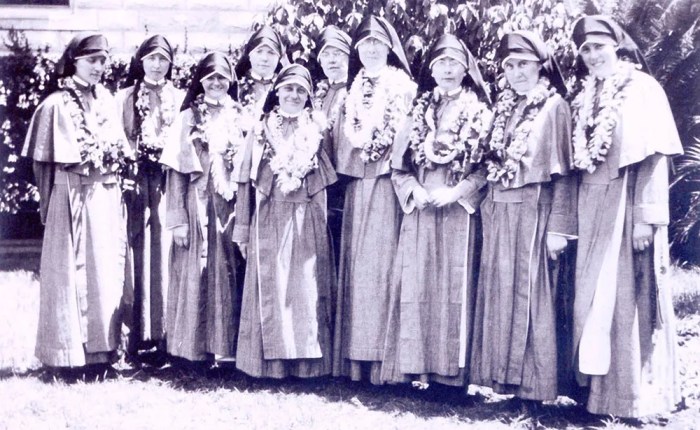
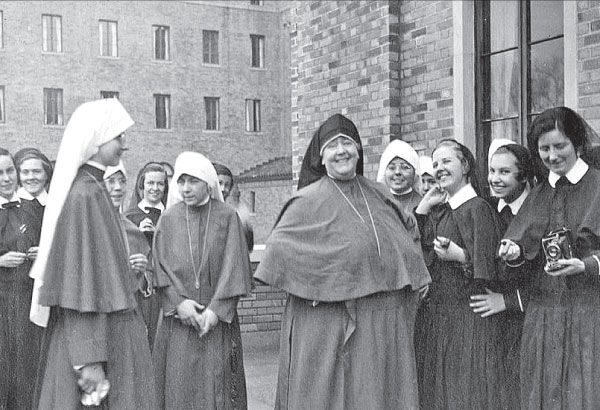
For today’s post, I thought I’d highlight a group of women who have devoted their lives to making the world a better place – the Maryknoll Sisters of St. Dominic.
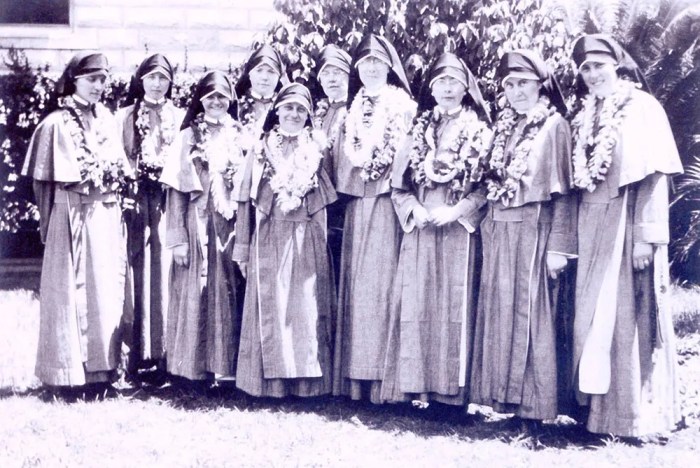
Maryknoll Sisters in Punahou, Hawaii c. 1920s Photo from the Maryknoll Mission Archives
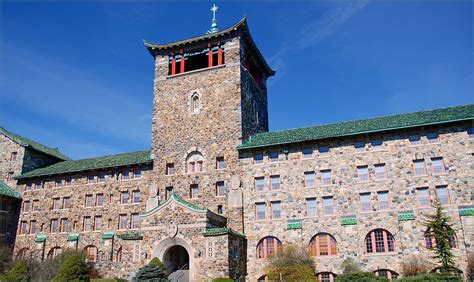
Maryknoll is just one of several places that have a pretty big footprint in Ossining but exist on the sidelines of Ossining’s collective consciousness. At least, I don’t often think about it unless I happen to run (or drive!) along Pinesbridge Road.
Maryknoll Seminary on Pinesbridge Road, Ossining
But in recent years, I’ve had the opportunity to get to know some of the Sisters there, and their lives and accomplishments are certainly worthy of a Women’s History month post.
First, what exactly IS Maryknoll? Officially, its title is the Catholic Foreign Mission Society of America, and includes the Fathers and Brothers of Maryknoll and the Maryknoll Sisters of St. Dominic. Founded by Father James Walsh and Father Thomas Price, they received Papal approval in 1911 and wasted no time in finding a home for their seminary. Purchasing several tracts of land in Ossining, they hired Italian masons who had worked on the Croton Dam to build many of the Maryknoll buildings – hence the remarkable stone masonry evident. (According to Brother John Blazo, the Maryknoll Historian, it was decided to give the cupola a particularly Chinese theme in order to motivate the missionaries to go to far away places and spread the word of God.)
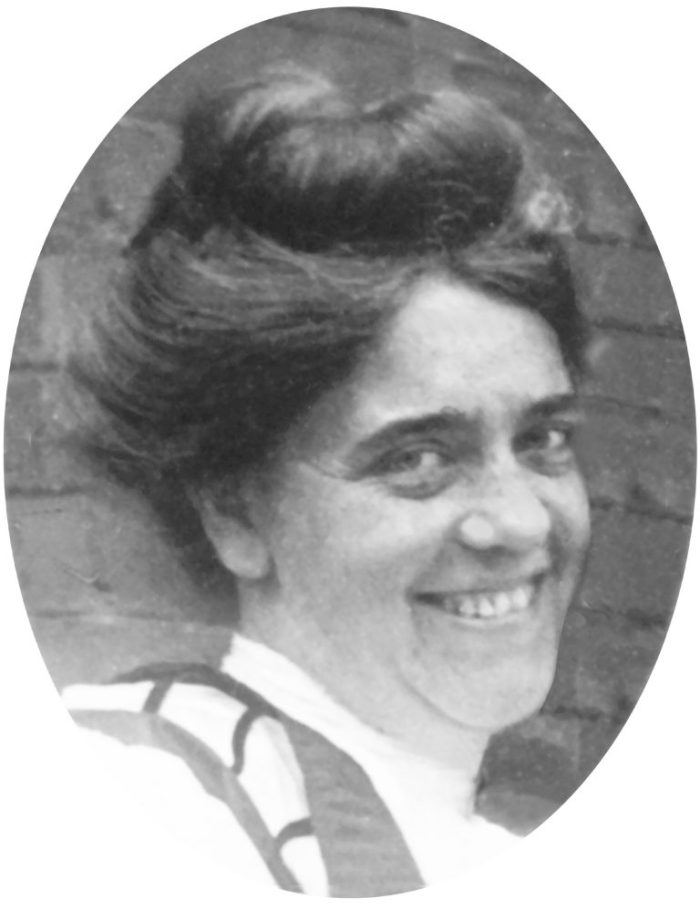
But back to the Sisters. They were founded in 1912 by Mary Josephine “Mollie” Rogers (later known as Mother Mary Joseph.) She’d gone to Smith College and become inspired by the active Student Volunteer Movement there and the idea of overseas missionary work.
Mary Josephine “Mollie” Rogers, c. 1910. Photo from the Maryknoll Mission Archives
Fortuitously, she met Father Walsh and began working in his office to help him get his Society started. Brother Blazo tells the story that Father Walsh had found it increasingly difficult to purchase some of the parcels of land he needed to put together the campus he envisioned. Sensing that there might be anti-Catholic sentiment at the root of it, Mollie Rogers dressed up in her most formal Smith College-wear and purchased the land on behalf of the Fathers, looking to all the world like a rich, Westchester matron.
Working in tandem with the Fathers and Brothers, it took almost a decade for the Sisters to be officially recognized by the Catholic Church. Mother Mary Joseph, along with few others, charted a course through unmapped waters – theirs was the first group of American religious women whose primary mission was overseas service. Frankly, it seems like the Church didn’t know what to do with them – they were rebuffed again and again by Church leadership, both here and in Rome. But by 1920, they were officially approved to begin their mission work. Soon, they were serving in faraway places like Manchuria and the Philippines and China, and women from all over the world were joining their Sisterhood.
According to their website, what Mother Mary Joseph asked from her Sisters was “Charity, fearless honesty and speaking the truth in love as they give witness to God’s love and devote their lives to service overseas.”
Sister Mary Joseph with novitiates at Maryknoll. Photo from the Maryknoll Mission Archives
World War II interrupted their mission work, especially in Asia – there, some Sisters were put in prison, others were arrested and deported. Two Sisters disappeared and were never found. In the States, when Japanese Americans were put in concentration camps, Maryknoll Sisters went with them.
Maryknoll Sisters in China, c. 1940s Photo from the Maryknoll Mission Archives
Over the decades, they’ve opened schools, clinics and hospitals, expanding their reach into South America, Africa, Thailand, Japan and South Korea. They’ve nursed lepers in Hawaii, AIDs patients in El Salvador, taught English in Jakarta, provided social work services to Sudanese refugees, guided Vietnamese asylum seekers through a maze of red tape, performed surgery in Guatemala, started health clinics in Tanzania, nursed the sick in South Korea – in short, as their website says, they serve “the poor, the ailing and the marginalized around the world.”
Each one of these remarkable women has gone through rigorous training programs, learned several languages, and lived for years in foreign countries, often in great peril, as they served in some of the most unstable and violent regions in the world.
The Maryknoll Sisters campus in Ossining offers space for nuns to take a breather between postings, opportunities for further training, and as a home base to serve locally. Both of my sons fondly remember the Sister who was a regular in their 2nd grade classroom at Brookside School (just across the street), and how it was always a treat to be in her reading group.
Currently, there are nearly 300 sisters serving in 18 countries.
My interactions with them have been inspiring and humbling – they are all more informed about current events than anyone I know. They also take a keen interest in politics and democracy, understanding that it is a potent tool to effect change. But it’s their sincere belief in social justice, peace, and humanity that really sets them apart.
I asked one of the sisters what made her want to be a missionary nun and she told me the following story:
“When I was a very little girl, my father took me to see some shacks that had appeared at the end of our very nice street. ‘They’re called Hoovervilles,’ he told me. (Yes, Herbert Hoover was President when she was a little girl!) I cried. ‘But we have to help these people, they can’t live like that.’ My father shook his head – ‘There are too many of them and they need too much. There’s nothing we can do.’ Well, I think that was moment that started me on this path – I was only about four years old, but I’ve never forgotten that moment. Yes, there ARE too many and they DO need a lot. But there’s always something we can do.”
In the spirit of Women’s History month, may I suggest that you peruse a few of the biographies of these inspiring women here.


















 Ossining History on the Run