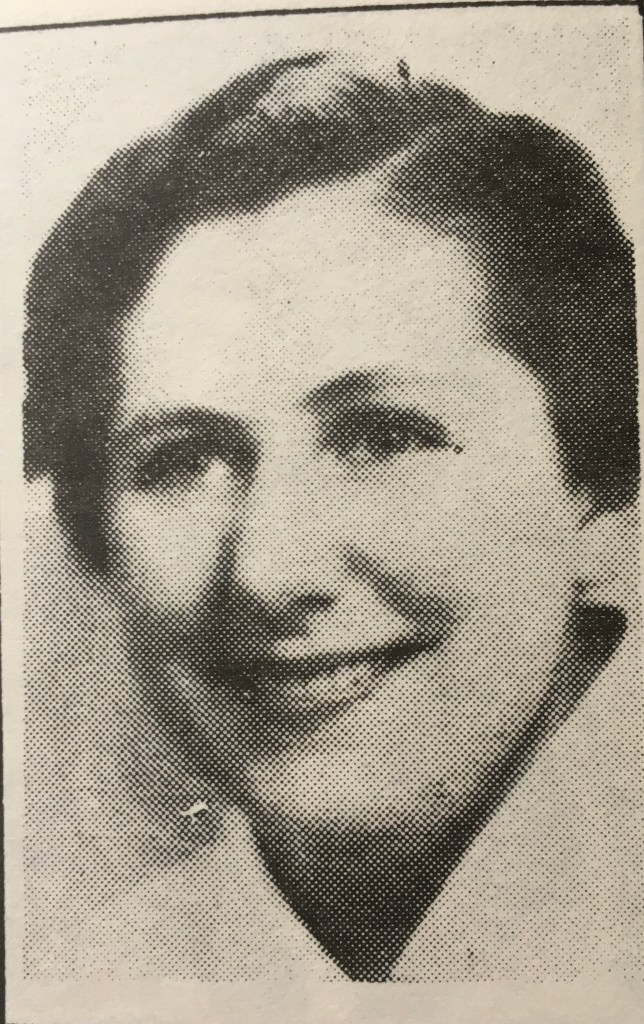
Ensign Mary Feeney Gordenstein Courtesy of the Ossining Historical Society and Museum
Ensign Mary Feeney Gordenstein 1916 – 1943 OHS 1933
U.S. Navy Nurse, Died in Action , World War II ***Local connection: Hamilton Avenue***
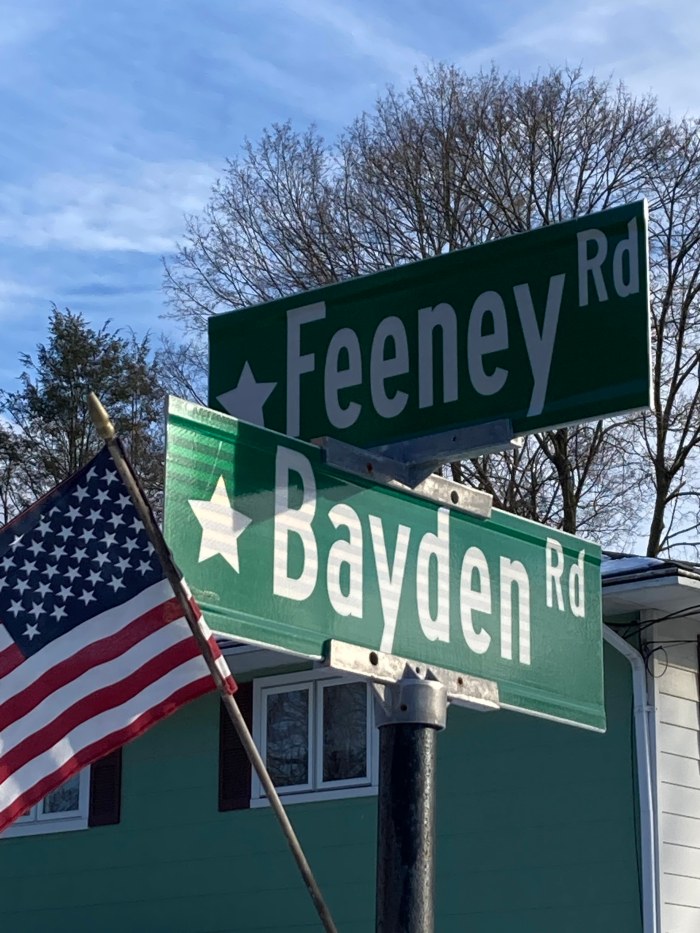
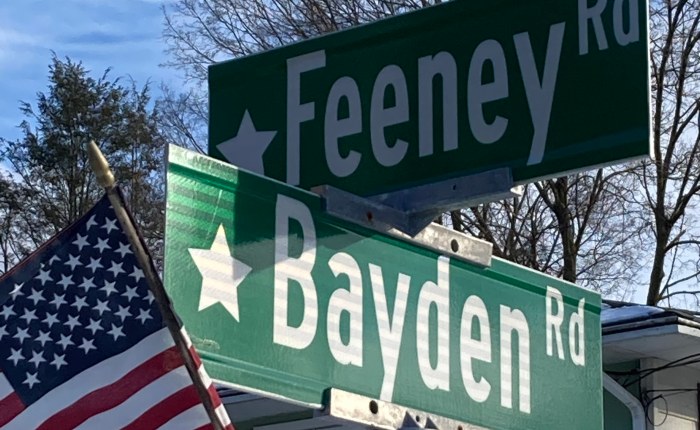
Did you know that Feeney Road in the Town of Ossining is named after Ensign Mary Feeney Gordenstein, a US Navy nurse who died in Pearl Harbor, Hawaii on April 14, 1943?
Mary Feeney was born in Ossining on September 11, 1916, to John and Ida Mae (Farren) Feeney. Her father was a desk clerk for the Ossining Police.
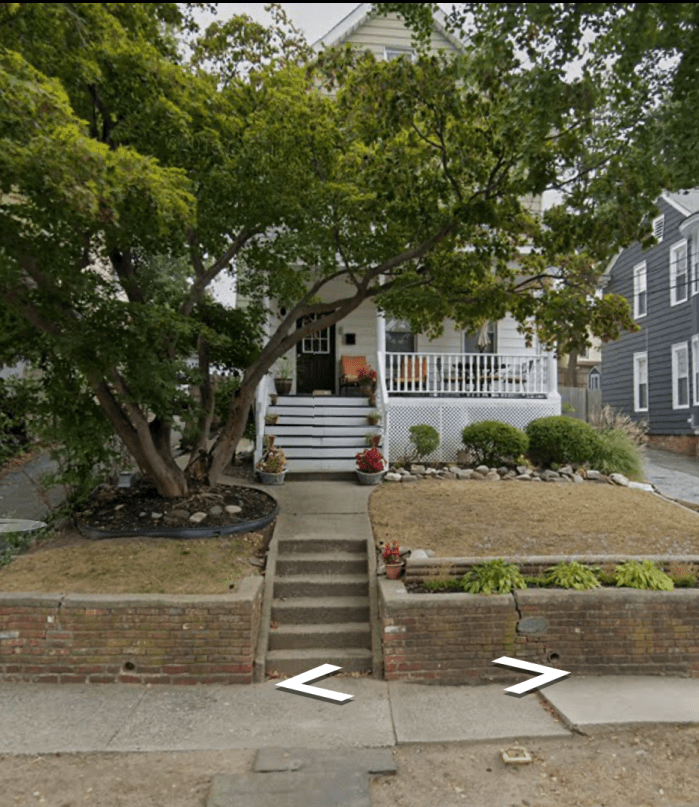
They first rented a house at 72 South Highland Avenue and then moved to 31 Hamilton Avenue.
Both houses still stand today:
72 Highland Avenue. Photo source: Google Streetview
31 Hamilton Avenue. Photo source: Google Streetview
Mary went to Ossining High School, graduating in 1933. She then went on to study at the Cochran School of Nursing at St. John’s Riverside Hospital, Yonkers, graduating in 1937.
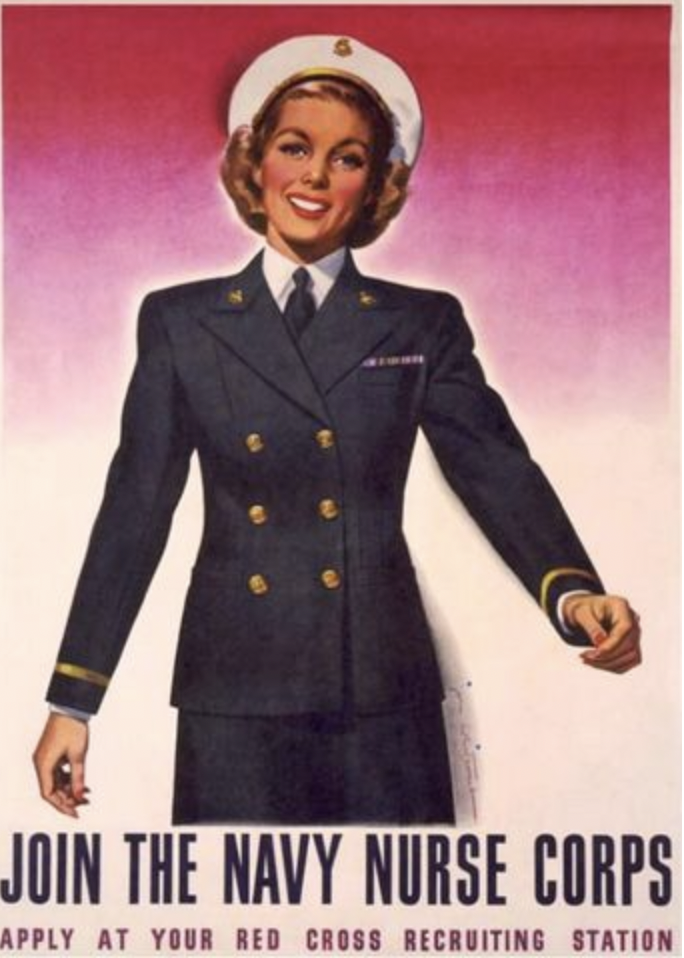
The census for 1940 has her working in “private practice.” In August 1941, she entered the US Navy Nurse Corps as an Ensign and spent at least four months in training before being shipped out. (For more on the US Navy Nurse Corps see here and here.)
Navy Nurse Recruiting Poster. Courtesy of the National Archives
When Ensign Feeney joined up, there were only about 800 Navy nurses on active duty. By the end of World War II, over 11,000 nurses, both active and reserve, were serving in the Navy.
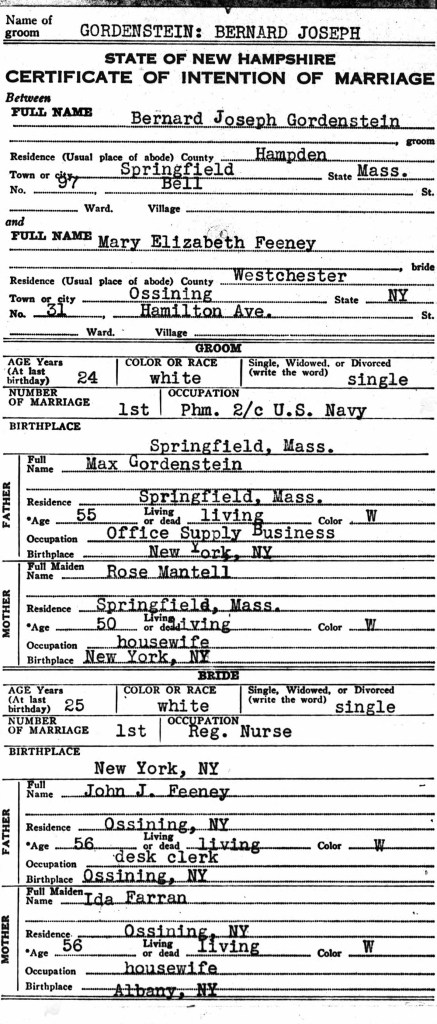
Ensign Feeney’s initial posting is still unclear, but in May of 1942 she married Bernard Joseph Gordenstein in Hillsborough, New Hampshire. He was also in the Navy, serving as a pharmacist. (This bit of information came as something of a surprise to the members of the Feeney family consulted for this exhibit. This might explain why the road is named Feeney and not Gordenstein.)
At some point, after the December 7, 1941 Pearl Harbor attacks, Ensign Mary Feeney was posted to Hawaii and served at the Pearl Harbor Naval Hospital. This was where injured warriors, primarily those from the Pacific Theatre of Operations, were stabilized before they were sent back to the US.
Here’s a 1942 photo from the U.S. Navy Bureau of Medicine and Surgery — while I can’t prove it, I have a feeling that the third nurse from the left, in the back row, might be our Mary Feeney.
Administrative group including Navy nurses and Red Cross workers at the Pearl Harbor Naval Hospital, 1942. Courtesy U.S. Navy Bureau of Medicine and Surgery
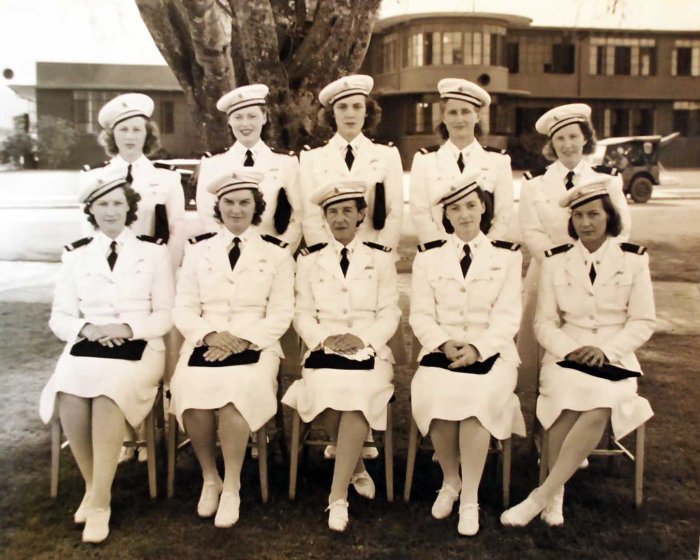
And in the photo below, the nurse seated in the front row all the way on the left actually does look very much like Ensign Feeney. (What do you think?) If it is, it would have been taken just four months before her death.
U.S. Navy Nurses pose for a group portrait at Pearl Harbor, Territory of Hawaii, December 16, 1942. Photo source: National Museum of the U.S. Navy
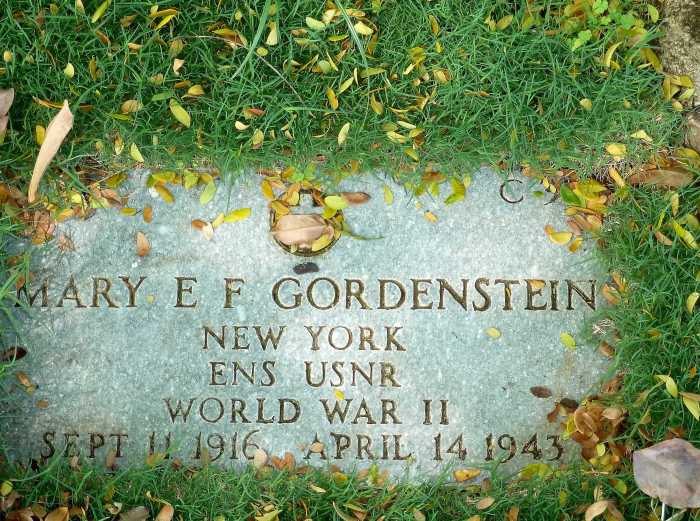
Sadly, Ensign Mary Feeney’s career in the US Navy was brief – she died of pneumonia on April 14, 1943 while stationed at the Pearl Harbor Naval Hospital.
She was posthumously awarded the Bronze Star for “Heroic or Meritorious Achievement or Service.”
She is buried in the Punchbowl National Memorial Cemetery of the Pacific on Oahu.
And in 1963, the Town of Ossining would name a street in the newly completed Lakeville Estates subdivision after her.
I’m not really quite sure why it’s taken me so long to blog about Peter Falk – I guess it’s mostly because he’s well-known and doesn’t need me to tell his story. But, since he is a true son of Ossining (Ossining High School graduate 1945!) I would be remiss if I didn’t. (Plus, I did a lot of this research for my recent presentation at Sing Sing Kill Brewery, so figured I might as well turn it into a blog post.)
Peter “Pete” Falk was born in the Bronx in 1927 but raised in Ossining on Prospect Avenue. (In 2005, Ossining would officially rename the corner of Eastern and Prospect Avenues “Peter Falk Place.”)
His parents owned a popular local clothing shop, Falk’s, that was located at 159 Main Street. Back in the days before malls and such, this was one of those essential local stores that sold pajamas, kids’ clothes swimsuits, and ladies’ undergarments. (Not the lacy lingerie kind that Victoria’s Secret sells, mind you, but the hardcore 1940s/50s rubbery kind that look just one step more comfortable than a Victorian whalebone corset.)
Falk’s Department Store at 159 Main Street, Ossining.
Photo courtesy of the Ossining Historical Society
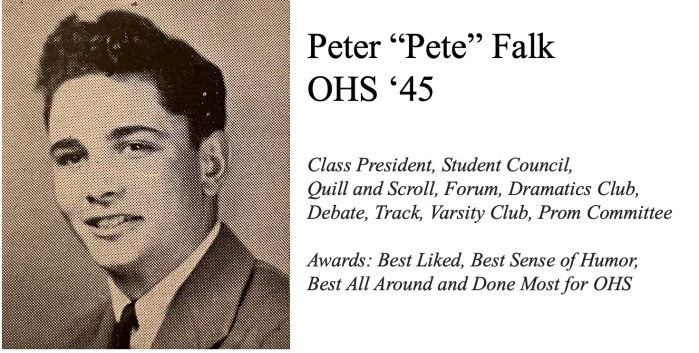
After perusing the 1945 Ossining High School yearbook (“The Wizard”) I get the strong impression that “Pete” Falk was one of those great guys that just everyone loved.
Photo Courtesy of the Ossining Historical Society
He was Class President for three years of high school (VP the other year) and, as you can see, served on an array of clubs and teams.
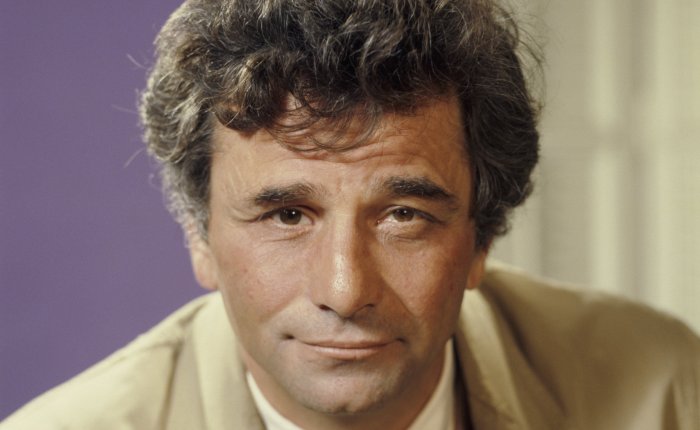
Now, if you’ve ever watched “Columbo” (or any of his other films), you might have noticed that he had an unusual squint – you can certainly see that his eyes don’t quite match in this photo. That’s because he had this eye removed at the age of three because of a retinoblastoma – a type of cancerous eye tumor. Ever after he wore a glass eye and would tell various stories regarding said eye.
One took place when he was playing Little League in Ossining. According to his 2006 autobiography, Just One More Thing: Stories from My Life, this happened:
“At Ossining High School, the baseball field was right in back of the school and the grandstand was very close to the playing field, particularly on the 3rd base side. This is significant because on this particular day it was a play at third base where the umpire called me out. It was a bad call. I was clearly safe. I knew it and everyone in the stands knew it. They sat so close to the field that they could see and hear everything. In front of everyone, I whipped out my eye and handed it to the umpire: ‘You’ll do better with this one.’ Talk about getting a laugh.” [2]
Because of his glass eye, he was not eligible for the draft, so he went straight on to Hamilton College but dropped out after three months to join the Merchant Marine. But also because of his glass eye, the only opportunities for him there were in the kitchen. So he sailed off as a third cook. After a year at sea, there were a few more attempts at college until Falk finally graduated from the New School of Social Research with a B.A. in Political Science and Literature. It was here, also, that he got his first taste of professional theater. After a few more false starts that included a master’s degree in Public Administration from Syracuse University (’53) and a job as an efficiency expert, in 1955 he finally followed the siren call of the theater.
When he told his dad, the response was “You’re gonna paint your face and make an ass of yourself for the rest of your life?”
Well, yes Dad, yes I will, said Peter Falk.
After that, things happened pretty fast. Falk began acting in summer stock in Connecticut, directed by theater legend Eva Le Gallienne. The next year, 1956, he made his Broadway debut in G.B. Shaw’s “St. Joan” as an English Soldier. From there, he landed in an off-Broadway production of Eugene O’Neill’s “The Iceman Cometh” directed by Jose Quintero and starring Jason Robards.
Pretty heady stuff for a kid who’d only just decided to make acting his career!
It was around this time that he went to Hollywood for a screen test. And here we get another (possibly apocryphal?) story about his glass eye when the young Peter Falk is introduced to Harry Cohn, the head of Columbia Pictures, as the next John Garfield. (I know, I’m not entirely sure who that is either!)
Cohn mumbled something about Falk’s “deficiency” and when he didn’t seem to be understood, Cohn just took a deep breath and shook his head. “For the same price” he said, “I’ll get an actor with two eyes.” [3]
Ouch!
Disappointed, Falk took himself back to the east coast, where he landed an agent and some bit parts in TV and off-Broadway. Finally, his big break came in 1960 with a movie called “Murder, Inc.” He even scored his first Academy Award nomination (for his supporting role as Abe Reles.)
Another Academy Award nomination came his way two years later, for “Pocketful of Miracles,” a Frank Capra-directed movie with a cast that included Bette Davis, Glenn Ford, Hope Lange and Ann-Margret.
But it was “Columbo” that catapulted him to legendary status. Starting in 1968, with the first pilot, the series ran consecutively from 1971 – 1978. After that, from 1990 – 2003 about ten Columbo specials were made. Falk as Lt. Columbo would get nominated for an Emmy Award almost every year, and he took it home at least four times. (He had already won an Emmy in 1962 for “Dick Powell Theatre.”)
Photo courtesy IMDB.com
(Fun fact – The Ossining Historical Society has an autographed trench coat on display that was personally given to them by Peter Falk.)
Falk was diagnosed with Alzheimer’s disease in 2008 and played his final film role a year later.
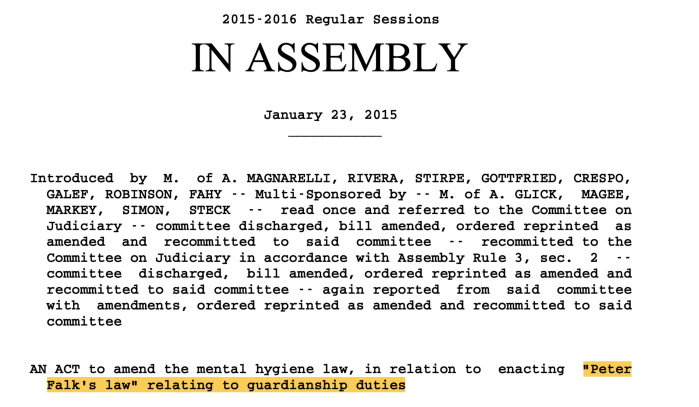
His last years were, it seems, tinged with sadness as his second wife, Shera, reportedly refused to allow his two children (from a previous marriage) to visit him as his dementia progressed. She supposedly didn’t even let them know when he passed away. The situation so troubled Falk’s daughter Catherine that after his death in 2011, she would go on to help pass legislation that would prevent family members from being cut off by the guardians of incapacitated family members. Ossining’s very own Assemblywoman Sandy Galef would introduce “Peter Falk’s Law” in 2015 and see it pass the NYS Senate in 2016.
But I like to think of him as that charming student from Ossining High School who spearheaded all sorts of fun for his class and went on to play one of the most iconic roles on television.
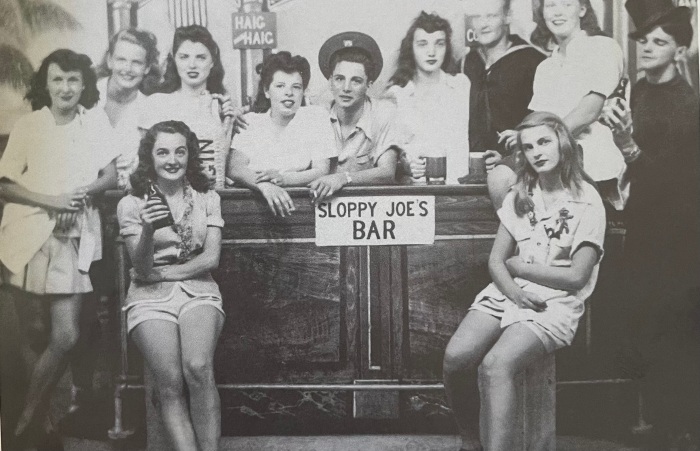
OHS ’45 Senior Class picnic, Rye Playland Photo courtesy Ossining Historical Society
[1] “The Wizard” the Ossining High School Yearbook, 1945
[2] “Peter Falk: Just one more thing – Stories from my Life” by Peter Falk, 2006
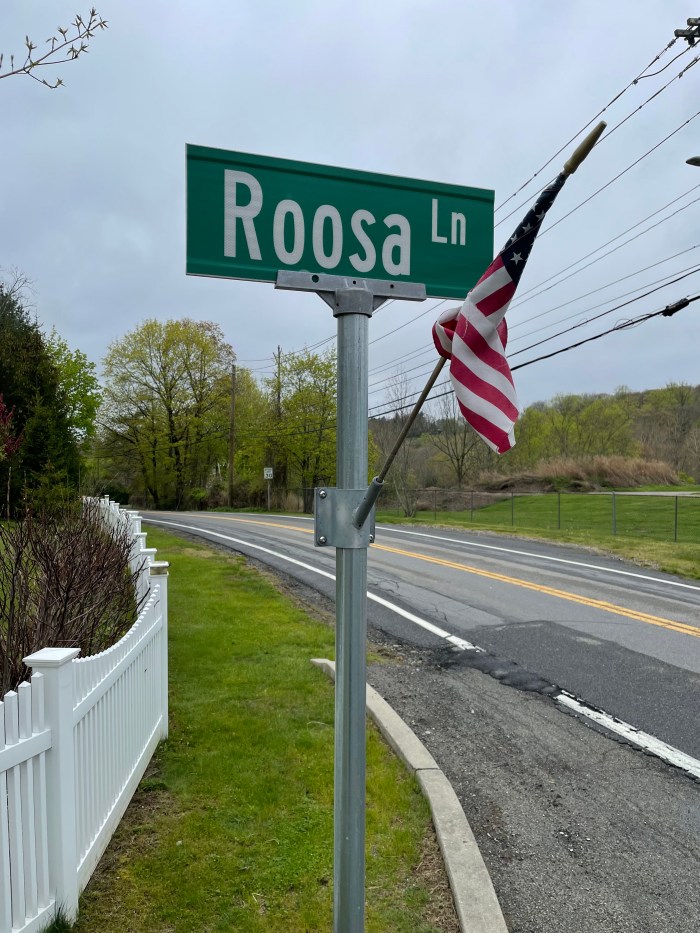
Continuing my investigation into the stories behind the Ossining streets named after veterans, today’s post begins with Roosa Lane.
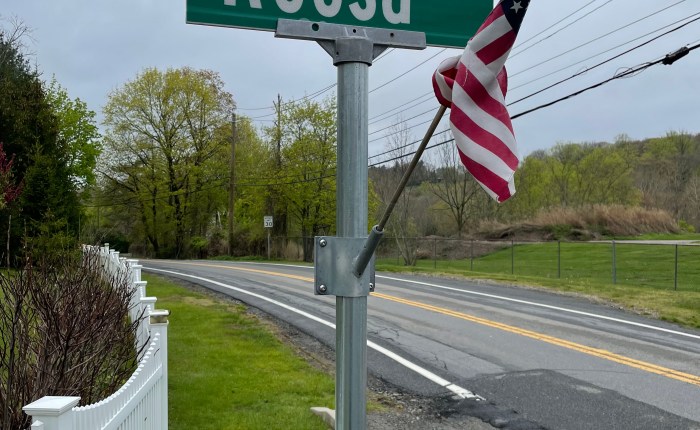
Roosa Lane, off Hawkes Avenue, Ossining. Photo by John Curvan
Now, as you will note, Roosa Lane does not have a star on it as other street signs do, but it DOES have a flag. While I’m still researching this, I believe the older streets (such as Feeney and Bayden for example) have the star while more recent ones, like Roosa, are demarcated with a flag.
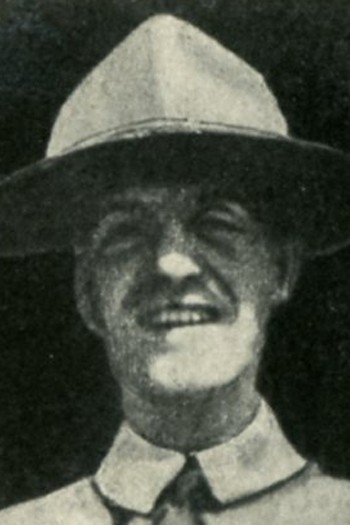
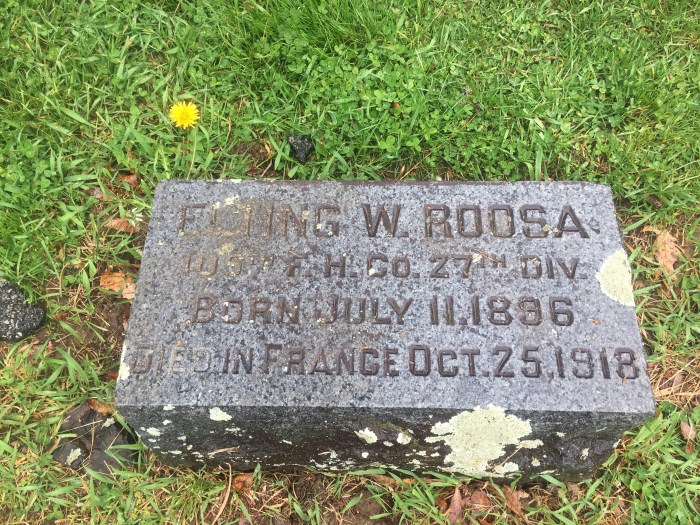
Roosa Lane is named after Private Elting W. Roosa, who died in France on October 25, 1918, just about two weeks before the Armistice. He was a member of the 105th Co. Medical Training Division, 27th Division at the time of his death.
Private Elting W. Roosa. Photo from the Columbia University Libraries
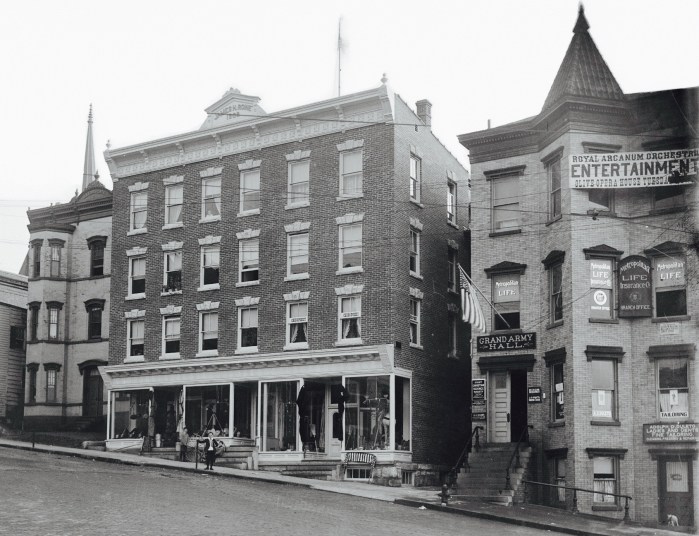
Roosa was born on July 11, 1896, in Kingston, New York, to William and Mary Roosa. The family moved to Ossining sometime after 1905 and lived at 4 Church Street, aka the Rowe building.
4 Church Street, c. 1910. Photo Courtesy of Dana White/Ossining Historical Society
Later, they moved to 11 Independence Place in Ossining. According to the 1914 Ossining City Directory, 18-year-old Elting Roosa was working as a clerk (father William was a carpenter.) But the next year, Elting enrolled in Columbia University’s School of Pharmacy, graduating in 1917.[i] Just before he graduated, in April of 1917, he joined the NY National Guard’s 102nd Sanitary Train, composed of ambulance and field hospital companies.
Upon graduation, Elting had quickly found a job as a pharmacist, in Tarrytown at Russell & Lawrie. (Fun fact, if they are not still in existence as of 2022, they were until very recently.) But he was drafted in June, and by July, Private Roosa and the rest of the 27th Division went down to Camp Wadsworth in Spartanburg, South Carolina for training. Just less than a year later, on June 30, 1918, he was sent overseas on the USS Huron and arrived in Brest, France – one of the last of his division to arrive.
I haven’t been able to confirm exactly what he did overseas – I’ve learned that many US Army personnel records spanning the years 1912 – 1963 were destroyed in a 1973 fire, so perhaps that accounts for the lack of information.[ii]
However, I think it’s likely that Roosa may have served as a medic, an orderly or perhaps even a pharmacist. But even in those few months that he was overseas, he must have seen plenty of the horrors of war. His Division, the 27th, was involved in the last, great push of the War, the Meuse-Argonne Offensive on the Somme that took place from September 24 – October 1.
Over one million US soldiers participated in this battle and over 26,000 died.
But our Private Roosa didn’t die in battle – no, he died of pneumonia. Remember, at this time, the Great Influenza was ravaging armies in the US and across Europe. And the Battle of Meuse-Argonne happened just as the second, most deadly wave of the influenza epidemic was peaking. According to an article published by the National Institute of Health (NIH) entitled “Death from 1918 pandemic influenza during the First World War: a perspective from personal and anecdotal evidence,” there were over 100K troop fatalities all told due to influenza at this time.[iii]
Further, the article details reports made by Colonel Jefferson Kean, the Deputy Chief Surgeon of the Allied Expedition Forces based in France. On September 18, 1918, he wrote of a “Sudden and serious increase in influenza-pneumonia.” By October 6, he was reporting that “Influenza and pneumonia . . . increased by thousands of cases. Case mortality of pneumonia 32 percent.” The next week, it had increased to 45%.
It was right about this time that our Private Roosa must have contracted what was likely influenza-pneumonia, dying shortly thereafter. As Sister Catherine Macfie observed at her field hospital in nearby Lille, France: “The boys were coming in with colds and a headache and they were dead within two or three days. Great, big handsome fellows, healthy men, just came in and died. There was no rejoicing in Lille the night of the Armistice.”[iv]
A surprising fact I uncovered was that while about 53,000 American soldiers died in combat in WWI, approximately 45,000 additional US soldiers died of influenza and pneumonia. It’s very hard to get one’s head around those figures.
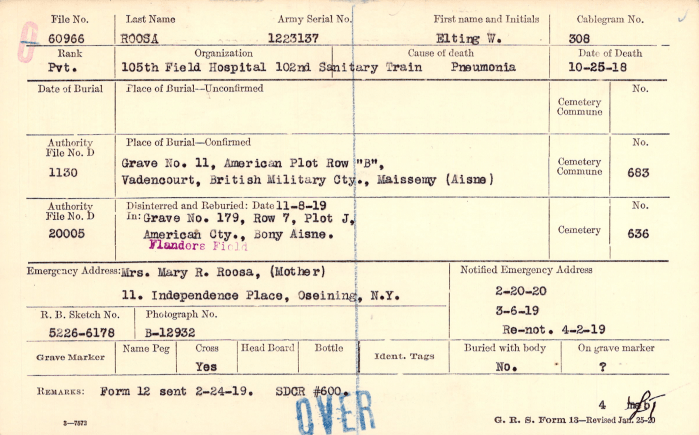
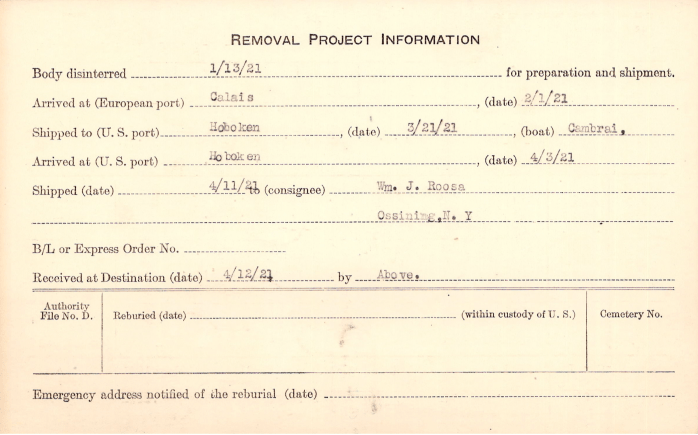
Another surprising fact is that Private Roosa was buried three times – below are the cards for his burials and disinterrments.
From the Records of the Quartermaster General, Card Register of Burials of Deceased Soldiers, 1917 – 1922, National Archives
This intrigued me, so I did a deep dive and learned that the odyssey of Private Roosa’s remains illustrates two stories: one, the development of how America would treat its battlefield dead going forward, and two, the political nightmare the repatriation of the US war dead was to become.
WWI was the first time the US Government attempted the repatriation of its fallen soldiers, but then of course this was the first time they had sent so many overseas to fight in a war. (Up until the 20th century, casualties of war were buried more or less where they fell.)
But after WWI ended, many families wanted their sons (and daughters – let’s not forget the 400+ American nurses who died during this war) to come home.
Though former President Theodore Roosevelt, whose son Quentin’s plane was shot down in July 1918 over the Marne, publicly announced that he wanted his son to remain where he fell, his sentiment was in the minority.
So, the Graves Registration Service (GRA) took on the tremendous project of determining what families’ wishes were and fulfilling them. To this end, over 74,000 postcards were sent out to the families of fallen soldiers asking if they wanted their remains repatriated. Ultimately, over 44,000 bodies were shipped home for burial.
But at the Armistice (11/11/1918), there were over 23,000 burial sites across the war zone. To accomplish their task, the GRA had to consolidate and relocate, establishing 700 temporary cemeteries for this purpose.
This likely explains why Private Roosa was first buried in a British cemetery in Maissemy, then disinterred and reburied about a year later in an American cemetery, that would be known as Flanders Field.
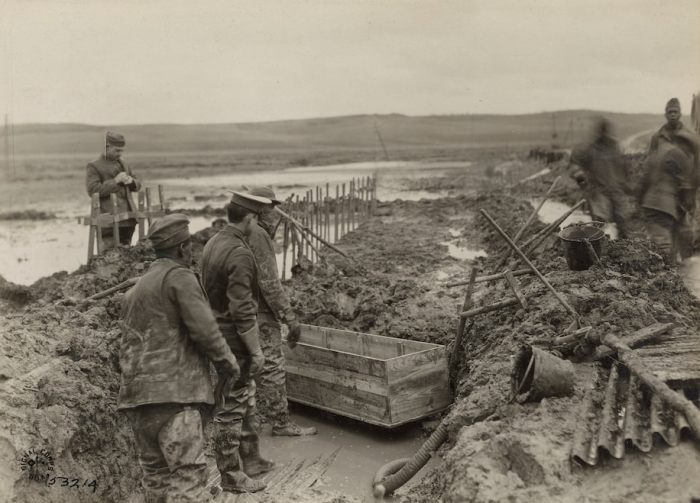
One thing I think is worth mentioning is that at that time, the US Army was still segregated. And this task of exhuming thousands of bodies was primarily assigned to the Black labor battalions. [v] This picture, from the National Archives and Records Administration, shows soldiers at work in the Ardennes, France.
Photo courtesy of the National Archives and Records Administration
In 1921, Private Roosa’s remains were exhumed and transported back to the States on the USS Cambrai, leaving Antwerp, Belgium on March 21, and arriving in Hoboken, NJ on April 3. (Ossining’s Sergeant Joseph De Barbiery arrived in Hoboken three months later, in July, 1921.)
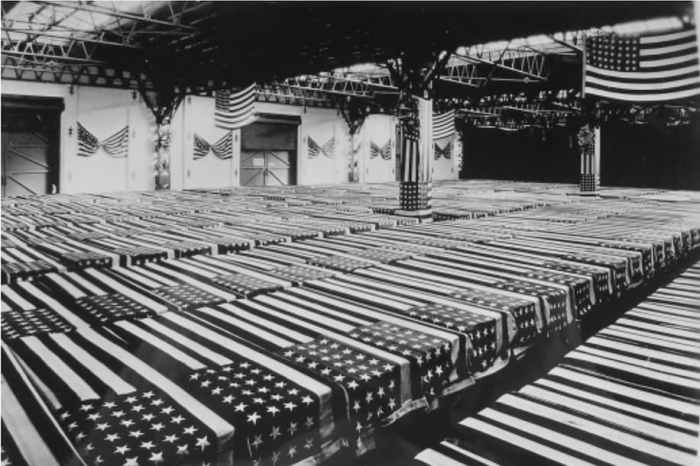
I also learned that France, desperate to recover from four years of brutal war that had destroyed its farms, towns and cities, not to mention an entire generation of young men, was not terribly enthusiastic about devoting its limited resources to the transport of the dead while its living were in dire need. They also didn’t want the sight of coffins to further traumatize its citizens. So it took several years of diligent diplomacy to make all the necessary arrangements for the 44,000 soldiers whose families wanted them home.vi
Caskets waiting for transport in Antwerp, Belgium, 1921. Photo courtesy of the US Army Signal Corps.
I have found no record of a funeral for Private Roosa, but he lies buried in Ossining, in Dale Cemetery, next to his mother and father and not too far from the street that bears his name today.
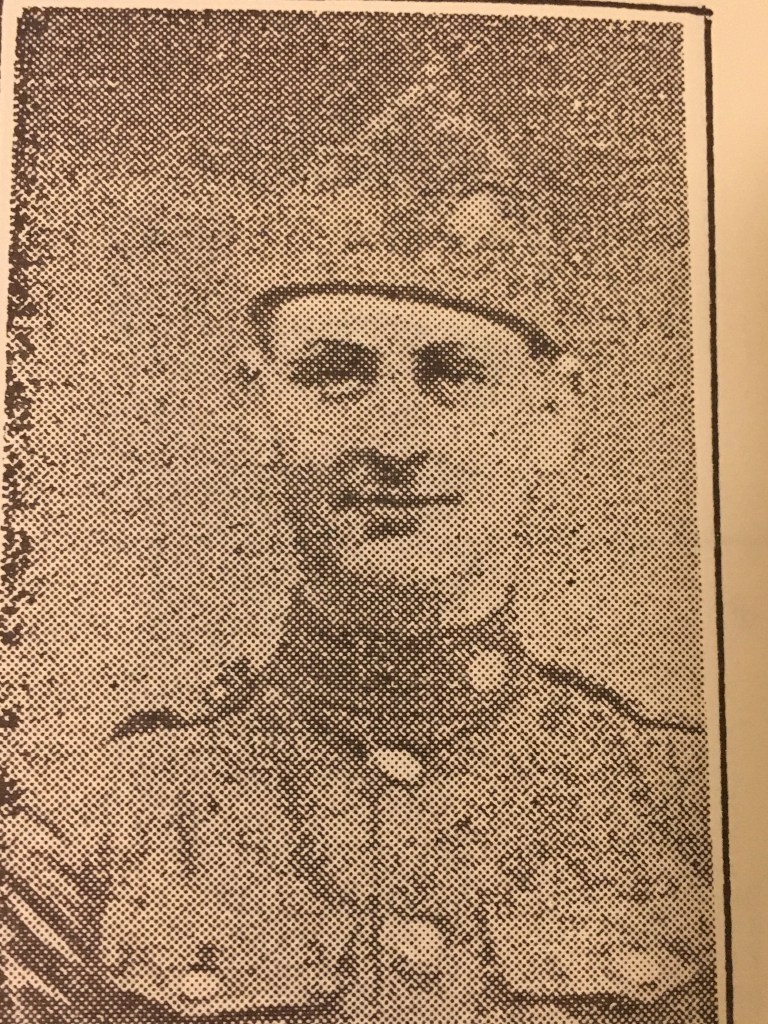
Private Benjamin Feeney. Photo Source: Ossining Historical Society pamphlet “A Memorial 1775 – 1983”
Today, let’s learn a little bit about Benjamin Feeney, one of Ossining’s own who made the greatest sacrifice in World War 1. (But no, he is NOT the Feeney after whom Feeney Road is named after. It is actually named after Ensign Mary Feeney, a U.S. Navy Corps nurse. See this post here.)
Benjamin K. Feeney was a Private in the 165th Infantry, Company L. He died in a German prison camp on August 7, 1918 from wounds received in battle on August 1, 1918.
Now, the 165th Infantry Regiment[1] had originally been known as the 69th Infantry Regiment, but for reasons known only to the Army, it was renamed the 165th in July of 1917 and became part of the 42nd Division. Because the 42nd was comprised of National Guard units from many states, then-Major Douglas MacArthur noted that the “42nd Division stretches like a Rainbow from one end of America to the other.” Ever after, the 165th was known as the Rainbow Division.
Fun fact – as the 69th Infantry Regiment it was known as the “Fighting 69th”, a nickname supposedly given to it by Robert E. Lee during the Civil War. Its Armory still stands at 26th Street and Lexington Avenue in New York City and has had a storied history I won’t get into here. But you should definitely Google it.
Also, here’s another fun fact: Father Duffy (of the statue in Times Square, right where the TKTS half-price ticket booth is located) was the regimental chaplain for the Fighting 69th. Poet Joyce Kilmer (you probably know him from the poem “Trees” that begins “I THINK that I shall never see/A poem lovely as a tree”) was also a member of this regiment and was killed on July 30, during the Aisne-Marne counter- offensive, just a week before our Private Feeney died.
Now, I’m not going to get into the weeds about the Aisle-Marne counter-offensive, or the Battle of Second Marne as it is sometimes called, to distinguish it from the first Battle of the Marne that took place in 1914. However, the fact that there are two battles of the same name on basically the same bit of land four years apart tells you something about what deadlock this World War was.
But I will note that this battle was Germany’s last major offensive of WWI and that it signed the Armistice about 100 days later, so this could certainly be seen as the beginning of the end for them. Some even think that the German infantry was decimated by the so-called “Spanish flu” and this contributed to their crushing defeat.
But back to our doughboy, Benjamin Feeney.
According to the 1905 census, Private Feeney was the son of Coleman and Bridget Feeney and born in about 1890. He lived on Revolutionary Road with his parents and at least seven siblings.[2]
On November 6, 1917, as a member of the National Guard incorporated into the 165th Regiment, he traveled to France, on the troopship Ascania, departing from Montreal, Canada.
According to the Records of the Office of the Quartermaster General, 1774-1985[3] Private Feeney took part in several major engagements in France: Rouge Bouquet (in March 1918.) Poet Joyce Kilmer was also in this battle and wrote a poem called Rouge Bouquet in memory of their fallen comrades.
Other battles in which poor Private Feeney fought in were in Baccarat (April 1918), Champagne (June 1918), and Chateau Thierry (July 1918). I realize that these last three sound like a vacation, but they were brutal, trench-based conflicts that make “All Quiet on the Western Front” seem tame.
His final battle was the Aisne-Marne Offensive whose objective was to cross the Ourcq River and force the Germans to retreat (Read this if you want a deeper dive.) While the Allies were, as previously mentioned, successful, the 165th suffered a 42% casualty rate. Our poor Private Feeney was one of them.
His record notes “captured August 1/18, released, death at Limburg, Germany of wounds received in action.” He was likely held at Limburg an der Lahn, a large German POW camp, in the days before he died.
He was buried at the Oise-Aisne American Cemetery, Seringes-et-Nesles, France.
(And no, Feeney Road in the Town of Ossining is NOT named after him. It is named after Ensign Mary Feeney, who also died in World War II.)
[3] The National Archives at College Park; College Park, Maryland; Record Group Title: Records of the Office of the Quartermaster General, 1774-1985; Record Group Number: 92; Roll or Box Number: 379








 Ossining History on the Run