
I’ve received a number of queries asking me to compare the Bark Europa, the ship I’ll be sailing on, to the ship that Alfred Agate was on for the US Exploring Expedition.
First, Alfred was on a total of three ships during the course of the US XX.
He started on the USS Relief, a supply ship that was 109’ long with a 30’ beam.
Commanded by Lt. Andrew K. Long, the Relief was not built for speed. But then, it was meant to be a storeship, so what could you expect? Still, her sluggishness infuriated Lt. Charles Wilkes and after berating Lt. Long mercilessly for months (as much as one could do from another ship with no radio), and after the ship was almost wrecked off Noir Island, Wilkes sent the ship home from the port of Callao. (Fun fact that gets grosser in some accounts – when the Relief was fumigated in Callao, anywhere from 3 – 8 barrels of dead rats were unloaded from her hold.)
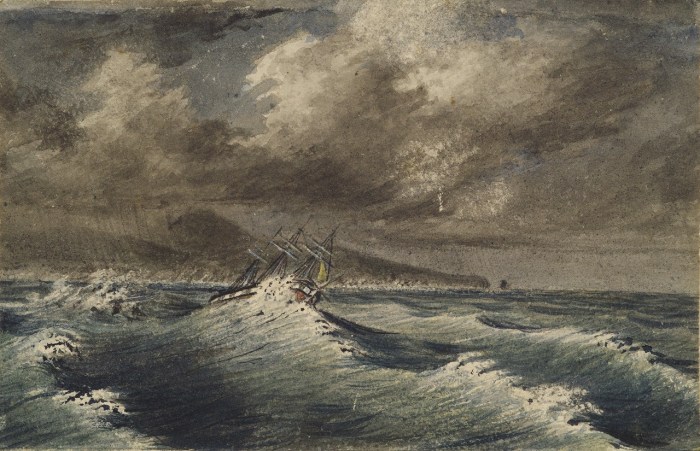
Courtesy of the Naval History and Heritage Command
Alfred Agate and William Rich, the naturalist, are transferred to the USS Peacock at Callao.
The USS Peacock was a sloop-of-war, 119’ (36m) long with a 32’ (10m) beam.
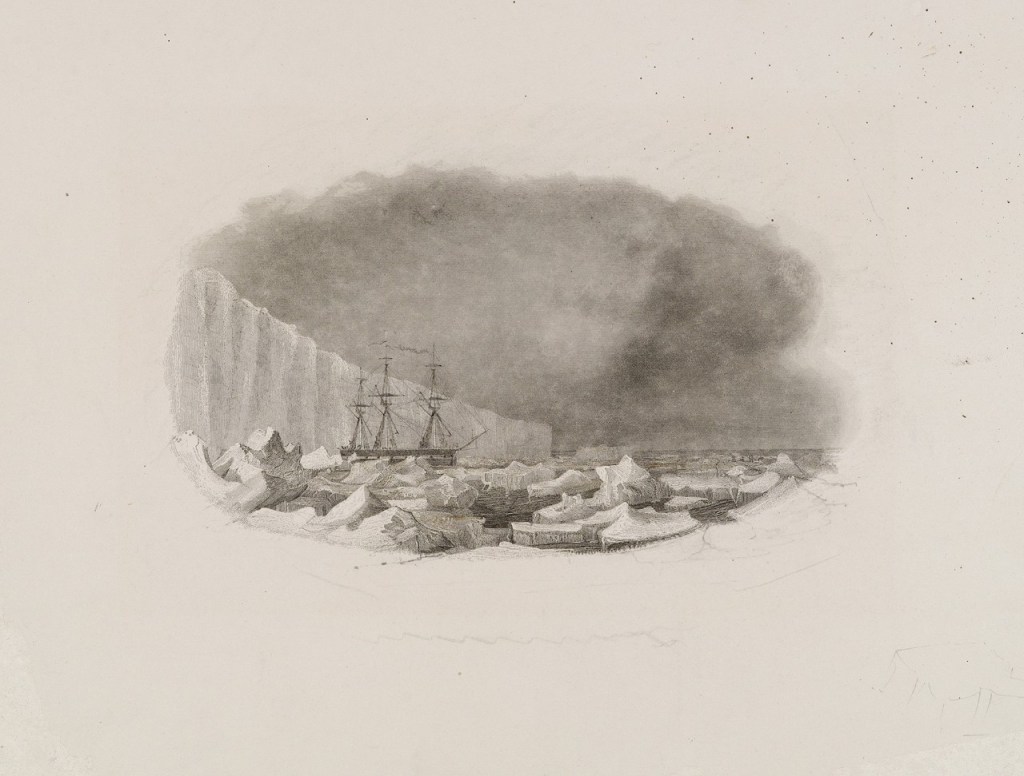
This image was likely sketched by Lt. Wilkes and then cleaned up by Alfred Agate later as Agate did not embark on either Antarctic mission of the US XX.
Courtesy of the Smithsonian Institution
Lt. William Hudson was the very capable commander who eventually, as it seems did everyone, got on Wilkes’ bad side.
Alfred was on the Peacock until it was wrecked on or about July 16, 1840 while trying to cross the bar into the Columbia River. All hands were saved, but Alfred is said to have lost many illustrations on his escape from the sinking ship.

Courtesy of the Naval History and Heritage Command
From there, after some overland expeditions in southern Oregon and northern California (during which Alfred got so ill from “fever and ague” that he had to be transported to San Francisco for treatment.) At this point, he was placed on the USS Vincennes, the flagship of the Expedition and the one under Lt. Charles Wilkes’ direct command.
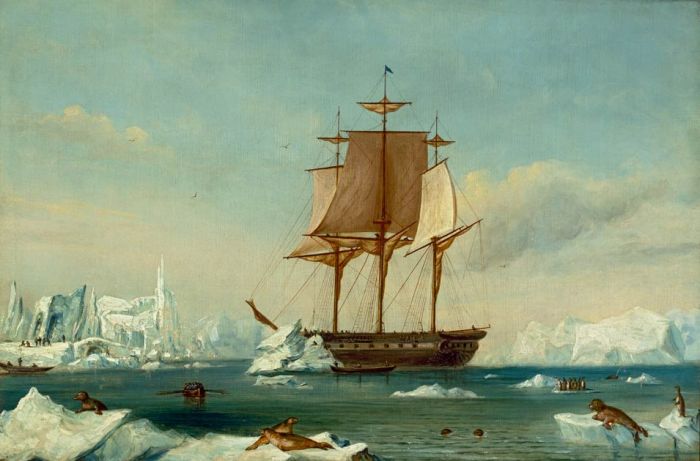
Courtesy of the Smithsonian Institution
The Vincennes, also a sloop-of-war, was 127’ (39m) with a beam of 34’ (11m).
In comparison to the three ships listed above, the Bark Europa is a three-masted steel barque, 131’ (40m) long with a beam of 25’ (7.5m). And of course, unlike all the ships on the US Exploring Expedition, she is equipped with engines. However, unlike the Europa, the two sloops-of-war were equipped with numerous cannons of various sizes. These were used to frighten the various native peoples to “encourage” them to cooperate with the demands of the Americans and to retaliate against said natives when they did not.
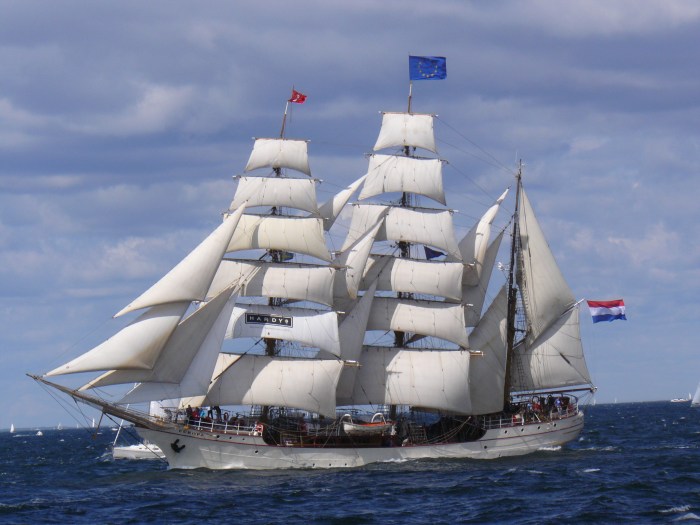
Courtesy of Wikimedia Commons
This is likely to be my last post for a while, as I am about to board the Europa in less than an hour. But I will post again!
If you haven’t already subscribed and are interested in following this journey, you can do so here:
 Ossining History on the Run