My training for this year’s NYC marathon officially starts this week.
It’s not my first marathon, nor even my first NYC marathon, so this year I’m going to try and finish in a particular time, not just hope to finish without soiling myself. Now, I’m not at all fast, but to hit the time I want, I know I need to incorporate more than just a lot of running into my training. I’ll need to do horrible things like Yasso 800s, tempo runs and hill repeats. Sounds like great fun in the heat of summer, right?
Blah blah blah, I know this is all boring to you non-runners, but I promise there’s a point to all this, because it’s those hill repeats that inspire today’s post . . .
The hill of choice for me is Allapartus Road, which is a narrow, windy road that connects Spring Valley Road up to Rt. 134/Croton Dam Road. As you run up it, you pass the Lutheran retreat on your left (once owned by Major Edward Bowes) and on your right, if you know exactly where to peek through the trees, an abandoned castle once known as Elda.
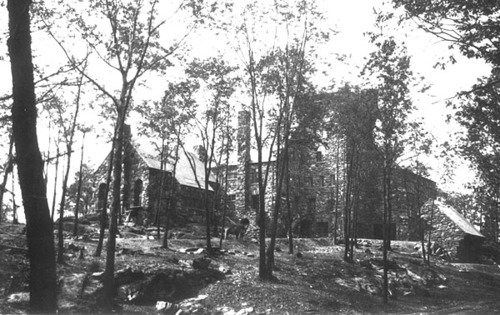
Wait, what? A castle? There’s an abandoned castle right in our midst? (Maybe abandoned is the wrong word because apparently someone owns this castle. And if you try to get close enough to see it, you’ll be trespassing. So don’t do that, okay?)
Just know that at the crest of Allapartus, there’s a stone castle that was built by David Abercrombie, of Abercrombie & Fitch fame.
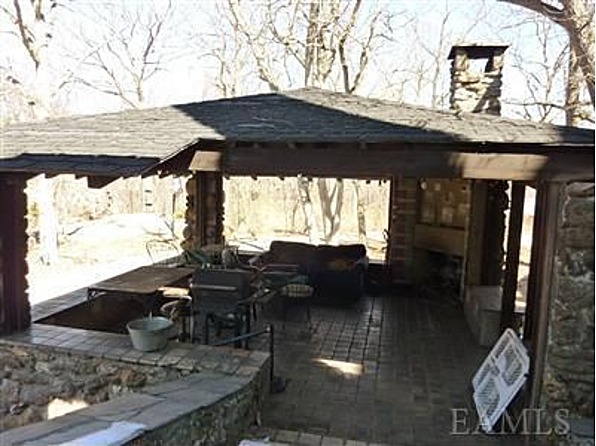
According to the NYC Office of Parks, Recreation & Historic Preservation, the castle “was built in 1927 as the Elda Estate. The 60-acre estate included the large main house, a house barn, three small residences, a bathhouse and a large pond. The estate was carved from a W.W. Law property between 1911 and 1927. [The main house is] a massive, multi-level building based on the English Cottage style constructed of both cut granite and live rock (also granite.) The house is reminiscent of a Medieval Castle and designed to look in part like a ruin. The house features a number of intersecting gables as well as a section with a hipped roof and some areas that are not covered at all. The house features a number of arched doorways, arched windows, curved staircases, exposed stone chimneys, and vaulted spaced and covered masonry. Other features include an open patio with a fireplace, a covered patio with a hipped roof and other medieval inspired elements.”
Here’s the open patio:
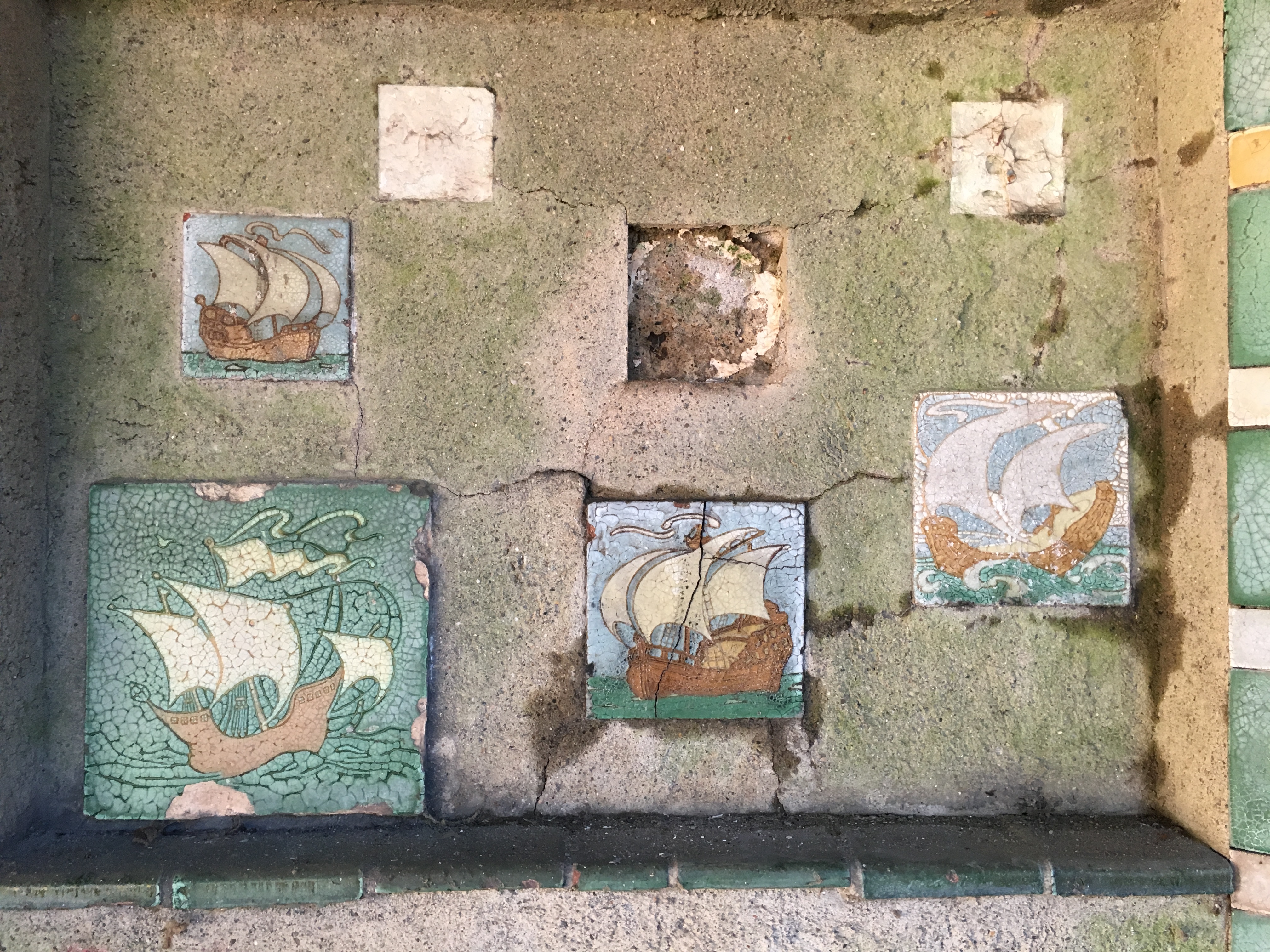
Here are some pictures of tiles that are inset into this gazebo:
Here are the tiles above the outdoor fireplace — they look like Henry Hudson’s Half-Moon, don’t they?
And here’s another open patio/courtyard (opinions differ on whether the castle was built like this, or whether a post-Abercrombie owner removed the roof on this part. The outline of a roof in the stone work makes me think this area was meant to be enclosed.)
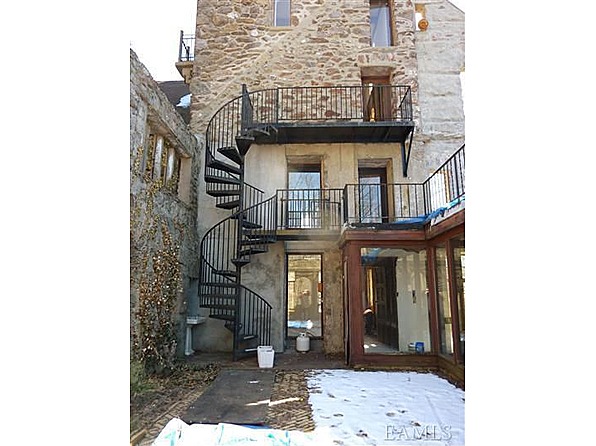
And here’s a photo that really gives the Medieval flavor of the place: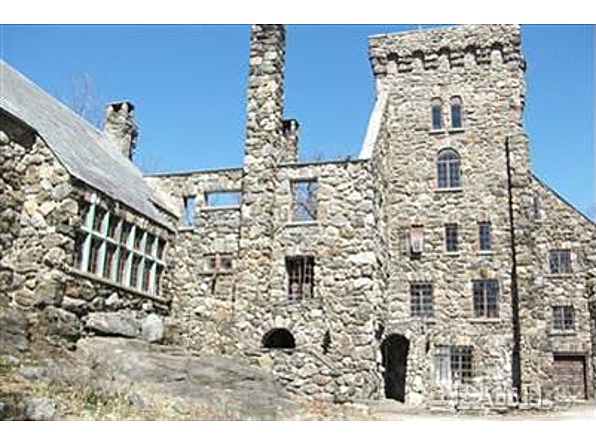
According to David Abercrombie’s obituary, the castle also “affords a view of the Hudson Valley and Long Island Sound.” I guess that’s possible, if you stand on the very top of that tower.
Anyway, why was it called Elda, and who was David Abercrombie?
Well, Elda was an acronym for Elizabeth, Lucy, David, and Abbott, Abercrombie’s four children.
And David Abercrombie himself was a surveyor, civil engineer, and general all-around outdoorsman. Born in Baltimore in 1867, he began working for railroad and mining companies surveying land across America, living the outdoor life in rough camps and mining towns.
In 1892 he opened up Abercrombie Co., a top-drawer camping, fishing and hunting gear boutique at 36 South Street in downtown Manhattan. Financier Ezra Fitch was one of his best customers and, in 1900, Fitch bought a share of the store, renaming it — you guessed it — “Abercrombie & Fitch.”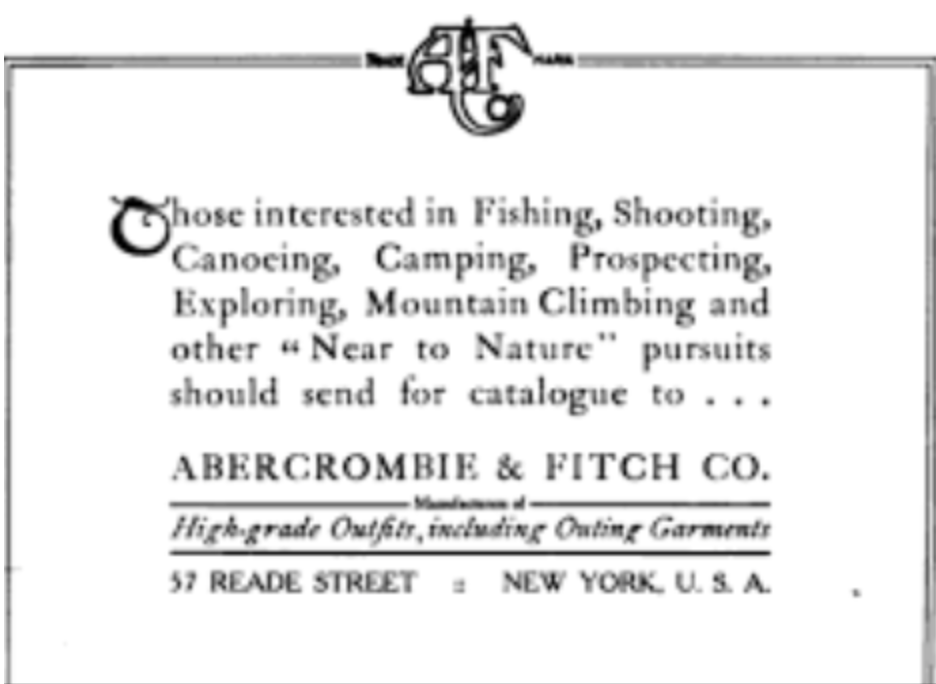
(I’d love to know what the well-dressed prospector wore circa 1905! And what are outing garments? Oh my!)
In those early days, Abercrombie & Fitch outfitted some of the most famous explorers of the day – like Arctic explorer Admiral Richard Byrd, Theodore Roosevelt, Ernest Hemingway and Amelia Earhardt. A far cry from today’s Abercrombie & Fitch that outfits teenagers with bikinis, perfumes and polo shirts.
During World War I, Abercrombie was commissioned as a Major in the Quartermaster corps and was in charge of packing and shipping all sorts of supplies to our boys overseas. It seems that he basically invented compression packing, and figured out how to squeeze 20 cubic feet of material into 4 cubic feet. (See this 1942 letter from wife Lucy Abercrombie to the New York Times extolling her husband’s skill in packing.)
At some point in the 1920s, the Abercrombies bought the estate’s land from Briarcliff Manor founder Walter Law. Abercrombie’s wife Lucy supposedly designed the castle, and it was built using stone from the area. No doubt the Abercrombies invited neighbors like Major Bowes, Margaret Illington, and maybe even Jeanne Eagels to their housewarming party!
According to an article written by Miguel Hernandez, Abercrombie was very active in local society. He founded the Dirt Trails Association, which created a public bridle path through many of the adjoining estates in the area, all marked with “DTA.” (Funny that the initials for the Dirt Trail Association are the same as for David T. Abercrombie. Coincidence? I wonder.)
He had a firing range built on the property and allowed local police officers to use it freely for target practice (he was Police Commissioner of New Castle at one time.) His estate was designated as a Reserve Officers Contact Camp and was used by groups like the Veteran Corps of Artillery and the Military Society of the War of 1812. (Did they do re-enactments back then??) He also encouraged the priests and brothers of Maryknoll to use his pond. (I suppose it’s not that long a trek from Maryknoll to Elda, if you take the trails.)
Today, you can pretend to be a Maryknoll missionary and hike along part of the old estate grounds to the pond:
Park in the lot for New Castle’s Sunny Ridge Preserve (on Rt. 134/Croton Dam Road near Grace Lane.)
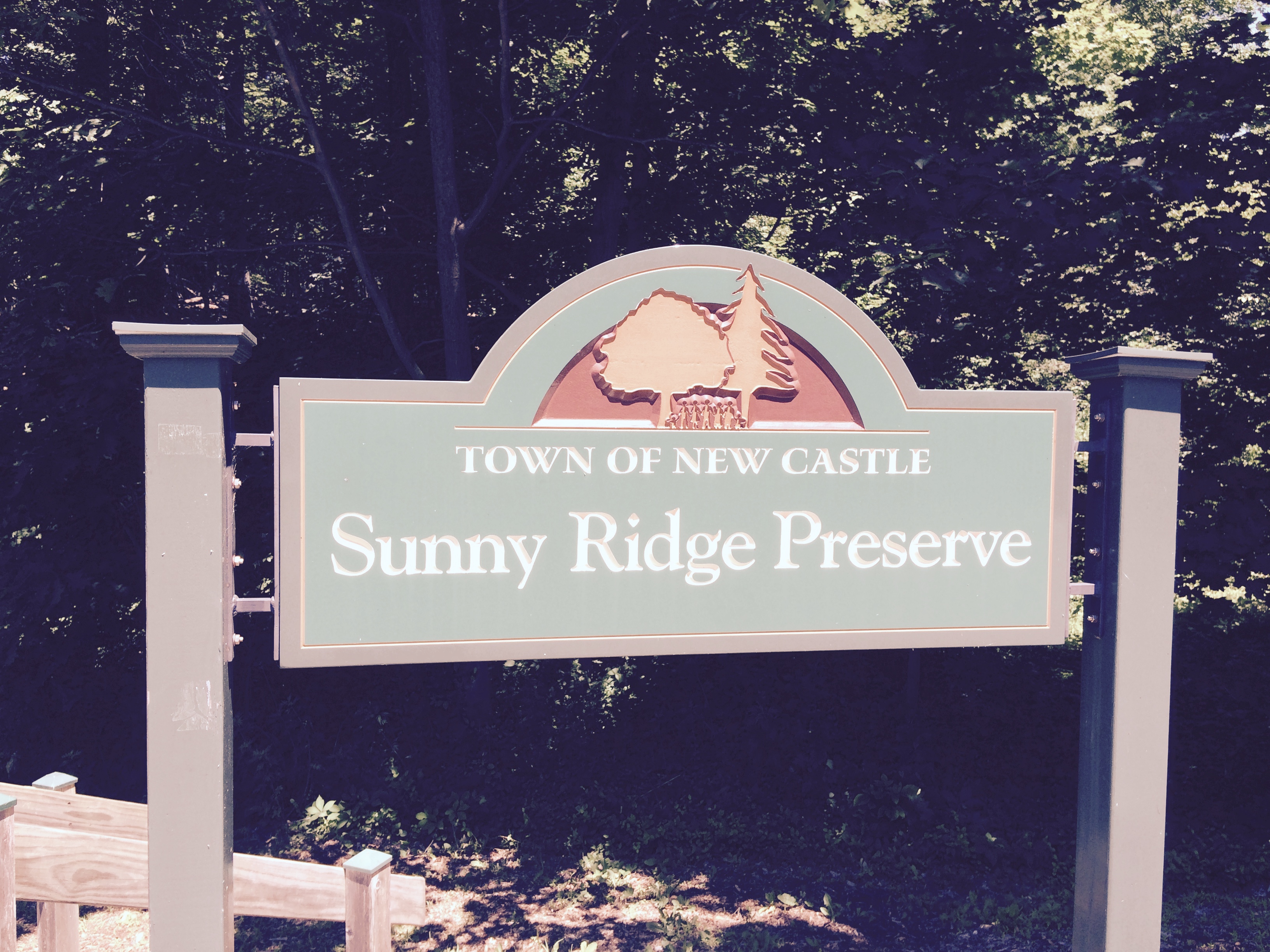
Follow the white-blazed trail for about 5 minutes
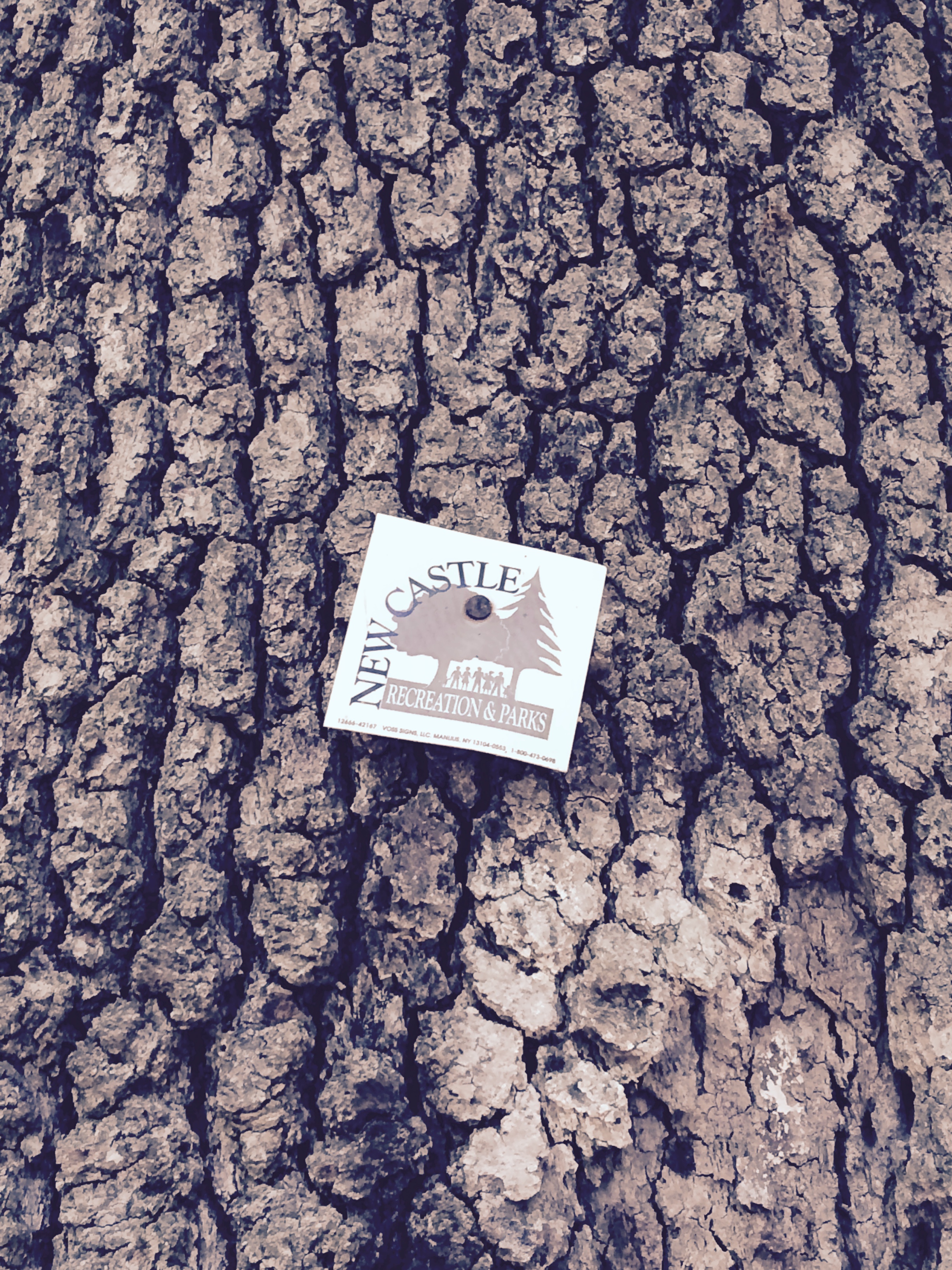
until you see a little trail lead off into the brush to your right. Bushwhack along that trail a little bit until it opens up and you come to a pond down the hill to your left:
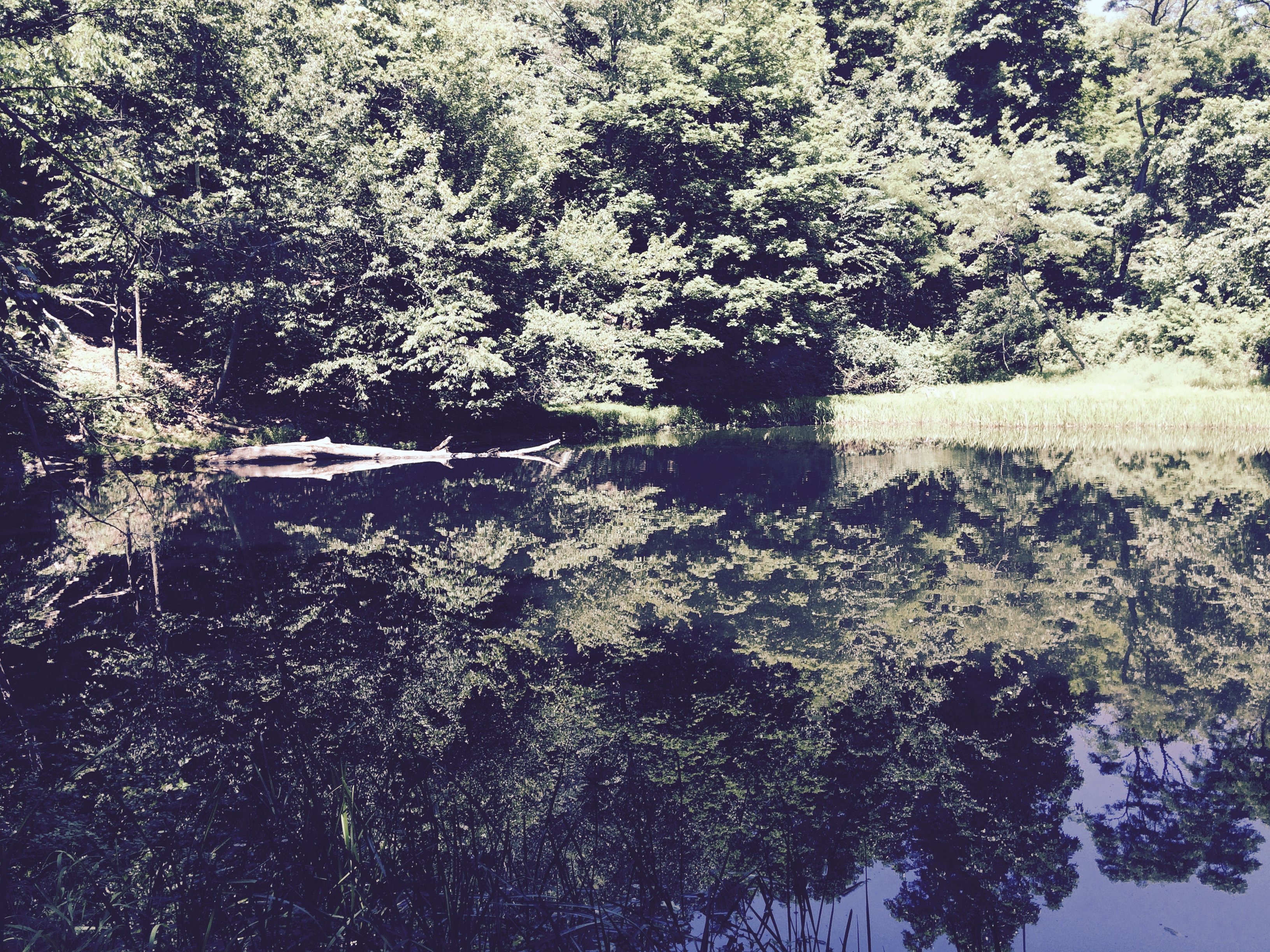
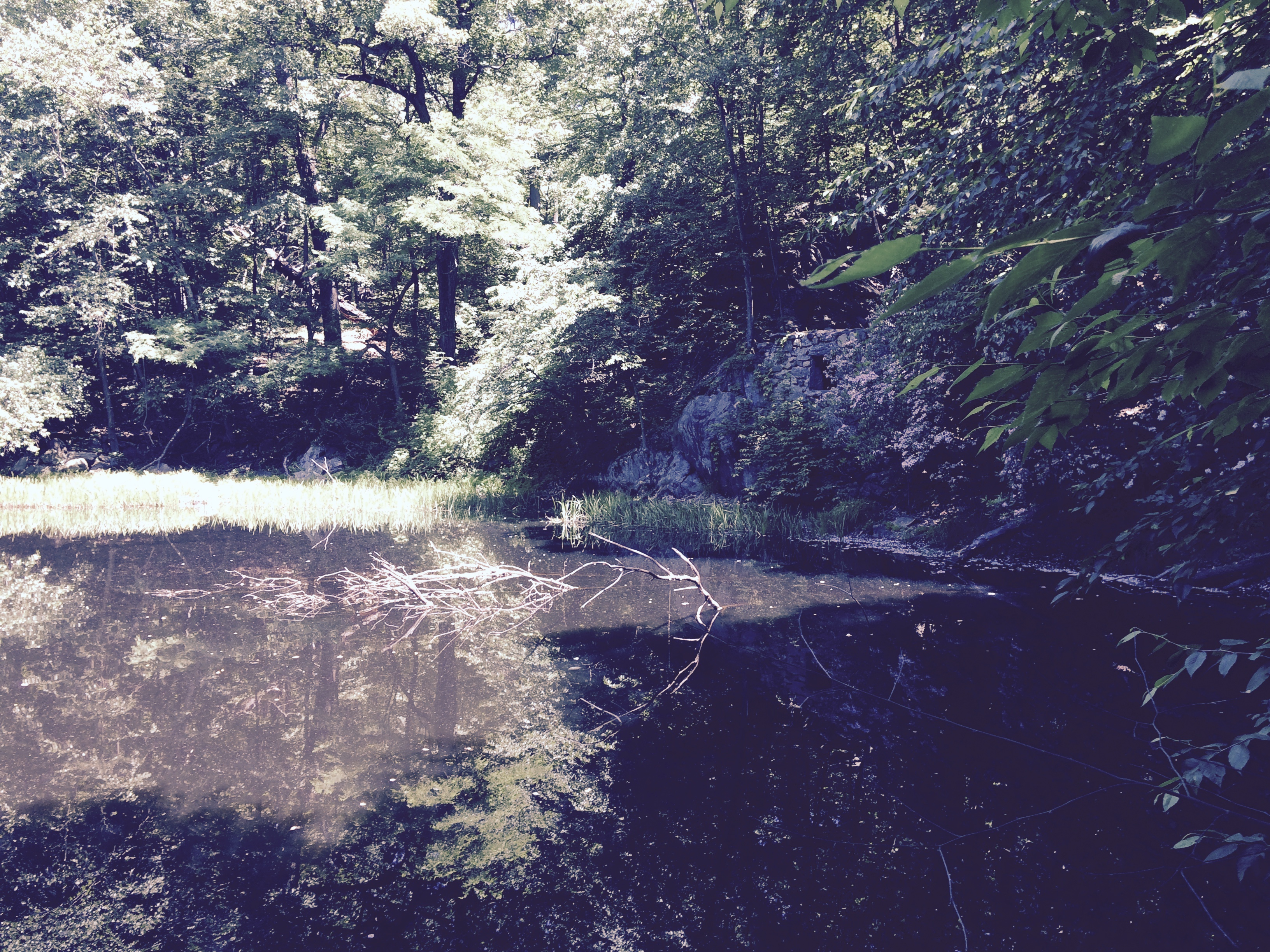
There’s a small stone building on the edge of the pond (you have to look really hard at this picture to see it):
Walk around the edge of the pond to go inside and take dramatic, shadowy photos:
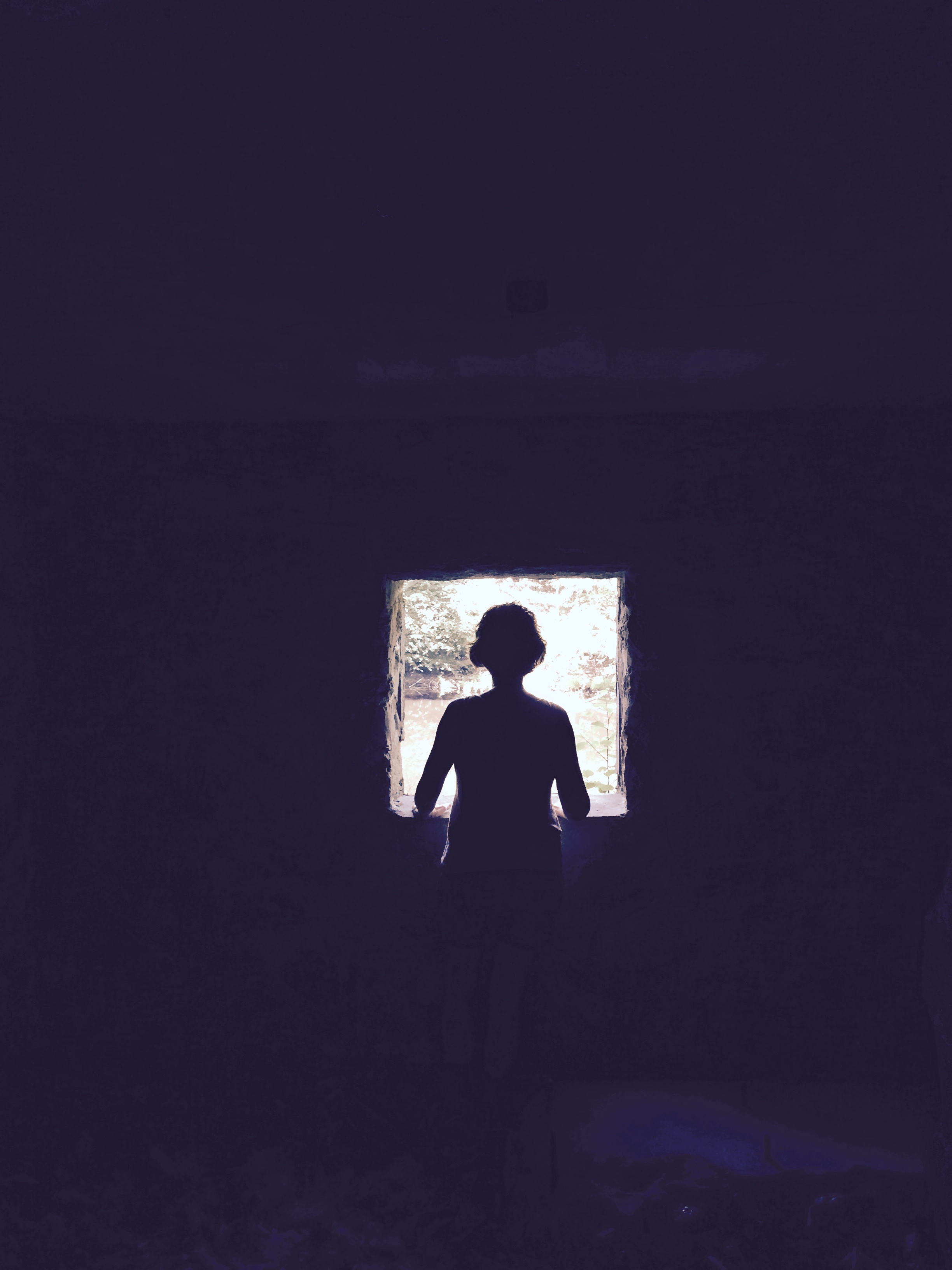
(I’ve no idea what the stone house was used for — perhaps a pump house of some kind?)
Walk past the stone house up a scrabbly hill – wait, first look back and see again how delightful this site is, and imagine the Abercrombie family enjoying this cool, shady spot on a blazing summer day.
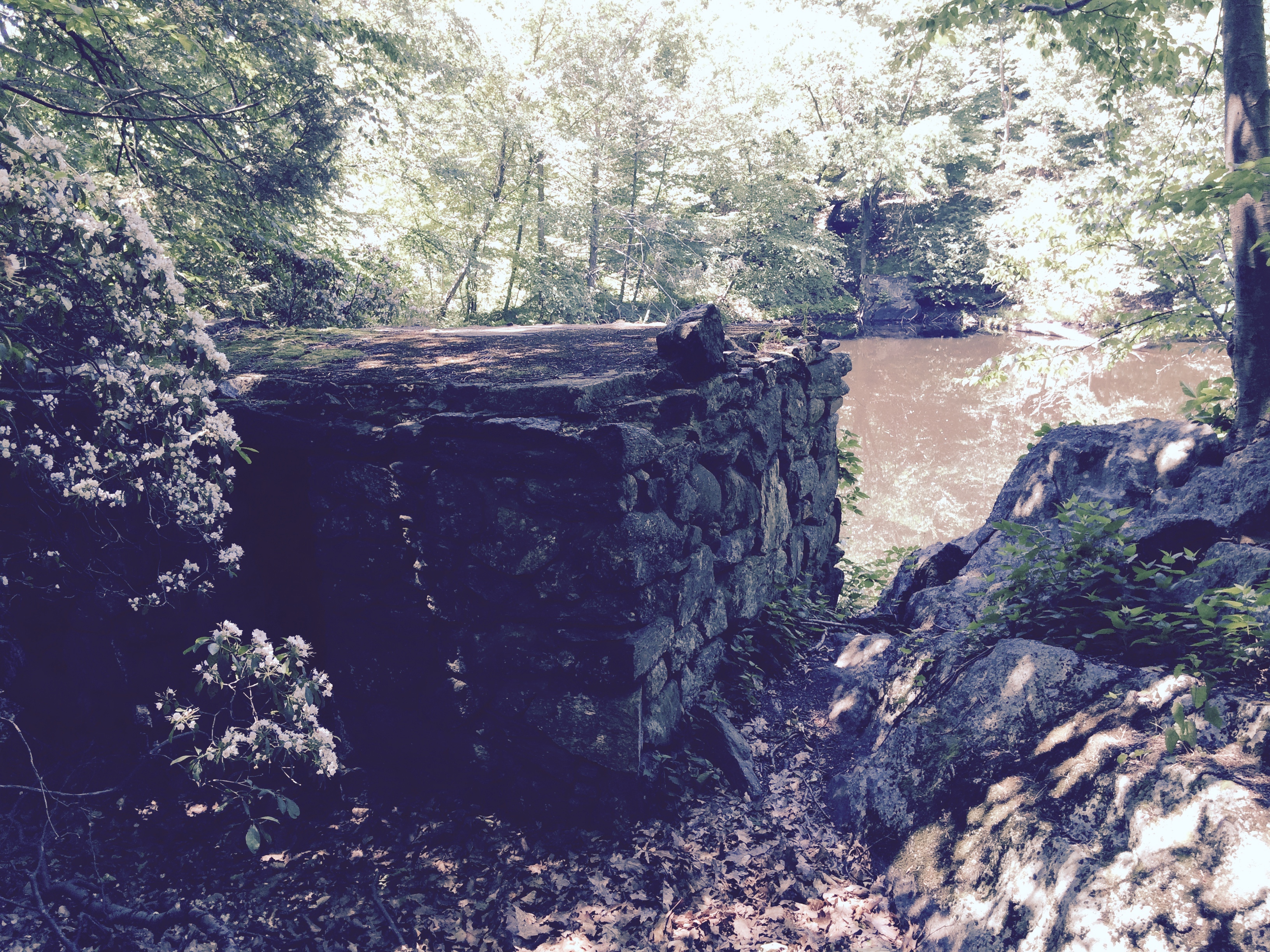
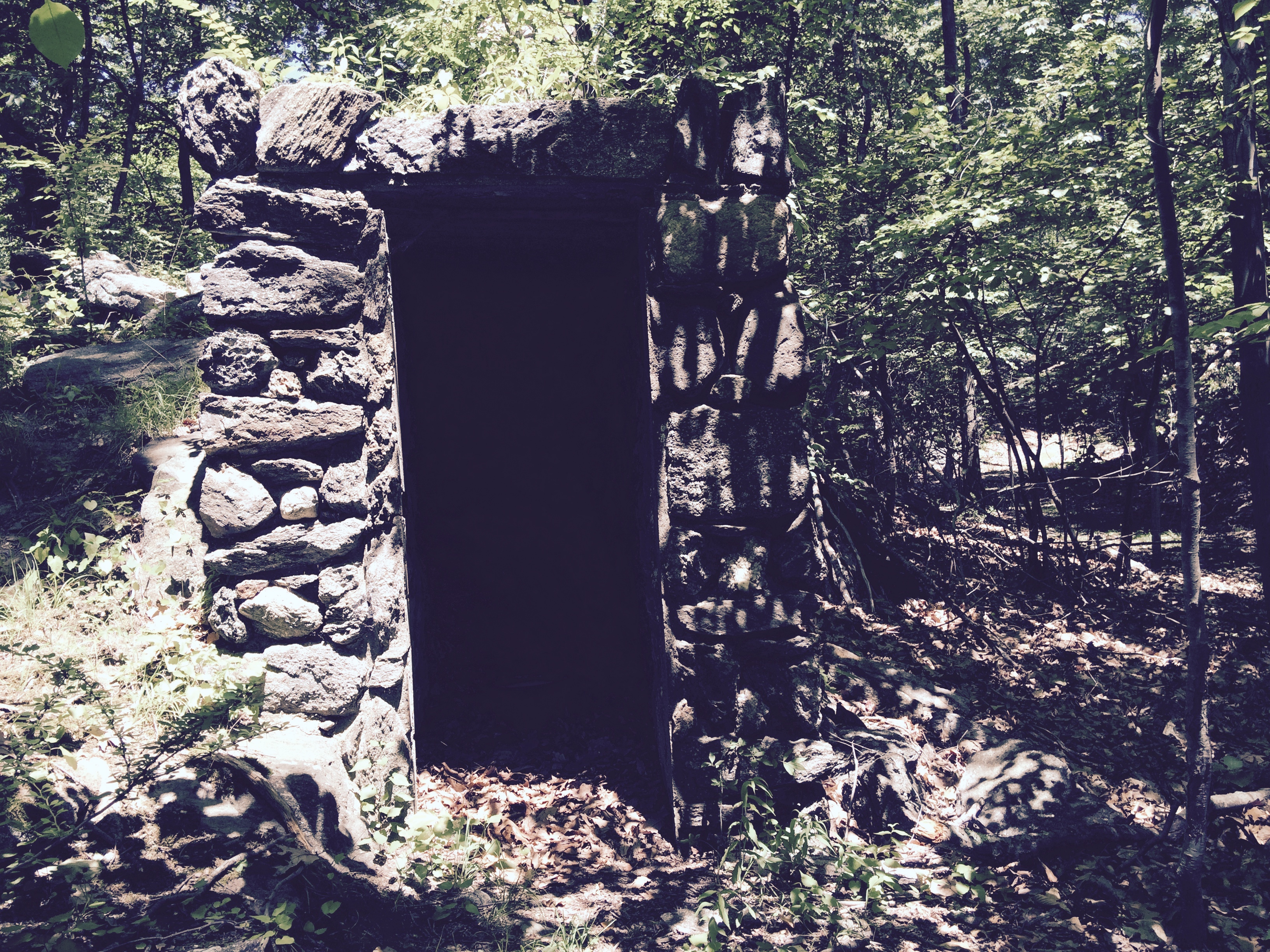
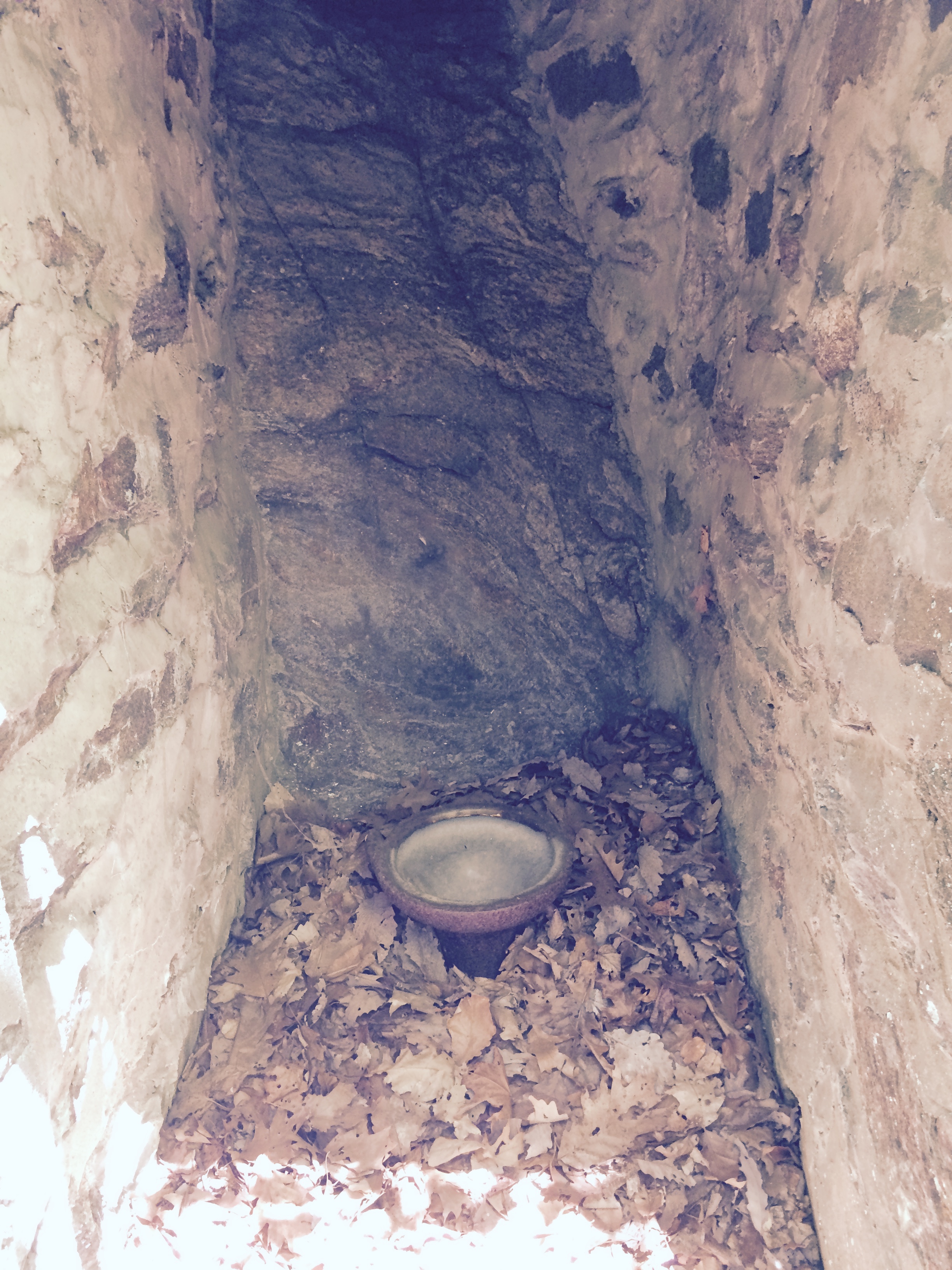
At the top of the hill, you’ll come across the ruins of an old stone toilet building,
On top of the toilet, you find the ruins of an old stone fireplace:
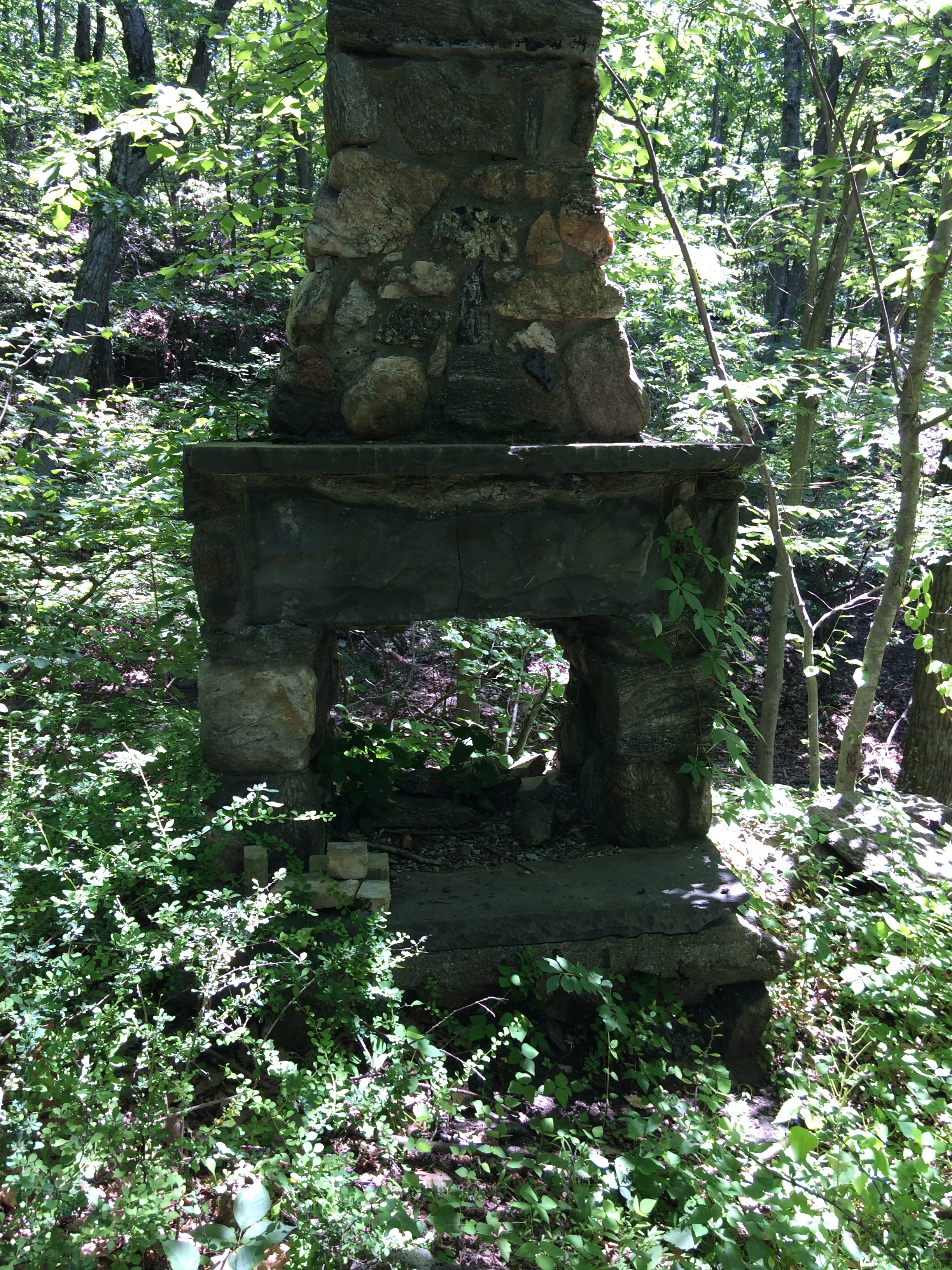
I imagine these are the ruins of the bathhouse mentioned earlier, in which one could enjoy hot cocoa in front of a roaring fire after a brisk morning swim. Or perhaps to toast marshmallows in after a sunset dip?
Walk a little further past the toilet, the fireplace and the pond, along the path strewn with branches and fallen trees . . .
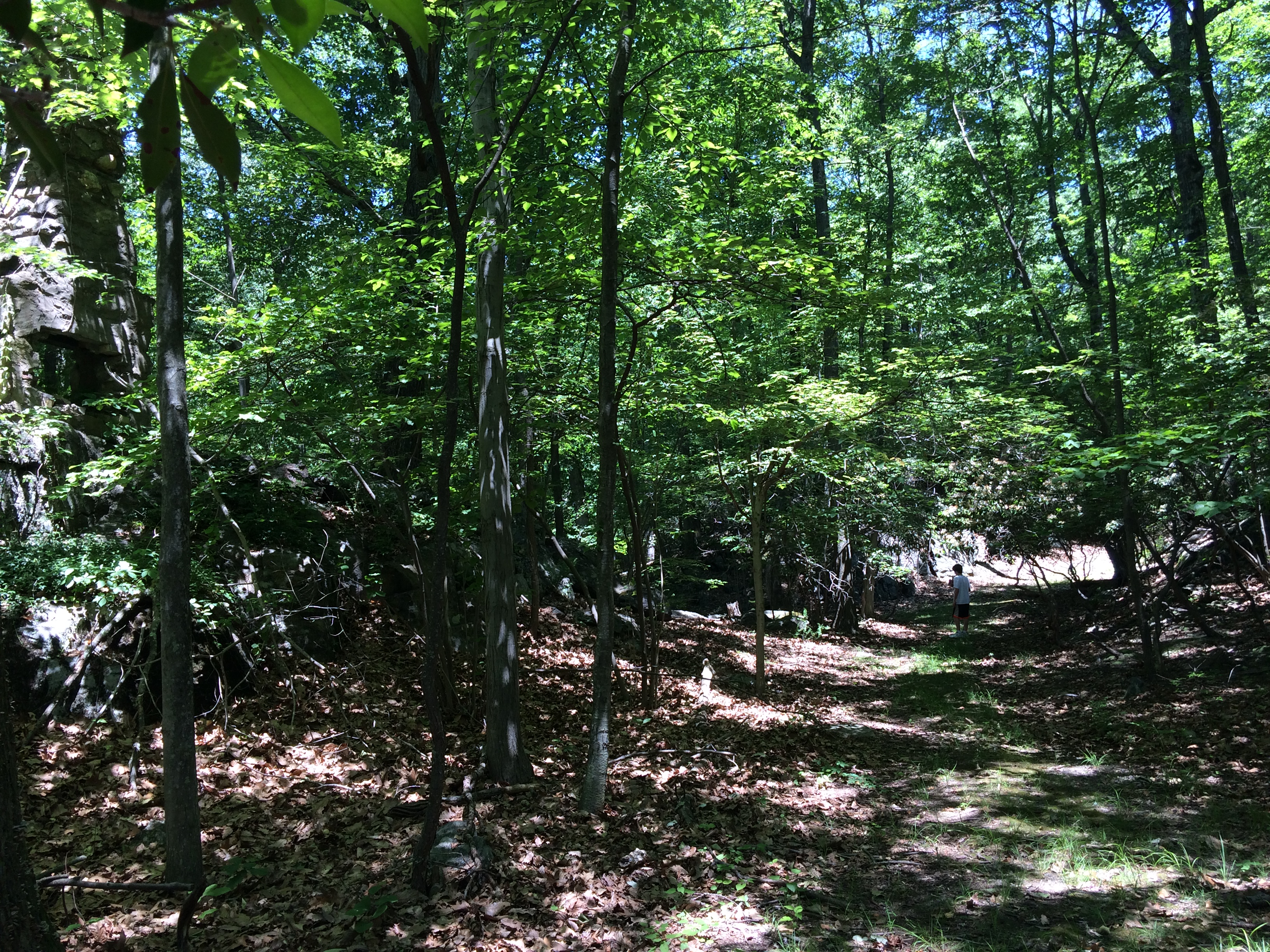
and you’ll come across the driveway to the castle. Whatever you do, don’t take a left and walk up the driveway to the castle. Like I said earlier, it’s private property.
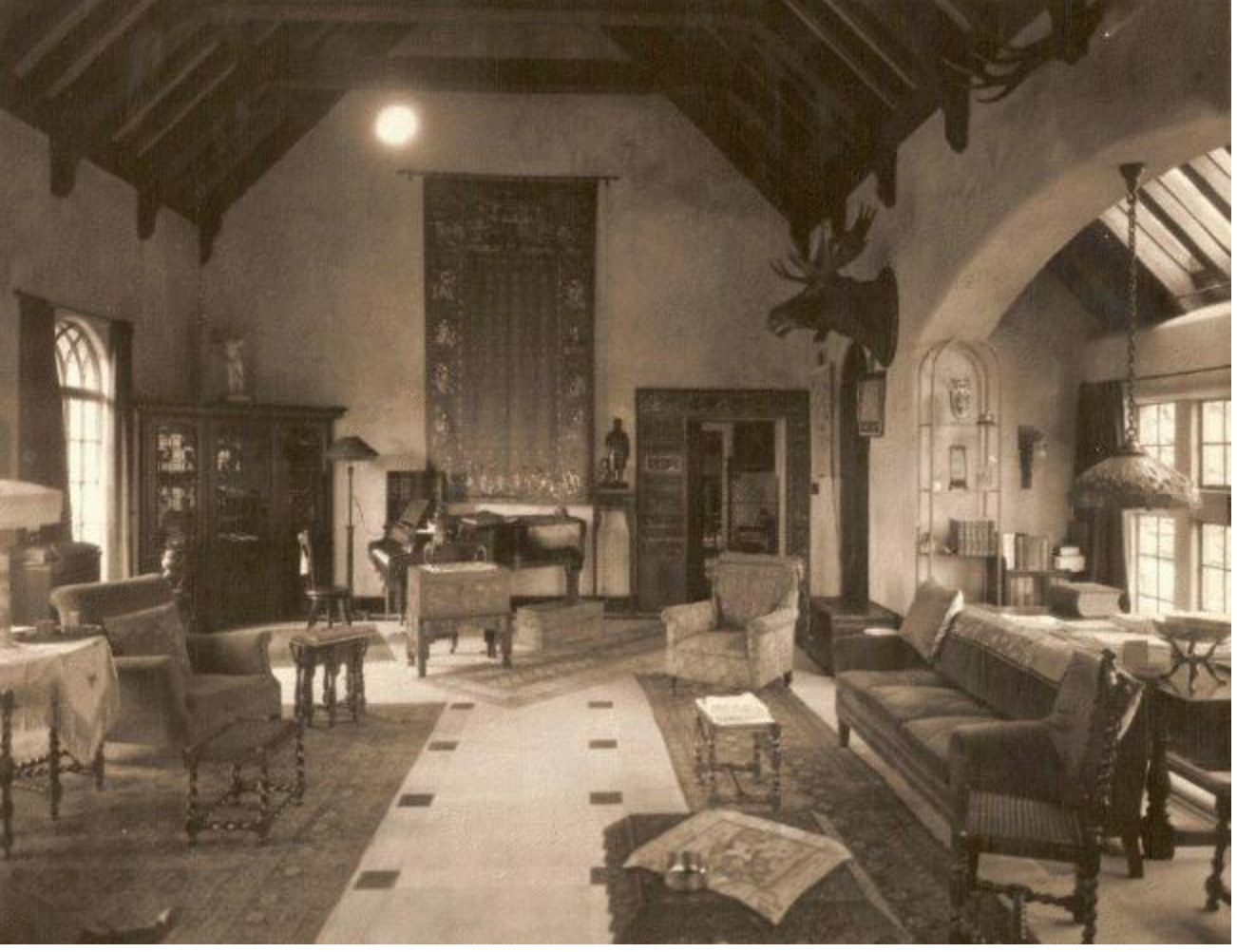
Here’s a photo of the great room in the castle, in its heyday:
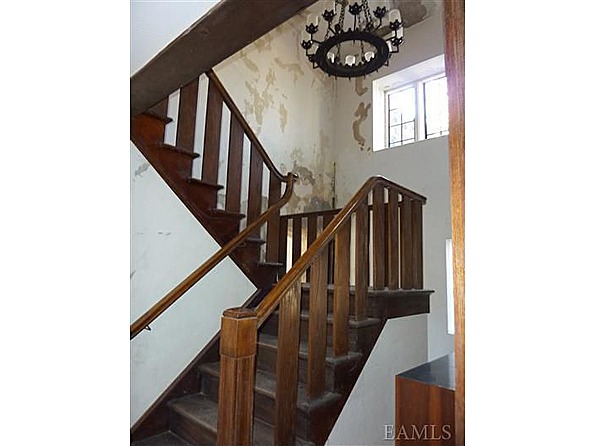
And here are some random photos of the castle today that I’ve lifted off the Internet:
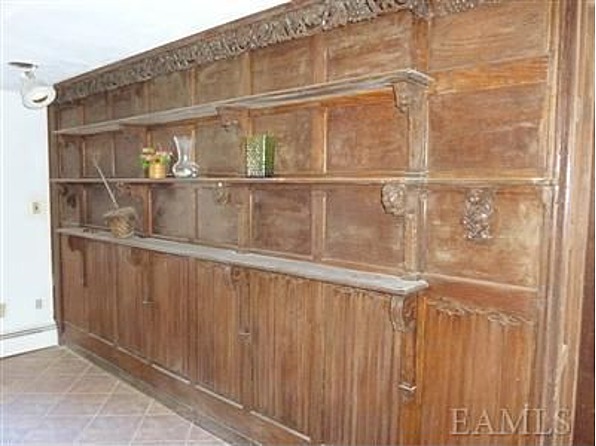
Check out these built-in bookshelves with hand-carved figurines:
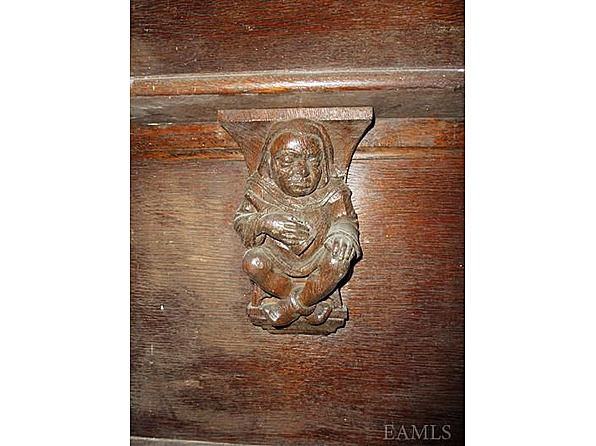
Close-up of bookshelf holding figurine:
I’ve read somewhere that parts of the castle were shipped over from Scotland, and if you look closely at the beams, you can see the numbers carved into them for easy reassembly. Not sure if that’s true, but it makes for an interesting story.
However, it does seem like the castle has been rather cursed.
In 1929, Abercrombie’s 30-year old daughter Lucy died horribly from burns she received while “engaged in a task on a preparation for waterproofing canvas compounded from a secret formula developed by her father many years ago.” A formula that involved powdered paraffin and gasoline. And a formula that, as far as I can tell, blew up in her face and enveloped her in flames. The New York Times article on this unhappy accident is opaque on whether the accident occurred at Elda or at some other Ossining location. But still.
Soon after, in August 1931, David Abercrombie passed away from rheumatic fever at the relatively young age of 64. At the time, the castle had still not quite been completed.
In 1937, the Abercrombie’s oldest son David died from a horse kick on his Wyoming dude ranch.
Soon after (I’m guessing,) Mrs. Lucy Abercrombie moved out of the castle and in with her oldest daughter Elizabeth in Millbrook, NY. Apparently, the castle sat empty until 1947 when the Centro Research Laboratories bought Elda from the Abercrombie estate. After a two-year zoning fight between the neighbors and Centro, “a new by-pass entrance was constructed into the estate, away from the privately-owned houses, built on the estate frontage on Croton Dam Road.” I guess that’s when they built that driveway you shouldn’t walk on that leads from the castle to Rt. 134/Croton Dam Road. The Centro laboratory was involved in working on “industrial applications of resins and plastics.” No wonder the neighbors were fighting it! Would you want that stuff in your neighborhood? Hmm, I wonder how that parcel is zoned now . . .
It might have been during this time that the roof was blown off the now-open courtyard section of the castle. Or it might not. No one really seems to know. (I’ve also heard the rumor that part of the Manhattan Project was housed there during WWII. I don’t really believe it though.)
In the 1960s, Dr. N.J. Harrick of Harrick Scientific lived in the castle and apparently tried to rescue it from complete ruin. According to local people who knew of/owned this property in the 1960s – 70s, it’s been beset by vandals since the 1930s, and has been damaged and repaired many times over the years.
In the 1990s, the Half Moon Foundation of the Humanist Society purchased it to use for events and weddings. (The Humanist Society was founded by Corliss Lamont, another local resident and subject of this blog post.) By then, it seems that the 60-acre estate had shrunk down to about 14-acres.
After they sold it, though, it seems the castle really fell into disrepair. Now, so I’ve heard, all the windows have been shattered by rocks, and all the rooms have been graffiti’d and are knee deep in garbage and broken glass. Apparently, the property was sold in 2011 for $3.75 million but the state of the buildings continue to deteriorate.
Isn’t it a shame to know that something so cool is just disintegrating in our midst?
Here’s a post from a fellow blogger over at SecretHike.com that gives some more recent shots.
UPDATE: April 2022 – a major fire ripped through the castle. While it’s still standing, it’s been seriously damages. See here for the shocking pictures!







 Ossining History on the Run