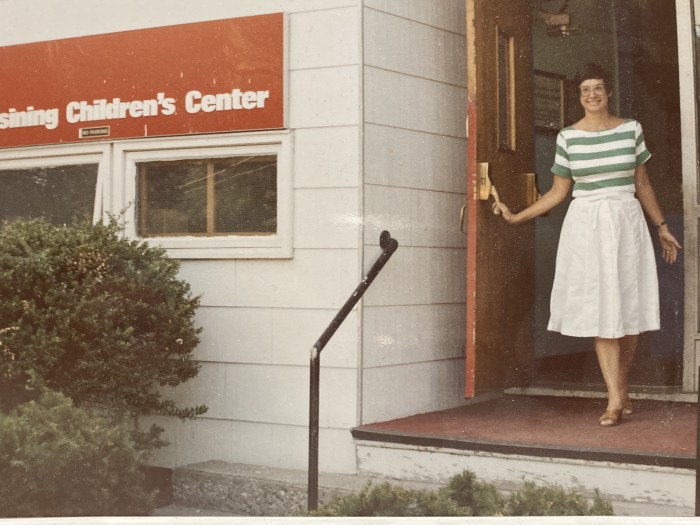
Today I am highlighting the life and work of Sally Ziegler, the Executive Director of the Ossining Children’s Center in the 1970s. In addition to helping run the Center, she also saw the need to engage in the political arena to further advocate for childcare and founded the Child Care Council, an organization she helped lead into the 1990s.
Sally Ziegler at the Ossining Children’s Center, c. 1970s Photo courtesy Andrew Zeigler
Now, the Ossining Children’s Center is another one of those resilient organizations that was founded years ago by a group of community-minded, compassionate and powerful women in Ossining.
In 1895, seeing a need to offer childcare to immigrant women, the Women’s Association of St. Paul’s Episcopal Church started what was then called the Christ Child Day Nursery and Bethany Home. According to the website of Grace Episcopal Church (the current iteration of St. Paul’s), at the end of the 19thcentury there were many widows in Ossining, women whose husbands had been killed working on the railroad or building the Croton Dam. Women who then needed to go to work to support their families but had no one to look after their children.
Let’s stop here for a moment and unpack that bit of history. In that time before OSHA, before any sort of Worker’s Compensation, before any worker protection really at all, enough local workers were dying on their jobs that the good women of Ossining saw the need to organize one of the first childcare centers in the United States. It’s hard not to have strong feelings about the plight of working people in the United States at the turn of the 20th century, where a fatal accident could leave a family indigent and the business owner unscathed.
But back to the Ossining Children’s Center and Sally Ziegler.
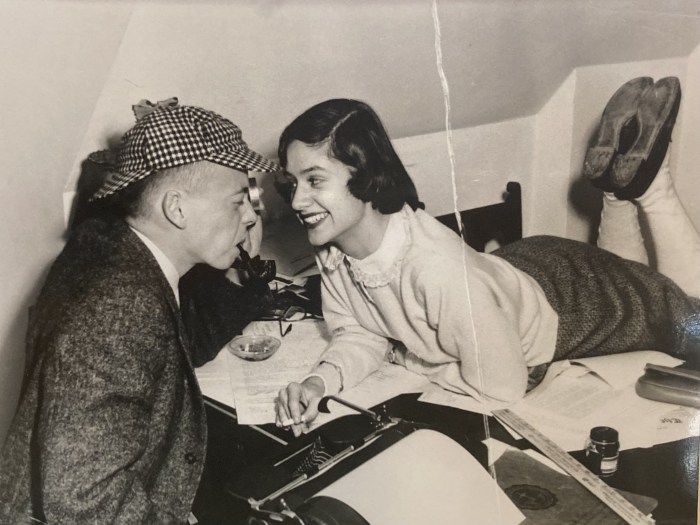
Sally McIntosh Ziegler was born in 1936 in Savannah, Georgia. Attending Duke University, in 1956 she became the first female editor-in-chief of the Duke Chronicle, the university newspaper.
Sally McIntosh and Ted Ziegler in the Duke University Chronicle Editorial Office, c. 1955. Photo courtesy Andrew Ziegler
She married and moved to Ossining in the early 1960s, where she and husband Ted started their family. Sally began volunteering at the Children’s Center when her children were toddlers.
What was a volunteer position soon morphed into something paid, then permanent, until Sally was appointed Executive Director, a role she held for over a decade.
From what I’ve read about her (see her Duke University obituary here), and conversations I’ve had with her son Andrew, Sally was one of those quietly determined women who got things done. I’m sure her soft southern manners helped mask her grit and fierce desire to help those less fortunate.
Stories of her taking night classes in Spanish to better communicate with the parents at the Children’s Center, tirelessly lobbying the legislature for more funding for childcare, and becoming an Episcopal deacon in retirement, all speak to a woman who was dedicated to the service of others.
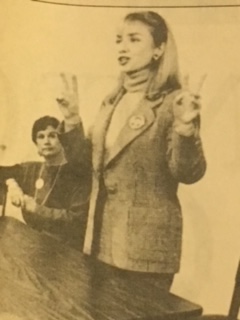
Sally Ziegler keeping an eye on Hillary Rodham Clinton. Photo courtesy Andrew Ziegler
I see her as one of a parade of women who have done great good in our community, and perhaps got a testimonial dinner and a plaque upon retirement (a la Fanny Kane), but the remembrance of their good works has melted away as the years march on. Unlike the Carnegies and the Rockefellers whom we can’t help continuing to honor thanks to their largesse and the fact that their names are on things, the stories of the people who do the work, who show up day after day, who minister to the needy are so often forgotten. Perhaps that’s the way they wanted it, but I think we need more stories of good people who think of others. Just imagine the number of families whose lives have been lifted up by Sally Ziegler and all the others who have made (and continue to make) the Ossining Children’s Center a success.
Sally Ziegler is just one of many of the unsung heroes who have bolstered and improved our community. And though I rail against the necessity of “theme months,” I have to admit I likely would never have heard of her if I hadn’t been writing these Women’s History blog posts. Her story is inspiring and should be told. I’m grateful to have had the opportunity to learn about and highlight her, even if only in blog form.
Folks, you’re in for a treat! Former Ossining Village Historian (and current Village Trustee) Dana White is our guest today on the blog. Please enjoy her post on Fanny Brandreth Kane, Ossining’s first lady of civic affairs.
Guest post by Dana White
Fanny Brandreth Kane 1858 – 1938
On the evening of April 13, 1936, more than 150 local residents paid $2.25 apiece to attend a testimonial dinner at the Briar Hills Country Club (now Trump International). While such soirees were not uncommon, usually they were held for someone who’d recently died. That evening’s honoree, Fanny Kane, was very much alive, the first person with a pulse–and a woman to boot–to be honored “for her unselfish service” to Ossining.
Frances (Fanny) Kane was a tiny ball of energy in a size-one shoe, a Mayflower descendant and DAR member who made it her mission to help the less fortunate, the sick, the lonely.
After the diners had finished the fresh fruit cocktail with mint, cream of tomato soup, filet mignon with pan roasted potatoes, new peas, and ice cream in “fancy moulds,” the speeches began. One after another, Mrs. Kane’s friends and admirers stood to toast her achievements as a Neighbor and Friend, an Organizer, a Citizen and a Humanitarian. Clara Fuller, co-founder with Kane of the Civic League and the Ossining Woman’s Club, attested to her friend’s astonishing can-do spirit: “She can’t help it, she was born that way. What she wills to be done, will be done.”
Fanny entered the world on October 31, 1858, one of four girls born to George and Virginia Brandreth. George, a lawyer and village president, was the oldest of thirteen children born to Benjamin Brandreth, the wealthy Englishman who manufactured his patent medicines and porous plasters on the Sing Sing waterfront. George ran the company after his father’s death in 1880.
Brandreth Pills for your vitiated bile . . .
Fanny’s mother Virginia was a daughter of another leading citizen, General Aaron Ward, who lived in Careswell, a grand Greek Revival mansion built in the 1830 sof convict-quarried Sing Sing marble. (It stood where the high school gym is today.) Fanny and her family lived at No. 10 Ellis Place, a large house they called Vine Cottage, only steps from Trinity Episcopal, the church the Brandreths were instrumental in building. Fanny showed an early propensity for order and neatness; as one admirer testified that night, Fanny “began her activities in public welfare at the early age of six, when she made her father remove a blot on the beauty of the neighborhood in the form of a little black pig and his sty.”
Fanny’s high-society upbringing was full of trips to New York City for Christmas presents, charity balls and dances at West Point, yet tragedy blotted this idyllic life. There was a childhood accident that stole the sight in her left eye, a handicap she did her best to ignore. When Fanny was 12 her mother passed away, and Mary, the oldest daughter, assumed the maternal role. When Fanny was 20, her fiance, Alexander Gibson, son of the principal of St. John’s School (where St. Ann’s School now stands), died suddenly, and a heartbroken Fanny took a year-long trip to Europe and Egypt with Mary and her husband.
In 1884, at the ripe old age of 25, Fanny finally married, the last daughter to do so. Like her, John Innes Kane II was a Sing Sing native whose wealthy father, John Kane Sr., hailed from Albany. In the early 1840s, the Kane family had bought 46 acres on the river side of Albany Post Road–saving it from being cut up into home lots–and built the fine granite mansion called Woodlawn. It had 20 rooms and numerous outbuildings and was stuffed with fine antiques. But John Sr. had tuberculosis, and by the time their son was one year of age, both he and his wife had passed away. The little orphan inherited Woodlawn but was raised by relatives. He did not live there again until he married Fanny, having returned to Ossining after a career in the Army Calvary on the Texas frontier. According to a New York Times account of the wedding, Fanny’s father George “presented her with a share in the Brandreth company, valued at $50,000, a silver tea set, a check for $500, an elegant piano, and a handsome victoria.”
Woodlawn today, the clubhouse for Avalon/The Terrace apartment complex
The first half of Fanny’s adult life was occupied with raising three children and caring for her husband, who, like his father, battled tuberculosis. John held positions at the Sing Sing Gas Co. and as Ossining postmaster, but his ill health forced him to warmer climes. Woodlawn was often vacant, the furniture sheeted, as Fanny accompanied John to Texas, California, and Arizona. In 1898, John volunteered to serve in the Spanish American war, and after the invasion of Cuba returned home with ruined health. He passed away at Lake George in 1904, leaving Fanny, at 46, a wealthy widow with three children and a philanthropic heart.
Over the next thirty years, Fanny made her mark on the village of Ossining. Again, tragedy was the motivation: Her younger sister Helen, called Nellie, was dying. Nellie, a kind soul who was married to Frederick Potter, scion of a wealthy local family, had the best medical care money could provide, yet she worried about those less fortunate. One day, she wondered aloud, “What do poor people do when they are sick?” Her dying wish was that Fanny and Frederick help the poor receive medical care.
After Nellie’s death in 1905, Fanny and Frederick embarked on a partnership that would change the face of Ossining’s health care. Frederick hired a nurse to care for the village poor, and Fanny directed her duties, jotting down reports with a pad and pencil she kept by her bed, at all hours of the day and night. (In 1914, this service became the District Nursing Association; Fanny served as its president until her death.) In 1906, the Potter family funded the construction of a new hospital on Spring Street, with Fanny a charter member. She also started clinics for women on Pre-Natal care, Maternal Health and Social Hygiene.
Community service filled a void in Fanny’s life. Deciding the village was untidy, she and her childhood friend Clara Fuller, principal of the Ossining School for Girls, decided to do something about it. They started the Civic League, comprised of women dedicated to improving quality of life in the village. Whereas Ossining politics had been purely a man’s game, Fanny insisted female voices be heard. In addition to cleaning up the streets, Fanny and her volunteer force tackled the clean up of the Kill Brook, fought to preserve trees from developers, and took on the illegal saloons that distracted so many husbands from their domestic obligations. The story goes that one Sunday, motivated by one wife’s tears, Fanny marched into a saloon and led the drunken husband out by the hand. When her efforts to regulate the saloons came up short, she opened a coffee shop and reading room on North Malcolm Street where “idlers” could spend time. She even hired the village’s first policewoman to patrol the local “disorderly houses” at night and report any problems.
She felt the state prison was another blot on the landscape, especially after the electric chair arrived in 1891. She called for the prison to be closed, or at the very least given its own train stop, so that newly arrived inmates were not marched through the streets to the prison gates. In both these goals, she proved unsuccessful.
During World War I, Fanny characteristically turned hardship into opportunity. Her youngest child, Edward Winslow (named for relative Winslow Homer), went off to Europe and became an aviator on the front lines. Fanny and the rest of the country’s women stayed behind and did their part, knitting socks and making bandages for the troops. After Winslow returned unscathed, much to her delight, she transformed this community spirit into the Ossining Woman’s Club. She raised the $10,000 needed to buy the large house on South Highland Avenue. It was not only a gathering place and hub of activity, but also a home for single women of modest means, who could rent rooms at a low price.
In 1931, convinced Ossining needed to preserve its past, Fanny hosted the first meeting of the Ossining Historical Society at Woodlawn. The society’s first president, she presided over the collection of artifacts and documents that were stored in the Washington School on Croton Ave. before landing in their current home at 196 Croton Ave. While Fanny’s other organizations have waned over the time, the Ossining Historical Society Museum remains her most visible and active legacy.
Elsewhere, Fanny’s legacy is in transition. The Woman’s Club closed and the South Highland house sold. An oil portrait of Fanny that hung above the fireplace in the main room was relocated to the historical society. The Woodlawn estate, which was sold after her death in 1938 and served as a corporate headquarters for decades, is now home to luxury apartments (Avalon Bay and now The Terraces). The majestic mansion was restored to its former glory for a resident’s clubhouse, a stellar example of adaptive reuse.
The interior of Woodlawn today, in its current use as the Clubhouse for Avalon/the Terrace apartments
Fanny was the last of her sisters to pass away. Her generous heart gave out on June 1, 1938, at the age of 79. Her funeral was held at Trinity Episcopal Church and she was buried in Dale Cemetery. Flags on all the public buildings were lowered to half-mast. Her tiny coffin and legions of mourners brought to mind the words of one doctor at the testimonial dinner: “Fanny, you are a little bit of a woman, but you have a big heart and a big capacity for work that is worth while.”
Addendum by Caroline: Here’s Fanny Kane’s New York Times obituary. She truly was a powerhouse!
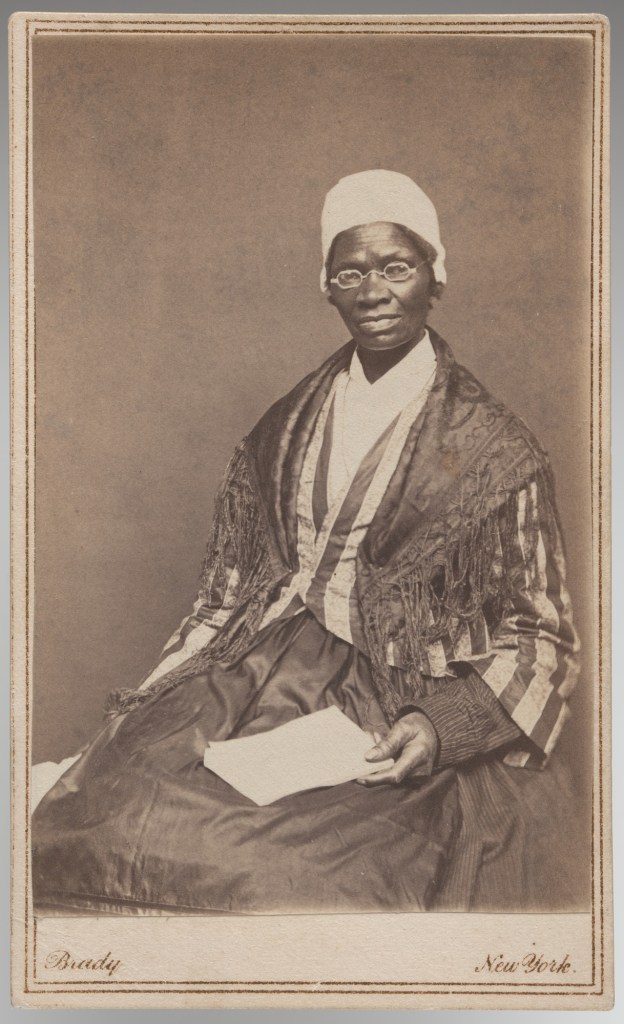
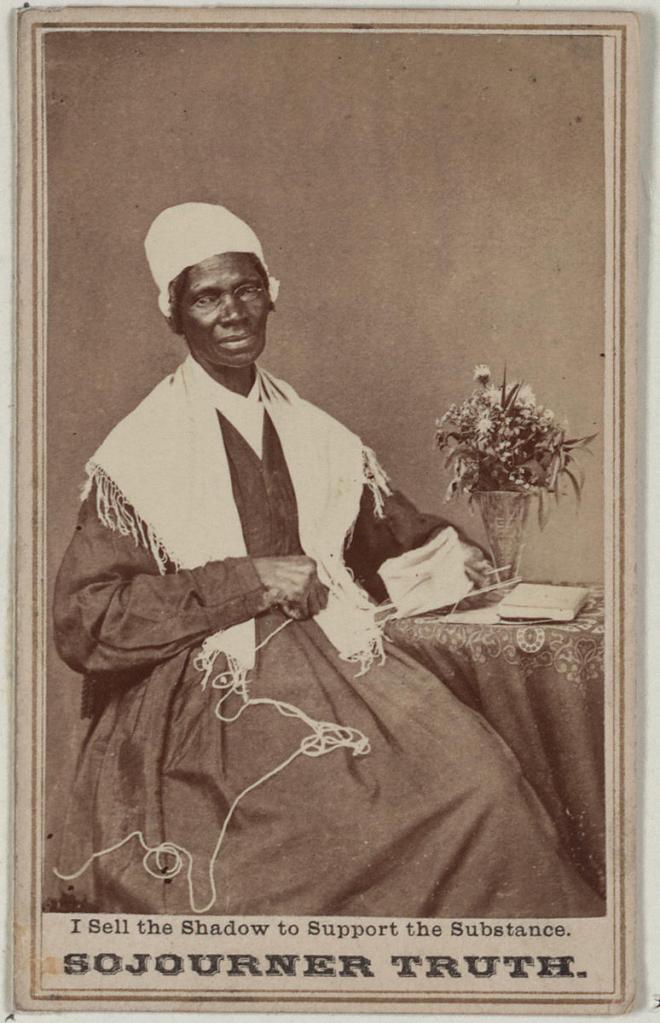
Sojourner Truth, c. 1864 Photographer: Mathew Brady Credit: National Portrait Gallery, Smithsonian Institution
Sojourner Truth (aka Isabella Baumfree Van Wagenen) c.1797 – 1883
Abolitionist Activist Speaker ***Local Connection: Zion Hill, Sparta*** (today the site of the Beechwood Condominium Complex off Route 9)
Sojourner Truth was born Isabella Baumfree in about 1797, to James and Elizabeth Baumfree. One of about ten children, the family was enslaved by a Col. Hardenburgh who owned a large farm in Ulster County, New York.
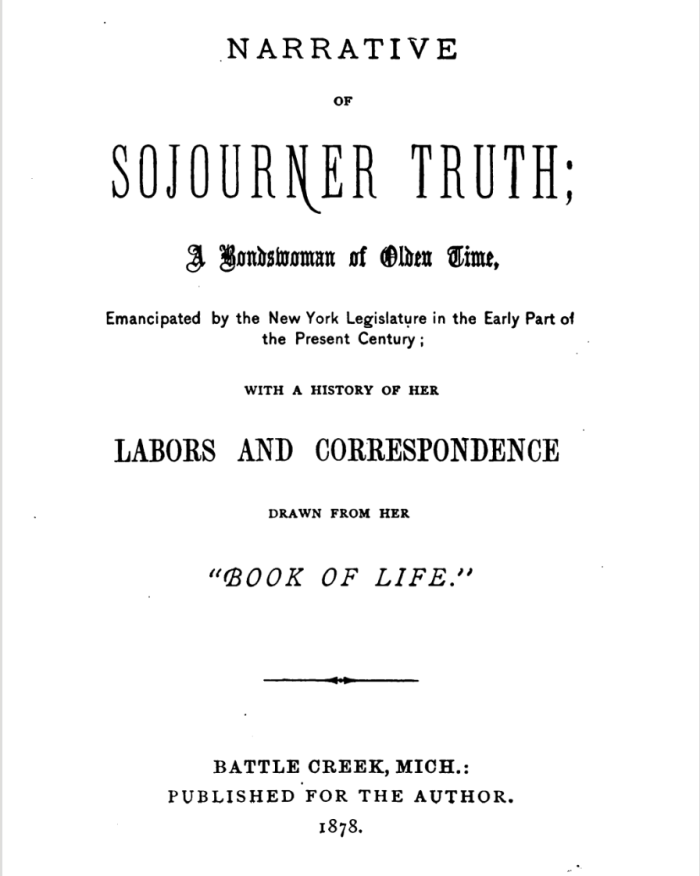
First, we’re able to know so much about her because in 1850 she dictated her memoirs to friend Olive Gilbert and they were published. This Book of Life would be added to and republished in 1878:
You can read it in its entirety here if you’re interested.
At the age of 9 (or so), Isabella was sold away from her family “for the sum of one hundred dollars, to one John Nealy, of Ulster County, New York; and she has an impression that in this sale she was connected with a lot of sheep.”
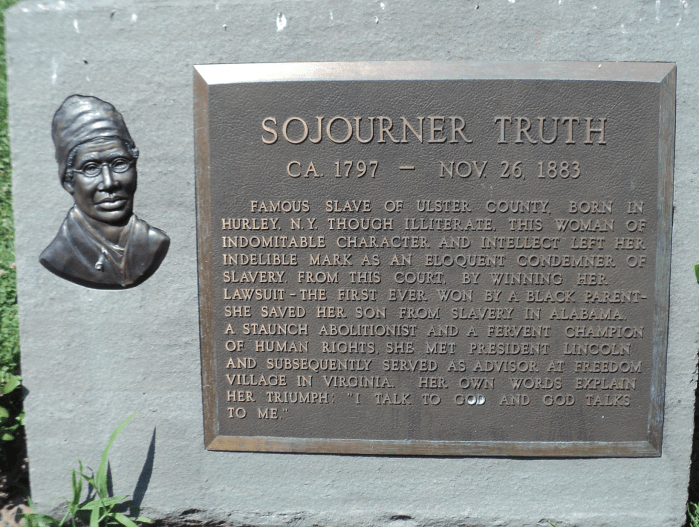
Sojourner Truth plaque in Ulster County
Her first language was Dutch, and she was said to speak with a Dutch accent when speaking English (which then brings into question the stylized “dees, dems and doze” accent she is often quoted as having in her famous “Ain’t I a Woman” speech. But more on that anon.)
Because at this point (she was NINE!) Isabella could only speak Dutch and the Nealys could only speak English, she was frequently whipped for her misunderstanding and confusion. Within a few years, she was again sold, this time to a tavern owner named Martinus Schryver who lived nearby in Port Ewen. She would later describe this as “a wild, out-of-door kind of life. She was expected to carry fish, to hoe corn, to bring roots and herbs from the wood for beers, go to the Strand for a gallon of molasses or liquor as the case might require . . . morally, she retrograded, as their example taught her to curse; and it was here that she took her first oath.”[3]
Within two years, Schryver sold her to a John Dumont in New Paltz, New York.
So, before she was 15, she had been taken from her family and sold as chattel to three other men.
Around the age of 18, she was “married to a fellow-slave, named Thomas, who had previously had two wives, one of whom, if not both, had been torn from him and sold far away.”[4] She would have about five children with Thomas.
Now, beginning in 1799, New York State began slowly abolishing slavery – so slowly, that it would take until 1827 for it to be completely outlawed. As described in her Narrative:
“After emancipation had been decreed by the State, some years before the time fixed for its consummation, Isabella’s master told her if she would do well, and be faithful, he would give her ‘ free papers,’ one year before she was legally free by statute. In the year 1826, she had a badly diseased hand, which greatly diminished her usefulness; but on the arrival of July 4, 1827, the time specified for her receiving her free papers, she claimed the fulfilment of her master’s promise; but he refused granting it, on account (as he alleged) of the loss he had sustained by her hand.”[5]
Furious, Isabella would sit down and spin about 100 pounds of wool before taking her infant daughter and walking away from the Dumonts early one morning (walked away, not run away. The distinction was important to Isabella.) She would eventually find herself in the home of the Van Wageners, an abolitionist, Quaker couple. When John Dumont tracked her to the Van Wageners, they offered $25 for Isabella and her infant. Dumont acquiesced, and Isabella lived with the Van Wageners (and took their name) until she was legally freed by the State of New York a year later.
Once free, Isabella Van Wagener wanted to find her young son, Peter who, at the age of five, had been sold away from Isabella by John Dumont. Now, human enslavement in New York State operated in a bit of a gray area. Post-1799, several laws were passed that would free all enslaved minors once they reached the age of 21, and specifically outlawed selling enslaved minors out of state. However, these laws were enforced only occasionally. But Isabella Baumfree was not to be trifled with and she marched down to the courthouse to file a lawsuit. Long story short, she got her son back from Alabama where he’d been sold – a remarkable feat for a woman of that era.
A page from court documents pertaining to Isabella (Baumfree) Van Wagener’s suit to regain her son, Peter, recently discovered in the NYS Archives Courtesy of the New York State Archives
It’s at this point in her life that Isabella Baumfree Van Wagener’s Ossining connection arises. It’s a very complicated story and even the Narrative doesn’t get into the particulars, but let’s just say that in 1833 she was hired to be a housekeeper for what can really be only called a cult, led by one Prophet Matthias. They all ended up in a house in Sing Sing/Scarborough called Zion Hill (still standing today as part of the Beechwood condominium complex,) living with Benjamin and Ann Folger.
We can be quite certain that she really did live here, because Benjamin Folger implicated her in the murder of one Elijah Pierson, a follower of Matthias and resident of Zion Hill, who mysteriously died after eating blackberries. But though accused of murder, Isabella went to court, sued Benjamin Folger for libel and, amazingly, won. See (former Ossining Village Historian) Miguel Hernandez’s article here for a deeper dive.
Isabella would continue working as a servant for about ten more years, before she heard the Lord call on her to preach. She changed her name to Sojourner Truth on Pentecost Sunday, 1843 and began preaching against slavery. By all accounts she was a very charismatic speaker and an inspiring singer. She would go on to dictate her memoirs, and with the proceeds, buy a house in Massachusetts.
In 1851, Sojourner Truth gave her famous “Ain’t I a Woman” speech at the Ohio Women’s Rights Convention.
Today it’s believed that this is probably not at all an accurate representation of the speech Truth gave. A transcription was published at the time and is very unlike the version that has become associated with Truth. In fact, it wasn’t until 1863, at the height of the Civil War, that the version linked to above became the accepted version. (For more on this, check out the Sojourner Truth Project here.) But let’s just say the popular speech sounds pretty racially stereotyped linguistically and not at all like it came from someone who spoke with a Dutch accent.
Regardless, I think we can agree that Truth’s speech enlightened many who heard it, as did her life story.
Truth was a savvy marketer. She would sell Cartes de Visites (postcards) like the one below to support herself and fund her lecture tours. Often carrying the caption “I sell the shadow to support the substance,” these cards symbolized Truth’s struggle between self-promotion and her desire to be seen as a sophisticated and respectable free woman. Distributed at anti-slavery conventions and through mail orders, these postcards became wildly popular, enabling Truth to fully pay off her first home within three years and then purchase a second home.
In this image, the seemingly random coils of yarn on her skirt are believed to have been placed quite deliberately – if you look closely, they seem to form the shape of the east coast of the United States. This symbol reiterates Truth’s message of freedom and equality that applied to all states, both North and South. Courtesy of the Library of Congress
Truth would move to Michigan, join a Seventh Day Adventist sect there, all the while preaching about equality.
She would die in Battle Creek, MI in 1883, in the home she owned, bought with money she had earned from her writing and speeches, surrounded by her children.
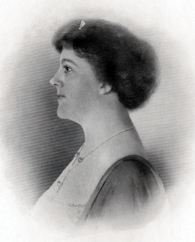
Today’s Women’s History Month post is celebrating Edith Carpenter Macy (1869 – 1925).
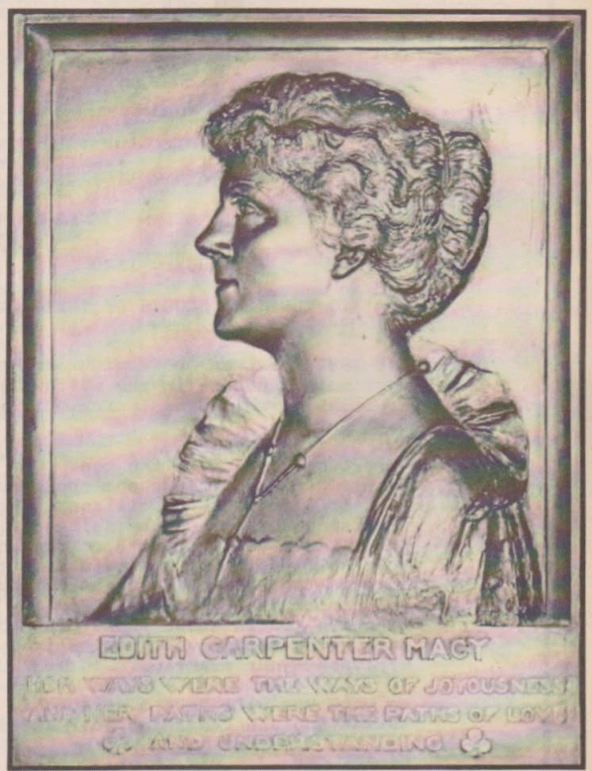
Edith Carpenter Macy, plaque located at the Edith Macy Center. Photo from the Girl Scouts Archives
If you’ve ever shopped at the Chilmark Center on the border of Ossining and Briarcliff Manor, you’ve been wandering through what was part of V. Everitt and Edith Carpenter Macy’s eponymous farm and estate.
Also, if you’ve ever bought a box of Girl Scout cookies, you were enjoying a fundraiser popularized by Edith Macy in the 1920s, in her position as Chair of the Girl Scout Board of Directors.
Edith Macy lived amidst great privilege. Marrying Valentine Everit Macy in 1896, she would benefit from his prodigious wealth (he inherited $20 million at the age of 5 thanks to his father’s canny merger with Standard Oil – but more on that in another post).
The 1900 Census notes that she and Everit had a butler, a 2nd butler, a cook, 3 maids (kitchen, chamber and ladies’), a laundress, and a nurse living with them on Underhill Road.
But though it might sound like she lived the American version of Downton Abbey (sorry, it’s that 2nd butler listed above!) Edith Macy spent much of her time working for the good of others.
Like many of her neighbors (Narcissa Cox Vanderlip, Carrie Chapman Catt and Elizabeth Underhill, just to name a few) Macy participated wholeheartedly in the fight for women’s suffrage. And once the 19th amendment was passed in 1920, (though let’s not forget that New York State passed a women’s suffrage act in 1917), Macy became the Director of the Westchester League of Women Voters.
But Edith Macy wasn’t content with only being associated with suffrage – she was also active in charities that directly helped poor women and children.
Now, one of the things I enjoy about writing these posts is that not only do I learn about the individuals I write about, but I gain granular insights into what the world was like “back then.” In writing up Mrs. Macy’s story, I’m reminded about all the things we take for granted today, such as the right for women to vote, pure food, and not seeing the majority of your children die before they reach adulthood.
One of the many organizations Mrs. Macy was involved in was the Henry Street Settlement. According to the Scarsdale Inquirier, “Long before the milk situation in New York city was satisfactory, [she] took an active part in the work of the Henry Street Settlement and furnished pure milk for the babies to that settlement from [her] farm at Chilmark.”[1]
I think it’s worth unpacking that snippet a bit, because we so take for granted that the milk we get in our supermarkets is safe for human consumption. But back at the turn of the 20th century, that was decidedly not the case. In 1901, in response to rising infant mortality rates, especially in the poorer sections of Manhattan, the Rockefeller Institute commissioned a report on the sanitary conditions in New York’s milk industry. They documented the generally filthy conditions found in local dairies, such as open vats of milk stored in stables and near manure piles that resulted in skyhigh bacterial content that sickened and killed thousands of infants.
So this “pure milk” the Macys supplied to the Henry Street Settlement was more than just a small PR stunt – they were actually responding to a serious need until routine pasteurization of milk was adopted in New York City in 1912.
In 1914, she helped found the Westchester County Children’s Association – an organization that still thrives today and, true to its original mission, provides direct support for children’s programs while also lobbying on behalf of policies that will benefit Westchester’s children.
Macy’s interest in women’s suffrage rather naturally steered her to the Girl Scouts, an organization she would help lead from 1919 – 1925. She thought it was never too early to educate girls about citizenship and how they could be effective, useful members of society. Indeed, one of her first initiatives was to involve the Girl Scouts in the final campaign that helped pass the 19thAmendment.
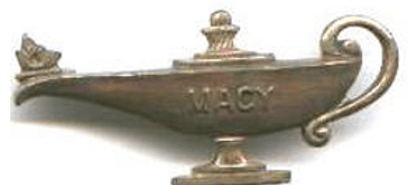
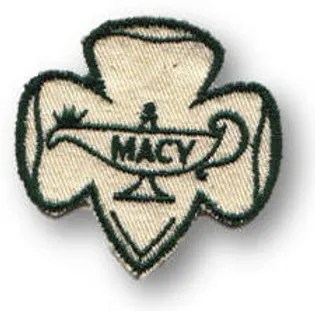
Vintage pin and patch celebrating Edith Macy. Photo credit Vintagegirlscout.com
Sadly, Edith Macy died suddenly at the age of 55. In her honor, her husband purchased 200 acres of land and established the Edith Macy Center, a permanent place for Girl Scout leaders to receive training. The Edith Macy Center at 550 Chappaqua Road is still active today and still named after her.
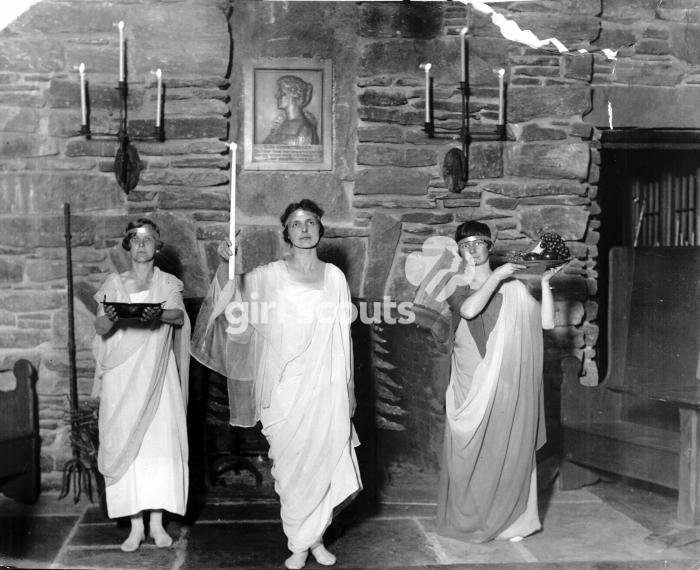
Dedication of Camp Edith Macy in Great Hall, 1926. Left to to Right: “Warmth”, Ruth Mitchell; “Light”, Oleda Schrottky; “Food”, Elsa G. Beeker. Plaque of Edith Macy on the wall behind them Photo credit the Girl Scouts Archives
[1] Scarsdale Inquirer, Volume VI, Number 12, 14 February 1925
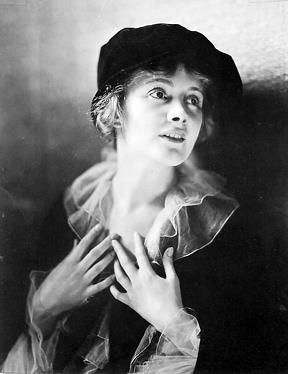
Jeanne Eagels, as a war orphan in the 1918 play “Daddies,” produced by David Belasco
Jeanne Eagels 1890 – 1929
Broadway and early film star ***Local Connection: Homes on Kitchawan Road (Rt. 134) and Cedar Lane***
Okay, first, if you are under the age of 95, you might ask, who is Jeanne Eagels?
Well, she was a big Broadway and film star in the 1910s and ‘20s — in fact, one of the biggest.
And her Ossining connection is that she owned not one, but two estates here: a 30-acre estate called “Kringejan” at 1395 Kitchawan Road, and 22-acres of land and a house on Cedar Lane Road.
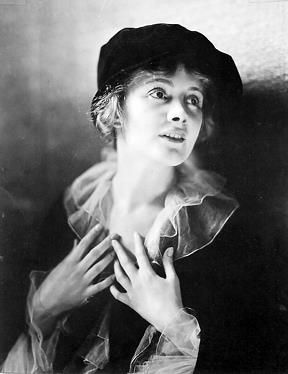
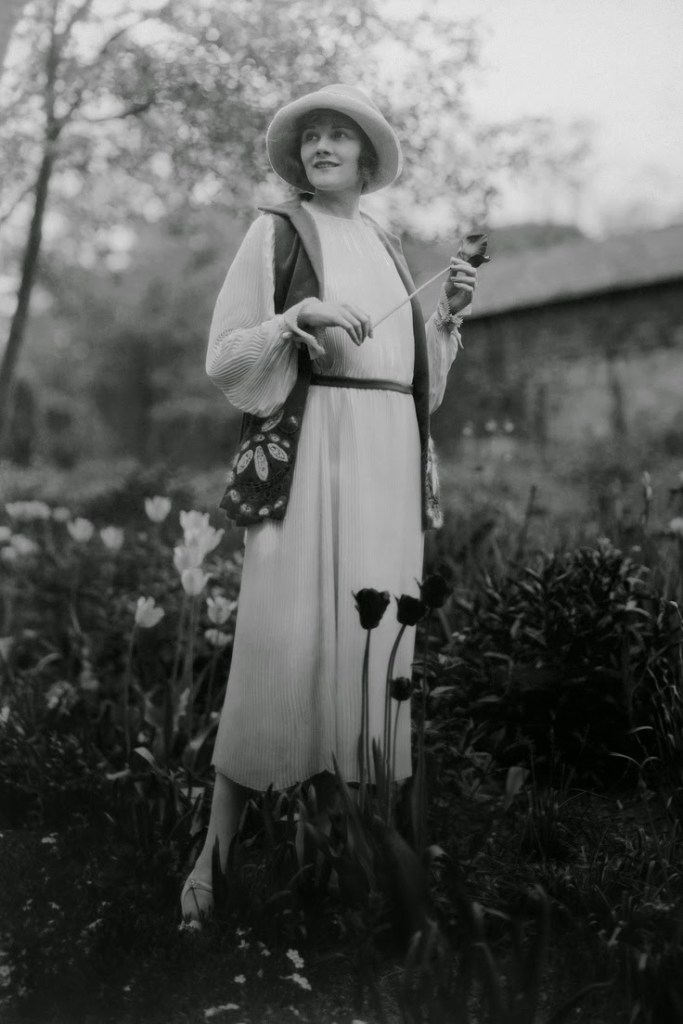
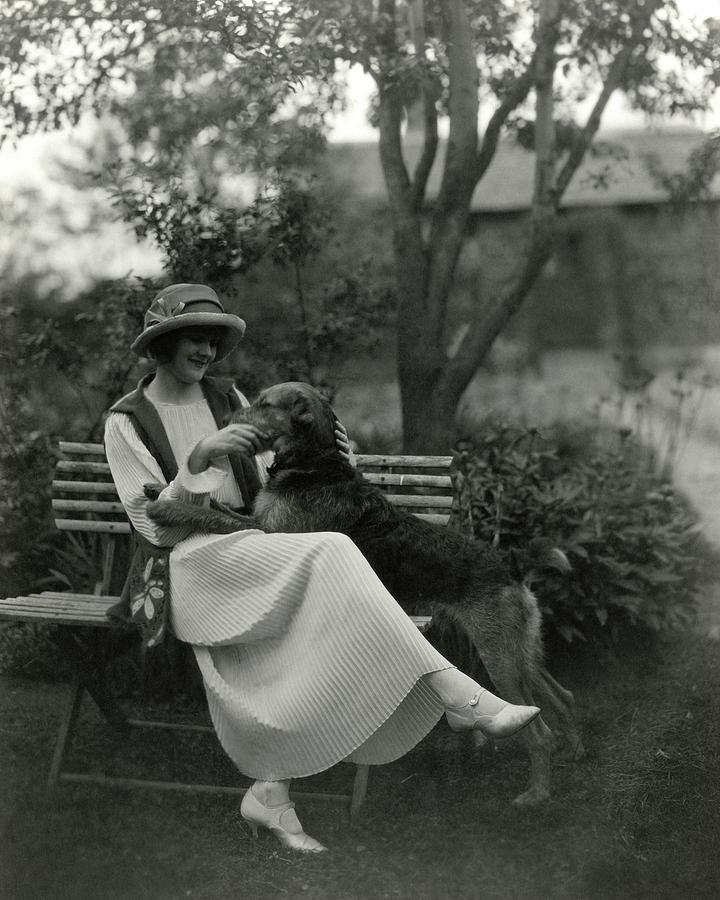
In fact, I’m convinced that these two photos below were taken in the gardens of Kringejan:
Photographs by Maurice Goldberg for Vanity Fair, c. 1925 Public Domain
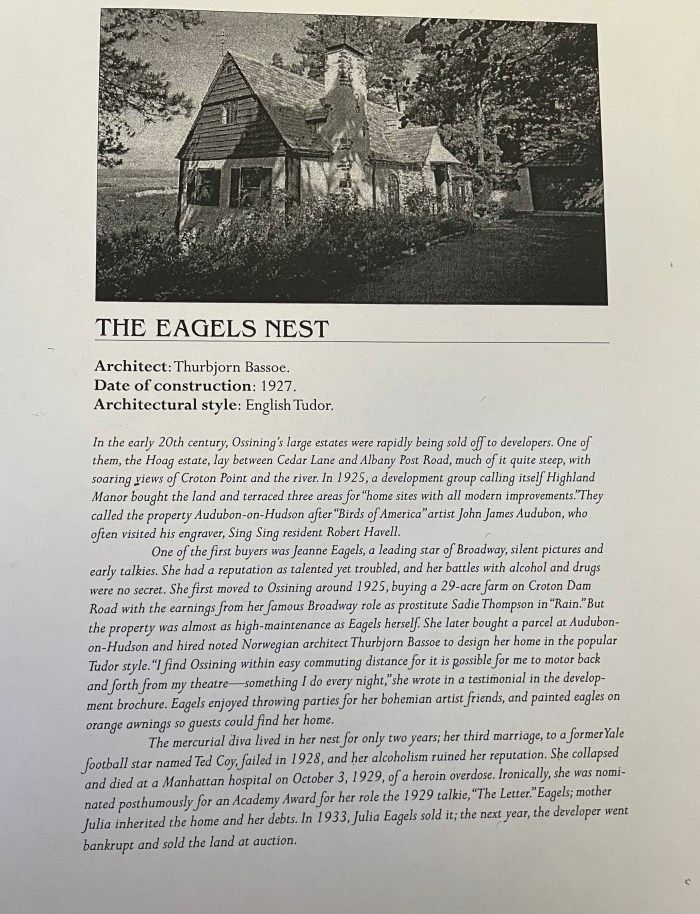
And here’s a description of her 2nd home in Ossining, on Cedar Lane Road:
Courtesy of the Ossining Historical Society
In those days, Ossining was quite the place for the gentry to land – businessmen, bankers, writers and actors were snapping up farms and transforming them into elegant country estates. According to Eric Woodard and Tara Hanks in their biography Jeanne Eagels: A Life Revealed, Eagels fell in love with the Ossining area when she was making silent films at Thanhouser Studios in New Rochelle.
Hers was the classic “lift yourself up by your bootstraps” story that America loves: the small-town girl who comes to the big city and makes good. She started by nabbing bit parts in around 1908, and by dint of hard work, talent and luck, reached the top of her profession before her untimely death at the age of 39.
1924 found her on a list with Rockefellers, Roosevelts, Guggenheims and Harrimans when the income tax payments of Manhattan’s wealthiest were made public.
But somehow, that’s not at all how she’s remembered.
She lived most of her life on that tricky front line where she was applauded for her success while at the same time condemned for it. She was raised up and then torn down time and time again. The insatiable curiosity of the press and the public transformed almost every detail of her life into something salacious.
So, let’s try to separate the fact from fiction and give this accomplished woman her due.
Jeanne Eagels was born Amelia Eugenia Eagles in Kansas City, Missouri in 1890.
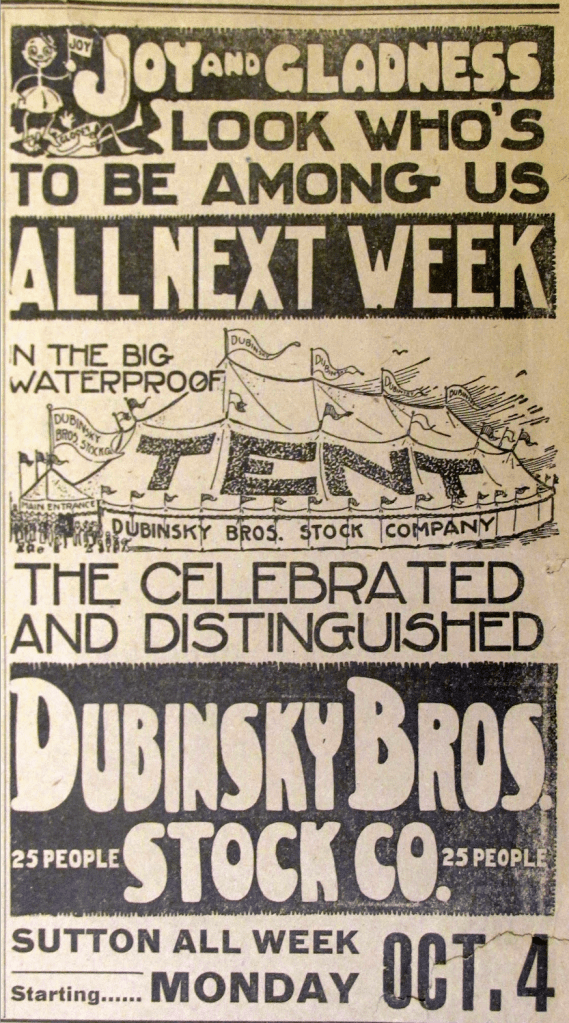
The story goes that Jean Eagles [sic] ran off with the Dubinsky Brothers Stock Company at the age of 15 (though she was really 18.) Starting off with a few small parts (and possibly by marrying one of the Dubinsky brothers) she clawed her way to the top there. At the time, stock companies were how most people living outside cities got their entertainment in the years before film and radio. And also how many actors got their starts.
These companies were constantly touring, often doing one night stands, after which the company would sleep sitting upright on chilly trains as they overnighted to the next stop. They played all sorts of venues, from legitimate theaters to church basements to tents in the nicer weather. On the rare occasion they played more than one night in a particular town, there were limitations about where they could stay because many hotels wouldn’t rent rooms to actors due to their supposedly loose morals. (And maybe because more than one had skipped out without paying.)
Sometimes they played in theaters, sometimes in tents . . .
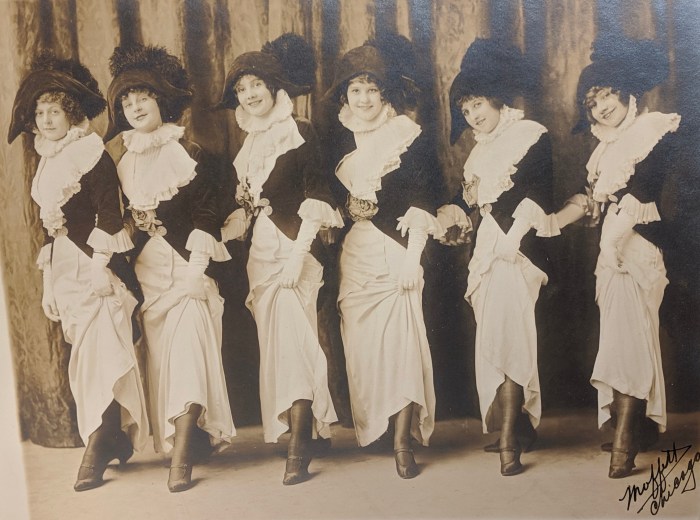
She left the Dubinsky Brothers in 1910 (and changed her name to Jeanne Eagels) to join a tour of Jumpin’ Jupiter, landing on Broadway for three weeks in March of 1911. While the show was savaged by critics, Eagels managed to land on her feet and score a job in the chorus of The Pink Lady, a Klaw & Erlanger production.
Jeanne Eagels is third from the left in this c. 1910 photograph. Courtesy of the New York Public Library – Billy Rose Theater Division
From here on, she’d continue to work steadily and for the most influential producers on Broadway, such as Charles Frohman, David Belasco, and the Shubert brothers.
Arguably, her most famous role was as Sadie Thompson in the play Rain. Whether you know it or not, I can guarantee you’ve heard of it somehow, or at least of the character of Sadie. Based on what was at the time considered a wicked and immoral story by Somerset Maugham (written in 1921), it’s about a prostitute named Sadie Thompson and the married missionary who falls in love with her as he tries to save her soul. It was provocative, controversial and just downright shocking.
Audiences couldn’t get enough of it.
Rain first premiered on Broadway in 1923. Lee Strasberg, the father of Method Acting, called her Sadie “One of the great performances of my theater-going experience . . . An inner, almost mystic flame engulfed Eagels and it seemed as if she had been brought up to some new dimension of being.”
(Fun fact: Gloria Swanson sold her Croton-on-Hudson estate to finance the 1928 silent picture version of Rain called Sadie Thompson, which she produced and starred in. Other actors connected to Rain in later films include Joan Crawford and Rita Hayworth. And, in 2016, the Old Globe Theater in San Diego premiered a musical version also called Rain. It’s a story that continues to fascinate.)
Jeanne Eagels quickly became as big a star as you could be back then. She appeared on Broadway and took her shows on the road, often selling out when she was the star. The Cleveland News ran a story about her which noted her “Lightning energy . . . Eyes snap. Voice trills. She seizes the attention.” It goes on to praise her realism and emotionalism – attributes it seems that most actresses of the time lacked.
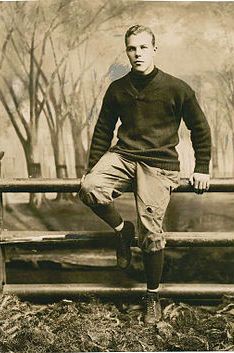
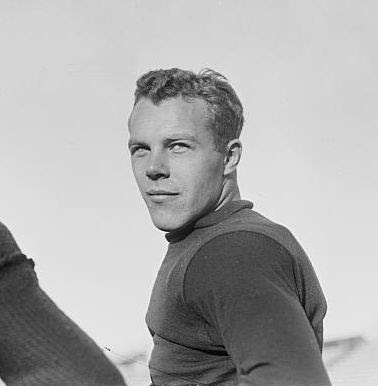
In 1925, Eagels secretly married Ted Coy, a famed Yale football player and supposedly the inspiration for F. Scott Fitzgerald’s character of Tom Buchanan in The Great Gatsby.
Ted Coy, legendary Yale football star.
But Eagels didn’t allow marriage to slow down her career. She stayed on tour with Rain until 1926, when she left to take on the role of Roxie Hart in the Maurine Dallas Watkins-penned play Chicago (in 1975, John Kander, Fred Ebb and Bob Fosse would turn it into a hit musical.) But as her star continued to ascend, her marriage with Coy became more and more volatile.
It’s at this point of her career that the legend of her temperamental nature becomes the story. Soon, the papers were running article after article about her failing marriage, health problems, mental instability and whispers of drug addictions. Ultimately, they got the better of her, and she quit Chicago.
After spending a few months in Ossining recuperating and trying to repair her marriage, she signed on to star in the play Her Cardboard Lover opposite a young Leslie Howard. Directed by an early-in-his-career George Cukor, and with a script doctored by P.G. Wodehouse, it seemed destined for success. Alas, Eagels’ reviews paled next to Leslie Howard’s.
Thus began a series of missed performances and general incidences of unprofessional behavior.
Here’s an excerpt from an article in the Milwaukee Sentinel from May 6, 1928, during the tour of Her Cardboard Lover:
Miss Eagel’s eccentricities are of long standing. Before each performance, the company and management wait anxiously to see if she will appear at all. When she does, nobody knows what she will do on the stage, and the stage manager stands ready to ring down the curtain in case of trouble.
The article goes on to describe how she simply disappeared when the show moved from Chicago to Milwaukee:
Days passed, the theatre remained dark, the company idle, the management began to tear its hair, already made gray by the erratic star. Towards the end of the week, the lady of mystery turned up with the simple explanation that “She hadn’t been feeling well.” It was too late to do anything in Milwaukee, but there was a fine advance in St. Louis. So the manager bought flowers for the star and the company took turns petting and pitying her and asking no questions.
But the newly formed Actors’ Equity Association (of which Eagels, along with her New Castle neighbor Holbrook Blinn, had been unsupportive and initially refused to join) brought her up on charges for her behavior, levied a $3,600 fine equal to two weeks’ salary (or $48,000 in 2025 dollars) and banned her from appearing on the Broadway stage for a year.
In response, Eagels just went off and made films because she could. She had made some silent movies before her stage career took off, and film producers had never stopped clamoring for her.
However, her personal demons were taking over, and after missing two weeks of shooting, she was fired from MGM’s Man, Woman and Sin, a silent film in which she was co-starring with John Gilbert. (Since she’s in the final cut, it seems like most of her scenes had been shot.) It’s also around this time the gossip columns start calling her “Gin Eagels” because she was known to drink hot gin “prescribed by her doctor to relieve persistent neuralgia.” (Let’s not forget, this is all during Prohibition.)
For the last year of her life, most of her press mentions concern her health (many hospitalizations), her divorce (in lurid detail), and her films. And, of course her tragic death.
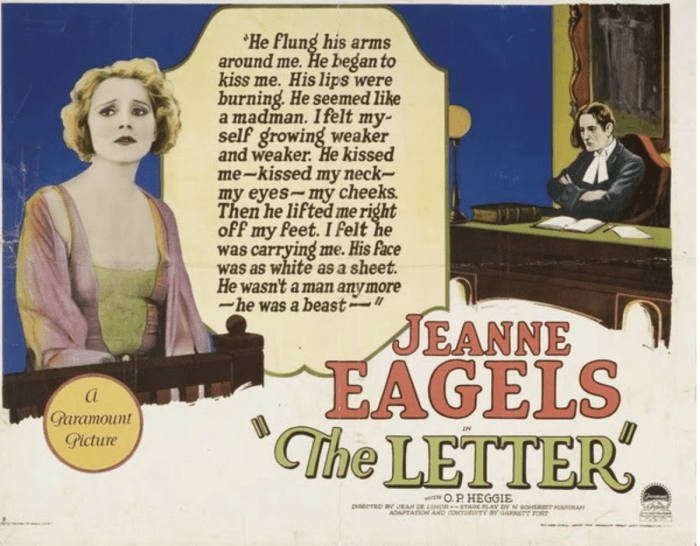
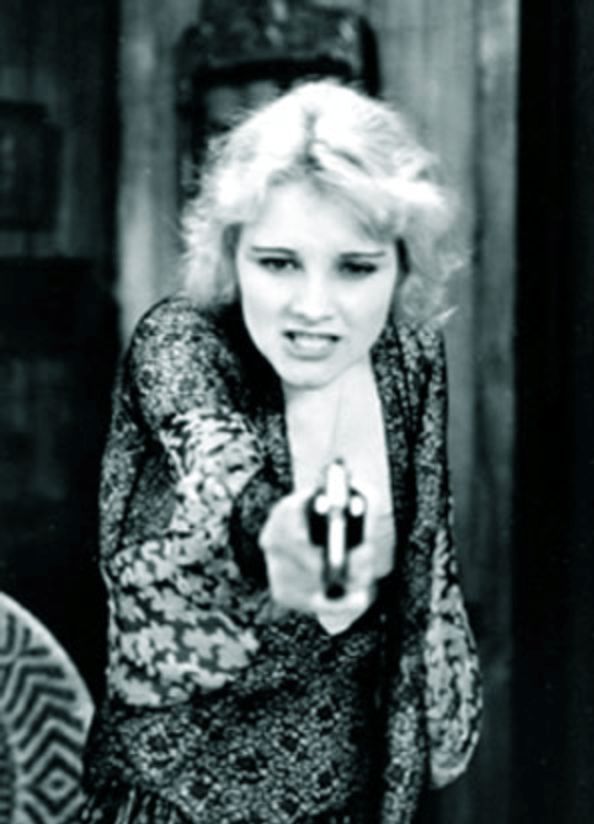
Her last project was a 1928 film called The Letter. It’s her only talkie, and she was posthumously nominated for a Best Actress Oscar Award for her performance (it went to Mary Pickford instead.)
Here’s a link to a scene. She does not look like she is at her best here.
Sadly, the story that’s mostly remembered is the tragedy of her early death, and her erratic behavior. This was helped along by a titillating biography written in 1930 by a muckraking Chicago reporter, Edward Doherty. Called The Rain Girl: The Tragic Story of Jeanne Eagels, her death was attributed to heroin addiction and alcoholism.
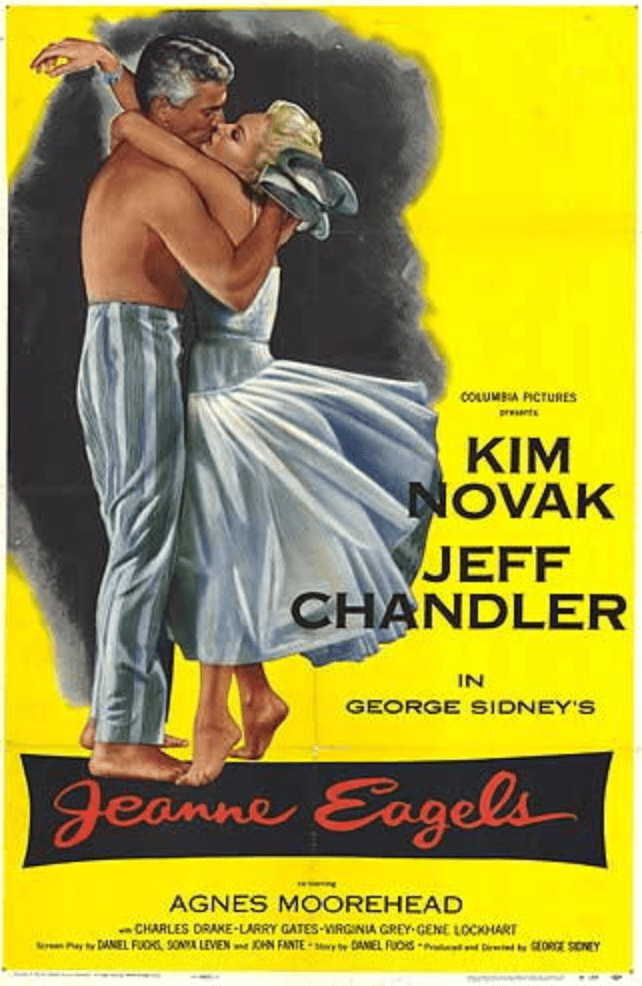
Eagels’ story was still bankable in 1957 when Columbia Pictures produced a highly fabricated biopic based on the Doherty book, starring Kim Novak:
Even the New York Times was not immune to capitalizing on her death. Her 1929 obituary made sure to remind everyone of her volatility and instability. It even took the time to follow up on her cause of death, publishing an article several days later that quoted the City Toxicologist’s finding that she “died from an overdose of chloral hydrate, a nerve sedative and soporific.”
The Times would go on to cover her funeral, burial and the settlement of her estate, noting that it totaled over $88,000 (that’s $1.1 million today) and consisted of her Ossining home, nearly $12,000 in jewelry and furs, and a rare Hispano-Suiza autocar.
A 1927 Hispano-Suiza motorcar. Imagine living in Ossining when cars like that were on the road! Today such cars can sell for up to $450,000
Clearly she was troubled and likely an addict of some kind, and I’m not trying to be an apologist here for the unprofessional behavior reported by the press at the time. The fact of the matter is that she was a remarkably successful actress, and producers kept hiring her because she sold tickets and made money for them. Looking at her films today, it might be hard to see the appeal, but back then, she was the cat’s meow.
Today’s post highlights the life and work of Kathryn Stanley Lawes, known as the “Mother of Sing Sing.”
Now, Kathryn Lawes’ story was actually my entry into Ossining history – when my husband and I first moved here, one of the first things we did was go to the Ossining Library and check out every book we could find about Ossining.
Of course, many of them were focused on Sing Sing Prison. Built by convicts in 1825 using stone quarried on site, it has featured prominently in the history and lore of our town. And Hollywood’s films of the 1930s, starring actors like Humphrey Bogart, Spencer Tracy, and Bette Davis, and where the terms “Up the River,” “The big house” and “The last mile” were coined, helped burnish the myth and mystery of the prison. (Fun fact: Many of these films were actually shot inside Sing Sing’s walls, using real prisoners as extras and sometimes engaging the actual Warden, Kathryn’s husband Lewis Lawes, to play a version of himself. In 1934, Warner Brothers even built a brand-new gymnasium for the prison as a thank-you. Here’s a partial list of films if you’re interested.)
One of the first books I read was Ralph Blumenthal’s “The Miracle at Sing Sing,” a biography of Kathryn’s husband, the progressive and once well-known Warden Lewis Lawes. In charge of Sing Sing from 1920 to 1941, he instituted many reforms and remains the longest tenured prison warden in its history. He also seems to have had the highest profile of any prison warden ever, appearing in movies, giving lectures world-wide, hosting his own radio program, writing books, articles, a Broadway play, and even a couple of screenplays. He also oversaw more executions than any other Sing Sing warden (303, to be precise, with four of them women.)
His wife, Kathryn, was beloved by Sing Sing’s inmates — to the point that they all called her “Mother.” In addition to raising three daughters inside the prison walls, she would regularly go into the prison and visit with the incarcerated. She arranged for every man to get a Christmas present; she would help them write letters to their families; she would even intercede on their behalf with the Warden on occasion.
In 1937, the Logansport-Pharos-Tribune wrote one of the few articles about her and described how she “Took – not sent – food and clothes and money to a family left desolate by the husband’s imprisonment. She saw to it that encouraging letters went to hopeless young criminals. Many, many dollars found their way from her purse to the pockets of newly released men, frightened to face freedom again. . . When a convict’s mother or near relative was dying, the convict was permitted to leave the Sing Sing walls for a final visit. On such occasions instead of going under heavy guard, he was taken in Mrs. Lawes’ own car, often accompanied by the Warden’s wife herself.” [1]
Her youngest daughter, Cherie, recalled how her mother once gave away a favorite dress of hers so that the daughter of one of “the boys” could wear it to attend a high school dance.
Kathryn hosted Labor Day picnics for inmates, Halloween parties for the neighborhood children, and made sure the mess served special meals for Thanksgiving and other holidays.
The inmates knew that they could trust her, with one quoted as saying that telling Mother Lawes something was “like burying it at sea.”
She was especially kind to those in the death house awaiting execution, quietly helping to make their cells brighter, spending hours talking to them, helping out their families – to the extent of putting the families up in her own home as the execution date drew near and arranging their final visits. She also made sure that every prisoner had a decent burial if they had no immediate family.
Little things, perhaps, but important. And so deeply compassionate.
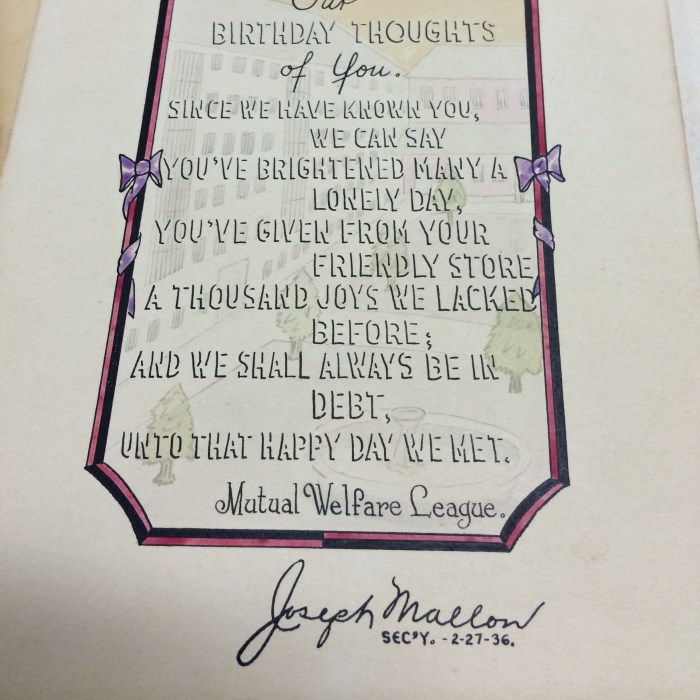
In 1936, the “boys” sent her this handmade birthday card:
Courtesy of the Lewis Lawes Archive, John Jay College, NYC
Kathryn was born in Elmira, New York in 1885. Born into genteel poverty, she was ambitious and smart. At 17, she took a business course and landed a job as a secretary in a paper company. It’s around that time she met Lewis Lawes, who was working as an errand boy in a neighboring office. But Lewis’ father was a prison guard at the Elmira Prison, so it was rather natural that his son would follow in his footsteps.
Kathryn and Lewis married in 1905 and started their family. Lewis quickly rose through the ranks in the New York prison system first in Elmira, then in Auburn. In 1915, he became Chief Overseer at the Hart Island reformatory, living right in the middle of the facility with Kathryn and their two young daughters. There, Kathryn found time to work with the boys, some who were as young as 10, giving many of them the first maternal attention they’d ever experienced.
Still, it’s quite hard to flesh out Kathryn’s story. She gave very few interviews and those that she did give read like someone wrote them without ever talking to her. Much of what we know about her surfaced only after her mysterious death.
You see, what makes her story so complex (and dare I say compelling?) is that she died at the age of 52 after falling off the Bear Mountain Bridge.
What, you say? But yes, it’s true.
I hate to hijack a Women’s History month post with a true crime mystery, but it can’t be helped.
On October 30, 1937, the New York Times published an article entitled “Wife of Warden Lawes Dies After a Fall. Lies Injured all Day at Bear Mountain Span.” In it, the NYS Police said that she had jumped or fallen from the Bridge. Though conscious when discovered hours later by Warden Lawes, their son-in-law, and Dr. Amos Squire the Westchester County Medical Examiner, she died of her injuries soon after arriving at Ossining Hospital.
A few days later, a follow-up story was published in the Times that quoted heavily from Dr. Amos Squire (the former Sing Sing Prison Doctor as well as Medical Examiner), asserting that he had gone back to the scene of the accident. There, he found “her high-heeled shoes caught between two boards of a walk” and concluded that she had gone hiking, perhaps venturing down the trail to pick wildflowers. He surmised that she had tripped, rolled hundreds of feet down the steep embankment towards the river, breaking her leg in the fall. Then, he asserted, she dragged herself 125 feet to the spot where she was found twelve hours later.
I mean, really. So many things here –
First, how perfectly horrible. What a ghastly way to die. How could this have happened to such a universally beloved woman?
But then, the mind starts to whir . . . Were fifty-two-year-old women in the habit of hiking in 1937? In high heels? And how convenient that her high heels remained stuck between “boards of a walk.” And what about this dragging herself one hundred twenty-five feet southward with a compound fracture to spot where she was finally found? Finally, was it coincidence that the Westchester County Medical Examiner was Dr. Amos Squire, the former Sing Sing prison doctor and old friend to the Lawes’?
There’s so much to unpack. But I’m going to leave it there, for another time.
I’d rather try to concentrate on her life and the good she did in her relatively short time on earth by sharing some of the condolence letters Warden Lawes received. [2] More than anything, they give us a picture of the truly kind, benevolent influence she had on the lives of so many:
Joe Moran, Prisoner # 47-342 wrote “With the passing of dear Mrs. Lawes, the only ray of sunshine ever to be found within the walls of Sing Sing has gone forever. She lent courage to the condemned, she comforted the sick and she brightened the lives of the friendless. The men branded with numbers shall never forget the many kindnesses and acts of charity administered to them by the woman they regarded as their mother.”
Edward McIntyre, a former inmate, said “I don’t believe a kinder soul ever lived. And I know this from watching her making her daily visits to the sick and being at all times ready to help somebody who was in need.”
Even the mothers of inmates sent in condolences: “She was highly appreciated by me because she was kind to the inmates, especially my son. Only two weeks ago he praised her to me. He said ‘Mother, Mrs. Lawes is right fine. Mrs. Lawes always says ‘hello boys’ in a motherly tone. And you know, she does not have to recognize us. But she does.’”
The inmates were inconsolable when they heard the news of her sudden and shocking death. Finally, against his instincts, Warden Lawes was forced to do the unthinkable – open up the prison gates and allow two hundred or so “old-timers” to march up the hill to the Warden’s house to pay their last respects at her bier. Two hundred men walked through the gates to freedom and two hundred men walked back into the prison.
That year, there was no Halloween party for local children, nor any Christmas presents for the inmates of Sing Sing ever again.
To this day, her good works are remembered by preachers and highlighted in their prayers and sermons.
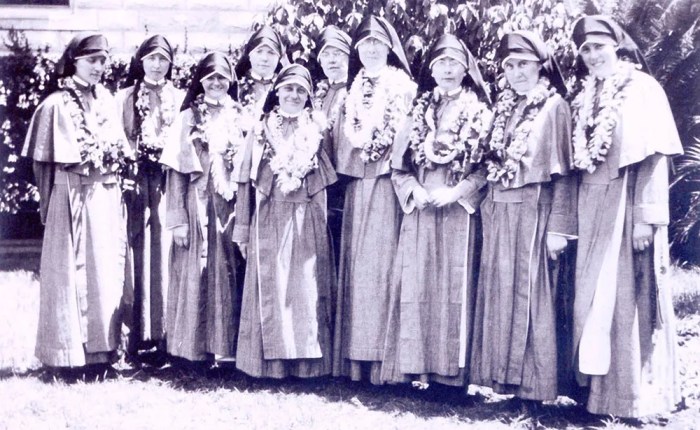
For today’s post, I thought I’d highlight a group of women who have devoted their lives to making the world a better place – the Maryknoll Sisters of St. Dominic.
Maryknoll Sisters in Punahou, Hawaii c. 1920s Photo from the Maryknoll Mission Archives
Maryknoll is just one of several places that have a pretty big footprint in Ossining but exist on the sidelines of Ossining’s collective consciousness. At least, I don’t often think about it unless I happen to run (or drive!) along Pinesbridge Road.
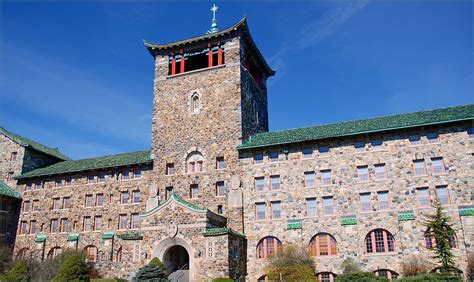
Maryknoll Seminary on Pinesbridge Road, Ossining
But in recent years, I’ve had the opportunity to get to know some of the Sisters there, and their lives and accomplishments are certainly worthy of a Women’s History month post.
First, what exactly IS Maryknoll? Officially, its title is the Catholic Foreign Mission Society of America, and includes the Fathers and Brothers of Maryknoll and the Maryknoll Sisters of St. Dominic. Founded by Father James Walsh and Father Thomas Price, they received Papal approval in 1911 and wasted no time in finding a home for their seminary. Purchasing several tracts of land in Ossining, they hired Italian masons who had worked on the Croton Dam to build many of the Maryknoll buildings – hence the remarkable stone masonry evident. (According to Brother John Blazo, the Maryknoll Historian, it was decided to give the cupola a particularly Chinese theme in order to motivate the missionaries to go to far away places and spread the word of God.)
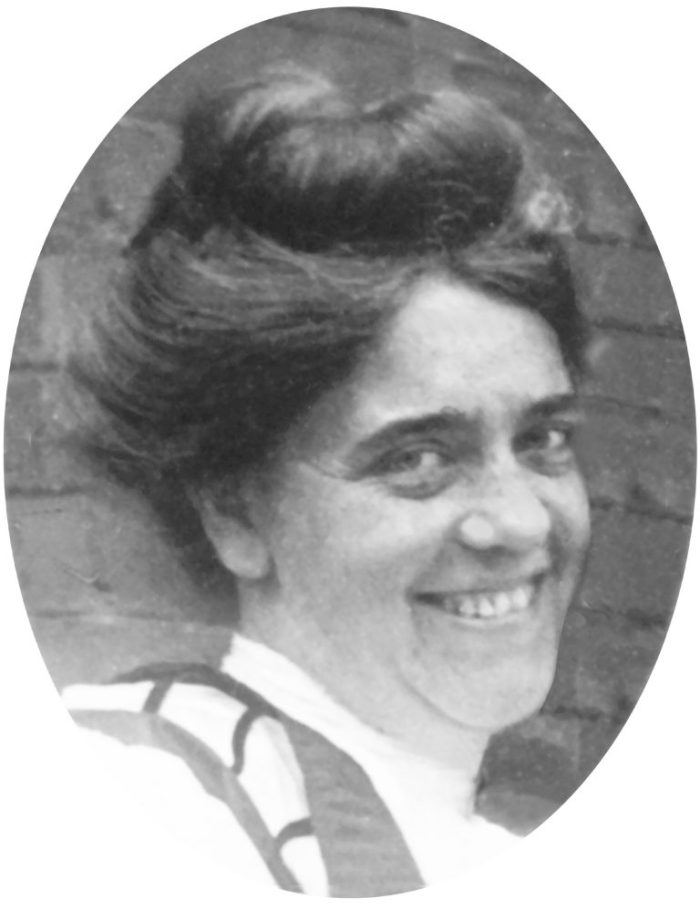
But back to the Sisters. They were founded in 1912 by Mary Josephine “Mollie” Rogers (later known as Mother Mary Joseph.) She’d gone to Smith College and become inspired by the active Student Volunteer Movement there and the idea of overseas missionary work.
Mary Josephine “Mollie” Rogers, c. 1910. Photo from the Maryknoll Mission Archives
Fortuitously, she met Father Walsh and began working in his office to help him get his Society started. Brother Blazo tells the story that Father Walsh had found it increasingly difficult to purchase some of the parcels of land he needed to put together the campus he envisioned. Sensing that there might be anti-Catholic sentiment at the root of it, Mollie Rogers dressed up in her most formal Smith College-wear and purchased the land on behalf of the Fathers, looking to all the world like a rich, Westchester matron.
Working in tandem with the Fathers and Brothers, it took almost a decade for the Sisters to be officially recognized by the Catholic Church. Mother Mary Joseph, along with few others, charted a course through unmapped waters – theirs was the first group of American religious women whose primary mission was overseas service. Frankly, it seems like the Church didn’t know what to do with them – they were rebuffed again and again by Church leadership, both here and in Rome. But by 1920, they were officially approved to begin their mission work. Soon, they were serving in faraway places like Manchuria and the Philippines and China, and women from all over the world were joining their Sisterhood.
According to their website, what Mother Mary Joseph asked from her Sisters was “Charity, fearless honesty and speaking the truth in love as they give witness to God’s love and devote their lives to service overseas.”
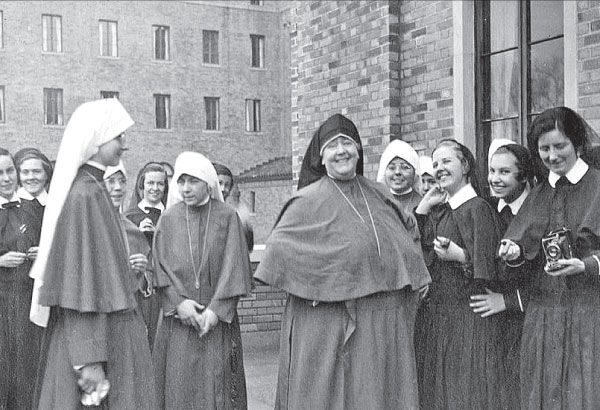
Sister Mary Joseph with novitiates at Maryknoll. Photo from the Maryknoll Mission Archives
World War II interrupted their mission work, especially in Asia – there, some Sisters were put in prison, others were arrested and deported. Two Sisters disappeared and were never found. In the States, when Japanese Americans were put in concentration camps, Maryknoll Sisters went with them.
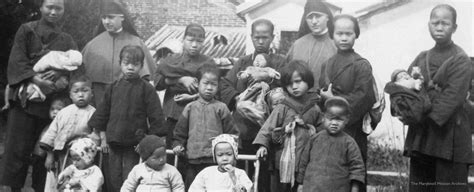
Maryknoll Sisters in China, c. 1940s Photo from the Maryknoll Mission Archives
Over the decades, they’ve opened schools, clinics and hospitals, expanding their reach into South America, Africa, Thailand, Japan and South Korea. They’ve nursed lepers in Hawaii, AIDs patients in El Salvador, taught English in Jakarta, provided social work services to Sudanese refugees, guided Vietnamese asylum seekers through a maze of red tape, performed surgery in Guatemala, started health clinics in Tanzania, nursed the sick in South Korea – in short, as their website says, they serve “the poor, the ailing and the marginalized around the world.”
Each one of these remarkable women has gone through rigorous training programs, learned several languages, and lived for years in foreign countries, often in great peril, as they served in some of the most unstable and violent regions in the world.
The Maryknoll Sisters campus in Ossining offers space for nuns to take a breather between postings, opportunities for further training, and as a home base to serve locally. Both of my sons fondly remember the Sister who was a regular in their 2nd grade classroom at Brookside School (just across the street), and how it was always a treat to be in her reading group.
Currently, there are nearly 300 sisters serving in 18 countries.
My interactions with them have been inspiring and humbling – they are all more informed about current events than anyone I know. They also take a keen interest in politics and democracy, understanding that it is a potent tool to effect change. But it’s their sincere belief in social justice, peace, and humanity that really sets them apart.
I asked one of the sisters what made her want to be a missionary nun and she told me the following story:
“When I was a very little girl, my father took me to see some shacks that had appeared at the end of our very nice street. ‘They’re called Hoovervilles,’ he told me. (Yes, Herbert Hoover was President when she was a little girl!) I cried. ‘But we have to help these people, they can’t live like that.’ My father shook his head – ‘There are too many of them and they need too much. There’s nothing we can do.’ Well, I think that was moment that started me on this path – I was only about four years old, but I’ve never forgotten that moment. Yes, there ARE too many and they DO need a lot. But there’s always something we can do.”
In the spirit of Women’s History month, may I suggest that you peruse a few of the biographies of these inspiring women here.
Textile designer ***Local Connection: Smith-Robinson House/Printex Factory, 34 State Street***
Do you know who Vera Neumann was? Perhaps your mother or grandmother owned a Vera scarf? Or maybe you bought some Vera dish towels from Crate & Barrel, or a Vera dress from Target not too long ago? She’s an absolute legend in the world of textile design and her Printex printing plant was located right here in Ossining, at 34 State Street.
So settle in, tie a brightly hued scarf around your neck, and read on . . .
Born in 1907 in Stamford, CT, Vera was creative from the time she could hold a pencil. The story goes that her father nurtured her talent by taking her to the Metropolitan Museum of Art every Sunday, as well as hiring a sign painter to give her private drawing lessons. Vera went on to study at the Cooper Union and started out as a fashion illustrator and freelance painter of murals for children’s rooms. (Wouldn’t THAT have been a thing to grow up with on your wall!)
She married her husband George Neumann in the 1940s and they became the power couple of textile design. With her limitless imagination and his business acumen, they built a wildly successful and long-lived company. Their first commission was placements for the B. Altman department store, with Vera screenprinting the entire run on her dining room table. After that, it was a race to keep up with demand.
The post-World War II world complicated matters, as it was difficult to source fabrics. An oft-repeated story is that Vera came across a stash of silk parachutes in an army surplus store and began screen printing her whimsical, colorful, ever-changing designs on silk and so created her iconic line of scarves.
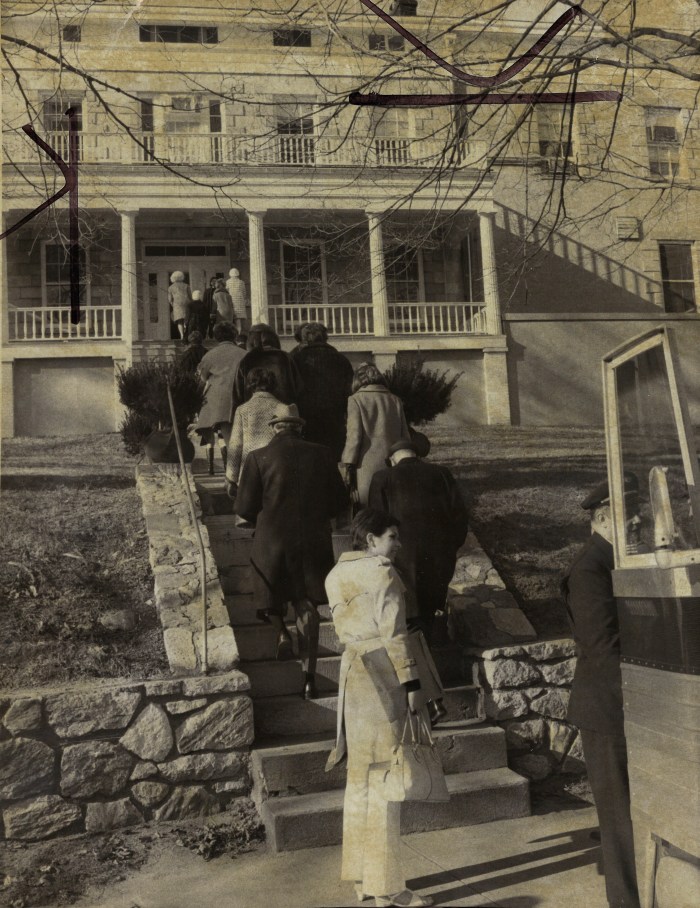
Outgrowing one studio after another, Vera and George settled in Ossining, buying the former Smith-Robinson House at 34 State Street and fitting it out for their Printex plant. (An 1810 Georgian mansion, it’s still standing today, barely, and is one of the few remaining buildings in Ossining built with prisoner-quarried Sing Sing marble.)
Department Store buyers visiting the Printex Plant, c. 1960s Courtesy of the Ossining Historical Society and Museum
With their living space and office right next to the plant, Vera’s reputation and creativity thrived.
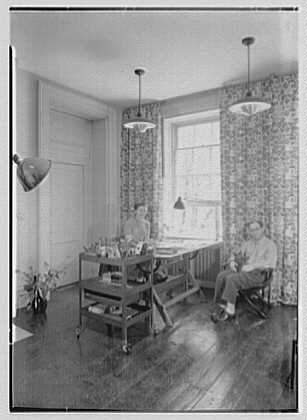
Vera and George Neumann in the design studio of Printex. Photo by Gottscho-Schleisner, Inc. (1951), Courtesy of the Library of Congress
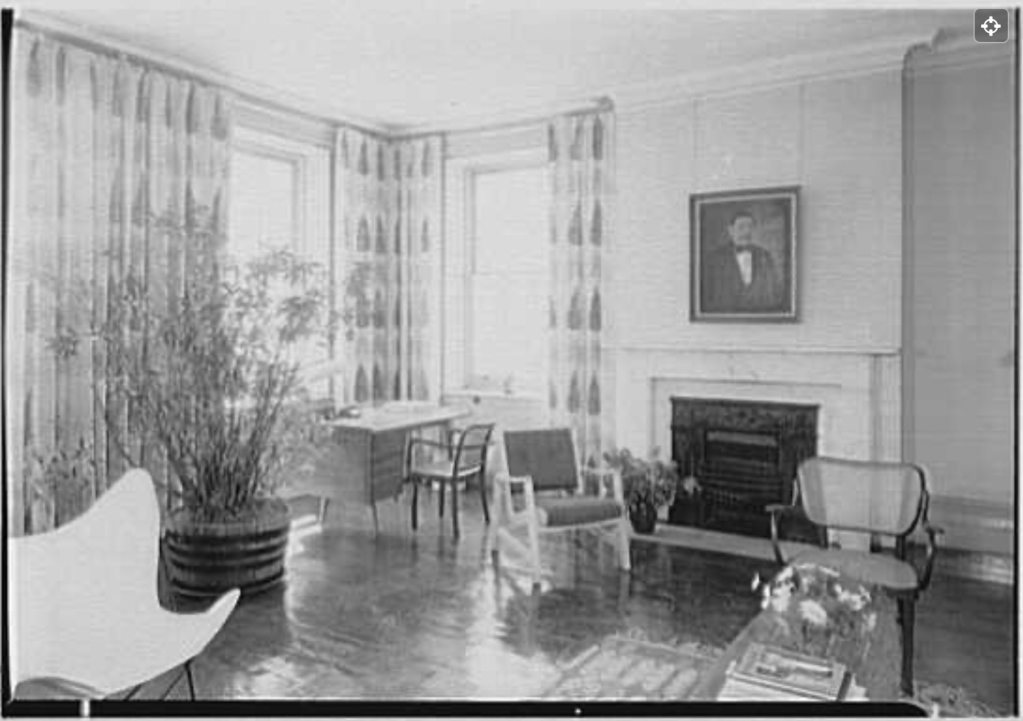
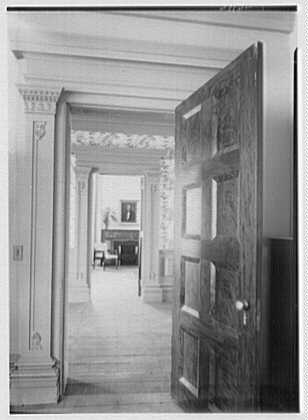
The Living Room Look at that shiny wood floor! And that fireplace! Photo by Gottscho-Schleisner, Inc. (1951) Courtesy of the Library of Congress
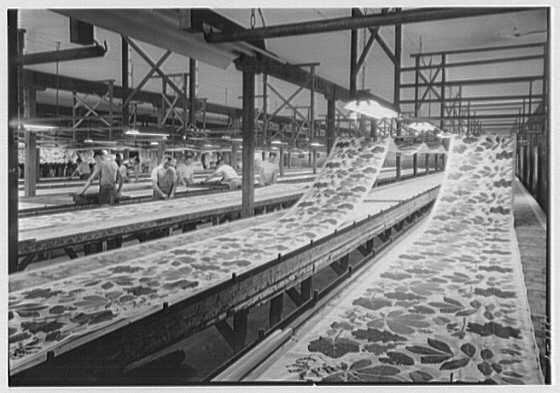
The printing plant Photo by Gottscho-Schleisner, Inc. (1951) Courtesy of the Library of Congress
The office suite of Printex Photo by Gottscho-Schleisner, Inc. (1951) Courtesy of the Library of Congress
How fabulous was this? River views and no commute? Wood floors and fireplaces? And just look at the Georgian decoration around those doorways! I wonder if any of it survives today?
The Printex company employed many Ossiningtonians. Dr. George Hill, their neighbor at 30 State Street, provided medical services to Printex employees. He also helped connect young people with jobs there. Local artist Donna Chambers was one of them, and the training and inspiration she received no doubt helped inspire her to become a professional artist who creates remarkable quilts and jewelry today.
And here’s just a tiny selection of Vera designs, from a 2015 exhibit at the Alexander Gray Gallery in New York:
If we were going to play six degrees of Vera Neumann, we can connect in one turn to President Harry S Truman and First Lady Bess Truman, who chose Vera’s Jack-in-the-Pulpit design (below) for the upholstery in the White House solarium.
Jack-in-the-Pulpit design – note, the shadows are part of the design. It is one of Vera’s most popular, in active use from 1952 to the mid-1980s
We can also connect to Marilyn Monroe. who famously wore nothing but a Vera scarf in her last photo shoot (with photographer Bert Stern.) Some might find the photos a bit raunchy, so be warned before you click here.
But one of the most admirable things about Vera Neumann is that she kept her price point low enough so anyone could own a Vera. While other designers charged upwards of $25 a scarf, Vera’s averaged from $2 – 10. (Remember inflation! $25 in the 1960s is about $250 today.) “I don’t believe only the wealthy deserve good design,” she said and meant it. And her inexhaustible creativity meant that the market was never saturated with the same thing, so even these “cheaper” scarves were always unique and special.
In the 1950s, as their family grew, George and Vera decided to build their dream house, reaching out to the leading architect of the day, Marcel Breuer. On their plot of land at the top of Finney Farm Road in Croton, with magnificent views of the Hudson and beyond, Breuer’s modernist design is a triumph. Still standing, and recently restored, it was on the market in 2020 for $4.2 million. Take a look here and here.
Vera and George travelled widely and collected art – Alexander Calder (who briefly lived in Croton as a child) was a close friend, and the Neumann lawn was decorated with a large Calder sculpture, a gift from the artist.
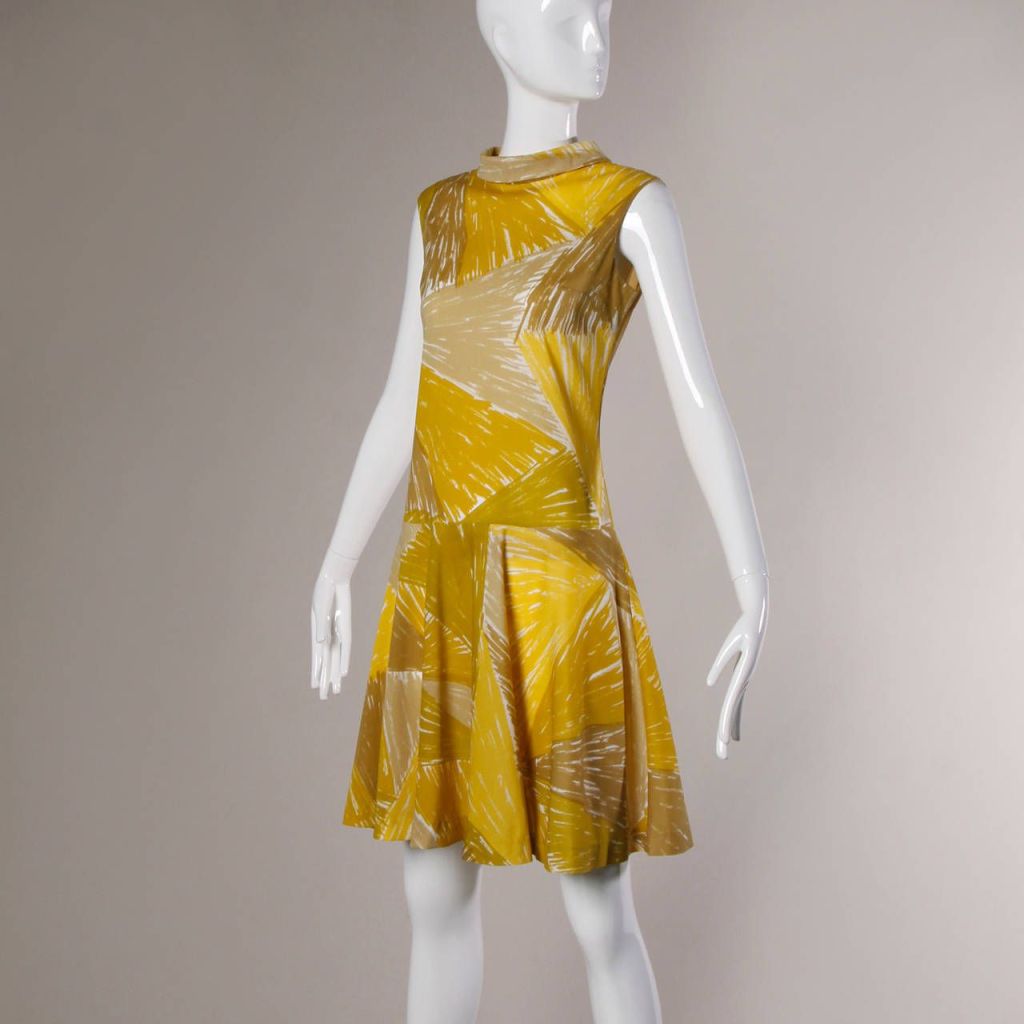
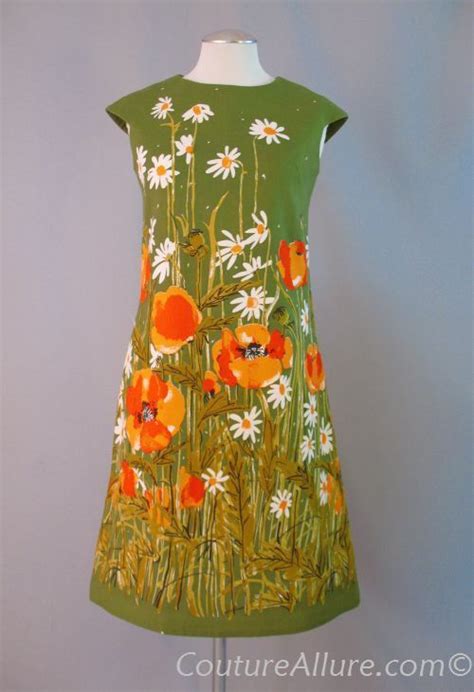
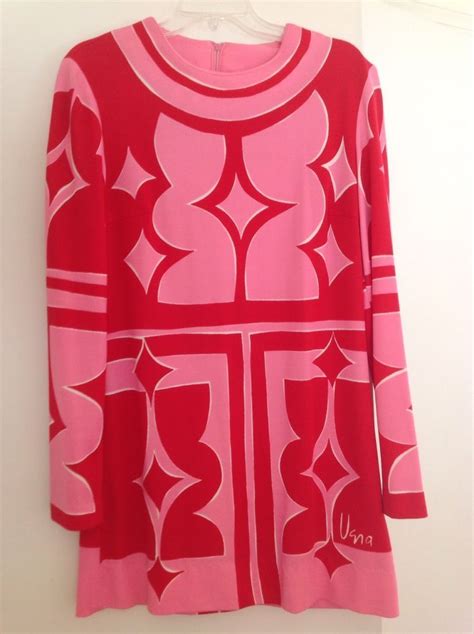
In the 1960s, the company branched out into clothing and home textiles, and sales skyrocketed. Here are a few outfits I plucked off Ebay/Pinterest:
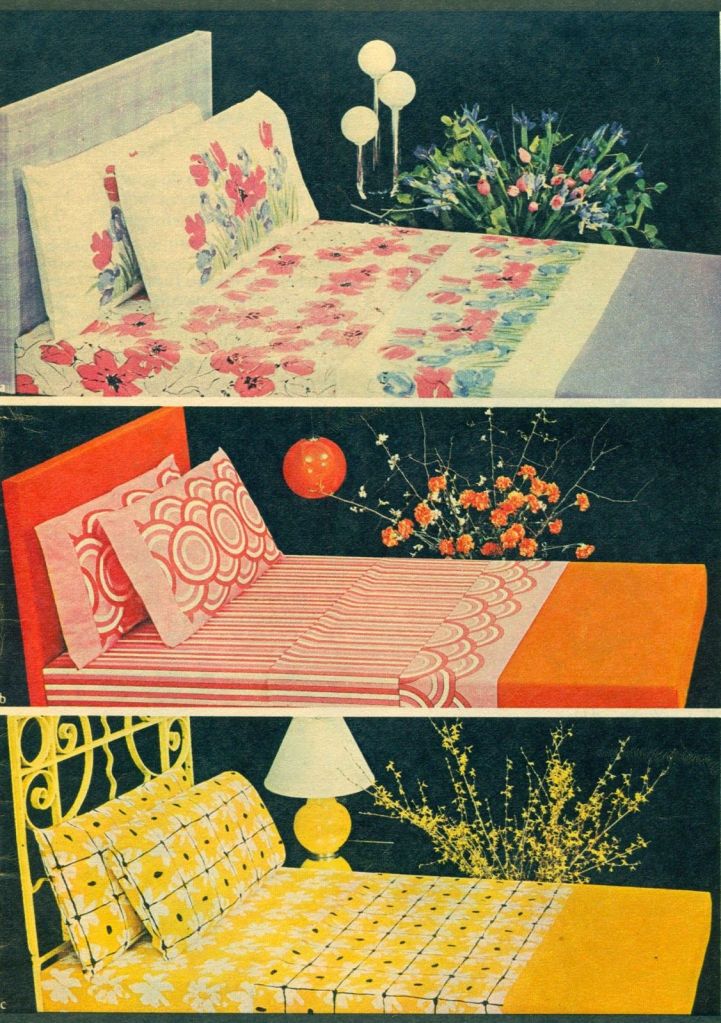
And here are some homegoods items:
George died in 1960 and Vera sold Printex in 1967, though she remained active as a designer and board member for decades.
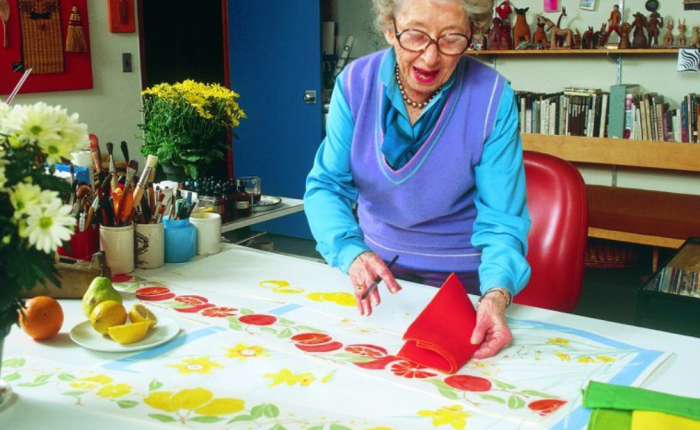
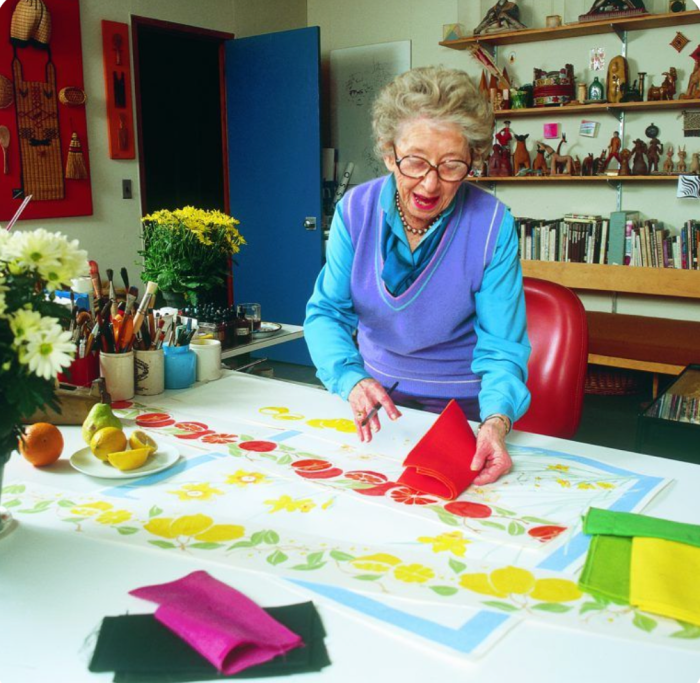
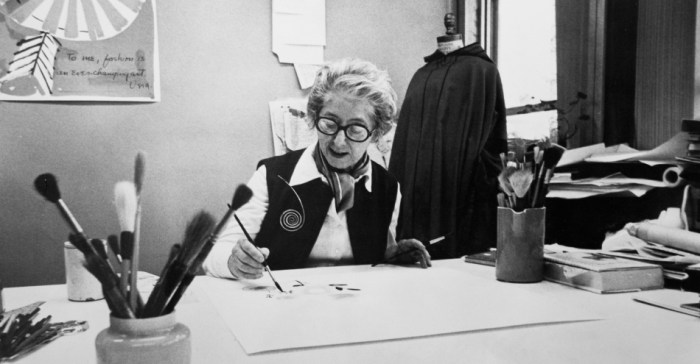
Vera Neumann in her Ossining studio, c. 1974
She lived in her beautiful home with her dachsunds and cats, swimming daily in her indoor pool until 1981, when she moved in with her daughter in Ossining.
Vera Neumann died in 1993, designing to the end. An artist, a trendsetter, a savvy businesswoman, hers was certainly a life well-lived who brought joy to everyone who saw her designs. Check out more of her work here.














 Ossining History on the Run
