Check this out! I just happened upon the Agate Passage over which the Agate Bridge spans, connecting the Kitsap Peninsula to Bainbridge Island (north of Seattle, Washington.)
And guess who they’re named after? Ossining’s own Alfred Agate!!
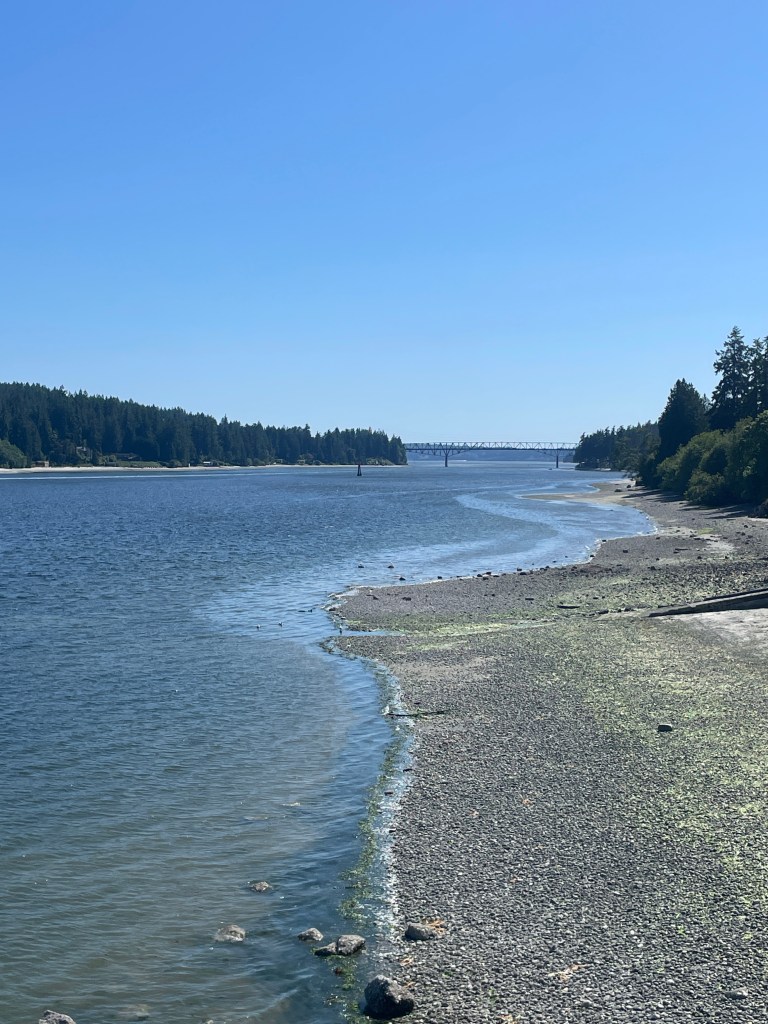
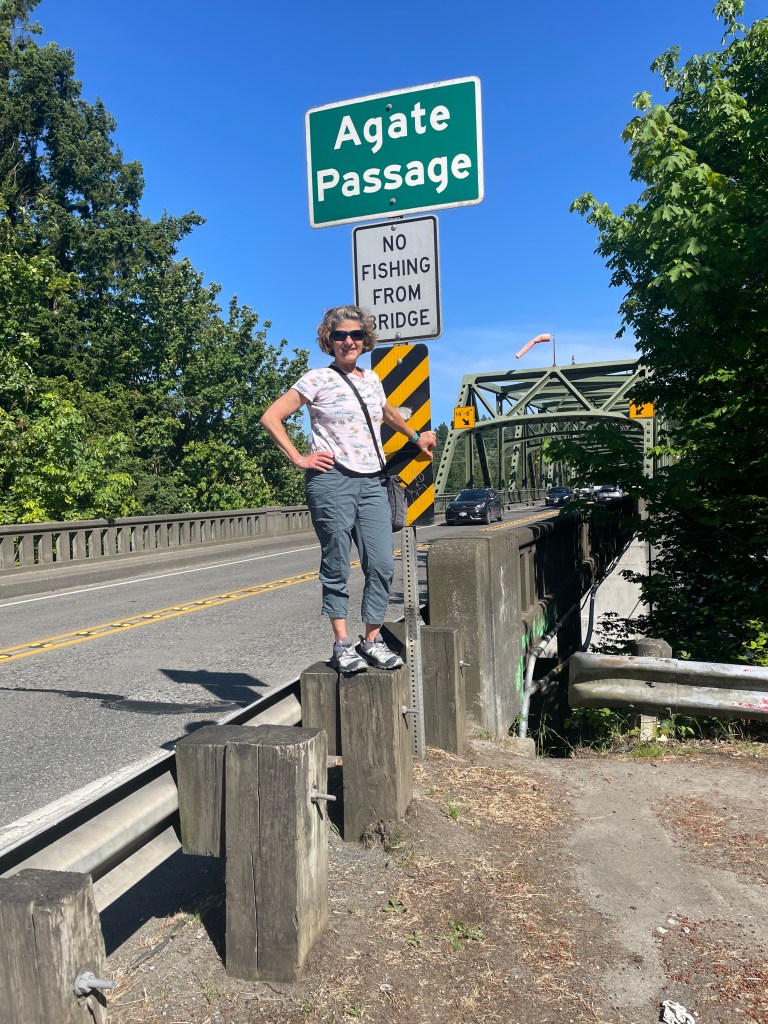
How did this come to be?
Well, if you’ve been following this blog, you’ll know that I’ve been quite obsessed with artist Alfred Agate, born in the Sparta neighborhood of Ossining in 1812. He went on to be an artist/illustrator on the U.S. Exploring Expedition of 1838 – 1842 (aka the USXX.)
See here and here for a refresher.
To recap briefly, the USXX was the largest U.S expedition you’ve never heard of, and its mission was multi-pronged:
- Survey as much of the South Pacific as humanly possible (primarily for the then-flourishing whale trade)
- Enter into agreements with the local chiefs to protect American interests and sailors (for aforesaid whale trade, but also any other lucrative businesses)
- Discover if Antarctica was an actual landmass or just a pile of snow and ice
- Survey the Columbia River and the Pacific Northwest before heading home by way of the Philippines.
It’s this last bullet point that interests us.
The expedition began with six ships, but lost one rounding Cape Horn in 1838, and sent one home in 1839, so by the time they were approaching the West Coast of North America in 1840, there were only four ships. At this point in the expedition, leader Lt. Charles Wilkes was often splitting his armada up to save time and maximize efficiency.
In December of 1840, our Alfred was aboard the USS Peacock which was trying to complete numerous complex missions, such as surveying the western edge of the South Pacific whaling grounds, correcting some previous USXX surveys of Samoa, and arresting a couple of Samoan chiefs because Lt. Wilkes said so. She and her crew were supposed to complete all this in time to meet the rest of the ships at the mouth of the Columbia River by May 1, 1841.
Lt. Wilkes had gone ahead with his other two ships, the USS Vincennes and the USS Porpoise, taking them into the Strait of San Juan de Fuca between the northern edge of Washington State and Vancouver Island on May 1, 1841. For 2 ½ months they would meander down to Puget Sound surveying as they went. (Of course, the British-held Hudson’s Bay Company was firmly ensconced there, trading in beaver and other skins, among other things. But that didn’t stop Lt. Wilkes . . . )
In late May, Lt. Wilkes would travel overland back down to the mouth of the Columbia River to meet up with the USS Peacock, but it would not be there. With no way to contact them, he had no idea where they were or what was making them so late. He left his ship’s purser, Waldron, to wait for them. After six weeks, Waldron would abandon his post, leaving his Black servant John Dean to wait in his stead. Good thing too, because Dean would make friends with the local Chinook Indians, and turn out to be a quick, decisive leader. When the Peacock finally did arrive in mid-July, she would founder on the bar at the mouth of Columbia. Our Alfred, his illustrations and the rest of the crew survived only because Dean dispatched several canoes of Chinook to save all hands before she sank in ignominy.
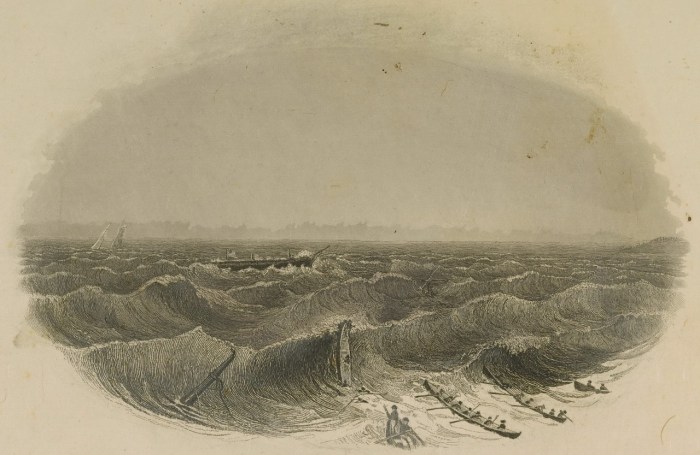
by Alfred Agate, 1841.
(Note the canoes of Chinook courageously navigating the storm-tossed waters.)
Courtesy of the Naval History and Heritage Command
But back to Agate Passage – I cannot find any explanation as to WHY the surveying crew of the Vincennes/Porpoise would name this passage after Alfred (I mean, he wasn’t aboard either ship surveying this region.) However, the Agate Passage (over which the Agate bridge was built in 1950) had apparently been missed by previous explorers and so remained unnamed by Europeans. (Captain George Vancouver’s 1792 expedition, I’m looking at you!)
Of course, the native Suquamish people knew of this passage as it bordered their land, and likely had their own name for it (though I also haven’t discovered this.)
But, as we know, European explorers liked to rename everything to honor their people, so Agate Passage this became.
My theory is that because the USS Peacock was so tardy in arriving at the Columbia River, the remaining crew feared that the ship was lost. And they all seemed to admire our young illustrator, being especially moved by the way he handled a debacle in Fiji when two USXX crew members, Lt. Underwood and midshipman Wilkes Henry were murdered in retaliation for the kidnapping of a Fiji chief. (See here for that story)
So, perhaps this was why they decided to name this passage after Alfred Agate.
What do you think?
* This title is a bit of clickbait because now you know Alfred Agate wasn’t ever in Seattle — he would get to the mouth of the Columbia River and then immediately head south.
 Ossining History on the Run
Wh
LikeLike
Hey Caroline,Hope you’re having the most fabulous time at your writing retreat in the Pacific Northwest. And here’s my question: you mention not being clear on why the passage was named after Alfred Agate but didn’t mention the bridge. Do you have anything specific to add about why the bridge bears his name? Was he just an artist/explorer that folks in that area admired?Have a great adventure and hope to catch up before the end of the summer!Nancy
LikeLike
Ha! I guess I thought it was clear from the post that the bridge was named Agate because it bridged the passage of the same name. The passage was named Agate in 1841 when the US Exploring Expedition found it and named it. Guess I need to rewrite the blog post!
LikeLike
Hi Caroline… such a lovely part of the world – lucky you! I always enjoy learning from you.
FYI, the house at 6 Agate Street is on the market (last home to the late Ed Impara and his late wife, Jean). What a lovely home, and a terrific garden.
https://www.zillow.com/homedetails/6-Agate-Ave-Ossining-NY-10562/33078245_zpid/
I’d love to get back to that 1807 Large Copper Penny story when possible. Life is slowing down post-moving, and I’d love to take you on the trail and poke around. Around most of the summer 🙂
Yours,
Nancy Carmichael (nancycarmichael@outlook.com)
LikeLike